
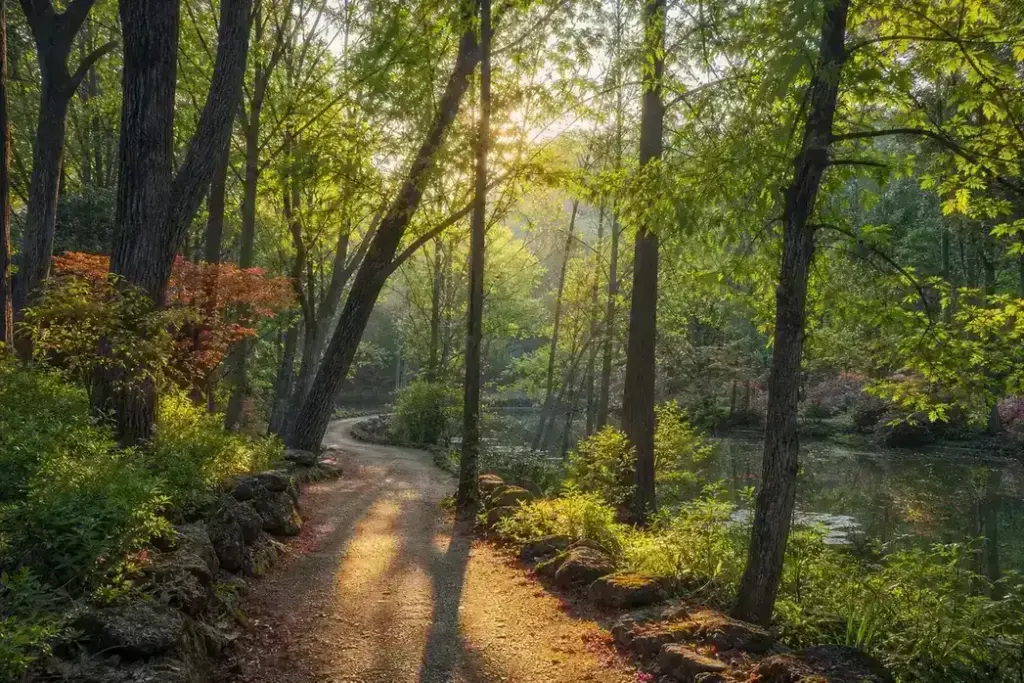
Atatürk Arboretum, located in Istanbul’s Sarıyer district, is a 296-hectare botanical garden within Belgrade Forests and was founded in 1949 as the first arboretum in Turkey. Considered a “live plant museum,” the arboretum displays trees and woody plants whose origins and ages are known and are organized according to plant taxonomy.
The arboretum houses over 2,000 species of trees and plants from around the world, with Istanbul University’s Faculty of Forestry as the scientific partner of the park’s executive board. Unlike the adjacent Belgrade Forest, the arboretum has stricter conservation rules: no food and drink (except water), no picnic, no barbecue, no bicycles, and no pets, drones or tripods.
Quick Facts
| Turkish name | Atatürk Arboretumu |
|---|---|
| Built / opened | 1982 |
| Architect(s) | Camille Guinet (road network planner, 1959–1961) |
| Address | Kemer, İstanbul Üniversitesi Orman Fakültesi, 34450 Bahçeköy, Sarıyer, Istanbul Google MapsApple MapsYandex Maps |
| District | Sarıyer |
| Metro | Zincirlikuyu Metrobus Station (42M bus, to Bahçeköy) |
| Admission | ₺ |
| Best time to visit | Weekday mornings offer the calmest atmosphere and fewest visitors; the arboretum opens at 09:00. The arboretum is closed Mondays. Spring (April–May) brings flowering plants such as rhododendrons; autumn (September–October) offers striking foliage. Summer shading from tall trees provides relief from heat, but weekend afternoons can be crowded. Winter visits are quieter and require no special preparation, though hours are shorter (closing at 17:00). |
| Website | ataturkarboretumu.ogm.gov.tr |
What Is (and Isn't) Part of a Visit to Ataturk Arboretum?
| Part | Status | Notes |
|---|---|---|
| Arboretum grounds and walking paths | Included in the standard ticket | All maintained trails and ponds within the 296-hectare arboretum are open to visitors with entry ticket. |
| Plant collections and botanical displays | Included in the standard ticket | Over 2,000 species are accessible; many are labeled, though specialized botanical knowledge is not required to enjoy. |
| Belgrad Forest (adjacent) | Outside / not part of it | The wider Belgrad Forest is separate from the arboretum and has its own rules and access; they border each other but require different orientation. |
| Food and drink service | Not open to visitors | No cafés, restaurants, or food vendors operate inside the arboretum; water is allowed, but bring your own provisions. |
| Guided tours | Separate ticket or institution | Educational programs and group tours are organized but typically require advance booking; ask at the entrance. |
| Bicycles and sports equipment | Not open to visitors | Bicycles, scooters, skates, and ball games are prohibited to protect the research environment. |
| Pets | Not open to visitors | Animals (including dogs on leash) are not permitted; the arboretum maintains strict rules to protect flora and fauna. |
Why Visit Ataturk Arboretum?
The Atatürk Arboretum is a green oasis in the middle of Istanbul, a little bit off the beaten path but accessible via public transport, offering a respite to city dwellers in the form of a huge forest spread out over 296 hectares. It contains more than 2,000 foreign and native plant species, including some species that cannot be found anywhere else in Turkey.
Walking paths guide visitors through wooded areas and past tranquil lakes, providing opportunities for birdwatching and observing wildlife like swans, ducks, geese, rabbits, fish, and turtles. The arboretum appeals to nature lovers seeking a quiet escape from Istanbul’s urban crowds, as well as botany enthusiasts and researchers.
How Ataturk Arboretum Is Laid Out
The arboretum is located southeast of Belgrad Forest and consists of a network of walking paths that loop through different botanical zones. The entry point leads into the main arboretum area. Visitors can explore winding paths that lead through various themed gardens, tranquil ponds, and serene wooded areas. Allow yourself to wander without a fixed route; the paths eventually reconnect, and you can choose whether to walk the perimeter trails, visit the ponds, or explore the internal plant collections. The scale is substantial—a 2-hour visit covers the highlights; 3–4 hours allows leisurely exploration of less-trafficked sections.
Highlights of Ataturk Arboretum
Themed Plant Collections
The arboretum houses over 2,000 species of trees and plants from around the world. Trees and shrubs are organized by species and region, allowing you to walk from Turkish native species to trees adapted from temperate forests globally. Information plaques identify many specimens, making it a self-guided botanical education. Look for grouped collections such as conifers and broadleaf sections.
Tip: Pick up or request a plant guide map at the entrance to identify key collections; many specimens are labeled with Latin and Turkish names.
Tranquil Ponds and Lakeside Paths
Walking paths guide visitors through wooded areas and past tranquil lakes, providing opportunities for birdwatching and observing wildlife like swans, ducks, geese, rabbits, fish, and turtles. The ponds offer reflective spots for photography and quiet observation, especially in early morning light.
Tip: Visit early (gates open at 09:00) for clearer water reflections and better chances of spotting wildlife before crowds arrive.
Rhododendron and Native Turkish Flora
The arboretum houses unique collections like the Rhododendron Valley and the Liquidambar Forest. These specialist zones showcase flowering shrubs and native species that thrive in Istanbul's climate, valuable for understanding the region's botany.
Tip: Rhododendrons bloom most vividly in spring (April–May); plan a visit then for the best display, though the arboretum is beautiful year-round.
Belgrad Forest Connection
The arboretum is located southeast of Belgrad Forest and sits within its natural boundaries. This proximity allows visitors to explore both the cultivated arboretum collections and the wilder, unmanaged forest ecosystem. The contrast illustrates how botanical curation works alongside natural conservation.
Tip: Consider combining a visit: spend 2–3 hours in the arboretum, then walk into the adjacent Belgrad Forest trails for a full nature day.
Kirazlı Dam (1818)
The arboretum contains the 1818-built Kirazlı Dam and a 1916-established plant nursery. These historical features are embedded within the arboretum grounds and testify to the site's long history as a water management and forestry hub before its designation as a botanical research center.
Tip: Ask staff for directions to these structures; they are not always prominently marked but offer glimpses into the site's pre-arboretum history.
Photography and Seasonal Colors
The arboretum is designed as a "living plant museum" and serves scientific research and public education, offering tranquil walking trails and photography opportunities; visitors can explore its lush landscapes year-round, with seasonal changes adding to its charm. Autumn brings spectacular foliage; spring showcases flowering species.
Tip: Professional photography requires prior permission and may incur an additional fee; bring a tripod only if you have obtained advance clearance.
Atmosphere
The arboretum is a quiet piece of heaven, a tranquil sanctuary where one can walk around artificial ponds, observe squirrels posing for photographers, and become friends with stray dogs being cared for by the staff. The air is clean and filled with natural sounds—birdsong, rustling leaves, water—rather than city noise. Weekday mornings are particularly serene; weekends see more visitors but rarely approach the crowding of central Istanbul attractions.
The well-maintained paths wind through sun-dappled wooded sections and open meadows. On sunny days, light filters through the canopy; on overcast days, the landscape takes on softer tones. The atmosphere is contemplative and scientific rather than festive—this is not a park for recreation but a place for observation and study. Visitors tend to move slowly, pause to read labels, and sit quietly on benches overlooking ponds.
History of Ataturk Arboretum
The establishment of an arboretum was proposed by Hayrettin Kayacık, professor of the Faculty of Forestry at Istanbul University in 1949. Initially, an area of 38 hectares was foreseen for the arboretum. The concept was ambitious: a dedicated space for research, education, and conservation of tree species suited to Turkey’s climate.
Between 1959 and 1961, Camille Guinet, inspector of the Sorbonne University’s botanical garden, planned the road network inside the arboretum. This international collaboration brought European botanical expertise to Istanbul’s project. However, due to financial shortages, accomplishment of the project took time. Development proceeded in phases, with land preparation and initial plantings beginning in the 1960s but extending decades.
Opened on July 12, 1982, it was named in honor of Mustafa Kemal Atatürk (1881–1938), the founder of Turkish Republic, on his 100th birthday anniversary. It is owned and financed by the Directorate General of Forestry, which is also responsible for administrative operation, while Istanbul University’s Faculty of Forestry serves as the scientific partner of the park’s executive board. From its opening, the arboretum has functioned as both a research and educational institution and a public green space, allowing visitors to experience the botanical diversity that supports Turkish forestry science.
Tickets and Booking for Ataturk Arboretum
| Ticket | Price | Includes |
|---|---|---|
| Adult admission | ₺ | Full day access to all arboretum grounds and plant collections; valid from 09:00 until closing (17:00 standard, extended in summer). |
| Student admission | ₺ | Discounted entry with valid student ID; same access as adult ticket. |
| Professional photography permit | ₺ | Authorization to use tripods and conduct commercial or extensive photography; equipment typically forbidden without this. |
₺ budget · ₺₺ moderate · ₺₺₺ upscale · ₺₺₺₺ splurge. Price levels are estimates compared with typical prices for visitors.
Tickets are sold at the entrance gate; online booking is available through the official website at ataturkarboretumu.ogm.gov.tr. Payment is typically cash (Turkish lira) or card at the gate. Same-day tickets are available during regular hours; advance online purchase is optional.
Entry rules: Visitors must bring a photo ID. Groups of 10 or more may require advance notice. Professional photography, drones, and tripods are prohibited unless a special permit is obtained in advance from the arboretum office. Pets, bicycles, and outside food are not allowed; water only.
Note that rates for Turkish citizens and certain concessions (students, seniors, disabled visitors) differ from foreign adult rates. Consult the official ticket page at ataturkarboretumu.ogm.gov.tr for current pricing and all eligible discount categories, as these are subject to change.
Suggested itineraries Ataturk Arboretum
2 hours
Enter via the main gate and follow the central loop trail. Visit one or two of the themed plant collections, walk along a pond, and pause for observation. This covers the most visible and accessible sections, ideal for a quick nature escape.
3 hours
Begin with the main loop, then branch into the Rhododendron Valley or conifer sections. Spend time at one of the larger ponds. Sit briefly to observe wildlife. This allows a deeper sense of the arboretum's botanical diversity.
Half day (4+ hours)
Explore multiple themed zones systematically: native Turkish species, exotic collections, historic features like the Kirazlı Dam, and all major ponds. Allow time to read plant labels and sit for photography or quiet observation. This pace lets you experience the arboretum as both a garden and a research site.
How to Get to Ataturk Arboretum
By public transport (recommended): Take the 42M bus from Zincirlikuyu Metrobus Station toward Bahçeköy. The bus stops near the arboretum entrance; the journey takes approximately 30–40 minutes depending on traffic. Alternatively, some bus routes from central Beyoğlu or Beşiktaş serve Bahçeköy; ask the driver for the arboretum stop.
By private car: Drive toward Sarıyer on Büyükdere Avenue, heading toward Bahçeköy. Follow signs for Kemerburgaz Road; the arboretum entrance is well signposted on the Kemerburgaz–Bahçeköy route. Parking is available at the entrance.
Walking from the bus stop: Once you arrive at Bahçeköy, follow local signs or ask a driver for the Atatürk Arboretum entrance; it is typically a 5–10 minute walk from the bus stop, depending on your exact stop location.
Accessibility
The main paths are wide and well-maintained, suitable for wheelchairs and mobility aids; however, the terrain includes gentle slopes and uneven sections in less-traveled areas. Benches are placed at regular intervals along the main loop for resting. The entrance gate and main building are wheelchair accessible. Accessible restrooms are available at the entrance building. Stroller use is permitted on primary paths but may be difficult on side trails due to roots and slopes.
Food Nearby
No food service operates inside the arboretum; only water is permitted. The nearby village of Bahçeköy has small shops, markets, and basic eateries along the main road, typically within a 10–15 minute walk from the entrance. For a fuller range of restaurants and cafés, Sarıyer proper is accessible by bus, about 20 minutes away. Plan to bring water and light snacks (energy bars, fruit) if you intend to spend several hours on the trails.
What to Bring
Comfortable walking shoes are essential; trails involve roots, slopes, and uneven ground. Bring a reusable water bottle (refill at the entrance building if needed). Sun protection—hat and sunscreen—is advisable, especially on open sections. A small backpack for personal items and a camera are useful. In spring and autumn, a light jacket is recommended as morning temperatures can be cool in the shade. Do not bring pets, bicycles, scooters, or outside food.
Best Views and Photo Spots of Ataturk Arboretum
Main pond reflections
The largest pond creates mirror-like reflections of surrounding trees and sky, especially on calm mornings. Overhanging branches frame the water, and waterfowl add movement and interest. The light is soft in early morning, ideal for landscape and reflection shots.
Best time: Early morning (09:30–11:00) when light is low-angle and mist may linger; weekdays for fewer reflections disturbance.
Rhododendron Valley (spring)
A concentrated collection of flowering rhododendrons creates a canopy of color (pink, purple, white) over the path. Close-up shots of individual blooms and wide shots of massed flowers are both striking. The understory lighting is dramatic.
Best time: Mid-April to late May during peak bloom; overcast days reduce harsh shadows and intensify flower colors.
Tree-lined paths in canopy shade
Tall trees create dappled light on the path, with strong sun-and-shadow patterns. The geometry of the path and trees receding into distance works well for compositional shots. Autumn foliage enhances color contrast.
Best time: Mid-morning (10:00–12:00) when directional light creates clear shadow patterns; September–October for foliage.
Kirazlı Dam (historic water feature)
The 1818-built dam framed by natural surroundings offers a historical anchor point and often reflects surrounding vegetation in still water. The structure merges engineering history with landscape.
Best time: Later afternoon (14:00–16:00) when warm side-light illuminates the stonework; weekdays for solitude.
Wildlife at pond margins
Swans, ducks, and waterfowl against rippled water create natural wildlife subjects. Marginal plants frame the animals. Early morning light is flattering for water photography.
Best time: Early morning (09:30–10:30) when animals are most active and feeding; calm weather for clear reflections.
Photography Rules
Photography for personal use is free and encouraged; however, tripods, drones, and professional equipment are prohibited unless a special permit is obtained in advance from the arboretum office (contact via the official website). Flash photography is permitted outdoors but should be used respectfully to avoid disturbing wildlife. Macro and nature photography are particularly rewarding given the plant diversity.
Family Suitability
The Atatürk Arboretum is suitable for families with children aged 5 and up who enjoy walking and nature exploration. Toddlers in strollers can navigate the main paths, though rougher side trails are not stroller-friendly. The ponds and wildlife (ducks, swans, squirrels) interest young children. However, there are no playgrounds, no food service, and the educational value is higher than entertainment value—children seeking active play may find the pace slow. Bring water and snacks. Benches throughout allow frequent rest stops. Families with older children or teenagers interested in botany or photography will enjoy the experience most.
Istanbul Vibes Tips
- Arrive early on a weekday to experience maximum tranquility. The arboretum opens at 09:00 on Tuesday–Sunday; morning light is also best for photography.
- Do not rely on plant labels alone. Bring binoculars or a field guide to Turkish trees, or download a free tree-identification app before visiting to deepen your understanding of what you are seeing.
- Plan your visit to avoid Mondays (closed) and weekend afternoons (busier). If you must visit on weekends, go early (09:00–11:00) before mid-morning crowds arrive.
- Combine your visit with the adjacent Belgrad Forest trails if you have 5+ hours. Both sites are complementary—the arboretum is curated and research-focused; Belgrad Forest is wild and free to enter. Allow 2–3 hours in each.
- Pack enough water and light snacks; there is nowhere to buy food inside. A picnic is not permitted, but sitting quietly on a bench with a snack and water is acceptable and common.
- If you plan to use a tripod or professional camera gear, email the arboretum in advance at the contact on the official website to request a permit; do not assume it will be allowed on the day.
Explore Nearby Ataturk Arboretum
Sights near Ataturk Arboretum
 Belgrad Forestabout 3.5 km away · typical visit: 2–4 hours
Main image: AI-generated illustration. It may not show the place exactly as it looks.
 Blue Mosque – about 19.0 km away · typical visit: 45–75 minutes3 min on foot from Gülhane metro
Main image: AI-generated illustration. It may not show the place exactly as it looks.
 Hagia Sophia – about 18.7 km away · typical visit: 1–1.5 hours8 min on foot from Gülhane metro, Open daily 09:00–19:30
Main image: AI-generated illustration. It may not show the place exactly as it looks.
Related guides
 Best Hiking Trails Near Istanbul: Forest, Island and Coast
Main image: AI-generated illustration. It may not show the place exactly as it looks.
 Best Parks and Green Spaces in Istanbul: Where to Find Calm
Main image: AI-generated illustration. It may not show the place exactly as it looks.
 Lokanta Kru: Seasonal Turkish Dining in NişantaşıOpen 12:00–22:00, closed Sun
Main image: AI-generated illustration. It may not show the place exactly as it looks.
 Six Senses Kocataş Mansions: A Bosphorus Spa Retreat
Main image: AI-generated illustration. It may not show the place exactly as it looks.
 Rumeli Kale Cafe: Breakfast on the Bosphorus Shore
Main image: AI-generated illustration. It may not show the place exactly as it looks.
Browse more: More in Sarıyer · All Parks · All Sightseeing
FAQ: Ataturk Arboretum
Can I bring my dog?
No. Pets are not permitted inside the arboretum to protect the research environment and the wildlife. This applies even to well-behaved dogs on leash.
Is there anywhere to eat or buy food inside?
No. No food vendors, cafés, or restaurants operate inside the arboretum. Only water is permitted to bring in. Plan to bring your own snacks and water, or eat before or after your visit in nearby Bahçeköy.
Can I use a bike or scooter?
No. Bicycles, scooters, skates, and wheeled sports equipment are prohibited to preserve the pathways and protect the botanical collections.
Is it open on weekends?
Yes, but only Tuesday–Sunday. The arboretum is closed all day Monday. Weekends are busier than weekdays; for a quieter visit, go on a weekday morning.
How long should I plan to spend?
Plan 2–4 hours depending on your interest. A quick visit of the main loop takes about 2 hours; a thorough exploration of multiple plant zones takes 3–4 hours.
Do I need to book tickets in advance?
Online advance booking is available through the official website, but it is not required. Tickets are sold at the entrance gate on a first-come, first-served basis during opening hours.
Is the arboretum wheelchair accessible?
The main paths are wide and suitable for wheelchairs and mobility aids. Benches are available for rest, and accessible restrooms are at the entrance building. Some side trails have uneven terrain and may be difficult.
Can I take professional photos with a tripod?
Tripods, drones, and professional photography equipment are prohibited unless you obtain a special permit in advance. Personal photography without tripods is allowed. Contact the arboretum office through the official website to request a permit.
Istanbul Vibes is a one-person project. A coffee keeps it going
Hotels near Ataturk Arboretum
- Sarıyer Belediyesi Tahsin Salihoğlu Kız Konukevi (650 m) Check prices (affiliate link, opens in a new tab)
Affiliate link (opens the booking site): we may earn a commission at no extra cost to you.
Restaurants near Ataturk Arboretum
Distances are straight-line, from OpenStreetMap data.

Take this guide with you
Get a free PDF of this guide to print or read offline: key facts, tips and a map link on a few clean pages.
Report an issue on this page
How we research and update our guides
About this guide: AI assistance and accuracy
This guide is created with the help of AI and is based on official sources where available. Mistakes can still happen. Opening hours, prices, rules and other details are given to the best of our knowledge as of the date shown and can change without notice. It offers general recommendations only, not professional, legal or travel advice. Please confirm important details with the official source before you travel; you are responsible for your own plans and decisions.
* Affiliate link: as an Amazon Associate we earn from qualifying purchases at no extra cost to you.
