

Iznik sits at the eastern end of a tranquil lake about two hours from Istanbul by car, though the route curls around the Gulf of İzmit, making the drive longer than the straight-line distance suggests. The city’s real name is Iznik, though it occupies the site of ancient Nicaea, one of Christianity’s most significant cities. Visitors come for two distinct draws: the Ottoman-era tiles that made the city the ceramic capital of the empire, and the layers of Byzantine and earlier history embedded in its walls and remaining monuments.
A day trip is feasible but rushed; an overnight stay reveals far more. The city’s setting on the lake’s shore and its surviving medieval fortifications create a quiet, contemplative atmosphere that contrasts sharply with Istanbul’s intensity.
Quick Facts
| Address | İznik, Bursa Province, Turkey Google MapsApple MapsYandex Maps |
|---|---|
| Best time to visit | Spring (April–May) and autumn (September–October) are ideal: temperatures are mild, daylight lasts long enough for a full day of exploration, and the lake is calming without the summer heat. Wildflowers bloom in spring along the shoreline and in fields outside the walls.Summer (June–August) is warm and brings swimmers to the lake, creating a busier, more social atmosphere. The light is brilliant for photography but intense by midday. Winter (November–March) is grey and damp; the lake feels bleak, and shorter days reduce the time available for sightseeing. Nevertheless, winter is the quietest season and offers solitude to visitors who don't mind cool weather.Avoid the midday hours of summer if you plan to walk the walls—there is no shade. Late afternoon light is superior for photography of both the walls and the lake. |
| Website | iznik.bel.tr |
What Is (and Isn't) Part of a Visit to Iznik?
| Part | Status | Notes |
|---|---|---|
| Iznik town and the lake | Included in the standard ticket | A day trip focuses on the town, its monuments, and the shoreline. Lake excursions by boat may be available but are not standard tourist activities. |
| City walls (partial walking circuit) | Included in the standard ticket | Much of the wall perimeter is accessible for walking; some sections are embedded in private property or ruined. A half-circuit walk is typical rather than the full loop. |
| Green Mosque (Yeşil Cami) | Included in the standard ticket | Free entry when not in use for prayer. Modest interior; the exterior and urban setting matter most. |
| Nilüfer Hatun Imarete (museum) | Separate ticket or institution | Requires a separate ticket. Holds the finest examples of Iznik pottery on display. Hours may be limited; check locally. |
| Iznik Archaeological Museum | Separate ticket or institution | Requires a separate ticket. Displays finds from ancient and medieval periods, including Byzantine and Ottoman ceramics. |
| Hagia Sophia of Iznik | Not open to visitors | The Byzantine church structure survives but is not reliably open to visitors. Access is uncertain; ask locally before planning to visit. |
| Bursa (city) | Outside / not part of it | Bursa is a separate destination 80 kilometres away. A combined Iznik–Bursa day trip is possible but requires at least 10–12 hours to meaningfully visit both. |
How to Get from Istanbul to Iznik
| Option | Duration | Price | Notes |
|---|---|---|---|
| Rental car or taxi | Approximately 2 hours from central Istanbul | ₺₺ | Most flexible and direct, though the route winds around the Gulf of İzmit. Straight-line distance is 90 kilometres but road distance is roughly 140 kilometres. A rental car allows you to explore the lakeshore at leisure and visit sites outside the town. Taxi negotiation required; ride-share apps may have limited availability. |
| Train and taxi combination | Approximately 2.5 hours including transfers | ₺ | Take the Marmaray suburban train from Yenikapi station to Gebze, then a taxi to Iznik (about 40 kilometres further). Slower than driving but economical. Return journey follows the same route. Check current schedules at the station. |
| Bus | 3–4 hours depending on service and route | ₺ | Long-distance buses operate from Istanbul Otogar (central bus station) to Iznik and nearby towns. FlixBus and Kamil Koç are common operators. Journey time reflects road congestion and the indirect route. Buses return to Istanbul in evening hours; confirm the last departure before you go. |
₺ budget · ₺₺ moderate · ₺₺₺ upscale · ₺₺₺₺ splurge. Price levels are estimates compared with typical prices for visitors.
Why Visit Iznik?
Iznik pottery was the decorative signature of Ottoman palaces and mosques across the empire; seeing where these tiles were made—and viewing surviving examples—brings that craftsmanship into context. The city walls, built in Byzantine times and restored through centuries of occupation, still form a rough circuit that reveals how the city was physically shaped by defense needs. For anyone interested in Christianity’s early councils or Byzantine history, Iznik is essential: the First Ecumenical Council, which defined core Christian doctrine, met here in 325 AD. The lake itself, pristine and largely undeveloped, offers a rare chance to see the landscape that shaped Ottoman life.
Highlights of Iznik
City Walls
The ancient walls surrounding Iznik, built and rebuilt over more than two millennia, still form much of the town's boundary. Constructed in Byzantine times and reinforced during Ottoman rule, they stretch roughly five kilometres and were once topped with over a hundred towers. Several sections stand intact and accessible to visitors—the northern wall in particular offers dramatic views over the lake. Walking a portion of the walls is essential for understanding how the city's geography determined its military and civic identity.
Tip: The best-preserved sections are in the north and northeast; start your wall walk here rather than the deteriorated southern portions.
Green Mosque (Yeşil Cami)
Built in the early fifteenth century, this Ottoman mosque survives as one of Iznik's most recognizable buildings, distinguished by the green tiles that gave it its name. The interior is modest but proportional; what matters most to visitors is its place in the townscape—it anchors the main square and remains actively used by the town's Muslim community. The exterior shows the transition between Byzantine and Ottoman architectural ideas.
Tip: Respect prayer times; visiting is easiest between prayers. Remove your shoes before entering.
Nilüfer Hatun Imarete
Originally built as a soup kitchen by Nilüfer Hatun, mother of an Ottoman sultan, this complex survives as a museum housing some of the finest examples of Iznik ceramics ever made. The building itself—a working kitchen and hospice for the poor—reflects Ottoman social welfare architecture. The tiles displayed here show the extraordinary technical skill and aesthetic refinement that made Iznik ware sought after from Cairo to Damascus. The collection includes sixteenth-century pieces representing the peak of the ceramic tradition.
Tip: Verify current opening hours at the entrance or with your hotel; it operates as a cultural institution rather than a conventional museum and may have limited hours.
Iznik Archaeological Museum
Located in the town centre, this museum holds pottery, coins, inscriptions and other finds from the ancient and medieval city, providing context for what you see in the landscape. The ceramic pieces show the continuous tradition of pottery-making from Byzantine through Ottoman times, and the numismatic collection illustrates Iznik's importance as an imperial city. Though smaller than Istanbul's major museums, it offers focused, readable displays.
Tip: Ask the staff to point out pieces from specific workshops—Iznik potters left distinctive marks.
Lake Iznik Shore
The lake stretches about 32 kilometres in length and 10 kilometres across, creating a landscape of open water, reeds and distant hills. The water is fresh and largely unpolluted, rare for an urban area in Turkey. The shoreline near town offers peaceful walks and places to sit; in warm months, locals swim. At dusk, the light across the water is exceptional—the lake's scale makes it feel removed from the town despite being steps away.
Tip: Visit the lakeshore in late afternoon when the light softens and the town's noise diminishes. Bring binoculars to spot waterbirds.
Hagia Sophia of Iznik
Though less imposing than its namesake in Istanbul, this Byzantine church—rebuilt or substantially repaired in Ottoman times—stands as a testament to Iznik's religious significance. The structure shows how Byzantine religious architecture adapted to Ottoman use and restoration. The building is no longer in active use as a place of worship and access can be limited; check locally before planning a visit.
Tip: Hire a local guide if you can; the building's history and the stories embedded in its architecture are not obvious from exterior inspection alone.
Atmosphere
Iznik in the town centre feels like a modest Turkish provincial town: quiet streets, small shops, families on morning errands. There is no sense of being at a major tourist destination. In the market area near the mosque, vegetables and household goods are sold as they have been for centuries. Moving toward the walls or the lakeshore, the atmosphere shifts: fewer people, more space, the sound of wind and water. In summer, the lake draws swimmers and fishermen in the early morning and evening. The pace is slower than Istanbul; there’s time to sit with tea and observe. Tourists are welcomed but not catered to with special facilities—you’re a visitor in someone’s working neighbourhood, not a guest in a theme park.
History of Iznik
Iznik stands at the site of ancient Nicaea, a Greek city founded in the fourth century BC. The name derives from Nicaea, and the place held strategic and cultural significance throughout antiquity. In 325 AD, the First Ecumenical Council of the Christian Church met in Nicaea, establishing foundational doctrine including the definition of Christ’s divinity—a council whose decisions shaped Christianity for nearly two thousand years. This religious weight is invisible now but historically immense.
Under Byzantine rule, Nicaea remained a significant city, fortified with the walls that still partially stand. These defences were tested repeatedly; the walls were built, rebuilt and repaired as the city changed hands and faced siege. The Byzantine period lasted until the Turkish conquest in the early fourteenth century, when the Ottoman advance into Anatolia made Nicaea a target and finally an Ottoman possession.
The Ottomans saw Iznik’s potential and rebuilt it as a centre of ceramic production. From the fifteenth century onward, Iznik potters created tiles and vessels of extraordinary quality, developing techniques and glazes that became the signature aesthetic of Ottoman imperial architecture. Palaces and mosques across the empire were decorated with Iznik ware; the tiles are instantly recognizable by their cobalt blues, turquoises, reds and leaf patterns. This ceramic golden age lasted roughly from 1480 to 1650, after which competition and changing tastes caused the industry to decline.
The city’s population and prosperity fluctuated with Ottoman fortunes. An earthquake in 1065 AD damaged it severely. The Greco-Turkish War of 1919–1921 caused significant destruction and displacement; the modern Turkish government resettled Turkish refugees from the Balkans in Iznik, altering its demographic composition. Today, the city is a modest administrative centre of Bursa Province, neither wealthy nor declining, with the lake as its dominant geographical feature and its Ottoman history as its claim to cultural importance.
Tickets and Booking for Iznik
| Ticket | Price | Includes |
|---|---|---|
| Nilüfer Hatun Imarete entrance | ₺ | Access to the museum and tile collection. |
| Iznik Archaeological Museum entrance | ₺ | Access to pottery, coins, inscriptions and finds from ancient and medieval Iznik. |
₺ budget · ₺₺ moderate · ₺₺₺ upscale · ₺₺₺₺ splurge. Price levels are estimates compared with typical prices for visitors.
Both museums are modest institutions serving a local population; advance booking is not typical. Arrive during posted opening hours (usually morning through early evening) and buy tickets at the entrance. Hours may vary seasonally and with staffing; confirm at your hotel or by visiting the Iznik municipality website (www.iznik.bel.tr) before you go. The Green Mosque is free to enter outside of prayer times. Ticket prices for Turkish citizens and concessions differ from the international visitor rate; ask at the ticket window. For all current opening hours, ticket categories and any seasonal variations, check the official Iznik municipality website or contact the local tourist information.
Suggested itineraries Iznik
4 hours on site (day trip from Istanbul)
Arrive by mid-morning. Walk a portion of the city walls (north or northeast section, about 45 minutes). Return to town and visit the Green Mosque (20 minutes). Lunch at a local café. Spend 1–1.5 hours in either the Nilüfer Hatun Imarete or the Iznik Archaeological Museum. Walk to the lakeshore for late-afternoon light (30 minutes). Return to Istanbul by late evening (allow 2 hours travel time).
8 hours (full day from Istanbul)
Arrive mid-morning. Explore a longer section of the city walls (90 minutes total). Visit both museums (allow 1.5–2 hours total). Lunch with a view of the lake. Explore the lakeshore and sit for tea. Wander the town's main streets and examine any remaining Ottoman buildings. Depart by late afternoon to reach Istanbul by early evening (2 hours travel).
Overnight (recommended)
Arrive late afternoon, settle into accommodation. Walk the walls at dusk. Dinner in town. Next morning, visit both museums and the main monuments at a relaxed pace. Lunch by the lake. Afternoon walk around the shore. Return to Istanbul in late afternoon or early evening, or continue onward to Bursa (80 kilometres south) if combining destinations.
How to Get to Iznik
By car: The straightforward route is southeast from central Istanbul toward Gebze, then southeast again around the Gulf of İzmit toward Iznik—roughly 140 kilometres and 2 to 2.5 hours depending on traffic. Navigation apps (Google Maps, Yandex) are essential; the route is not intuitive. Parking in central Iznik is simple; there is no parking shortage.
By train and taxi: Take the Marmaray suburban train from Yenikapi station (on the European side near Topkapi Palace) heading toward Gebze. The journey takes about 40 minutes. Exit at Gebze and hire a taxi to Iznik (a 40-kilometre drive, roughly 45 minutes). The return journey reverses the route. Marmaray trains run frequently but confirm the schedule, as the suburban service operates different hours than the main metro.
By bus: Long-distance buses depart from Istanbul Otogar (Esenler bus station on the European side) and occasionally from smaller hubs in the city. FlixBus and Kamil Koç operate services to Iznik or nearby towns. Journey time is typically 3.5 to 4 hours; the route depends on where the bus terminates, and some services require a connection. Return buses depart Iznik in late afternoon; confirm the schedule before you go.
Accessibility
Iznik has no developed accessible tourism infrastructure. The city is hilly in places; some streets are uneven. The city walls, the primary walking attraction, are outdoors and uneven, with steps in sections and no railings. The museums have modest facilities; contact them directly to ask about wheelchair access. There are no accessible public restrooms in the town centre. A companion for those with mobility limitations is advisable. The lake shore path is flatter but can be muddy after rain. Taxis are available but not all drivers speak English; use a translation app or arrange transport through your Istanbul hotel.
Food Nearby
Iznik has modest local restaurants and tea gardens, concentrated near the town centre and the mosque. These serve Turkish home cooking—kebabs, stews, simple vegetable dishes, yoghurt, bread—at budget prices. The lakeshore has a few simpler establishments. None are gourmet destinations. Restaurants cater to locals rather than tourists and may not have English menus; arriving at meal times (roughly noon–2 pm for lunch, 8 pm onward for dinner) is safer than eating at odd hours. Tea gardens (çay bahçesi) serve tea and simple snacks throughout the day. No major international chains or fine-dining venues exist. Bring snacks or accept simple, unpretentious meals.
What to Bring
Comfortable walking shoes are essential—the walls and streets are uneven, and you will spend hours on foot. Bring sun protection (hat, sunscreen) even in cooler months; the lake reflects light and the walls offer no shade. A water bottle is advisable; you will find tea and simple drinks in town but fewer modern cafés than in Istanbul. In spring and autumn, layers are wise, as the lakeshore can be cool, especially in late afternoon. A camera with charged battery is worth the weight if you want to photograph the walls at different times of day. In summer, swim clothes and a towel if you plan to visit the lakeshore at peak times.
Best Views and Photo Spots of Iznik
North wall section with lake view
The northern fortification walls rise above the town and frame the lake beyond. The view combines the historical architecture with the open landscape, showing why this location was defensible and why the lake was central to the city's identity.
Best time: Late afternoon when the low sun illuminates the stone and casts the wall's profile into relief against the water.
Green Mosque (Yeşil Cami) in the town square
The mosque's turquoise tiles and minaret are the town's most photogenic landmark. Photographing it in context with surrounding buildings and the street life of the square shows Iznik as a functioning Ottoman town rather than a museum.
Best time: Morning light from the east; late afternoon light from the west. Avoid midday when shadows are harsh.
Lake shore at dusk
The open water, the distant hills, and the colours reflecting off the surface create a contemplative mood entirely different from the walled town. The scale emphasizes the isolation and beauty of the setting.
Best time: Thirty minutes before sunset, when the sky is still bright enough for colour but warm-toned. Return just after sunset for deeper colours.
East gate (Döner Kapı) of the city walls
One of the surviving Ottoman gateways through the walls, showing the defensive architecture and the transition between the enclosed historical town and the modern city beyond it.
Best time: Morning light from the east shows the gateway's face; late afternoon light from the west shows its depth and the wall's thickness.
Photography Rules
Photography is unrestricted in public areas and monuments. No drone permits are typically required for casual photography, but do not fly drones near the town centre or military installations (Turkey has restricted airspace). The city walls offer dramatic perspectives from multiple vantage points. The lakeshore at dusk is exceptional. Museums allow interior photography unless specifically prohibited by individual institutions (ask at the ticket desk). Avoid photographing people without consent, as is customary throughout Turkey.
Family Suitability
Iznik suits families with older children (8+) who can walk distances and manage uneven surfaces, but not small children or families with strollers. The lakeshore offers safe, open space and the walk is gentle, ideal for families interested in nature. The town itself is safe and traffic is light, making it comfortable for unsupervised wandering by confident children. The museums are modest and may bore children under 10; the wall walk is the highlight for families and offers climbing, exploration and views. Be prepared for limited eating options; pack snacks for young children or eat at midday when restaurants are most active. In summer, the lake offers swimming for strong swimmers; lifeguards and bathing facilities are minimal.
Istanbul Vibes Tips
- Book a local guide if possible. Iznik's significance is not always obvious from walking alone; a guide who knows the Byzantine and Ottoman history, and who speaks English, transforms the experience from pleasant tourism to genuine understanding. Ask your Istanbul hotel or the Iznik municipality office to arrange one.
- Timing the lakeshore visit for late afternoon is crucial. The light changes throughout the day, and the water and distant hills are most beautiful as the sun drops. Plan your museum and wall visits for the morning and early afternoon, then head to the shore for the final hours of daylight.
- Do not expect a rushed day trip from Istanbul to capture everything. The town's power is partly in its quietness, and hurrying undermines that. An overnight stay, though requiring more planning, is more than twice as rewarding.
- The walls are accessible from many points, but their condition varies. The north wall near the lake is the best-preserved section; this is where to start if you have limited time. Avoid the southern and western walls, which are more ruined and less dramatic.
- Wear good walking shoes and bring water. There is more uneven terrain and fewer amenities than in Istanbul. The town has a general store (market) where you can buy bottled water and snacks if you arrive unprepared.
- Verify opening hours by phone or at your hotel before traveling. The museums serve a local audience and hours can shift seasonally or due to staffing. The Iznik municipality phone line is often the most reliable source.
Explore Nearby Iznik
Related guides
 Bursa: Ottoman Capital Day Trip from Istanbul via Ferry
Main image: AI-generated illustration. It may not show the place exactly as it looks.
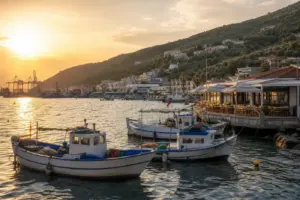 Gemlik: A Day Trip for Olives, Harbors and Waterfront Dining
Main image: AI-generated illustration. It may not show the place exactly as it looks.
Browse more: All Day Trips
FAQ: Iznik
Is Iznik a realistic day trip from Istanbul?
Yes, but barely. A full day trip is possible—you will spend 4 hours driving (round trip) and have about 4–5 hours in town. This allows time for the walls and one museum, plus lunch. Overnight is much better and is strongly recommended if your schedule permits.
What is Iznik most famous for?
Iznik is famous for two things: Ottoman-era pottery and tiles, and its place in Christian history as the site of the First Ecumenical Council in 325 AD. The tiles—characterized by cobalt blues, turquoises and intricate patterns—decorated Ottoman palaces and mosques. The Council of Nicaea shaped Christian doctrine.
Can I swim in Lake Iznik?
Yes, locals swim in the lake, especially in summer. The water is fresh and relatively clean. There are no formal beaches with facilities; swimming is informal and unsupervised. Strong swimmers only; currents and water quality are not monitored as they would be at a developed beach.
Is Iznik worth the drive from Istanbul?
Yes, if you have a serious interest in Ottoman art, pottery, or early Christian history. If you are simply looking for scenic countryside or a casual outing, other destinations closer to Istanbul (Belgrad Forest, Emirgan Park) are easier to reach. Iznik rewards focused attention.
Do I need a guide in Iznik?
Not essential, but highly recommended. The town is safe and walkable on your own, but its significance—the walls, the monuments, the history—is not immediately obvious. A guide with knowledge of Byzantine and Ottoman architecture transforms a pleasant walk into a meaningful visit. Budget 2–3 hours and ask your hotel to arrange one in advance.
How do I get from Istanbul to Iznik?
By car (most direct, 2–2.5 hours), by train and taxi combination (2.5 hours total, cheapest), or by long-distance bus (3–4 hours). No direct public transit exists. A rental car offers the most flexibility and allows leisurely exploration of the lakeshore.
Can I combine Iznik with other destinations?
Yes. Bursa is 80 kilometres south and makes a good pair destination if you have 2 days. The train-taxi route can be extended toward Bursa. A long day (12 hours) can include both, but you will rush both sites.
Are the museums worth visiting?
The Nilüfer Hatun Imarete, with its collection of Iznik pottery, is absolutely worth an hour of your time—it shows why the ceramics were prized. The Archaeological Museum is smaller and more specialized; worth 45 minutes if you have the time, but the walls and lakeshore are the real draw.
Istanbul Vibes is a one-person project. A coffee keeps it going

Take this guide with you
Get a free PDF of this guide to print or read offline: key facts, tips and a map link on a few clean pages.
Report an issue on this page
How we research and update our guides
About this guide: AI assistance and accuracy
This guide is created with the help of AI and is based on official sources where available. Mistakes can still happen. Opening hours, prices, rules and other details are given to the best of our knowledge as of the date shown and can change without notice. It offers general recommendations only, not professional, legal or travel advice. Please confirm important details with the official source before you travel; you are responsible for your own plans and decisions.
* Affiliate link: as an Amazon Associate we earn from qualifying purchases at no extra cost to you.
