
Information only. This page is general information, not financial, investment, tax or legal advice and not a recommendation to use any bank, service or product. Rules, fees and availability change. The order of a list is not a ranking. Investments can lose value. For your own situation ask a licensed adviser or the provider.
Whether you arrive for a few days or move to stay, understanding how Istanbulites pay will save you friction and keep your money secure. This guide covers what payment methods work where, how to get cash safely, and what common assumptions about paying in Istanbul turn out to be wrong.
The article explains Visa and Mastercard acceptance across the city, why cash still matters, how ATMs function, currency exchange basics, and how to open a bank account if you plan to stay longer. It also covers payment restrictions that may apply depending on your home country, and how to handle tipping and small transactions.
At a Glance
| # | Place | Best for | Good to know |
|---|---|---|---|
| 1 | Cards: Visa and Mastercard in Istanbul | Most widely accepted | Citywide. Always keep cash as backup; not every small vendor or taxi accepts cards. |
| 2 | ATMs: Finding and using cash machines | The safest way to get Turkish lira | Throughout the city. Major banks: Ziraat Bankası, İş Bankası, VakıfBank. Withdraw during bank hours (typically 9am–5pm weekdays) to avoid timeout issues. |
| 3 | Cash: When and where you need Turkish lira | Essential for daily life | Bazaars, street food stalls, informal taxis, neighbourhood shops. Withdraw from ATMs as needed rather than bringing large amounts. |
| 4 | Payment cards from outside Turkey | Whether your home bank card works | Check with your home bank before leaving. Confirm your card network (Visa, Mastercard or Maestro), PIN format (4 digits), and fee structure. |
| 5 | Opening a Turkish bank account as a foreigner | For residents or long-term visitors | Major banks with foreign services: Ziraat Bank, İş Bankası (İşbank), Garanti BBVA, VakıfBank, Akbank. Bring your passport, a local address and Turkish tax number (if you have one). |
| 6 | Money transfers and international payments | Sending and receiving money across borders | Contact your Turkish bank or home bank for current rates, fees and processing times. International SWIFT transfers typically take several working days. |
| 7 | Currency exchange and döviz offices | Exchanging foreign cash or getting lira | Eminönü, Taksim, Sultanahmet have döviz offices. Use ATMs for best rates. All currency withdrawn from ATMs is Turkish lira. |
| 8 | Digital wallets and local payment apps | Mobile and contactless alternatives | Citywide card machines generally accept physical Visa and Mastercard. Digital wallet support is limited and unpredictable. |
How We Chose
This overview lists eight payment-related topics that matter most to visitors and people moving to Istanbul. Each entry describes what to expect, where to start, and what to verify before you go. The list is not ranked and is not a recommendation of any bank or service. Selection is based on:
- Core methods visitors and newcomers actually use
- Practical questions they commonly ask
- Official information from banks and government regulators
- What varies significantly between locations in Istanbul (airports, metro, bazaars, neighbourhoods)
1. Cards: Visa and Mastercard in Istanbul – Most widely accepted
Visa and Mastercard are widely accepted across Istanbul, with contactless payments being the standard in most urban areas. Restaurants, hotels, supermarkets, museums and most shops in tourist districts take cards without issue. Smaller cafes, local eateries, street vendors selling simit or kestane, and many souvenir shops often prefer or exclusively accept cash. American Express is less common. Contactless works in most payment terminals, though machines occasionally fail unexpectedly.
Good to know: Citywide. Always keep cash as backup; not every small vendor or taxi accepts cards.
Tip: Pin-free contactless payments are now common at higher limits. Check with your home bank whether your specific card works in Turkey and what international fees apply.
2. ATMs: Finding and using cash machines – The safest way to get Turkish lira
ATMs are easy to find throughout Istanbul, including at airports, along shopping streets, and near metro stations. You'll find ATMs in Turkey at the airport, near bank branches and also in free-standing booths close to major attractions and other tourist areas. It's not uncommon for ATMs in free-standing booths to have been tampered with, so it's often safer to use ATMs next to bank branches. Turkish ATMs accept chip-and-pin cards and cards that only have a magnetic stripe on the back. However, they only accept four-digit PINs.
Good to know: Throughout the city. Major banks: Ziraat Bankası, İş Bankası, VakıfBank. Withdraw during bank hours (typically 9am–5pm weekdays) to avoid timeout issues.
Tip: When the ATM offers to convert to your home currency (Dynamic Currency Conversion), decline and withdraw in Turkish lira instead for a better rate.
3. Cash: When and where you need Turkish lira – Essential for daily life
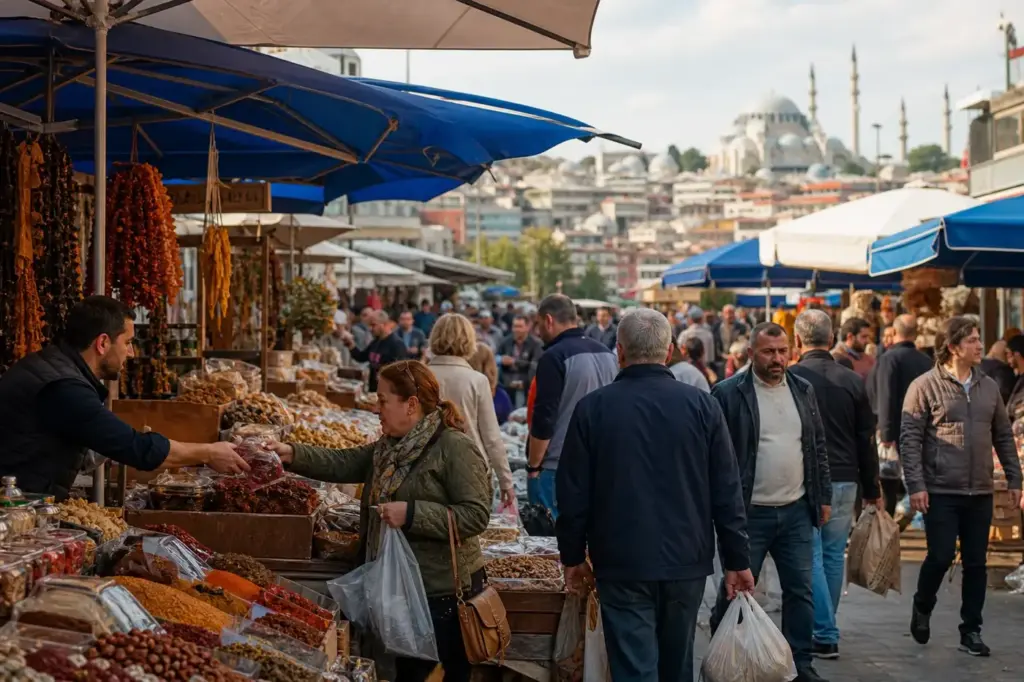
Istanbul is largely card-friendly, but cash remains essential for navigating the city's authentic side. While you can tap your card in most shops and restaurants, you will need Turkish Lira for taxis, street vendors, and small neighbourhood eateries. The places that still want lira cash are taxis off the meter, street vendors, tiny family lokantas, small bazaar stalls, public toilets and anyone you want to tip. Tipping is common. Most tips in Turkey are given in cash. Carry small lira notes.
Good to know: Bazaars, street food stalls, informal taxis, neighbourhood shops. Withdraw from ATMs as needed rather than bringing large amounts.
Tip: Keep small denomination notes separate from larger ones so you can tip and pay for street snacks without repeatedly reaching for your ATM card.
4. Payment cards from outside Turkey – Whether your home bank card works
Most international debit and credit cards work smoothly in Turkey, especially in major cities, airports, hotels, restaurants, and shopping areas. ATMs across the country are connected to international banking networks, so withdrawing money is usually straightforward for foreign visitors. Most Turkish ATMs accept Visa, Mastercard, and Maestro, which are the most widely supported international systems. American Express may be accepted in some places, but not everywhere, so carrying a Visa or Mastercard is recommended. Rules about which cards work and what fees apply differ by your home country and your specific bank.
Good to know: Check with your home bank before leaving. Confirm your card network (Visa, Mastercard or Maestro), PIN format (4 digits), and fee structure.
Tip: Tell your home bank you're travelling in Turkey so they don't block your card as a security measure. Some banks allow you to set travel dates in their app.
5. Opening a Turkish bank account as a foreigner – For residents or long-term visitors
Foreigners are welcome to open bank accounts in Turkey. The process is straightforward once you have the correct documentation and choose a bank that welcomes foreign clients. Many Turkish banks now offer English-language support and online banking, and several allow accounts in multiple currencies. The four largest banks in Turkey maintain English-language helplines for foreign customers, making telephone banking a genuinely practical alternative for expats. Requirements vary by bank and by your nationality and residence status.
Good to know: Major banks with foreign services: Ziraat Bank, İş Bankası (İşbank), Garanti BBVA, VakıfBank, Akbank. Bring your passport, a local address and Turkish tax number (if you have one).
Tip: Ask for an English-speaking adviser when you visit a branch. Contracts and account documents are typically in Turkish, so clarify fees and terms in English before signing.
6. Money transfers and international payments – Sending and receiving money across borders
A number of Turkish banks — among them Ziraat Bankası, İş Bankası, and TEB (Turkish Economy Bank) — are well equipped to handle international payments, offering foreign currency transfer services and dedicated global banking solutions. Yapı Kredi additionally provides Western Union money transfer services through all of its branch locations. Payment restrictions may apply depending on your home country and residence status. Rules and available methods change frequently; check directly with the banks and your home bank before you need to transfer money.
Good to know: Contact your Turkish bank or home bank for current rates, fees and processing times. International SWIFT transfers typically take several working days.
Tip: Transfer costs and speed vary widely. Compare options: direct bank transfer, Western Union, specialist money transfer services. Fees eat into the amount received, so ask for the total cost upfront.
7. Currency exchange and döviz offices – Exchanging foreign cash or getting lira
The safest way to withdraw cash in Turkey is to use ATMs attached to major bank branches, withdraw in Turkish lira (TRY) and decline dynamic currency conversion when possible. ATMs are usually the best option for fair exchange rates. Exchange offices can be useful for cash exchange but rates vary. Avoid exchanging cash at hotels, souvenir shops or tourist-facing vendors, as rates are typically poor. Foreign cash (euros, dollars) cannot be used directly to pay for goods or services in Istanbul.
Good to know: Eminönü, Taksim, Sultanahmet have döviz offices. Use ATMs for best rates. All currency withdrawn from ATMs is Turkish lira.
Tip: Exchange rates and fees change daily and vary by location. Bring a small amount of your home currency as an emergency backup, but do not rely on exchanging it at tourist spots.
8. Digital wallets and local payment apps – Mobile and contactless alternatives
International digital services like Google Pay, Apple Pay, and PayPal are not available in Turkey. However, there are some Turkish alternatives like BKM Express and Paycell. Digital wallets such as Apple Pay and Google Wallet function in some locations, but adoption is still inconsistent, so they should not be your only payment method. Contact payment networks directly to confirm whether a specific service is available to visitors from your country, as access may be restricted.
Good to know: Citywide card machines generally accept physical Visa and Mastercard. Digital wallet support is limited and unpredictable.
Tip: Do not assume international digital wallets work in Istanbul. Carry a physical card and cash as your primary backup to any payment method.
Good to know
- Contactless is genuinely everywhere, even in modest neighbourhoods. Some small spots add a quiet surcharge for card or claim the machine is "broken" when you try to pay a small bill, which is your cue to have cash ready.
- Some Turkish ATMs are known to timeout before the transaction is complete. Essentially, the connection drops before the ATM receives your bank's instructions to dispense money. Because of this issue, it's best to make withdrawals during bank opening hours.
- Carry a small amount of cash on you for the day, pay anything bigger by card, and refill cash from an ATM when you run low. That way you are never stuck, and you are never walking around with a worrying amount of cash either.
- Large purchases at Istanbul's famous bazaars (Kapalı Çarşı, Spice Bazaar) often accept cards if you bargain them down, but smaller stallholders usually work in cash only. Have both methods ready when shopping.
- While you can pay for public transport with a contactless credit card, using a cash-topped Istanbulkart is still the cheapest way to travel.
- Some taxis accept card, but many prefer cash. Always ask before you start the ride.
Explore Nearby Paying and cards
Sights near Paying and cards
 Istiklal Street · typical visit: 1–2 hours12 min on foot from Tünel metro, Open 24 hours
Main image: AI-generated illustration. It may not show the place exactly as it looks.
Related guides
 Spice Bazaar and Grand Bazaar Route: Two Markets, Six Centuries
Main image: AI-generated illustration. It may not show the place exactly as it looks.
 Nisantasi and Sisli Walk: Istanbul’s Urban Elite Quarter
Main image: AI-generated illustration. It may not show the place exactly as it looks.
 Istanbul Markets Morning Tour: Spice Bazaar and Grand Bazaar Itinerary
Main image: AI-generated illustration. It may not show the place exactly as it looks.
 HSBC Turkey: Banking in Istanbul for International Visitors
Main image: AI-generated illustration. It may not show the place exactly as it looks.
 How to Find a Pharmacy in Istanbul: Signs, Hours and Night Pharmacies
Main image: AI-generated illustration. It may not show the place exactly as it looks.
Browse more: All Finance Guides · All Other
FAQ
Do I need to carry a lot of cash in Istanbul?
No. The practical approach is to carry a small amount for daily street food, small vendors, tipping and emergencies, withdraw cash from ATMs as needed, and pay for larger transactions by card. This keeps you safe and flexible.
Which card networks work best in Istanbul?
Visa and Mastercard are the most widely supported. American Express may work in some places but not everywhere, so Visa or Mastercard is recommended. Check with your home bank that your specific card is enabled for international use and what fees apply.
Can I use my debit card from home to withdraw Turkish lira?
Yes, most international debit and credit cards work in Istanbul. Visa and Mastercard are widely accepted. Make sure your PIN is four digits and your home bank has activated your card for use in Turkey. Fees depend on your home bank's policy.
Should I exchange money at the airport or use an ATM?
ATMs are usually the best option for fair exchange rates. Exchange offices can be useful for cash exchange but rates vary. Avoid hotel and tourist shop exchanges—rates are poor. Use an ATM at the airport or withdraw from an ATM in the city centre.
What happens if I pay for a small amount by card?
Contactless card payment works for small amounts at most modern merchants. However, some small spots add a quiet surcharge for card or claim the machine is "broken" when you try to pay a small bill, which is your cue to have cash ready. Street vendors and informal taxis usually accept cash only.
Is it safe to use ATMs in Istanbul?
You'll find ATMs at the airport, near bank branches and also in free-standing booths close to major attractions and other tourist areas. It's not uncommon for ATMs in free-standing booths to have been tampered with, so it's often safer to use ATMs next to bank branches. Use ATMs during daylight and near established banks.
Can I open a Turkish bank account if I'm not a resident?
Foreigners are welcome to open bank accounts in Turkey. Requirements differ by bank and your nationality. For visitors staying short-term, a bank account usually isn't necessary. For longer stays, contact banks directly about documents needed (passport, address, tax number).
How do I pay for public transport—cash or card?
While you can pay for public transport with a contactless credit card, using a cash-topped Istanbulkart is still the cheapest way to travel. Istanbulkart is a reloadable transit card available at metro stations and airport machines. Buy one if you'll use public transport more than once.
Before you decide anything
- This page is information. It is not financial, investment, tax or legal advice, and not a recommendation to use or buy any product, or to choose any bank, service or country.
- Fees, rates, limits and rules change often and depend on your nationality, residence and the product. Ask the provider for its current written conditions.
- Investments can lose value, and you can lose money. Past results say nothing about the future.
- Check that a provider is licensed in the official register of the BDDK, SPK, TCMB, SEDDK.
- Payment limits can affect which services work for visitors from your country. Check with your own bank before you travel or send money.

Take this guide with you
Get a free PDF of this guide to print or read offline: key facts, tips and a map link on a few clean pages.
Report an issue on this page
How we research and update our guides
About this page: AI assistance and accuracy
This page was prepared with the help of AI and checked by automatic rules. It is general information only, not financial, investment, tax or legal advice and not a recommendation to use any bank, service or product. Mistakes can still happen, and fees, rules and availability change without notice. Please check important details with the provider, the competent regulator and a licensed adviser before you decide anything.
