

Polonezköy, meaning “Polish village” in Turkish and known historically as Adampol, sits about 30 km north of central Istanbul on the city’s Asian side. Polonezköy Istanbul day trip takes you to a place where 19th-century Polish history and nature converge—a rare destination where you can walk forest trails, taste village breakfast with local herbs, and visit a Polish church surrounded by pine trees.
Founded in 1842 as a refuge for Polish exiles after the failed November Uprising, the village retains its distinct character. While the population is now only around 346 residents (with fewer than 50 of Polish descent), the places and stories they left behind shape everything you see: wooden houses, Orthodox church bells, cemetery graves inscribed in Polish, and farmland where descendants still grow plums and cherries.
Current access notice: As of October 2026: Polonezköy village center is free to access and walk around. If you drive into or walk within the marked Polonezköy Nature Park boundaries, a small entrance fee is charged. On foot, this is typically modest; for vehicles, it is slightly higher. Fee amounts and seasonal variations are set by the Ministry of Environment and Forests. Check locally for current rates before visiting.
Quick Facts
| Built / opened | 1842 |
|---|---|
| Address | Beykoz, Istanbul, Turkey Google MapsApple MapsYandex Maps |
| Admission | Free to walk around village; small fee for nature park access |
| Best time to visit | Spring (April–May) brings blossoms in village gardens and cooler weather for walking. Early autumn (September–October) offers warm days, clear light, and fewer insects than summer. Summer (June–August) can be hot and insect-ridden, though trails remain shaded. Winter (November–February) is quieter and cooler, but trails may be muddy or slippery after rain. Weekdays are far less crowded than weekends; mid-morning (9-11 am) is ideal for visiting before larger groups arrive. Late afternoon light through the forest is beautiful for photography. |
What Is (and Isn't) Part of a Visit to Polonezköy?
| Part | Status | Notes |
|---|---|---|
| Polonezköy village and surrounding forest | Included in the standard ticket | Free to walk through the village center and streets; part of daily experience. |
| Polonezköy Nature Park trails | Included in the standard ticket | Walking trails are included with nature park entrance fee. Multiple trails of varying length (2-5 km) are well-marked but unmaintained in places. |
| Church of Our Lady of Częstochowa | Included in the standard ticket | Free to enter and visit; a modest white church open to respectful visitors during daylight hours. |
| Polish Cemetery | Included in the standard ticket | Free access; located adjacent to the church. Respectful walking and photography allowed. |
| Zosia Teyze Memorial House | Separate ticket or institution | Small museum with modest entrance fee. Hours vary; inquire locally or call ahead. Donation-based or small fixed fee typical. |
| Restaurant meals and breakfast | Separate ticket or institution | Meals are not included in village access; restaurants charge separately for food and drinks. Breakfast is the main attraction here and reasonably priced. |
| Horseback riding and cycling activities | Separate ticket or institution | Some local operators offer horseback rides and bike rentals; these are paid separately and must be arranged in advance or on-site. |
| Riva Beach (Bosphorus waterfront nearby) | Outside / not part of it | About 25-30 minutes drive from Polonezköy; a separate day-trip destination often combined with Polonezköy in multi-stop tours. |
How to Get from Istanbul to Polonezköy
| Option | Duration | Price | Notes |
|---|---|---|---|
| Private car or taxi from central Istanbul | 30 minutes to 1 hour (depending on traffic and starting point) | ₺₺ | Most flexible and fastest option. From Taksim or Sultanahmet, expect 50-70 km of driving. Return journey may face heavier traffic if leaving late afternoon. Ask your hotel to arrange or use a ride-app. Cost varies by distance negotiated or metered fare. |
| Bus from Cumhuriyet Village (nearby transit hub) | 20-30 minutes from Cumhuriyet to Polonezköy; reaching Cumhuriyet from central Istanbul takes 45-60 minutes | ₺ | Public buses 137 and 138 serve Cumhuriyet Village, from which local minibuses (dolmuş) connect to Polonezköy. Routes and schedules change; check official Istanbul public transport (IETT) or Cumhuriyet Village transit info before travel. This option is cheaper but requires more planning and time. Last return buses typically run by early evening. |
| Organized day tour from Istanbul | Full day (7-8 hours including hotel pickup and return) | ₺₺₺ | Tour operators offer guided day trips from Istanbul hotels, often combining Polonezköy with nearby Riva Beach, Beykoz Grove, or Yoros Castle. Pickup and return transportation included. Tours typically depart early morning and return by early evening. Booking in advance is standard. |
₺ budget · ₺₺ moderate · ₺₺₺ upscale · ₺₺₺₺ splurge. Price levels are estimates compared with typical prices for visitors.
Why Visit Polonezköy?
This is a day trip for those who want fresh air and a change of atmosphere without leaving the region—close enough to visit before lunch, distant enough to feel you’ve gone elsewhere. The main draw is a morning of nature: walking shaded trails where you might see roe deer or wild boar, sitting under dappled leaves with birdsong as soundtrack. The village itself is small; you’ll explore it on foot in under an hour.
The secondary attraction is cultural: the Polish Church of Our Lady of Częstochowa, a modest white-painted building with a simple interior, stands near the village center. The Polish cemetery nearby holds graves of settlers and their descendants. A local history museum (the Zosia Teyze Memorial House) documents village life. For many visitors, breakfast or lunch at one of the village restaurants—some serving Polish dishes like pierogi—rounds out the experience of a place that feels like stepping into another country, yet remains unmistakably Istanbul’s.
Highlights of Polonezköy
Church of Our Lady of Częstochowa
A simple white-painted Orthodox church built by Polish settlers in the 19th century, standing near the village square. Inside, the interior is spare and quiet, with religious icons and a peaceful atmosphere. The church remains active and is used by both local residents and visitors. It is the visual anchor of Polish presence in the village and the single most photographed landmark here.
Tip: Visit in early morning when light filters through the forest trees around the church, or late afternoon when the stone is warm and shadows are long. The cemetery behind and beside the church holds graves with bilingual Polish and Turkish inscriptions dating back generations.
Polonezköy Nature Park and Forest Trails
The village sits within a 3,004-hectare (7,420-acre) nature park declared in 1994. Multiple walking trails (yürüyüş parkuru) thread through pine and mixed forest, with distances from 2 to 5 km. Wildlife includes roe deer, red deer, and wild boar. The trails are well-marked but not heavily maintained; footing is uneven on some sections. The park offers picnic tables and rest areas at intervals.
Tip: Start your walk early morning when animals are more active. Bring water and sturdy shoes; the trails can be muddy after rain. Insect repellent helps in summer months. Allow at least 1.5 to 2 hours for a satisfying walk.
Polish Cemetery
Adjacent to the church, this small cemetery holds graves of Polish founders and residents dating to the 1840s. Many stones bear names in Polish script and dates that tell the story of families who settled and lived out their lives here. Some graves belong to notable figures; others are simple markers for ordinary villagers. The cemetery is overgrown with grass and wild daisies, giving it a peaceful, undisturbed air.
Tip: Respectfully walk among the graves in the early morning when the light is soft. Bring a notebook if you enjoy genealogy; many graves are readable. Take photos only if you are documenting family history.
Zosia Teyze Memorial House
A restored Ottoman-era wooden house that now serves as a small museum of local history and village memorabilia. 'Zosia Teyze' (Aunt Zosia) refers to a long-time resident. The house displays photographs, household objects, and documents illustrating daily life in the village from the 19th century onward. It is modest in scope but offers genuine insight into how settlers lived.
Tip: Call ahead or ask at a village restaurant for opening times; the house is not always staffed. A guided visit is often worth asking for, as caretakers can explain objects and family connections.
Village Square and Restaurants
The informal central meeting point where a handful of restaurants, small shops, and the church frame a modest plaza shaded by trees. This is where village life happens: locals chat, visitors gather, and food is prepared. Several restaurants serve traditional Turkish breakfast (menemen, cheese, olives, yogurt), while a few offer Polish specialties like pierogi and gołąbki (cabbage rolls). Many also serve grilled meat, fresh salads, and tea.
Tip: Breakfast is the best meal here; arrive by 10 am to enjoy it without crowds. Most restaurants also serve lunch and early dinner. Expect modest prices and generous portions. Some places have hammocks or cushions in gardens where you can rest after eating.
Adam Mickiewicz Street
Tip: Walk this street to get a sense of residential village architecture—wooden houses set among trees. It is more atmospheric in late afternoon when light slants through the forest canopy.
Atmosphere
Polonezköy feels removed from Istanbul despite being nearby. The dominant sensory experience is forest: tall pines, dappled shade, the smell of earth and needles, and bird calls throughout the day. In spring, fruit trees (apple, cherry, plum) blossom in gardens; in summer, wildflowers line the roadsides. The air is noticeably cooler and fresher than the city.
The village itself is quiet and sparse. You will see local residents going about daily routines—a woman tending a garden, a man on a tractor—but tourism is not intrusive. Restaurants fill with visitors on weekends, especially families and couples from Istanbul seeking breakfast and a walk. On weekdays, the village is even more peaceful. There is no nightlife, no loud activity; the prevailing mood is contemplative and slow.
Architecturally, you notice a mix: older wooden houses with traditional Turkish features, some restored and some weathered; alongside them, modern concrete residences built by families who stayed or returned. The church’s whitewashed walls stand out against the green. Street signs appear in Turkish and Polish, a small reminder of the village’s dual heritage. The overall effect is of stepping into a different era and place, yet still within earshot of a major city.
History of Polonezköy
In 1841, Michał Czajkowski, an envoy of the Polish exile government led by Prince Adam Jerzy Czartoryski, settled in Istanbul to establish an “Eastern Agency” representing Polish interests. The following year, 1842, Czajkowski negotiated with Ottoman authorities to grant Poles a forest area north of Istanbul. The land was purchased from the Lazarist missionary order. Prince Czartoryski envisioned a self-sufficient farming community where Polish exiles could maintain their identity and livelihood away from Russian reach.
The village was named Adampol (literally “Adam’s village”) in honor of Prince Adam Jerzy Czartoryski, though some sources suggest the name also honored the poet Adam Mickiewicz, who arrived in Istanbul in 1855 as an envoy and died there that year. At first, only about a dozen settlers arrived. By the mid-19th century, the population grew to around 220—never large, but stable. Settlers engaged in agriculture, cattle raising, and forestry. They built the Church of Our Lady of Częstochowa (modeled on the sacred site in Poland) to serve their spiritual needs.
Over decades, the village absorbed waves of migrants: those fleeing the 1848 revolutions across Europe, refugees from the Crimean War (1853), and runaways from Siberian captivity and Circassian conflicts. This diversity meant that over time, the settlement included not only Poles but also people of other nationalities, though Polish culture remained dominant.
The 20th century brought decline. World Wars, changing borders, and economic shifts led many descendants to emigrate, either back to Poland or to other countries. By the late 20th century, the Polish population had shrunk to a handful of families. In 1994, recognizing the area’s ecological and historical value, Turkish authorities declared Polonezköy and its surroundings a nature park, the first and largest in Istanbul Province. This decision helped preserve the forest and the village, though as a heritage site rather than a thriving Polish community.
Today, Polonezköy is a living museum of Polish-Ottoman relations and a refuge for Istanbul residents seeking nature. The village maintains a small museum, annual festivals, and the church continues to function. The cemetery and restored houses tell the story of families who chose exile and built a life in a foreign land. While the original purpose—a Polish refuge—has faded with emigration, the place itself has been reborn as a day-trip destination and a symbol of historic Turkish hospitality toward foreign exiles.
Tickets and Booking for Polonezköy
| Ticket | Price | Includes |
|---|---|---|
| Polonezköy Nature Park entrance (on foot) | ₺ | Access to marked walking trails, rest areas, and picnic facilities within the 3,004-hectare nature park. |
| Polonezköy Nature Park entrance (vehicle) | ₺₺ | Parking and access to the nature park for a car or small group vehicle; allows you to drive part-way and walk selected trails. |
₺ budget · ₺₺ moderate · ₺₺₺ upscale · ₺₺₺₺ splurge. Price levels are estimates compared with typical prices for visitors.
Entry to Polonezköy village center is free; you pay only if you drive or walk into the marked nature park area. The park is managed by Turkey’s Ministry of Environment and Forests Directorate-General of Nature Protection and National Parks. Entrance fees are collected at the gate; there is no advance online booking for park access.
To visit the Zosia Teyze Memorial House (small history museum), inquire at village restaurants or local shops for current hours and contact details, as opening times are irregular. There is typically a modest entry fee or donation requested.
For organized tours, book through Istanbul tour operators 1-3 days in advance. No specific visa or ID is required beyond your normal Istanbul entry documentation. See the official website of the Ministry of Environment and Forests for current park regulations and exact fee rates, which may vary seasonally.
Suggested itineraries Polonezköy
4 hours on site (half-day trip)
Arrive mid-morning. Visit the Church of Our Lady of Częstochowa and Polish Cemetery (30 minutes). Enjoy village breakfast at a restaurant (1-1.5 hours). Walk one of the shorter nature trails (1-1.5 hours). Return to Istanbul by mid-afternoon. This covers the main highlights without rushing.
6 hours on site (full morning/afternoon day trip)
Arrive early morning (around 9 am). Breakfast at a restaurant (1 hour). Walk a longer nature trail (2-2.5 hours). Visit the Polish Cemetery and church again if time allows. Lunch or tea at another restaurant (1 hour). Optional: visit the Zosia Teyze Memorial House if open (30 minutes). Depart by 4 pm to return to Istanbul by evening.
Full day (8-10 hours with extended itinerary)
Depart Istanbul early (7-8 am). Arrive Polonezköy by 9 am. Breakfast (1 hour). Walk a longer trail (2.5-3 hours). Lunch (1-1.5 hours). Visit church, cemetery, and memorial house (1 hour). Optional activity: horseback ride or bike tour if arranged in advance (1.5-2 hours). Dinner at a restaurant (1.5 hours). Depart around 6-7 pm, arriving Istanbul by 8-9 pm. Consider adding nearby Riva Beach or Beykoz Grove if time allows.
How to Get to Polonezköy
By private car or taxi (recommended): From central Istanbul (Taksim, Sultanahmet), take the E5 highway (Trans-European Motorway) northward toward the second Bosphorus Bridge (Fatih Sultan Mehmet Bridge). After crossing the bridge onto Istanbul’s Asian side, follow signs toward Beykoz district. Polonezköy is signposted from the main road; the final approach is via forest roads. Journey time is 50 minutes to 1.5 hours depending on traffic and starting point. Return can take longer during peak afternoon hours.
By public transport: Take a metro or bus to Kavacık station (Asian side, near the second bridge). From there, catch a taxi (20-minute ride) or local minibus (dolmuş) toward Polonezköy. Alternatively, reach Cumhuriyet Village by buses 137 or 138 from central Istanbul, then connect via local minibus to Polonezköy. This route is slower and requires navigating multiple transfers; check current schedules before departing.
By organized tour: Many Istanbul hotels arrange pick-up for day tours. Tours depart your hotel in the morning and include transportation both ways.
Parking: Village and nature park have parking areas; free for visitors entering on foot, modest fee for cars driving within the park boundary.
Accessibility
Paved paths connect the village center and church; these are accessible for wheelchairs and mobility aids. Most restaurant seating is outdoors in garden areas with uneven ground. Nature park trails are unpaved, hilly, and uneven—not suitable for wheelchairs or those with limited mobility. Benches and rest areas are scattered along trails. The Zosia Teyze Memorial House is a small restored wooden structure with steps at the entry; accessibility here is limited. The church itself has steps but is otherwise accessible inside. Restrooms in restaurants are typically squat-style Turkish toilets or standard Western ones; inquire when arriving.
Food Nearby
Polonezköy has several restaurants and cafes clustered around the village square. Most serve traditional Turkish breakfast (menemen, cheeses, olives, fresh bread), alongside Turkish mains like grilled meat, kebab, and salads. A few offer Polish specialties including pierogi (filled dumplings), gołąbki (cabbage rolls with meat), and bigos (stew). Restaurants often have garden seating with hammocks or cushioned benches. Organic local produce and homemade jams are sometimes available. Expect moderate prices and generous portions. No chain restaurants or fast food; all are locally owned establishments. Tea, Turkish coffee, and fresh fruit juices are standard. Alcoholic beverages are available but not heavily featured.
What to Bring
Comfortable walking shoes with good grip (trails can be muddy or root-strewn). Light layers; the forest is cooler than the city even on warm days. Sun hat and sunscreen, especially if trails are shaded unevenly. Water bottle (refill at restaurants). Insect repellent in summer and early autumn. Camera or phone for photos. A small backpack or crossbody bag. In winter, a light jacket. Bags are not restricted; carry what you need for your walk and meal.
Best Views and Photo Spots of Polonezköy
Church of Our Lady of Częstochowa frontage
The white-painted church against dark forest and sky. The church's simple cross and bell tower stand out sharply. Foreground includes wildflowers (daisies, grasses) and the cemetery fence. The composition feels remote and peaceful. Historically, this is the single most iconic image of the village.
Best time: Early morning with soft light, or late afternoon when side-light brings out the white-wash and casts long shadows. Avoid midday sun which flattens the scene.
Forest trail looking upward
Tall pine trees creating a natural cathedral of shade, canopy filtered light, and dappled shadows on the path ahead. The perspective draws the eye upward and inward. The mood is contemplative and atmospheric. This perspective conveys what many visitors come for: immersion in forest.
Best time: Mid-morning or late afternoon when light angles through the canopy. Avoid midday when shadows are harsh. A light haze on cool mornings adds atmosphere.
Polish Cemetery among wildflowers
Weathered gravestones with bilingual Polish and Turkish inscriptions, framed by wild grasses and daisies. The composition shows history preserved in nature. Names and dates visible on stones tell stories. The overgrown, unmaintained state of the cemetery is part of its pathos and charm.
Best time: Late afternoon light softens the stone and illuminates wildflowers. Spring (May–June) when daisies bloom is most visually striking. Overcast days reduce harsh shadows on carved inscriptions.
Village square shaded by tree canopy
The informal plaza where restaurants, small shops, and the church frame a gathering space. Trees create dappled shade. Benches, small tables, and details of village life (a woman gardening, locals chatting, visitors resting) fill the scene. This conveys the quiet daily rhythm of the place.
Best time: Mid-morning when visitors have arrived but before peak crowds (weekends around 11 am–1 pm). A light overcast morning has ideal soft light.
Wooden house details with window frame and vines
Close-up of traditional Ottoman-era wooden architecture: a weathered doorway, carved wooden window frame, vines or flowers climbing the facade. The texture and colors (weathered wood, white-washed plaster, green vines) capture the village's heritage and age. These details are scattered throughout residential streets.
Best time: Morning light to show texture of old wood and plaster. Avoid direct midday sun which can wash out details.
Photography Rules
Photography is permitted throughout the village, cemetery, and trails. Respectful behavior in the cemetery is expected—do not walk on graves or take disruptive close-ups of individual headstones without purpose. Flash photography inside the church is not permitted; ask permission before photographing any active worship. Tripods and drones are not restricted by law but are discouraged in the nature park to preserve the quiet atmosphere. Professional or commercial photography may require permission from local authorities or the Ministry of Environment and Forests. The best light for photography is early morning or late afternoon when the forest is mist-tinged or golden.
Family Suitability
Polonezköy suits families with children aged 5 and up who enjoy short walks and nature. The village center is safe and walkable; no traffic hazards. The nature trails are suitable for elementary school-age children on shorter routes (1-2 km); longer hikes require older kids or very fit younger children. Stroller access: the village square and church are accessible with a stroller, but nature trails are unpaved and hilly, making strollers impractical. There are benches and quiet garden spaces where families can rest. Restaurant meals are generous and accommodate children (simple dishes like bread, cheese, grilled meat available). The cemetery is peaceful and historically interesting for curious kids; explain respectfully before visiting. Swimming is not available here, but Riva Beach (nearby) offers water activity as an extension.
Istanbul Vibes Tips
- Start early in the day, ideally arriving by 9-10 am. Breakfast is the meal to experience here, and restaurants are most relaxed and well-stocked before noon. The village also feels less crowded on weekday mornings.
- Walk the nature trails in the middle of the day rather than at dawn or dusk; this is when the light filtering through the forest is most visible and when wildlife sightings are less likely but the atmosphere is most vivid. Early morning and late afternoon are best for photography but involve mosquitoes in summer.
- Bring more water than you think you'll need. Restaurants and shops are concentrated in the village square; once on the trails, you are in forest with no vendors. Water bottles are heavier than expected for a 2-3 hour walk in shade or warmth.
- Do not confuse Polonezköy with Cumhuriyet Village (a separate modern town nearby served by buses 137 and 138). Cumhuriyet is a larger, ordinary residential area. Many visitors accidentally get off at Cumhuriyet and must travel further to reach Polonezköy's forest and heritage sites.
- The Zosia Teyze Memorial House operates on an irregular schedule. Ask at any restaurant or shop when you arrive whether it is open that day. If it is, visiting for 20-30 minutes adds context to the village's personal history; if it is closed, you miss little—the village and its cemetery already tell most of the story.
Explore Nearby Polonezköy
Sights near Polonezköy
 Belgrad Forestabout 23.8 km away · typical visit: 2–4 hours
Main image: AI-generated illustration. It may not show the place exactly as it looks.
Related guides
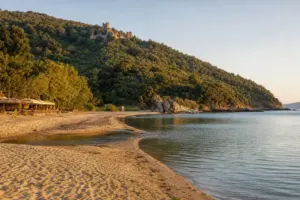 Riva: Beach, Castle Ruins and Black Sea Escape from Istanbul
Main image: AI-generated illustration. It may not show the place exactly as it looks.
 Anadolu Kavağı and Yoros Castle: Ferry, Fortress and Bosphorus Views
Main image: AI-generated illustration. It may not show the place exactly as it looks.
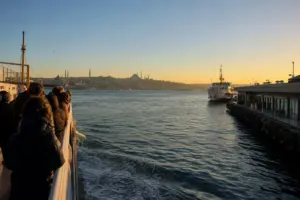 Day Trips Under 90 Minutes from Istanbul: Six Escapes by Ferry and Taxi
Main image: AI-generated illustration. It may not show the place exactly as it looks.
Browse more: All Day Trips · All Parks
FAQ: Polonezköy
Is Polonezköy free to visit?
The village center is free to walk around. If you enter the marked Polonezköy Nature Park boundaries (where the marked trails begin), there is a small entrance fee—modest for pedestrians, slightly higher for vehicles. The church and cemetery are free to visit. The small memorial museum (Zosia Teyze House) has a separate modest fee.
How far is Polonezköy from central Istanbul?
About 30 km (19 miles) from the historic center, on the city's Asian side. By car with normal traffic, it takes 50 minutes to 1.5 hours to reach it from Taksim or Sultanahmet. Public transport connections are slower.
Can I see the Polish Church without paying any fee?
Yes. The Church of Our Lady of Częstochowa is free to enter during daylight hours. Respectful behavior is expected—remove shoes if requested, do not photograph during active worship, and avoid touching religious objects.
Are the nature trails difficult to walk?
Most marked trails are moderate and suitable for people with normal fitness. Trails are unpaved, occasionally steep, and can be muddy or root-strewn. They are not suitable for wheelchairs or those with limited mobility. The shortest trails (around 2 km) take 1-1.5 hours; longer ones (5 km) take 2-3 hours.
Is there food available in the village?
Yes. Several restaurants clustered around the central square serve Turkish breakfast, grilled meat, and salads. A few offer Polish specialties like pierogi. Prices are reasonable and portions generous. No fast food chains or supermarkets; all are local establishments. Bring water, as restaurants may not have it freely available.
Is Polonezköy part of Istanbul's official tourist attractions?
It is not a major museum or monument like Topkapi Palace or Hagia Sophia, but it is recognized by Istanbul's tourism authorities as a cultural heritage site and nature destination. It appears in official Istanbul day-trip guides. The area is protected as a nature park since 1994.
Can I visit Polonezköy on a day trip without a car?
Yes, but it requires more planning. Take a bus to Cumhuriyet Village (buses 137 or 138), then catch a local minibus (dolmuş) to Polonezköy. Journey time is longer (2+ hours from central Istanbul). Alternatively, book an organized tour that includes transportation. Check schedules before departing, as public transport to remote villages is infrequent.
What is the best season to visit Polonezköy?
Spring (April–May) and early autumn (September–October) offer ideal weather and fewer insects. Summer is hot, humid, and mosquito-ridden, though trails remain shaded. Winter is quieter but can be muddy. Weekday visits are less crowded than weekends.
Istanbul Vibes is a one-person project. A coffee keeps it going

Take this guide with you
Get a free PDF of this guide to print or read offline: key facts, tips and a map link on a few clean pages.
Report an issue on this page
How we research and update our guides
About this guide: AI assistance and accuracy
This guide is created with the help of AI and is based on official sources where available. Mistakes can still happen. Opening hours, prices, rules and other details are given to the best of our knowledge as of the date shown and can change without notice. It offers general recommendations only, not professional, legal or travel advice. Please confirm important details with the official source before you travel; you are responsible for your own plans and decisions.
* Affiliate link: as an Amazon Associate we earn from qualifying purchases at no extra cost to you.
