
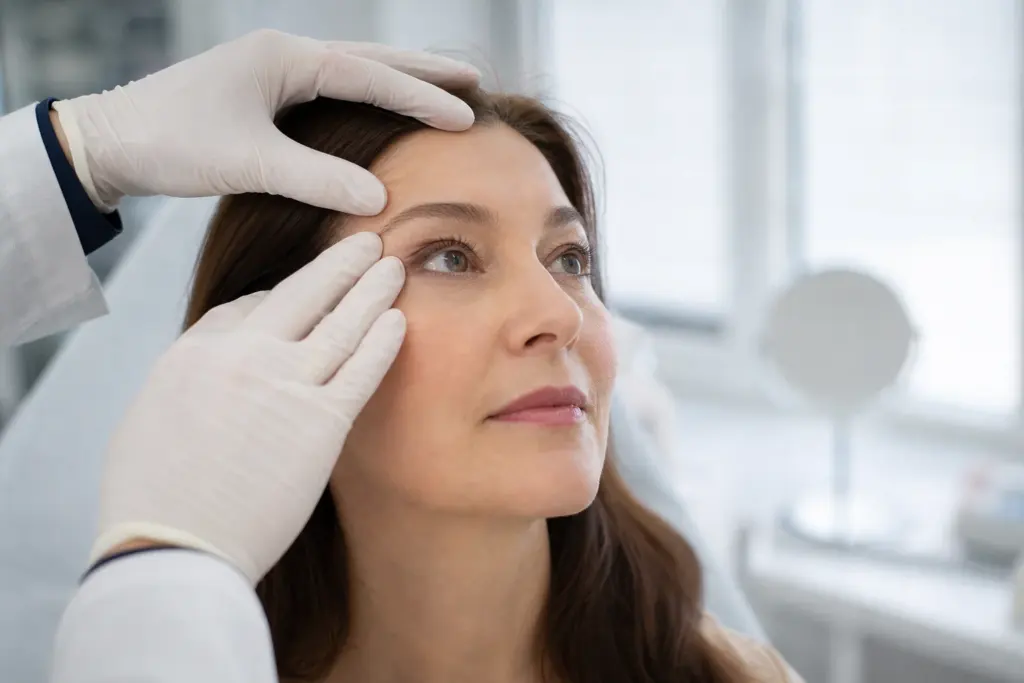
Information only. This article explains what a treatment is and how it is usually carried out. It is not medical advice, not an offer and not a recommendation to have any procedure. Whether it suits you can only be decided by a licensed doctor after an examination.
Blepharoplasty, or eyelid surgery, is a procedure that visitors sometimes consider in Istanbul as part of treatment abroad. This guide explains how the procedure works, what to expect around surgery, the realistic risks and recovery timeline, and questions to ask before deciding.
Many international patients consider blepharoplasty abroad because they weigh cost, timing and access to experienced surgeons. This article describes what the procedure involves, who is generally a candidate, typical preparation and recovery, and key considerations. A licensed doctor in the home country can be consulted before deciding, and the licence of any clinic and doctor can be checked with the Turkish Ministry of Health, which sets the rules for health services and for foreign patients. Quality, regulation and advertising rules differ by country and by provider.
Quick answer: Blepharoplasty removes excess eyelid skin and fat through small surgical incisions, usually hidden in the natural eyelid crease. The procedure typically takes 30–60 minutes under local anesthesia, is performed on an outpatient basis (same-day discharge), and involves 7–10 days of significant bruising and swelling, with full healing over 2–3 months.
At a Glance
| Total time | Procedure: 30–60 minutes. Same-day discharge. Full recovery: 8–12 weeks. Most people return to light activity within 7–10 days. |
|---|---|
| Typical cost | ₺₺₺ |
What You Need Before You Start
- Detailed medical history (allergies, medications, past surgeries, chronic conditions)
- Pre-operative eye examination and tear production assessment
- Blood work and general health clearance from a physician
- List of current medications, including blood thinners and supplements
- Commitment to stop blood-thinning medications and certain anti-inflammatory drugs as instructed (usually 1–2 weeks before)
- Ability to arrange transport home (driving not permitted same day) and help with daily tasks for 1–2 weeks
- Plans for follow-up care at home after returning from Istanbul
Compare Your Options
| Option | Duration | Price | Notes |
|---|---|---|---|
| Upper blepharoplasty | 20–40 minutes | Removes excess skin and fat from the upper eyelids. The incision is hidden in the natural crease. Usually performed under local anesthesia. Most common procedure for drooping upper lids or heavy-looking eyes. Addresses vision obstruction caused by drooping lids. | |
| Lower blepharoplasty | 20–40 minutes | Removes or repositions excess fat and removes skin from the lower eyelids. Incision is placed just below the eyelash line or inside the eyelid. Addresses under-eye bags or puffiness. Sometimes combined with upper blepharoplasty in the same session. | |
| Combined upper and lower blepharoplasty | 40–60 minutes | Both eyelids are treated in one session under local anesthesia. Provides comprehensive rejuvenation of the entire eye area. Same-day discharge. Healing and swelling management is similar to single-eyelid surgery. | |
| Transconjunctival lower blepharoplasty | 20–40 minutes | An alternative technique for lower eyelids where the incision is made inside the eyelid (on the conjunctiva) rather than on the skin. Used to remove fat without significant external scarring. Suitable for patients with good skin elasticity who mainly want fat removal. Leaves no visible external scar. | |
| Asian blepharoplasty | 40–60 minutes | Specialized technique performed on patients of East Asian descent. May involve creation or alteration of the eyelid crease, removal of excess upper lid skin, and fat repositioning. Surgeon must have specific experience with this technique to achieve natural results. |
₺ budget · ₺₺ moderate · ₺₺₺ upscale · ₺₺₺₺ splurge. Price levels are estimates compared with typical prices for visitors.
Step-by-Step Instructions
Step 1: Initial consultation and medical evaluation
Before surgery, you will have a detailed consultation with the surgeon to discuss your goals, medical history, and eye health. The surgeon will perform a physical examination, check tear production, measure your eyelids, and assess your eyesight and peripheral vision. You may also undergo blood tests and a general health check. This is the time to ask questions about expected results, recovery, and risks. Be honest about any unrealistic expectations or concerns you have; the surgeon should address whether you are a good candidate. Medical records from your home country are helpful.
Tip: Bring a list of all current medications and supplements, including over-the-counter items. Ask the surgeon to explain in writing what will be done and what to expect.
Step 2: Pre-operative preparation (1–2 weeks before)
Stop taking blood-thinning medications (aspirin, anticoagulants, ibuprofen, naproxen) as advised by the surgeon, usually 1–2 weeks before surgery. Avoid herbal supplements that increase bleeding. Do not stop prescribed heart or blood pressure medications without talking to your doctor. Avoid smoking and alcohol, as these delay healing. Stop wearing contact lenses a few days before surgery and use glasses instead. On the day of surgery, arrange for someone to drive you home and stay with you for at least the first day.
Tip: Ask the surgeon exactly which medications are safe to continue. Some cardiac or blood pressure drugs must be taken on schedule even on surgery day.
Step 3: Anesthesia and incision placement
On the day of surgery, you will receive anesthesia—usually local anesthetic around the eyes, numbing drops in the eyes, and sometimes a sedative via IV. You will be awake but relaxed and will not feel pain. The surgeon marks the eyelids with a sterile pen to plan the incision. For the upper eyelids, the cut is made in the natural crease so it is hidden when your eyes are open. For the lower eyelids, the incision is just below the eyelash line.
Tip: You will be moved to a recovery area after the procedure. Do not plan to read or use screens for the first few days.
Step 4: Tissue removal and skin closure
The surgeon carefully removes excess skin and fat through the incision. After removal, the skin edges are brought together with very fine dissolving stitches. The entire procedure for upper and lower eyelids usually takes 30–60 minutes. You will not feel pain, though you may feel mild pressure or tugging. After closure, the incision sites may be covered with thin bandages.
Tip: The dissolving stitches usually do not need to be removed separately, though some surgeons use non-dissolving stitches that are removed about one week later.
Step 5: Immediate recovery (same day)
After surgery, you will rest in the recovery area while the anesthesia wears off. Nurses will monitor your heart rate, blood pressure, and eyes. You will go home the same day. You may have mild to moderate pain, swelling, and bruising. Expect to look noticeably bruised and swollen for several days, often compared to having been in a boxing match. Apply cold compresses to reduce swelling, keep your head elevated, and follow all post-operative instructions from your surgeon.
Tip: Arrange for someone to stay with you the first night. Do not drive, operate machinery, or make important decisions for at least 24 hours.
Step 6: First week: Bandage and stitch removal, ongoing swelling
Thin bandages over the incisions are usually removed after a few days. If non-dissolving stitches were used, they are removed around day 7. Bruising is usually worst on days 1–3 and gradually fades. Swelling continues but decreases. Use cold compresses for the first 48 hours, then warm compresses if advised. Use prescribed eye drops or ointments as directed. Do not rub your eyes, wear contact lenses, or expose your eyes to sun or dust. Light activity like short walks is safe and may help healing.
Tip: Severe swelling is normal at this stage. Dark sunglasses will help if you need to go out. Plan to take at least one week off work if your job involves public interaction or screen time.
Step 7: Weeks 2–4: Return to light activity, residual swelling
Most people return to normal activities after 7–10 days. You can usually wash your face gently, shower, and wear light makeup if desired (ask the surgeon first). Avoid heavy lifting, strenuous exercise, and contact sports for at least 3–4 weeks. Bruising fades significantly by two weeks, though some discoloration may remain. Swelling decreases but may still be visible; this is normal. Eyes may feel dry; use prescribed drops regularly. Avoid chlorine pools and saunas until cleared by your surgeon.
Tip: Results will look asymmetrical during healing—this is normal as each eye heals at a slightly different rate. Do not be alarmed by uneven appearance in week 2.
Step 8: Weeks 4–12: Final healing and results
By 4–6 weeks, most bruising and swelling have resolved, and you can resume all activities including exercise and contact sports. However, the final appearance takes 8–12 weeks to fully stabilize as any remaining swelling continues to decrease. Your surgeon will typically see you for a follow-up visit around the 2-month mark to assess healing and final results. Some residual swelling may persist for several months, but this usually improves without treatment. If results are not satisfying or complications develop, discuss revision options with your surgeon after full healing.
Tip: Protect your eyes from sun exposure for several months; use sunglasses and sunscreen on the eyelid area to avoid pigment changes.
Common Mistakes to Avoid
- Booking travel within the first week after surgery. Severe bruising and swelling will be very visible, and air pressure can worsen swelling. Plan to stay in Istanbul for at least 7–10 days, with minimal travel or public activities.
- Continuing blood-thinning medications or supplements without telling the surgeon. Aspirin, warfarin, ibuprofen, herbal supplements like ginkgo biloba, and fish oil can increase bleeding and bruising. Always provide a complete medication list at consultation and follow pre-operative instructions exactly.
- Wearing contact lenses too soon after surgery. Eyes are sensitive, incisions are healing, and contact lenses can introduce infection or irritate the surgical area. Stick to glasses for at least 1–2 weeks after surgery, or as advised by your surgeon.
- Having unrealistic expectations about results. Blepharoplasty addresses drooping, puffiness, and excess skin, but does not eliminate all signs of aging, fine wrinkles, or crow's feet. Results differ from person to person. Discuss specific goals clearly with your surgeon during consultation.
- Skipping follow-up care or home arrangements. Recovery is outpatient, but you cannot drive home or care for yourself alone on surgery day. Swelling and vision changes make it unsafe. Arrange transport and help for the first 1–2 weeks.
- Not arranging follow-up care at home. After you return home, complications can still arise. Before leaving Istanbul, ask your surgeon for written after-care instructions, contact details for emergencies, and whether the clinic can liaise with a doctor in your home country. Seek urgent medical care if you experience severe pain, fever, heavy bleeding, or sudden vision changes.
Tickets, Payment and Booking
Clinics and consultation: Many private hospitals and surgical centers in Istanbul offer blepharoplasty for international patients. Clinics should hold the Turkish Ministry of Health’s Health Tourism Authorisation Certificate. Consultations are usually offered in person or by video call. Ask to speak directly with the surgeon, not only with coordinators.
Payment and documents: Payment methods vary by clinic; credit cards and bank transfers are commonly accepted. International patients may be asked to pay a deposit to secure a surgery date. Ask for an itemized quote including all fees (surgeon, facility, anesthesia, post-operative visits). Some clinics offer packages that include accommodation or transport. Always request a written treatment plan and contract in your language before committing payment.
Verification: Check the surgeon’s credentials through the Turkish Medical Association (TTB) or the clinic’s official website. Ask for evidence of board certification (TSPRAS, EBOPRAS, or ISAPS membership). Avoid responding to unsolicited offers on social media or through third-party brokers; contact clinics directly.
Good to know
- If you have dry eye disease, controlled diabetes, high blood pressure, or thyroid disease, inform the surgeon at consultation. These conditions may increase risk and should be managed or ruled out before surgery.
- Take photos of your eyes before surgery for comparison during healing. Swelling is worst on days 2–3; do not judge final results until 2–3 months later.
- Arrange your surgery for a time when you can take 1–2 weeks off work without pressure. Do not schedule surgery just before an important event or vacation.
- Keep your follow-up appointments in Istanbul if recommended by your surgeon (usually around day 7 and again at 4–6 weeks). Do not skip these even if you feel well.
- If you develop severe pain, fever, heavy bleeding, discharge, or sudden vision changes after returning home, seek urgent medical attention immediately and contact your surgeon in Istanbul as well.
- Ask your surgeon which eye drops, ointments, and sunscreen are safe to use during recovery. Bring these items with you to Istanbul or buy them locally.
Explore Nearby Blepharoplasty
Sights near Blepharoplasty
 Galata Tower · typical visit: 1–2 hours4 min on foot from Şişhane metro, Open daily 08:30–23:00
Main image: AI-generated illustration. It may not show the place exactly as it looks.
 Galata Bridge · typical visit: 30 minutes to 1 hour10 min on foot from Haliç metro, Open 24 hours
Main image: AI-generated illustration. It may not show the place exactly as it looks.
Related guides
 How to Get from Istanbul Airport to the City Centre
Main image: AI-generated illustration. It may not show the place exactly as it looks.
Browse more: All Other · All Treatments
FAQ
What exactly is blepharoplasty?
Blepharoplasty is a surgical procedure that removes excess skin and fat from the upper or lower eyelids. It is performed to address drooping eyelids, under-eye bags, puffiness, or skin that hangs down and obstructs vision. Results differ from person to person, and the procedure does not erase all signs of aging or change the shape of the eyes dramatically.
Can blepharoplasty improve my vision?
Yes, if excess upper eyelid skin or fat obstructs your field of vision, removing it can restore peripheral vision. However, blepharoplasty is not always a vision treatment; it may be purely cosmetic. During your consultation, the surgeon will assess whether your vision is affected and discuss whether vision improvement is a realistic goal.
What is the recovery time, and when can I return to work?
Most people return to light activity and work within 7–10 days. However, bruising and swelling can be significant for the first week and may take 2–3 weeks to resolve fully. Final results are not visible until 8–12 weeks after surgery. Avoid strenuous exercise, heavy lifting, and contact sports for at least 3–4 weeks.
How long do the results last?
Blepharoplasty results are long-lasting. Excess skin that is removed does not grow back. However, the face continues to age, and some mild drooping or looseness may develop years later. Some patients choose revision surgery after many years, but most results are stable for a decade or longer.
Is blepharoplasty safe? What are the main risks?
Blepharoplasty is generally safe when performed by a qualified surgeon in an accredited facility. Common side effects are temporary bruising, swelling, and dry eyes. Serious complications are rare but can include infection, bleeding, difficulty closing the eyes, or vision changes. Results and risks differ from person to person; a licensed doctor must assess your individual situation.
Who should not have blepharoplasty?
Blepharoplasty is not recommended for pregnant women, people with uncontrolled high blood pressure or diabetes, those with severe dry eye disease, people with blood clotting disorders, those with active eye infections, people with retinal detachment or glaucoma, and those with certain thyroid conditions or wound-healing problems. A licensed doctor must evaluate whether you are a candidate.
What medications should I stop before surgery?
Stop blood-thinning medications (aspirin, warfarin, ibuprofen, naproxen) and certain herbal supplements (ginkgo biloba, fish oil) as instructed by the surgeon, usually 1–2 weeks before surgery. Do not stop prescribed heart or blood pressure medications without consulting your doctor. Bring a complete list of all medications to your consultation.
Can I have blepharoplasty if I wear contact lenses?
Yes, but you should stop wearing contact lenses a few days before surgery and switch to glasses. After surgery, wait at least 1–2 weeks before resuming contact lens use, or as advised by your surgeon. Contact lenses can irritate healing incisions or introduce infection.
Not legal advice. This is general information for visitors. Rules on visas, entry, registration, customs and similar matters change often and can depend on your nationality. Check the official source and, if in doubt, ask your embassy or a qualified adviser.
Before you decide anything
Risks and possible complications
- Infection at the incision site
- Bleeding or hematoma (blood collection under the skin)
- Bruising and swelling (usually temporary and expected)
- Dry eyes or irritation that may persist for weeks
- Difficulty closing the eyes or temporary drooping of the eyelid
- Asymmetry between the two sides (minor differences are common during healing)
- Scarring (usually minimal and hidden, but visible scarring is rare)
- Temporary or rarely permanent vision changes, blurred vision, or double vision
- Skin discoloration or darker pigmentation at the incision
- Retrobulbar or orbital hemorrhage (bleeding behind the eye, extremely rare but serious)
- Allergic reaction to anesthesia or medications
- Blood clots (rare with outpatient surgery)
- Need for revision surgery to adjust results
Alternatives to talk about with a doctor
- Non-surgical options: Injectable treatments (botulinum toxin, dermal fillers) to address wrinkles or mild puffiness
- Topical creams: Over-the-counter or prescription eye creams for mild puffiness or fine lines
- Cold therapy: Regular use of cold compresses, cold spoons, or jade rollers to reduce puffiness temporarily
- Lifestyle changes: Adequate sleep, salt reduction, allergy management, and elevation of the head at night can reduce under-eye bags
- Radiofrequency or laser treatments: Non-surgical skin tightening (results are mild and temporary)
- Thread lifts or other minimally invasive procedures (less invasive but results are temporary)
- Discuss these options with a licensed doctor to determine which may help your specific concerns
Questions to ask a licensed doctor
- Am I a good candidate for blepharoplasty given my medical history, current medications, and eye health?
- What specific changes will you make to my eyelids? Will you remove skin, fat, or both?
- Will the procedure address my vision problems, or is it mainly cosmetic?
- What are the realistic results for my eyelids, and how do they differ from what I might imagine?
- What are the most common complications with this procedure, and how would you manage them?
- How long is the recovery, and when can I return to work and exercise?
- What if I am not satisfied with the results? Can you perform revision surgery?
- What happens if I have complications after I return home? How do you provide follow-up care?
- Do you work with surgeons or eye doctors in my home country for coordinated aftercare?
- What are your credentials, experience with blepharoplasty, and complication rates?
- How do I verify your license and credentials through Turkish medical authorities?
- Can you provide a written treatment plan, consent form, and post-operative care instructions?
- This page is information. It is not medical advice and not a recommendation to have any treatment or to choose any clinic, doctor or country.
- Every medical procedure has risks, and results and healing differ from person to person. A licensed doctor who has examined you decides whether a treatment is suitable.
- Talk to a doctor in your home country before you decide, and plan follow-up care at home: problems can appear after you return.
- Check that the clinic and the doctor are licensed in the official register of the Türkiye Cumhuriyeti Sağlık Bakanlığı, and ask for a written treatment plan and a consent form you understand.
- After a procedure, get urgent medical help for severe pain, fever, heavy bleeding or breathing problems. In an emergency call the local emergency number.
Kontrendikasyonlar olabilir. Bir uzmana danışmak gerekir.

Take this guide with you
Get a free PDF of this guide to print or read offline: key facts, tips and a map link on a few clean pages.
Report an issue on this page
How we research and update our guides
About this page: AI assistance and accuracy
This page was prepared with the help of AI and checked by automatic rules. It is general information only, not medical advice and not a recommendation to have any treatment or to choose any clinic. Mistakes can still happen and details can change without notice. Please check important details with the official source and talk to a licensed doctor before you decide anything.
