

Mantı is among the most labour-intensive dishes in Turkish cuisine—but making it from scratch offers a genuine look at how home cooks approach this beloved dumpling. Whether you’re at home in Istanbul or anywhere else, learning to fold these tiny parcels by hand shows why restaurant versions command respect: dozens of dumplings, each sealed by hand, topped with cooling yogurt and a pool of hot, spiced butter.
This guide walks you through making How to make mantı Turkish dumplings from scratch. The recommended approach is boiling fresh or home-dried dumplings rather than baking them first. It takes patience but rewards you with tender, flavourful results that serve 2–4 people as a main course.
Quick answer: Make the dough, let it rest, roll paper-thin, cut into small squares, fill with seasoned ground meat, pinch the corners closed, and boil in salted water until they float and the dough turns tender. Allow 2–3 hours total from start to table, mostly resting and shaping time. Cost is budget to moderate, depending on meat choice.
At a Glance
| Type | Dishes |
|---|---|
| Origin | Mantı is believed to have originated from nomadic tribes of Central Asia, where the concept of dumplings filled with meat was common among various nomadic cultures, including the Mongols and Turkic tribes. Historical records suggest that mantı was consumed by the Seljuk Turks in the 13th century and became popular in the Ottoman Empire. Mantı is strongly identified with the province of Kayseri and was registered by the Turkish Patent and Trademark Office with a geographical indication certificate in 2009. |
| Servings | 2–4 people as a main course |
| Total time | 2–3 hours (mostly resting and folding) |
| Difficulty | Medium |
History and Story of Mantı
This dish was transported from Central Asia to Anatolia by the Turks and Mongols via the Silk Road. Horsemen carried dried or frozen mini ravioli along the way, then made them easily edible over a campfire. By the Ottoman period, mantı had become a refined and celebrated dish, appearing in palace cuisine as well as in everyday households. The oldest written mantı recipe in Ottoman cuisine dates back to the 15th century in the book Kitâbü’t-Tabîh by Muhammed bin Mahmud Şirvani.
Ingredients
- 250 g all-purpose flour
- 1 egg
- 60 ml water
- ½ teaspoon salt (for dough)
- 200 g ground beef or lamb
- 1 medium onion, finely chopped or grated
- Salt and black pepper to taste
- 250 ml yogurt
- 2 cloves garlic
- 60 g butter
- 1 teaspoon dried mint or red pepper flakes
How Mantı Is Made
Step 1: Make and knead the dough
Flour, eggs, water, and salt are mixed and kneaded until the dough is smooth. In a large bowl, combine flour and salt. Make a well in the centre, crack the egg into it, add water, and mix with a fork, gradually incorporating flour until a shaggy dough forms. Transfer to a clean surface and knead by hand for 8–10 minutes until smooth and firm—it should feel slightly stiffer than bread dough. If it seems dry, wet your hands lightly and continue.
Tip: The dough should feel slightly firmer than regular bread dough. Over-wet dough tears easily when rolled thin.
Step 2: Rest the dough
The dough must be left to rest to roll out very thin. Cover the dough ball with a damp kitchen towel or plastic wrap and let it rest for 30–45 minutes at room temperature. This allows the gluten to relax, making the dough easier to roll without it snapping back.
Tip: A longer rest (up to 1 hour) makes the dough even more pliable for rolling very thinly.
Step 3: Prepare the meat filling
While the dough rests, prepare the filling. Combine the ground meat with the finely grated onion, salt, and black pepper. The onion should be very finely chopped so it cooks quickly inside the small dumplings. Mix gently until just combined. The filling should not be wet or juicy, as moisture softens the dough during cooking.
Tip: If the grated onion releases too much liquid, squeeze it gently in a clean cloth to remove excess moisture.
Step 4: Roll and cut the dough
The dough is cut into 4cm squares. Divide the rested dough into 2–3 manageable pieces. Working with one piece at a time, keep the others covered with the damp towel. On a lightly floured surface, roll the dough as thin as possible—aim for 1–2 mm thickness, thin enough to see your hand through it. Using a sharp knife or pizza cutter, cut the dough into small squares. Cut squares should be roughly 2–3 cm on each side.
Tip: Use a pizza cutter or sharp knife for clean cuts. Work quickly so the dough doesn't dry out; cover finished squares with a towel while you work.
Step 5: Fill and fold each dumpling
Minced meat, chopped onion, and spices are mixed to prepare the filling. The filling is distributed evenly to the dough. Place a small pinch of filling—roughly the size of a pea—in the centre of each dough square. Each dough square is folded into two, and then the opposite corners are pinched to form a pouch and pressed to seal firmly. Fold the square diagonally in half, then bring the two opposite corners together and pinch to seal. Each finished dumpling should look like a tiny sealed parcel.
Tip: Less filling is better—too much will burst during cooking. Press seams very firmly so filling doesn't leak.
Step 6: Cook the dumplings
Bring a large pot of salted water to a rolling boil. Gently drop the mantı into the boiling water, a few at a time, so they don't stick together. They will sink to the bottom and then float to the surface as they cook. Once they are floating and the dough is tender (about 6–7 minutes), they are ready to be scooped out with a slotted spoon. Transfer cooked mantı to a shallow serving bowl.
Tip: Stir gently after adding the dumplings to prevent sticking. Do not boil them too long or the dough becomes soft and breaks apart.
Step 7: Make the yogurt sauce
Yoğurt sauce consists of Turkish yogurt, crushed garlic, and salt. It should be whipped thoroughly. In a bowl, whisk together yogurt with 2 crushed or minced garlic cloves and a pinch of salt until smooth and pourable. Taste and adjust seasoning if needed.
Tip: Add the sauce to the warm mantı just before serving so the dumplings are still hot. A cooler sauce on hot dumplings creates a pleasant contrast.
Step 8: Finish with butter sauce
Butter sauce consists of butter and red flaked peppers. This sauce is prepared at the last second. The butter is heated, then the red flaked peppers are added to the hot butter and removed from the stove. Heat butter in a small pan over medium heat, then stir in 1 teaspoon of dried red pepper flakes (pul biber), dried mint, or a combination. Remove from heat immediately.
Tip: Make the butter sauce right before serving so it's hot when drizzled over the yogurt-topped mantı.
Variants
- Kayseri mantısı: the smallest and most famous style, filled with spiced ground lamb or beef, served with yogurt, butter, and tomato sauce or red pepper
- Sinop mantısı: a larger dumpling from the Black Sea region, typically topped with crushed walnuts in addition to yogurt and butter sauce
- Tepsi mantısı: left open at the top, cooked in a large pan, stewed in their own juices, and topped with yogurt and herbs or tomato sauce
- Vegetarian mantısı: filled with lentils, chickpeas, mashed potatoes, spinach, or pumpkin instead of meat
- Fried mantısı: dumplings fried in oil until crisp, served hot with yogurt and sauce
- Tatar böreği-style: a predecessor dish using layered dough instead of small parcels, served with meat and garlic yogurt
Common Mistakes to Avoid
- Rolling the dough too thick: mantı dough should be paper-thin (1–2 mm). Thick dough makes heavy, doughy dumplings instead of delicate ones. Resting the dough longer helps it roll thinner without tearing.
- Overfilling each dumpling: more than a pea-sized amount of meat breaks through the thin dough and leaks into the water, making them fall apart and taste bland. A tiny pinch is correct.
- Not sealing firmly: if the corners and seams are not pressed closed, filling leaks out during boiling. Press seams between your thumb and forefinger until completely sealed.
- Adding the yogurt too early: if the yogurt sauce is stirred in while the mantı are very hot, they become soggy. Spoon the warm yogurt on top just before serving, then drizzle the hot butter sauce over it.
- Crowding the pot: boiling too many mantı at once causes them to stick together and stick to the bottom. Add a few at a time and stir gently after each addition.
- Skipping the dough rest: dough that hasn't rested snaps back when rolled thin, making it difficult to achieve the paper-thin texture that defines good mantı. Always rest for at least 30 minutes.
How to Order and Eat It
After boiling, Mantı is served with garlic flavored yogurt and melted butter on top. Eat with a spoon or fork, making sure to get dough, filling, yogurt, and the spiced butter in each bite. The hot butter mingles with the cool yogurt to create the characteristic flavour. Mantı are typically topped with yogurt (that may or may not be flavored with garlic), tomato sauce, and/or chili oil. Some regional variations serve mantı in a shallow bowl with plenty of sauce, allowing the dumplings to absorb the flavours as you eat.
To order: Mantı lütfen [Mantı lutfen] (literally 'mantı please')
Diet and Allergens
- Contains gluten
- Contains eggs
- Contains milk (yogurt, butter)
Where to Try Mantı
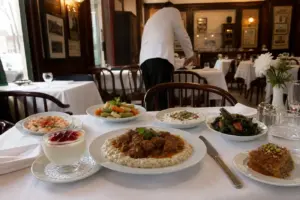 Hünkar Ottoman and Turkish home cooking
Main image: AI-generated illustration. It may not show the place exactly as it looks.
 Hacı Abdullah Lokantası Turkish
Main image: AI-generated illustration. It may not show the place exactly as it looks.
 Özbek Sofrası Uzbek and Afghan
Main image: AI-generated illustration. It may not show the place exactly as it looks.
 Vegan Dükkan Lokanta Turkish (vegan)
Main image: AI-generated illustration. It may not show the place exactly as it looks.
 Vodiy Uzbek Restaurant Uzbek
Main image: AI-generated illustration. It may not show the place exactly as it looks.
 Afsona Uzbek Restaurant Uzbek
Main image: AI-generated illustration. It may not show the place exactly as it looks.
 Vegan Dukkan Turkish Vegan
Main image: AI-generated illustration. It may not show the place exactly as it looks.
 Mikla New Anatolian
Main image: AI-generated illustration. It may not show the place exactly as it looks.
Istanbul Vibes Tips
- Istanbul serves varieties from all over Turkey. If you find mantı in restaurants, ask which region the chef is from—Kayseri versions will be tiny and precisely folded, while other regional styles may be larger or topped differently. Each tells a different story.
- Making mantı is a social dish: invitation to friends or family to help fold while chatting. It takes 2–3 hours partly because folding 40+ dumplings by hand is time-consuming. Traditional gatherings (often called 'mantı günü' or mantı day) turn it into a communal event.
- Freeze unbaked mantı on a baking tray (don't let them touch), then transfer to a freezer bag once solid. They keep for weeks and can go straight from freezer to boiling water—add a minute or two to the cooking time. This is how Turkish cooks prepare ahead.
- The test for well-sealed mantı: a properly folded dumpling should stay intact when dropped into boiling water and stirred gently. If they fall apart, the seals weren't firm enough or the dough was too thin. Test one first.
- Don't use a food processor to mix the meat filling—it over-works the meat and makes it dense and wet. Chop the onion finely by hand and mix gently with the meat using a spoon.
Explore Nearby Mantı
Browse more: All Food & Drink · All Other
FAQ
Is mantı difficult to make at home?
Mantı is not technically difficult, but it is time-consuming. The techniques (dough-making, rolling, folding) are simple. What takes time is patience: the dough rest, rolling it thin enough, and folding dozens of small parcels by hand. Plan 2–3 hours and don't rush. The more you make, the faster you become.
Can I buy frozen or dried mantı instead of making it?
Yes. Frozen or dried mantı are widely available in Turkish supermarkets and international sections, and they cook the same way as fresh—just add them directly to boiling water. They save hours of prep time. Many home cooks use frozen mantı for weeknight meals and make fresh ones only for special occasions.
What is the difference between Kayseri mantı and other styles?
Kayseri mantı is famous for being the smallest: tradition holds that a bride-to-be in Kayseri should be able to fit 40 dumplings on a spoon. Other regional styles are larger or served differently—some are baked before boiling, some are topped with walnuts or tomato sauce instead of just yogurt and butter. Kayseri is considered the 'gold standard' for technique.
Why is the yogurt sauce served cold on hot mantı?
The contrast between hot dumplings and cool, creamy yogurt is intentional—it creates flavour balance and texture contrast. The yogurt cools the dumplings slightly, making them easier to eat, while the hot spiced butter drizzled on top keeps some heat. It's a play of temperatures.
Can I make mantı with vegetarian filling?
Yes. Lentils, mashed potatoes, spinach, chickpeas, or pumpkin work well as fillings. The technique is the same: mix your filling with salt, pepper, and spices; fill and fold the dumplings; boil and serve with yogurt and butter sauce. Some regions of eastern Turkey traditionally use lentils instead of meat.
How thin should the dough be?
The dough should be rolled to 1–2 mm thick—thin enough that you can almost see your hand through it. Thinner dough makes more delicate, tender mantı. This is why resting the dough for 30–45 minutes is so important: relaxed gluten stretches without tearing.
Why does the filling leak out during cooking?
Leaking usually means either too much filling, not enough dough moisture (try slightly wetter dough next time), or seams that weren't pressed firmly enough. Each dumpling should be sealed so thoroughly that your fingernail marks are visible on the seams. Press hard.
Can I bake mantı instead of boiling them?
Some recipes suggest baking briefly before boiling to firm up the dough and reduce sticking. This works but adds a step. Boiling directly is faster and makes softer, more tender dumplings. Baking can also be used for a crispier texture, but is less traditional.
Istanbul Vibes is a one-person project. A coffee keeps it going

Take this guide with you
Get a free PDF of this guide to print or read offline: key facts, tips and a map link on a few clean pages.
Report an issue on this page
How we research and update our guides
About this guide: AI assistance and accuracy
This guide is created with the help of AI and is based on official sources where available. Mistakes can still happen. Opening hours, prices, rules and other details are given to the best of our knowledge as of the date shown and can change without notice. It offers general recommendations only, not professional, legal or travel advice. Please confirm important details with the official source before you travel; you are responsible for your own plans and decisions.
* Affiliate link: as an Amazon Associate we earn from qualifying purchases at no extra cost to you.
