

The Pera Museum is a private art institution housed in a distinctive neoclassical building on Meşrutiyet Street, steps away from the bustling İstiklal Avenue. Founded by the Suna and İnan Kıraç Foundation and inaugurated in 2005, it draws art lovers, history buffs, and curious travelers seeking Ottoman and European artistic traditions under one elegant roof.
The museum occupies a restored 19th-century structure that once served as the Hotel Bristol. Its three permanent collections—Orientalist paintings from the 17th to 20th centuries, a vast repository of Anatolian weights and measures spanning millennia, and glazed tiles and ceramics from Kütahya—anchor the experience, while rotating exhibitions of world-class artists keep it fresh for repeat visitors.
Quick Facts
| Built / opened | 2005 |
|---|---|
| Architect(s) | Original building: Achille Manoussos (1893); Renovation: Sinan Genim (2003–2005) |
| Address | Meşrutiyet Caddesi No:65, 34430 Tepebaşı, Beyoğlu, Istanbul Google MapsApple MapsYandex Maps |
| District | Beyoğlu |
| Metro | Tünel (T4, From Tünel station on İstiklal Avenue, walk downhill toward Meşrutiyet Street; the museum is about 5 minutes on the left) |
| Admission | ₺₺ for adults; free Fridays 18:00–22:00 (Long Fridays) |
| Best time to visit | Visit on weekdays (Tuesday–Thursday) for the quietest experience, particularly in mid-morning (10:00–12:00) or mid-afternoon (14:00–16:00). Fridays 18:00–22:00 (Long Fridays) attract younger crowds and locals who come for free entry, creating a more social atmosphere; this is ideal for visitors who enjoy evening activity and don't mind more foot traffic.Autumn (September–November) and spring (April–May) bring moderate crowds and pleasant weather. Summer (June–August) can be hot and draws larger numbers of tourists to the İstiklal Avenue area. Winter is quieter but some visitors find the shorter daylight hours limiting.Avoid afternoons on Saturdays and all-day Sundays if you prefer a more peaceful experience. Before planning around a specific temporary exhibition, check the museum website, as popular international shows can draw significantly larger crowds. |
| Website | peramuseum.org |
What Is (and Isn't) Part of a Visit to Pera Museum?
| Part | Status | Notes |
|---|---|---|
| Ground floor (Pera Café, ticket desk, restrooms) | Included in the standard ticket | Part of the museum visit; café operates as a separate venue with its own pricing. |
| First and second floors (permanent collections) | Included in the standard ticket | Orientalist paintings and Anatolian weights/measures; all accessible with standard admission ticket. |
| Third to fifth floors (temporary exhibitions) | Included in the standard ticket | Rotating exhibitions; included in standard admission ticket. |
| Pera Film screenings | Separate ticket or institution | Separate ticket required; screening schedule available on museum website. |
| Istanbul Research Institute (next building) | Separate ticket or institution | Affiliated institution with its own exhibitions and research library; separate entry and programs. |
Why Visit Pera Museum?
This museum fills a specific niche in Istanbul’s cultural landscape: it preserves the European fascination with Ottoman life through Orientalist art, offering a mirror on how the West imagined the East. The Tortoise Trainer by Osman Hamdi Bey—perhaps Ottoman art’s most iconic painting—is a permanent fixture, and the Anatolian weights collection alone spans 4,000 years, from Roman steelyard weights to Islamic measures.
Beyond the collections, the building itself merits attention: its restored façade retains the grandeur of its hotel days, while the interior seamlessly integrates modern museum functions. Temporary exhibitions consistently feature significant international lenders and emerging artists, making the experience unpredictable and rewarding.
How Pera Museum Is Laid Out
The museum occupies five floors within the repurposed hotel building. The ground floor houses the Pera Café, decorated in art deco style, and serves as arrival space. The first and second floors hold the permanent collections: Orientalist paintings on one floor, Anatolian weights and Kütahya ceramics on another, arranged thematically rather than chronologically. The top three floors rotate temporary exhibitions, allowing the museum to present major loan shows. Elevators connect all levels; stairs with hand-rails offer an alternative route between floors. Most visitors start on the ground floor, ascend through the permanent galleries, then explore temporary exhibitions at their own pace.
Highlights of Pera Museum
The Tortoise Trainer by Osman Hamdi Bey
This 1906 painting is Ottoman art's most celebrated image: a young man in a turban holds a tortoise, rendered with technical precision and psychological depth by Osman Hamdi Bey, the museum's founder-namesake collector. The work epitomizes the museum's commitment to preserving Ottoman artistic identity against European Orientalist stereotypes. Visitors consistently make this painting their priority on arrival.
Tip: Arrive early to see this work before crowds gather, especially on Fridays before 18:00.
Orientalist Paintings Gallery
The museum holds one of Europe's finest collections of 19th-century paintings depicting the Ottoman world through European eyes: works by Jean-Étienne Liotard, Jean-Baptiste van Mour, and Fausto Zonaro, among others. Spanning from the 17th century through the early 20th, these pieces reveal both genuine aesthetic response and colonial-era fantasy. The collection includes intimate domestic scenes, imperial ceremonies, and landscapes that shaped Western perceptions for generations.
Tip: Read the captions carefully—many paintings contain visual jokes or deliberate misinterpretations by Western artists unfamiliar with Ottoman culture.
Anatolian Weights and Measures Collection
Nearly 10,000 objects tracing the history of trade, standardization, and daily commerce across Anatolia from 2000 BC to the present. Roman imperial steelyard weights in bronze, Islamic measures in intricate metalwork, Ottoman balance scales—each artifact tells a story of commerce and cultural continuity. The collection occupies two floors and represents a rarely seen window into ordinary economic life across millennia.
Tip: This collection often feels overlooked compared to paintings, but it offers insight into how ordinary people actually lived and worked—arguably more authentic than Orientalist fantasy art.
Kütahya Tiles and Ceramics Collection
Glazed tiles and ceramics from the 18th to 20th centuries produced in Kütahya, a major Ottoman ceramic center. Plates with painted figures, decorative tiles in blues and greens, and functional vessels showcase the evolution of Anatolian ceramic traditions. The collection shows both continuity with classical patterns and adaptation to changing tastes through the late Ottoman and early modern periods.
Tip: Many pieces are small—bring glasses or use the museum's magnifying glasses if fine detail interests you.
Temporary Exhibitions
The top three floors host rotating international exhibitions. In recent years, the museum has hosted major loan exhibitions from institutions including the Tate Britain and Victoria and Albert Museum, featuring works by artists such as Rembrandt, Frida Kahlo, Andy Warhol, Joan Miró, and Fernando Botero. Exhibitions typically run for 2–3 months and are paired with films, lectures, and educational programs that explore thematic connections to the permanent collections.
Tip: Check the official website before visiting to see which exhibition is on display—temporary shows are the main draw for many repeat visitors.
Pera Film Screenings
The museum operates Pera Film, an independent cinema program that runs year-round, screening everything from restored classics to independent documentaries and avant-garde films. Many screenings align thematically with current exhibitions. The cinema occupies a dedicated space within the building and offers seating for approximately 100 viewers. This program attracts a dedicated cinephile audience and adds a temporal element to the museum visit.
Tip: Film schedules and themes are announced separately from exhibition schedules; consult the website or ask at the ticket desk for current screenings.
Atmosphere
The museum feels more intimate than many major institutions—five floors mean you’re never lost in overwhelming crowds or vast halls. The restored neoclassical interior, with its art deco touches on the ground floor, evokes the building’s hotel heritage; refined rather than pompous. On weekdays, the atmosphere is contemplative; on Friday evenings when entry is free (18:00–22:00), the energy shifts toward casual exploration, with younger visitors and art-curious locals mingling with tourists.
The Pera Café on the ground floor becomes a natural gathering point—visitors rest, sketch notes, or linger over drinks in a space that doubles as a mini-gallery. The permanent collections attract serious art historians and casual browsers equally; temporary exhibitions drive focused visits by those following a specific artist or theme. Overall, the museum succeeds in feeling welcoming rather than elitist, despite its status as a private institution supported by one of Turkey’s wealthiest families.
History of Pera Museum
The building that houses the Pera Museum was constructed in 1893 by architect Achille Manoussos, a prominent designer of late Ottoman Istanbul. Originally built as the Hotel Bristol, it embodied the elegance expected of a luxury establishment in an era when European travelers and traders were reshaping Istanbul’s commercial landscape. Meşrutiyet Street and the surrounding Tepebaşı quarter had become the city’s modern center, and the Bristol Hotel served wealthy guests arriving by train or from European diplomatic missions.
In 2002, the Suna and İnan Kıraç Foundation—one of Turkey’s major private collectors and cultural patrons—acquired the building with the intention of creating a museum dedicated to art and cultural preservation. Architect Sinan Genim undertook a comprehensive renovation from 2003 to 2005, maintaining the restored neoclassical exterior while completely modernizing the interior to museum standards. On 8 June 2005, the Pera Museum opened to the public as the first major initiative in the Kıraç Foundation’s cultural program.
Since opening, the museum has established itself through three permanent collection streams—Orientalist paintings, Anatolian weights and measures, and Kütahya ceramics—each carefully curated from the Foundation’s holdings. Parallel to permanent displays, the museum quickly became known for hosting significant international loan exhibitions, collaborating with major museums including the Tate Britain and the Victoria and Albert Museum. This dual focus on preserving Ottoman heritage while engaging contemporary global art discourse has defined its cultural role for two decades.
Tickets and Booking for Pera Museum
| Ticket | Price | Includes |
|---|---|---|
| Adult admission | ₺₺ | Access to all permanent collections and current temporary exhibitions on all five floors. |
| Discounted admission (students, under 12, over 60) | ₺ | Same access as full price; proof of eligibility required. |
| Free entry (Long Fridays) | Free | Full museum access every Friday from 18:00 to 22:00; no booking required. |
| Free entry (Young Wednesdays) | Free | Free admission for students every Wednesday; student ID required. |
₺ budget · ₺₺ moderate · ₺₺₺ upscale · ₺₺₺₺ splurge. Price levels are estimates compared with typical prices for visitors.
Tickets can be purchased online through the museum’s official website or at the ticket desk on arrival. Online purchase is recommended during peak hours and for special exhibitions to avoid queues.
Opening and hours: The museum is open Tuesday–Thursday and Saturday 10:00–19:00, Friday 10:00–22:00, Sunday 12:00–18:00, closed Mondays. Note that Friday hours extend to 22:00, and entry is free from 18:00–22:00 (Long Fridays).
Same-day tickets are generally available at the entrance ticket desk unless a major temporary exhibition is drawing unusually large crowds. The museum does not typically require advance booking for casual visits.
Admission prices vary: Standard rates apply to international visitors; discounted tickets are available for Turkish students, Turkish seniors over 60, and children under 12. Rates for Turkish citizens and additional concession categories (educators, ICOM members, press) differ and may be lower. For complete current pricing and all eligibility categories, consult the official ticket page at peramuseum.org.
Suggested itineraries Pera Museum
1–1.5 hours
Enter on the ground floor and visit the Pera Café if desired. Ascend to the first floor to see the Orientalist paintings collection, focusing on works by Osman Hamdi Bey, Jean-Étienne Liotard, and Jean-Baptiste van Mour. Check the current temporary exhibition on the upper floors if time permits. This focused route covers the museum's most iconic works.
2–2.5 hours
Follow the 1–1.5 hour route above, then dedicate time to the Anatolian weights and measures collection on the second floor, observing the evolution of trade standards and commercial tools across millennia. Browse one of the temporary exhibitions. Rest at the café before departing.
3+ hours
Begin at the permanent collections (first and second floors), spending 45 minutes on Orientalist paintings and 45 minutes on Anatolian weights and ceramics. Ascend to the temporary exhibitions (floors 3–5) and spend 60–90 minutes exploring current shows at leisure. Conclude with café time or a Pera Film screening if one is scheduled that evening.
How to Get to Pera Museum
By metro: Take the Tünel Line (T4) to Tünel station. Exit onto İstiklal Avenue and walk downhill (southwestward) toward Meşrutiyet Street, approximately 5 minutes on foot. The museum is on the left side of Meşrutiyet Street, marked by its classical façade. Alternative metro: Galata Tower area is a 10–15 minute walk via Istiklal Avenue.
By foot: From Taksim Square, walk south down İstiklal Avenue for approximately 10 minutes; turn left onto Meşrutiyet Street. From Galata Tower, head north on the main avenue and turn right onto Meşrutiyet Street.
By taxi/app: Most ride-sharing apps (Uber, Bolt) serve this area. Drop-off is straightforward; the building is clearly visible on Meşrutiyet Street.
Parking: Street parking near Meşrutiyet Street exists but is limited and often full during daytime hours. Public parking lots are available a short walk away.
Accessibility
The museum is wheelchair accessible throughout. Elevators connect all five floors; stairs with handrails provide an alternative route for those able to use them. Accessible restrooms are located on the ground floor. The entrance door can accommodate wheelchairs, though the street approach may be uneven in places.Guide dogs and service animals are permitted. No companion ticket discount is formally listed, but staff can advise on specific needs at the ticket desk.The museum does not publish a detailed accessibility statement on its website; visitors with specific mobility requirements are encouraged to call ahead (+90 212 334 99 00) to discuss individual accommodations.
Food Nearby
The Pera Café inside the museum offers seating, drinks, and light refreshments in an art deco–inspired setting. Beyond the museum, Meşrutiyet Street and the surrounding Tepebaşı quarter host numerous restaurants, cafés, and street food vendors catering to international and Turkish tastes. Just north on İstiklal Avenue, options range from casual kebab shops and lokantası (traditional Turkish restaurants) to higher-end dining establishments. Nearby side streets offer smaller, quieter venues—typical Istanbul choices for a quick meal or extended lunch.
What to Bring
Comfortable shoes for walking and potentially standing; the museum is not large but five floors mean multiple transitions. A water bottle is useful in warmer months. A small notebook for jotting notes on artworks is common among art enthusiasts. The museum permits photography without flash or tripods inside (verify current policy at entrance). Bags and large items may require coat-check; travel light if possible. In summer, bring sunscreen for the walk to and from the metro.
Best Views and Photo Spots of Pera Museum
Neoclassical façade on Meşrutiyet Street
The restored 1893 building front, with its classical columns and proportions, photographs well from across the street, especially in afternoon light. The entrance door frames nicely for a full façade shot.
Best time: Late afternoon (16:00–17:30) when the building façade is evenly lit and the street is less crowded; avoid midday harsh shadows.
Ground floor café interior
The art deco–styled café space with period lighting creates a nostalgic ambiance. Shots of the café seating, details of the décor, or posed portraits of companions work well here.
Best time: Mid-morning or mid-afternoon when natural light softens; early evening creates warm atmospheric shots.
Pera Museum entrance hallway
The interior vestibule and ticket desk area show the transition from restored hotel grandeur to modern museum space. Architectural details and the interplay of old and new photograph well.
Best time: Early morning (10:00–10:30) before crowds arrive; softer natural light from street-level windows.
Upper floor gallery windows
From upper floors, windows frame views of surrounding Beyoğlu rooftops and the urban landscape. These shots capture context and location without showing interior works.
Best time: Clear-sky days; avoid overcast mornings when sky is flat and gray.
Photography Rules
Personal photography (without flash, tripod, or professional equipment) is generally permitted in the permanent collections and temporary exhibitions, though specific restrictions apply to certain fragile works or special displays. Flash photography is not permitted. Tripods and professional camera equipment require prior permission. Always verify the current policy at the entrance ticket desk upon arrival, as rules may change between exhibitions.
Family Suitability
The Pera Museum suits older children and teenagers with art interests, particularly ages 10+. The permanent collections—Orientalist paintings and especially the Anatolian weights collection—can engage curious minds through storytelling and hands-on learning if accompanied by an adult guide. Younger children (under 8) may find the experience less absorbing, as most exhibits lack interactive elements or large-scale visual drama.Stroller access is limited: elevators accommodate full-size strollers, but gallery spaces are compact, making maneuvering difficult. Most families with young children manage by folding the stroller and carrying children, or by leaving the stroller at coat-check. The café provides a rest-friendly environment. Free entry for children under 12 on select occasions (check website) can offset costs for larger families.
Istanbul Vibes Tips
- Visit on a Friday evening between 18:00 and 22:00 for free admission (Long Fridays). The atmosphere shifts toward a younger, more casual crowd, and you'll pay nothing while seeing the full permanent collection. Temporary exhibitions are equally accessible at no charge.
- Start on the second floor (Anatolian weights and measures) before descending to the Orientalist paintings. This less-crowded floor often gets overlooked, and exploring it first ensures you see it without fatigue. The Tortoise Trainer on the first floor can be saved for later, when you'll view it with fresh context.
- Bring a pen or pencil to note exhibition titles and artist names from the wall cards. The museum provides minimal printed guides; taking notes as you go helps you remember specifics and follow up with research later.
- Check the Pera Film schedule (screened on-site) when booking your visit. If a film aligns with the current temporary exhibition, attending a screening afterward deepens understanding of the show's themes. Tickets are sold separately; ask staff for current schedules.
- Allow 20 minutes minimum for the Anatolian weights collection. Many visitors move through it quickly, but the detail and historical range reward slow looking. Bring glasses or use the museum's magnifying tools if fine detail interests you.
- The museum's café is worth lingering in even if you don't eat. It offers a quiet refuge from the crowded İstiklal Avenue outside and provides a good vantage point to observe the building's architectural transition from hotel to museum. Prices are moderate for Istanbul.
Explore Nearby Pera Museum
Sights near Pera Museum
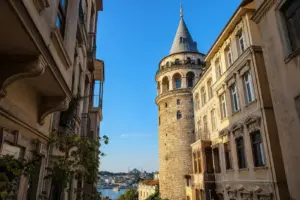 Galata Tower – about 700 m away (~11 min walk) · typical visit: 1–2 hours4 min on foot from Şişhane metro, Open daily 08:30–23:00
Main image: AI-generated illustration. It may not show the place exactly as it looks.
 Blue Mosque – about 3.0 km away · typical visit: 45–75 minutes3 min on foot from Gülhane metro
Main image: AI-generated illustration. It may not show the place exactly as it looks.
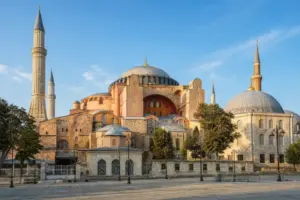 Hagia Sophia – about 2.6 km away · typical visit: 1–1.5 hours8 min on foot from Gülhane metro, Open daily 09:00–19:30
Main image: AI-generated illustration. It may not show the place exactly as it looks.
 Istanbul Research Institute – about 350 m away (~6 min walk) · typical visit: 1–2 hours11 min on foot from Tünel metro, Open 10:00–19:00, closed Sun
Main image: AI-generated illustration. It may not show the place exactly as it looks.
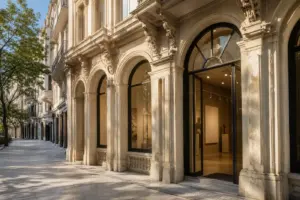 Meşher – about 150 m away (~3 min walk) · typical visit: 1–2 hours4 min on foot from Tünel metro, Open 11:00–19:00, closed Mon
Main image: AI-generated illustration. It may not show the place exactly as it looks.
 Hazzopulo Passage – about 150 m away (~3 min walk) · typical visit: 30–45 minutes8 min on foot from Tünel metro, Open daily 08:00–22:00
Main image: AI-generated illustration. It may not show the place exactly as it looks.
Metro stations near Pera Museum
 Tünelabout 400 m away (~6 min walk)
Main image: AI-generated illustration. It may not show the place exactly as it looks.
 Şişhane – about 500 m away (~8 min walk)Open daily 06:09–00:09
Main image: AI-generated illustration. It may not show the place exactly as it looks.
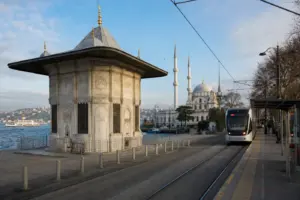 Tophaneabout 750 m away (~12 min walk)
Main image: AI-generated illustration. It may not show the place exactly as it looks.
Restaurants and cafes near Pera Museum
 360 Istanbul – about 150 m away (~3 min walk)8 min on foot from Tünel metro
Main image: AI-generated illustration. It may not show the place exactly as it looks.
 Yeni Lokanta – about 250 m away (~4 min walk)3 min on foot from Tünel metro
Main image: AI-generated illustration. It may not show the place exactly as it looks.
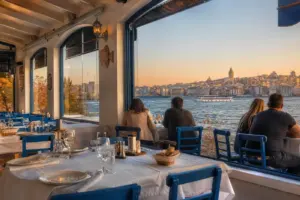 Eleos Restaurant – about 250 m away (~4 min walk)2 min on foot from Tünel metro, Open daily 14:30–00:00
Main image: AI-generated illustration. It may not show the place exactly as it looks.
 Nicole – about 300 m away (~5 min walk)6 min on foot from Tünel metro, Open 18:30–23:30, closed Mon
Main image: AI-generated illustration. It may not show the place exactly as it looks.
Nightlife near Pera Museum
 Blind – about 200 m away (~3 min walk)3 min on foot from Tünel metro
Main image: AI-generated illustration. It may not show the place exactly as it looks.
 Balkon – about 250 m away (~4 min walk)2 min on foot from Tünel metro, Open daily 13:00–02:00
Main image: AI-generated illustration. It may not show the place exactly as it looks.
Train stations and river piers near Pera Museum
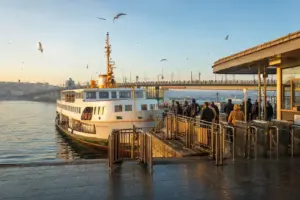 Karaköy Ferry Terminalabout 1.1 km away (~18 min walk)
Main image: AI-generated illustration. It may not show the place exactly as it looks.
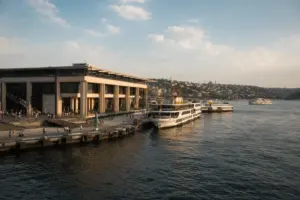 Kabataş Ferry Terminalabout 1.6 km away (~25 min walk)
Main image: AI-generated illustration. It may not show the place exactly as it looks.
Events and traditions near Pera Museum
 Istanbul Music Festivalabout 700 m away (~11 min walk)
Main image: AI-generated illustration. It may not show the place exactly as it looks.
 Istanbul Film Festivalabout 1.8 km away (~29 min walk)
Main image: AI-generated illustration. It may not show the place exactly as it looks.
Related guides
 Grand Hotel de Londres: A Faded Pera Landmark from 1892
Main image: AI-generated illustration. It may not show the place exactly as it looks.
 Fıccın: Circassian Cooking on Beyoğlu’s Kallavi Sokak
Main image: AI-generated illustration. It may not show the place exactly as it looks.
 Suriye Passage: Historic Arcade with 1908 Architecture and Hidden Shops3 min on foot from Tünel metro
Main image: AI-generated illustration. It may not show the place exactly as it looks.
 Art Galleries and Contemporary Art Spaces: Istanbul’s Essential Guide
Main image: AI-generated illustration. It may not show the place exactly as it looks.
 Best Museums by Category: Ottoman Palaces to Contemporary Art
Main image: AI-generated illustration. It may not show the place exactly as it looks.
Browse more: More in Beyoğlu · All Museums · All Sightseeing
FAQ: Pera Museum
Is the Pera Museum free or ticketed?
Admission is ticketed at a moderate price level. However, entry is completely free every Friday from 18:00–22:00 (called Long Fridays). Students also receive free admission on Wednesdays, and children under 12 typically enter free. Check the official website for current rates and any additional free-entry periods.
Is Pera Museum included in the Museum Pass Istanbul?
The Museum Pass Istanbul (multi-museum ticket) offers a 20% discount on Pera Museum admission; it does not include free entry. If you're visiting multiple Istanbul museums, the pass may offer value. Verify current pass pricing and inclusions on the Istanbul Tourism Board website.
What is the most famous artwork in the Pera Museum?
The Tortoise Trainer (1906) by Osman Hamdi Bey is the museum's most iconic work. This painting depicts a young man in a turban holding a tortoise and is considered one of Ottoman art's masterpieces. It's a permanent fixture on the first floor and typically the first piece visitors seek out.
How long does a typical visit take?
A focused visit covering the Orientalist paintings and the Tortoise Trainer takes 1–1.5 hours. A thorough visit including the Anatolian weights and ceramics collection takes 2–2.5 hours. If you explore current temporary exhibitions fully, budget 3+ hours.
Can I take photos inside the museum?
Personal photography without flash or tripods is generally permitted in permanent collections and temporary exhibitions, though some fragile works may be restricted. Professional equipment requires prior approval. Always check the current policy with staff at the entrance, as rules may vary by exhibition.
Is the Pera Museum suitable for children?
The museum works best for children aged 10 and older with art or history interests. Younger children may lose interest quickly, as exhibits lack interactive or large-scale visual spectacle. Stroller access is limited; most families with small children find it easier to leave strollers at coat-check and carry children or manage on foot.
What is the closest metro station?
Tünel station on the T4 Line is the nearest, approximately 5 minutes' walk downhill on İstiklal Avenue toward Meşrutiyet Street. Alternatively, walk south from Galata Tower or north from Taksim Square along İstiklal Avenue.
What are the current temporary exhibitions?
Temporary exhibitions rotate every 2–3 months and feature works by international and Turkish artists. Check the museum's official website (peramuseum.org) for current shows, opening and closing dates, and thematic details. Major exhibitions are often announced weeks in advance.
Istanbul Vibes is a one-person project. A coffee keeps it going
Hotels near Pera Museum
- Grand Hotel de Pera (50 m) Check prices (affiliate link, opens in a new tab)
- De pera (50 m) Check prices (affiliate link, opens in a new tab)
- Grand Hotel de Londres (50 m) Check prices (affiliate link, opens in a new tab)
- The Westist Hotel&SPA (100 m) Check prices (affiliate link, opens in a new tab)
Affiliate link (opens the booking site): we may earn a commission at no extra cost to you.
Restaurants near Pera Museum
- Nupera (50 m) Google Maps
- Pera Antakya (100 m) Google Maps
- Fıccın (100 m) Google Maps
- Çok Çok Thai Restaurant (100 m) Google Maps
Distances are straight-line, from OpenStreetMap data.

Take this guide with you
Get a free PDF of this guide to print or read offline: key facts, tips and a map link on a few clean pages.
Report an issue on this page
How we research and update our guides
About this guide: AI assistance and accuracy
This guide is created with the help of AI and is based on official sources where available. Mistakes can still happen. Opening hours, prices, rules and other details are given to the best of our knowledge as of the date shown and can change without notice. It offers general recommendations only, not professional, legal or travel advice. Please confirm important details with the official source before you travel; you are responsible for your own plans and decisions.
* Affiliate link: as an Amazon Associate we earn from qualifying purchases at no extra cost to you.
