
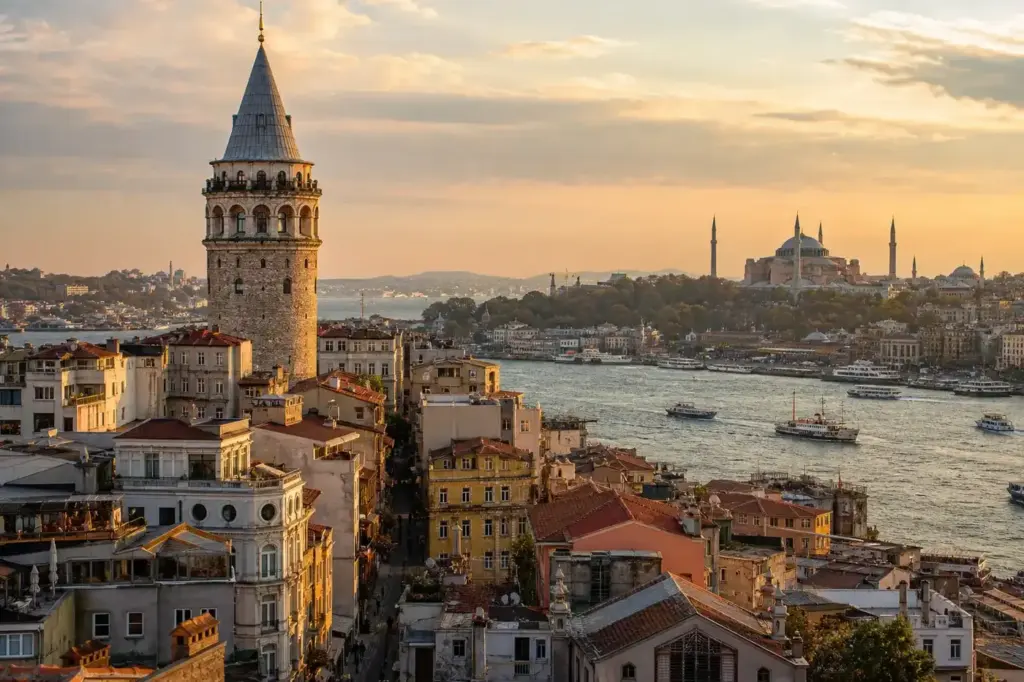
Beyoğlu (pronounced bay-OH-loo) is Istanbul’s energetic European-side neighborhood north of the Golden Horn. Once a Genoese trading colony and later the center of Ottoman diplomatic life, it has become the city’s creative heart—home to independent galleries, vintage shops, literary venues and world-class museums set alongside traditional Turkish teahouses and seafood restaurants.
The neighborhood fans out from the medieval Galata Tower on the waterfront through narrow lanes packed with life, then climbs inland to İstiklal Avenue, a famous pedestrian street lined with 19th-century architecture. Above that sits Taksim Square, the commercial and cultural anchor of modern Istanbul. Beyoğlu appeals equally to history buffs exploring Ottoman street networks, artists and designers drawn to its independent spaces, foodies seeking both street food and Michelin-listed restaurants, and anyone wanting to understand contemporary Turkish urban culture.
Quick Facts
| Address | Google MapsApple MapsYandex Maps |
|---|---|
| District | Beyoğlu |
| Metro | Şişhane (M2, 4-5 min walk to Galata Tower; heading south toward the waterfront) Taksim (M2, 10 min walk to upper Beyoğlu; north end of İstiklal Avenue) Beyoğlu (Tünel, Street level on Tünel Square; connection to İstiklal Avenue heritage tram) Kabataş (F1 Funicular, Eastern terminus; access to waterfront and uphill funicular to Taksim) |
| Recommended duration | Half day to full day |
What Is (and Isn't) Part of a Visit to Beyoğlu?
| Part | Status | Notes |
|---|---|---|
| Galata Tower admission and viewing platform | Separate ticket or institution | Separate ticket required; not included with any general Istanbul pass. |
| Pera Museum (Turkish paintings, Ottoman art, contemporary exhibitions) | Separate ticket or institution | Separate ticket required; rotates exhibitions frequently. |
| Istanbul Modern (contemporary art museum, Galata waterfront) | Separate ticket or institution | Separate ticket required. Rooftop café is free to access without museum admission. |
| Sakip Sabancı Museum (Ottoman calligraphy, Turkish Islamic art) | Separate ticket or institution | Separate ticket required; located in Emirgan (uphill from central Beyoğlu). |
| Galata Mevlevi Museum (Sufi order history and traditions) | Separate ticket or institution | Separate ticket required; located in 17th-century tekke building in Galata. |
| İstiklal Avenue walking, shops, cafés | Included in the standard ticket | Free to walk and browse; shopping and eating costs extra. |
| Tünel funicular ride | Separate ticket or institution | Requires single journey payment or Istanbulkart; not included in general passes. |
| Taksim Square area, surrounding streets and shops | Included in the standard ticket | Free to visit; shopping and dining cost extra. |
| Cihangir neighborhood streets, cafés, shops | Included in the standard ticket | Free to walk; cafés and shops are pay-as-you-go. |
| Balat neighborhood (across Golden Horn, in Fatih district, not Beyoğlu) | Outside / not part of it | Lies in the old city across the water; technically not part of Beyoğlu, though easily accessed via Galata Bridge (10 min walk). |
Why Visit Beyoğlu?
Galata’s medieval harbor atmosphere is found nowhere else in Istanbul—the waterfront lanes, the tower rising from narrow streets, and ferries crossing the Golden Horn create an entirely different world from the mosques and palaces across the water.
The artistic and literary scene is concentrated here: artist-run galleries, independent bookstores (many with English stock), music venues ranging from classical to electronic, and venues hosting everything from film festivals to poetry readings.
International dining and cafe culture run deeper than anywhere else—from tiny meyhane (tavern) windows to contemporary restaurants by Turkish and international chefs, plus traditional Turkish coffee houses, craft breweries and roofteries overlooking the Bosphorus.
Architecture across centuries sits side-by-side: Ottoman-era mosques and hamams, Genoese fortifications, 19th-century European apartment buildings, Ottoman synagogues, and sharp contemporary design.
How Beyoğlu Is Laid Out
Beyoğlu stretches roughly north-south across about 4 km. Start at the waterfront: Galata is the historic district clustered around the 14th-century Galata Tower, with the 17th-century Galata Mevlevi Museum, narrow residential lanes, and seafront restaurants. The pedestrian bridge crosses the Golden Horn to the old city.
Moving inland and uphill, streets widen into İstiklal Avenue, the neighborhood’s spine—a 1.4 km tree-lined pedestrian street with shops, cafés, bookstores, and the entrance to the Tünel funicular. Side streets off İstiklal lead to museums (Istanbul Modern, Pera Museum, Sakip Sabancı Museum) and hidden neighborhoods.
Taksim Square sits at the north end of İstiklal, a major transport hub and plaza. From here, other neighborhoods branch out: Cihangir to the east (residential, artistic), Talimhane and Dolapdere to the north (lower-key, working-class character), and Beşiktaş neighborhoods beyond.
Most first-time visits focus on Galata–İstiklal–Taksim; allow half to a full day for a proper wander through side streets and at least one museum.
Highlights of Beyoğlu
Galata Tower
Built by Genoese colonists in 1348, this cylindrical stone tower dominates the skyline and the neighborhood's identity. The tower has been rebuilt several times (notably after an earthquake in 1509) and underwent restoration in the 1960s. Climbing the stairs or taking the lift to the top gives a 360-degree view of the Golden Horn, Bosphorus and old city skyline. The tower's small restaurant and cafe occupy the upper levels.
Tip: Visit late afternoon for the best light and fewer crowds at the top. The tower gets very busy during midday. Book tickets online in advance or arrive very early.
İstiklal Avenue
This famous 1.4 km pedestrian street runs from Tünel Square to Taksim Square and forms the spine of modern Beyoğlu. Lined with 19th-century European-style facades, it hosts a mix of shops from global chains to independent boutiques, vintage stores, bookshops (including several with English books), and cafés. The street is studded with historic hans (Ottoman trading houses now converted to shops and galleries), small museums, and side-street restaurants. The street was a major axis of Ottoman and early Republican urban life.
Tip: Avoid midday on weekends when the avenue is packed shoulder-to-shoulder. Early morning or weekday afternoons are quieter. The best discoveries lie on the numbered side streets (Müze Sokak, Mis Sokak, Asmalı Mescit) rather than the main avenue.
Pera Museum
Located off İstiklal Avenue in a 19th-century building, Pera Museum holds Ottoman paintings, Turkish ceramics and glass, and rotating international contemporary exhibitions. The collection includes works by Ottoman court painters and Orientalist pieces by Western artists. The museum's courtyard café and upper-floor restaurant overlook the neighborhood's rooftops. This is one of Istanbul's few museums with strong international programming.
Tip: Admission is not included with any general pass. Check the exhibition schedule before visiting; quality varies. The restaurant is open even when exhibitions are not, offering a peaceful break from the street.
Istanbul Modern
Housed in a converted 1913 customs warehouse on the Galata waterfront, Istanbul Modern displays Turkish and international contemporary art with an emphasis on post-1980s work. The building's raw industrial space—soaring ceilings, exposed brick, views over the Golden Horn—is as much part of the experience as the art. The museum has a strong rooftop restaurant and café.
Tip: The separate rooftop café is free to access without paying museum admission—excellent for sunset views. Plan at least 2 hours inside the museum. Weekday mornings are quieter than weekends.
Sakip Sabancı Museum
This recently renovated museum in a restored 1911 mansion in upscale Emirgan (above central Beyoğlu) holds a private collection of Ottoman calligraphy, Turkish and Islamic art, and contemporary works. The mansion itself—with gardens, fountains and period rooms—is worth seeing. The collection is rotated, so the museum frequently hosts new exhibitions. The grounds offer a rare quiet moment and views over the Bosphorus.
Tip: It's about 15 minutes uphill from İstiklal Avenue, or take a minibus or taxi. Check ahead which galleries are open that day. The gardens are beautiful in spring and autumn.
Galata Mevlevi Museum
Housed in a 17th-century tekke (spiritual lodge) in Galata, this museum preserves the traditions of the Mevlevi order (whirling dervishes). The building contains period rooms showing how the lodge functioned, musical instruments, manuscripts and personal objects. The courtyard and central semahane (ceremony hall) are atmospheric even without explanatory text. This is the most accessible place to understand Sufi mysticism and Ottoman spiritual life.
Tip: The museum is small; 30 minutes is typical. English signage is minimal, so a guide or audio guide adds value. The cemetery behind holds graves of important dervishes.
Taksim Square
Tip: Taksim is best viewed as a transport hub or a place to eat than as a destination itself. The square can be crowded and chaotic; quieter spots lie just off it on surrounding streets. The small park areas along Cumhuriyet Caddesi (north of the square) are more peaceful.
Balat Neighborhood
Though technically in the Fatih district across the Golden Horn, Balat's colorful Ottoman Greek houses and bohemian atmosphere draw many Beyoğlu visitors across the Galata Bridge. The steep neighborhood (in the old city) is full of narrow lanes, vintage shops, cafés and family-run restaurants. It's particularly popular with photographers for its bright facade colors and textured street life. A walk through Balat complements a Beyoğlu visit.
Tip: Balat is NOT part of Beyoğlu proper (it's in the old city), but it's just a 10-minute walk from Galata. Go in the early morning before tour groups arrive for better photos and a calmer atmosphere.
Cihangir Neighborhood
A short walk east of İstiklal, this residential neighborhood of tree-lined streets and Ottoman-era buildings is where many Istanbul artists, writers and designers live and work. Quieter than the main avenue, Cihangir has independent cafés, bookshops, small galleries and art studios tucked into apartment buildings. The hill offers glimpses of the Bosphorus and a more local, less touristy atmosphere than central Beyoğlu.
Tip: Cihangir rewards wandering—there are no major 'sights' but plenty of atmosphere. Get lost in the lanes between Meşrutiyet and Tomtom Caddesi. Sunset from the rooftop-bar area (around Çukur Sokak) is remarkable.
Tünel Funicular
Built in 1875 (the second-oldest underground urban railway in the world after London's Underground), the Tünel is both a transport link and a historic tunnel. The line rises 574 meters over 212 meters of track, connecting Karakoy at the waterfront to Tünel Square on higher ground. A journey takes 100 seconds. The tunnel itself is a short ride but atmospheric, and Tünel Square (the upper station) sits on İstiklal Avenue with cafés and the entrance to the heritage tram line.
Tip: Taking the Tünel is more about the historical experience than saving time—stairs or a walk up the hill are feasible alternatives. The funicular runs at regular intervals and accepts the Istanbulkart. The station architecture at street level on Tünel Square is worth noting.
Atmosphere
Beyoğlu pulses with energy but in a markedly different way from the mosque-packed old city. The waterfront around Galata feels European and maritime—narrow streets packed shoulder-to-shoulder with restaurants, bars, antique shops and late-night venues. The smell of grilled fish, cigarette smoke and alcohol drifts from open doors. On warm evenings the waterfront fills with young Istanbulites and tourists nursing drinks overlooking the Golden Horn.
İstiklal Avenue is busier: a human river of locals and tourists flows between independent shops and cafés, street musicians play corner sets, and the smell shifts between roasting chestnuts, kebab, cologne and brewing coffee. Side streets feel calmer—old teahouses with only men inside, empty 19th-century courtyards, residential lanes with laundry hanging between buildings.
After dark, Beyoğlu becomes Istanbul’s nightlife district. Bars and clubs multiply; street-level meyhanes open their doors; rooftop bars fill; and the energy remains high until dawn. By morning it’s quiet again, with cleaning crews hosing the sidewalks and early-opening bakeries.
History of Beyoğlu
Medieval Genoese trading post (13th–15th centuries): Beyoğlu’s history begins as a Genoese fortified trading colony, established after Genoese merchants won trading privileges in Constantinople. The Galata Tower (built 1348) was the colony’s military headquarters and beacon. Genoese merchants dominated Black Sea trade, and Galata was wealthy and largely autonomous from Ottoman control until the late 15th century.
Ottoman period and diplomacy (15th–18th centuries): After Constantinople fell to the Ottomans in 1453, Galata remained largely intact but under Ottoman rule. Genoese elites gradually left, replaced by Ottoman-era Christians (Greeks, Armenians, Jews) and Muslim merchants. The neighborhood became the seat of Ottoman diplomacy—foreign embassies (particularly European ones) were established on the heights above Galata because Ottoman protocol required diplomats to live outside the imperial capital. This shaped Beyoğlu’s cosmopolitan character for centuries.
19th-century transformation (1800s): The Ottoman reform period (Tanzimat) saw massive European investment and migration into Beyoğlu. French, British, Italian, German and American embassies, trading houses, banks and schools transformed the neighborhood into Istanbul’s ‘European quarter.’ The street now called İstiklal Avenue became a grand boulevard. Apartment buildings, theaters (including the famous Pera Palace Hotel, 1892) and shops catered to wealthy Europeans and cosmopolitan Ottoman elites. The Tünel funicular (1875) connected the lower waterfront to the height of Taksim, accelerating development uphill.
Early 20th century and Turkish modernization (1920s–1950s): After the founding of the Turkish Republic in 1923, Beyoğlu’s character shifted again. Some foreign missions departed, but the neighborhood remained Istanbul’s cultural and entertainment center. The Turkish film industry established studios here; nightclubs, jazz venues, and bohemian spaces proliferated. Taksim Square was redesigned in the 1940s–1950s as a symbol of modern Turkey. European residents gradually diminished, replaced by Turkish arrivals from Anatolia seeking modern urban life.
Legends and Myths about Beyoğlu
The Galata Tower's red light
Underground tunnels connecting Beyoğlu and the old city
Disputed by historians. Tales persist of secret Ottoman-era tunnels beneath the Golden Horn connecting embassies and palaces in Beyoğlu to government buildings in the old city. Some stories claim diplomat tunnels, others claim escape routes. While medieval and Ottoman structures do lie beneath the neighborhood, no verified network of connecting tunnels under the Golden Horn has been archaeologically confirmed. The story likely conflates real Ottoman underground works (cisterns, sewers) with wishful urban legend.
Tickets and Booking for Beyoğlu
Beyoğlu itself is free to visit and explore; costs arise only when entering paid attractions (museums, tower, funicular) or eating and shopping. For attractions: Galata Tower, Pera Museum, Istanbul Modern, Sakip Sabancı Museum and Galata Mevlevi Museum each require separate tickets (not sold as a combined pass). Online booking opens well in advance and is highly recommended for Galata Tower and major museums, especially on weekends and public holidays. Check the official sites of each institution for current prices and hours; rates for Turkish citizens and concessions differ from international visitor rates. The Tünel funicular accepts Istanbulkart (Istanbul’s transit card) or single-journey tickets bought at the station. For comprehensive details on each museum and attraction, visit the official website of each institution.
Suggested itineraries Beyoğlu
Half day (3-4 hours)
Start at Galata Tower (book tickets ahead; 45 min-1 hour for ascent, views and descent). Walk down to the waterfront through Galata's narrow lanes, stopping for tea or a light meal. Cross to Balat via Galata Bridge if interested (adds 30 min). Return to Tünel station and ride the funicular up to İstiklal Avenue. Walk İstiklal Avenue to Taksim Square, browsing shops and side streets (1.5-2 hours). End at a rooftop bar or café near Taksim for sunset views.
Full day (6-8 hours)
Morning: Galata Tower and waterfront exploration (2 hours). Lunch at a Galata seafood restaurant. Afternoon: Istanbul Modern museum and rooftop café (2 hours), then side streets of central Beyoğlu (1 hour). Late afternoon: İstiklal Avenue walk, Pera Museum or Sakip Sabancı Museum if energy permits (2 hours). Evening: Dinner and drinks in Beyoğlu's restaurant and bar scene (2+ hours). Optional: add Cihangir neighborhood exploration for quieter, more residential atmosphere.
Evening and night (3-4 hours)
Start with dinner at a meyhane or restaurant around 8 pm in Galata or along İstiklal (1.5 hours). Move to a rooftop bar for drinks and views (1-1.5 hours). Later in the evening, explore Beyoğlu's nightlife—live music venues, DJ bars, or clubs (open until 2-4 am depending on venue). Or opt for a quieter evening: café on İstiklal, bookshop browse, then a late dinner at a local favorite.
How to Get to Beyoğlu
By Metro: The M2 line serves two main stations in Beyoğlu. Taksim station exits directly into Taksim Square at the northern end of İstiklal Avenue. Şişhane station exits onto İstiklal Avenue and is about a 4-5 minute walk to Galata Tower (head downhill/south toward the waterfront).
By Funicular: The Tünel funicular connects Karakoy (waterfront, near Galata Tower) to Tünel Square on İstiklal Avenue. This is useful if arriving from the old city via Galata Bridge.
By Tram: The T1 tram line runs along the waterfront from Eminönü (old city, near ferries and Spice Bazaar) to Kabataş (southern Beyoğlu waterfront), with a stop at Karakoy near Galata Tower. This is convenient for combining old city sightseeing with Beyoğlu.
By Ferry: Ferries cross the Golden Horn from Eminönü and Karakoy, arriving at the Galata/Karakoy waterfront—the natural entry point to Beyoğlu. Walk uphill through Galata lanes or take the Tünel funicular.
Walking from surrounding areas: Beyoğlu is walkable from Taksim (north, downhill) to Galata (south). The walk is about 25 minutes at a slow pace with shops and cafés.
Accessibility
Beyoğlu has varied accessibility. İstiklal Avenue itself is a flat, wide, well-maintained pedestrian street with frequent rest stops (cafés, benches). Taksim Square is flat and easy to navigate.Galata's narrow lanes and steps are challenging for wheelchair users; the neighborhood was not designed for universal access. However, the main waterfront promenade near Istanbul Modern is relatively flat.The Tünel funicular is wheelchair accessible (with assistance). The M2 metro stations (Taksim and Şişhane) have lifts and accessible entrances, though assistance may be needed.Uphill areas (Cihangir, Emirgan, toward Sakip Sabancı Museum) involve steep streets and stairs unsuitable for wheelchairs. Taxis and minibuses can help bridge these areas.Museums (Pera Museum, Istanbul Modern, Galata Mevlevi Museum) vary: some have accessible entrances and lifts, others do not. Contact venues ahead to confirm accessibility for your specific needs.Ramps and tactile pavements are absent in many areas. Beyoğlu is manageable for people with reduced mobility who can navigate some stairs and uneven terrain, but full accessibility cannot be assumed.
Food Nearby
Beyoğlu has exceptional dining options at all price levels. Galata waterfront: seafood restaurants with tables overlooking the Golden Horn (Balıkçı Sabahattin, Balikci Baris and others). İstiklal Avenue: casual kebab stands, Turkish breakfast places, international café chains, and upscale Turkish-Mediterranean restaurants. Side streets off İstiklal (Müze Sokak, Asmalı Mescit, Çıkrıkçılar Caddesi): meyhane (taverns) serving meze and raki, family-run restaurants, tiny kebab shops, and craft coffee roasters. Taksim area: hotels and malls with international chains. Cihangir neighborhood: quieter cafés, independent restaurants, and bohemian atmosphere. Fast food and street snacks (simit bread, roasted chestnuts, Turkish pizza) are everywhere on İstiklal Avenue.
What to Bring
Comfortable walking shoes are essential—Beyoğlu demands hours of street wandering, sometimes on uneven or sloped terrain. A lightweight daypack or crossbody bag keeps hands free for browsing shops and taking photos. Sun protection (sunscreen, hat, sunglasses) is needed in spring and summer, especially on the exposed Galata waterfront and Taksim Square.In winter, a warm jacket and umbrella are necessary; rain comes frequently. A reusable water bottle is useful, as Beyoğlu offers many cafés but fewer public fountains than the old city.Bag security is standard precaution (as in all busy city areas), but petty theft from open bags is rare in daytime. Evening, especially in nightlife areas, warrants standard urban awareness.
Best Views and Photo Spots of Beyoğlu
Galata Tower, upper deck
360-degree views encompassing the Golden Horn to the west, the old city's minarets and domes, the Bosphorus northward, and the modern skyline of Beyoğlu and Asian shore. The dome of Hagia Sophia and Suleymaniye Mosque dominate the old city view; container ships and ferries cross the water below.
Best time: Early morning (before 9 am) for clear light and minimal crowds. Late afternoon (4-6 pm) for warm golden light and sunset colors. Avoid midday when the sun is harsh and crowds peak.
Galata Tower exterior, viewed from Galata Bridge
The tower's cylindrical form rises dramatically from the narrow lanes of Galata, framed by 19th-century buildings and boat traffic on the water. This is the iconic 'postcard' view of the tower, showing its architectural context.
Best time: Morning light from the east (6-8 am) or late afternoon from the west (4-6 pm) for sculptural side-lighting. Sunset creates silhouettes. Avoid harsh midday overhead sun.
Golden Horn waterfront at sunset, near Istanbul Modern or Galata Bridge
The water reflects pastel and golden light, ferries and small boats create movement, the old city's skyline glows, and the Galata Tower is backlit. This is one of Istanbul's most beautiful sunset scenes.
Best time: 30 minutes before to 10 minutes after sunset (roughly 5-6 pm in winter, 8-8:30 pm in summer) for optimal light and reflection. Clear skies improve color.
İstiklal Avenue from above (rooftop bars or the Tünel Square overpass)
The avenue stretches as a tree-lined river of pedestrians and facades, with side-street glimpses and the surrounding urban texture. Late afternoon side-light illuminates the building details.
Best time: Late afternoon (4-6 pm) for warm light and crowds (if you want activity) or early morning (8-9 am) for empty streets and clearer shadows on facades.
Taksim Square at night, particularly from a rooftop bar
The Republic Monument is illuminated, surrounding buildings light up, and the urban energy of modern Istanbul glows. The square shows its function as the pulse of contemporary city life.
Best time: After dark (8 pm onward), especially Friday and Saturday nights when the square and bars are most vibrant.
Cihangir backstreets looking toward the Bosphorus
Narrow lanes frame apartment buildings and tree canopies, with the Bosphorus visible between buildings in the distance. The view shows local residential life rather than tourist bustle.
Best time: Early morning (7-9 am) for quiet streets and soft light. Late afternoon for warm tones. Any clear day works—these are modest but intimate views.
Photography Rules
Photography is generally unrestricted in public areas of Beyoğlu. The Galata Tower interior may restrict tripods and professional filming without permits. Museums (Pera Museum, Istanbul Modern, Galata Mevlevi Museum) have varying internal photography policies—check at entry or on official sites. Most allow non-flash personal photography but prohibit tripods and commercial use.Drone photography over the neighborhood is prohibited without special permits from Turkish aviation authorities. The Golden Horn and Bosphorus views are sensitive for security reasons.Streets are legal to photograph, but it is courteous to ask before photographing individuals, especially in residential areas and traditional teahouses.
Family Suitability
Beyoğlu is family-friendly during daytime, though not ideal for very young children or strollers. The Galata Tower, İstiklal Avenue shops and cafés, and Taksim Square are accessible to families. Istanbul Modern and Pera Museum offer occasional children's programs (check ahead). The waterfront promenade near Istanbul Modern is pleasant for walkers.Strollers face challenges: İstiklal Avenue is flat and wide but crowded and chaotic on weekends; Galata's narrow, stepped lanes are stroller-unfriendly. Taksim area is manageable.Beyoğlu becomes less family-oriented after dark: nightlife venues, bars, and late-night crowds dominate from 10 pm onward. Neighborhoods like Cihangir are quieter and more family-suitable in the evening than central İstiklal.For families with older children (8+), Beyoğlu offers good museums, street exploration, and meal options. Younger children may find it overwhelming unless focus is narrowed (one museum, one meal, one walk).
Istanbul Vibes Tips
- Start your Beyoğlu visit at Galata Tower early (7-8 am) or very late (6-7 pm) if you want to avoid hour-long waits and thick crowds. The early morning light also favors photography.
- The 'must-see' İstiklal Avenue is iconic but crowded and can feel tourist-heavy. Spend at least as much time on side streets (Müze Sokak, Mis Sokak, Çiçek Pasajı, Asmalı Mescit) where real neighborhood life, small galleries and local restaurants hide. These are where Beyoğlu's character reveals itself.
- Museum hopping (Pera, Istanbul Modern, Sakip Sabancı) is excellent but exhausting. Pick one or two rather than three, and allow 2 hours per museum. Many quality exhibitions are worth the time, and museum cafés offer recovery space.
- Don't assume 'near Beyoğlu' is actually in Beyoğlu—Balat (across the Golden Horn), Ortaköy (downhill toward Beşiktaş), and Karakoy (the waterfront strip) are technically separate neighborhoods. They're accessible from Beyoğlu but have their own identity and are better visited as separate excursions.
- Evening and night are when Beyoğlu becomes itself—the neighborhood truly comes alive after dark with bars, meyhane, live music and younger crowds. If you prefer calm and daytime sightseeing, visit early; if you want energy and nightlife, arrive after 8 pm.
- Booking a museum or Galata Tower ticket online in advance saves 10-20 minutes in line and sometimes a small price reduction. Most venues open at 9-10 am; arriving just after opening is much less crowded than midday.
Explore Nearby Beyoğlu
Sights near Beyoğlu
 Galata Bridge – about 800 m away (~13 min walk) · typical visit: 30 minutes to 1 hour10 min on foot from Haliç metro, Open 24 hours
Main image: AI-generated illustration. It may not show the place exactly as it looks.
 Golden Horn · typical visit: 1–3 hours (waterfront walk or boat tour)
Main image: AI-generated illustration. It may not show the place exactly as it looks.
 Galata Tower – about 150 m away (~3 min walk) · typical visit: 1–2 hours4 min on foot from Şişhane metro, Open daily 08:30–23:00
Main image: AI-generated illustration. It may not show the place exactly as it looks.
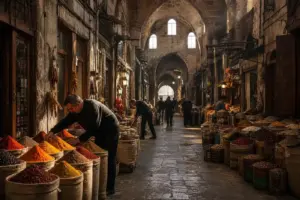 Spice Bazaar – about 1.2 km away (~20 min walk) · typical visit: 1–2 hours13 min on foot from Haliç metro, Open daily 08:00–19:30
Main image: AI-generated illustration. It may not show the place exactly as it looks.
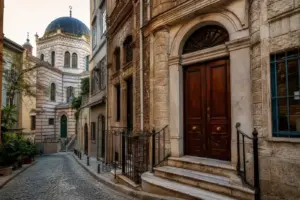 Museum of Turkish Jews – about 200 m away (~3 min walk) · typical visit: 1–2 hours2 min on foot from Şişhane metro
Main image: AI-generated illustration. It may not show the place exactly as it looks.
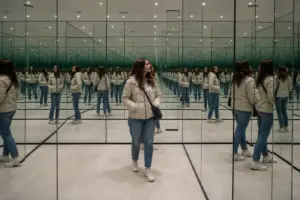 Museum of Illusions – about 300 m away (~5 min walk) · typical visit: 1–1.5 hours2 min on foot from Tünel metro
Main image: AI-generated illustration. It may not show the place exactly as it looks.
Metro stations near Beyoğlu
 Tünelabout 200 m away (~3 min walk)
Main image: AI-generated illustration. It may not show the place exactly as it looks.
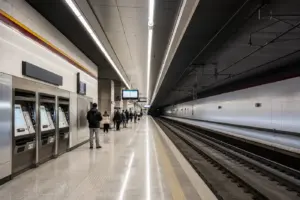 Şişhane – about 200 m away (~4 min walk)Open daily 06:09–00:09
Main image: AI-generated illustration. It may not show the place exactly as it looks.
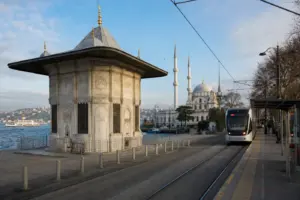 Tophaneabout 550 m away (~9 min walk)
Main image: AI-generated illustration. It may not show the place exactly as it looks.
Restaurants and cafes near Beyoğlu
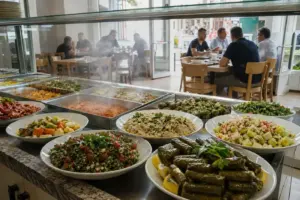 Galata Kitchen – about 150 m away (~2 min walk)5 min on foot from Tünel metro, Open 11:30–22:00, closed Sun
Main image: AI-generated illustration. It may not show the place exactly as it looks.
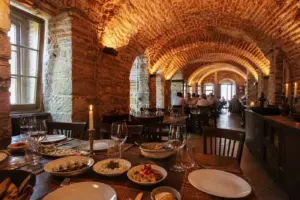 Pepo's Galata – about 200 m away (~3 min walk)5 min on foot from Şişhane metro, Open daily 10:00–02:00
Main image: AI-generated illustration. It may not show the place exactly as it looks.
 Hacı Abdullah Lokantası – about 200 m away (~3 min walk)5 min on foot from Şişhane metro, Open daily 11:00–23:00
Main image: AI-generated illustration. It may not show the place exactly as it looks.
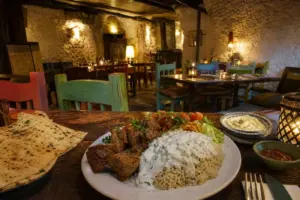 Vegan Community Kitchen – about 200 m away (~4 min walk)3 min on foot from Tünel metro, Open 12:30–22:30, closed Mon
Main image: AI-generated illustration. It may not show the place exactly as it looks.
Nightlife near Beyoğlu
 Nardis Jazz Club – about 200 m away (~3 min walk)5 min on foot from Şişhane metro, Open 20:30–01:00, closed Sun
Main image: AI-generated illustration. It may not show the place exactly as it looks.
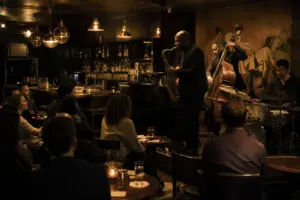 Asia-Khai Jazz Club – about 200 m away (~4 min walk)6 min on foot from Şişhane metro
Main image: AI-generated illustration. It may not show the place exactly as it looks.
Train stations and river piers near Beyoğlu
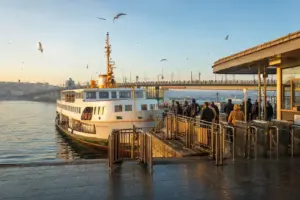 Karaköy Ferry Terminalabout 600 m away (~10 min walk)
Main image: AI-generated illustration. It may not show the place exactly as it looks.
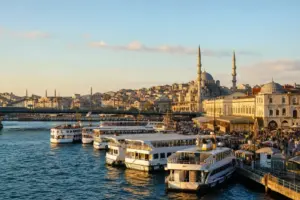 Eminönü Ferry Terminalabout 1.1 km away (~18 min walk)
Main image: AI-generated illustration. It may not show the place exactly as it looks.
Events and traditions near Beyoğlu
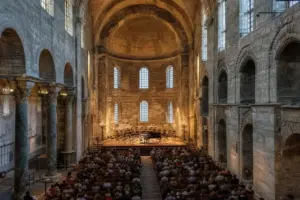 Istanbul Music Festivalabout 1.2 km away (~20 min walk)
Main image: AI-generated illustration. It may not show the place exactly as it looks.
Related guides
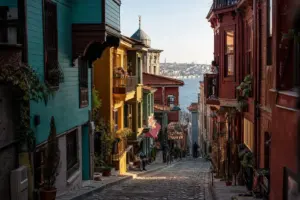 Balat: Istanbul’s Colorful Historic Neighborhood
Main image: AI-generated illustration. It may not show the place exactly as it looks.
 Turkish Meyhane Guide: How to Order Rakı, Meze and Fish
Main image: AI-generated illustration. It may not show the place exactly as it looks.
 Michelin Star Restaurants in Istanbul 2027: Dining Guide
Main image: AI-generated illustration. It may not show the place exactly as it looks.
 Alternative Music Venues and Underground Music Scene: Where to Hear Live Indie, Rock and Electronic Music
Main image: AI-generated illustration. It may not show the place exactly as it looks.
 Live Music Venues and Jazz Clubs: Where to Hear Jazz in Istanbul
Main image: AI-generated illustration. It may not show the place exactly as it looks.
Browse more: More in Beyoğlu · All Neighborhoods
FAQ: Beyoğlu
Is Beyoğlu the same as Galata?
No. Galata is a small historic district (the medieval waterfront area around Galata Tower) within the larger Beyoğlu neighborhood. Beyoğlu stretches from the waterfront up through İstiklal Avenue to Taksim and beyond. Galata is part of Beyoğlu, but Beyoğlu includes much more.
Can I visit Beyoğlu in a day trip from the old city?
Yes, easily. From Sultanahmet, take the M2 metro to Taksim (20 min) or cross Galata Bridge to the waterfront (10 min walk). A half-day wander through Galata, İstiklal and one museum is very doable. A full day allows deeper exploration of neighborhoods and two museums.
How much does it cost to visit Beyoğlu?
Entering Beyoğlu itself is free. Costs arise only for paid attractions: Galata Tower (separate ticket), Pera Museum, Istanbul Modern, Sakip Sabancı Museum, Galata Mevlevi Museum (each requires a separate ticket), and the Tünel funicular (single journey ticket). Walking, shopping and café sitting have their own costs.
Is Beyoğlu safe at night?
Yes, Beyoğlu is generally safe for visitors at night, especially on main streets (İstiklal Avenue, Taksim) and in well-lit bar and restaurant areas. Use the same urban awareness you would in any major city—avoid very quiet side streets alone late at night, keep valuables secure, and travel with others if possible. The neighborhood is well-policed for a tourist area.
What is the best way to get to Galata Tower?
By metro (M2 to Şişhane, 4-5 min walk downhill) or by crossing Galata Bridge from the old city on foot (15 min) or via tram T1 to Karakoy (10 min walk). All routes are straightforward. Allow 30 min–1 hour once at the tower to ascend, view and descend.
Do I need a guide to understand Beyoğlu's history?
Not necessary. Walking the streets, reading plaques (though few), and visiting museums (especially Galata Mevlevi Museum and Istanbul Modern, which have contextual information) give good understanding. A guide enriches the experience with stories and connections but is optional. Many visitors explore successfully on their own with a map and this article.
What museums in Beyoğlu are best?
Pera Museum (Ottoman art, Turkish paintings, contemporary exhibitions), Istanbul Modern (contemporary art in a warehouse with Bosphorus views), Sakip Sabancı Museum (Ottoman calligraphy and Islamic art), and Galata Mevlevi Museum (Sufi traditions) are all excellent. Pick based on your interests—contemporary art lovers favor Istanbul Modern, Ottoman history enthusiasts prefer Pera or Sakip Sabancı.
Where should I eat in Beyoğlu?
Waterfront Galata: seafood restaurants with Golden Horn views. İstiklal Avenue: casual kebab, Turkish breakfast, international chains. Side streets off İstiklal (Müze Sokak, Asmalı Mescit): meyhane, family restaurants, independent cafés. Cihangir: quieter, local restaurants and cafés. Budget meals start with street snacks; upscale restaurants run considerably higher. No single 'best' spot—explore neighborhoods that appeal to you.
Istanbul Vibes is a one-person project. A coffee keeps it going

Take this guide with you
Get a free PDF of this guide to print or read offline: key facts, tips and a map link on a few clean pages.
Report an issue on this page
How we research and update our guides
About this guide: AI assistance and accuracy
This guide is created with the help of AI and is based on official sources where available. Mistakes can still happen. Opening hours, prices, rules and other details are given to the best of our knowledge as of the date shown and can change without notice. It offers general recommendations only, not professional, legal or travel advice. Please confirm important details with the official source before you travel; you are responsible for your own plans and decisions.
* Affiliate link: as an Amazon Associate we earn from qualifying purchases at no extra cost to you.
