
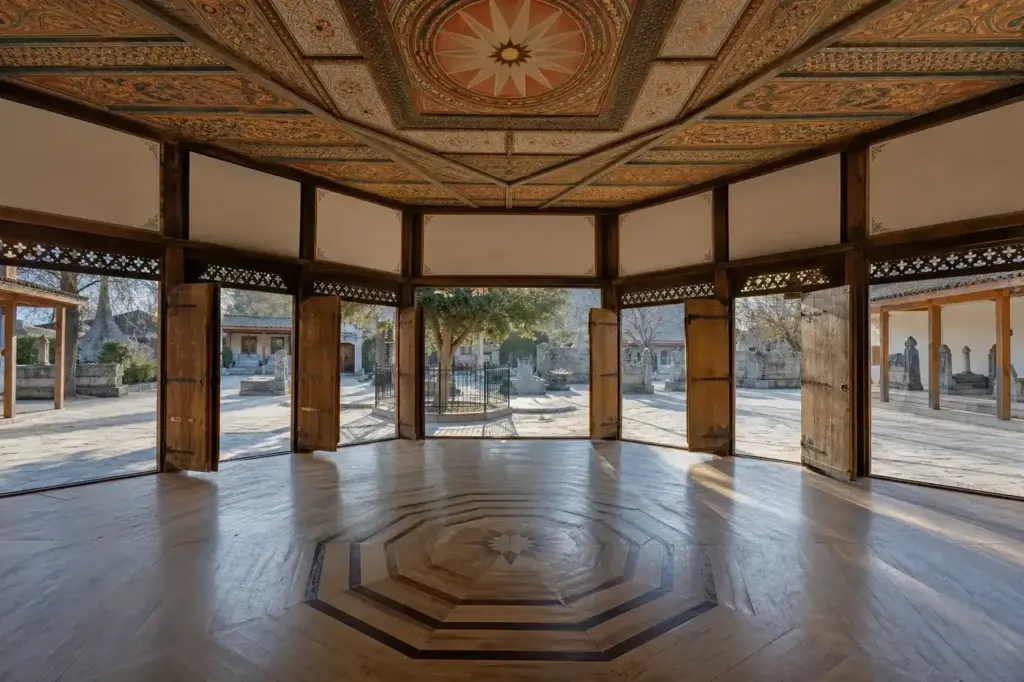
The Galata Mevlevi Museum sits quietly at the end of Istiklal Street, a spiritual sanctuary in one of Istanbul’s busiest quarters. Established in 1491, it is the oldest Mevlevi lodge in the city, and remains a living monument to the Sufi traditions of the Islamic world. Unlike grander Ottoman monuments, this modest wooden building—the core of a larger complex—preserves the intimate world of dervishes who devoted their lives to meditation, music, and the mystical whirling ceremony known as the sema.
Today the lodge functions as a museum, with whirling dervish performances showcasing the mystical practices of the Mevlevi order held regularly. The experience combines quiet contemplation in the exhibition rooms with the possibility of witnessing an extraordinary spiritual ritual.
Current access notice: As of October 2026: Museum closed Mondays. Last entry 17:30.
Quick Facts
| Turkish name | Galata Mevlevihanesi Müzesi |
|---|---|
| Built / opened | 1491 |
| Address | Şahkulu, Galip Dede Cad. No:15, 34420 Beyoğlu/İstanbul Google MapsApple MapsYandex Maps |
| District | Beyoğlu |
| Metro | Tünel (Tram T1, From Tünel, take Galip Dede Caddesi uphill; museum is 3–4 minutes on the left) Kabataş (M2 Metro, 5–7 minute walk via Galata Tower towards Galip Dede Caddesi) |
| Admission | ₺₺ |
| Best time to visit | Visit on a weekday morning (Tuesday–Friday, 09:00–11:00) to experience the courtyard in near-solitude, allowing quiet reflection. Sundays are busier but rewarding if you plan to attend the sema ceremony at 18:00. Summer (May–September) sees more tourists; winter (December–February) is quieter. Avoid afternoons during peak tourist season (July–August), when Istiklal Street is crowded and the courtyard more congested. |
| Website | muze.gov.tr |
What Is (and Isn't) Part of a Visit to Galata Mevlevi Museum?
| Part | Status | Notes |
|---|---|---|
| Museum exhibition rooms (semahane hall, artifacts, manuscripts) | Included in the standard ticket | Covered by single entry ticket; displays spread through two floors of the main wooden building |
| Courtyard, garden, and complex grounds | Included in the standard ticket | Accessible with museum ticket; includes tomb areas and mausoleums |
| Whirling dervish sema ceremony (Sunday performance) | Separate ticket or institution | Requires separate ticket, booked online; usually Sundays at 18:00 (check official source for current schedule) |
| Galata Tower | Outside / not part of it | Separate historic monument nearby on Galip Dede Caddesi; requires its own ticket and is not part of the Mevlevi complex |
| Photography inside semahane during sema ceremony | Not open to visitors | Photography generally restricted during active ceremonies to preserve the spiritual atmosphere |
Why Visit Galata Mevlevi Museum?
Displays include Sufi artifacts including clothing, turbans and ceremonial accessories, as well as traditional musical instruments. More importantly, this is one of very few places in Istanbul where you can watch an authentic sema ceremony in its proper setting rather than a tourist performance. The lodge offers a rare glimpse into Ottoman Sufism—a mystical branch of Islam that emphasizes direct spiritual experience through music, poetry, and dance. The beautiful garden courtyard provides an oasis of calm unexpected in central Galata.
How Galata Mevlevi Museum Is Laid Out
The complex is organized around a central courtyard. It is part of a complex including a meydan-ı şerif (courtyard), çeşme (drinking fountain), türbesi (tomb) and hamuşan (cemetery). The main semahane (ritual hall) is a two-story wooden building directly facing the courtyard entrance. Museum displays are spread through both floors of this building. On the upper floor you’ll find the master’s quarters and the sultan’s prayer area. Stone dervish cells line parts of the courtyard. The graves of important Mevlevi sheikhs, including the celebrated poet Sheikh Galib, are visible in the mausoleum areas.
Highlights of Galata Mevlevi Museum
The Semahane
The semahane features an octagonal layout and 18th-century Baroque elements, and displays Turkish musical instruments and manuscripts of Ottoman poets, including Sheikh Galib. This wooden hall with its painted ceiling and gilded woodwork is where dervishes performed their whirling ceremony. It remains unchanged and intimate, seating around 150 people.
Tip: During a sema ceremony, watch for the specific ritual: dervishes remove their black cloaks (symbolizing ego's burial) to reveal white garments underneath before beginning their whirling
Sheikh Galib Mausoleum
The Sheikh Galib Mausoleum was constructed in the early 19th century by Halet Said Efendi and houses notable figures like Sheikh Galib and Ismail Ankaravi. Galib was an 18th-century Mevlevi poet and scholar of extraordinary influence. His tomb is marked with Ottoman calligraphy.
Tip: Look for the intricate Arabic script carved into the stone—it records biographical information and spiritual rank
Dervish Cells
Stone rooms aligned in a row were used for dervish accommodation. These bare, simple chambers show how dervishes lived: austere, communal, with minimal possessions. Each cell is tiny—just enough for sleeping and basic prayer.
Tip: The cells illustrate the Mevlevi vow of poverty; Mevlevi dervishes renounced worldly comfort as part of their spiritual path
Ottoman Manuscript Collection
The museum displays original Ottoman poetry manuscripts and calligraphy, particularly works connected to Sheikh Galib and the Mevlevi tradition. These include devotional texts and mystical poetry reflecting Sufi philosophy.
Tip: If possible, ask a staff member about the Ottoman script—understanding even a few letters helps you recognize the aesthetic principles of Islamic calligraphy
Musical Instruments
On display are instruments central to Mevlevi ritual: the ney (reed flute), drum, and stringed instruments. Exhibits include traditional musical instruments, manuscripts, and textiles related to Mevlevi practices. The ney's haunting sound opens every sema ceremony.
Tip: Listen carefully during a performance to the ney's opening solo—it is said to represent the soul's yearning to return to God
Dervish Clothing and Regalia
The museum preserves original Mevlevi robes, tall brown felt hats (the sikke), and ritual garments. Each element has symbolic meaning in the ceremony: the tall hat represents the ego's tombstone, the black cloak the grave.
Tip: Mevlevi dress is highly distinctive—if you see similar attire worn during performances, it signals an authentic ceremony rather than a theatrical adaptation
Courtyard and Garden
The peaceful courtyard surrounding the semahane offers respite from the noise of Istiklal Street just beyond the gate. The museum offers a tranquil escape with a beautiful garden and peaceful atmosphere.
Tip: Visit early morning (shortly after 09:00) to experience the courtyard before crowds arrive; afternoon brings more visitors
Atmosphere
The moment you pass through the museum’s main gate—marked with Ottoman calligraphy—the sound of traffic drops away. The courtyard is quiet, often echoing only with footsteps and bird calls. Visitors tend to move slowly and speak softly, as if sensing the spiritual weight of the space. The wooden semahane has the intimate, worn patina of centuries; light filters through small windows, illuminating dust motes. The air itself feels different—older, concentrated.
If you visit during a Sunday sema ceremony, the atmosphere transforms. The 150-seat semahane fills with a mix of Turkish nationals and international visitors. The opening ney music creates an almost meditative hush. As dervishes begin to whirl, the room becomes absorbed in watching the ceremony—there’s no chatter, no distraction. It’s one of Istanbul’s most genuinely spiritual experiences.
History of Galata Mevlevi Museum
Built on land previously owned by Iskender Pasha, a prominent governor, the Galata Mevlevi Lodge was founded during Sultan Bayezid II’s reign. It emerged during a period when Sufism flourished in Ottoman elite circles. Bayezid II (r. 1481–1512) was known to be sympathetic to mystical Islam, and the Mevlevi order—which traced its spiritual lineage to the 13th-century Persian poet Mevlana Jalaluddin Rumi—received imperial patronage.
The semahane (whirling-dervish hall) at the center of this tekke (dervish lodge) was erected in 1491 and renovated in 1608 and 2009. The 1491 construction marked the physical anchor of the lodge; the 1608 renovation likely reflected both decay and changing Ottoman architectural tastes. By the 17th century, the lodge was well established as a center for Mevlevi learning and ritual.
The lodge has undergone several restorations, especially after a major fire in 1766. This fire was catastrophic but prompted major rebuilding. Subsequent repairs were made during the reigns of Sultans Selim III, Mahmud II, and Abdülmecid. Each sultan’s involvement underscored the lodge’s continued importance to Istanbul’s cultural and spiritual life.
The 20th century brought upheaval. It ceased to function as a dervish tekke (lodge) in 1925, following Atatürk’s secular reforms, which outlawed Sufi orders and their gatherings. The lodge fell into disuse. After a brief spell as a school, it opened as a museum in 1975, initially as the Divan Literature Museum focusing on Ottoman poetry. It underwent a major refurbishment between 2005 and 2009 and was reopened as the Galata Mevlevi Lodge Museum on November 21, 2011. This restoration returned it to focus on Mevlevi spirituality itself, allowing sema ceremonies to resume and making it a living center of Sufi tradition once again.
Legends and Myths about Galata Mevlevi Museum
Rumi's Eternal Dance
Legend – historically unreliable. The Mevlevi order traces its teachings to Mevlana Jalaluddin Rumi, the 13th-century Persian mystic whose poetry and philosophy inspired the whirling ceremony. While Rumi lived in Konya, not Istanbul, his spiritual presence is felt throughout the Galata lodge. Dervishes speak of the whirl as Rumi's eternal dance—a physical expression of his mystical philosophy that humans can join through meditation and surrender.
Sheikh Galib and the Dove
Legend – historically unreliable. Local tradition holds that Sheikh Galib, the 18th-century poet buried in the lodge's mausoleum, received a dove as a messenger from God. The dove appeared during his deepest meditations, signifying divine communication. His tomb became a place of pilgrimage for those seeking spiritual insight, and the dove motif appears in some of his mystical poetry preserved in the lodge.
Tickets and Booking for Galata Mevlevi Museum
| Ticket | Price | Includes |
|---|---|---|
| Museum entry (foreign adults) | ₺₺ | Access to all exhibition rooms, courtyard, mausoleums, and grounds; valid full day during opening hours |
| Children under 8 | Free | Free entry; parents must accompany |
| Sema ceremony (Sunday evening) | ₺₺ | Approximately 1-hour whirling dervish performance in the semahane; limited seating (150 total); separate online booking required |
₺ budget · ₺₺ moderate · ₺₺₺ upscale · ₺₺₺₺ splurge. Price levels are estimates compared with typical prices for visitors.
The museum itself does not require advance booking; entry is available at the ticket window inside the grounds, a few steps beyond the entrance past tombs. Hours are 09:00–18:30 (closed Mondays); last entry is 17:30. Whirling dervish ceremonies on Sunday evenings require separate online booking in advance, as seating is limited to approximately 150 seats and performances sell out. Tickets are booked through the official source (check muze.gov.tr for the current booking link). If an online date is not available, the ceremony may be full or cancelled; same-day purchase is sometimes possible from a table outside the main entrance before 11:00 on Sundays, but advance booking is safer.
Rates for Turkish citizens and concessions differ from international visitor rates; children under 8 enter free. For all current categories and concession details, visit the official museum page on muze.gov.tr.
Suggested itineraries Galata Mevlevi Museum
45 minutes
Enter courtyard and view the mausoleums and dervish cells to understand the complex layout. Visit the semahane to see the ritual hall and its architecture. Spend 15 minutes in the museum displays on the upper floor viewing manuscripts and instruments. Exit via the courtyard. This covers the essentials without rushing.
1.5 hours
Begin in the courtyard, reading the information plaques. Explore the semahane in detail, noting the octagonal layout and carved details. Spend 30 minutes on the museum's two floors, examining manuscripts, musical instruments, and Mevlevi clothing. Sit in the courtyard garden for 10 minutes to absorb the atmosphere. Ask staff if any specific artifacts are explained in detail that day.
Full experience (3–4 hours with sema)
Visit the museum in the afternoon (14:00–16:30), following the 1.5-hour plan. Return at 17:30 for the Sunday sema ceremony, which begins around 18:00. Arrive early to observe the dervishes preparing. Watch the full ceremony (approximately 1 hour). A light dinner at a nearby café follows nicely; restaurants line nearby Galip Dede Caddesi.
How to Get to Galata Mevlevi Museum
By tram (T1): Exit at Tünel station. The entrance to the museum is on Galip Dede Caddesi, uphill from Tünel. Walk uphill for 3–4 minutes; the museum is on your left, marked with its main gate. You will pass some small shops and restaurants.
By metro (M2) from the Bosphorus side: Exit Kabataş station. Walk uphill towards Galata Tower; as you approach the tower, turn left onto Galip Dede Caddesi and continue uphill. The museum is 5–7 minutes from the station.
By taxi or dolmuş: Give the driver the address: Galip Dede Cad. No:15, Beyoğlu. The street is central enough that any driver will know it.
From Hagia Sophia or Blue Mosque: Take the tram (T1) across the Golden Horn to Tünel, then walk uphill as described above (total 20–25 minutes).
Accessibility
The entrance courtyard is at ground level and accessible without steps. The semahane hall is on the ground floor and accessible. Access to the upper floor (where some manuscripts and additional displays are housed) requires climbing a wooden staircase—no elevator is available. Stone paths through the courtyard are uneven and may be difficult for those with mobility restrictions. The ticket window and main facilities are near the entrance. Staff can assist with basic accessibility questions.
Food Nearby
Galip Dede Caddesi and the immediately adjacent streets contain small cafés, tea houses, and kebab restaurants. Within 1–2 minutes' walk are several casual Turkish restaurants and coffee shops. Istiklal Street, just downhill from the museum, has many more options ranging from fast food to mid-range dining. No food is served inside the museum complex.
What to Bring
Wear comfortable walking shoes suitable for uneven stone courtyard surfaces. In summer, bring sun protection and a hat, as the courtyard has limited shade. In winter, the building is not heavily heated. A notebook is useful for reading the informational plaques describing exhibits. Modest dress is respectful in this spiritual space, though not strictly required; covered shoulders and knees are appreciated. Small bags are allowed; large backpacks may be checked at the entrance.
Best Views and Photo Spots of Galata Mevlevi Museum
The semahane interior facing the octagonal floor
Capture the wooden architecture, painted ceiling, and geometric floor where dervishes whirl. The play of light through small windows creates atmospheric shadows.
Best time: Morning (09:00–11:00) when light enters from the east; avoid flash
Courtyard framed by the main gate entrance
The quiet courtyard with the semahane building in the center, tomb structures, and garden paths. Shows the scale and layout of the complex.
Best time: Early morning or late afternoon for softer light; avoid harsh midday sun
The Ottoman calligraphy above the main entrance door
Close detail of the intricate Arabic script marking the traditional entrance. Shows the artistry and religious devotion embedded in the architecture.
Best time: Morning light on the door (around 09:30) is most flattering
Garden corner near the mausoleums
Trees, ancient gravestones with Ottoman calligraphy, and quiet alcoves. Captures the contemplative atmosphere.
Best time: Late afternoon (16:00–17:30) when light softens and tourists thin
Photography Rules
Photography is permitted in the courtyard, gardens, and most display areas. Flash photography is restricted inside the semahane and exhibition rooms to protect historic artifacts and the intimate atmosphere. Photography is generally forbidden during active sema ceremonies to preserve the spiritual experience and privacy of performers. Tripods and commercial equipment require permission.
Family Suitability
The museum is suitable for older children (ages 10+) with an interest in Islamic history or spiritual traditions. The courtyard is safe and peaceful for supervised children. The semahane and exhibition rooms are accessible to strollers, though the uneven stone courtyard surfaces are challenging for wheeled equipment. The experience may be abstract for very young children, as there are few interactive elements—it is primarily an exhibition and spiritual site. The sema ceremony is appropriate for families but requires sitting still in a crowded hall; younger children may find the stillness and unfamiliar ritual overwhelming.
Istanbul Vibes Tips
- Sunday sema ceremonies book out 2–3 weeks in advance during peak season (May–September). If planning a visit specifically for the ceremony, book online immediately upon discovering your travel dates; check muze.gov.tr for the booking portal.
- The museum is reached by walking uphill from Tünel station. This modest climb can be steep; allow extra time if you have mobility concerns or are carrying heavy bags. Taxis drop you nearer the entrance if walking is difficult.
- Many visitors confuse the Mevlevi Museum with the nearby Galata Tower (a medieval Genoese tower used as a lookout). The tower is separate, a 5-minute walk away, and requires its own ticket. The museum is the wooden building set back from the street behind a courtyard, not the stone tower.
- Arrive 30 minutes early for the Sunday ceremony to secure a good seat; the semahane fills quickly. The ceremony begins around 18:00 but doors open earlier. Arriving too close to start time may mean standing or limited sightlines.
- If you speak Turkish or ask politely, staff members will sometimes explain specific artifacts or answer questions about dervish traditions—the experience is richer with context. English signage exists but is sparse.
- The courtyard is one of Istanbul's quietest, least commercialized spaces. Resist the urge to eat, play loud music, or take hurried photos; respect the contemplative atmosphere that makes the site special and meaningful to visitors seeking spiritual engagement.
Explore Nearby Galata Mevlevi Museum
Sights near Galata Mevlevi Museum
 Galata Tower – about 1.6 km away (~26 min walk) · typical visit: 1–2 hours4 min on foot from Şişhane metro, Open daily 08:30–23:00
Main image: AI-generated illustration. It may not show the place exactly as it looks.
 Blue Mosque – about 3.6 km away · typical visit: 45–75 minutes3 min on foot from Gülhane metro
Main image: AI-generated illustration. It may not show the place exactly as it looks.
 Hagia Sophia – about 3.3 km away · typical visit: 1–1.5 hours8 min on foot from Gülhane metro, Open daily 09:00–19:30
Main image: AI-generated illustration. It may not show the place exactly as it looks.
 Atatürk Library – about 150 m away (~2 min walk) · typical visit: 2–3 hours11 min on foot from Kabataş metro, Open daily 09:00–21:00
Main image: AI-generated illustration. It may not show the place exactly as it looks.
 Atatürk Cultural Center – about 300 m away (~5 min walk) · typical visit: 2–3 hours8 min on foot from Kabataş metro, Open daily 10:00–18:00
Main image: AI-generated illustration. It may not show the place exactly as it looks.
 Istanbul Cinema Museum – about 450 m away (~7 min walk) · typical visit: 2–3 hoursOpen 11:00–19:00, closed Mon
Main image: AI-generated illustration. It may not show the place exactly as it looks.
Metro stations near Galata Mevlevi Museum
 Kabataş – about 800 m away (~13 min walk)Open daily 06:15–00:00
Main image: AI-generated illustration. It may not show the place exactly as it looks.
 Fındıklı-Mimar Sinan Üniversitesi – about 800 m away (~13 min walk)Open daily 06:00–00:00
Main image: AI-generated illustration. It may not show the place exactly as it looks.
Restaurants and cafes near Galata Mevlevi Museum
 Kızılkayalar – about 150 m away (~2 min walk)11 min on foot from Fındıklı-Mimar Sinan Üniversitesi metro, Open daily 08:00–05:00
Main image: AI-generated illustration. It may not show the place exactly as it looks.
 Topaz – about 150 m away (~3 min walk)11 min on foot from Fındıklı-Mimar Sinan Üniversitesi metro, Open 18:00–00:00, closed Sun
Main image: AI-generated illustration. It may not show the place exactly as it looks.
 Tiflisi – about 250 m away (~4 min walk)10 min on foot from Kabataş metro
Main image: AI-generated illustration. It may not show the place exactly as it looks.
 Zübeyir Ocakbaşı – about 250 m away (~4 min walk)14 min on foot from Fındıklı-Mimar Sinan Üniversitesi metro
Main image: AI-generated illustration. It may not show the place exactly as it looks.
Nightlife near Galata Mevlevi Museum
 Upperist – about 200 m away (~3 min walk)10 min on foot from Kabataş metro
Main image: AI-generated illustration. It may not show the place exactly as it looks.
 U2 Istanbul Irish Pub – about 250 m away (~4 min walk)14 min on foot from Fındıklı-Mimar Sinan Üniversitesi metro
Main image: AI-generated illustration. It may not show the place exactly as it looks.
Train stations and river piers near Galata Mevlevi Museum
 Kabataş Ferry Terminalabout 900 m away (~15 min walk)
Main image: AI-generated illustration. It may not show the place exactly as it looks.
 Beşiktaş Ferry Terminalabout 1.6 km away (~26 min walk)
Main image: AI-generated illustration. It may not show the place exactly as it looks.
Events and traditions near Galata Mevlevi Museum
 Istanbul Music Festivalabout 800 m away (~13 min walk)
Main image: AI-generated illustration. It may not show the place exactly as it looks.
 Istanbul Film Festivalabout 1.4 km away (~23 min walk)
Main image: AI-generated illustration. It may not show the place exactly as it looks.
Related guides
 Best Museums by Category: Ottoman Palaces to Contemporary Art
Main image: AI-generated illustration. It may not show the place exactly as it looks.
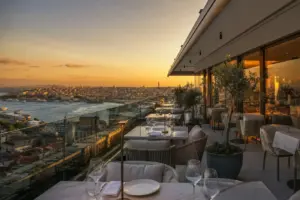 Mikla: Michelin-Starred Turkish Rooftop Fine Dining15 min on foot from Tünel metro, Open 18:00–01:00, closed Sun
Main image: AI-generated illustration. It may not show the place exactly as it looks.
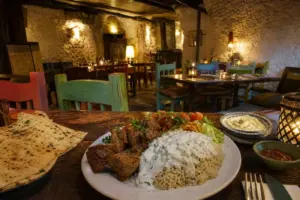 Vegan Community Kitchen: Homemade Turkish Vegan Food in Galata3 min on foot from Tünel metro, Open 12:30–22:30, closed Mon
Main image: AI-generated illustration. It may not show the place exactly as it looks.
 Balkan Lokantasi: Authentic Turkish Canteen on İstiklal Caddesi12 min on foot from Fındıklı-Mimar Sinan Üniversitesi metro, Open daily 07:00–23:00
Main image: AI-generated illustration. It may not show the place exactly as it looks.
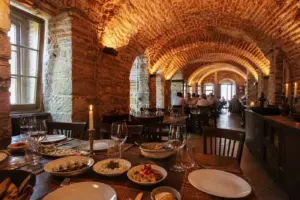 Pepo’s Galata: Turkish Kebabs and Wine Near Galata Tower5 min on foot from Şişhane metro, Open daily 10:00–02:00
Main image: AI-generated illustration. It may not show the place exactly as it looks.
Browse more: More in Beyoğlu · All Museums · All Sightseeing
FAQ: Galata Mevlevi Museum
Is the Galata Mevlevi Museum the same as the Galata Tower?
No. The Mevlevi Museum is a wooden lodge building set back from the street in a courtyard; the Galata Tower is a separate medieval stone tower nearby on the same street. Both are in Galata, but they are distinct sites with separate tickets and histories. The tower is a tourist lookout; the museum is a spiritual site and exhibition space.
When are the whirling dervish ceremonies held?
Sema ceremonies typically occur on Sunday evenings (around 18:00), lasting approximately 1 hour. However, schedules may vary by season. Check the official museum website or call +90 212 245 4141 before planning your visit, as performance dates and times can change. Ceremonies require separate advance booking and sell out quickly.
Can I visit just the museum without attending a ceremony?
Yes. The museum itself opens daily (Tuesday–Sunday, 09:00–18:30) for general viewing of exhibits, the semahane hall, courtyard, and grounds. Museum entry alone is much more affordable than ceremony tickets and requires no advance booking. You can understand dervish culture and see the historic space without the performance.
How long does a visit typically take?
Plan 45 minutes for a quick visit (viewing the semahane, courtyard, and main exhibits) or 1.5 hours for a thorough exploration. If attending the sema ceremony, add another 1–1.5 hours. The complete experience (museum + ceremony + waiting time) takes 3–4 hours.
Do I need to remove my shoes or dress specially?
No strict dress code exists, but modest, respectful clothing is appreciated in this spiritual space. You do not need to remove shoes to enter the museum. During the sema ceremony, appropriate dress is respectful; covered shoulders and knees are customary. Visitors are expected to maintain quiet behavior and contemplative atmosphere.
Is the Istanbul Museum Pass accepted here?
Yes. The Istanbul Museum Pass (a multi-day pass covering 13 museums and historic sites) includes free entry to the Galata Mevlevi Museum. However, it does not cover sema ceremony tickets, which must be purchased separately.
Can children attend the sema ceremony?
Yes, children are welcome. The ceremony lasts about 1 hour and children ages 8+ can usually sit through it, though very young children may find the stillness and unfamiliar experience challenging. Children need their own tickets booked in advance like adults.
Is photography allowed during the ceremony?
Photography is generally prohibited during active sema ceremonies to preserve the spiritual atmosphere and the privacy of the dervishes. Photography is permitted in the courtyard, gardens, and exhibition rooms. Always ask staff before photographing if unsure.
Istanbul Vibes is a one-person project. A coffee keeps it going
Hotels near Galata Mevlevi Museum
- The Now Hotel (50 m) Check prices (affiliate link, opens in a new tab)
- Linfer Hotel (100 m) Check prices (affiliate link, opens in a new tab)
- Kartal Palace Hotel (100 m) Check prices (affiliate link, opens in a new tab)
- Hotel Grand Zentrum (100 m) Check prices (affiliate link, opens in a new tab)
Affiliate link (opens the booking site): we may earn a commission at no extra cost to you.
Restaurants near Galata Mevlevi Museum
- Eylül Cafe and Restaurant (150 m) Google Maps
- Ist Cafe (200 m) Google Maps
- Hatay Medeniyetler Sofrasi (200 m) Google Maps
- Ming Garden (200 m) Google Maps
Distances are straight-line, from OpenStreetMap data.

Take this guide with you
Get a free PDF of this guide to print or read offline: key facts, tips and a map link on a few clean pages.
Report an issue on this page
How we research and update our guides
About this guide: AI assistance and accuracy
This guide is created with the help of AI and is based on official sources where available. Mistakes can still happen. Opening hours, prices, rules and other details are given to the best of our knowledge as of the date shown and can change without notice. It offers general recommendations only, not professional, legal or travel advice. Please confirm important details with the official source before you travel; you are responsible for your own plans and decisions.
* Affiliate link: as an Amazon Associate we earn from qualifying purchases at no extra cost to you.
