
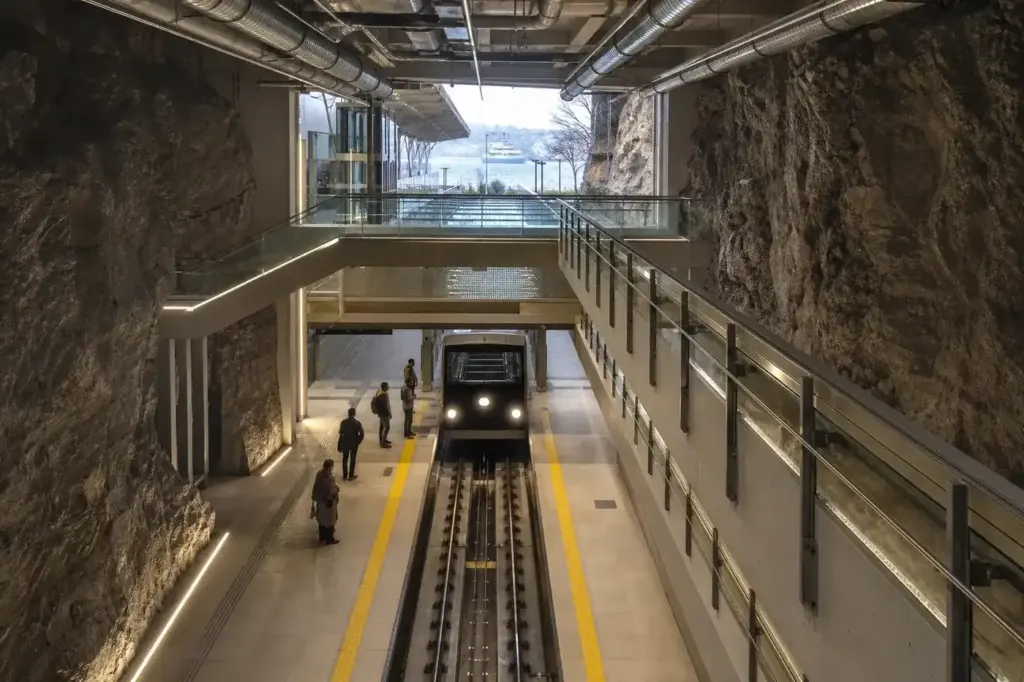
Kabataş is Istanbul’s busiest transport interchange, where land and water routes converge at the Bosphorus shore. The F1 funicular station sits 16 metres below sea level here, making it an engineering feat that few visitors realize. Whether you’re arriving by ferry from the Asian side, descending from Taksim Square, or boarding a tram to the city centre, Kabataş shapes how millions of daily journeys happen in Istanbul.
The station opened on 29 June 2006 as the terminus of the T1 tram line, instantly becoming a crucial link between Beyoğlu‘s heights and the waterfront transport network. Today it connects four major systems: the F1 funicular to Taksim, the T1 tram to Bağcılar and the Old City, ferries to the Asian side, and soon the M7 metro.
Current access notice: As of October 2026: The M7 metro extension to Kabataş is under construction and expected to open in late 2026. The F1 funicular and T1 tram continue operating normally. Check Metro Istanbul's official site for the latest M7 opening date.
Lines and interchanges: F1. Interchange: Kabataş (F1), Taksim (F1).
Quick Facts
| Built / opened | 2006 |
|---|---|
| Address | Meclis-i Mebusan Cd., Ömer Avni Mah., 34427 Beyoğlu, Istanbul Google MapsApple MapsYandex Maps |
| District | Beyoğlu |
| Interchanges | Kabataş (F1, Main station hall) Taksim (F1, Arrive at Taksim Square; exit towards Taksim Metro (M2) or Istiklal Street) |
| Opening hours | Daily 06:15-00:00 |
| Best time to visit | Kabataş operates year-round, but travel is most efficient outside rush hours (09:30–17:00 on weekdays, and most of the day on weekends and public holidays). The station functions in all weather. Heavy rain or wind can occasionally affect ferry schedules and funicular operation (rare). Winter (November–February) sees lower tourist crowds but can bring sea spray and wind along the Bosphorus piers. Spring and autumn offer comfortable conditions for waterfront waiting time. |
Why Visit Kabataş?
Most visitors pass through Kabataş not to visit it but to use it as a gateway. The station serves several essential journeys: reaching Taksim Square and Istiklal Street without climbing, crossing to Kadıköy or Üsküdar via ferry, or joining a Bosphorus cruise. During rush hours, the station reveals how Istanbul’s public transport system actually works at scale—controlled chaos of thousands moving between ferries, funiculars, trams and buses. The station has become a visible symbol of how a growing city moves people efficiently.
How Kabataş Is Laid Out
The station is split into layers. Underground, the F1 funicular platform sits 16 metres below sea level due to the steep slope towards Taksim. Above ground, on Meclis-i Mebusan Avenue, the T1 tram platform sits at street level. Next to it are the ferry piers and Kabataş Terminal building, where inter-city ferries and cruise boats depart. Bus stops for local routes 22, 26, 27 and others line the avenue nearby. During peak hours (around 8 am and 5-7 pm on weekdays), the entire zone becomes congested with commuters transferring between systems. Enter from street level for ferries and trams, or descend to the funicular hall below.
Atmosphere
Kabataş thrums with motion. Between 07:00 and 09:00 on weekdays, hundreds of passengers pack the funicular cars and tram platforms in waves. The F1 funicular station hall echoes with the sound of departing trains every few minutes; from here you hear the underground rumble as each car climbs or descends at a 22 per cent gradient. Above ground, the T1 trams rattle past every 2-3 minutes at peak hours, their overhead wires crackling in the wind. Ferry horns sound regularly from the piers. The air smells of diesel, salt water and the kebab stands near the terminal.
During midday (11:00-14:00) and evening (after 20:00), the rhythm slows considerably. The funicular runs with 5-minute frequency even at off-peak times, but waiting areas stand mostly empty. The waterfront reveals itself then—you can see across the Bosphorus and hear the ferry engines more clearly. The station feels utilitarian rather than touristic; few people linger.
History of Kabataş
The site’s transport story began long before Kabataş became a metro hub. Ferries have departed from the Bosphorus shore here since Ottoman times, when the landing served traders and commuters crossing the strait. The area’s name, Kabataş, means ‘rock shore’—a literal description of the waterfront before modern development.
Modern transport infrastructure arrived in 1992 when the T1 tram line opened as far as Eminönü. For fourteen years, the tram terminused at Eminönü, leaving Kabataş to ferries and buses alone. In 2006, a major integration project changed this. On 29 June 2006, two transport systems opened simultaneously: the T1 tram extension from Eminönü to Kabataş, and the F1 Taksim–Kabataş funicular. The funicular had been built by the Doppelmayr Garaventa Group and required extraordinary engineering—the Kabataş platform sits 16 metres below sea level, and the 594-metre line climbs a 22 per cent gradient in just 2.5 minutes. This linking of the waterfront to Taksim Square via underground funicular transformed Kabataş from a ferry terminal into a multi-modal hub.
The station’s role grew further with major infrastructure projects. In 2023, part of the M7 metro line opened nearby, with further sections approaching. The M7 will eventually extend Kabataş connections to Mahmutbey in the northwest, threading through Beyoğlu, Beşiktaş, Şişli and beyond. As of October 2026, the Yıldız–Kabataş metro section is under construction, with opening expected in late 2026. When complete, Kabataş will be Istanbul’s busiest four-line interchange: F1 funicular, T1 tram, M7 metro, and ferries.
The station’s design reflects its challenge: integrating ferries, buses, trams and a funicular all within metres of each other, on a sloping shoreline, within an already dense neighbourhood. Most solutions remain invisible to passengers—mechanical systems located at Taksim Station control the funicular cable via counter-weight and counterbalance principle, while separate ticket systems, platforms and entrances keep each transport mode independent even as they serve the same passengers.
Tickets and Booking for Kabataş
Kabataş is not a destination where you buy separate tickets for each mode. Instead, for tourists visiting Istanbul, use the following payment options:
- Single journey: Pay cash or card at each station (funicular, tram, ferry, bus) for each leg of your journey. Prices vary by transport type and are generally modest.
- Istanbul Kart: A rechargeable card available at metro station kiosks and some shops, valid across metro, tram, funicular, ferry and bus services. Allows discounts for multiple journeys.
- Mobile app: The Metro Istanbul app and city transport apps allow mobile payment on many services; check compatibility with your foreign phone and card.
- Foreign visitors and payment: Cash is widely accepted. Turkish debit and credit cards are required for some app-based systems. Check whether your home country’s banking sanctions affect use of Turkish cards (if applicable). Most payment systems at Kabataş accept foreign cards at physical terminals.
Avoid travel during rush hours (08:00–09:30 and 17:00–19:00 on weekdays) if possible; platforms become severely crowded. No reserved seating or queuing systems exist—boarding is first-come, first-served. For detailed fares, journey planning and payment method support, visit the official Metro Istanbul website.
How to Get to Kabataş
By funicular (F1): The funicular station sits below street level. From Taksim Square, descend into the Taksim station hall (marked for F1 Taksim–Kabataş). The journey takes 2.5 minutes and covers a 70-metre elevation drop. The Kabataş platform is your destination if heading to the Bosphorus shore or ferries.
By tram (T1): The T1 tram terminuses at Kabataş. From Sultanahmet or the Old City, board a tram heading towards Bağcılar and ride to the final stop at Kabataş. From Beyoğlu or Taksim, take any tram heading towards Bağcılar. Journey times vary: from Eminönü about 10 minutes, from Sultanahmet about 15 minutes.
By ferry: If arriving by ferry from the Asian side (Üsküdar, Kadıköy or Moda), you dock at Kabataş Pier directly. Walk uphill along Meclis-i Mebusan Avenue or use the funicular or tram from here.
By bus: Local buses 22, 22B, 25E, 26, 26A, 26B, 27E, 27SE, 28, 28T, 29C, 29D, 30D and others serve Kabataş. The main stop is on Meclis-i Mebusan Avenue near the tram terminal.
By taxi or car: Taxis can drop you at Kabataş Pier or street-level entrances. Parking is limited. Most visitors use trams or ferries rather than driving.
Accessibility
Kabataş is accessible by wheelchair. The F1 funicular has wheelchair-accessible cars and the Taksim station has lifts to the platform level. The Kabataş funicular platform sits below ground and is reached by a long underground corridor with lifts. The T1 tram uses modern low-floor vehicles accessible to wheelchair users. Ferry piers at Kabataş have accessible boarding points and staff can assist if notified in advance. The station has accessible toilet facilities. Free companion tickets are not standard across all services; check with individual operators at the time of travel.
Food Nearby
Kebab stands and small cafés operate around Kabataş Pier and Meclis-i Mebusan Avenue. Inside the terminal building, a few snack vendors offer sandwiches, pastries and drinks. None are high-end restaurants; all are casual, quick-service eateries typical of transport hubs. For proper dining, walk 5–10 minutes uphill into Beyoğlu or Taksim, or take the funicular up to Istiklal Street. Crossing by ferry to Kadıköy puts you in an area with many more restaurant choices.
What to Bring
Wear comfortable walking shoes—the station involves moving between platforms on different levels and, for ferry passengers, walking from piers up slopes to the tram or funicular. The waterfront is windy; a light jacket helps. In summer, bring sunscreen for time spent on outdoor ferry decks or walking the pier area. Bring a reusable water bottle (tap water in Istanbul is safe). A small backpack is practical; bag checks are standard at some transport hubs but not heavily intrusive.
Best Views and Photo Spots of Kabataş
Kabataş Pier overlook, near the ferry terminal building
View across the Bosphorus towards the Asian hills, with ferries departing and arriving, and Beyoğlu's buildings framing the left side. The water and light shift with time of day.
Best time: Golden hour (early morning 06:30–08:00, or late afternoon 17:00–19:00) gives warm light across the strait. Midday (12:00–14:00) reveals the sharpest details across the water.
Meclis-i Mebusan Avenue at street level near the T1 tram platform
The tram approaching the Kabataş terminus, with the Bosphorus and hills in the background. Captures the busy street-level transport rhythm.
Best time: Peak hours (08:00–09:00 and 17:30–18:30) when multiple trams are visible. Early morning before 07:00 offers clear light without crowds.
From the funicular car, during descent from Taksim
The 2.5-minute journey offers changing views of Beyoğlu's district, the Bosphorus emerging below, and the city's vertical layers. The window framing is unique.
Best time: Daylight hours. Evening (after 17:00) when the Bosphorus reflects sunset light creates a dramatic shot.
Photography Rules
Photography is allowed throughout Kabataş. No restrictions apply to personal cameras or phones. Drone use is not permitted. Tripods are allowed for still photography but may obstruct others during peak hours. Flash photography is permitted but unnecessary in the well-lit station halls.
Family Suitability
Kabataş is family-friendly as a transit point. The F1 funicular is an attraction in itself for children (the fast descent and engineering are memorable). The T1 tram ride is smooth and gentle. Ferry crossings are exciting for kids. Strollers are manageable on the tram and ferry platforms but challenging in the crowded funicular station during rush hours. Expect long queues with children during peak travel times (08:00–09:30, 17:00–19:00 on weekdays). The waterfront piers are open-air but not playgrounds; supervise children carefully near the water's edge. Bring snacks—the nearby food options are limited.
Istanbul Vibes Tips
- Plan your transfer mode in advance. If heading to Taksim Square or Istiklal Street, the funicular is faster than walking (2.5 minutes vs 20+ minutes on foot) but often crowded at peak times. If heading to the Old City, the tram is more comfortable than the ferry on rough water days.
- Ferries to the Asian side (Üsküdar, Kadıköy) depart frequently, especially 07:00–10:00 and 16:00–19:00. Outside these windows, wait times can extend to 20+ minutes. Check the pier signboards or ferry operator websites before boarding.
- The funicular closes at midnight (00:00); after this time, you cannot use it to reach Taksim. Taxis and night buses are the only options late at night. Plan evening outings accordingly.
- Ticket machines at the tram platform sometimes run out of change during peak hours. Bring small denominations or use the Istanbul Kart if possible. The funicular station has dedicated ticket windows that are more reliable.
- Do not confuse Kabataş funicular station (F1) with Taksim funicular station on Istiklal Street (the historic Tünel). They are entirely separate systems separated by the city's height difference. Kabataş–Taksim is modern and steep; Tünel is historical and shallower.
Explore Nearby Kabataş
Sights near Kabataş
 Dolmabahce Palace – about 900 m away (~15 min walk) · typical visit: 2–3 hours15 min on foot from Kabataş metro, Open 09:00–18:00, closed Mon
Main image: AI-generated illustration. It may not show the place exactly as it looks.
 Istiklal Street – about 1.2 km away (~19 min walk) · typical visit: 1–2 hours12 min on foot from Tünel metro, Open 24 hours
Main image: AI-generated illustration. It may not show the place exactly as it looks.
 Camlica Tower – about 4.8 km away · typical visit: 1–2 hours2 min on foot from Altunizade metro, Open daily 10:00–22:00
Main image: AI-generated illustration. It may not show the place exactly as it looks.
 Atatürk Cultural Center – about 500 m away (~8 min walk) · typical visit: 2–3 hours8 min on foot from Kabataş metro, Open daily 10:00–18:00
Main image: AI-generated illustration. It may not show the place exactly as it looks.
 Mimar Sinan Fine Arts University – about 600 m away (~10 min walk) · typical visit: 1–2 hours2 min on foot from Fındıklı-Mimar Sinan Üniversitesi metro
Main image: AI-generated illustration. It may not show the place exactly as it looks.
Metro stations near Kabataş
 Fındıklı-Mimar Sinan Üniversitesi – about 450 m away (~8 min walk)Open daily 06:00–00:00
Main image: AI-generated illustration. It may not show the place exactly as it looks.
Train stations and river piers near Kabataş
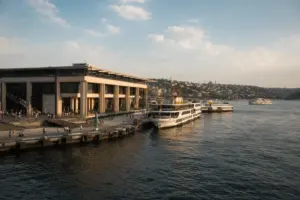 Kabataş Ferry Terminalabout 200 m away (~3 min walk)
Main image: AI-generated illustration. It may not show the place exactly as it looks.
 Beşiktaş Ferry Terminalabout 1.1 km away (~18 min walk)
Main image: AI-generated illustration. It may not show the place exactly as it looks.
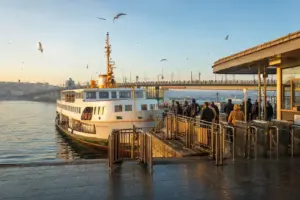 Karaköy Ferry Terminalabout 2.0 km away (~32 min walk)
Main image: AI-generated illustration. It may not show the place exactly as it looks.
Restaurants and cafes near Kabataş
 Ayaspaşa Russian Restaurant – about 300 m away (~5 min walk)5 min on foot from Kabataş metro, Open daily 12:30–23:30
Main image: AI-generated illustration. It may not show the place exactly as it looks.
 Tiflisi – about 650 m away (~10 min walk)10 min on foot from Kabataş metro
Main image: AI-generated illustration. It may not show the place exactly as it looks.
 Nobu Istanbul – about 650 m away (~11 min walk)11 min on foot from Kabataş metro
Main image: AI-generated illustration. It may not show the place exactly as it looks.
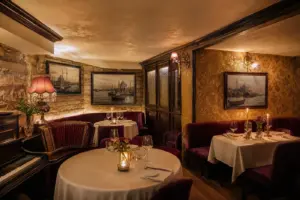 Jash Istanbul – about 650 m away (~11 min walk)4 min on foot from Fındıklı-Mimar Sinan Üniversitesi metro, Open daily 12:00–02:00
Main image: AI-generated illustration. It may not show the place exactly as it looks.
Events and traditions near Kabataş
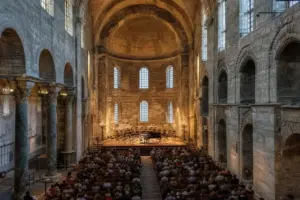 Istanbul Music Festivalabout 1.6 km away (~25 min walk)
Main image: AI-generated illustration. It may not show the place exactly as it looks.
Related guides
 Ortaköy and Beşiktaş Walk: Waterfront Mosques, Street Food and Local Life
Main image: AI-generated illustration. It may not show the place exactly as it looks.
 Istanbul Football Stadium Tours: Three Clubs and Their Museums
Main image: AI-generated illustration. It may not show the place exactly as it looks.
 Best Hotels Near Istanbul’s T1 Tram Line for Easy Sightseeing
Main image: AI-generated illustration. It may not show the place exactly as it looks.
 Istanbul Ferry Timetables and Prices: Şehir Hatları Routes Explained
Main image: AI-generated illustration. It may not show the place exactly as it looks.
 Best Bosphorus Dinner Cruises: Prices, Food and Experiences Compared
Main image: AI-generated illustration. It may not show the place exactly as it looks.
Browse more: More in Beyoğlu · All Metro Stations · All Other Hubs
FAQ: Kabataş
Is Kabataş where I board ferries to the Asian side?
Yes. Ferries to Üsküdar and Kadıköy depart from Kabataş Pier, next to the metro station. The ferry terminal building is on the waterfront. Walk from the tram or funicular platform towards the water—the pier is clearly signalled. Ferries run frequently, especially during rush hours.
Can I reach Taksim Square directly from Kabataş?
Yes, via the F1 funicular. Descend from the funicular's Kabataş hall below ground, board a car, and arrive at Taksim station in 2.5 minutes. This is the fastest route. Alternatively, take the tram up one stop and walk, but the funicular is quicker.
Which tram line goes through Kabataş?
The T1 Kabataş–Bağcılar tram. It runs from Kabataş through Eminönü, Sultanahmet, and Laleli to Bağcılar. The journey to the Old City (Sultanahmet) takes about 15 minutes from Kabataş.
Is the funicular crowded at all times?
Peak crowding occurs 08:00–09:30 and 17:00–19:00 on weekdays. Between these times, especially midday and on weekends, wait times are typically under 5 minutes and cars are half-full. Avoid the morning and evening rush.
Will the new M7 metro change how I use Kabataş?
Yes. Once the M7 opens to Kabataş (expected late 2026), you will be able to reach Mahmutbey, Beşiktaş, Şişli and other northwestern areas by metro. This will reduce reliance on buses and trams for those routes. For now, trams and funicular remain the main options.
Can I buy a single ticket for multiple transport modes at Kabataş?
No. Each system (funicular, tram, ferry, bus) has its own ticket. Buy at each station. The Istanbul Kart, a rechargeable card, works across all systems and avoids buying separate tickets for each journey.
How deep is the funicular platform below the sea?
The Kabataş funicular station sits 16 metres below sea level due to the steep slope. The funicular itself rises 70 metres in elevation over 594 metres of length (a 22 per cent gradient). This is a feat of engineering, not a reason to worry about safety—the system is fully modern and regularly inspected.
Where do I wait for a bus at Kabataş?
Bus stops are on Meclis-i Mebusan Avenue at street level, near the tram platform. Routes 22, 26, 27 and others serve Kabataş. Bus shelters and signboards mark the stops. Check route numbers on the shelter before boarding.
Istanbul Vibes is a one-person project. A coffee keeps it going

Take this guide with you
Get a free PDF of this guide to print or read offline: key facts, tips and a map link on a few clean pages.
Report an issue on this page
How we research and update our guides
About this guide: AI assistance and accuracy
This guide is created with the help of AI and is based on official sources where available. Mistakes can still happen. Opening hours, prices, rules and other details are given to the best of our knowledge as of the date shown and can change without notice. It offers general recommendations only, not professional, legal or travel advice. Please confirm important details with the official source before you travel; you are responsible for your own plans and decisions.
* Affiliate link: as an Amazon Associate we earn from qualifying purchases at no extra cost to you.
