
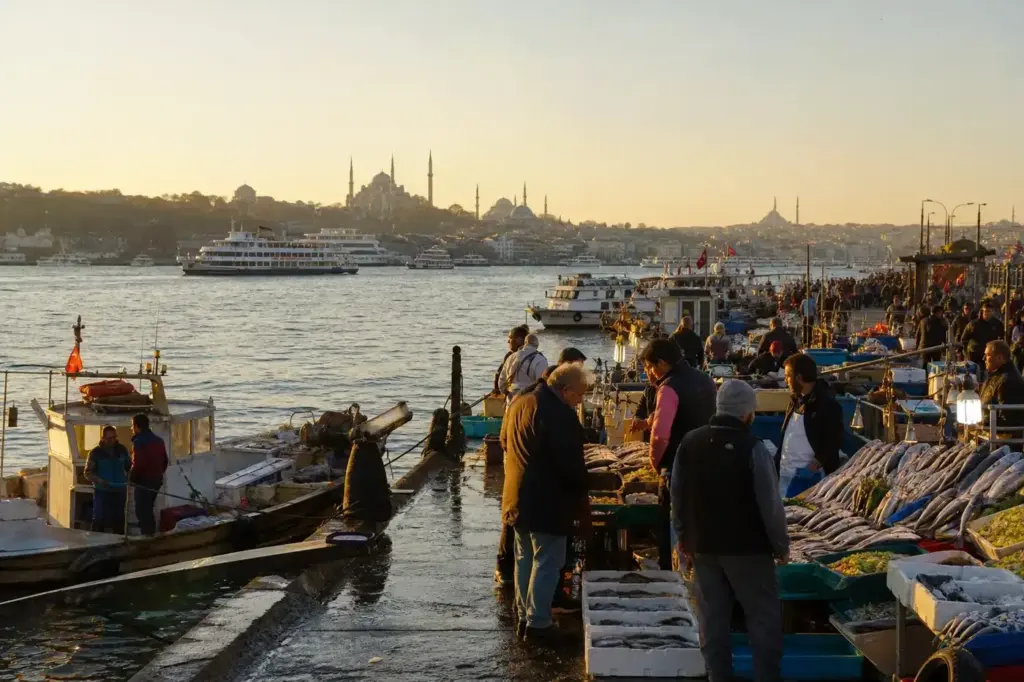
Kadıköy is the Asian side’s busiest cultural and commercial hub, sitting just 2 km across the Bosphorus from Old Istanbul. Known in Byzantine times as Chalcedon, it remains the gateway for ferries, metro and rail between continents. Visitors arrive by train, metro or ferry—most step directly from the water into pedestrian markets and café-lined streets.
The district sprawls inland over several kilometers, but most travelers spend time in central Kadıköy and Moda, two densely packed neighborhoods packed with restaurants, bars, bookshops and graffiti-covered walls.
Quick Facts
| Address | Google MapsApple MapsYandex Maps |
|---|---|
| District | Kadıköy |
| Metro | Kadıköy (M4, Multiple exits to Haydarpaşa Rıhtım Caddesi) Kozyatağı (M4, M8, Multiple exits to E-5 highway) |
| Best time to visit | Spring (April–May) and autumn (September–October) offer warm days and cool evenings, ideal for waterfront walks and sitting in tea gardens. Summer (June–August) is hot and can be crowded, especially weekends, but the waterfront remains alive until late evening. Avoid midday heat in summer by visiting in early morning or evening. Weekday mornings offer the most authentic market atmosphere; weekends draw more leisure visitors and families. Winter (November–February) is cool and often rainy, but the district is less crowded and cafés are cozy. Restaurants and bars operate year-round. |
| Recommended duration | Half day to full day |
What Is (and Isn't) Part of a Visit to Kadıköy?
| Part | Status | Notes |
|---|---|---|
| Central Kadıköy market and waterfront (Çarşı, ferry pier, Moda street) | Included in the standard ticket | Freely accessible public streets and waterfront; no tickets required. |
| Metro stations (Kadıköy M4, Kozyatağı M4/M8) | Included in the standard ticket | Accessible with metro pass or single ticket purchased at ticket machines. |
| Ferry terminal and boat services | Included in the standard ticket | Ferry tickets purchased separately at kiosks; municipal ferries (Şehir Hatları) and private operators (Turyol, İDO) offer service to European side. |
| Restaurants, cafés, bars, shops | Included in the standard ticket | Private businesses; payment required. No special ticket or booking needed to walk and window-shop. |
| Haydarpaşa Train Station | Not open to visitors | Undergoing restoration; not open to public entry. Exterior visible from street and waterfront. |
| Sureyya Opera House | Separate ticket or institution | Performance tickets sold separately if events are scheduled; café sometimes open to public. |
| Istanbul Toy Museum (in Göztepe neighborhood, Kadıköy) | Separate ticket or institution | Located in Göztepe (southeast of central Kadıköy); separate admission required. |
| Heritage Tram T1 line | Included in the standard ticket | Single tram ticket inexpensive; operates with metro pass or standalone fare. |
Why Visit Kadıköy?
Kadıköy works best as a half-day ferry excursion or an evening visit for dinner and nightlife. The market (çarşı) near the ferry pier is genuinely busy—not staged for tourists—with fruit, fish, and working tavernas. The seafront promenade toward Moda offers panoramic views back to the Sultanahmet skyline across the water. Moda itself, a tree-lined promontory, holds tea gardens and a local-feeling waterfront park. The district is also headquarters for Istanbul’s street art scene, indie bookshops, craft bars and small galleries. Coming here, you leave the Sultanahmet tourist loop and observe how ordinary Istanbul works.
How Kadıköy Is Laid Out
Kadıköy district is large but visitors concentrate in two linked areas. The ferry terminal and metro station sit side by side at the waterfront, where pedestrian streets extend inland into the market (çarşı) and Caferağa Mah. neighborhood. This pocket is densely packed, narrow and chaotic—good for 1–2 hours of market browsing, eating and shop windows.
South from the market, past the tram stop and Altıyol Square (where the Bull Statue stands), Moda street climbs gently toward the Moda promontory. This is the second neighborhood—less dense, more residential, with wider streets, waterfront cafés and parks. Moda is a 20–30 minute walk from the ferry. Yeldeğirmeni street, north and uphill from the market, is a bohemian quarter known for boutiques, galleries and craft shops. Allow 2 hours for a loop covering market, tram, Moda and the seafront promenade.
Highlights of Kadıköy
Kadıköy Ferry Terminal and Market (Çarşı)
Step off the ferry into one of Istanbul's most authentic working markets, with no tour groups or souvenir shops. Narrow lanes lined with fruit and vegetable stalls, fish mongers, and working-class eateries run parallel to the waterfront. The market has existed since Ottoman times as a supply point for the city. It is genuinely crowded on weekday mornings—locals shopping, not visitors watching. Just inland are meyhane tavernas serving grilled fish and meze.
Tip: Arrive at 9–11 a.m. for the busiest market energy and best light. Ferries run frequently from Eminönü and Karaköy on the European side (15 minutes).
Moda Seafront Promenade and Tea Gardens
A 2–3 km waterfront path winds south from the ferry docks along the Sea of Marmara, passing seaside cafés and eventually reaching Moda, a tree-lined promontory with tea gardens overlooking the water. The view back to Topkapi Palace, Hagia Sophia and the European skyline is unobstructed. This is where Istanbulites come to linger; it feels like a living neighborhood, not a sightseeing circuit.
Tip: Walk the full route in either direction; it takes 30–45 minutes without stopping. Best in late afternoon when light softens and locals gather for tea.
Yeldeğirmeni Street and Street Art Quarter
Once known for windmills (yeldeğirmeni means windmill), this uphill neighborhood is now Istanbul's bohemian heart: vintage shops, independent galleries, craft studios, and some of the city's best street art murals. The area urbanized in the 1850s and later became a center for Jewish and German communities. Today it attracts artists, designers and students.
Tip: This is best explored by simply walking and getting lost. No single sight dominates; the atmosphere and shop windows are the draw. Start from Haydarpaşa metro station and walk uphill.
Altıyol Square and Bull Statue (Boğa Heykeli)
A public plaza anchored by a bronze sculpture of a fighting bull, originally cast in 1864 in Paris and installed here in 1987. The statue has become a symbol of Kadıköy. The square sits at the intersection of main streets and is surrounded by shops and café tables—a natural gathering point where locals pass through daily. The statue is framed by Bahariye Street, lined with older buildings and shops.
Tip: The statue is best photographed in morning light. The square is lively in afternoons and evenings as people pass through shopping or going to cafés.
Sureyya Opera House
A striking 1927 art deco building on Bahariye Street, commissioned by Ottoman politician Süreyya Ilmen Pasha. It operated as a cinema and wedding hall before functioning as a performance venue. The exterior alone is worth viewing: tall windows, distinctive architectural detailing and a presence that marks it as an early 20th-century prestige project. The building reflects Istanbul's mid-century modernization.
Tip: View the exterior from Bahariye Street. Check ahead if performances are scheduled; the theater operates intermittently. The café in the ground-floor lobby is sometimes open to the public.
Haydarpaşa Train Station
A monumental Ottoman-era terminus visible from across the water, built 1906–1908 by German architects in Romantic Gothic style. It served as the starting point for trains heading to Anatolia and Syria, and remains one of Istanbul's most distinctive buildings—a clock tower and central dome frame the façade. Recent archaeological digs around the station have uncovered artifacts from Hellenistic, Roman, Byzantine and Ottoman periods, confirming Chalcedon's long history.
Tip: The station is now closed to public entry (under restoration); admire the exterior from street level or the waterfront. The building sits at the northern edge of central Kadıköy, about a 15-minute walk from the ferry.
Moda Çaddesi and Upscale Neighborhoods
Heading south from Moda Square along Moda Street, the landscape becomes greener and quieter. This avenue connects to neighborhoods like Fenerbahçe and Caddebostan, where wider streets, expensive real estate and private parks replace the density of central Kadıköy. The style shift is distinct—fewer tourists, more families and retirees. Göztepe offers a city park and avenues lined with restaurants and shops.
Tip: This area is pleasant for a walk but light on specific sights. It works best as an extension of a longer Moda visit or a neighborhood to explore if you live or stay overnight in the district.
Galata and Heritage Tram (Nostalgic T1 Line)
A vintage electric tram line runs from Kadıköy's waterfront northward, the only remaining streetcar line on the Asian side. Restored wooden cars evoke early 20th-century travel. The short ride offers a window into how Istanbul moved before metro and buses—slow, local, passing through residential streets. The tram is operational and used by residents, not tourists.
Tip: Board at the Kadıköy stop near Altıyol Square. A single ride costs little. The tram is most atmospheric on weekday mornings when locals use it to commute.
Atmosphere
Kadıköy hums with commercial energy but without tourist theater. The waterfront and market pulse with vendors shouting prices, shoppers bargaining, and deliverymen pushing carts. Smell: fresh fish, produce, grilled meat from meyhanes. Sound: café chatter, tram bells, the constant calls of fishmongers. The pace is fast near the ferry and market—shoulders bumping, bags swinging—but slows immediately as you move inland or south toward Moda.
By evening, the character shifts. Restaurants fill, bars open, students claim coffee shops with laptops. On summer nights, the waterfront fills with couples and groups drinking tea or beer; the air cools. The crowd is mixed: young artists, families, workers, tourists and locals mixing freely.
History of Kadıköy
The earliest settlement at Kadıköy dates to the Neolithic period (Chalcolithic artifacts found at Fikirtepe Mound are dated 5500–3500 BC). Greeks established Chalcedon (χαλκηδών) as a port colony in the 7th century BC, famously said to have been founded blind—legendary founders failed to recognize the site’s potential until after they settled, missing its strategic value compared to Byzantion across the water.
Through Byzantine times, Chalcedon remained a market city and pilgrimage site for Christians. After the Ottoman conquest in 1453, the rural settlement was placed under the jurisdiction of Constantinople courts, and renamed Kadıköy—from Kadı (Islamic judge) and köy (village). This administrative arrangement stuck: the name literally means Village of the Judge.
In the Ottoman period (15th–19th centuries), Kadıköy served as an agricultural market and eventually a summer retreat for Istanbul’s wealthy, who commuted by boat. By 1882, census records show a population of 6,733, comprising Muslims, Armenians, Greeks, Jews, Latins, Bulgarians and Catholics—a typical Ottoman Constantinople mix.
The 19th century brought infrastructure that transformed Kadıköy into a suburb. In 1869, a rail line connected it to Üsküdar; by 1906–1908, the monumental Haydarpaşa Train Station opened as the terminus for Anatolia and Syria railways, designed by German architects in Gothic Revival style. The station became a symbol of late Ottoman modernization. Ferry services expanded during the same period, allowing daily commuting to the city center. By 1928, Kadıköy separated from Üsküdar as an independent district, formalizing its status as a major urban hub on the Asian side.
In the 20th century, waves of migration from rural Anatolia populated the district. Urban renewal projects in recent decades have added apartment buildings and metro service (M4 line opened 2012), yet the core character—waterfront markets, independent shops, street art, and a leftist cultural streak—has persisted. Archaeological excavations since 2018 around Haydarpaşa have recovered pottery, coins and architectural fragments from the ancient Chalcedon, confirming the site’s continuous occupation across Hellenistic, Roman, Byzantine and Ottoman eras.
Legends and Myths about Kadıköy
Chalcedon: Founded by the Blind
Legend – historically unreliable. Ancient writers report that the founders of Chalcedon were blind to opportunity, unaware they had chosen a poorer site than nearby Byzantion across the water. The tale may reflect real economic history: Byzantion's deeper harbor and stronger position made it the greater city. Yet Chalcedon thrived anyway as a market and eventually grew into modern Kadıköy. The legend underscores the unpredictability of urban fortune.
The Bull Statue's Journey
Legend – historically unreliable. The bronze fighting bull now in Altıyol Square was cast in Paris in 1864 and originally commissioned for the Ottoman Sultan's palace. After moving through multiple locations and exhibitions over more than a century, it was finally installed in Kadıköy in 1987. Locals claim the statue embodies the district's stubborn, combative spirit—refusing to stay put and ultimately claiming a home on the Asian side.
Tickets and Booking for Kadıköy
Kadıköy itself has no admission fee. However, individual venues charge separately: ferry tickets (purchased at waterfront kiosks or via operators), tram fares (included with metro pass or sold as single tickets), and any performances or museums. The official Istanbul transportation authority (İETT) and Istanbul Metro operate fare systems; metro passes (Akbil or single journey tokens) are valid across metro and tram. See the official Istanbul Metropolitan Municipality website for current transport fares and any venue-specific ticket information.
Suggested itineraries Kadıköy
2 hours
Arrive by ferry or metro at Kadıköy station. Spend 45 minutes browsing the market (çarşı) north and south of the ferry, sampling food at a meyhane or stall. Walk south via Altıyol Square to view the Bull Statue and Sureyya Opera House (15 minutes). Finish with tea or coffee at a café overlooking the water (30 minutes).
4 hours
Begin at the ferry terminal and market (1 hour). Walk the waterfront promenade south toward Moda, stopping at cafés (1–1.5 hours). Explore uphill to Yeldeğirmeni street for street art, boutiques and galleries (1–1.5 hours). End with dinner or drinks near Altıyol or Moda.
Half day (4–5 hours)
Cover central Kadıköy and Moda fully. Start at the market and ferry pier (1 hour). Walk the complete promenade to Moda promontory and tea gardens (1.5 hours). Explore Yeldeğirmeni and surrounding bohemian quarter (1–1.5 hours). Lunch at a meyhane or waterfront restaurant. Add a tram ride if interested (20 minutes).
How to Get to Kadıköy
By Ferry (from Europe side): The most scenic option. Municipal ferries (Şehir Hatları) and private operators (Turyol, İDO) depart from Eminönü (near Galata Bridge) and Karaköy waterfront. Journey time 12–15 minutes. Ferries run frequently throughout the day and evening. Buy tickets at waterfront kiosks immediately before boarding. The ferry arrives directly at Kadıköy pier, steps from the market and Altıyol Square.
By Metro (M4 line): Kadıköy is the western terminal of the M4 line. Trains arrive at Kadıköy station underground, accessed via stairways marked with the pink M4 symbol. Exit to Haydarpaşa Rıhtım Caddesi (street level). From the exit, the ferry pier is 200 meters west; the market is immediately north. Metro runs from 06:00 to 00:04 (midnight+4 minutes).
By Heritage Tram (T1): The vintage wooden tram connects to Kadıköy from points north. The main stop is at Altıyol Square, in the heart of the district.
Walking and Orientation: Once at the ferry or metro, orientation is simple. Waterfront runs east–west. North of the ferry is the market and older neighborhoods (Caferağa). South is Moda Street, climbing gently inland to the Moda promontory. Yeldeğirmeni is north and uphill from the market. All main sights are within 30 minutes’ walk from the ferry.
Accessibility
Kadıköy metro station (M4) is fully accessible with elevators and level boarding. Ferries have accessible entry via ramps. The market area has cobblestone and uneven paving in places; some streets are steep (Yeldeğirmeni). Moda promenade is mostly paved and level. Restaurants and cafés vary; many older establishments have steps. The Haydarpaşa Train Station exterior is accessible from street level but the building is not open to public interior.
Food Nearby
Kadıköy is defined by food. The market itself is lined with working meyhanes (Turkish tavernas) serving grilled fish, meze and local wine, mostly unlicensed. Bahariye Street and Moda Caddesi have clusters of restaurants ranging from casual to upscale, specializing in fish, Ottoman cuisine and contemporary Turkish cooking. Fish sellers in the market sell directly to consumers (you can also find fish to take away). Coffee shops range from traditional Turkish coffee to specialty third-wave cafés. Street food includes simit (sesame bread rings), street-grilled fish, and pastries. The district has no international chains in the market core; food is local and independent.
What to Bring
Comfortable walking shoes for uneven and sometimes steep streets. A reusable water bottle (water fountains in public spaces are common). A light layer for evenings even in summer. Waterfront can be breezy. An umbrella or light rain jacket in spring and autumn. Small bag or backpack sufficient; large luggage is inconvenient in crowded market streets. No special security restrictions in public areas; standard urban awareness applies.
Best Views and Photo Spots of Kadıköy
Waterfront promenade looking back toward Sultanahmet
The European skyline—Topkapi Palace, Hagia Sophia, Blue Mosque—frames itself across the water with the Sea of Marmara in the foreground. Morning light hits the European shore and reflects off the water. Late afternoon sun creates a golden edge. The perspective is unique: seeing historic Istanbul from the opposite shore.
Best time: Early morning (07:00–09:00) for soft light and few people. Late afternoon (16:00–18:00) for golden hour and local walkers. Avoid midday glare.
Moda Square and Tea Gardens overlook
The tree-lined square opens to a viewpoint where the Sea of Marmara spreads before you, with the European peninsula visible across the water. Local residents occupy plastic chairs at low tables; the scene captures Kadıköy's social life rather than monuments.
Best time: Late afternoon when locals gather for tea and the light softens. Evening creates silhouettes of trees and people.
Altıyol Square with Bull Statue
The bronze bull stands at the center of busy street crossroads, framed by older shop-lined buildings and Bahariye Street. The composition is urban and intimate—people shopping, traffic, the statue commanding attention despite the ordinary surroundings.
Best time: Morning (08:00–10:00) when shoppers arrive but crowds are thin. Afternoon when shadow and light create depth.
Market alley with fish sellers
Narrow lanes lined with colorful fish displays, hanging meat, fruit stalls and vendor calling voices. The scene is animated, colorful and distinctly un-touristic—working Istanbul captured in a 50-meter stretch.
Best time: Weekday mornings (09:00–12:00) when the market is fullest and vendors are actively selling. Avoid afternoons when the market winds down.
Yeldeğirmeni street café corner
A side street in the bohemian quarter lined with vintage shops, graffiti walls and outdoor café tables. The combination of street art, cafés and steep residential architecture creates an artsy, lived-in feeling.
Best time: Late afternoon when light warms the street and cafés fill with people. Weekday mornings are quieter and good for street art detail photography.
Haydarpaşa Train Station from the waterfront
The Gothic Revival clock tower and dome are best seen from the waterfront promenade, where the building sits on the skyline against the water and sky. Scale and architectural detail are visible from this distance.
Best time: Afternoon from the west (where light hits the façade). Evening silhouette against a dusky sky is also striking.
Photography Rules
Kadıköy has no blanket photography restrictions. Street photography in public areas is standard. Some restaurants and cafés may ask permission before photographing food or interiors. Haydarpaşa Train Station: photograph the exterior freely from public streets, but the building is not accessible. Tripods and professional equipment may draw attention in crowded market areas; ask before setting up.
Family Suitability
Kadıköy is very family-friendly during daytime and early evening. The market is lively and safe, though crowded and tight—strollers are manageable but challenging in peak hours. Waterfront walks and tea gardens are accessible and relaxed. Restaurants have seating outdoors and tolerate children. Playgrounds exist in Moda (60th Year Park at Göztepe has open green space). The district is generally safe for families; evening safety is normal urban awareness. Late-night bars and nightlife areas are concentrated around certain streets, but easy to avoid. Public transport (metro, tram, ferry) is family-friendly with step-free access (metro) and frequent service.
Istanbul Vibes Tips
- Avoid the market at midday (12:00–15:00) if you dislike crowds. Morning shopping rhythm is most authentic; early evening (17:00–19:00) brings a different energy—workers shopping for dinner, no tourists yet.
- The waterfront promenade is longer than it appears on a map—allow full time. Most visitors underestimate the walk to Moda; it takes 30–40 minutes from the ferry with rest stops. Build in buffer time.
- Do not expect major monuments or museums in central Kadıköy. This is a neighborhood for walking, eating, people-watching and café culture. The appeal is atmosphere, not sightseeing. If you want museums, visit Toy Museum (Göztepe) or travel to Europe side.
- Yeldeğirmeni is easy to miss if you stay on main streets. Climb uphill from the market—narrow lanes, steep corners and hidden shops make it worth exploring. Get deliberately lost; that is the point.
- Meyhanes in the market are cash-only or have older payment systems; carry Turkish lira. Table service is slow and relaxed by design; expect to linger over meze and drinks for 1–2 hours. This is intentional—meyhanes are social spaces, not quick meals.
- Ferry lines can have slight delays or crowding during rush hours (07:00–09:00 and 17:00–19:30). Travel mid-morning, afternoon or evening for a quicker, less packed ride and better views during passage.
Explore Nearby Kadıköy
Sights near Kadıköy
 Galata Bridge – about 5.2 km away · typical visit: 30 minutes to 1 hour10 min on foot from Haliç metro, Open 24 hours
Main image: AI-generated illustration. It may not show the place exactly as it looks.
 Spice Bazaar – about 5.1 km away · typical visit: 1–2 hours13 min on foot from Haliç metro, Open daily 08:00–19:30
Main image: AI-generated illustration. It may not show the place exactly as it looks.
 Bosphorus Cruise · typical visit: 2–6 hours depending on cruise type
Main image: AI-generated illustration. It may not show the place exactly as it looks.
 Maiden's Tower – about 3.7 km away · typical visit: 1–1.5 hoursOpen daily 09:00–18:00
Main image: AI-generated illustration. It may not show the place exactly as it looks.
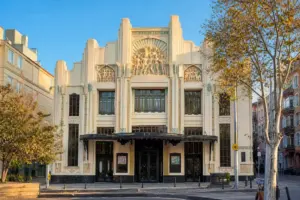 Süreyya Opera House – about 750 m away (~12 min walk) · typical visit: 2–3 hours12 min on foot from Kadıköy-İDO metro, Open daily 10:00–18:00
Main image: AI-generated illustration. It may not show the place exactly as it looks.
 Barış Manço Museum – about 1.0 km away (~16 min walk) · typical visit: 1–1.5 hoursOpen 09:00–16:00, closed Mon
Main image: AI-generated illustration. It may not show the place exactly as it looks.
Metro stations near Kadıköy
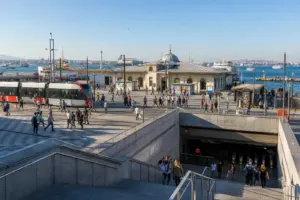 Kadıköy-İDO – about 150 m away (~2 min walk)Open daily 06:00–00:04
Main image: AI-generated illustration. It may not show the place exactly as it looks.
Restaurants and cafes near Kadıköy
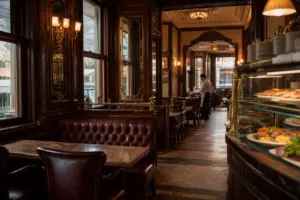 Yanyalı Fehmi Lokantası – about 150 m away (~2 min walk)1 min on foot from Kadıköy-İDO metro, Open daily 09:00–21:00
Main image: AI-generated illustration. It may not show the place exactly as it looks.
 Baylan Pastanesi – about 300 m away (~5 min walk)4 min on foot from Kadıköy-İDO metro, Open daily 09:00–20:00
Main image: AI-generated illustration. It may not show the place exactly as it looks.
 Ciya Sofrasi – about 400 m away (~6 min walk)6 min on foot from Kadıköy-İDO metro
Main image: AI-generated illustration. It may not show the place exactly as it looks.
 Afsona Uzbek Restaurant – about 1.0 km away (~16 min walk)15 min on foot from Kadıköy-İDO metro, Open daily 09:00–22:00
Main image: AI-generated illustration. It may not show the place exactly as it looks.
Nightlife near Kadıköy
 Taşra Kabare – about 350 m away (~6 min walk)7 min on foot from Kadıköy-İDO metro, Open daily 11:00–04:00
Main image: AI-generated illustration. It may not show the place exactly as it looks.
Train stations and river piers near Kadıköy
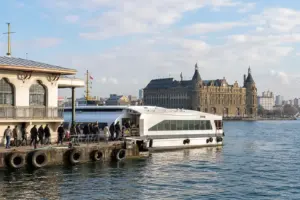 Kadıköy Ferry Terminalabout 100 m away (~2 min walk)
Main image: AI-generated illustration. It may not show the place exactly as it looks.
Related guides
 Üsküdar: The Asian Shore’s Authentic Neighborhoods and Bosphorus Views
Main image: AI-generated illustration. It may not show the place exactly as it looks.
 Marmaray Train Guide: Bosphorus Crossing and Connections
Main image: AI-generated illustration. It may not show the place exactly as it looks.
 What to Wear in Istanbul by Month: Weather and Packing List
Main image: AI-generated illustration. It may not show the place exactly as it looks.
 Istanbul Metro Map 2027: All Lines, Interchanges and Tourist Stops
Main image: AI-generated illustration. It may not show the place exactly as it looks.
 Istanbul in December: Weather, Attractions and Winter Travel Tips
Main image: AI-generated illustration. It may not show the place exactly as it looks.
Browse more: More in Kadıköy · All Neighborhoods
FAQ: Kadıköy
Is Kadıköy a neighborhood or a district?
Kadıköy is both. It is an administrative district of Istanbul (the entire area on the Asian side roughly from Üsküdar south to Maltepe). Within that district are many neighborhoods, including central Kadıköy, Moda, Yeldeğirmeni, Fenerbahçe, Bostancı and others. When locals say 'I'm going to Kadıköy,' they usually mean central Kadıköy and Moda.
How long should I spend in Kadıköy?
A 2-hour ferry visit covers the market and waterfront café culture. A half-day (4–5 hours) allows for market, waterfront walk, Moda, Yeldeğirmeni and a meal. Most visitors do 2–4 hours and return by ferry. Overnight visitors get the evening bar and nightlife scene, but it is not a destination that requires more than one day unless you live or stay in the district.
Do I need a guide to visit Kadıköy?
No. The district is compact, easy to navigate and designed for walking. Streets are signed. Metro and ferry are straightforward. A guide adds cultural context and restaurant knowledge, but self-guided exploration is completely feasible and arguably better for experiencing local atmosphere.
Is Kadıköy safe?
Yes, central Kadıköy (market, Moda, Yeldeğirmeni) is safe during day and evening. Normal urban awareness applies: avoid large bags, be aware of surroundings, use established routes. Nightlife areas (certain bars and clubs) require standard safety judgment. Women and mixed groups are common in public spaces.
What is the Haydarpaşa Train Station and can I visit?
A monumental Ottoman-era building completed in 1908, Haydarpaşa was the terminus for trains to Anatolia and the Levant. It is architecturally significant (Gothic Revival style). The building is currently undergoing restoration and is not open to public entry. You can view the exterior from street level or the waterfront.
Can I bring luggage to Kadıköy?
Yes, but it is inconvenient. The market area has narrow, crowded streets and uneven paving. Large luggage is difficult to manage. If arriving by metro or ferry with heavy bags, consider left-luggage services at your hotel or consider spending 2–3 hours in Kadıköy before moving elsewhere. Hotels and guesthouses in the district typically accept day-use or luggage storage.
Where do I get ferry tickets?
Buy tickets at kiosks directly at the Kadıköy Ferry Terminal or at terminals on the European side (Eminönü, Karaköy). Tickets are inexpensive and sold immediately before boarding. Multiple operators run the route; queues move quickly. No advance booking is necessary.
Is Kadıköy better than the Old City (Sultanahmet)?
They serve different purposes. Sultanahmet has major museums and monuments. Kadıköy offers neighborhood experience, local food, markets and creative culture. Most visitors do both: Sultanahmet for sightseeing, Kadıköy for living Istanbul. Neither is objectively 'better'—it depends on what you want to see.
Istanbul Vibes is a one-person project. A coffee keeps it going

Take this guide with you
Get a free PDF of this guide to print or read offline: key facts, tips and a map link on a few clean pages.
Report an issue on this page
How we research and update our guides
About this guide: AI assistance and accuracy
This guide is created with the help of AI and is based on official sources where available. Mistakes can still happen. Opening hours, prices, rules and other details are given to the best of our knowledge as of the date shown and can change without notice. It offers general recommendations only, not professional, legal or travel advice. Please confirm important details with the official source before you travel; you are responsible for your own plans and decisions.
* Affiliate link: as an Amazon Associate we earn from qualifying purchases at no extra cost to you.
