
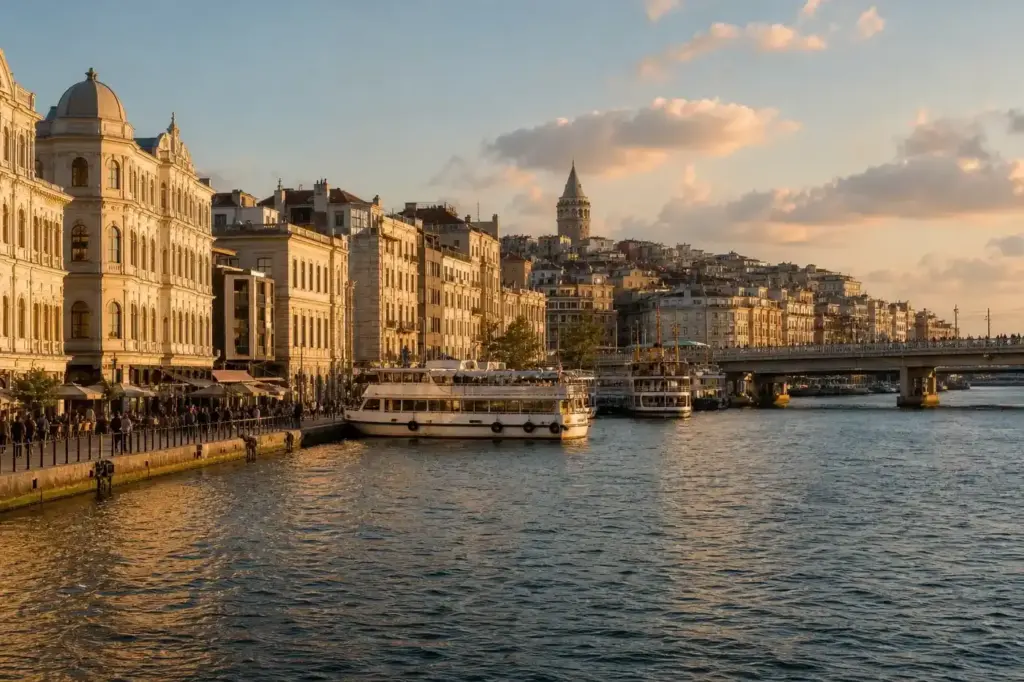
Karaköy sits on the waterfront of the Galata Bridge‘s northern side at the point where the Golden Horn meets the Bosphorus, and was once one of Istanbul’s most important ports. The area was renamed in the 19th century for the Karaite Jews who had settled there, though it was traditionally known as Galata.
Today Karaköy and Galata sit at the point where the Golden Horn meets the Bosphorus, one a working waterfront transit hub and the other a steep medieval quarter climbing toward its famous 14th-century tower, forming one of Istanbul’s most layered and walkable neighborhoods, where Genoese history, Ottoman banking heritage, and a contemporary café and gallery scene occupy the same cobblestone streets.
Quick Facts
| Address | Karaköy, Beyoğlu, Istanbul Google MapsApple MapsYandex Maps |
|---|---|
| District | Beyoğlu |
| Metro | Karaköy (T1 (Tram), Tram platform at waterfront) Karaköy (F2 (Tünel funicular), Tersane Avenue, IETT building) |
| Best time to visit | Season: Spring (April–May) and autumn (September–October) are ideal. Weather is mild, crowds are moderate, and the light at sunset is warm. Summer is hot and crowded with tourists. Winter (December–February) is cool and rainy but quieter and atmospheric.Day of week: Weekday mornings (Tuesday–Friday, 8–10am) are quietest. Weekends and afternoons are crowded. Avoid Friday and Saturday evenings near the bridge (very busy).Time of day: Early morning (6–8am) offers the fewest crowds and active ferry traffic. Late afternoon and sunset (4–6pm) bring crowds but offer the best light for photography and atmosphere. Midday (11am–3pm) is hot, crowded, and has harsh overhead light. |
| Recommended duration | 2–4 hours |
What Is (and Isn't) Part of a Visit to Karaköy?
| Part | Status | Notes |
|---|---|---|
| Karaköy neighborhood streets and waterfront | Included in the standard ticket | Free to walk; no admission required for the district itself. |
| Galata Bridge | Included in the standard ticket | Free to cross on foot; part of the Karaköy public experience. |
| T1 Tram stop at Karaköy | Included in the standard ticket | Included in normal public transport fare; allows easy arrival and transit through the area. |
| Tünel (F2) funicular station | Included in the standard ticket | Part of Karaköy; requires a separate public transport ticket to ride uphill to Beyoğlu. |
| Galata Tower observation deck | Separate ticket or institution | Separate paid ticket required; located above Karaköy on the hill, not part of a free neighborhood visit. |
| Istanbul Modern museum | Separate ticket or institution | Separate admission; sits on the border between Karaköy and Tophane, not part of a free visit. |
| Salt Galata | Separate ticket or institution | Free to enter and explore the building; located on Bankalar Caddesi within Karaköy. |
| Jewish Museum in Karaköy | Separate ticket or institution | Housed in a restored synagogue; separate admission required. |
| Ferry piers and Bosphorus ferries | Separate ticket or institution | Located at the waterfront; ferries require separate tickets for Golden Horn and Bosphorus routes. |
| Bankalar Caddesi and restored Ottoman buildings | Included in the standard ticket | Free to walk and explore the street and surrounding area. |
Why Visit Karaköy?
What makes this area unique is the density of transitions, from fishing lines dangling off the bridge at dawn to art galleries and specialty coffee shops by mid-morning, from Ottoman banking palaces to Genoese stone towers, all within a ten-minute walk.
If Galata Tower is the landmark crowning the hill, Karaköy is the lively shoreline at its feet—the place where ferries dock, trams rumble past, and the Galata Bridge reaches across the water toward the Old City. The neighborhood rewards a slower pace: walk the narrow streets around Bankalar Caddesi, a street leading up towards Galata Tower that was one of the most important avenues in 19th-century Istanbul, sometimes referred to as the Wall Street of the Ottomans, where all of the major banks and insurance companies had their head offices.
How Karaköy Is Laid Out
Karaköy and Galata occupy the northern bank of the Golden Horn, stacked vertically: Karaköy on the waterfront at the foot of Galata Bridge, and the Galata quarter rising sharply up the hill behind it toward the medieval tower.
The waterfront itself is a narrow, animated strip crowded with ferries, trams, and the historic Galata Bridge crossing to the south. Karaköy is the waterfront quarter directly below Galata Tower, on the north bank of the Golden Horn. Behind the waterfront, steep streets climb upward past restored Ottoman buildings, art galleries, and cafés, with the hill culminating in the Galata Tower neighborhood above.
Most visitors enter from the Galata Bridge or via tram at the waterfront, then either explore the shops and restaurants along the water or climb the cobblestone lanes toward higher ground. The main axis runs east–west along the waterfront, with the funicular station and ferry piers at the bridge’s north side serving as orientation points.
Highlights of Karaköy
Galata Bridge Crossing
The Galata Bridge spans the Golden Horn to connect Karaköy on the Galata side with Eminönü in the historic Old City. It is famous for the anglers who line its upper deck and the row of fish restaurants beneath it, and walking across at sunset is a classic Istanbul experience. Arrive in late afternoon to see fishermen casting lines and watch light change on the water.
Tip: Cross the bridge at sunset when the light turns golden and the crowds are thickest; the lower level fish restaurants are functioning but basic, so eat elsewhere first.
Bankalar Caddesi (Banks Street)
Bankalar Caddesi is a street leading up towards Galata Tower that was one of the most important avenues in 19th-century Istanbul. Sometimes referred to as the Wall Street of the Ottomans, it was where all of the major banks and insurance companies had their head offices. The street's neoclassical and art-deco buildings remain mostly intact, and the street itself now hosts galleries, cafés, and independent shops.
Tip: Start from the waterfront (near the tram station) and walk uphill; pause at the restored 19th-century bank buildings to notice the architectural details. Allow 15–20 minutes to reach the top.
Galata Tower
The famous Galata Tower was built by the Genoese in 1348 at the northernmost and highest point of the citadel. Towering above Karaköy, the 63-metre-tall Galata Tower is a symbol of the city and one of the top attractions in Istanbul. The tower sits at the crest of the Galata hill, visible from almost everywhere in Karaköy. Climbing the tower (separate ticket, not part of a Karaköy visit) offers 360-degree views.
Tip: The best view of the tower itself is from the Galata Bridge or the waterfront below it; climbing inside is crowded and expensive. Instead, spend time in the streets around the tower's base.
Golden Horn Waterfront
The Karaköy waterfront gives the district a sense of openness after the enclosed feeling of the hillside; near the harbour, Istanbul feels wide awake, with ferries crossing the water and the city stretching toward the Bosphorus. Early mornings in Karaköy belong to the ferries, with the first boats to the Asian side departing before 7am.
Tip: Visit in the early morning (6–7am) to see active ferry departures and fishermen; return at sunset for light and quiet; midday is crowded and hot.
Beyoğlu District Transition
To the northeast, the neighborhood transitions into the broader Beyoğlu district, eventually reaching İstiklal Avenue and Taksim Square. Karaköy marks the lower boundary of a much larger cultural quarter. From Karaköy, the Tünel funicular connects Karaköy and Beyoğlu, running uphill from near the confluence of the Golden Horn with the Bosphorus and is about 573 metres long.
Tip: Take the 90-second Tünel funicular ride uphill from Karaköy to Beyoğlu (exit at Tünel Square and Istiklal Avenue) rather than walking; it saves 15 minutes and feels historic.
Art and Contemporary Spaces
Istanbul Modern straddles the border of Karaköy and Tophane. Salt Galata occupies the former headquarters of the Imperial Ottoman Bank on Bankalar Caddesi, and the upper floors open onto one of the district's better rooftop views over the Golden Horn. Both spaces represent Karaköy's transformation into a cultural center.
Tip: Istanbul Modern requires a separate ticket but sits on the Tophane waterfront just above Karaköy; Salt Galata is free to enter and is in a beautifully restored Ottoman building on Bankalar Caddesi.
Atmosphere
Karaköy occupies the narrow strip of waterfront at the northern end of Galata Bridge and the steep hill that climbs behind it, with the density of transitions from fishing lines dangling off the bridge at dawn to art galleries and specialty coffee shops by mid-morning, from Ottoman banking palaces to Genoese stone towers.
The waterfront pulses with movement: ferries loading and unloading, trams screeching around the bend, fishermen lining the bridge railings, and the constant churn of foot traffic. By mid-morning, the energy shifts toward cafés, bookshops, and galleries in the side streets. In the evening, the converted warehouses and Ottoman buildings glow warm, and the crowd becomes a mix of locals, tourists, and Istanbul’s arts and design community. The Galata hillside above offers quieter relief—narrow, steeply sloped streets with fewer shops and more residential feel.
History of Karaköy
Settlement of the area dates back as early as the Byzantine Empire when in the 13th century it was the main commercial centre of Constantinople, populated at that time mostly by the Genoese, the area was modelled on a typical Italian city. The medieval citadel of Galata was a colony of the Republic of Genoa between 1273 and 1453, and the famous Galata Tower was built by the Genoese in 1348 at the northernmost and highest point of the citadel.
During the Byzantine period, Galata was a Genoese trading colony that was quasi-independent and walled off from the rest of the city, and at one point, this port had one of the busiest harbors in all of Europe. According to historical records and illustrations, Karaköy looked much like any other Italian city in the 15th century.
After the Ottomans captured Constantinople in 1453, Karaköy, known as Galata at the time, underwent a major transformation; the Genoese, who had previously settled here, continued to influence the district’s development, and by the 16th century, Karaköy became the center for foreign trade, with many European nations establishing consulates and businesses in the area. During the Ottoman period, the area became the city’s financial district, the center for banking and commerce, where all the major banks and insurance companies were located, and banking in the Ottoman Empire was strongly associated with minorities, with many Italians, Greeks, Armenians, and Jews moving in.
One theory about the neighborhood’s name originates from the Jewish community’s presence after the Ottomans captured the city in 1453, as the Ottoman Empire encouraged Jewish people from various parts of the world to settle in Istanbul, creating vibrant communities; many Jews, including those arriving from Spain in the late 15th century, settled in Ottoman lands and established communities in districts like Balat and Karaköy. Others arrived from areas in the North of the Black Sea (now in Russia) and were settled in the Karaköy area by Sultan Mehmed II, and their numbers were further augmented in the late 18th century when the Russians seized Crimea, causing its Karaite population to flee.
This cosmopolitan period in Karaköy’s history is still evident from the numerous churches and synagogues in the area, though very few of these are still functional. In the late 19th and early 20th centuries, Karaköy transformed once again, this time through industrialization, with factories and warehouses dominating the area, and the district becoming an important site for commerce and industry in Istanbul.
Just a decade ago, Karaköy was a quiet, somewhat neglected corner of Istanbul, with buildings and businesses there, yet the lively ambiance and thriving social scene that now define the neighborhood were nowhere to be seen, caught in a state of limbo, awaiting transformation; with major investments flooding in, this former “ghost town” has made a stunning comeback, with the emergence of Galataport, luxury five-star hotels, gourmet restaurants, and bustling cafes all contributing to Karaköy’s radical transformation into one of Istanbul’s most vibrant and cosmopolitan neighborhoods.
Legends and Myths about Karaköy
Genoese Citadel and the Tower
Disputed by historians. The medieval citadel of Galata was a colony of the Republic of Genoa between 1273 and 1453, and the famous Galata Tower was built by the Genoese in 1348. The tower is said to have been built as the watchtower guarding the most valuable of Genoa's trading posts, and the legend persists that it can be seen from anywhere in Istanbul—though from sea level in Karaköy itself, tall buildings often block the view except from the bridge.
The Jewish Refuge Story
After the Ottomans captured Constantinople in 1453, the Ottoman Empire encouraged Jewish people to settle in Istanbul; many Jews, including those arriving from Spain, settled in Ottoman lands and established communities in Karaköy; others arrived from areas north of the Black Sea and were settled in the Karaköy area by Sultan Mehmed II, with their numbers growing further in the late 18th century as Karaite families moved from Crimea.
Tickets and Booking for Karaköy
Karaköy itself has no admission fee and requires no tickets. It is a free neighborhood to explore on foot.
However, many attractions nearby require separate tickets: the Galata Tower (observation deck), Istanbul Modern (contemporary art museum), Salt Galata (cultural foundation, usually free entry), and the Jewish Museum (in a restored synagogue) all charge admission. Ferry rides across the Golden Horn or Bosphorus from Karaköy’s piers also require separate tickets purchased at the pier or via the official ferry operator.
To reach Karaköy, use the free Istanbul Kart (rechargeable transit card) or a single-journey token for the T1 tram. The Tünel funicular (F2 line) also requires a transit card or single token. See the Getting There section for specifics on entry points.
Suggested itineraries Karaköy
1–2 hours (waterfront and bridge)
Start at the Galata Bridge on the Karaköy side. Walk the length of the bridge from north to south, watching fishermen and the water. Exit onto the waterfront promenade, walk east past the ferry docks and cafés. If time allows, climb back uphill via one of the side streets (Tersane Caddesi or the lanes north of the tram station) toward Bankalar Caddesi for views of the Ottoman buildings. End at the tram or Tünel station to move on.
2–3 hours (Galata hill loop)
Enter via the Galata Bridge or tram. Climb inland from the waterfront up Bankalar Caddesi, pausing at Ottoman bank buildings and galleries. Continue uphill toward Galata Tower (visible above), then descend through quieter side streets on the east side of the hill past churches and residential areas. Return to the waterfront via Tersane Caddesi or continue uphill to ride the Tünel funicular to Beyoğlu and İstiklal Avenue.
3–4 hours (full neighborhood immersion)
Arrive early at the waterfront (7–8am) to see ferries departing and fishermen. Walk the bridge and piers. Climb into Karaköy's interior lanes, exploring side streets and small galleries. Visit Salt Galata on Bankalar Caddesi or the Jewish Museum. Stop for lunch or coffee at a local café. Spend 1–2 hours drifting through the Galata quarter's steep streets, window-shopping and noticing architectural details. End with an evening walk across the Galata Bridge from north to south as light fades.
How to Get to Karaköy
By Tram (T1 line): The T1 tram runs along the Karaköy waterfront. Get off at Karaköy station, which sits directly on the waterfront near the ferry piers and the north end of Galata Bridge. The tram also connects to Sultanahmet, Eminönü, and other major sites across the Golden Horn.
By Tünel Funicular (F2 line): The Tünel lower station (Karaköy station) is located at Tersane Avenue, at the ground floor of the IETT General Headquarters Building. The funicular runs straight uphill for 573 metres (1,880 feet) to Beyoğlu and Istiklal Avenue in 90 seconds. This is a good entry point if arriving from Beyoğlu above.
By Ferry: Ferries serving the Golden Horn and Bosphorus dock at Karaköy Pier, located directly on the waterfront. Ferries from Kadıköy (Asian side), Eminönü (directly across), and the Bosphorus arrive here. Use the official ferry operator’s routes (Şehir Hatları or Turyol).
By Foot: The Galata Bridge is pedestrian-friendly. Walk from Eminönü across the bridge to reach Karaköy’s waterfront in 5–10 minutes. From Taksim or Beyoğlu, walk downhill through the narrow streets of Galata (15–20 minutes) or take the Tünel funicular down.
By Bus: Multiple bus routes serve Karaköy, including line 90 and lines 26, 28, 30D, 33, 47, 90, and others. Bus stops are located around the waterfront area and near the tram station.
Accessibility
Karaköy's waterfront and bridge are largely flat and accessible by wheelchair or stroller, with level ground and ramps. The T1 tram has low-floor operation and ramps built with technical details allowing disabled people to access. The Tünel funicular is accessible (no stairs required to enter). However, the Galata hill itself is steep with many uneven cobblestone streets and steps; navigating the interior uphill streets is difficult for wheelchair users or parents with strollers. The streets around Galata Tower and on Bankalar Caddesi have sidewalks but are very steep. Most restaurants and cafés at street level are accessible; upper floors may not be.
Food Nearby
Karaköy has abundant dining options. The row of fish restaurants beneath Galata Bridge offers basic grilled fish and seafood (casual and touristy). The waterfront promenade has modern cafés, wine bars, and restaurants aimed at visitors. Bankalar Caddesi and the surrounding streets hold bakeries (including Karaköy Güllüoğlu for baklava), independent cafés, and small restaurants. For local flavor, explore the side streets north of the tram station where neighborhood restaurants serve Turkish cuisine at modest prices. Namlı Gurme offers prepared foods and breakfast in a historic setting. Most venues are informal; reservations are rarely needed except at upscale waterfront restaurants.
What to Bring
Comfortable walking shoes (the neighborhood is flat on the waterfront but very steep on the Galata hill). Light layers—the waterfront can be windy. Sun protection (hat, sunscreen) for daytime visits; the bridge offers no shade. A small day bag for galleries, museums, and cafés. Camera or phone for photos of the bridge and tower views. No special security precautions are needed; follow standard Istanbul safety practices.
Best Views and Photo Spots of Karaköy
Galata Bridge, from Karaköy side looking toward Eminönü
The bridge spans the Golden Horn with Eminönü and the Old City's mosques and minarets in the background. The upper deck is lined with fishermen, and the lower level shows the bridge's structure and water beneath. This is the most iconic view of Karaköy and Istanbul.
Best time: Golden hour at sunset (4–6pm) when light is warm and long; or early morning (6–8am) when fishermen are active and light is soft. Avoid midday when shadows are harsh and crowds are densest.
Karaköy waterfront, looking back toward Galata Tower
The steep Galata hillside rises behind the low waterfront, with the Galata Tower visible at the apex. Ottoman buildings and cafés line the waterfront in the foreground. This perspective shows the vertical layering that makes Karaköy distinctive.
Best time: Morning light (7–10am) softly illuminates the hillside; avoid afternoon when the hill falls into shadow.
Bankalar Caddesi, looking uphill toward Galata Tower
The narrow, steep street lined with 19th-century neoclassical bank buildings rises toward the tower. The architecture is monumental and well-preserved, showing Karaköy's Ottoman financial history.
Best time: Mid-morning (9–11am) or late afternoon (4–5pm) when light rakes across the building facades; avoid midday when the street is in shadow.
Tersane Caddesi (Arsenal Street), looking toward the Golden Horn
This quieter street drops steeply from the IETT building (Tünel station) toward the waterfront. Narrow, atmospheric, with less foot traffic than the bridge. Ottoman-era buildings and small shops line the way.
Best time: Early morning or late afternoon for soft light and fewer people; a good alternative to crowded bridge photography.
Karaköy Pier area, early morning
Ferry boats loading passengers in the dawn light, with commuters and fishermen visible. The pier and ferry station show the working side of Karaköy, less touristy than the bridge.
Best time: 6–8am when ferries are most active and light is soft and golden.
Photography Rules
Photography is unrestricted in public spaces of Karaköy. The Galata Bridge is one of Istanbul's most photographed locations; bring a camera. The waterfront and narrow side streets offer atmospheric shots, especially in early morning light. The Galata Tower is best photographed from the bridge or waterfront below; climbing the tower itself offers panoramic views but no tripods are typically allowed. Indoor galleries and museums may have photography restrictions; ask staff. Drones are not permitted in central Istanbul.
Family Suitability
Karaköy is moderately family-friendly. The waterfront and Galata Bridge are flat, walkable, and interesting for children—especially the bridge's fishermen and water views. Ferry rides are enjoyable for kids. However, the steep Galata hillside with narrow streets, uneven cobblestones, and stairs makes it difficult for strollers; parents with young children should stay on the flat waterfront and bridge area. Older children (ages 8+) will enjoy climbing the Galata streets and exploring galleries and cafés. The Tünel funicular is popular with kids and is a good way to reach the hill. Restaurants are mostly casual and welcoming. The area is safe during the day but can feel crowded and unfamiliar at night.
Istanbul Vibes Tips
- Arrive at Karaköy via the Galata Bridge from Eminönü rather than via tram or funicular on your first visit. Walking the bridge gives you an immediate sense of the neighborhood's position and energy, and you arrive at the waterfront center where orientation is easiest.
- Skip climbing the Galata Tower itself. The observation deck is expensive, crowded, and offers a generic 360-degree view that doesn't include the best vista—looking down at Karaköy and the bridge from above. Instead, photograph the tower from the bridge or waterfront below, where it looks far more dramatic.
- Explore the interior streets of the Galata hill, not just the main tourist routes. Walk up one of the side streets (east of Bankalar Caddesi) past small churches, restored Ottoman houses, and quiet cafés. These streets are steep but less crowded and feel more authentic.
- Time your Galata Bridge visit for very early morning (before 7am) or late evening (after 5pm) if you want photographs without crowds. The light is also better at these times. Midday is congested and harsh.
- Don't eat at the fish restaurants under Galata Bridge; they are touristy and mediocre. Instead, walk up into the neighborhood to Bankalar Caddesi or the waterfront cafés north of the bridge for better food and better value.
- The Tünel funicular (F2) is short, steep, and feels historic—worth the 90-second ride just for the experience, especially if you're moving between Karaköy and Beyoğlu. It's far quicker than walking.
Explore Nearby Karaköy
Sights near Karaköy
 Galata Tower – about 350 m away (~5 min walk) · typical visit: 1–2 hours4 min on foot from Şişhane metro, Open daily 08:30–23:00
Main image: AI-generated illustration. It may not show the place exactly as it looks.
 Istanbul Modern – about 900 m away (~15 min walk) · typical visit: 2–3 hours4 min on foot from Tophane metro
Main image: AI-generated illustration. It may not show the place exactly as it looks.
 Galata Bridge – about 350 m away (~6 min walk) · typical visit: 30 minutes to 1 hour10 min on foot from Haliç metro, Open 24 hours
Main image: AI-generated illustration. It may not show the place exactly as it looks.
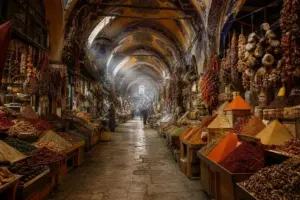 Egyptian Bazaar – about 800 m away (~13 min walk) · typical visit: 30 minutes to 1 hour13 min on foot from Haliç metro, Open daily 08:00–19:30
Main image: AI-generated illustration. It may not show the place exactly as it looks.
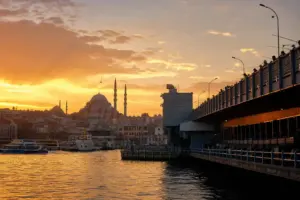 Golden Horn · typical visit: 1–3 hours (waterfront walk or boat tour)
Main image: AI-generated illustration. It may not show the place exactly as it looks.
 Kara Mustafa Mosque – about 50 m away (~1 min walk) · typical visit: 30 minutes10 min on foot from Şişhane metro
Main image: AI-generated illustration. It may not show the place exactly as it looks.
Metro stations near Karaköy
 Şişhane – about 600 m away (~10 min walk)Open daily 06:09–00:09
Main image: AI-generated illustration. It may not show the place exactly as it looks.
 Tünelabout 650 m away (~10 min walk)
Main image: AI-generated illustration. It may not show the place exactly as it looks.
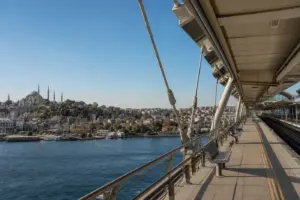 Haliç – about 700 m away (~11 min walk)Open daily 06:06–00:06
Main image: AI-generated illustration. It may not show the place exactly as it looks.
Restaurants and cafes near Karaköy
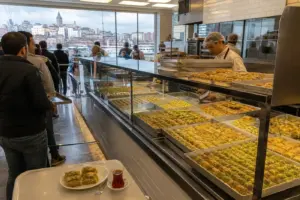 Karaköy Güllüoğlu – about 150 m away (~2 min walk)12 min on foot from Şişhane metro, Open daily 07:00–23:00
Main image: AI-generated illustration. It may not show the place exactly as it looks.
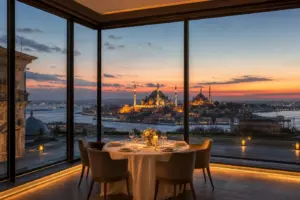 Neolokal – about 200 m away (~3 min walk)7 min on foot from Şişhane metro
Main image: AI-generated illustration. It may not show the place exactly as it looks.
 Ali Ocakbaşı Karaköy – about 200 m away (~3 min walk)8 min on foot from Haliç metro, Open daily 12:00–23:00
Main image: AI-generated illustration. It may not show the place exactly as it looks.
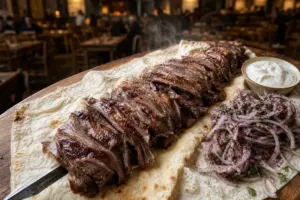 Şehzade Cağ Kebap – about 300 m away (~5 min walk)11 min on foot from Haliç metro
Main image: AI-generated illustration. It may not show the place exactly as it looks.
Nightlife near Karaköy
 The Bank Roof Bar – about 100 m away (~2 min walk)8 min on foot from Şişhane metro, Open daily 12:00–02:00
Main image: AI-generated illustration. It may not show the place exactly as it looks.
 Cheers Karaköy – about 200 m away (~3 min walk)9 min on foot from Haliç metro, Open daily 08:30–02:00
Main image: AI-generated illustration. It may not show the place exactly as it looks.
Train stations and river piers near Karaköy
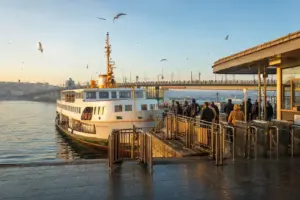 Karaköy Ferry Terminalabout 200 m away (~3 min walk)
Main image: AI-generated illustration. It may not show the place exactly as it looks.
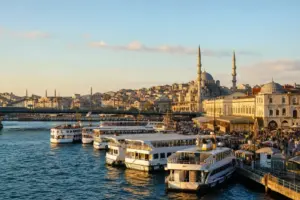 Eminönü Ferry Terminalabout 700 m away (~11 min walk)
Main image: AI-generated illustration. It may not show the place exactly as it looks.
Events and traditions near Karaköy
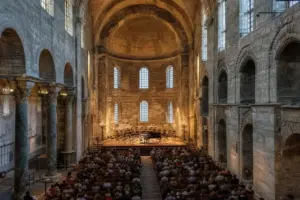 Istanbul Music Festivalabout 1.7 km away (~28 min walk)
Main image: AI-generated illustration. It may not show the place exactly as it looks.
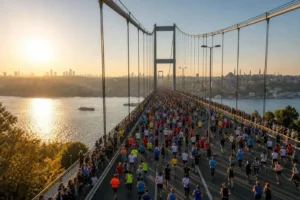 Istanbul Marathonabout 1.9 km away (~32 min walk)
Main image: AI-generated illustration. It may not show the place exactly as it looks.
Related guides
 What to Wear in Istanbul by Month: Weather and Packing List
Main image: AI-generated illustration. It may not show the place exactly as it looks.
 Istanbul with a Baby or Stroller: Transport, Hotels and Attractions
Main image: AI-generated illustration. It may not show the place exactly as it looks.
 Best Restaurants with Bosphorus Views in Istanbul: Six Tables
Main image: AI-generated illustration. It may not show the place exactly as it looks.
 Istanbul Street Art Guide: Kadıköy and Karaköy Walks
Main image: AI-generated illustration. It may not show the place exactly as it looks.
 Food Allergies in Istanbul: Turkish Phrases and Dining Tips
Main image: AI-generated illustration. It may not show the place exactly as it looks.
Browse more: More in Beyoğlu · All Landmarks · All Neighborhoods
FAQ: Karaköy
Is Karaköy the same as Galata?
Galata is the former name of the Karaköy neighbourhood in Istanbul. Today, "Galata" usually refers to the steep hill and tower above, while "Karaköy" refers to the waterfront quarter below. They are adjacent parts of the same area in the Beyoğlu district.
What is the best way to reach Karaköy?
The most scenic entry is to walk across the Galata Bridge from Eminönü (directly opposite). The quickest is to take the T1 tram to Karaköy station on the waterfront. From Beyoğlu or Taksim above, take the Tünel funicular (F2) down to the Karaköy station in 90 seconds. All three are included in a standard Istanbul transit card.
Do I need a ticket to walk around Karaköy?
No. Karaköy is a free neighborhood to explore on foot. However, you do need a transit fare to arrive via tram or funicular. Separate tickets are required for attractions like the Galata Tower, Istanbul Modern, or ferry rides.
How long should I spend in Karaköy?
Two to three hours is typical for walking the waterfront, exploring Bankalar Caddesi, and drifting through Galata's side streets. If you're also visiting nearby attractions (Istanbul Modern, Salt Galata, the tower), add another 1–2 hours. Many visitors combine Karaköy with Sultanahmet or Beyoğlu in a full day.
Is Karaköy safe for tourists?
Yes. Karaköy is one of Istanbul's most visited areas and is generally safe during the day and early evening. It is crowded, well-lit, and actively policed. Use standard city safety practices: avoid isolated streets late at night, keep valuables secure, and be aware of pickpockets in crowds on the bridge.
Can I visit the Galata Tower from Karaköy?
Yes, but you must buy a separate ticket. The tower sits on the Galata hill directly above Karaköy. Walk uphill via Bankalar Caddesi or side streets to reach the tower entrance. The observation deck requires an admission fee and is often crowded.
What is the difference between Karaköy and Eminönü?
Karaköy is on the north side of the Golden Horn (where you are), near Galata Tower and the Beyoğlu district. Eminönü is on the south side, in the historic Old City (Sultanahmet) with Hagia Sophia, the Blue Mosque, and the Grand Bazaar. The Galata Bridge connects them.
Are there good restaurants in Karaköy?
Yes. Bankalar Caddesi and the surrounding streets have cafés, bakeries, and independent restaurants. The waterfront has modern restaurants and wine bars aimed at visitors. The area is known for artisanal coffee, baklava, and fresh seafood, though the restaurants under the Galata Bridge are better avoided in favor of better options uphill or on the waterfront promenade.
Istanbul Vibes is a one-person project. A coffee keeps it going

Take this guide with you
Get a free PDF of this guide to print or read offline: key facts, tips and a map link on a few clean pages.
Report an issue on this page
How we research and update our guides
About this guide: AI assistance and accuracy
This guide is created with the help of AI and is based on official sources where available. Mistakes can still happen. Opening hours, prices, rules and other details are given to the best of our knowledge as of the date shown and can change without notice. It offers general recommendations only, not professional, legal or travel advice. Please confirm important details with the official source before you travel; you are responsible for your own plans and decisions.
* Affiliate link: as an Amazon Associate we earn from qualifying purchases at no extra cost to you.
