
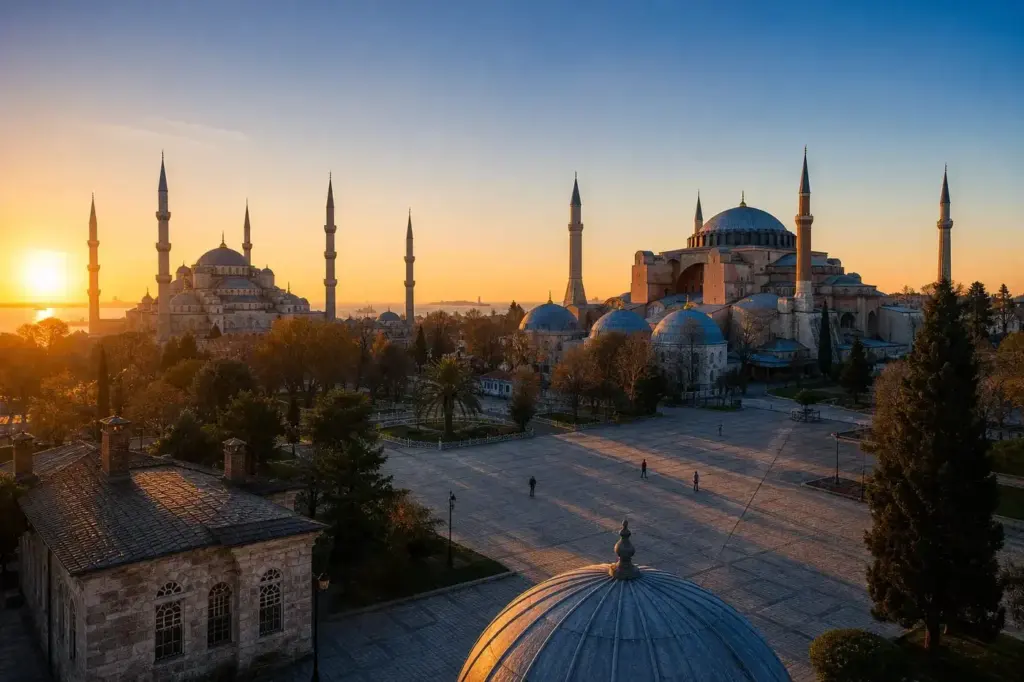
Sultanahmet is the living centre of Constantinople’s eight-hundred-year legacy. This neighbourhood in the Fatih district sits on the historic peninsula where Roman emperors, Byzantine rulers and Ottoman sultans all made their seats of power. Named after Sultan Ahmed I, who commissioned the Blue Mosque in the early 1600s, Sultanahmet today feels like a vast open-air museum where layers of history lie visible at every step.
The district is compact and mostly walkable. Major landmarks—the Hagia Sophia, Blue Mosque, Topkapi Palace and Basilica Cistern—cluster within minutes of each other around Sultanahmet Square, the ancient Hippodrome. The area is bounded by water on three sides: the Bosphorus to the east, the Golden Horn to the north, and the Sea of Marmara to the south. Hotels, restaurants and shops are plentiful, making it the natural base for first-time visitors.
Quick Facts
| Address | Sultanahmet, Fatih, Istanbul, Turkey Google MapsApple MapsYandex Maps |
|---|---|
| District | Fatih |
| Metro | Sultanahmet (T1 Tram, On-street tram stop) Cemberlitas (M1A Metro, Near Grand Bazaar) Aksaray (M1A Metro, Western edge of district) |
| Best time to visit | Spring (April–May) and autumn (September–October) are ideal: mild temperatures, manageable crowds (lighter than peak summer), clear light for photography and walking. Summer (June–August) brings intense heat (30–35°C), humidity and maximum tourist crowds; the main squares are congested from 10:00–17:00. Winter (November–February) is cool and sometimes rainy, but monuments are rarely crowded; mornings can be crisp and clear for photos. Ramadan (dates vary; in 2026 falls in late February–March) affects mosque visiting hours. Weekdays are quieter than weekends for the same season. Visit major monuments early (08:00–10:00) or late afternoon (16:00+) to avoid peak crowds regardless of season. |
| Recommended duration | 1–3 days |
What Is (and Isn't) Part of a Visit to Sultanahmet?
| Part | Status | Notes |
|---|---|---|
| Sultanahmet neighborhood itself (streets, squares, parks) | Included in the standard ticket | Public spaces free to walk, explore and photograph. |
| Hagia Sophia | Separate ticket or institution | Separate ticket required; functioning mosque, entry restricted during prayer times. |
| Blue Mosque (Sultan Ahmed Mosque) | Separate ticket or institution | Free entry for visitors outside prayer times; modest dress required. |
| Topkapi Palace and Palace Museum | Separate ticket or institution | Separate admission required; palace grounds require paid ticket; some rooms in Harem may need additional or combined ticket. |
| Basilica Cistern | Separate ticket or institution | Separate ticket required; underground attraction, air-conditioned but cool year-round. |
| Istanbul Archaeological Museums | Separate ticket or institution | Separate admission required; three connected buildings near Topkapi Palace; typically included in Museum Pass but not in individual monument tickets. |
| Gülhane Park | Included in the standard ticket | Free public park; gates open daily; small sections may be roped off occasionally for events. |
| Sultanahmet Square (Hippodrome) | Included in the standard ticket | Public square, monuments (Obelisk, Serpent Column) visible from ground level at no cost. |
| Grand Bazaar | Outside / not part of it | Separate entity west of Sultanahmet; belongs to Eminönü district; reached via walking or tram. |
| Egyptian Bazaar (Spice Bazaar) | Outside / not part of it | Located in Eminönü across the Galata Bridge; separate from Sultanahmet core. |
Why Visit Sultanahmet?
Few neighbourhoods anywhere let you walk between as many significant monuments as Sultanahmet does. You can visit a 6th-century underground cistern, a 1400-year-old cathedral-turned-mosque, an Ottoman palace where sultans ruled an empire, and the ruins of a Roman chariot-racing track, all in a morning.
The district is also where visible history matters most. Beneath today’s streets lie the marble columns and walls of the Byzantine Great Palace. The hillside slopes tell the story of urban layers—Roman, Byzantine and Ottoman roads still in use. For anyone interested in how empires transform cities, Sultanahmet is a compact, genuine classroom. Beyond monuments, the side streets retain an older Istanbul feel: small carpet shops, family tea gardens, hammams and quiet courtyards that contrast with the tourist squares.
How Sultanahmet Is Laid Out
Sultanahmet radiates outward from Sultanahmet Square (also called the Hippodrome), the central gathering point. On the square’s east side stands Hagia Sophia, the neighbourhood’s dominant visual landmark. Directly across to the southwest sits the Blue Mosque, its six minarets and blue dome catching light from any angle. To the north and west, behind Hagia Sophia, stretch the grounds of Topkapi Palace—enter from the northern side off Soğukçeşme Street.
The Basilica Cistern lies one block north of the Hagia Sophia. South of the square, the ground slopes away toward the Sea of Marmara and Gülhane Park. West from the square, the Grand Bazaar begins a few blocks away along a series of covered streets (the Arasta Bazaar forms a smaller covered market directly behind the Blue Mosque).
The neighbourhood is nearly flat by Istanbul standards, and all major sites are reachable on foot. The T1 tram runs east-west along the western edge, connecting to Eminönü and beyond. The M1A metro has stations at Cemberlitas (near the Grand Bazaar) and Aksaray (western boundary), useful if visiting from other districts. Most visitors spend their time within the core around the square; the edges fade quickly into residential areas and smaller mosques.
Highlights of Sultanahmet
Hagia Sophia
The architectural centrepiece of Sultanahmet, completed in 537 by Byzantine Emperor Justinian I. Its massive dome—engineered to seem to float—still awes visitors nearly 1,500 years later. Originally a cathedral, it became a mosque after the Ottoman conquest in 1453 and served as a museum from 1935 until 2020, when it returned to use as a mosque. You can see both Byzantine mosaics (gold-backed religious scenes) and Islamic calligraphy covering the upper walls and dome. The interior soars upward without obstruction; look for the shafts of light that illuminate the cavernous space.
Tip: Arrive early (before 09:00) to see the interior before crowds gather. Photography is allowed but avoid disruptive angles during prayer times. Modest dress (covered shoulders and knees) is expected.
Blue Mosque (Sultan Ahmed Mosque)
Built between 1609 and 1616 during the reign of Sultan Ahmed I, this is Sultanahmet's namesake mosque. Its six minarets and cascade of blue-tiled domes dominate the skyline. The interior walls are covered in Iznik tiles (blue, white, and green glazed ceramics) that give the building its popular name. The mosque sits directly across Sultanahmet Square from Hagia Sophia, making it impossible to miss. Unlike Hagia Sophia, it remains primarily a place of worship, though visitors are admitted outside prayer hours.
Tip: Enter through the side courtyard (visitors' entrance on the east); the main doors are for worshippers. Remove shoes and observe silence. Women and men are separated in the main prayer hall; visitors watch from galleries. Entry is free but a donation is expected. Avoid midday prayer times (roughly 12:00–13:30).
Topkapi Palace
The royal residence and administrative centre of the Ottoman Empire for nearly 400 years, Topkapi sprawls across a hillside garden overlooking the Bosphorus. Built by Mehmed II (the Conqueror) after 1453, the palace is a cluster of courtyards, pavilions, kitchens, treasuries and private quarters rather than a single building. The Harem section—former home to the Sultan's mother, concubines and eunuchs—attracts the most visitor attention, with its richly decorated rooms and intricate tile work. The Treasury displays ornate weapons, jewels and historical objects. The views of the Bosphorus from the palace gardens are among Istanbul's finest.
Tip: A full visit requires 2–3 hours. Topkapi is separate from Hagia Sophia and the Blue Mosque and requires its own ticket. Enter from the northern gate off Soğukçeşme Street. The Harem is inside the palace but sometimes requires a separate or combined ticket; confirm when booking. Photography is restricted in some Treasury and Harem rooms.
Basilica Cistern
A 6th-century underground water reservoir built by Emperor Justinian I to supply the Great Palace above. The cistern descends about 5 metres underground and stretches 140 metres long. Its 336 marble columns rise from shallow water, their surfaces worn smooth by centuries. Carefully designed ambient lighting (no natural light penetrates) gives the vaulted chamber an otherworldly atmosphere. Two famous carved Medusa heads serve as column bases; their origins and original purpose remain mysterious. The cistern was 'lost' for centuries until rediscovered in the 17th century.
Tip: Wear non-slip shoes; the walkway can be wet and slippery. The temperature stays cool year-round (around 12°C), so bring a light layer. The cistern is uncomfortably crowded between 10:00 and 16:00; visit early morning or late afternoon. Separate admission required.
Sultanahmet Square (The Hippodrome)
The open plaza where Byzantine emperors once watched chariot races; today it is the neighbourhood's main gathering point. Three ancient monuments survive: the Obelisk of Theodosius, a 3,500-year-old granite needle brought from Egypt in the 4th century; the Serpent Column, a bronze monument originally erected in Delphi to commemorate a Greek victory over Persia; and the Walled Obelisk (Constantine Obelisk), built of stone blocks. At the north end stands the German Fountain, a marble pavilion presented by Kaiser Wilhelm II in 1900. The square is surrounded by key sights and is the natural starting point for exploring the neighbourhood.
Tip: Sit in one of the tea gardens at the square's edge to observe the constant flow of visitors and take in the scale of the monuments. Early morning (07:00–09:00) is quietest. The square itself is free to walk in; monuments are visible from ground level.
Istanbul Archaeological Museums
A complex of three museums within the Sultanahmet district housed in Ottoman buildings near Topkapi Palace. The Main Museum contains artefacts from Greek, Roman and Byzantine periods, including sculptures, coins and ceramics spanning thousands of years. The Museum of the Ancient Orient focuses on Mesopotamian and Near Eastern artefacts. The Tiled Kiosk displays Islamic ceramics and calligraphy. Together they provide essential context for understanding the layers of civilisation visible in Sultanahmet's ruins and streets. These are separate institutions from Topkapi Palace Museum.
Tip: A Museum Pass (if purchased) typically includes these museums but not Topkapi Palace or Hagia Sophia. Verify what is covered when buying. Plan 2–3 hours if visiting all three buildings. Entry is via a single gate near Gülhane Park.
Gülhane Park
A large public park at the lower end of Topkapi Palace grounds, sloping down toward the Golden Horn. Originally part of the palace complex, it was opened to the public in 1912. Gardens include walking paths, cafés, and views across the Golden Horn toward the Galata Tower and Beyoğlu district. Locals and tourists mix here; it offers respite from the crowded monuments and is ideal for a picnic or rest. The park is especially pleasant in spring (tulips and magnolias) and autumn.
Tip: Enter from the gate near the Archaeology Museums or from the lower entrance near the waterfront (Eminönü). A coffee or tea at one of the park cafés costs little and gives you a vantage point for photos. The park is free to enter.
Soğukçeşme Street
A narrow, picturesque lane running downhill from Topkapi Palace's north gate toward Hagia Sophia. Lined with restored Ottoman houses (now mostly small hotels, restaurants and shops), the street is quieter than the main squares and feels closer to an older Istanbul. The houses are painted in warm earth tones and feature characteristic red-tiled roofs and latticed windows. It's an easy, pleasant walk and offers better photography than the crowded monuments. Several small museums and a hammam are tucked along the street.
Tip: Walk this street in the late afternoon when light is softer and crowds lighter. Stop at a café for Turkish tea or coffee and observe the restored architecture closely. The street naturally connects Topkapi's entrance to the main sights, so it works well as part of a walking route rather than a separate destination.
Atmosphere
Sultanahmet feels like an open-air museum interrupted by tourism. In the early morning (before 08:00), the squares are quiet: locals walk to work, the call to prayer echoes from nearby mosques, and the monuments stand in soft light without crowds. By mid-morning, tour buses and groups arrive; the main sites become visibly congested, and the tone shifts to one of hurried sightseeing. The narrow side streets—away from the main squares—retain an older, residential character even at peak times: families shop at local markets, elders sit in tea gardens, and small workshops continue their routines.
The physical environment reinforces the sense of layered time. The ground itself slopes and dips where Byzantine walls once stood. New buildings sit directly atop ancient foundations. Minarets call to prayer throughout the day; the sound carries across the peninsula from multiple mosques simultaneously, especially at dusk. Restaurants and hotels cluster around the monuments, particularly toward the western edge near the Grand Bazaar. Food smells (grilled meat, freshly baked bread, strong Turkish coffee) are constant in the market streets.
Visitor experience varies sharply by time: early arrivals see authentic morning Istanbul; noon visitors face crowds and heat; late afternoon brings softer light and a sense of completion as people finish their tours. The neighbourhood is safe and walkable at all hours, though the monuments themselves close at stated times.
History of Sultanahmet
Sultanahmet’s history begins with the ancient Greek city of Byzantium, founded by colonists around 660 BCE. The site’s strategic position overlooking the Bosphorus made it valuable to Rome. In 330 CE, Roman Emperor Constantine the Great refounded the city as Constantinople, the new capital of the Roman Empire, envisioning it as a ‘New Rome.’ This decision transformed the peninsula from a provincial outpost into the centre of imperial power.
During the Byzantine (Eastern Roman) period, Sultanahmet became the seat of Christian emperors and the religious heart of Orthodox Christianity. Emperor Justinian I (527–565) commissioned the Hagia Sophia, completed in 537, which remained the world’s largest cathedral for a thousand years. The Hippodrome, expanded and rebuilt by Constantine, hosted chariot races and public assemblies that were central to Byzantine civic life. The Great Palace of the Byzantine Emperors stretched across much of modern Sultanahmet; remnants of its mosaics and foundations survive beneath later structures. This era lasted over a thousand years, during which Sultanahmet embodied imperial grandeur.
The Byzantine period ended abruptly on 29 May 1453, when Ottoman forces under Sultan Mehmed II breached the city walls after a seven-week siege. The conquest of Constantinople marked the fall of the Byzantine Empire and the rise of Ottoman dominance in the eastern Mediterranean. Mehmed II immediately transformed the city: Hagia Sophia was converted into a mosque (the dome interior was whitewashed to cover Christian mosaics), and the city became the capital of the Ottoman Empire. Topkapi Palace was built on a peninsula overlooking the Bosphorus as the sultan’s residence and seat of government.
The Ottoman era saw the construction of the district’s most recognisable monuments. Sultan Ahmed I commissioned the Blue Mosque (Sultanahmet Mosque) between 1609 and 1616, making it the latest-built of Sultanahmet’s major mosques. The district became known by his name. For nearly 400 years (until 1923), Topkapi Palace served as the residence of Ottoman sultans; it was then opened to the public as a museum. Ottoman rule brought religious transformation—churches became mosques, and Islamic calligraphy and tilework covered spaces where Christian mosaics had been. Yet Ottoman architects and rulers preserved many Byzantine structures, adapting rather than destroying them.
In the modern era (20th and 21st centuries), Sultanahmet evolved from an active imperial and religious centre into a historical monument district. The Turkish Republic (founded 1923) relocated the capital to Ankara. The discovery and archaeological excavation of Byzantine mosaics and palace remains in the 1930s–1950s reinforced the neighbourhood’s value as a heritage site. Hagia Sophia became a museum in 1935, remaining one until 2020. In 1985, UNESCO designated Sultanahmet as part of the Historic Areas of Istanbul World Heritage Site. Restoration efforts accelerated from the 1990s onward, with Ottoman houses rebuilt and streets repaved to attract tourism. Today Sultanahmet functions as a living heritage district: monuments serve both religious and cultural purposes, archaeological discoveries continue beneath modern structures, and the neighbourhood balances preservation with accommodation of millions of annual visitors.
Legends and Myths about Sultanahmet
The Medusa Heads of the Basilica Cistern
Disputed by historians. Two large carved stone Medusa heads serve as column bases in the Basilica Cistern, their faces inverted or sideways, gazing upward or inward. Their origin and purpose are unknown. Local legends claim they were salvaged from older Roman temples or monuments and repurposed in the cistern; others suggest they were deliberately turned to ward off evil. The mystery persists because no contemporary records explain their presence. Archaeological evidence suggests they were likely reused Roman sculptural fragments incorporated when the cistern was built or repaired, but the exact source and initial purpose remain disputed among historians.
The Ghost of the Hippodrome
Legend – historically unreliable. Popular folklore claims the Hippodrome's spirit still hosts invisible chariot races at night, with ghostly crowds cheering in ancient Greek and Latin. Some accounts describe sounds of galloping and crowd roar heard by those standing in Sultanahmet Square after dark. The legend likely arose from the site's intense history—the Hippodrome was the scene of the Nika Riots (532 CE), a violent uprising that killed thousands, and hosted 1,000 years of public spectacle before falling silent. Modern visitors rarely report such phenomena; the legend survives mainly in older travel guides and local storytelling.
The Hidden Passage Beneath Hagia Sophia
Legend – historically unreliable. A persistent rumour claims a secret tunnel runs beneath Hagia Sophia, connecting to Topkapi Palace or leading to the Golden Horn. Some versions say it was built for emperors to move safely between the palace and religious ceremonies; others claim it conceals treasures or leads to an undiscovered chamber. No archaeological evidence confirms such a tunnel. The story likely arose from the physical proximity of Hagia Sophia and the palace, the knowledge that Byzantine buildings often had multiple interior passages, and the natural human desire to believe that ancient monuments hold hidden mysteries.
Tickets and Booking for Sultanahmet
Sultanahmet itself is free to explore; admission charges apply only to individual monuments and museums.
For major sites within Sultanahmet: Hagia Sophia, Blue Mosque, Topkapi Palace, Basilica Cistern and Istanbul Archaeological Museums each require separate tickets or combined passes. Many visitors purchase a Museum Pass (which includes most state museums but traditionally excludes Hagia Sophia and Basilica Cistern, though coverage changes). Verify what is included when purchasing.
Official websites for individual monuments provide current ticket categories and prices. Rates for Turkish citizens, students, children and concessions are typically lower than international adult rates but change seasonally and are not listed here. Advance online booking (2–3 days ahead) is common for major sites during peak season to avoid sold-out times; same-day tickets are usually available at off-peak times. Some monuments offer skip-the-line tickets or timed entry.
Voucher exchange and ID requirements depend on the specific site. Check the official website or the entry gate for current rules before arriving. For details on all ticket categories and current prices, visit the official tourism or monument websites.
Suggested itineraries Sultanahmet
Half day (3–4 hours)
Focus on Sultanahmet Square and immediate surroundings. Start at Sultanahmet Square; see the Obelisk of Theodosius, Serpent Column and German Fountain (free, 20 min). Walk to Hagia Sophia (1–1.5 hours inside, ticket required). Cross to Blue Mosque (30 min–1 hour, free entry, outside prayer times). Finish with tea in a square-side café. This covers the neighbourhood's most famous sights without exhaustion.
Full day (6–8 hours)
Begin at Topkapi Palace opening time to beat crowds (2–3 hours, including Harem; separate ticket). Walk downhill via Soğukçeşme Street to Sultanahmet Square (15 min). Visit Hagia Sophia (1–1.5 hours; ticket required). See Blue Mosque (45 min–1 hour; free). Lunch at a nearby restaurant. Afternoon: visit Basilica Cistern (45 min; ticket required) and Istanbul Archaeological Museums (1–2 hours; ticket required). End at Gülhane Park for sunset and views.
Two days
Day 1: Topkapi Palace morning; Sultanahmet Square and monuments midday; Hagia Sophia and Blue Mosque afternoon. Day 2: Early visit to Basilica Cistern before crowds; Istanbul Archaeological Museums; side-street exploration (Soğukçeşme, Arasta Bazaar, small mosques); Gülhane Park and waterfront. This pace allows reading information plaques, sitting in cafés, and discovering quieter corners. Add a guided tour for one major site if desired.
Three days (history focus)
Day 1: Topkapi Palace, Blue Mosque, Hagia Sophia. Day 2: Basilica Cistern, Istanbul Archaeological Museums, Great Palace Mosaic Museum. Day 3: Gülhane Park, Tiled Kiosk Museum, side streets and smaller mosques (Little Hagia Sophia / Küçük Ayasofya), waterfront walks. Visit a hammam (Turkish bath) for historical immersion. This allows deeper reading of each site's history and quieter exploration away from main crowds.
How to Get to Sultanahmet
By Tram: The T1 tram line runs along the western edge of Sultanahmet, stopping at Sultanahmet station (closest to the main sights) and Gülhane Park. From Beyoğlu or modern Istanbul, take the T1 in the direction of Kabataş or Sirkeci, and exit at Sultanahmet. The journey takes 5–10 minutes from central areas. The tram also connects to the Grand Bazaar area (Cemberlitas stop).
By Metro: The M1A (red line) serves Cemberlitas and Aksaray stations, both on the western edge. Cemberlitas is near the Grand Bazaar and western entrance to the district; Aksaray is further out. From either, it’s a 5–10 minute walk to the main monuments.
On Foot: If staying in nearby districts (Eminönü, Karaköy, Beyoğlu), Sultanahmet is reachable by walking. From Karaköy or Galata Tower, walk or take the T1 tram across the Galata Bridge to Eminönü, then continue south or walk uphill to Sultanahmet Square (10–15 min on foot). From Taksim or Beyoğlu, either take the metro to Cemberlitas or walk downhill toward the Golden Horn (20 min).
By Taxi or Car: Taxis are plentiful but traffic is heavy, especially during peak hours (10:00–16:00). Street parking is limited and often reserved. Driving is not recommended unless you have a specific destination; walking or tram is faster and easier.
From Airports: Istanbul Airport (European side) is 25 km away; Sabiha Gökçen (Asian side) is 40 km away. Take a shuttle, metro + tram, or taxi from either airport to Sultanahmet (40 min–1.5 hours depending on traffic and transfer method).
Accessibility
The main streets and Sultanahmet Square are mostly flat and paved, making the neighbourhood walkable for people with reduced mobility. Hagia Sophia and the Blue Mosque have wheelchair-accessible entrances and ramps or low steps. Topkapi Palace is built on a slope; lower courtyards and gardens are accessible, but the Harem involves stairs and narrow passages. The Basilica Cistern requires descending stairs (approximately 12 steps), though the underground chamber itself is accessible by wheelchair once inside. Gülhane Park has paved paths but is hilly in places. Restaurants and hotels typically have ground-floor seating. Public restrooms are limited; most visitors use facilities at museums or cafés. Specific accessibility details vary by building; contact individual sites or tourism office for precise information on lifts, companion requirements or accessible routes.
Food Nearby
The neighbourhood offers diverse dining: street-level kebab stands and börek (pastry) vendors near Sultanahmet Square cost little and are quick. Sit-down restaurants range from budget kebab houses (₺) to mid-range establishments (₺₺) serving Turkish meze, fish and Ottoman-style dishes. Cafés and tea gardens cluster around the main squares, offering Turkish coffee, tea and pastries for minimal cost. The Arasta Bazaar (behind the Blue Mosque) has small eateries and sweet shops. The Grand Bazaar (15 min walk west) contains hundreds of restaurants from budget to upscale. Avoid obvious tourist traps on the main square itself; side streets and neighbourhood restaurants offer better value and authenticity. Alcohol is served in some restaurants but less visible than in secular districts; observe local customs.
What to Bring
Comfortable walking shoes (cobblestones and marble floors are hard on feet). A light layer or scarf (mosques require covered shoulders; indoor cisterns and museums stay cool year-round). Sunscreen and a hat for sunny days; the squares have minimal shade. A refillable water bottle (fountains exist, though not abundant). Modest, loose clothing (long trousers or skirts, covered shoulders) to respect religious sites and for your comfort in crowds. Cash for small vendors and tea gardens; most major sites accept cards. A small backpack or crossbody bag for documents and phone; large bags are often not permitted in mosques or restricted monuments. Arrive with light bags; you will carry items while walking for hours.
Best Views and Photo Spots of Sultanahmet
Sultanahmet Square, facing both Hagia Sophia and Blue Mosque
The two monuments frame the square perfectly from the central plaza. Early light (08:00–09:30) bathes both in warm gold and casts shadows that emphasize their domes and minarets. This is the neighbourhood's most photographed view but genuinely stunning.
Best time: Early morning (08:00–09:30) or late afternoon (17:00–18:30); avoid midday glare and crowds.
From inside Gülhane Park, facing the Bosphorus and Galata Tower
Looking north across the water, the Galata Tower rises on the opposite shore, framed by trees and gardens. This perspective is less crowded than the main square and feels more intimate. Golden Horn ferries pass in the background.
Best time: Late afternoon (16:00–18:00) when light softens and the tower is well-lit against the sky.
Soğukçeşme Street, looking downhill toward Hagia Sophia
The narrow cobbled lane lined with restored Ottoman houses slopes downward; Hagia Sophia's dome appears framed at the end of the street. Warm light reflects off the house facades and terracotta tiles, making this a quieter, more atmospheric shot than the main square.
Best time: Morning (09:00–11:00) or late afternoon (16:00–17:30), when light rakes across the facades.
From the terrace of Topkapi Palace gardens, looking toward the Bosphorus and Asian shore
Cypress trees frame views of the Bosphorus stretching toward the Black Sea, with the Asian hills beyond. On clear days, Rumeli Fortress and the far shore are visible. This vista carries Ottoman atmosphere and demonstrates why sultans chose this location.
Best time: Late morning (10:00–12:00) or golden hour before sunset (17:00–18:30).
Standing on the German Fountain in Sultanahmet Square
From the marble pavilion, you can photograph both the Blue Mosque to your right and Hagia Sophia to your left, with visitors and the square's monuments in the frame. This elevated vantage captures the scale and bustle of the space.
Best time: Early morning (07:30–09:00) when fewer people are in frame.
Inside the Basilica Cistern, near the Medusa columns
The carved stone Medusa heads, their features lit by the cistern's designed lighting, sit beneath marble columns rising from shallow water. The atmospheric, eerie blue-green light and the mysterious artefacts make this an unusual interior photograph.
Best time: Morning visits (08:30–10:30) have fewer visitors reflected in the water; lighting is constant underground but atmosphere feels emptier in morning.
Photography Rules
Photography is permitted in public spaces (squares, streets, parks) without restriction. Inside mosques, photography is generally allowed but avoid disruptive angles, tripods or flash during prayer times (five times daily, roughly 06:00, 13:00, 15:30, 18:00, 20:00). Hagia Sophia permits photography in most areas but restricts it in certain alcoves; flash is not allowed. The Basilica Cistern permits photography but discourages tripods in tight spaces. Topkapi Palace restricts photography in some Treasury and Harem rooms; check posted signs. Drone photography is prohibited throughout the district. No drones or remote-controlled devices.
Family Suitability
Sultanahmet is walkable and mostly suitable for families with children and strollers, though requires realistic planning. Toddlers manage flat streets and open squares; the main sights are within close distance, reducing walking fatigue. Hagia Sophia and Blue Mosque can overwhelm very young children with noise (call to prayer, crowds) and length of interior; 30 min to 1 hour is usually a child's limit. The Basilica Cistern's stairs and narrow passages are difficult for strollers; leave the stroller at the entrance. Topkapi Palace involves walking and some stair sections; older children (8+) enjoy the palace grounds and views. Gülhane Park is ideal for family breaks: open space, playgrounds in places, tea gardens for rest. Food is readily available; Turkish pastries and kebabs suit most appetites. The neighbourhood has no specific children's museums or attractions; it is best for history-interested families. Crowds are heaviest 10:00–17:00; morning or late-afternoon visits are calmer. Public restrooms are limited; use museum facilities.
Istanbul Vibes Tips
- Arrive at major monuments at opening time (08:00 or earlier) or after 16:00 to beat crowds. The monuments are crowded from 10:00–15:00, especially in summer. Early arrival gives you the sites with peaceful interiors, better light for photos, and shorter queues. Staff are fresher and more helpful early.
- Do not assume your Museum Pass covers Hagia Sophia and Basilica Cistern; it typically does not. Verify what is included when purchasing. Many visitors waste time searching for pass usage. Buying individual tickets at each site is simple if passes do not include these major attractions.
- Wear loose, comfortable clothes and non-slip shoes. Mosques require covered shoulders and knees; marble floors in monuments are worn and slippery, especially in Basilica Cistern. Stiff or formal clothing limits your comfort during hours of walking and entry/exit to attractions.
- Walk the side streets (Soğukçeşme, Arasta Bazaar, streets west toward Divan Yolu) at least once. Tourist traps and crowding concentrate on main squares. The smaller streets have real neighbourhood feel—neighbourhood bakeries, tea gardens, family shops—and often house smaller mosques or museums with no queues.
- Skip the loud tourist restaurants immediately surrounding the main square; food is mediocre and overpriced. Walk one block away or explore inside Arasta Bazaar or the streets behind Topkapi Palace. Local restaurant owners and families eat outside the main tourist zone. One or two blocks of walking yields better meals and value.
- If visiting during Ramadan (dates vary), expect altered mosque visiting hours, particularly closures at midday and evening prayer time. Call ahead or check official sites. Respect fasting customs; eating and drinking in public is discouraged during daylight hours. Ramadan atmosphere in evening is actually atmospheric (iftar meals and evening markets), so do not avoid the neighbourhood entirely.
Explore Nearby Sultanahmet
Sights near Sultanahmet
 Grand Bazaar – about 950 m away (~15 min walk) · typical visit: 2–4 hours4 min on foot from Beyazıt-Kapalıçarşı metro, Open 08:30–19:00, closed Sun
Main image: AI-generated illustration. It may not show the place exactly as it looks.
 Egyptian Bazaar – about 1.3 km away (~22 min walk) · typical visit: 30 minutes to 1 hour13 min on foot from Haliç metro, Open daily 08:00–19:30
Main image: AI-generated illustration. It may not show the place exactly as it looks.
 Galata Bridge – about 1.7 km away (~27 min walk) · typical visit: 30 minutes to 1 hour10 min on foot from Haliç metro, Open 24 hours
Main image: AI-generated illustration. It may not show the place exactly as it looks.
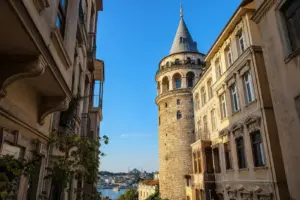 Galata Tower – about 2.3 km away · typical visit: 1–2 hours4 min on foot from Şişhane metro, Open daily 08:30–23:00
Main image: AI-generated illustration. It may not show the place exactly as it looks.
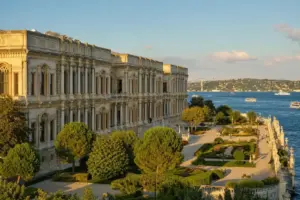 Dolmabahce Palace – about 4.3 km away · typical visit: 2–3 hours15 min on foot from Kabataş metro, Open 09:00–18:00, closed Mon
Main image: AI-generated illustration. It may not show the place exactly as it looks.
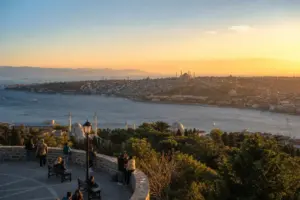 Camlica Hill – about 5.3 km away · typical visit: 1–2 hoursOpen daily 10:00–21:30
Main image: AI-generated illustration. It may not show the place exactly as it looks.
Metro stations near Sultanahmet
 Gülhane – about 200 m away (~3 min walk)Open daily 06:00–00:00
Main image: AI-generated illustration. It may not show the place exactly as it looks.
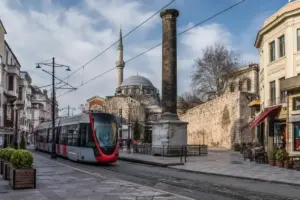 Çemberlitaşabout 600 m away (~10 min walk)
Main image: AI-generated illustration. It may not show the place exactly as it looks.
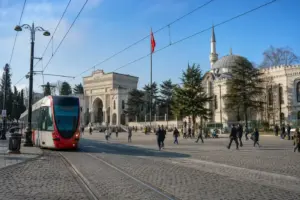 Beyazıt-Kapalıçarşı – about 950 m away (~15 min walk)Open daily 06:00–00:00
Main image: AI-generated illustration. It may not show the place exactly as it looks.
Restaurants and cafes near Sultanahmet
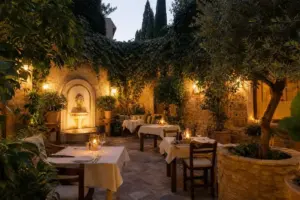 Hidden Garden – about 100 m away (~2 min walk)4 min on foot from Gülhane metro, Open daily 11:00–00:00
Main image: AI-generated illustration. It may not show the place exactly as it looks.
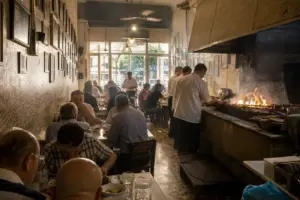 Tarihi Sultanahmet Koftecisi – about 300 m away (~5 min walk)7 min on foot from Gülhane metro, Open daily 11:00–23:00
Main image: AI-generated illustration. It may not show the place exactly as it looks.
 Balık Ekmek at Eminönü – about 350 m away (~6 min walk)7 min on foot from Gülhane metro, Open daily 09:00–22:30
Main image: AI-generated illustration. It may not show the place exactly as it looks.
 Giritli Restaurant – about 400 m away (~6 min walk)3 min on foot from Gülhane metro, Open daily 12:00–00:00
Main image: AI-generated illustration. It may not show the place exactly as it looks.
Nightlife near Sultanahmet
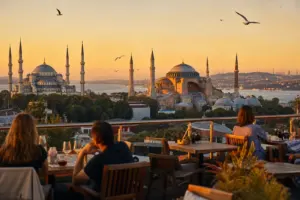 Seven Hills – about 250 m away (~4 min walk)4 min on foot from Gülhane metro, Open daily 08:00–23:00
Main image: AI-generated illustration. It may not show the place exactly as it looks.
 Roxy – about 350 m away (~6 min walk)7 min on foot from Gülhane metro
Main image: AI-generated illustration. It may not show the place exactly as it looks.
Train stations and river piers near Sultanahmet
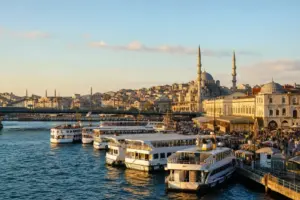 Eminönü Ferry Terminalabout 1.4 km away (~23 min walk)
Main image: AI-generated illustration. It may not show the place exactly as it looks.
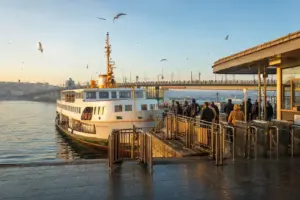 Karaköy Ferry Terminalabout 1.8 km away (~29 min walk)
Main image: AI-generated illustration. It may not show the place exactly as it looks.
Events and traditions near Sultanahmet
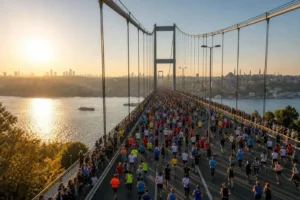 Istanbul Marathonabout 50 m away (~1 min walk)
Main image: AI-generated illustration. It may not show the place exactly as it looks.
Related guides
 Can You Leave Istanbul Airport During a Layover?
Main image: AI-generated illustration. It may not show the place exactly as it looks.
 Food Allergies in Istanbul: Turkish Phrases and Dining Tips
Main image: AI-generated illustration. It may not show the place exactly as it looks.
 30 Best Souvenirs from Istanbul: What to Buy and Where to Find It
Main image: AI-generated illustration. It may not show the place exactly as it looks.
 Airbnb in Istanbul: Short-Term Rental Rules, Costs and Booking Tips
Main image: AI-generated illustration. It may not show the place exactly as it looks.
 M11 Istanbul Airport Metro: Stations, Transfers and Travel Times
Main image: AI-generated illustration. It may not show the place exactly as it looks.
Browse more: More in Fatih · All Landmarks · All Neighborhoods
FAQ: Sultanahmet
Is Sultanahmet suitable for a first visit to Istanbul?
Yes. Sultanahmet is the ideal starting point for first-time visitors. Most of Istanbul's most famous sights cluster here within walking distance: Hagia Sophia, Blue Mosque, Topkapi Palace and Basilica Cistern. The neighbourhood is compact, well-served by tram and metro, and full of hotels and restaurants. Many first-time visitors spend 2–3 days here before exploring other districts.
How long should I spend in Sultanahmet?
A rushed visit of the main sites takes 1 day (early morning to evening). A reasonable pace is 2 days (one full day for monuments, one for side streets and museums). History enthusiasts or photographers may spend 3+ days. This depends on whether you plan to enter every monument (each requires hours) or focus on key sights and atmosphere.
Are the Blue Mosque and Hagia Sophia separate tickets?
Yes. Both require separate admission. You cannot buy a combined ticket for just these two. A Museum Pass may include Hagia Sophia (coverage varies; verify before buying), but the Blue Mosque is always free to enter outside prayer times. See the 'booking_info' section for ticket details.
Can I visit the Blue Mosque during prayer times?
The Blue Mosque closes to visitors during five daily prayer times (roughly 06:00, 13:00, 15:30, 18:00, 20:00, with exact times varying by season). Each closure lasts 30 min to 1 hour. Visitors should avoid these windows and check current prayer times before planning. You can still see the exterior and gardens.
What does the Museum Pass include?
The Museum Pass includes most state-run museums in Istanbul (Topkapi Palace, Istanbul Archaeological Museums, Galata Mevlevi Museum, Turkish & Islamic Arts Museum and others) but traditionally does not include Hagia Sophia or Basilica Cistern, though coverage may change. The Blue Mosque is free (outside prayer times). Verify current inclusions before purchasing.
Is Sultanahmet walkable, or do I need tram/metro?
Sultanahmet's core (the main monuments and square) is very walkable on foot; the area is compact and mostly flat. You do not need tram or metro to move between monuments within the neighbourhood. However, the T1 tram is useful for arriving from other districts or accessing the western edge (Grand Bazaar). Walking is the best way to see Sultanahmet itself.
Is Sultanahmet safe at night?
Sultanahmet is generally safe and is one of Istanbul's safest neighbourhoods. Police presence is visible, streets are lit and populated in evenings until 22:00 or later. Use normal city precautions (avoid isolated alleys, keep valuables secure). Locals and tourists move freely at night. The neighbourhood quiets down after 21:00 but remains safe.
Where is the Grand Bazaar, and is it part of Sultanahmet?
The Grand Bazaar (Kapalı Çarşı) is west of Sultanahmet in the Eminönü district, about 15 min walk away. While often visited as part of the same trip, it is a separate entity with its own history and character. The Arasta Bazaar (behind the Blue Mosque) is smaller and is actually in Sultanahmet; it is a quieter alternative to the Grand Bazaar.
Istanbul Vibes is a one-person project. A coffee keeps it going

Take this guide with you
Get a free PDF of this guide to print or read offline: key facts, tips and a map link on a few clean pages.
Report an issue on this page
How we research and update our guides
About this guide: AI assistance and accuracy
This guide is created with the help of AI and is based on official sources where available. Mistakes can still happen. Opening hours, prices, rules and other details are given to the best of our knowledge as of the date shown and can change without notice. It offers general recommendations only, not professional, legal or travel advice. Please confirm important details with the official source before you travel; you are responsible for your own plans and decisions.
* Affiliate link: as an Amazon Associate we earn from qualifying purchases at no extra cost to you.
