
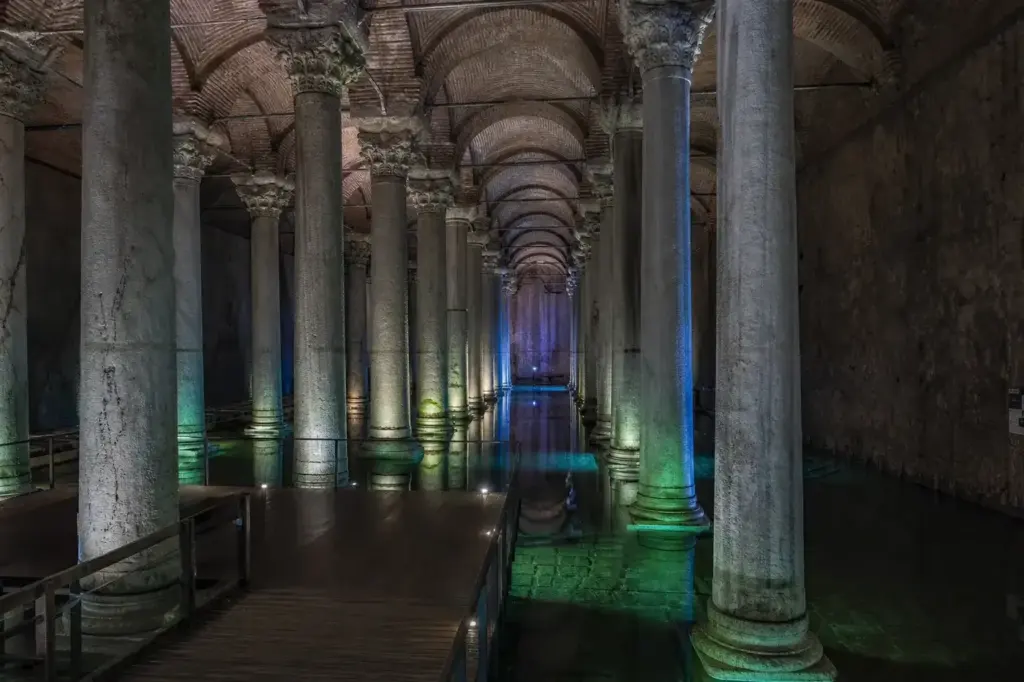
Descend into the Basilica Cistern, Istanbul’s largest ancient underground reservoir. Built in 532 under Emperor Justinian I, this vaulted chamber lies one block west of Hagia Sophia, invisible from the street above yet breathtaking below. A forest of 336 marble columns rises from shallow water, many salvaged from older Roman buildings, their capitals carved in different styles.
The cistern supplied drinking water to the Great Palace and surrounding quarters of Byzantine Constantinople. Its scale—138 metres long, 65 metres wide—reflects the engineering ambition of Justinian’s era. After the Ottoman conquest, it fell into disuse and was forgotten until rediscovered in 1545. Modern restoration and lighting have transformed it into a museum experience, though the columns, brick vaults and hydraulic mortar remain original to the 6th century.
Quick Facts
| Built / opened | 532 |
|---|---|
| Architect(s) | Emperor Justinian I |
| Address | Yerebatan Caddesi 1/3, Alemdar Mahallesi, Sultanahmet, 34410 Fatih, Istanbul, Turkey Google MapsApple MapsYandex Maps |
| District | Fatih |
| Metro | Sultanahmet (T1, 5–8 min walk west along Yerebatan Caddesi) |
| Admission | ₺₺ for foreign adults; free for children under 7 |
| Best time to visit | Early morning (09:00–10:30) offers the fewest crowds and best light for photography without flash. Late afternoon (16:30–18:00) is also quieter. Avoid 11:00–15:00, when tour groups and cruise-ship passengers crowd the space. Tuesdays and Wednesdays are typically the quietest weekdays. Summer (June–August) brings intense heat outside but the cistern stays cool (around 15°C), making it a refuge on hot days; however, crowds are heaviest. Spring (April–May) and autumn (September–October) offer moderate crowds and pleasant temperatures above ground. |
| Website | basilicacisternmuseum.org |
What Is (and Isn't) Part of a Visit to Basilica Cistern?
| Part | Status | Notes |
|---|---|---|
| Basilica Cistern main chamber | Included in the standard ticket | The entire underground reservoir with 336 columns, Medusa heads, and walkway is included in the standard ticket. |
| Night Shift (evening light and sound experience) | Separate ticket or institution | A separate, higher-priced ticket is required for the special evening session (usually 19:30–22:00) with artistic lighting and occasionally live music. |
| Audio guide | Separate ticket or institution | Audio guides in multiple languages are available for rent at the entrance. |
| Hagia Sophia | Outside / not part of it | Hagia Sophia stands one block east; it has its own entrance and separate ticket. |
| Blue Mosque | Outside / not part of it | The Blue Mosque is two blocks south; it is a working mosque with separate visiting rules and no ticket required. |
| Great Palace archaeological site | Outside / not part of it | The Great Palace that the cistern served lies beneath the modern Sultanahmet district; limited remains are visible at ground level but no excavated site is open to visitors. |
| Topkapi Palace | Outside / not part of it | Topkapi Palace is 500 metres east; it has its own entrance and ticket. |
Why Visit Basilica Cistern?
Walk through a space few ancient structures offer: a fully navigable interior from 1,500 years ago, still structurally sound. The scale and the play of light on water create an otherworldly atmosphere unlike the street-level sights nearby. The Medusa heads—two carved stone capitals at the northwest corner, repurposed from Roman temples—are among Istanbul’s most photographed details and easy to find.
A visit takes less than an hour, making it a natural fit between Hagia Sophia and the Blue Mosque. The temperature stays cool year-round (around 15°C), offering relief on hot summer days.
How Basilica Cistern Is Laid Out
The entrance is a low grey building on Yerebatan Caddesi. You descend a long staircase into the vaulted chamber, where you step onto raised wooden walkways. The walkway forms one main loop through the reservoir, beginning near the entrance and moving toward the far end where the two Medusa heads are located at the northwest corner. The loop is narrow but easy to follow, with no branching paths.
The cistern is mostly one level—the walkways keep you above shallow water on all sides. Rows of columns recede into dimly lit arches; atmospheric coloured lighting now illuminates the brick vaults and water reflections. You can move at your own pace, and most visitors spend 30–45 minutes inside, with slower photography adding another 15 minutes.
Highlights of Basilica Cistern
The 336 Marble Columns
A forest of columns rising 9 metres from the floor, carved capitals at the top. Many were salvaged from older Roman temples and structures when the cistern was built, which is why no two look identical. Some feature Corinthian capitals, others are simpler designs. You walk between them on the raised platform, looking up at the brick ceiling vaults they support. The repetition and scale create the dominant visual impression of the space.
Tip: Look upward at the capitals as you walk to spot the different carving styles. Bring binoculars if you want to study the details of the carvings.
The Medusa Heads
Two large carved stone heads, depicting the mythological Gorgon Medusa with snakes for hair, serve as column bases at the northwest corner of the cistern. Both lie on their sides, a deliberate placement. They are Roman spoils incorporated into the Byzantine structure. Medusa appears in classical art as a protective symbol, so her inclusion in a water reservoir may have been apotropaic (warding off evil). Their carved detail and mysterious placement have made them one of Istanbul's most famous archaeological features.
Tip: Ask staff at the entrance for directions to the Medusa heads if you are unsure—they are at the far end of the walkway. The space is dimly lit, so a phone torch or small torch helps you see the carving details clearly.
The Brick Vaults and Arches
The ceiling is not flat but a series of brick barrel vaults and groin vaults supported by the columns and arches between them. These were built using Roman concrete and hydraulic mortar—a lime mixture that hardens underwater. The vaults spring from the column capitals in a rhythm that guides your eye down the length of the chamber. Modern lighting washes the vaults in colour, emphasizing the geometry. This is 6th-century engineering on a monumental scale.
Tip: Stand still for a moment and look along the length of the cistern toward the far end. The perspective and repetition of columns and vaults are most striking from this angle.
Water Reflections and Light Installation
The cistern is kept with a shallow layer of water for visitor access and atmospheric effect. The modern lighting system—installed during a major 2017–2022 restoration—cycles through coloured washes that reflect in the water below. The effect is more art installation than ruin, which some visitors love for its mood and others criticize as a departure from the original. Either way, the reflections and light are central to the experience now.
Tip: Photographs are best with minimal flash or no flash—the coloured lighting is what makes the images dramatic. Come early (09:00–10:30) or late afternoon (16:30–18:00) for softer, less crowded photography.
The Entrance Staircase
The entry to the cistern involves a steep descent down a long brick staircase. You walk down beside the walls of an ancient shaft—the original access point to the reservoir. The brick wall on one side is lit, emphasizing the descent into depth. The staircase itself is an event, marking the transition from the modern street above to the ancient chamber below.
Tip: The stairs are steep and narrow. Wear comfortable shoes with good grip. If you have mobility concerns, ask staff about accessible entry options before descending.
The Great Palace Connection
The cistern was built to supply water to the Great Palace of Constantinople, the imperial residence of Byzantine emperors. The palace itself is not visible (its remains lie under the Sultanahmet district), but understanding that this reservoir fed the imperial court adds context to the scale and engineering effort. The cistern was so important that it was kept functioning for centuries and eventually became essential during Ottoman sieges.
Tip: Walk the platform and imagine the scale of the palace this was built to serve. The 80,000 cubic metres of water stored here was transported via 20 kilometres of aqueducts from the Belgrade Forest north of the city.
Atmosphere
The first impression is cool, quiet and dim. The air temperature stays around 15°C year-round, so you notice the drop as you descend the staircase. The sound is muffled—your footsteps on the wooden platforms echo faintly off the water and vaults. Modern coloured lighting (typically blues and greens) reflects in the still water, creating a reflective, almost dreamlike mood. The space feels removed from the street above.
Crowds vary by time. Early morning (09:00–10:30) is sparse. By midday, tour groups arrive, and the space becomes noisier and more crowded, though the acoustics mean sound travels oddly—a person 50 metres away sounds distant. Late afternoon (after 16:00) grows quieter again. In the evening, a separate ticket allows entry to a special lighting programme with live music on some nights.
History of Basilica Cistern
The cistern drew water from the Belgrade Forest, roughly 20 kilometres north of the city, transported via the Aqueduct of Valens and other aqueducts. It held up to 80,000 cubic metres. The design—brick vaults supported by columns, many salvaged from Roman temples—reflected Byzantine engineering standards. The Medusa heads incorporated into the structure were Roman spoils, likely protective symbols. The cistern was designed to be invisible, hidden beneath the square and buildings above.
After the Ottoman conquest of Constantinople in 1453, the cistern fell into disuse as the new rulers relocated the capital’s water-supply system. For centuries it was forgotten, its entrance buried. In 1545, the French scholar Petrus Gyllius, exploring Byzantine antiquities, discovered it by accident when he fell through a cellar floor. He documented the structure in his writings, though little was done to preserve it.
In the Ottoman period, small repairs took place. A major restoration occurred in 1723 under Sultan Ahmed III, directed by the architect Muhammad Agha of Kayseri. Further repairs followed under Sultan Abdulhamid II in the 19th century, and crack repairs were made in 1968. By the 20th century, the cistern had become a tourist attraction, though it remained largely as an unlit ruin.
In 2017, a comprehensive five-year restoration began under the Istanbul Metropolitan Municipality. The project reinforced the vaults, installed modern drainage and walkways, added seismic reinforcement, and introduced the current atmospheric lighting system. The cistern reopened in July 2022 as the Basilica Cistern Museum, with management transitioning to new operators in June 2026. Today it remains one of Istanbul’s most visited ancient monuments and a remarkable survivor of Byzantine infrastructure.
Legends and Myths about Basilica Cistern
The Medusa Heads as Protective Charms
Legend – historically unreliable. Local legend holds that the Medusa heads were placed face-down and sideways as a ward against evil and to protect the water supply. In ancient Greek and Roman symbolism, the gaze of Medusa—even in death—was thought to have protective power. The heads' placement in a cistern, a space vital to the city's survival, may have been intentional. Whether this was Justinian's explicit intention or a later interpretation is unclear, but the story reflects how ancient Byzantines understood protective magic.
Petrus Gyllius's Accidental Discovery
Disputed by historians. According to historical accounts, the French scholar Petrus Gyllius discovered the cistern in 1545 when he fell through the floor of a cellar into water below. Startled and confused, he realized he had entered an enormous underground chamber. He was one of the few Europeans to document the space after it had been lost to memory for nearly a century. His writings preserved awareness of the cistern's existence and architectural importance during a period when Ottoman Constantinople paid it little attention.
Tickets and Booking for Basilica Cistern
| Ticket | Price | Includes |
|---|---|---|
| Daytime entry (09:00–18:30) | ₺₺ | Access to the entire cistern chamber, walkway, Medusa heads, and all interior areas. Includes information panels in Turkish and English. Last entry is around 18:00. |
| Night Shift (19:30–22:00) | ₺₺₺ | Separate evening experience with artistic lighting programme and occasionally live music or performances. Separate higher ticket price. Tickets sold at the entrance starting at 19:30. |
| Children under 7 | Free | Free entry with ID. Children 7 and over require a full ticket. |
₺ budget · ₺₺ moderate · ₺₺₺ upscale · ₺₺₺₺ splurge. Price levels are estimates compared with typical prices for visitors.
Buy tickets at the entrance or online in advance through the official website or authorised platforms. The ticket office accepts only bank cards and Istanbul’s contactless payment card (İstanbulkart); no cash is taken. Buying online is strongly recommended in high season (March to October) to skip queues, which can exceed 30 minutes during midday.
Last entry to the daytime session is around 18:00, though the venue itself remains open until 18:30. The evening Night Shift session (19:30–22:00) is a separate experience with a separate, higher-priced ticket; these are sold only at the entrance starting at 19:30.
Discounted rates for Turkish citizens, students and seniors are available but require valid ID checked at the entrance. The Istanbul Museum Pass is not valid here. For all ticket categories and current prices, see the official museum website.
Suggested itineraries Basilica Cistern
45 minutes
Enter and follow the walkway from the beginning. Observe the columns and vaults on either side. Walk to the far end where the Medusa heads are located (about 10 minutes). Spend time photographing them and the surrounding areas. Walk back slowly, noticing details in the capitals and the reflection of light in the water.
1 hour
Slow walk through the entire chamber, pausing at different points. Start at the entrance, move steadily forward while observing the columns and architecture. Reach the Medusa heads, spend 10–15 minutes there. Return via a different line of sight or explore side areas. Stop to photograph reflections and details.
2 hours (with Hagia Sophia)
Allow 45 minutes in the Basilica Cistern. Exit and walk one block east to Hagia Sophia (included in some combo tickets). Allow 60–75 minutes for Hagia Sophia. Return to Sultanahmet for lunch or continue to the Blue Mosque (two blocks south).
Evening (Night Shift + Hagia Sophia)
Visit Hagia Sophia in late afternoon (last entry 17:00). Explore for 60 minutes. Rest and eat dinner nearby. Return to the cistern around 19:30 for the Night Shift experience (90 minutes). The artistic lighting and potential live music create a different atmosphere than daytime.
How to Get to Basilica Cistern
By T1 Tram (simplest): Board the T1 tram heading toward Bağcılar. Get off at Sultanahmet stop (served by both directions). Exit and turn west along Yerebatan Caddesi (the street with the cistern entrance sign). Walk 5–8 minutes downhill toward the waterfront. The entrance is a low grey building on your left marked with signage.
From Hagia Sophia: Exit Hagia Sophia onto Sultanahmet Caddesi. Turn west (toward the sea). Yerebatan Caddesi branches off to the left after 100 metres. Follow it downhill for 3–4 minutes to reach the cistern entrance.
By foot from Blue Mosque: Exit onto Atmeydanı and head north toward the shore. Turn right (east) onto Yerebatan Caddesi after passing the Topkapi Palace walls. The entrance is 4–5 minutes’ walk.
By taxi: Tell the driver Yerebatan Sarnıcı or give the address (Yerebatan Caddesi 1/3, Sultanahmet). Traffic is heavy during the day, so the tram is often faster.
Accessibility
The entrance involves descending a steep staircase (approximately 50 steps) into the chamber. The walkway itself is level and wide enough for wheelchairs; however, the descent is not accessible to wheelchair users or those unable to manage stairs. The cistern does accommodate visitors with mobility aids who can navigate the stairs. The space is dimly lit and has uneven water on either side; visitors with balance difficulties should move carefully. The air is cool and humid (around 15°C), which may affect those with respiratory sensitivity. Staff can answer questions about specific needs at the entrance.
Food Nearby
The immediate area has informal food vendors on Yerebatan Caddesi selling drinks and snacks. For sit-down restaurants, walk 5 minutes to Sultanahmet Square where numerous menus cater to tourists, ranging from casual kebab to international cuisine. Matbah Ottoman Cuisine (118 metres south) and Avlu Restaurant (246 metres south) are popular options near the Basilica Cistern. Cafes along Sultanahmet Caddesi offer tea and pastries.
What to Bring
Comfortable walking shoes with good grip—the stone floor can be wet and slippery. A light layer (sweater or cardigan)—the cistern stays around 15°C year-round, much cooler than the street above. A phone torch or small flashlight for detailed photography in low light. Do not bring large bags; bags are checked at security, and the narrow walkway makes navigation difficult with bulky items.
Best Views and Photo Spots of Basilica Cistern
Medusa head zone (northwest corner)
The two carved stone heads lying on their sides serve as column bases. Rows of columns recede behind them, creating depth. The carved detail of the Medusa face is clear here, and the context of the columns emphasizes the scale. Light usually reflects well in the water nearby.
Best time: Late afternoon (16:30–18:00) when crowds thin and the ambient light is softer. Midday crowds make framing difficult.
Central column avenue (main walkway looking toward the far end)
Stand on the walkway and look along the length of the chamber toward the Medusa heads. Rows of columns recede into the distance in repeating rhythm, with brick vaults above and water reflections below. The perspective emphasizes depth and the monotony of the grid.
Best time: Early morning (09:00–10:30) when fewer people are visible in the distance and natural light from the entrance illuminates the arches.
Looking back toward the entrance
Turn around from the far end and photograph toward the entrance staircase. The columns frame the stairway in the distance. The play of light from above creates a sense of emerging from depth.
Best time: Any time, as the entrance light provides consistent illumination. Early morning gives a softer quality.
Water reflections under lit columns
Stand still on the walkway and photograph a cluster of illuminated columns reflected in the water surface. The coloured lighting (typically blues or greens) creates a double image. The effect is most striking when the lighting is active and when few people are visible.
Best time: Evening during the Night Shift session (19:30–22:00) when the artistic lighting programme is running with full intensity. Or late afternoon on a quiet day when the ambient coloured lights activate.
Overhead vault detail
Aim upward at the brick barrel vaults and the point where they meet at the column capitals. The repetition of the arch structure and the texture of the ancient brick are visible. A close-up shot of a capital's carving works well from this angle.
Best time: When the lighting highlights the ceiling vaults—typically in late afternoon or during the Night Shift when coloured lights wash the vaults.
Photography Rules
Photography is permitted throughout the cistern with no flash indoors. Tripods are permitted. Drones are not allowed in the cistern (this is an enclosed space). The modern coloured lighting is dramatic with flash off; use a phone torch or headlamp if you want to illuminate details. The Medusa heads and columns reflect well in the water, especially in low light.
Family Suitability
Children are welcome, and those under 7 enter free. The space is cool and quiet, which suits young children if they are comfortable with dim light. However, the steep staircase descent (about 50 steps) is challenging for toddlers and very young children; strollers are not practical. Older children (ages 6+) who can walk stairs enjoy exploring the columns and the Medusa heads. The space is generally safe—the water is shallow (less than a metre), railings are minimal, and the walkway is bordered; supervise children closely near the water's edge. The cool temperature means children may need a layer. No dedicated family facilities (changing rooms, family toilets) are marked in the venue.
Istanbul Vibes Tips
- Visit between 09:00 and 10:30 or after 16:30 to avoid the tour-group rush. Midday (11:00–15:00) is the absolute worst time—hundreds of people from cruise ships and group tours fill the narrow walkway, and photography becomes frustrating.
- Bring a phone torch or small flashlight. The modern lighting is atmospheric but dim. A torch helps you see the fine detail on the Medusa heads and the carved capitals of the columns.
- The 'Night Shift' session (19:30–22:00) with the special lighting programme is visually distinct from daytime, not just darker. If you are interested in the light-and-sound experience, check ahead—this session is pricier and runs only on certain days.
- Do not assume the Istanbul Museum Pass covers entry. It does not. Bring sufficient card or cash alternatives accepted locally. The venue takes only bank cards and Istanbul's İstanbulkart payment card, not cash.
- The cistern stays around 15°C year-round. Even in August, bring a sweater or cardigan. The shock from summer heat to underground cool is significant.
- The descent staircase is steep and narrow. If you have any mobility concerns, ask staff about accommodations before you commit to entering. There is no back exit—you must return the way you came.
Explore Nearby Basilica Cistern
Sights near Basilica Cistern
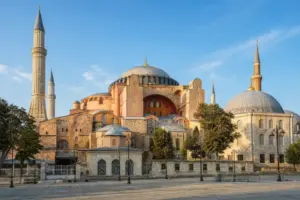 Hagia Sophia – about 350 m away (~6 min walk) · typical visit: 1–1.5 hours8 min on foot from Gülhane metro, Open daily 09:00–19:30
Main image: AI-generated illustration. It may not show the place exactly as it looks.
 Blue Mosque – about 100 m away (~2 min walk) · typical visit: 45–75 minutes3 min on foot from Gülhane metro
Main image: AI-generated illustration. It may not show the place exactly as it looks.
 Topkapi Palace – about 800 m away (~13 min walk) · typical visit: 3–4 hours without Harem; 4–5 hours with Harem15 min on foot from Gülhane metro, Open 09:00–18:30, closed Tue
Main image: AI-generated illustration. It may not show the place exactly as it looks.
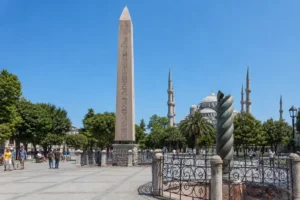 Byzantine Hippodrome – about 100 m away (~2 min walk) · typical visit: 1-2 hours5 min on foot from Gülhane metro, Open 24 hours
Main image: AI-generated illustration. It may not show the place exactly as it looks.
 Turkish & Islamic Arts Museum – about 200 m away (~4 min walk) · typical visit: 2–3 hours6 min on foot from Çemberlitaş metro, Open daily 09:00–18:30
Main image: AI-generated illustration. It may not show the place exactly as it looks.
 Hippodrome – about 100 m away (~2 min walk) · typical visit: 1–2 hours5 min on foot from Gülhane metro, Open 24 hours
Main image: AI-generated illustration. It may not show the place exactly as it looks.
Metro stations near Basilica Cistern
 Gülhane – about 200 m away (~4 min walk)Open daily 06:00–00:00
Main image: AI-generated illustration. It may not show the place exactly as it looks.
 Çemberlitaşabout 600 m away (~9 min walk)
Main image: AI-generated illustration. It may not show the place exactly as it looks.
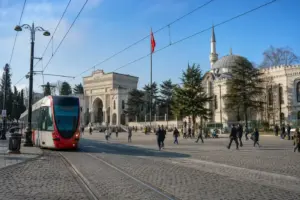 Beyazıt-Kapalıçarşı – about 950 m away (~15 min walk)Open daily 06:00–00:00
Main image: AI-generated illustration. It may not show the place exactly as it looks.
Restaurants and cafes near Basilica Cistern
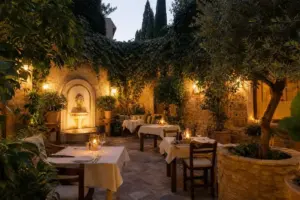 Hidden Garden – about 150 m away (~3 min walk)4 min on foot from Gülhane metro, Open daily 11:00–00:00
Main image: AI-generated illustration. It may not show the place exactly as it looks.
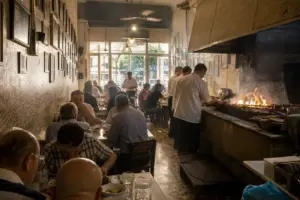 Tarihi Sultanahmet Koftecisi – about 200 m away (~3 min walk)7 min on foot from Gülhane metro, Open daily 11:00–23:00
Main image: AI-generated illustration. It may not show the place exactly as it looks.
 Balık Ekmek at Eminönü – about 250 m away (~4 min walk)7 min on foot from Gülhane metro, Open daily 09:00–22:30
Main image: AI-generated illustration. It may not show the place exactly as it looks.
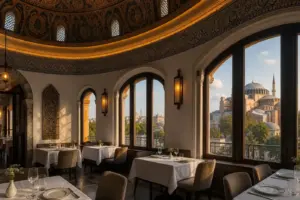 Matbah Restaurant – about 400 m away (~6 min walk)9 min on foot from Gülhane metro, Open daily 09:00–22:30
Main image: AI-generated illustration. It may not show the place exactly as it looks.
Nightlife near Basilica Cistern
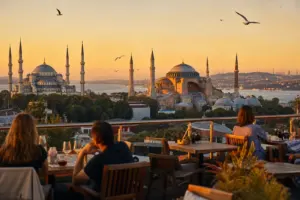 Seven Hills – about 200 m away (~3 min walk)4 min on foot from Gülhane metro, Open daily 08:00–23:00
Main image: AI-generated illustration. It may not show the place exactly as it looks.
 Roxy – about 250 m away (~4 min walk)7 min on foot from Gülhane metro
Main image: AI-generated illustration. It may not show the place exactly as it looks.
Train stations and river piers near Basilica Cistern
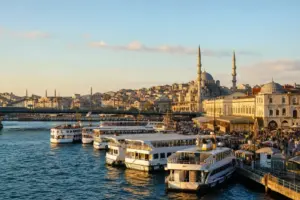 Eminönü Ferry Terminalabout 1.3 km away (~22 min walk)
Main image: AI-generated illustration. It may not show the place exactly as it looks.
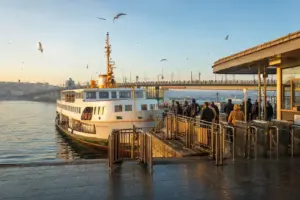 Karaköy Ferry Terminalabout 1.7 km away (~28 min walk)
Main image: AI-generated illustration. It may not show the place exactly as it looks.
Events and traditions near Basilica Cistern
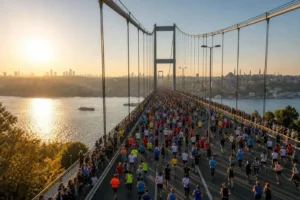 Istanbul Marathonabout 150 m away (~2 min walk)
Main image: AI-generated illustration. It may not show the place exactly as it looks.
Related guides
 Istanbul in December: Weather, Attractions and Winter Travel Tips
Main image: AI-generated illustration. It may not show the place exactly as it looks.
 Sultanahmet Köftesi: How to Order and Grill Istanbul Meatballs
Main image: AI-generated illustration. It may not show the place exactly as it looks.
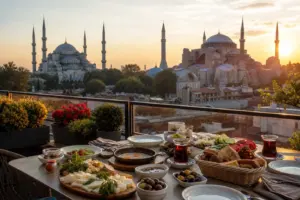 Seven Hills Restaurant: Rooftop Breakfast in Sultanahmet
Main image: AI-generated illustration. It may not show the place exactly as it looks.
 Sarnıç Restaurant: Dining in a Byzantine Cistern
Main image: AI-generated illustration. It may not show the place exactly as it looks.
 Binbirdirek Cistern: A Byzantine Underground Hall with 224 Marble Columns5 min on foot from Çemberlitaş metro, Open daily 10:00–17:00
Main image: AI-generated illustration. It may not show the place exactly as it looks.
Browse more: More in Fatih · All Landmarks · All Sightseeing
FAQ: Basilica Cistern
Is the Basilica Cistern part of Hagia Sophia?
No, they are separate sites with separate entrances and tickets. Hagia Sophia is one block east. Some combo tickets bundle both, but each requires its own visit and admission. The cistern was built to supply water to the palace and city; Hagia Sophia is a separate Byzantine church.
Do I need to book ahead or can I buy a ticket on arrival?
You can buy at the entrance, but booking online in advance is strongly recommended, especially March to October. Queues at the ticket office can exceed 30 minutes at midday. Online booking guarantees entry on your chosen time slot and skips the queue.
Can I visit in the evening?
Yes, there is a separate Night Shift session from 19:30 to 22:00 with special artistic lighting and sometimes live music. This requires a separate, higher-priced ticket sold only at the entrance starting at 19:30. The daytime session closes at 18:30.
How long do I need to spend inside?
Most visitors spend 30–45 minutes. Photography and slow exploration can extend this to 60 minutes. The walkway is one loop, so you can move at your own pace without missing anything.
Why are the Medusa heads there and why are they sideways?
The Medusa heads are Roman sculptures incorporated into the Byzantine cistern as column bases. They are likely placed face-down and on their side as a protective or apotropaic symbol. In classical symbolism, Medusa's gaze had protective power. Whether this placement was intentional during construction or added later remains disputed by historians.
Is the water clean? Can I touch it?
The water is kept shallow (less than a metre) for visitor access and is regularly maintained. You are not encouraged to touch it, and it is not drinking water. Stay on the walkway and do not wade in.
Is the Istanbul Museum Pass valid here?
No. The Istanbul Museum Pass does not cover the Basilica Cistern. You must buy a separate ticket at the entrance or online.
What should I wear?
Comfortable walking shoes with good grip—the stone can be wet and slippery. Bring a light sweater or cardigan; the underground temperature is around 15°C year-round, much cooler than the street. Avoid large backpacks, as the walkway is narrow and bags are checked at security.
Istanbul Vibes is a one-person project. A coffee keeps it going
Hotels near Basilica Cistern
- Hagia Sofia Mansions Istanbul, Curio Collection by Hilton (150 m) Check prices (affiliate link, opens in a new tab)
- Armagrandi Spina Hotel (150 m) Check prices (affiliate link, opens in a new tab)
- Aristocrat Hotel (150 m) Check prices (affiliate link, opens in a new tab)
- Blue House Hotel (150 m) Check prices (affiliate link, opens in a new tab)
Affiliate link (opens the booking site): we may earn a commission at no extra cost to you.
Restaurants near Basilica Cistern
- Old House Restaurant & Bar Cafe (200 m) Google Maps
- Serbethane Cafe & Restaurant (200 m) Google Maps
- Med Cezir (200 m) Google Maps
- West Town Cafe & Restaurant (200 m) Google Maps
Distances are straight-line, from OpenStreetMap data.

Take this guide with you
Get a free PDF of this guide to print or read offline: key facts, tips and a map link on a few clean pages.
Report an issue on this page
How we research and update our guides
About this guide: AI assistance and accuracy
This guide is created with the help of AI and is based on official sources where available. Mistakes can still happen. Opening hours, prices, rules and other details are given to the best of our knowledge as of the date shown and can change without notice. It offers general recommendations only, not professional, legal or travel advice. Please confirm important details with the official source before you travel; you are responsible for your own plans and decisions.
* Affiliate link: as an Amazon Associate we earn from qualifying purchases at no extra cost to you.
