
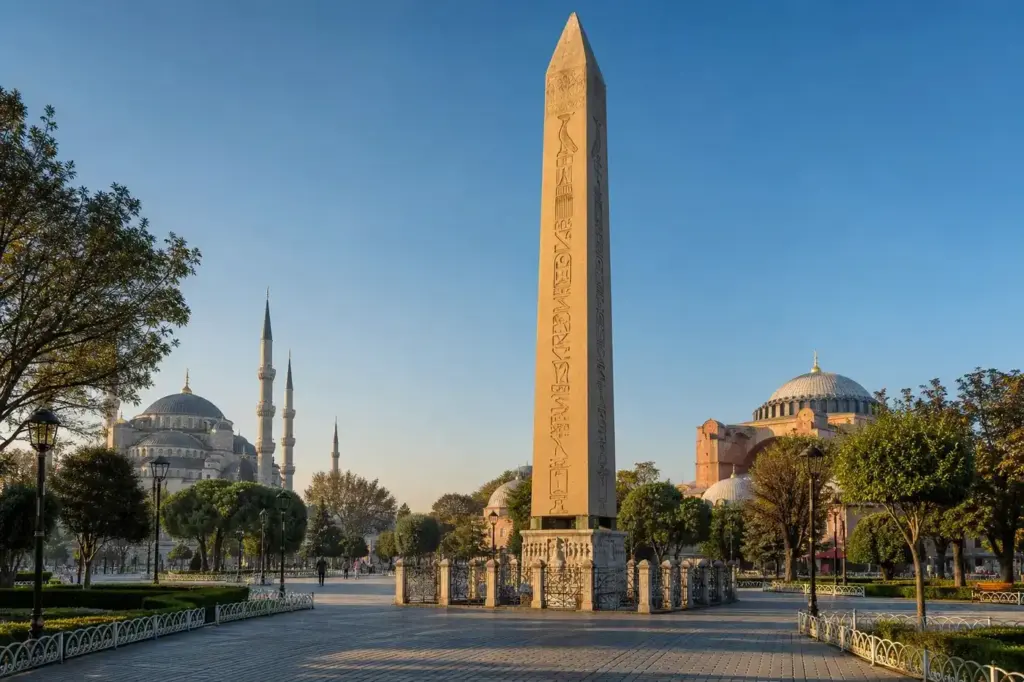
The Hippodrome of Constantinople, now known as Sultanahmet Square, is an open public space that sits directly above the ancient racetrack that once thundered with 100,000 spectators. The rectangular footprint of the square today directly follows the ground plan of the original track, which stretched approximately 450 meters long and 130 meters wide.
Entry is free, the site is open 24 hours, and you walk directly upon the ancient racing surface—now buried more than two meters beneath your feet. Three remarkable monuments still mark the Hippodrome’s ancient spine: the Obelisk of Theodosius, the Serpent Column, and the Walled Obelisk. The square sits between the Blue Mosque and Hagia Sophia, making it one of Istanbul’s most visited landmarks.
Quick Facts
| Turkish name | At Meydanı |
|---|---|
| Built / opened | 203 |
| Architect(s) | Emperor Septimius Severus (original); expanded by Constantine the Great |
| Address | Sultanahmet Square, Fatih, 34122 Istanbul, Turkey Google MapsApple MapsYandex Maps |
| District | Fatih |
| Metro | Sultanahmet (T1 Tram, Main exit leads directly to the square) Sirkeci (M1A / M2 Metro, 12-minute walk following signs toward Sultanahmet Square) |
| Admission | Free |
| Best time to visit | The Hippodrome is accessible 24 hours a year. Early morning, between 7 and 8 AM, offers the quietest experience and the most beautiful light for photography and contemplation. The monuments cast long shadows, and the square belongs mostly to locals and a few early-rising visitors. By mid-morning, tour groups begin to arrive, and crowds increase steadily through the afternoon, peaking around 10 AM to 3 PM. Late afternoon, after 4 PM, sees a drop in crowd density. Evening brings floodlighting and a more atmospheric ambiance, especially for photography. Weekdays are generally quieter than weekends. Spring (April–June) and autumn (September–October) offer the most pleasant weather. Summer is very hot, and winter is cool and occasionally rainy, but the site remains accessible and beautiful in all seasons. |
What Is (and Isn't) Part of a Visit to Hippodrome?
| Part | Status | Notes |
|---|---|---|
| Sultanahmet Square (the Hippodrome site) | Included in the standard ticket | Open public space, free to enter 24 hours a day; no ticket required. |
| Three Ancient Monuments (Obelisk of Theodosius, Serpent Column, Walled Obelisk) | Included in the standard ticket | Visible from the square without any ticket; accessible 24 hours. |
| The Original Racing Track | Not open to visitors | Buried more than two meters below the current pavement; not excavated or open to visitors. |
| Blue Mosque | Separate ticket or institution | Adjacent to the western side of the Hippodrome; separate entrance, separate rules, and separate visiting hours; part of a different institution. |
| Hagia Sophia | Separate ticket or institution | Located north of the Hippodrome; separate entrance, separate ticket, and separate rules; distinct historical institution. |
| Turkish and Islamic Arts Museum (Ibrahim Pasha Palace) | Separate ticket or institution | Located on the eastern side of the square in the Ibrahim Pasha Palace; requires separate ticket and has distinct opening hours. |
| Imperial Box (Kathisma) | Not open to visitors | The palace-side structure from which emperors watched races no longer exists; only its historical location is marked. |
Why Visit Hippodrome?
The Hippodrome tells the story of Byzantine power and popular culture in a single location. The 532 AD Nika Riots, which began in the Hippodrome and nearly toppled Emperor Justinian I, demonstrate how central this space was to the city’s fate. Standing in the square, you walk the same elongated rectangle where these historical events unfolded, and you can see three surviving ancient monuments that have marked the central spina for over 1,500 years.
How Hippodrome Is Laid Out
Sultanahmet Square is a rectangular open space aligned with the original track of the Hippodrome. The ground beneath your feet sits more than two meters above the original racing surface, which is no longer visible. The square is bordered by the Blue Mosque to the west and Hagia Sophia to the north. Three monuments occupy the square’s central axis, marking the location of the ancient spina (the dividing barrier of the racetrack):
- North end: The Obelisk of Theodosius stands at the northern section of the square.
- Center: The Serpent Column occupies the middle.
- South end: The Walled Obelisk (Dikili Taş) stands in the southern portion.
The entire square is easily walkable; most visitors can see all three monuments in a 30-minute stroll. The square itself serves as a public plaza with benches, gardens, and fountains, making it pleasant for sitting and observing the surroundings and adjacent historic structures.
Highlights of Hippodrome
Obelisk of Theodosius
This is the tallest and most prominent monument in the square, standing more than 25 meters high. It was brought to Constantinople as plunder from Luxor, Egypt, in the 4th century AD and erected on the spina by Emperor Theodosius I around 390 AD. The hieroglyphic inscriptions on all four sides are still visible and decipherable. The base was sculpted with reliefs showing Theodosius and his court watching chariot races—one of the only surviving images of how the Hippodrome was actually used.
Tip: Walk around all sides of the base to see the relief carvings of spectators and imperial figures; the west side facing the Blue Mosque often has the clearest light for photography in late afternoon.
The Serpent Column
This bronze column, originally more than 8 meters tall (now broken at the top), was brought to Constantinople from Delphi, Greece, in 390 AD. It was cast to commemorate the Greek victory over the Persians at Plataea in 479 BC. The bronze serpents that formed the capital are now in the Istanbul Archaeological Museums; what remains in the square is the twisted shaft that once coiled upward. Its age and the precision of its casting make it remarkable—a 2,400-year-old artifact still standing in public view.
Tip: The heads of the three serpents are missing; look for the inscription plaque that explains the history. The museum visit (separate museum, not part of the Hippodrome) shows the original serpent heads that were removed for protection.
Walled Obelisk (Dikili Taş)
This 32-meter granite obelisk stands at the southern end of the square, surrounded by a protective stone base. It was also brought from Egypt and erected during the reign of Emperor Constantine VII in the 10th century AD. It is the most severely weathered of the three monuments, with much of its surface eroded, but it remains an impressive testimony to Byzantine engineering and the empire's reach. Unlike the Obelisk of Theodosius, this one has a more austere appearance, reflecting a different era of the empire.
Tip: Approach from the south side to see the protective wall structure clearly; in afternoon light, the shadows cast by the weathered surface reveal details in the stone that can be hard to see at midday.
The Spina and Ancient Track
The elongated rectangular shape of Sultanahmet Square directly preserves the ground plan of the Hippodrome's track. The original racing surface, where chariots once competed, lies buried more than two meters below the current pavement. The spina was the central dividing barrier running the length of the track, where the three monuments were positioned. By standing in the square and looking at its length, you can mentally reconstruct the 450-meter-long racetrack where up to eight chariots (two per team) raced at high speed.
Tip: Walk the full length of the square from north to south to appreciate its scale and the track's proportions. Early morning (before 8 AM) offers the clearest light and fewest crowds for this kind of contemplative visit.
The Imperial Connection: Great Palace and Blue Mosque
The Great Palace of Constantinople, the primary residence of Byzantine emperors, stood directly south and adjacent to the Hippodrome. Emperors had a direct covered passage from the palace to the Kathisma (imperial box), allowing them to appear suddenly and spectacularly before crowds. The Blue Mosque was later built on the site of the Great Palace in the early 17th century. This spatial relationship—palace, racetrack, and crowds—was fundamental to how Byzantine emperors wielded power.
Tip: Stand in the square and look toward the Blue Mosque (southwest); this helps you visualize the palace complex that once stood there and understand why the Hippodrome's location was so strategically important to imperial authority.
View and Photography from Surrounding Corners
The Hippodrome's square shape offers excellent vantage points from each corner and side for photographing the monuments and the surrounding Sultanahmet area. The northern section offers views of Hagia Sophia; the western side frames the Blue Mosque; the southern approaches show the monuments against the urban backdrop. Early morning and late afternoon light is ideal for seeing the texture and details of the ancient stones.
Tip: For the most atmospheric photographs, arrive between 7 and 8 AM when the square is nearly empty, the light is warm and low, and monuments cast long shadows. Avoid midday sun, which creates harsh contrasts and attracts the largest crowds.
Atmosphere
Sultanahmet Square feels like the threshold between archaeological site and living city. The green space, adorned with benches and gardens, attracts a constant stream of visitors—families, tour groups, and individual travelers—all moving between the Blue Mosque and Hagia Sophia. In early morning, roughly 7 to 9 AM, the square belongs to a handful of locals walking dogs and municipal workers; it is peaceful and the light is ideal for seeing the monuments clearly.
By mid-morning, tour groups begin to arrive, and the pace quickens. Midday crowds peak, especially in summer and during weekends. Visitors move quickly through, pausing at monuments for photographs. In late afternoon, after 4 PM, the density drops again as people head to mosques for prayer or to restaurants in surrounding neighborhoods. Evening brings different lighting—the monuments are floodlit or catch the warm last light—and the atmosphere becomes more contemplative, especially among photographers and those seeking quieter moments.
The monuments themselves are sober and weary, bearing 1,500 years of weather and history. The Obelisk of Theodosius stands regally, its hieroglyphics still legible. The Serpent Column’s twisted bronze shaft is haunting—incomplete, ancient, yet striking. The Walled Obelisk is weathered almost to abstraction, its surface soft and eroded. These objects command respect through their age and the space around them feels grave, historically charged, despite the bustle of contemporary tourism.
History of Hippodrome
Construction of the Hippodrome began around 203 AD under Roman Emperor Septimius Severus during the reign of Caracalla. Severus enlarged and enhanced a smaller arena that may have existed earlier. The track was modest at first, serving the growing settlement of Byzantium. When Constantine the Great declared the city the new capital of the Roman Empire in 330 AD and renamed it Constantinople, he lavished enormous resources on the Hippodrome. It was expanded dramatically and became a grand imperial monument, reaching dimensions of approximately 450 meters long and 130 meters wide—rivaling Rome’s Circus Maximus in scale. The seating capacity was estimated at 100,000 spectators.
During the Byzantine period (330–1453 AD), the Hippodrome was the sporting and social center of Constantinople. Chariot racing, organized into four rival factions (the Blues, Greens, Reds, and Whites), captured the passion of the entire city. Emperor Justinian I had a covered passage built from the Great Palace directly to the imperial viewing box (Kathisma), allowing him to enter the arena spectacularly and interact with crowds.
The central dividing barrier of the track, called the spina, was decorated with statues, monuments, and treasures. Over centuries, Byzantine emperors transported to Constantinople Egyptian obelisks, Greek columns, and bronze sculptures—all positioned on the spina to display imperial power and cosmopolitan culture. The Obelisk of Theodosius, brought from Egypt in the 4th century, was erected around 390 AD. The Serpent Column, taken from Delphi in Greece, arrived around the same period. These monuments turned the Hippodrome into a museum of conquest and imperial authority.
The Nika Riots of 532 AD marked a turning point. A chariot race crowd erupted into a rebellion against Emperor Justinian I, fueled by factional and religious tensions. The riots spread throughout the city, burning buildings and creating civil chaos. Justinian ordered troops to suppress the uprising brutally; approximately 30,000 people were killed, many of them trapped in the Hippodrome itself. After this catastrophe, chariot racing lost its cultural dominance. The Hippodrome continued to be used for imperial ceremonies and public events, but it never regained its former significance as the beating heart of Byzantine civic life.
When the Ottoman Empire conquered Constantinople in 1453, the Hippodrome ceased to be used for organized events. The Ottoman rulers built new centers of power elsewhere; the site became a public square and eventually fell into partial disrepair. Over centuries, the original track was buried under accumulating earth and debris. By the late Ottoman period, much of the Hippodrome’s history was forgotten; parts of the square were used for markets and everyday activities. The three surviving monuments—the Obelisk of Theodosius, the Serpent Column, and the Walled Obelisk—remained standing, though their original context and purpose were no longer widely understood.
In modern times, the square was formalized as Sultanahmet Square (Sultanahmet Meydanı) or At Meydanı (Horse Square), and its historical significance was recognized and preserved. The square became a central gathering place and a primary tourist destination in Istanbul. Archaeological work has confirmed the original dimensions and orientation of the track, and the square today preserves the exact ground plan of the ancient Hippodrome. The rectangular outline of the square makes the Hippodrome’s scale legible to anyone who knows what to look for.
Legends and Myths about Hippodrome
The Three Serpent Heads of the Serpent Column
Legend – historically unreliable. According to legend, the Serpent Column in the Hippodrome once had three bronze serpent heads coiled atop its shaft—originally cast to commemorate Greek victory over the Persians at Plataea in 479 BC. Over the centuries, these heads vanished. One account claims they were destroyed by a drunken crusader during the Latin occupation of Constantinople in the 13th century. Another version says they were deliberately removed for safety reasons over time. The exact date and manner of their disappearance remains uncertain. Today, only the twisted shaft remains in the square; the original heads are preserved in the Istanbul Archaeological Museums. The mystery of their loss has become part of the column's legend.
Emperor Justinian's Kathisma and the Nika Riots
Disputed by historians. The legend holds that Emperor Justinian I watched the Nika Riots unfold from his imperial viewing box, the Kathisma, seeing his own subjects turn against him and nearly topple his rule. In reality, Justinian did order the suppression of the riots, and approximately 30,000 people were killed in the Hippodrome. Some accounts dramatize the scene as Justinian watching the bloodshed from his seat of power, a moment when imperial authority hung by a thread. Whether Justinian was physically present to witness it or learned of events through messengers remains unclear in historical sources, but the image of the emperor presiding over the moment his empire nearly collapsed has become part of the Hippodrome's historical legend.
Charioteer Porphyrios, the Hero of the Hippodrome
Legend – historically unreliable. Among all the chariot racers who competed in the Hippodrome over centuries, one name stands out in surviving records: Porphyrios. He was so celebrated and successful that he raced for both the Blues and the Greens, a rare feat given the deep factional loyalties. Statues were erected in his honor in the Hippodrome, and inscriptions praised his skill and victories. Ancient writers record that crowds chanted his name and that he earned the status of a public hero during the Byzantine period. Unfortunately, none of his statues survive; only their bases and inscriptions remain, now preserved in the Istanbul Archaeological Museums. His legend demonstrates how chariot racing produced heroes whose fame rivaled that of modern sports celebrities.
Tickets and Booking for Hippodrome
The Hippodrome (Sultanahmet Square) is a free open public space and does not require a ticket. No advance booking is needed. The square is accessible 24 hours a day, every day of the year. There are no entrances, turnstiles, or barriers; you simply enter the square from any of its sides. If you wish to visit the surrounding paid attractions—the Blue Mosque, Hagia Sophia, Basilica Cistern, or Turkish and Islamic Arts Museum—each has its own separate ticket and rules. For details on those institutions, see their respective pages. Photography is permitted throughout the square without restriction.
Suggested itineraries Hippodrome
30 minutes
Walk the length of the square from north to south, pausing at each of the three monuments (Obelisk of Theodosius, Serpent Column, Walled Obelisk). Spend a few minutes at each to read the plaque information and observe the details. This covers the essential highlights and gives you a sense of the Hippodrome's scale and the spina's location.
1–1.5 hours
Begin with the 30-minute walk. Add time to sit on one of the square's benches and observe how the monuments relate to each other and to the surrounding Blue Mosque and Hagia Sophia. Take photographs from multiple angles. Read the full history by visiting each side of the Obelisk of Theodosius base to see the relief carvings. Walk around the Serpent Column to view any surviving inscriptions.
2–3 hours
Spend an hour in the Hippodrome as described above. Then visit one of the adjacent institutions: the Turkish and Islamic Arts Museum (on the eastern side, housed in the Ibrahim Pasha Palace), or explore the Blue Mosque (to the west), or Hagia Sophia (to the north). This combination gives you the Hippodrome's historical context and fills out a half-day in Sultanahmet's most important sights.
Half day (4–5 hours)
Dedicate the morning or afternoon to Sultanahmet. Spend 1.5 hours at the Hippodrome. Visit the Turkish and Islamic Arts Museum (1–1.5 hours) to see chariot racing artifacts and to understand the daily life of the Hippodrome era. Walk to Hagia Sophia (15 minutes) and spend 1.5–2 hours there. End with a visit to the Blue Mosque (30 minutes to 1 hour). This creates a comprehensive understanding of the Hippodrome's place in Byzantine and Ottoman Istanbul.
How to Get to Hippodrome
By Tram (recommended): Take the T1 tram (Bağcılar–Kabataş line) to the Sultanahmet stop. The journey from central areas like Taksim takes about 15–20 minutes. Exit the tram and you will find yourself directly in Sultanahmet Square at the Hippodrome. This is the easiest and most direct route for most visitors.
By Metro: Take the M1A or M2 metro line to Sirkeci Station. From the station, follow signs toward Sultanahmet or the Hippodrome (also labeled Atmeydani). The walk is approximately 12 minutes downhill through residential streets. At the base, you will see the monuments and the square opening before you.
By Bus: Several bus routes serve Sultanahmet, including 38B, BN1, and 77A. Ask the driver for Sultanahmet or Atmeydani stop. From there, walking directions to the square are straightforward; locals are helpful with directions.
On Foot: If you are staying in the Sultanahmet area, the Hippodrome is easy to reach on foot. It is directly between the Blue Mosque (to the west) and Hagia Sophia (to the north), making it a natural waypoint in any tour of the Old City. Street signs and landmarks make navigation simple.
By Taxi or Ride-Share: Give the driver the address “Sultanahmet Square” or “Atmeydani” in the Fatih district. The journey time and cost depend on traffic and your departure point.
Accessibility
Sultanahmet Square is a paved, level public space with good accessibility for wheelchair users. There are no stairs or significant barriers throughout the square. Benches are positioned at regular intervals for rest. The three monuments are visible from the accessible pathways without need for climbing or uneven terrain. Rest facilities (benches, shade from nearby trees and buildings) are available throughout the square. Nearby public restrooms can be found in the adjacent Turkish and Islamic Arts Museum and in restaurants and cafes in the surrounding streets. No special arrangement or ticket is needed to access the Hippodrome itself.
Food Nearby
The Hippodrome is surrounded by Sultanahmet, Istanbul's most visited tourist district, with abundant restaurant and cafe options. Along the streets bordering the square and in the surrounding neighborhoods, you will find Turkish cuisine, international options, traditional kebab restaurants, seafood establishments, and casual cafes. Many venues have outdoor seating with views of the monuments. The narrow streets immediately around the square (such as Divanyolu Caddesi) are lined with cafes and restaurants ranging from budget to moderate prices. Avoid restaurants directly in the square facing the monuments, as these tend to be pricier. Better value is found one or two blocks away from the main tourist flow.
What to Bring
Comfortable walking shoes are essential, as you will spend time strolling and standing in the square. Bring sun protection (hat, sunscreen) during spring, summer, and early autumn, as the square offers limited shade. In winter, a light jacket is advisable. A water bottle helps you stay hydrated, especially in summer. A camera or smartphone is useful for photography. No special security arrangements or restrictions apply to bag size at the Hippodrome itself; you simply enter the public square as you would any open plaza. Note that some nearby institutions (mosques, museums) have bag and security rules.
Best Views and Photo Spots of Hippodrome
Northern end, facing the Obelisk of Theodosius
The tallest monument dominates the frame, with Hagia Sophia's dome visible in the background and the Blue Mosque minarets to the left. This alignment captures three of Istanbul's most iconic structures in a single frame. The relief carvings on the obelisk's base are visible and often lit clearly in afternoon light.
Best time: Late afternoon (after 3 PM) when the setting sun illuminates the obelisk from the side and casts shadows that reveal the carved details on the base.
Western side of the square, looking at all three monuments in line
From the Blue Mosque side, you can see all three monuments arranged along the spina, stretching the length of the square. This perspective conveys the Hippodrome's scale and the linear arrangement of the central barrier. The Serpent Column and Walled Obelisk diminish in perspective distance.
Best time: Early morning (7–8 AM) when the monuments are lit from the east and the square is empty, allowing clear sightlines and minimal shadow distortion.
Around the base of the Obelisk of Theodosius (west face)
The relief carvings show Emperor Theodosius and his court watching a chariot race—one of the few surviving images of the Hippodrome in use. The west-facing side receives afternoon light that reveals texture and detail. The Blue Mosque's dome is framed in the background.
Best time: Late afternoon, when the angle of light is low and shadows emphasize the carved details in the stone.
The Serpent Column, full height including its broken top
The twisted bronze shaft is striking, especially when photographed against the sky. Its incomplete state (missing the serpent heads) is poignant. Close angles emphasize the precision of the ancient metalwork; wider shots show its context among the other monuments.
Best time: Midday sun or overcast light, which avoids harsh shadows and shows the surface texture of the bronze.
Southern end, looking back toward the Hippodrome from the Walled Obelisk
Standing behind the Walled Obelisk and looking north toward the Obelisk of Theodosius creates a perspective down the length of the ancient spina. The three monuments align into the distance, conveying the racetrack's elongated form. Urban buildings frame the sides.
Best time: Early morning or late afternoon, when angle of light creates depth and makes the monument line recede naturally into perspective.
Photography Rules
Photography is permitted freely throughout Sultanahmet Square and of all three monuments without restriction or fee. Tripods, drones, and professional equipment require no special permission for still photography in the public square, though you should be considerate of other visitors. Flash is not restricted. No permit is needed for personal, non-commercial photography. Avoid photographing people without consent. Early morning and late afternoon offer the best light for detail and shadows on the monuments.
Family Suitability
The Hippodrome is highly family-friendly. The open square is safe and welcoming, with benches for rest and shade from nearby trees. Children can run and play in the public space. The monuments are visually interesting and serve as markers for a walking tour; the stories of chariot racing and Byzantine history engage older children. The site requires no special skills or physical exertion beyond walking. Strollers are easily maneuvered on the paved, level surface. The square is less crowded in early morning and late afternoon, making it easier for families with young children to enjoy without overwhelming crowds. Nearby restaurants offer family-friendly meals. Visiting the Hippodrome takes 30 minutes to 1.5 hours depending on pace, fitting easily into a family itinerary.
Istanbul Vibes Tips
- Arrive between 7 and 8 AM to experience the Hippodrome as it truly is—quiet, beautifully lit, and free of crowds. You will have the monuments and the square almost entirely to yourself, allowing you to walk the entire length at a contemplative pace and photograph without people in every frame.
- The three monuments are not equally prominent; the Obelisk of Theodosius is the main focus, but the Serpent Column and Walled Obelisk offer equally important history. Allocate time to observe all three, walk around each one, and read the plaques. Many visitors rush past the smaller monuments and miss crucial details.
- Walk the full rectangular length of the square (north to south) to internalize the ancient Hippodrome's scale. This walk, approximately 250 meters, helps you understand how enormous the original track was and why it was such a monumental engineering achievement.
- Do not miss the relief carvings on the base of the Obelisk of Theodosius. Walk around all four sides; the west-facing side is most detailed and shows imperial figures and chariot races. Late afternoon light (after 3 PM) makes these carvings most visible.
- Combine your Hippodrome visit with the adjacent Turkish and Islamic Arts Museum (on the eastern side in the Ibrahim Pasha Palace), which displays chariot racing artifacts, costume, and inscriptions that bring the history alive. This museum visit contextualizes what you see in the square.
- Beware of taxi and guide solicitations around the Hippodrome; decline politely. The site itself is free, and you do not need a guide to understand the visible monuments—the plaques provide adequate historical context. If you prefer a guided tour, arrange one through your hotel before arriving.
Explore Nearby Hippodrome
Sights near Hippodrome
 Blue Mosque – about 150 m away (~2 min walk) · typical visit: 45–75 minutes3 min on foot from Gülhane metro
Main image: AI-generated illustration. It may not show the place exactly as it looks.
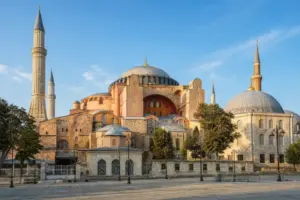 Hagia Sophia – about 400 m away (~7 min walk) · typical visit: 1–1.5 hours8 min on foot from Gülhane metro, Open daily 09:00–19:30
Main image: AI-generated illustration. It may not show the place exactly as it looks.
 Turkish & Islamic Arts Museum – about 100 m away (~2 min walk) · typical visit: 2–3 hours6 min on foot from Çemberlitaş metro, Open daily 09:00–18:30
Main image: AI-generated illustration. It may not show the place exactly as it looks.
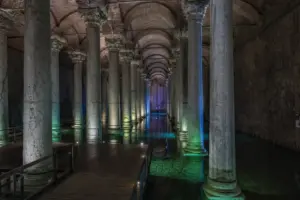 Basilica Cistern – about 100 m away (~2 min walk) · typical visit: 1 hour4 min on foot from Gülhane metro, Open daily 09:00–18:30
Main image: AI-generated illustration. It may not show the place exactly as it looks.
 Topkapi Palace – about 850 m away (~14 min walk) · typical visit: 3–4 hours without Harem; 4–5 hours with Harem15 min on foot from Gülhane metro, Open 09:00–18:30, closed Tue
Main image: AI-generated illustration. It may not show the place exactly as it looks.
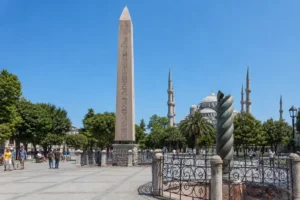 Byzantine Hippodrome – about 50 m away (~1 min walk) · typical visit: 1-2 hours5 min on foot from Gülhane metro, Open 24 hours
Main image: AI-generated illustration. It may not show the place exactly as it looks.
Metro stations near Hippodrome
 Gülhane – about 300 m away (~5 min walk)Open daily 06:00–00:00
Main image: AI-generated illustration. It may not show the place exactly as it looks.
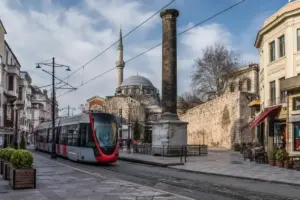 Çemberlitaşabout 450 m away (~8 min walk)
Main image: AI-generated illustration. It may not show the place exactly as it looks.
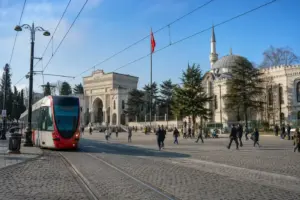 Beyazıt-Kapalıçarşı – about 800 m away (~13 min walk)Open daily 06:00–00:00
Main image: AI-generated illustration. It may not show the place exactly as it looks.
Restaurants and cafes near Hippodrome
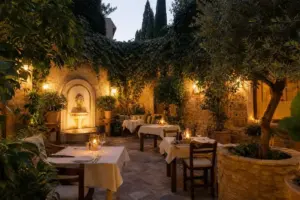 Hidden Garden – about 100 m away (~2 min walk)4 min on foot from Gülhane metro, Open daily 11:00–00:00
Main image: AI-generated illustration. It may not show the place exactly as it looks.
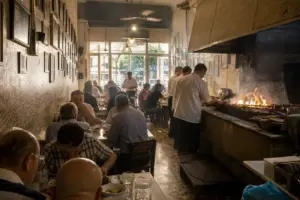 Tarihi Sultanahmet Koftecisi – about 200 m away (~4 min walk)7 min on foot from Gülhane metro, Open daily 11:00–23:00
Main image: AI-generated illustration. It may not show the place exactly as it looks.
 Balık Ekmek at Eminönü – about 300 m away (~5 min walk)7 min on foot from Gülhane metro, Open daily 09:00–22:30
Main image: AI-generated illustration. It may not show the place exactly as it looks.
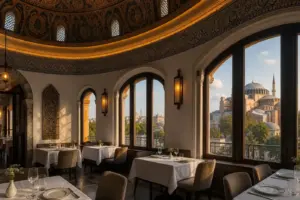 Matbah Restaurant – about 400 m away (~7 min walk)9 min on foot from Gülhane metro, Open daily 09:00–22:30
Main image: AI-generated illustration. It may not show the place exactly as it looks.
Nightlife near Hippodrome
 Roxy – about 300 m away (~5 min walk)7 min on foot from Gülhane metro
Main image: AI-generated illustration. It may not show the place exactly as it looks.
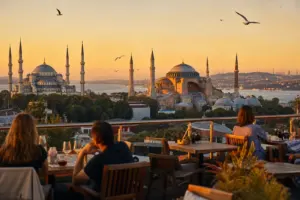 Seven Hills – about 300 m away (~5 min walk)4 min on foot from Gülhane metro, Open daily 08:00–23:00
Main image: AI-generated illustration. It may not show the place exactly as it looks.
Train stations and river piers near Hippodrome
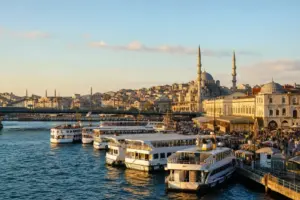 Eminönü Ferry Terminalabout 1.3 km away (~21 min walk)
Main image: AI-generated illustration. It may not show the place exactly as it looks.
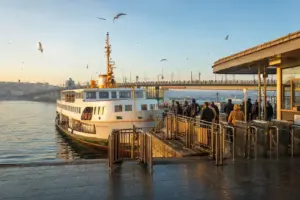 Karaköy Ferry Terminalabout 1.7 km away (~28 min walk)
Main image: AI-generated illustration. It may not show the place exactly as it looks.
Events and traditions near Hippodrome
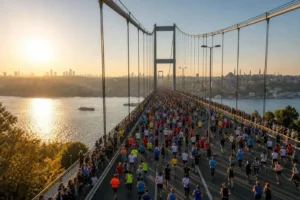 Istanbul Marathonabout 100 m away (~2 min walk)
Main image: AI-generated illustration. It may not show the place exactly as it looks.
Related guides
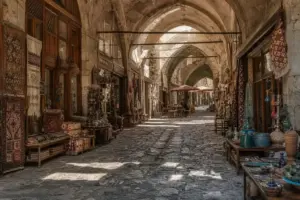 Arasta Bazaar: History, Shops and How to Visit1 min on foot from Gülhane metro, Open daily 09:00–19:00
Main image: AI-generated illustration. It may not show the place exactly as it looks.
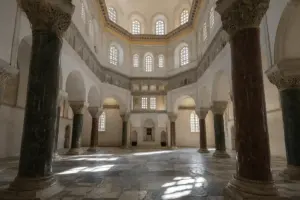 Little Hagia Sophia: Quiet Byzantine Church and Working Mosque4 min on foot from Gülhane metro, Open daily 08:00–20:00
Main image: AI-generated illustration. It may not show the place exactly as it looks.
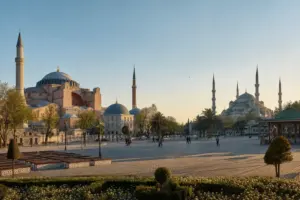 Hagia Sophia and Blue Mosque Day: A Morning Walking Itinerary
Main image: AI-generated illustration. It may not show the place exactly as it looks.
 Byzantine Heritage Route: 3 Days Through Constantinople’s Greatest Monuments
Main image: AI-generated illustration. It may not show the place exactly as it looks.
 7 Days in Istanbul: A Complete First-Time Itinerary
Main image: AI-generated illustration. It may not show the place exactly as it looks.
Browse more: More in Fatih · All Landmarks · All Sightseeing
FAQ: Hippodrome
Is the Hippodrome the same as Sultanahmet Square?
Yes. The ancient Hippodrome of Constantinople lies directly beneath what is now called Sultanahmet Square (or At Meydanı, meaning Horse Square). The square's rectangular shape precisely follows the ground plan of the original racetrack. The modern square is a public space built on the site of the ancient monument.
Do I need a ticket to visit the Hippodrome?
No. The Hippodrome is a free, open public space accessible 24 hours a day. There are no turnstiles, barriers, or entrance fees. You simply walk into the square from any of its sides. Adjacent institutions (Blue Mosque, Hagia Sophia, Turkish and Islamic Arts Museum) require separate tickets.
Can I see the original racing track?
No. The original racing surface is buried more than two meters beneath the current pavement. It is not excavated or open to visitors. However, the rectangular shape of Sultanahmet Square directly preserves the track's ground plan, allowing you to visualize its dimensions.
What are the three monuments in the square?
The Obelisk of Theodosius (tallest, at the north end) was brought from Egypt and erected around 390 AD. The Serpent Column (center), a bronze column from Delphi in Greece, arrived around the same era. The Walled Obelisk (south end), a granite obelisk also from Egypt, was erected in the 10th century. All three stood on the spina (central dividing barrier) of the ancient Hippodrome.
What is the best time to visit?
Early morning (7–8 AM) is quietest, with the best light for photography. Mid-morning through mid-afternoon brings large crowds. Late afternoon (after 4 PM) is quieter again. Spring and autumn offer the most pleasant weather. The site is accessible year-round, 24 hours a day.
How long does a visit take?
A quick walk through the square and observation of the monuments takes about 30 minutes. To spend time at each monument and observe details, plan 1–1.5 hours. To combine the Hippodrome with adjacent museums or mosques, allow 3–4 hours.
Is a guide necessary to understand the Hippodrome?
No. Plaques at each monument provide historical context in English. The site itself is straightforward to navigate. If you want deeper historical knowledge or stories, a guide can enhance the experience, but the Hippodrome is easily understood without one.
Istanbul Vibes is a one-person project. A coffee keeps it going
Hotels near Hippodrome
- Optimist hotel (150 m) Check prices (affiliate link, opens in a new tab)
- Hotel turkoman (150 m) Check prices (affiliate link, opens in a new tab)
- İbrahim Paşa Otel (150 m) Check prices (affiliate link, opens in a new tab)
- Hotel Ibrahim Pasha (150 m) Check prices (affiliate link, opens in a new tab)
Affiliate link (opens the booking site): we may earn a commission at no extra cost to you.
Restaurants near Hippodrome
- Spectra Restaurant (200 m) Google Maps
- Firuz Aga Restaurant (200 m) Google Maps
- Sultanahmet Halkin Koftecisi (200 m) Google Maps
- Semazen Cafe and Restaurant (200 m) Google Maps
Distances are straight-line, from OpenStreetMap data.

Take this guide with you
Get a free PDF of this guide to print or read offline: key facts, tips and a map link on a few clean pages.
Report an issue on this page
How we research and update our guides
About this guide: AI assistance and accuracy
This guide is created with the help of AI and is based on official sources where available. Mistakes can still happen. Opening hours, prices, rules and other details are given to the best of our knowledge as of the date shown and can change without notice. It offers general recommendations only, not professional, legal or travel advice. Please confirm important details with the official source before you travel; you are responsible for your own plans and decisions.
* Affiliate link: as an Amazon Associate we earn from qualifying purchases at no extra cost to you.
