

The Turkish & Islamic Arts Museum occupies the historic Ibrahim Pasha Palace on Sultanahmet Square, directly across from the Blue Mosque. Housing one of the world’s most significant collections of Islamic art, this museum was Turkey’s first dedicated to Turkish and Islamic heritage when it opened in 1914—originally in the Süleymaniye Mosque complex—and relocated to its current palace home in 1983.
The museum’s collection of over 40,000 artifacts showcases artistic traditions spanning from the 7th century through the Ottoman period. Visitors explore galleries arranged around a traditional Ottoman courtyard, discovering examples of calligraphy, carpets, ceramics, glass, metalwork, and rare manuscripts in a calm, less crowded alternative to nearby major attractions.
Quick Facts
| Built / opened | 1914 |
|---|---|
| Address | Binbirdirek, At Meydanı Cad. No:12, 34122 Sultanahmet, Fatih, Istanbul Google MapsApple MapsYandex Maps |
| District | Fatih |
| Metro | Sultanahmet (M1, South exit toward Sultanahmet Square) Cankurtaran (M1, Northeast, 5 min walk to Sultanahmet Square) |
| Admission | ₺₺ |
| Best time to visit | Season: Spring (April–May) and autumn (September–October) offer comfortable temperatures and fewer crowds than summer. Summer (June–August) is hot, but the museum's stone walls and cool galleries provide respite. Winter (November–March) is quieter and pleasant, though the museum closes earlier (18:00 instead of 21:00 in summer). Avoid visiting during Ramadan or the Sacrifice Feast (Kurban Bayramı), when hours may be adjusted and some sections may have limited access.Day of week and time: Weekday mornings (Tuesday–Friday, 09:30–11:00) are significantly less crowded than weekends or holiday periods. Weekends bring school groups and larger tour parties. Late afternoons (after 16:00) can also be quieter as day-trippers move to evening activities. Monday and major public holidays are typically calm, though verify before planning.Avoiding tour groups: Guided groups tend to arrive around 10:00–14:00. Arrive before 09:30 or after 15:00 for a more solitary experience. |
| Website | muze.gov.tr |
What Is (and Isn't) Part of a Visit to Turkish & Islamic Arts Museum?
| Part | Status | Notes |
|---|---|---|
| Main museum galleries (carpets, calligraphy, ceramics, metalwork, ethnography) | Included in the standard ticket | All included in standard admission ticket. |
| Ibrahim Pasha Palace courtyards and architectural spaces | Included in the standard ticket | Accessible as part of museum circulation; part of the historic building experience. |
| Museum café and shop | Included in the standard ticket | Located within palace grounds; separate purchases required. |
| Audio guide in multiple languages | Separate ticket or institution | Rental or digital guide available for additional cost; not included in standard ticket. |
| Land Registry and Cadastre offices | Outside / not part of it | Still occupy part of the Ibrahim Pasha Palace complex; not open to museum visitors. |
| Blue Mosque (Sultanahmet Mosque) | Outside / not part of it | Across Sultanahmet Square; separate visit and free entry. Do not confuse as part of this museum. |
| Basilica Cistern (Yerebatan Sarnıcı) | Outside / not part of it | Nearby attraction requiring separate ticket; not included or adjacent to museum. |
Why Visit Turkish & Islamic Arts Museum?
The museum offers a focused, in-depth look at Islamic civilization’s artistic achievements across multiple centuries and cultures. Its collections of Ottoman carpets and illuminated Qurans are among the finest in the world, while the ethnography sections reveal daily life in traditional Anatolian communities.
The setting itself matters: the palace, built in 1524 for Pargalı Ibrahim Pasha (grand vizier to Suleiman the Magnificent), is architecturally significant as the only surviving Ottoman state official’s palace in Istanbul. The courtyard, with its fountain and stone archways, provides a serene contrast to crowded historical sites nearby. Many visitors appreciate that the museum remains relatively quiet even in peak season.
How Turkish & Islamic Arts Museum Is Laid Out
The museum occupies the Ibrahim Pasha Palace, arranged around multiple courtyards. The main public entrance opens onto the first courtyard, where you’ll find the ticket office. Gallery spaces branch from here into cool, darkened rooms featuring different collections.
Key sections include dedicated galleries for calligraphy and manuscripts on the upper floors, carpet collections in large ground-floor halls, and ceramics and metalwork displays in smaller chambers. The ethnography section showcases reconstructed rooms and dwellings from Anatolian life. A terrace overlooking Sultanahmet Square (toward the Blue Mosque) offers respite between galleries and is one of the museum’s most pleasant spots.
Most visitors follow a natural circuit through the palace’s rooms rather than a strict sequence; allow time to explore the courtyards themselves, where Ottoman architectural details—arches, stonework, and traditional tiles—remain intact.
Highlights of Turkish & Islamic Arts Museum
Ottoman Carpet Collection
The museum houses one of the world's finest collections of antique Turkish carpets, including examples from the 15th century onward. The carpet gallery occupies large, well-lit ground-floor halls displaying Anatolian, Ottoman, and Seljuk pieces. These hand-knotted works showcase regional patterns and dyes, with explanatory texts describing production techniques and cultural significance. Look for the brilliant reds and intricate geometric designs that define Ottoman weaving.
Tip: Allow extra time in the carpet section; the variety and scale can be overwhelming. Visit in mid-morning when light through windows best illuminates colors and details.
Illuminated Qurans and Calligraphy
The calligraphy galleries feature beautifully preserved manuscripts, including illuminated Qurans and literary works spanning centuries. These delicate pieces sit behind glass in climate-controlled cases, displaying the precision and artistry of Islamic scriptural traditions. Examples range from early Seljuk works to Ottoman imperial commissions, each showing distinct styles of script and decoration. The museum's collection demonstrates calligraphy as both spiritual practice and visual art form.
Tip: Bring reading glasses or use the museum's magnifying glasses (available at information desks) to appreciate fine details in illuminated pages. Photography of manuscripts is prohibited, so take time to study them in person.
Ibrahim Pasha Palace Courtyard
The palace's first courtyard, rebuilt and preserved during the 1982 restoration, serves as the museum's centerpiece. Stone archways frame multiple levels, and a traditional fountain occupies the center. The courtyard itself—built on a slope overlooking the ancient Hippodrome—exemplifies Ottoman civil architecture of the 1520s. Unlike later Ottoman buildings of timber, this palace was constructed in stone and brick masonry, allowing it to survive earthquakes and fires.
Tip: Step into the courtyard early in your visit to orient yourself; the layout makes more sense once you've seen the central space. Return here between gallery visits for a quiet moment.
Ethnography Section: Anatolian Life
This collection recreates domestic spaces from traditional Anatolian communities, including nomadic and settled cultures. Display rooms feature period furnishings, textiles, household implements, and clothing that reveal how Turkish and Islamic societies lived outside palace and mosque contexts. The ethnography section adds human dimension to the formal arts displayed elsewhere, showing how people used ceramics, metalwork, and textiles in daily practice.
Tip: This section is often quieter than the main carpet and calligraphy galleries, making it ideal for unhurried viewing.
Ceramic and Glass Collection
Displays of Islamic ceramics, tiles, and glasswork span from early Islamic periods through the Ottoman era. Glazed and unglazed pottery from Seljuk workshops shows the development of underglaze painting techniques. Ottoman iznik tiles with their characteristic blue and turquoise hues appear in several galleries. Glass vessels, some nearly transparent, demonstrate the sophistication of medieval Islamic glassmaking. Each piece includes details about regional production centers and historical periods.
Tip: Look for the tall ceramic vessels and storage jars; their scale and decorative detail become apparent only when viewed from different angles. Walk around displays rather than viewing from a single spot.
Woodwork and Metalwork
Carved and inlaid wooden doors, screens, and furnishings showcase Ottoman craftsmanship and geometric patterning. Metalwork displays include brass and copper vessels, weapon fittings, and decorative objects inlaid with precious metals and stones. The woodwork section features panels from demolished Ottoman buildings, preserving architectural details that would otherwise be lost. Each piece demonstrates the technical skill and materials available to Ottoman artisans.
Tip: The woodwork section includes pieces that were salvaged from historic buildings scheduled for demolition; these displays tell stories of preservation efforts in Istanbul's rapidly changing cityscape.
Atmosphere
The museum feels calm and contemplative, with galleries lit by soft overhead lighting and some natural light from high windows. Stone walls and arched ceilings create cool, quiet spaces even on crowded days outside. Unlike major museums with constant visitor flow, the Turkish & Islamic Arts Museum tends to attract fewer groups, allowing for more leisurely viewing.
Visitors—a mix of international tourists, Turkish families, and art enthusiasts—tend to move slowly, studying individual pieces. The palette of colors is muted: cream stone walls, deep blues and reds in carpets, gold and black in calligraphy. Periods of silence are common, broken only by footsteps on stone floors or a fountain’s gentle sound in the courtyard. Morning hours feel particularly peaceful, while late afternoon can bring school groups. The museum’s setting within a historic palace adds to the meditative quality; you’re moving through rooms that sheltered Ottoman grandees, now emptied but architecturally intact.
History of Turkish & Islamic Arts Museum
The Turkish & Islamic Arts Museum has two distinct histories: that of its collection and that of its building.
The collection began in 1914 as the Museum of Islamic Endowments (Evkaf-ı İslâmiye Müzesi), established during the final years of the Ottoman Empire. Director Osman Hamdi Bey, seeking to preserve Islamic artifacts from waqf (religious foundation) buildings—mosques, dervish lodges, and tombs—that were being damaged, stolen from, or demolished, assembled the first pieces. The museum opened in the imaret (public soup kitchen) of the Süleymaniye Mosque complex, designed by the architect Mimar Sinan. After the Republic’s establishment in 1923, the institution was renamed the Turkish and Islamic Arts Museum.
The building itself has a longer history. The Ibrahim Pasha Palace was constructed around 1520–1524 (sources vary on exact dates, though 1524 is commonly cited) under the patronage of Suleiman the Magnificent. It was built for Pargalı Ibrahim Pasha, Suleiman’s childhood friend, brother-in-law, and grand vizier who served for 13 years before being executed by strangulation in 1536. The palace was unusually constructed in stone and brick masonry rather than the timber typical of Ottoman civil architecture, allowing it to survive centuries of earthquakes and fires. It remains the only surviving Ottoman state official’s palace in Istanbul.
After Ibrahim Pasha’s death, the palace changed hands repeatedly—serving as quarters for military recruits, an imperial lion house, an asylum, a sewing workshop, archives for the Ministry of Justice, and a registry office. The building suffered damage, underwent repairs, and by the mid-20th century had deteriorated significantly.
In 1983, after extensive restoration work between 1966 and 1983, the Turkish and Islamic Arts Museum was relocated from the Süleymaniye complex to the Ibrahim Pasha Palace. The 1983 move allowed the collection to be displayed in a historically appropriate setting—a palace—while expanding gallery space. In 2012, when the Ministry of Justice archives vacated the palace, additional rooms were transferred to the museum, further enlarging exhibition areas. The building underwent selective restoration to preserve Ottoman features (stone archways, courtyards, traditional tiles) while installing modern climate control and lighting to protect delicate textiles and manuscripts.
Legends and Myths about Turkish & Islamic Arts Museum
Ibrahim Pasha's Fall from Grace
Disputed by historians. Ibrahim Pasha was celebrated as one of Suleiman the Magnificent's closest advisors and most capable administrators, serving as grand vizier with seemingly unlimited power. Yet in 1536, Suleiman ordered his execution by strangulation, and Ibrahim's palace and wealth were confiscated to the state. The exact cause remains historically debated—some sources cite palace intrigue and jealousy from other officials, others point to Ibrahim's overreach in administrative authority. The palace, built as a symbol of his glory, thus became a monument to his sudden downfall.
The Palace's Italian-Style Construction
Legend – historically unreliable. Travelers and historians noted that the Ibrahim Pasha Palace was built in ashlar (dressed stone) masonry, an unusual technique for Ottoman civil buildings of the time, which typically used timber frames. Some 17th-century observers, including the chronicler Evliya Çelebi, remarked that the palace resembled an Italian fortress more than a Turkish residence, with heavy stone walls and iron gates. The distinctiveness of its construction allowed the palace to outlast countless other Ottoman buildings, though historians debate whether this was a deliberate architectural choice or reflected the specific slope of the land.
The Palace's Grandeur Exceeding Topkapi
Disputed by historians. Historical accounts claim that the Ibrahim Pasha Palace was larger and more magnificent than even the Topkapi Palace itself, the official residence of the sultans. Contemporary sources describe elaborate courtyards, cascading fountains, and chambers that hosted grand state ceremonies and celebrations. However, much of the palace has been damaged, demolished, or repurposed over five centuries, and no contemporary architectural drawings survive to verify these claims fully.
Tickets and Booking for Turkish & Islamic Arts Museum
| Ticket | Price | Includes |
|---|---|---|
| General admission (foreign adults and visitors) | ₺₺ | Access to all museum galleries, courtyards, and permanent collection displays. |
| Museum Pass Istanbul / Museum Pass Türkiye | Free | Free entry for pass holders; valid pass must be presented at ticket counter. |
₺ budget · ₺₺ moderate · ₺₺₺ upscale · ₺₺₺₺ splurge. Price levels are estimates compared with typical prices for visitors.
Official ticket sales: Tickets are sold at the museum entrance box office, located in the first courtyard after entering the main gates. The box office closes at 17:30, 30 minutes before the museum itself closes at 18:30.
Online advance booking: No advance online booking system exists for this museum. Arrive early to avoid lines, especially during April–October peak season. Same-day tickets are available during opening hours, though morning arrival (before 11:00) typically offers shorter waits.
ID and voucher exchange: No special ID documentation or voucher exchange required for standard admission. Bring a valid form of ID if purchasing passes or claiming any special rates.
Note on pricing: The standard ticket price is displayed at the entrance and on the official website (muze.gov.tr). Turkish citizens and certain concession categories (students, children under 8, disabled visitors) receive different rates. Check the official ticket page for current categories and applicable rates, as these change periodically and may depend on residency or documentation.
Suggested itineraries Turkish & Islamic Arts Museum
1.5–2 hours
Ticket office → first courtyard orientation → main calligraphy and manuscript gallery → carpet collection (ground floor). View signature pieces in each section; move through quickly without extended stops. Finish at the palace terrace overlooking Sultanahmet Square for views across the Hippodrome to the Blue Mosque.
2.5–3 hours
Begin at ticket office and courtyard → calligraphy and manuscripts (upper floors) → ceramics and glass displays → Ottoman woodwork and metalwork sections → ethnography rooms with reconstructed spaces → return to courtyard for a break at the fountain → final time in the carpet gallery, viewing pieces more carefully. Allows moderate pacing and time to read exhibit descriptions.
Half day (4 hours+)
Comprehensive circuit: start with palace orientation, then work through manuscripts and calligraphy methodically → carpet gallery with detailed study of regional variations and production techniques → ceramics, glass, and metalwork sections examining individual pieces → ethnography displays → architectural details in courtyards and archways → rooftop or terrace for views → museum café for refreshment → return for any missed sections or favorites revisited.
How to Get to Turkish & Islamic Arts Museum
By Metro: The M1 line serves the museum directly. Exit at Sultanahmet station; the museum entrance is on the west side of Sultanahmet Square, approximately 2 minutes’ walk southwest of the metro exit. Follow signs toward the Hippodrome or Blue Mosque; the museum occupies the western side of the square’s historic center.
Walking from Cankurtaran Metro (alternative): If Sultanahmet station is crowded, Cankurtaran station (also M1) is one stop south. Exit and walk northeast for approximately 5–7 minutes, following Tevkialan Cad. toward Sultanahmet Square.
Walking from other sites: From the Blue Mosque (Sultanahmet Mosque), the museum is directly across the square—less than 1 minute walk. From Topkapi Palace, walk south through the park and downhill to Sultanahmet Square (approximately 10 minutes). From the Basilica Cistern, head northwest across the square (approximately 5 minutes).
By taxi or ride-share: Provide the address (Binbirdirek Mah., At Meydanı Cad. No:12) to the driver. Drop-off is on the square itself; enter through the main palace gates.
Parking: Street parking in Sultanahmet is limited and expensive. If driving, use one of the paid underground garages on the square (costs will be moderate to high) or park farther away and walk.
Accessibility
Wheelchair access: The museum is wheelchair accessible. Ramps are installed at the main entrance, and elevators serve upper gallery floors. Ground-floor galleries (including the main carpet collection) are navigable without stairs.Mobility considerations: The palace involves walking through multiple connected rooms and courtyards. While ramps are present, the building's historic layout means distances between sections are sometimes longer than in modern museums. Benches are available in courtyard areas and some gallery spaces for rest breaks.Accessible facilities: Accessible restrooms are available. Staff can provide information on the most convenient routes between major galleries if mobility is a concern.Companion tickets: Disabled visitors may bring a companion free of charge; ask at the ticket counter. Documentation (medical certificate or equivalent) is typically required.Service animals: Service animals are permitted throughout the museum.
Food Nearby
A small café operates within the museum's palace courtyard, serving coffee, tea, and light refreshments (pastries, sandwiches). It is a convenient spot to rest between galleries, though prices are moderate.Sultanahmet Square and surrounding streets offer abundant options within walking distance: traditional Turkish restaurants on the north and east sides of the square (serving kebabs, meze, and Ottoman specialties); casual cafés with sandwiches and drinks on narrow streets leading north toward the Grand Bazaar; and several international options catering to tourists. Most restaurants open from late morning through evening. Avoid eating in your pockets or while viewing galleries; the museum allows food and drinks only in designated rest areas and the courtyard.
What to Bring
Comfortable walking shoes are essential; the museum involves moving through multiple rooms and courtyards on stone floors and stairs (despite ramps). A light sweater or cardigan is useful year-round, as interior galleries can be cool even in summer. Bring a water bottle; while the café offers drinks, having water available helps during extended visits. A small notebook or phone for jotting notes about pieces is optional. Security bags are not restricted, but large bags may be subject to inspection; avoid oversized luggage. Photography is allowed in most galleries without flash or tripod; leave professional camera equipment at your hotel if you prefer not to deal with restrictions. Modest dress is recommended as a courtesy near religious sites, though no strict dress code is enforced inside the museum.
Best Views and Photo Spots of Turkish & Islamic Arts Museum
Palace courtyard with fountain and Ottoman archways
The central courtyard framed by stone arches and the palace's multi-story façade creates a classic Ottoman architectural composition. The fountain and open sky above create varied light throughout the day. This spot captures the building's historical presence and is one of the most photographed areas inside the museum.
Best time: Mid-morning (10:00–12:00) when natural light from above illuminates the courtyard evenly. Avoid harsh midday shadows that obscure architectural detail.
Museum terrace overlooking Sultanahmet Square and Blue Mosque
From the elevated terrace on the west side of the palace (accessible during museum hours), you can photograph the Blue Mosque across the square with the terrace's Ottoman stone balustrade in the foreground. The Hippodrome monuments (obelisk and serpent column) are also visible from this vantage point.
Best time: Late afternoon (15:00–17:30) when west-facing light illuminates the Blue Mosque's domes and creates warm tones. Morning light works well for detail shots of the balustrade.
Carpets in the main gallery floor
Large-scale Ottoman and Anatolian carpets are displayed on walls and in glass cases with controlled lighting that shows color and pattern detail. Photographs capture the intricate geometric and floral designs without glare when positioned at slight angles to display cases.
Best time: Any time; gallery lighting is consistent. Mid-morning provides steady natural light supplementing gallery illumination.
Arched gallery doorways and stone corridors
Multiple doorways leading between galleries create framed compositions with arches receding into shadow. These shots emphasize the palace's architectural geometry and create atmospheric depth.
Best time: Morning hours when side light from high windows creates subtle shadows defining archways. Avoid flash, which flattens the composition.
Photography Rules
Photography is permitted without flash in most galleries. Tripods and professional camera stands are not allowed. Illuminated manuscripts and certain delicate pieces may be displayed behind barriers; photography of these specific items is prohibited (look for signs or ask staff). Smartphones and compact cameras are commonly used by visitors. No drones or recording equipment beyond standard photography is allowed.
Family Suitability
Age suitability: The museum is suitable for families with children 8 years and older who can appreciate historical artifacts and walk at a moderate pace. Younger children may find the quiet, contemplative atmosphere challenging over extended periods. The ethnography section (with reconstructed rooms) and carpet gallery are often more engaging for children than calligraphy displays.Pacing and engagement: Allow flexibility; plan shorter visits (1.5–2 hours) with children rather than full 3–4 hour circuits. The courtyard and terrace provide breaks and outdoor space for younger children to decompress between gallery sections.Stroller access: Strollers are technically permitted but challenging due to narrow gallery passages, stairs despite ramps, and closely placed display cases. Backpack carriers are more practical. Strollers can be left in designated areas, but this requires leaving a child unattended.Facilities: Restrooms are available; ask staff for family or accessible restrooms if needed. The museum café offers light food suitable for children.
Istanbul Vibes Tips
- Arrive before 10:00 or after 15:00 to experience the museum in relative quiet, significantly different from the crowded atmosphere of nearby Topkapi Palace and Hagia Sophia. The calm setting is one of the museum's greatest appeals and is lost during peak hours.
- The museum is open daily year-round, including religious holidays, but hours change seasonally (09:00–21:00 April–October; 09:00–18:30 November–March). Summer evening hours allow for a late-afternoon visit with cool gallery temperatures as outside heat peaks.
- Study the courtyard and architectural details as carefully as the displayed objects. The palace itself tells stories about Ottoman craftsmanship, and restoration work has preserved original stone arches, courtyards, and traditional tiles that contextualize the artifacts.
- Don't skip the ethnography section on upper floors. While less visually spectacular than the carpet and calligraphy galleries, these recreated rooms of traditional Anatolian domestic life offer insight into how ordinary people used the ceramics, textiles, and metalwork displayed elsewhere.
- Request an audio guide at the ticket counter if you want deeper context on specific pieces; English-language guides are available. However, the museum provides adequate signage and descriptions without a guide, making one optional rather than essential for general visitors.
- The museum's location allows easy combining with nearby sites—the Blue Mosque is 1-minute walk away, the Basilica Cistern 5 minutes, and Topkapi Palace 10 minutes. Visit the less-crowded museum first, then move to busier attractions as they become more crowded later in the day.
Explore Nearby Turkish & Islamic Arts Museum
Sights near Turkish & Islamic Arts Museum
 Blue Mosque – about 200 m away (~3 min walk) · typical visit: 45–75 minutes3 min on foot from Gülhane metro
Main image: AI-generated illustration. It may not show the place exactly as it looks.
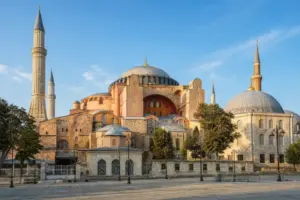 Hagia Sophia – about 500 m away (~8 min walk) · typical visit: 1–1.5 hours8 min on foot from Gülhane metro, Open daily 09:00–19:30
Main image: AI-generated illustration. It may not show the place exactly as it looks.
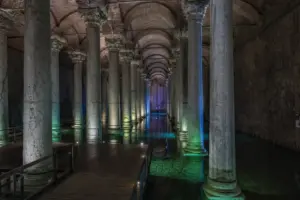 Basilica Cistern – about 200 m away (~4 min walk) · typical visit: 1 hour4 min on foot from Gülhane metro, Open daily 09:00–18:30
Main image: AI-generated illustration. It may not show the place exactly as it looks.
 Topkapi Palace – about 950 m away (~15 min walk) · typical visit: 3–4 hours without Harem; 4–5 hours with Harem15 min on foot from Gülhane metro, Open 09:00–18:30, closed Tue
Main image: AI-generated illustration. It may not show the place exactly as it looks.
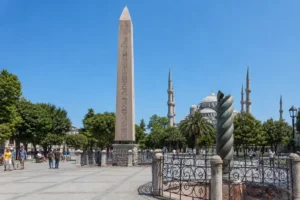 Byzantine Hippodrome – about 100 m away (~2 min walk) · typical visit: 1-2 hours5 min on foot from Gülhane metro, Open 24 hours
Main image: AI-generated illustration. It may not show the place exactly as it looks.
 Hippodrome – about 100 m away (~2 min walk) · typical visit: 1–2 hours5 min on foot from Gülhane metro, Open 24 hours
Main image: AI-generated illustration. It may not show the place exactly as it looks.
Metro stations near Turkish & Islamic Arts Museum
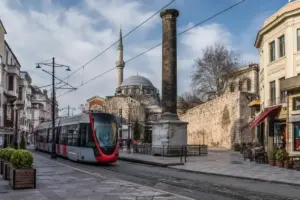 Çemberlitaşabout 400 m away (~6 min walk)
Main image: AI-generated illustration. It may not show the place exactly as it looks.
 Gülhane – about 400 m away (~6 min walk)Open daily 06:00–00:00
Main image: AI-generated illustration. It may not show the place exactly as it looks.
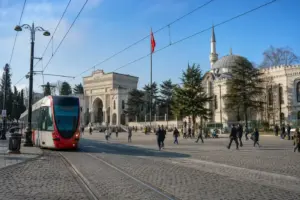 Beyazıt-Kapalıçarşı – about 700 m away (~12 min walk)Open daily 06:00–00:00
Main image: AI-generated illustration. It may not show the place exactly as it looks.
Restaurants and cafes near Turkish & Islamic Arts Museum
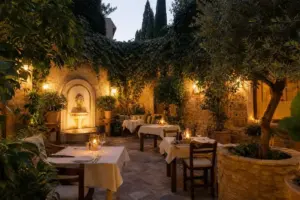 Hidden Garden – about 150 m away (~2 min walk)4 min on foot from Gülhane metro, Open daily 11:00–00:00
Main image: AI-generated illustration. It may not show the place exactly as it looks.
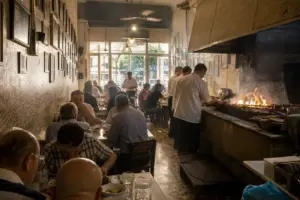 Tarihi Sultanahmet Koftecisi – about 300 m away (~5 min walk)7 min on foot from Gülhane metro, Open daily 11:00–23:00
Main image: AI-generated illustration. It may not show the place exactly as it looks.
 Balık Ekmek at Eminönü – about 400 m away (~6 min walk)7 min on foot from Gülhane metro, Open daily 09:00–22:30
Main image: AI-generated illustration. It may not show the place exactly as it looks.
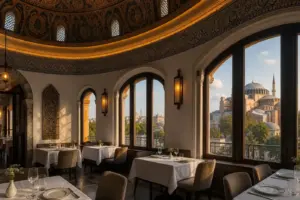 Matbah Restaurant – about 500 m away (~8 min walk)9 min on foot from Gülhane metro, Open daily 09:00–22:30
Main image: AI-generated illustration. It may not show the place exactly as it looks.
Nightlife near Turkish & Islamic Arts Museum
 Roxy – about 400 m away (~6 min walk)7 min on foot from Gülhane metro
Main image: AI-generated illustration. It may not show the place exactly as it looks.
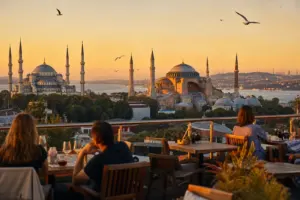 Seven Hills – about 450 m away (~7 min walk)4 min on foot from Gülhane metro, Open daily 08:00–23:00
Main image: AI-generated illustration. It may not show the place exactly as it looks.
Train stations and river piers near Turkish & Islamic Arts Museum
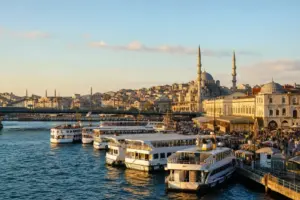 Eminönü Ferry Terminalabout 1.2 km away (~20 min walk)
Main image: AI-generated illustration. It may not show the place exactly as it looks.
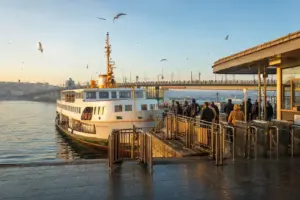 Karaköy Ferry Terminalabout 1.7 km away (~28 min walk)
Main image: AI-generated illustration. It may not show the place exactly as it looks.
Events and traditions near Turkish & Islamic Arts Museum
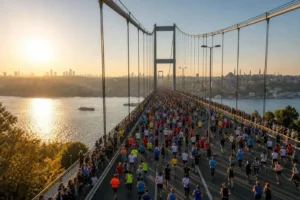 Istanbul Marathonabout 150 m away (~3 min walk)
Main image: AI-generated illustration. It may not show the place exactly as it looks.
Related guides
 Pepo’s Galata: Turkish Kebabs and Wine Near Galata Tower5 min on foot from Şişhane metro, Open daily 10:00–02:00
Main image: AI-generated illustration. It may not show the place exactly as it looks.
 Haci Bayram Hotel: Location, Rooms, and Rooftop Views
Main image: AI-generated illustration. It may not show the place exactly as it looks.
 Sura Hagia Sophia Hotel: Luxury in Istanbul’s Historic Heart
Main image: AI-generated illustration. It may not show the place exactly as it looks.
 Sultan Hostel: Budget Stay in Sultanahmet Near Hagia Sophia
Main image: AI-generated illustration. It may not show the place exactly as it looks.
 Victory Day: Istanbul’s August 30 National Celebration
Main image: AI-generated illustration. It may not show the place exactly as it looks.
Browse more: More in Fatih · All Museums · All Sightseeing
FAQ: Turkish & Islamic Arts Museum
Is the museum included in the Museum Pass Istanbul?
Yes. Both the Museum Pass Istanbul and Museum Pass Türkiye include free entry to the Turkish & Islamic Arts Museum. Present your valid pass at the ticket counter. The pass is purchased separately and covers multiple state-run museums in Istanbul; check the official website for current rates and partner museums.
Can you visit the museum if you're also visiting the Blue Mosque on the same day?
Yes, easily. The museum is directly across Sultanahmet Square (less than 1 minute walk) from the Blue Mosque. Many visitors combine both in a single visit. The museum opens before the mosque and stays open later, providing scheduling flexibility.
How much time should I spend in the museum?
A quick visit of 1.5–2 hours covers the main highlights (carpets, calligraphy, ceramics). A thorough visit allowing time to read descriptions and linger over pieces takes 3–4 hours. The museum does not require a full day, unlike Topkapi Palace or larger museums.
Is an audio guide necessary, or can you visit without one?
An audio guide is optional. The museum provides clear English-language labels and descriptions throughout galleries. An audio guide adds contextual depth for visitors interested in historical detail or artistic techniques, but general visitors gain adequate understanding without one.
Is the building historically significant, or is it just a modern museum interior?
The building itself—the Ibrahim Pasha Palace—is historically significant. Built in 1524 for a grand vizier of Suleiman the Magnificent, it is the only surviving Ottoman state official's palace in Istanbul. Original architectural features (stone arches, courtyards, traditional tiles) remain intact after restoration in the 1980s, making the palace experience part of the museum visit.
What happens during Ramadan or religious holidays?
The museum is typically open but may have adjusted hours during Ramadan and the Sacrifice Feast (Kurban Bayramı). Check the official website or call (+90 212 518 18 05) before visiting during these periods, as hours and access to specific galleries may change.
Is photography allowed inside the museum?
Yes, photography without flash is permitted in most galleries. Tripods and professional camera equipment are not allowed. Some delicate manuscripts and specific displays are marked as off-limits to photography; signs indicate these areas. Smartphones and compact cameras are commonly used.
Is the museum accessible for visitors with mobility challenges?
Yes. The museum has wheelchair ramps at the entrance and elevators serving upper floors. Ground-floor galleries are navigable without stairs. Accessible restrooms are available, and disabled visitors may bring a companion free of charge. Ask staff for directions to accessible routes between major galleries if needed.
Istanbul Vibes is a one-person project. A coffee keeps it going
Hotels near Turkish & Islamic Arts Museum
- Hotel turkoman (50 m) Check prices (affiliate link, opens in a new tab)
- İbrahim Paşa Otel (50 m) Check prices (affiliate link, opens in a new tab)
- Hotel Ibrahim Pasha (50 m) Check prices (affiliate link, opens in a new tab)
- Alzer (100 m) Check prices (affiliate link, opens in a new tab)
Affiliate link (opens the booking site): we may earn a commission at no extra cost to you.
Restaurants near Turkish & Islamic Arts Museum
- Osman (100 m) Google Maps
- Spectra Restaurant (100 m) Google Maps
- Sokullu (150 m) Google Maps
- The wox (150 m) Google Maps
Distances are straight-line, from OpenStreetMap data.

Take this guide with you
Get a free PDF of this guide to print or read offline: key facts, tips and a map link on a few clean pages.
Report an issue on this page
How we research and update our guides
About this guide: AI assistance and accuracy
This guide is created with the help of AI and is based on official sources where available. Mistakes can still happen. Opening hours, prices, rules and other details are given to the best of our knowledge as of the date shown and can change without notice. It offers general recommendations only, not professional, legal or travel advice. Please confirm important details with the official source before you travel; you are responsible for your own plans and decisions.
* Affiliate link: as an Amazon Associate we earn from qualifying purchases at no extra cost to you.
