
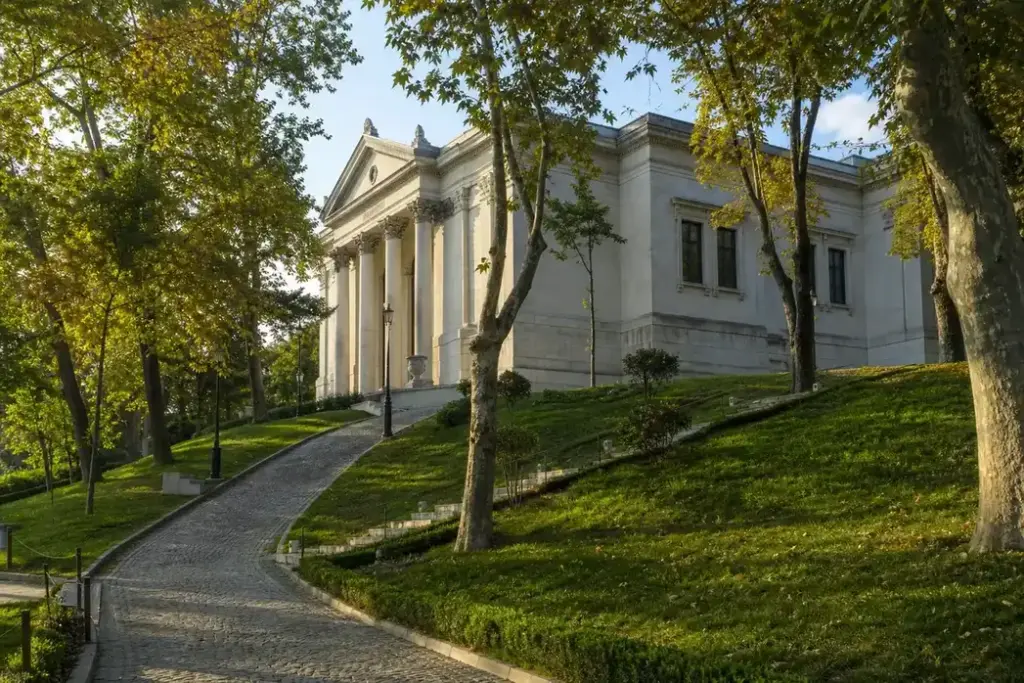
The Istanbul Archaeological Museums are a complex of three museums located on a peaceful hillside between Gülhane Park and Topkapi Palace‘s first courtyard. A single ticket grants entry to all three buildings: the main Archaeology Museum, the Museum of the Ancient Orient, and the Museum of Islamic Art (housed in the Tiled Kiosk).
Together they hold nearly one million artifacts spanning from ancient Mesopotamia through the Ottoman era, making this one of the world’s most important collections of ancient Near Eastern, Greek, and Roman art. The museum is often considered Turkey’s first regular museum and remains one of Istanbul’s most rewarding but least crowded major attractions.
Current access notice: As of October 2026: Some halls and buildings have been closed for restoration in recent years. Check the official website for the current status of all three museums.
Quick Facts
| Turkish name | İstanbul Arkeoloji Müzeleri |
|---|---|
| Built / opened | 1891 |
| Architect(s) | Osman Hamdi Bey |
| Address | Osman Hamdi Bey Yokuşu Sokak, Gülhane, 34122 Fatih, Istanbul, Turkey Google MapsApple MapsYandex Maps |
| District | Fatih |
| Metro | Vezneciler (M2, Transfer to T1 tram) Gülhane (T1, 5-minute walk through Gülhane Park) Sultanahmet (T1, 10-minute walk) |
| Admission | Moderate (₺₺) |
| Best time to visit | Early morning, from opening at 09:00 until about 11:00, sees the fewest visitors and offers calm gallery space and good natural light. Weekdays are quieter than weekends. Late September through October and April through early May offer pleasant outdoor conditions for navigating the hillside paths and terraces. Avoid mid-afternoon on weekends and Turkish school holidays when nearby Topkapi and Hagia Sophia draw large crowds that spill into this complex. Winter months (November–February) are quiet but cold; bring layers as the galleries have limited heating. |
| Website | muze.gen.tr/muze-detay/arkeoloji |
What Is (and Isn't) Part of a Visit to Istanbul Archaeological Museums?
| Part | Status | Notes |
|---|---|---|
| Main Archaeology Museum | Included in the standard ticket | The principal building with Greek, Roman, and other classical sculpture; one ticket covers entry. |
| Museum of the Ancient Orient | Included in the standard ticket | Mesopotamian, Egyptian, and Anatolian artifacts; included in the same ticket, located in a separate building downslope. |
| Museum of Islamic Art (Tiled Kiosk) | Included in the standard ticket | Ottoman and Islamic ceramics, textiles, and calligraphy in a 15th-century pavilion; included in the same ticket, upslope from the main building. |
| Gülhane Park | Outside / not part of it | Adjacent public park; free entry, separate from the museum ticket. |
| Topkapi Palace | Outside / not part of it | Separate museum complex located upslope; requires its own ticket. |
| Hagia Irene (Church and Museum) | Outside / not part of it | Historic church where the original collection was housed; now a separate museum with its own ticket, located northeast of the complex. |
| Audio guide | Separate ticket or institution | Available for an additional fee at the ticket counter or online. |
Why Visit Istanbul Archaeological Museums?
The collections are extraordinary: the main building contains the Alexander Sarcophagus, one of the world’s greatest marble sculptures, alongside Greek and Roman statuary of museum-quality specimens. The Museum of the Ancient Orient displays Mesopotamian cuneiform tablets, Egyptian mummies, and Hittite relief panels.
The setting matters too. The complex sits within a tranquil garden on palace grounds, offering respite from the crowds at nearby Topkapi. Opening hours are consistent (no weekly closures), and security lines move faster than at neighboring attractions. A visit combines substantive history with the calm of a lesser-known cultural refuge.
How Istanbul Archaeological Museums Is Laid Out
The three museums occupy separate buildings within a shared garden space on a sloping hillside. The main Archaeology Museum occupies a neoclassical building at the center, housing sculpture, relief panels, and smaller antiquities. The Museum of the Ancient Orient stands opposite, in a purpose-built structure dedicated to Mesopotamian, Egyptian, and Anatolian civilizations. The Museum of Islamic Art occupies the ornate Tiled Kiosk, a 15th-century Ottoman pavilion positioned higher on the slope.
Begin at the main entrance on the Gülhane side. Move through the Archaeology Museum first, descending past the central courtyard. The Museum of the Ancient Orient is located downslope from there. The Tiled Kiosk is reached by paths leading uphill. One ticket covers all three. Allow time for navigation between buildings and plan your ascent accordingly if mobility is a concern.
Highlights of Istanbul Archaeological Museums
Alexander Sarcophagus
The centerpiece of the main gallery, this marble sarcophagus dates to the 4th century BCE and depicts battle scenes of Alexander the Great with extraordinary detail. Carved limestone panels show Alexander in combat and ceremonial scenes, with still-visible traces of original paint. The craftsmanship represents the peak of Hellenistic sculpture. Stand in front of the panels at eye level to see the portrait-quality faces and dynamic movement.
Tip: Arrive early in the morning to see the sarcophagus's carved panels in natural light without crowds pressing around it.
Greek and Roman Sculpture Collection
The main building's upper galleries hold an unparalleled array of ancient marble statuary: portrait busts of Roman emperors and citizens, draped female figures from the classical period, and mythological subjects carved with museum-quality precision. Many pieces come from archaeological sites across the Aegean and Mediterranean. The scale and coherence of the collection is what strikes visitors most.
Tip: The sculpture gallery works best when visited slowly; move through one room at a time rather than trying to see everything in one pass.
Mesopotamian and Egyptian Antiquities
The Museum of the Ancient Orient displays cuneiform tablets from Sumer and Babylon (some dating to 2000 BCE), Egyptian mummies in their original wrappings, limestone funerary statues, and Hittite relief panels showing gods and royalty. The Hittite panels are particularly striking for their narrative carving. One gallery is devoted to the Code of Hammurabi and royal inscriptions from Mesopotamian dynasties.
Tip: Allow at least 45 minutes for the Ancient Orient Museum; the narrative flow of early civilizations is easier to follow here than attempting to see all periods in the main building.
Tiled Kiosk (Museum of Islamic Art)
This 15th-century octagonal pavilion built during the reign of Mehmet the Conqueror houses ceramics, calligraphy, textiles, and decorative metalwork from the Islamic period. The building itself is a masterpiece of Ottoman architecture, with intricate tilework and carved stone. Interior galleries display Iznik ceramics, Persian carpets, and illuminated manuscripts. The setting evokes the Ottoman palace tradition of collecting.
Tip: The Tiled Kiosk is best visited last or first, as its location uphill means backtracking if you save it for middle of your visit.
Sidamara Sarcophagus
A monumental marble sarcophagus from the 3rd century CE featuring relief carvings of seated philosophers and mythological figures. Carved from a single block of limestone, it represents the technical mastery and scale of Roman imperial-era funerary sculpture. The decorative bands include mythological scenes and architectural framing.
Tip: This sarcophagus stands in a dedicated gallery—look for the large carved stone chamber set apart from surrounding displays.
Anatolian Civilizations Gallery
The Museum of the Ancient Orient devotes extensive galleries to the Hittite Empire, Urartu, and other Anatolian kingdoms. Monumental stone reliefs show kings, priests, and religious ceremonies. Cuneiform inscriptions detail treaties and royal decrees. Artifacts span the Bronze Age through the Iron Age. Many pieces come from excavations at sites like Boğazköy and Alacahöyük.
Tip: The Hittite section is most rewarding if you read a few labels carefully; the sculptural style differs markedly from Greek art and reflects a different cultural context.
Troy and Ancient Anatolia Artifacts
Pottery, bronze tools, and clay figurines from the legendary city of Troy (Troia) and other Bronze Age Anatolian settlements. The collection includes vessels, weapons, and domestic objects that reveal daily life in ancient Anatolia. Some pieces date to the Early Bronze Age (3000 BCE). This section connects archaeological discovery with the famous sites visitors recognize by name.
Tip: If you plan to visit Troy itself (a few hours' drive away), this gallery provides excellent context for understanding what archaeologists actually found there.
Byzantine and Early Islamic Artifacts
The museums bridge the classical and Islamic periods with Byzantine mosaics, glass vessels, coins, and religious items. Terracotta lamps, bronze crosses, and pottery show the transition from pagan to Christian Istanbul. Islamic ceramics and metalwork demonstrate the continuity of craftsmanship traditions across the conquest of 1453.
Tip: The Byzantine galleries are located in the main building's lower levels, so visit them late in your tour when you've descended from the upper sculpture galleries.
Atmosphere
The museums feel calm and spacious compared to Topkapi Palace or Hagia Sophia across the hill. Visitors move unhurried through high-ceilinged galleries lit by tall windows. The main Archaeology Museum’s neoclassical interior has the formal dignity of 19th-century museum design—polished wood parquet, high walls, and galleries that echo slightly underfoot.
Early morning brings soft northern light and solitude; by mid-morning, small groups of international tourists and Turkish school groups arrive, but never in overwhelming numbers. The garden terraces between buildings invite pausing outdoors. A sense of scholarly purpose—rather than spectacle—pervades the place. The soundscape is muted: footsteps, low voices, occasional camera shutters, and the ambient rustling of the surrounding Gülhane Park.
History of Istanbul Archaeological Museums
The museum’s origins trace to the collection of antiquities during the Ottoman period. After the conquest of Istanbul in 1453, artifacts accumulated in the Hagia Irene Church near Topkapi Palace, initially used as a weapons storage for the Janissaries. By the 19th century, this collection formed the nucleus of what would become an institutional museum.
Osman Hamdi Bey, a Turkish painter, diplomat, and archaeologist (1842–1910), transformed the enterprise. Impressed by the Louvre during a visit to Paris in 1867, Hamdi Bey convinced the Ottoman authorities to establish a proper museum. In 1869, the Imperial Museum (Müze-i Hümayun) opened in the Hagia Irene building, making it arguably Turkey’s first regular museum. The collection quickly outgrew the space.
In 1881, construction began on a new purpose-built main building on its current hillside site, designed under Hamdi Bey’s direction. The neoclassical structure opened in 1891 and became the anchor of the complex. As the collection continued to expand, the Tiled Kiosk—a 15th-century Ottoman pavilion originally built as a hunting lodge—was converted to a museum in 1875 to house Islamic Art. The Museum of the Ancient Orient opened in its own building in 1935, completing the three-part complex.
Throughout the 20th century, the museums received major acquisitions from archaeological excavations across Anatolia, the Aegean, and the former Ottoman territories. The Alexander Sarcophagus, discovered at Sidon (in modern Lebanon), arrived in 1887 and remains one of the world’s most celebrated sculptures. Post-2010, significant restoration work modernized the facilities and reopened previously closed galleries, with a new entrance on the Gülhane side completed in the 2020s.
Legends and Myths about Istanbul Archaeological Museums
The Curse of the Alexander Sarcophagus
Legend – historically unreliable. Local legend claims that the Alexander Sarcophagus, carved with such life-like power, has brought misfortune to those who have tried to move it or touch its carvings without proper reverence. The story emerged from Ottoman-era tales about the sarcophagus's journey from Sidon to Istanbul. In reality, the object was carefully excavated and transported in the 1880s without incident, but the myth endured among guides and storytellers as an example of the art's supernatural potency.
The Secret Chambers Beneath Topkapi
Legend – historically unreliable. Rumors persist that tunnels connect the museum complex to hidden chambers beneath Topkapi Palace, allegedly used by Ottoman sultans to store treasures or conduct secret rituals. No archaeological evidence supports this, and the palace's documented layout makes such tunnels unlikely. The legend may stem from the museum's proximity to palace grounds and the genuine existence of underground cisterns elsewhere in Istanbul.
Tickets and Booking for Istanbul Archaeological Museums
| Ticket | Price | Includes |
|---|---|---|
| Standard admission (foreign adults) | ₺₺ | Entry to all three museums: Archaeology Museum, Museum of the Ancient Orient, and Museum of Islamic Art. |
| Children (under 12) | Free | Free entry to all three museums. |
| Museum Pass Istanbul | ₺₺₺ | Valid at these museums plus Topkapi Palace, Hagia Sophia, and other major Istanbul sites; often better value if visiting multiple attractions. |
₺ budget · ₺₺ moderate · ₺₺₺ upscale · ₺₺₺₺ splurge. Price levels are estimates compared with typical prices for visitors.
Tickets are available at the gate daily or online through the official museum portal at muze.gen.tr. Same-day walk-up entry is usually possible, though weekend and holiday afternoons may have short queues. Online purchase secures entry and can skip lines, though advance booking is not required.
The standard ticket price applies to foreign adult visitors. Turkish citizens and students pay discounted rates (rates change periodically). Children under 12 are free. Museum Pass Istanbul is valid for this complex and often provides good value if combining visits to Topkapi Palace and other major museums. An audioguide is available for an additional fee.
The ticket office closes at 17:30; plan to arrive at least 45 minutes before closing if visiting in late afternoon. For all current rates, free categories, and promotional offers, check the official website at muze.gen.tr/muze-detay/arkeoloji.
Suggested itineraries Istanbul Archaeological Museums
1.5 hours (express)
Focus on the main Archaeology Museum's upper galleries: the Alexander Sarcophagus, Greek portrait busts, and Hellenistic sculpture. Descend through the Byzantine and Egyptian sections briefly. Skip the Tiled Kiosk and Ancient Orient Museum. This works if you have limited time or are combining the visit with other Sultanahmet sights.
2–2.5 hours (recommended)
Begin at the main building: Alexander Sarcophagus and Greek galleries. Descend to Byzantine artifacts and Egyptian mummies. Cross to the Museum of the Ancient Orient and spend 30 minutes on Mesopotamian tablets and Hittite reliefs. End at the Tiled Kiosk for Ottoman Islamic art. This sequence flows naturally downslope and then up.
3–4 hours (thorough)
Spend 45 minutes in the main Archaeology Museum, including all sculpture galleries and the lower Byzantine section. Allocate 45 minutes to the Museum of the Ancient Orient, reading labels carefully to understand the progression of Anatolian and Mesopotamian cultures. Finish with 30 minutes in the Tiled Kiosk. Walk the garden terraces and rest between buildings. This pacing allows reflection on each collection's significance.
How to Get to Istanbul Archaeological Museums
By Tram (fastest): Take the T1 (Kabataş–Bağcılar) to the Gülhane stop. Exit and walk uphill through or beside Gülhane Park for 5 minutes to the museum entrance on Osman Hamdi Bey Yokuşu. This is the most direct route from central Istanbul.
By Metro and Tram: Take the M2 (Yenikapı–Hacıosman) to Vezneciler station, exit, and transfer to the T1 tram heading toward Kabataş. Ride one stop to Gülhane and walk as above.
From Topkapi Palace: Exit the palace’s first courtyard and walk down the cobblestone slope (Osman Hamdi Bey Yokuşu) heading toward Gülhane Park. The museum complex appears on your right after 5 minutes. This path is scenic and pedestrian-friendly, though sloped.
On foot from Sultanahmet Square: Walk downhill past Hagia Sophia toward Gülhane Park, bearing left into the park gates. Walk uphill along the main paths; the museum entrance is signposted. Allow 10–15 minutes depending on pace.
By bus: Several routes serve nearby Sultanahmet and Gülhane stops (bus 26, 26A, 26B, 28, 30D, 81, 82, 85). Exit at Gülhane and walk 5 minutes uphill.
Accessibility
The cobblestone path from the ticket booth to the main building is approximately 50 meters. The main Archaeology Museum is accessible via stairs at the entrance; an elevator serves interior galleries. The Museum of the Ancient Orient and Tiled Kiosk are located on sloped terrain with uneven stone paths between buildings. Benches are available in the garden courtyard and near major galleries. Accessible restrooms are located near the main entrance. Contact the museum directly at +90 212 520 7740 or check the official website for specifics on wheelchair access to all three buildings, as restoration work may have altered access routes.
Food Nearby
Food options within 5 minutes' walk include casual cafés and small restaurants on the streets surrounding Gülhane Park, particularly along Demirhane Caddesi and Alemdar Caddesi leading toward Sultanahmet. A café with light snacks operates within Gülhane Park itself. For sit-down dining, walk downhill toward Sultanahmet or toward the Sirkeci waterfront area (10–15 minutes). The area lacks major food courts or chains, so pack water or expect traditional Turkish cafés and tea houses.
What to Bring
Wear comfortable walking shoes with good grip; the cobblestone paths and garden slopes are uneven. Bring a light jacket or shawl for indoor galleries, which can feel cool despite the season. Water bottles are useful as food and beverage options are limited within the complex. A notebook is helpful for sketching or notes, as the density of artifacts invites reflection. Small bags are fine; large backpacks and tripods are discouraged. Photography is permitted without flash.
Best Views and Photo Spots of Istanbul Archaeological Museums
Alexander Sarcophagus gallery
The marble relief panels of the sarcophagus are carved with portrait-quality detail; standing at eye level with the panels shows the fineness of the Hellenistic sculpture. The surrounding white-walled gallery and natural north light from tall windows illuminate the carving without harsh shadows.
Best time: First hour after opening (9:00–10:00 AM) when light is soft and crowds are minimal, or late afternoon after 16:00 when day-trippers have thinned.
Tiled Kiosk exterior and courtyard
The 15th-century Ottoman pavilion's ornate tilework, carved stone, and octagonal silhouette stand against Gülhane Park's greenery. The courtyard gardens frame the building with mature trees, creating a layered composition of Ottoman architecture set in a green urban park.
Best time: Mid-morning (10:00–11:30) when the building's south face receives even light without harsh shadows.
Main building colonnade and entrance
The neoclassical façade with columned porch is framed by the hillside approach. Stone terraces and pathways leading to the entrance show the architectural context of the 19th-century museum, with Gülhane Park visible beyond.
Best time: Late afternoon (16:00–17:00) when warm light illuminates the stone columns and creates subtle shadows across the terraces.
Garden courtyard between museums
The central garden terrace linking the three buildings, with mature plane trees and stone benches, shows the museum complex's spatial organization. Views toward the garden's lower sections frame distant monuments and park greenery between the buildings.
Best time: Midday (11:00–13:00) when light is even across the garden and surrounding buildings are clearly visible without backlighting.
Downslope approach from Topkapi Palace
The Osman Hamdi Bey Yokuşu path descending from Topkapi's first courtyard offers a perspective of the museum complex framed by ancient stone walls and palace grounds, with the city skyline visible behind the hillside buildings.
Best time: Late afternoon (15:00–17:00) when warm light illuminates the stone pathways and palace walls, and the western skyline is visible beyond.
Photography Rules
Photography without flash is allowed in all galleries of the three museums. Tripods and selfie sticks are generally not permitted. Professional photography with equipment requires advance permission from the museum administration. Drone photography is forbidden in the complex and surrounding Gülhane Park area.
Family Suitability
The museums are suitable for families with school-age children (7+) interested in history and archaeology; younger children may tire over long visits. The cobblestone paths and garden slopes require sturdy shoes; strollers are impractical due to uneven terrain. Children under 12 enter free. The main Archaeology Museum's sculpture galleries are visually engaging (gods, myths, battles on reliefs and sarcophagi). The Museum of the Ancient Orient's mummies and Mesopotamian tablets hold some children's interest. The Tiled Kiosk's colorful ceramics appeal to younger visitors. Galleries are cool but not air-conditioned in summer. Plan shorter visits (1.5–2 hours) for families with young children; allow rest breaks in the garden courtyard.
Istanbul Vibes Tips
- One ticket covers all three museums—many first-time visitors assume each building requires a separate ticket or that some are 'extras.' The single entry is a genuine value.
- The museums have no weekly closing day (open 7 days), making them a reliable fallback when other major Istanbul museums are closed on Mondays or specific days.
- The Museum of the Ancient Orient is located downslope and opposite the main building—easy to miss or walk past if navigating quickly. Spend at least 30 minutes there; the Mesopotamian tablets and Hittite reliefs are extraordinary.
- Arrive before 10:00 AM or after 15:30 to avoid midday and late-morning crowds when tour groups arrive from other Sultanahmet sites. The calm morning atmosphere dramatically changes the visiting experience.
- If combining with Topkapi Palace, park combination museums on the same day: the entrance on the Gülhane side allows a direct walk from either attraction, and the passes can be purchased as a combined ticket or via Museum Pass Istanbul for better value.
- The cobblestone paths between buildings are uneven and can be slippery when wet. Wear shoes with good grip; the hilly terrain means ascents and descents throughout the visit.
Explore Nearby Istanbul Archaeological Museums
Sights near Istanbul Archaeological Museums
 Gülhane Park – about 600 m away (~10 min walk) · typical visit: 1–2 hours7 min on foot from Gülhane metro, Open daily 06:00–22:30
Main image: AI-generated illustration. It may not show the place exactly as it looks.
 Topkapi Palace – about 150 m away (~3 min walk) · typical visit: 3–4 hours without Harem; 4–5 hours with Harem15 min on foot from Gülhane metro, Open 09:00–18:30, closed Tue
Main image: AI-generated illustration. It may not show the place exactly as it looks.
 Hagia Sophia – about 300 m away (~5 min walk) · typical visit: 1–1.5 hours8 min on foot from Gülhane metro, Open daily 09:00–19:30
Main image: AI-generated illustration. It may not show the place exactly as it looks.
 Blue Mosque – about 750 m away (~12 min walk) · typical visit: 45–75 minutes3 min on foot from Gülhane metro
Main image: AI-generated illustration. It may not show the place exactly as it looks.
 Basilica Cistern – about 650 m away (~11 min walk) · typical visit: 1 hour4 min on foot from Gülhane metro, Open daily 09:00–18:30
Main image: AI-generated illustration. It may not show the place exactly as it looks.
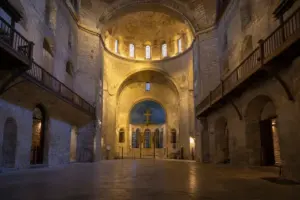 Hagia Irene – about 150 m away (~2 min walk) · typical visit: 45 minutes to 1 hour10 min on foot from Gülhane metro, Open 09:00–18:00, closed Tue
Main image: AI-generated illustration. It may not show the place exactly as it looks.
Metro stations near Istanbul Archaeological Museums
 Gülhane – about 750 m away (~13 min walk)Open daily 06:00–00:00
Main image: AI-generated illustration. It may not show the place exactly as it looks.
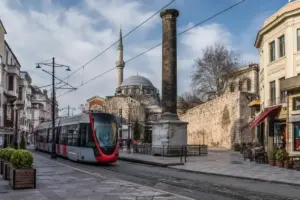 Çemberlitaşabout 900 m away (~15 min walk)
Main image: AI-generated illustration. It may not show the place exactly as it looks.
Restaurants and cafes near Istanbul Archaeological Museums
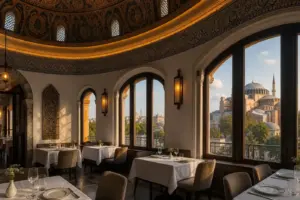 Matbah Restaurant – about 300 m away (~5 min walk)9 min on foot from Gülhane metro, Open daily 09:00–22:30
Main image: AI-generated illustration. It may not show the place exactly as it looks.
 Balık Ekmek at Eminönü – about 400 m away (~7 min walk)7 min on foot from Gülhane metro, Open daily 09:00–22:30
Main image: AI-generated illustration. It may not show the place exactly as it looks.
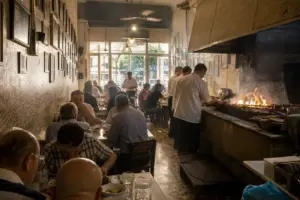 Tarihi Sultanahmet Koftecisi – about 500 m away (~8 min walk)7 min on foot from Gülhane metro, Open daily 11:00–23:00
Main image: AI-generated illustration. It may not show the place exactly as it looks.
 Hafız Mustafa 1864 – about 650 m away (~11 min walk)12 min on foot from Çemberlitaş metro, Open daily 12:00–23:59
Main image: AI-generated illustration. It may not show the place exactly as it looks.
Nightlife near Istanbul Archaeological Museums
 Roxy – about 400 m away (~7 min walk)7 min on foot from Gülhane metro
Main image: AI-generated illustration. It may not show the place exactly as it looks.
 Seven Hills – about 550 m away (~9 min walk)4 min on foot from Gülhane metro, Open daily 08:00–23:00
Main image: AI-generated illustration. It may not show the place exactly as it looks.
Train stations and river piers near Istanbul Archaeological Museums
 Eminönü Ferry Terminalabout 1.1 km away (~18 min walk)
Main image: AI-generated illustration. It may not show the place exactly as it looks.
 Karaköy Ferry Terminalabout 1.3 km away (~21 min walk)
Main image: AI-generated illustration. It may not show the place exactly as it looks.
Events and traditions near Istanbul Archaeological Museums
 Istanbul Marathonabout 800 m away (~13 min walk)
Main image: AI-generated illustration. It may not show the place exactly as it looks.
Related guides
 Istanbul Winter Museum Trail: Three Days of Indoor Culture and Treasures
Main image: AI-generated illustration. It may not show the place exactly as it looks.
 Stoudios Monastery: History, Architecture and Current Access
Main image: AI-generated illustration. It may not show the place exactly as it looks.
 Sultanahmet Walking Route: Byzantine and Ottoman Monuments on Foot
Main image: AI-generated illustration. It may not show the place exactly as it looks.
 Cataract Surgery: What to Know Before You Decide
Main image: AI-generated illustration. It may not show the place exactly as it looks.
 PRK Eye Surgery: What to Expect from Procedure to Recovery
Main image: AI-generated illustration. It may not show the place exactly as it looks.
Browse more: More in Fatih · All Museums · All Sightseeing
FAQ: Istanbul Archaeological Museums
Is one ticket enough for all three museums?
Yes. A single ticket grants entry to the Archaeology Museum, Museum of the Ancient Orient, and Museum of Islamic Art (Tiled Kiosk). All three are part of the Istanbul Archaeological Museums complex. Many visitors incorrectly assume each building requires a separate ticket.
How long should I spend here?
Plan 1.5–2 hours for a focused visit to the main highlights, or 3–4 hours for a thorough exploration of all three buildings. The Alexander Sarcophagus and Greek sculpture galleries merit 45 minutes alone. Early morning allows unhurried pacing.
Are children free?
Children under 12 enter free. Museum Pass Istanbul is valid for adults and covers this complex plus Topkapi Palace and other major sites, often providing better value than single tickets.
Is this the same as Topkapi Palace Museum?
No. The Istanbul Archaeological Museums are a separate complex located downslope from Topkapi Palace's first courtyard. Both are adjacent attractions in Sultanahmet, but each requires its own ticket and visit. The archaeological museums house antiquities; Topkapi displays Ottoman palace collections.
Can I visit on Mondays or specific days like other museums?
Yes. The museums are open every day of the week with no weekly closing day—unusual among Istanbul's major museums. They close only on national holidays.
Can I take photos inside?
Yes. Photography without flash is allowed in all galleries. Professional equipment, tripods, and selfie sticks require advance permission. Drones are forbidden.
Is Museum Pass Istanbul worth buying?
Museum Pass Istanbul is valid here and at Topkapi Palace, Hagia Sophia, and other major sites. If visiting 3 or more included attractions, the pass often costs less than single tickets. Check the pass value against your itinerary.
Is the Tiled Kiosk hard to reach?
The Tiled Kiosk is located upslope from the main building along garden paths. It requires walking on uneven stone terraces but is not difficult to access. Allow time for the ascent if visiting all three buildings; walking down-and-up may take 10–15 minutes of your visit.
Istanbul Vibes is a one-person project. A coffee keeps it going
Hotels near Istanbul Archaeological Museums
- The Empress Theodora (250 m) Check prices (affiliate link, opens in a new tab)
- Merih Hotel (250 m) Check prices (affiliate link, opens in a new tab)
- Gulhane Suites (300 m) Check prices (affiliate link, opens in a new tab)
- Minel Hotel (300 m) Check prices (affiliate link, opens in a new tab)
Affiliate link (opens the booking site): we may earn a commission at no extra cost to you.
Restaurants near Istanbul Archaeological Museums
- Karakol Restaurant (200 m) Google Maps
- Cistern Restaurant (200 m) Google Maps
- Sarnic Restaurant (200 m) Google Maps
- Sofia (200 m) Google Maps
Distances are straight-line, from OpenStreetMap data.

Take this guide with you
Get a free PDF of this guide to print or read offline: key facts, tips and a map link on a few clean pages.
Report an issue on this page
How we research and update our guides
About this guide: AI assistance and accuracy
This guide is created with the help of AI and is based on official sources where available. Mistakes can still happen. Opening hours, prices, rules and other details are given to the best of our knowledge as of the date shown and can change without notice. It offers general recommendations only, not professional, legal or travel advice. Please confirm important details with the official source before you travel; you are responsible for your own plans and decisions.
* Affiliate link: as an Amazon Associate we earn from qualifying purchases at no extra cost to you.
