
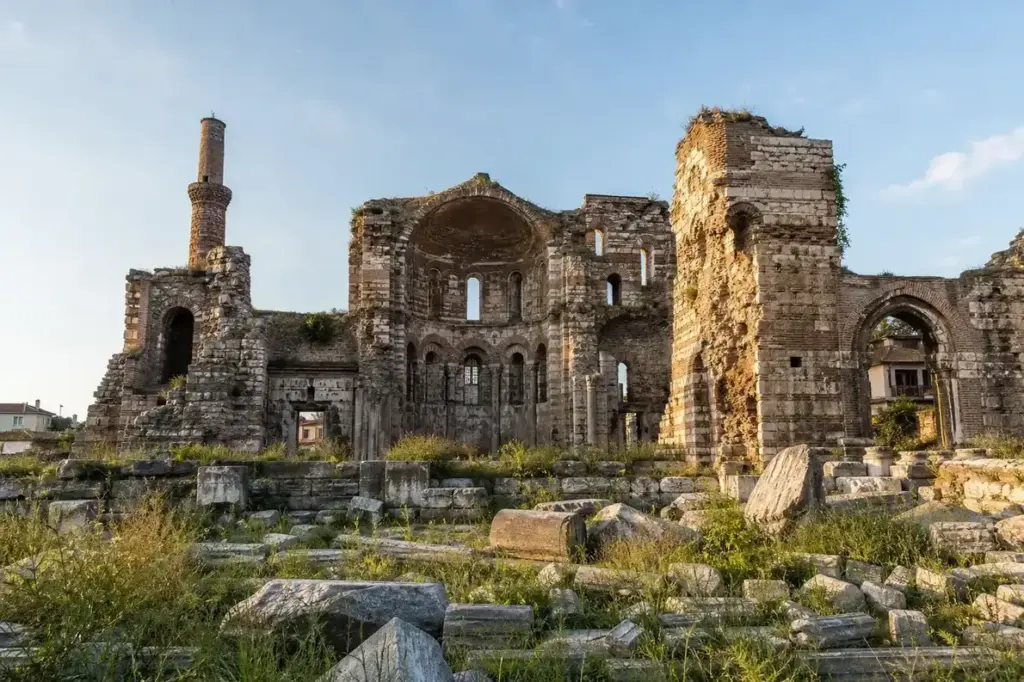
The surviving structure of Stoudios Monastery is the oldest church in Istanbul. Founded in the 5th century by Flavius Studius and completed in 463 AD, this Byzantine monastery once stood as one of the 80 monasteries in Constantinople, ranked first. Today the site remains partially visible in the Yedikule district, though restoration of the edifice was announced in 2023 and has been ongoing as of January 2024.
Although the monastery has been derelict for half a millennium, the laws and customs of the Stoudion were taken as models by the monks of Mount Athos and of many other monasteries of the Orthodox world; even today they have influence. The site is part of the UNESCO World Heritage List as one of the Historic Areas of Istanbul.
Current access notice: As of October 2026: The site is closed to public visitors. Restoration work announced in 2023 is ongoing. Access is not permitted due to security and structural concerns during renovation.
Quick Facts
| Built / opened | 462 |
|---|---|
| Architect(s) | Flavius Studius |
| Address | Kocamustafapaşa, Kilise Sk. No:8, 34098 Fatih/İstanbul Google MapsApple MapsYandex Maps |
| District | Fatih |
| Best time to visit | The site is currently closed for restoration and not accessible to visitors. Once restoration is complete and public access resumes, the best times would be spring (April–May) and autumn (September–October) for comfortable outdoor conditions. The site is largely open-air and without shade, so avoid mid-summer heat. Winter is wet and cold in Istanbul. Weekdays are quieter, though public access may still be limited or require advance arrangement. |
| Recommended duration | 1–2 hours (exterior viewing only) |
What Is (and Isn't) Part of a Visit to Stoudios Monastery?
| Part | Status | Notes |
|---|---|---|
| Byzantine basilica church | Included in the standard ticket | The main 5th-century church structure with three aisles, apse, narthex, and atrium—the core of the monastery complex. |
| Interior floor mosaics and opus sectile | Included in the standard ticket | 11th-century decorative pavement with animal and mythological scenes, partially preserved beneath the structure. |
| Underground crypt | Included in the standard ticket | Cruciform chamber under the apse that once housed monastic relics; not accessible to the public. |
| Monastic complex buildings | Not open to visitors | Monks' cells, school, bathhouse, kitchen, dining hall, mills and water well once stood here but have not survived or are buried; not visible or accessible. |
| Ottoman minaret | Included in the standard ticket | Partial remains of the minaret added during the Ottoman period after conversion to a mosque. |
| İmrahor Mosque (Ottoman name) | Outside / not part of it | Refers to the same building after its 15th-century conversion; there is no separate 'mosque' structure—the Byzantine church was adapted for Islamic worship and is now called by this name. |
Why Visit Stoudios Monastery?
The surviving structure of Stoudios Monastery is the oldest church in Istanbul, a large 5th-century three-aisled basilica, preceded by porticoed atrium and a narthex (divided into three bays) to the west and a single apse at the east end. The nave was flanked by green marble columns with acanthus capitals.
Highlights of Stoudios Monastery
Byzantine Basilica
The church was a large 5th-century three-aisled basilica, preceded by porticoed atrium and a narthex (divided into three bays) to the west and a single apse at the east end. The nave was flanked by green marble columns with acanthus capitals. Visitors can still trace the grand outline of the original structure, with some columns still standing and sections of walls remaining visible.
Tip: The site is currently fenced and largely closed to visitors due to ongoing restoration, but the exterior and remaining walls can be glimpsed from the street.
Floor Mosaics and Opus Sectile
The monastery has opus sectile pavement with figures of animals and mythological scenes, probably dating to the 11th century (thus comparable to the Monastery of the Pantokrator). The monastery floor contains opus sectile pavement featuring animal and mythological scenes dating to the 11th century, similar to the Monastery of Pantokrator. These intricate stone and marble floor patterns represent some of the finest Byzantine decorative work.
Tip: The floor mosaics are largely protected beneath the current structure and visible only during restoration work or guided archaeological visits.
Crypt with Reliquaries
The semicircle of the apse, which was polygonal on its exterior, contains the remains of a synthronon. A cruciform crypt was uncovered under the apse, which probably once housed the monastery's relics. This underground chamber represents the sacred heart of the monastic complex.
Tip: The crypt is not accessible to the public and is only visible in archaeological documentation or scholarly sources.
Scriptorum and Monastic School
The monastery contained a prominent school of calligraphy that produced numerous illuminated manuscripts, with artifacts now distributed across multiple international collections. Theodore, a monk and saint born in Caesarea, was a monk at Stoudios Monastery. In 1066, he copied the Psalms and the Odes for the use of the monastery's abbot, Michael. This was the intellectual centre of Byzantine monastic learning.
Tip: Medieval manuscripts created here are now held in museums and archives worldwide; no original scriptorium remains visible on site.
Ottoman Minaret Remnant
A minaret was added to the structure after its conversion into a mosque, of which only a part remains today. The monastery was converted into a mosque by İlyas Bey, the mirahur (stable master) of Bayezid II, hence its Turkish name. The partial minaret shows the layering of religious use across centuries.
Tip: The remaining fragment of the minaret is visible from certain angles around the site but the structure is largely obscured by fencing and restoration barriers.
1894 Earthquake Damage
The monastery was devastated by an earthquake in 1894, severely damaging what remained of the monastery. This seismic event marked the final major blow to the already-weakened structure, leaving the ruins you see today. The partially collapsed walls and open apse are direct results of this destruction.
Tip: Structural cracks and uneven stonework visible today date largely from the 1894 earthquake and subsequent weathering.
Atmosphere
The walls are fractured, open to the wind and rain, surrendering piece by piece to weeds and the quiet creep of time. You can still trace the grand shape of the original 5th-century basilica—the sheer scale is impressive, with columns still standing proud in places and glimpses of intricate floor mosaics—but it is undeniably decaying. Nature is moving back in, vines are crawling over stones that monks once prayed beside. Now known officially as the İmrahor Mosque site, it’s mostly fenced off, quiet, a sleeping giant in a city that rarely slows down. It’s almost ironic—a place once brimming with intellectual debate and imperial drama now sits in ruins, waiting for its restoration.
History of Stoudios Monastery
The monastery was founded in 462 AD by the consul Flavius Studius, a Roman patrician who had settled in Constantinople, and was consecrated to Saint John the Baptist. Its first monks came from the monastery of the Acoemetae. From its foundation, Stoudios rapidly became the preeminent monastic institution in Constantinople.
It played a lesser role under the Komnenoi and entered a period of decline during the Latin occupation of Constantinople. It was restored in 1293 and in the 14th century held first place among the monasteries of Constantinople. A brief revival in the late Byzantine period proved temporary.
It was converted into a mosque by İlyas Bey, the mirahur (stable master) of Bayezid II, hence its Turkish name. It underwent extensive alterations during the Ottoman Era. The conversion to Islamic use preserved the basic structure but changed its spiritual purpose and physical decoration.
It was devastated by an earthquake in 1894, severely damaging what remained of the monastery. This natural disaster proved the final blow to the already-declining structure, leaving the fragmented ruins visible today.
Tickets and Booking for Stoudios Monastery
The site is currently closed to the public due to ongoing restoration work that began in 2023. No public admission, tickets or tours are available. The structure is fenced and access is restricted.
Before visiting, check the latest status with the Directorate General of Foundations (Turkey’s Vakıflar Genel Müdürlüğü), which oversees the restoration project. Once restoration is complete, public access may be permitted, but no opening date has been announced. You may view the exterior from the surrounding streets in the Yedikule neighbourhood.
How to Get to Stoudios Monastery
Stoudios Monastery is located in the Yedikule (Seven Towers) district of Istanbul’s Fatih administrative area, south of the historic city walls near the Sea of Marmara. There is no direct metro station; the nearest transport options require walking.
- By metro and walking: Take the T1 tram or M2 metro to Zeytinburnu station. From there, walk south-southeast toward the Theodosian Walls (approximately 25–30 minutes). Follow signs or local directions toward Kocamustafapaşa and the Yedikule district. The monastery’s address is Kocamustafapaşa, Kilise Sokak No. 8, in the Fatih neighbourhood.
- By taxi or local transport: A taxi or minibus to Yedikule is quicker. Ask the driver for “İmrahor Ilyas Bey Mosque” or “Kocamustafapaşa Kilise Sokak.”
- Walking from the walls: If you are visiting the nearby Theodosian Walls or Yedikule Fortress, the monastery is within walking distance to the south.
Accessibility
The site is currently not accessible to the public. Once restoration concludes, accessibility will depend on the restoration design. The exterior remains can be viewed from the surrounding street. The Yedikule neighbourhood has steep terrain and cobbled streets, which may challenge visitors with mobility limitations.
Food Nearby
The Yedikule neighbourhood is quieter and more residential than central Istanbul tourist areas. Small local restaurants, kebab shops, and tea gardens serve the nearby population. Walking to busier commercial areas (Aksaray, Laleli) takes 15–20 minutes. It is best to eat before or after visiting and to bring water, as the immediate area offers limited tourist-oriented food options.
What to Bring
Wear sturdy walking shoes suitable for cobbled streets and hilly terrain. Bring water and sun protection, as the site is largely open-air. The neighbourhood is accessible but not heavily developed for tourism; do not expect facilities, restrooms or shade. Check the restoration status before visiting, as public access remains uncertain.
Photography Rules
Photography rules are not officially published for this site. As it is currently closed for restoration and fenced, photography from public areas surrounding the site may be permitted, but do not enter the fenced area. Once restoration is complete and public access resumes, check on-site signs or ask guides for current photography policies.
Family Suitability
The site is not currently open to the public, so it is not suitable for visits. Once restoration is complete, the hilly terrain, rough cobbled streets, and lack of shade or facilities make it better suited to older children and adults with historical interest. Young children and strollers would find the neighbourhood challenging. There are no interactive or child-oriented activities; this is an archaeological and historical site intended for adults.
Istanbul Vibes Tips
- Confirm the restoration status and any public access dates before traveling to the site. The Directorate General of Foundations website or a call to the local Istanbul archaeological office can provide current information.
- The Yedikule Fortress is just south of Stoudios Monastery and may be open when the monastery is not. You can visit the fortress and view the monastery's exterior from nearby while you are in the neighbourhood.
- The site is not easily reached by standard tourist routes. Allow extra travel time from central Istanbul and bring a map or GPS. Public signage is limited and mostly in Turkish.
- Visit the Istanbul Archaeological Museums to see artifacts, manuscripts and scholarly information related to Stoudios Monastery, including the famous Theodore Psalter (1066) copied by monks at the monastery.
- The surrounding Yedikule area has steep cobbled streets and is not heavily touristed. Wear comfortable shoes and do not expect the same infrastructure, signage or food options as central tourist zones.
Explore Nearby Stoudios Monastery
Sights near Stoudios Monastery
 Yedikule Fortress – about 550 m away (~9 min walk) · typical visit: 2–3 hours9 min on foot from Kazlıçeşme metro, Open 09:00–17:00, closed Mon
Main image: AI-generated illustration. It may not show the place exactly as it looks.
 Theodosian Walls · typical visit: 2–3 hours
Main image: AI-generated illustration. It may not show the place exactly as it looks.
 Istanbul Archaeological Museums – about 4.7 km away · typical visit: 2–3 hours13 min on foot from Gülhane metro, Open daily 09:00–18:30
Main image: AI-generated illustration. It may not show the place exactly as it looks.
 Golden Gate – about 600 m away (~10 min walk) · typical visit: 1–2 hours8 min on foot from Kazlıçeşme metro, Open 09:00–17:00, closed Mon
Main image: AI-generated illustration. It may not show the place exactly as it looks.
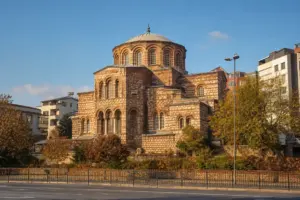 Constantine Lips Monastery Ruins – about 2.5 km away · typical visit: 45 minutes to 1 hour12 min on foot from Yusufpaşa metro
Main image: AI-generated illustration. It may not show the place exactly as it looks.
 Panorama 1453 – about 2.6 km away · typical visit: 1–2 hours2 min on foot from T1 Topkapı metro, Open daily 08:00–19:00
Main image: AI-generated illustration. It may not show the place exactly as it looks.
Metro stations near Stoudios Monastery
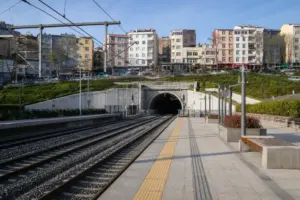 Kazlıçeşme – about 1.1 km away (~17 min walk)Open daily 06:00–23:59
Main image: AI-generated illustration. It may not show the place exactly as it looks.
Related guides
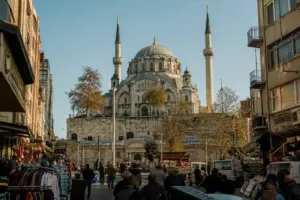 Laleli: Working Istanbul’s Textile Market and Hidden Mosque
Main image: AI-generated illustration. It may not show the place exactly as it looks.
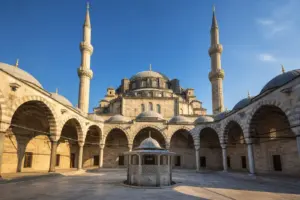 Şehzade Mosque: Mimar Sinan’s First Imperial Masterpiece4 min on foot from Vezneciler metro
Main image: AI-generated illustration. It may not show the place exactly as it looks.
 Best Underground Cisterns in Istanbul: Three Sites Compared
Main image: AI-generated illustration. It may not show the place exactly as it looks.
 The Red School in Fener: A Castle above the Golden Horn
Main image: AI-generated illustration. It may not show the place exactly as it looks.
 Orient Occident Hotel: Green and Brass in Sirkeci
Main image: AI-generated illustration. It may not show the place exactly as it looks.
Browse more: More in Fatih · All Churches · All Sightseeing
FAQ: Stoudios Monastery
Is Stoudios Monastery open to visitors?
No. As of October 2026, the site is closed due to ongoing restoration work that began in 2023. The structure is fenced and public access is not permitted. Check with the Directorate General of Foundations for updates on when restoration will be complete and whether public access will resume.
What is the difference between Stoudios Monastery and İmrahor Mosque?
They are the same building. Stoudios Monastery was the Byzantine name for the 5th-century church. After Ottoman conquest, it was converted and renamed İmrahor Ilyas Bey Mosque (or İmrahor Mosque) by İlyas Bey, the stable master of Bayezid II. Today it is referred to by both names; "monastery" emphasizes its Byzantine history and "mosque" its Ottoman function.
Why is Stoudios Monastery important?
Can I see the interior and mosaics?
Not currently. The interior is closed and largely not accessible. The famous 11th-century opus sectile floor mosaics with animal and mythological scenes remain in place but are not visible to the public during restoration.
Where was Stoudios Monastery located in Byzantine Constantinople?
It was located in the Psamathia region (modern Yedikule/Kocamustafapaşa), near the Theodosian Walls, south of the Mese (the main avenue), and not far from the Golden Gate and the Sea of Marmara.
What damage has the monastery suffered?
The monastery was damaged by earthquakes, fires, and the Fourth Crusade (Latin occupation). The most devastating blow came from the 1894 earthquake, which severely fractured the remaining walls and collapsed parts of the structure. The complex buildings surrounding the church (monks' cells, school, bathhouse, kitchen) have not survived or are buried.
Are there related sites I can visit nearby?
Yes. The Yedikule Fortress (Seven Towers) is just south of the monastery site. The Theodosian Walls run nearby. The Istanbul Archaeological Museums hold manuscripts and objects connected to Stoudios Monastery, including the Theodore Psalter created by monks here in 1066.
Is there a mosque here now that I can visit?
No. Although the building was converted to a mosque in the Ottoman period, it is not currently in active use as a mosque. The site is closed for restoration, and no religious services are held. Once restoration is complete, its future use (as a museum, mosque, or archaeological site) has not been publicly announced.
Istanbul Vibes is a one-person project. A coffee keeps it going
Hotels near Stoudios Monastery
- Queen seagull hotel (250 m) Check prices (affiliate link, opens in a new tab)
Affiliate link (opens the booking site): we may earn a commission at no extra cost to you.
Restaurants near Stoudios Monastery
- Buryan Kebap Ve Izgara Salonu (50 m) Google Maps
- Rumeli Tulumbacısı (100 m) Google Maps
- Kule köfte (100 m) Google Maps
- Eyüp Sultan Sofrası (100 m) Google Maps
Distances are straight-line, from OpenStreetMap data.

Take this guide with you
Get a free PDF of this guide to print or read offline: key facts, tips and a map link on a few clean pages.
Report an issue on this page
How we research and update our guides
About this guide: AI assistance and accuracy
This guide is created with the help of AI and is based on official sources where available. Mistakes can still happen. Opening hours, prices, rules and other details are given to the best of our knowledge as of the date shown and can change without notice. It offers general recommendations only, not professional, legal or travel advice. Please confirm important details with the official source before you travel; you are responsible for your own plans and decisions.
* Affiliate link: as an Amazon Associate we earn from qualifying purchases at no extra cost to you.
