

Constantine Lips Monastery Ruins occupies a unique place in Istanbul’s history as a building that has survived over a thousand years of religious and cultural transformation. Known today as the Fenari İsa Mosque, the site was originally founded in 907 as a monastery dedicated to the Theotokos (Mother of God) by Constantine Lips, a Byzantine aristocrat and naval official.
The complex consists of two adjoined churches: the northern church built in 907 during the reign of Emperor Leo VI, and the southern church added in the late 13th century by Empress Theodora, widow of Michael VIII Palaiologos. Though repeatedly damaged by fires during the Ottoman period and abandoned for decades in the 20th century, the structure was comprehensively restored in the 1960s and continues as an active mosque.
Quick Facts
| Built / opened | 907 |
|---|---|
| Address | Akşemsettin Mah., Adnan Menderes Blv., 34091 Fatih, Istanbul Google MapsApple MapsYandex Maps |
| District | Fatih |
| Metro | Fatih-Emniyet (M1) Aksaray (M1) |
| Admission | Free |
| Best time to visit | Seasons: Spring (April–May) and autumn (September–October) offer mild temperatures and lower tourist crowds, allowing peaceful exploration. Summer (June–August) brings heat and occasional humidity but fewer religious visitors during vacation periods. Winter (November–March) is quieter and cooler, though occasional rain may affect visibility of exterior brickwork details.Days and Hours: Weekdays outside prayer times are significantly quieter than weekends, allowing more uninterrupted study of the interior. Early morning (8–10 a.m.) and late afternoon (4–6 p.m.) are typically least crowded. Avoid midday (noon–2 p.m.) and early evening (5–6 p.m.) when prayer times are most likely.Photography: Afternoon light (2–4 p.m.) illuminates the south church's polychrome brickwork from the boulevard most effectively. Interior light is best around midday when sun enters the dome windows, but this coincides with prayer times on some days. |
| Recommended duration | 45 minutes to 1 hour |
What Is (and Isn't) Part of a Visit to Constantine Lips Monastery Ruins?
| Part | Status | Notes |
|---|---|---|
| North Church (Byzantine original, 907) | Included in the standard ticket | The original monastery church; accessible to visitors during non-prayer hours. |
| South Church (Palaiologos-era, late 13th century) | Included in the standard ticket | Theodora's addition serving as a mausoleum; integrated into the current mosque. |
| L-shaped Exonarthex (14th century ambulatory) | Included in the standard ticket | The western and southern passage; part of the accessible complex. |
| Ottoman Minaret (original 1498, removed 1942) | Not open to visitors | The minaret was demolished in 1942 and is no longer visible. |
| Archaeological artifacts from the site | Separate ticket or institution | Marble sculptures and the opus sectile panel are housed in the Istanbul Archaeological Museum. |
| Byzantine mosaics and frescoes | Not open to visitors | Original Byzantine decorations were lost to fires and Ottoman conversion; none remain visible. |
| Fenari İsa Mosque (Ottoman conversion and functioning place of worship) | Included in the standard ticket | The structure serves as an active mosque; visitors should respect prayer times. |
Why Visit Constantine Lips Monastery Ruins?
The monastery represents one of Constantinople’s finest examples of Middle Byzantine architecture, with a distinctive cross-in-square design that influenced later church construction. Its dual churches showcase architectural styles separated by centuries—the earlier Romanesque severity of the north church contrasts sharply with the decorative brickwork and refined dome of Theodora’s later addition.
Historically, the site served as a mausoleum for the imperial Palaiologos family during the final Byzantine era, making it an essential stop for understanding the dynasty’s power and the city’s religious landscape. The building’s transformation from monastery to mosque and its careful restoration make it a rare surviving example of Byzantine-Ottoman architectural coexistence in Istanbul.
How Constantine Lips Monastery Ruins Is Laid Out
The monastery consists of three distinct sections aligned on roughly the same axis. The North Church, the original 10th-century structure, occupies the northern portion and features a cross-in-square plan with a single dome. Its entrance remains on the eastern side, though closed since the Ottoman conversion.
The South Church, added by Empress Theodora in the late 13th century, sits immediately adjacent to the south and operated as a mausoleum for the imperial family. This smaller, square-plan church displays more ornate brickwork patterns characteristic of Palaiologan-era construction.
An L-shaped exonarthex (ambulatory passage) was added in the 14th century along the western and southern sides, extending the complex’s footprint. Since the Ottoman conversion, the structure functions as a single mosque, with the minaret visible on the southeastern corner. Visitors enter through doorways on the southern and eastern facades facing Adnan Menderes Boulevard.
Highlights of Constantine Lips Monastery Ruins
North Church Dome and Interior
The original monastery church built in 907 showcases the earliest surviving example of the cross-in-square architectural type in Constantinople. Enter through the eastern doorway to see the central dome and its supporting columns—these proportions influenced church design for centuries. The interior, stripped of its original mosaics and frescoes, retains the essential Byzantine spatial logic, with light falling through windows around the dome. The 10th-century construction employed spolia (reused materials) from earlier buildings, visible in the varied marble capitals and stone blocks.
Tip: The north church interior is simpler and colder than the south; visit it first to understand the monastery's original form before moving to the richer 13th-century addition.
South Church: Theodora's Mausoleum
Tip: Step outside briefly to photograph the south church's distinctive brickwork from the boulevard before entering; the patterns are clearest in afternoon light.
The L-Shaped Exonarthex (14th Century)
A broad ambulatory passage with vaults was added along the western and southern sides during the 14th century, extending the complex's footprint and creating additional burial space. This architectural element was inspired by the Pantokrator Monastery, another imperial mausoleum, and reflects the monastery's elevated status. The vaults and columns here show the engineering sophistication of late Byzantine construction, though the space is modest compared to the main churches.
Tip: This section often feels quiet and overlooked; spend time here to appreciate the structural sophistication and to avoid the busier areas near the mosque's main entrance.
Ottoman Conversion Features
When converted to a mosque around 1497–1498 under Bayezid II, the complex received Islamic fixtures and modifications. A minaret was added to the southeastern corner in 1498 (though removed in 1942). Inside, look for the mihrab (prayer niche) and minbar (pulpit) additions in the south church, which coexist with Byzantine architectural elements. In 1636, Grand Vizier Bayram Pasha restored the structure after fire damage, restructuring the north church as a dervish lodge with added interior features.
Tip: The layering of Byzantine and Ottoman elements is clearest in the southern church; ask the caretaker if you can identify the original Byzantine features versus later Islamic additions.
Archaeological Excavations and Artifacts
Between 1960 and 1963, the Byzantine Institute of America conducted major excavations that revealed the monastery's complex burial practices. During these digs, 22 sarcophagi were discovered, along with sculptured marble fragments including busts of the Apostles from a decorative archivolt. An opus sectile panel depicting Empress Aelia Eudoxia from the 10th or 11th century, originally from the church interior, is now in the Istanbul Archaeological Museum. These finds established the site as a significant imperial burial ground.
Tip: The Istanbul Archaeological Museum holds artifacts from this site; visit there to see the decorative marble pieces and gain fuller context for understanding what you see in the church interior.
Byzantine Polychrome Brickwork
The exterior walls of both churches, especially the south church, display distinctive polychrome brickwork—a hallmark of Middle and Late Byzantine construction. Alternating rows of red brick and white limestone create geometric patterns and decorative bands, a technique that required skilled masons and was expensive to execute. This brickwork served both structural and aesthetic purposes, reinforcing the walls while creating visual rhythm.
Tip: Walk slowly around the exterior perimeter, particularly the southern and western facades, to observe how the brickwork patterns change and how weathering has affected different sections over a thousand years.
The Lycus Valley Location
The monastery sits in the Lycus (Lycos) River valley, a topographical depression running through the historic city toward the Sea of Marmara. This location held strategic and symbolic importance in Byzantine Constantinople, situating the monastery southwest of the Church of the Holy Apostles. The valley's water source was vital for the monastery's operations. Today, the valley is largely hidden beneath Adnan Menderes Boulevard, but the site's elevated position relative to surrounding streets preserves the ancient geography.
Tip: Notice how the street level differs from the building's foundation level; this reflects the original valley topography that shaped Byzantine city planning.
Restoration and Survival
The monastery endured catastrophic fires in 1633, 1782, 1784, 1803, and most devastatingly in 1917, which left it in ruins for decades. A 1636 restoration by Grand Vizier Bayram Pasha and a 1960s restoration by the Byzantine Institute of America under Arthur Megaw saved the structure from total loss. The 1960–1963 excavations and conservation work transformed it from a derelict building into a functional mosque. This restoration history makes it one of Istanbul's most carefully studied and documented Byzantine structures.
Tip: The building's current stable condition masks its tumultuous past; understanding this survival narrative deepens appreciation for what you see.
Atmosphere
The monastery presents a stark, contemplative atmosphere despite its location on a busy boulevard. Inside, the space is cool, quiet, and largely empty except during prayer times. The interior feels austere—stripped of the gilded mosaics and vibrant frescoes that would have adorned it in Byzantine times—creating an honest encounter with medieval architecture reduced to its essential forms. Sunlight filters through high windows in the dome, illuminating the central space in shifting patterns.
Unlike the ornate, crowded energy of many Istanbul mosques, this site feels removed and peaceful. The older north church is especially spare, with minimal decoration or furnishings, while the south church retains slightly more embellishment and warmth. Outside, the roar of traffic on Adnan Menderes Boulevard starkly contrasts with the medieval stillness within—a reminder of how this ancient structure exists embedded in the modern city. Prayer times bring worshippers, but casual visitors often encounter the space nearly empty, allowing close study of the architecture.
History of Constantine Lips Monastery Ruins
Byzantine Foundation and Early Period (907–1204)
The monastery was originally founded by Constantine Lips and consecrated in 907–908 with the presence of Emperor Leo VI. Constantine Lips was a Byzantine aristocrat and admiral who died in 917. Constantine was a dignitary at the court of emperors Leo VI (886–912) and Constantine VII (905–959). The north church, dedicated to the Theotokos Panachrantos (the Immaculate Mother of God), was built as the monastery’s main structure. The Theotokos Church represented the earliest surviving example of the cross-in-square type in Constantinople. The construction employed abundant spolia materials, particularly late antique stamped bricks, pilaster capitals and marble slabs. The monastery quickly became one of Constantinople’s significant religious institutions.
Palaiologos Dynasty Expansion (13th–14th Centuries)
Between 1281 and 1301, Empress Theodora, the widow of Michael VIII Palaiologos, restored the monastic complex. After Michael VIII’s death in 1282, Theodora sought to honor the memory of Ioannes Prodromos (St. John the Forerunner) by constructing a second church adjacent to the original. This expansion revitalized the monastery and turned it into a significant burial site for the Palaiologan dynasty. The empress chose Lips Monastery for her family’s mausoleum perhaps because of its proximity to the Holy Apostles. In the 14th century, an L-shaped building was added to the west and south sides of the church to enlarge the complex. By the 14th century, the monastery was described as one of the larger nunneries in Constantinople.
Ottoman Conversion and Decline (15th–20th Centuries)
At the end of the 15th century during the reign of Bayezid II, Ali Efendi from the Fenarizade family converted the complex into a mosque. The Rumelian kazasker Fenarîzade Alaeddin Ali added a minaret to the southeast wall in 1498. In 1636, the grand vizier Bayram Pasha essentially restored the structure; during this restoration, a new minbar was built in the southern church and the northern church was restructured as a dervish lodge. City fires in 1636, 1782, 1784 and 1803 heavily damaged the structure. After a great fire in 1917, the structure lay in ruins for a long time.
Modern Restoration and Current Status (1960–Present)
After the Byzantine Institute of America excavated the area between 1960 and 1963, the structure’s destiny changed once again. It was opened for worship as a mosque after the excavation. Theodore Macridy conducted the first comprehensive survey in 1929, and his final report was published posthumously in 1964, following restoration works conducted by the Pious Foundation and the Byzantine Institute of America in the 1960s. The minaret was torn down in 1942, and although the structure was partially restored in 1947, it was abandoned for a long time between 1930 and 1960. The structure now functions as an active mosque while remaining one of Istanbul’s most carefully documented and preserved Byzantine monuments.
Legends and Myths about Constantine Lips Monastery Ruins
Constantine Lips's Death in Battle
Disputed by historians. Byzantine sources record that Constantine Lips, the monastery's founder, died in 917 fighting against Bulgarian forces under Simeon I at the Achaelous River. Some accounts suggest his death in battle was the spiritual catalyst for the monastery's establishment, as his family and the imperial court sought divine protection through this prestigious foundation. The historical tradition makes him a martyr-like figure whose military sacrifice preceded his lasting ecclesiastical legacy.
The Monastery as Imperial Sanctuary
Tickets and Booking for Constantine Lips Monastery Ruins
Entry to the Constantine Lips Monastery complex is free. The site functions as an active mosque and is open to visitors outside of the five daily prayer times. There is no ticketing system or advance booking requirement.
The mosque observes Islamic prayer schedules, which vary by season. Visitors should avoid arriving during prayer times (approximately dawn, midday, afternoon, sunset, and evening). The caretaker or staff can advise on prayer times if you are unsure.
When visiting, women should wear a headscarf and both men and women should remove shoes before entering the prayer hall. Modest dress is appreciated. No photography restrictions are typically enforced, though photography during active prayer should be avoided out of respect.
The site remains largely unstaffed; if you have questions about specific architectural features or the excavation history, you may find more detailed information at the Istanbul Archaeological Museum, which houses artifacts from the 1960s excavations.
Suggested itineraries Constantine Lips Monastery Ruins
45 minutes
Enter through the southern entrance and orient yourself in the mosque's main prayer area, observing the integration of Ottoman elements into the Byzantine space. Move systematically through the north church first, noting its simpler cross-in-square plan and austere interior. Exit briefly to observe the exterior brickwork patterns from the boulevard. Return to examine the south church's more ornate details and the L-shaped ambulatory. Visit the Istanbul Archaeological Museum afterward to see artifacts from the site.
1–1.5 hours
Begin with the north church interior, spending time studying its dome structure and column proportions. Move to the south church and examine the contrasting architectural language and decorative brickwork. Study the L-shaped exonarthex carefully, noting its vaulting and burial niches. Walk around the entire exterior perimeter to observe how the polychrome brickwork varies by elevation and the effects of weathering. Conclude with a visit to nearby Fatih Mosque or the Book Bazaar if time permits.
2–3 hours (including related sites)
Spend 1 hour at Constantine Lips Monastery following the detailed exploration above. Then walk to the nearby Church of St. Mary of the Mongols (15–20 minutes) or the Pantokrator Monastery/Zeyrek Mosque (20 minutes), both important Byzantine structures. Visit the Istanbul Archaeological Museum (metro ride away) to examine artifacts from the Lips excavations and other Byzantine material. This itinerary provides comparative context for understanding Byzantine architecture across different periods and sites.
How to Get to Constantine Lips Monastery Ruins
By Metro: The closest metro stations on the M1 line are Fatih-Emniyet (approximately 8 minutes’ walk) and Aksaray (approximately 10 minutes’ walk). From either station, follow signage toward Adnan Menderes Boulevard (formerly Vatan Caddesi). The monastery is on this main avenue; look for the distinctive Byzantine masonry and dome visible from the street.
Walking directions from Fatih-Emniyet Station: Exit the station and head northeast on Vatan Caddesi/Adnan Menderes Boulevard. Walk for approximately 10 minutes; the mosque appears on your left (south side of the street). The entrance is marked and sits below street level.
By Bus: Multiple IETT buses serve Adnan Menderes Boulevard. Look for stops near Aksaray or Fatih-Emniyet Metro and request the driver to indicate the Fenari İsa Mosque or Constantine Lips Monastery stop.
By Taxi or Ride-Share: Provide the driver with the address: Adnan Menderes Boulevard, Fatih district. The structure is prominent along this busy avenue and drivers know it well.
Note: The monastery sits below the current street level, so the entrance involves descending stairs; this reflects the Byzantine valley topography.
Accessibility
The entrance to the monastery involves descending a steep set of stairs from street level to the building—a necessary feature due to the Byzantine valley topography. Wheelchair and stroller access is not feasible. The interior floor is level once you reach the building, with no further steps between the north church, south church, and L-shaped ambulatory.The interior is dimly lit; visitors with vision impairments may find the architectural details difficult to perceive without assistance. There are no benches or seating areas for rest, though visitors are permitted to sit on the floor during non-prayer hours.Staff are rarely present; there are no dedicated disability services or accessible restroom facilities. Visitors requiring assistance should plan to visit with a companion.
Food Nearby
The area around Adnan Menderes Boulevard near the monastery is primarily residential and commercial (with shops and small offices) rather than restaurant-focused. However, within a 10–15 minute walk, you will find traditional Turkish kebab stands, small cafes, and lokanta (home-style restaurants) typical of the Fatih neighborhood. The Book Bazaar, located northeast of the mosque near the Beyazıt area, has several small tea gardens and simple eating options.For a more substantial meal experience, the Suleymaniye Mosque area (about 15 minutes' walk) has cafes and restaurants catering to tourists. The Grand Bazaar (Kapalı Çarşı), reachable in about 20 minutes, offers extensive food options.Recommendation: Bring water and snacks if you plan to spend 1–2 hours exploring; the immediate surroundings offer limited dining options suitable for a leisurely break.
What to Bring
Wear modest clothing—long trousers or skirts and covered shoulders. Women must bring or wear a headscarf for entry. Bring socks or slip-on shoes since you will remove footwear before entering the prayer hall. The interior is unheated and can be cool even in summer due to thick stone walls; a light jacket or shawl is useful. Bring water and sunscreen if visiting in summer, as you will walk along busy Adnan Menderes Boulevard.A camera with a good zoom lens helps photograph the exterior brickwork details from the boulevard without blocking pedestrian traffic. For studying architectural details inside, bring a notebook and pen rather than relying on flash photography.Security: Keep valuables secure and bags light; there are no lockers. The site is safe and well-populated during business hours, though the surrounding streets require standard urban awareness.
Best Views and Photo Spots of Constantine Lips Monastery Ruins
South Church Exterior from Adnan Menderes Boulevard
Stand on the north side of the boulevard opposite the south church facade. The polychrome brickwork pattern—alternating red brick and white limestone—is best framed from this distance. The decorative bands and geometric lattice effects are clearly visible, showcasing the intricate Byzantine masonry. The dome rises above the patterned walls, creating visual depth.
Best time: Afternoon light (2–4 p.m.) strikes the south-facing facade at an angle, accentuating the brickwork's three-dimensional effect and shadow detail.
North Church Dome Interior
Stand in the center of the north church beneath the dome. Looking upward, the dome's pendentives, supporting columns, and windows create a classical Byzantine composition. Light enters through the dome's upper windows, illuminating the central space and the geometric relationships that define the cross-in-square plan.
Best time: Midday (11 a.m.–1 p.m.) when sunlight streams through the dome windows most brightly, though this timing may coincide with midday prayer; visit 30 minutes before or after noon.
L-Shaped Exonarthex Vaults
Frame the arched vaulting and supporting columns of the ambulatory passage from the south church entrance. The repeated arches create linear perspective drawing the viewer's eye deeper into the structure. The brickwork and marble elements visible in the vault detail show Byzantine craftsmanship.
Best time: Late afternoon (4–5 p.m.) when oblique light enters from the side windows, modeling the vault curves and creating atmospheric depth.
Exterior Staircase Descent
From the street level, photograph the staircase descending to the entrance, framing the Byzantine masonry as it emerges from street level. This perspective emphasizes the building's ancient valley location now hidden beneath the modern city. Include the surrounding urban context (street, traffic) to convey the contrast between medieval and modern.
Best time: Early morning or late afternoon when side-lighting reveals texture in the stone and reduces harsh shadows on the stairs.
Photography Rules
Photography is permitted inside the mosque during non-prayer times, though flash is not recommended and should be switched off as a matter of respect. Exterior photography from the boulevard is unrestricted. Avoid photographing worshippers during prayer times. Drones are not permitted in the city center. Tripods are not recommended inside the prayer hall due to limited space and the need to remove shoes, though they may be acceptable for exterior shots if not obstructing pedestrian traffic.
Family Suitability
The monastery is suitable for older children (ages 10+) and families interested in history, though it requires patience and some historical context to appreciate fully. Younger children may find the dim interior, absence of interactive elements, and need for quiet contemplation less engaging.The steep entrance staircase is not stroller-accessible and may be challenging for young children or those with mobility difficulties. Once inside, the open floor plan is easy to navigate. The interior is quite cool and dimly lit, which children might find unsettling.The site's significance requires explanation—simply seeing old walls and arches means little without context. Parents should prepare talking points about the Palaiologos family, the Ottoman conversion, or the excavations to help children connect to the space. Compared to museums with hands-on exhibits or mosques with dramatic visual spectacle like the Blue Mosque, Constantine Lips may feel austere and require active interpretation.Best for: families studying Byzantine history, older children with architectural interest, or those combining the visit with nearby sites like the Suleymaniye Mosque or Grand Bazaar.
Istanbul Vibes Tips
- Visit on a weekday morning (Tuesday–Thursday, 9–11 a.m.) to avoid prayer times and tourist crowds. The site is nearly empty then, allowing unhurried study of architectural details and natural light patterns. Weekends and afternoons draw both worshippers and more casual visitors.
- Check prayer times before visiting by asking at your hotel or a nearby shop. The five daily prayers are brief (10–15 minutes each), so even arriving 30 minutes before a prayer time ensures privacy if you're willing to wait. Download an Islamic prayer time app to plan your visit precisely.
- Photograph the south church's brickwork from the boulevard first, before descending to enter. Once inside, this exterior detail is invisible. The polychrome pattern is the site's most visually striking Byzantine feature and requires good afternoon light to capture properly.
- Bring a small notebook and note the differences between the north and south churches. The contrast between the austere 907 original and the ornate 13th-century addition helps understand how the monastery evolved. Reading these differences in the architecture itself is more vivid than reading about them afterward.
- Do not expect explanatory plaques or guides. This is an active mosque, not a museum. Research the site beforehand using the Istanbul Documentation Project (Columbia University) or academic sources, or plan to spend your first 10 minutes reading a detailed guidebook at the site entrance before exploring.
- Allow time to visit the Istanbul Archaeological Museum (M1 metro to Sultanahmet area) after your visit. The marble sculptural fragments and opus sectile panel from the monastery's excavations are displayed there, providing tangible evidence of the site's former decoration and imperial connections.
Explore Nearby Constantine Lips Monastery Ruins
Sights near Constantine Lips Monastery Ruins
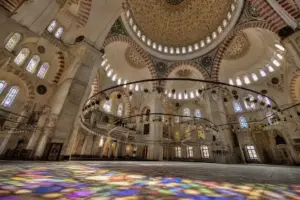 Süleymaniye Mosque – about 1.7 km away (~27 min walk) · typical visit: 1–2 hours9 min on foot from Vezneciler metro
Main image: AI-generated illustration. It may not show the place exactly as it looks.
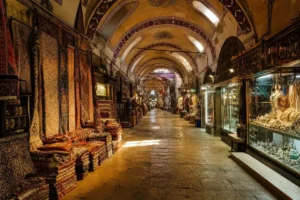 Grand Bazaar – about 2.1 km away · typical visit: 2–4 hours4 min on foot from Beyazıt-Kapalıçarşı metro, Open 08:30–19:00, closed Sun
Main image: AI-generated illustration. It may not show the place exactly as it looks.
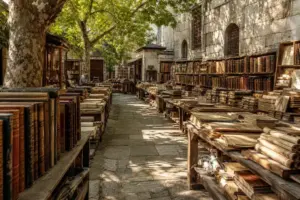 Book Bazaar – about 2.1 km away · typical visit: 1–2 hours4 min on foot from Beyazıt-Kapalıçarşı metro
Main image: AI-generated illustration. It may not show the place exactly as it looks.
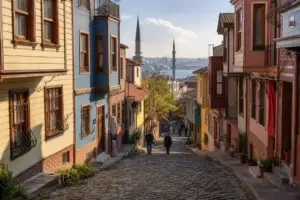 Fener District – about 1.7 km away (~27 min walk) · typical visit: 2–3 hoursOpen 24 hours
Main image: AI-generated illustration. It may not show the place exactly as it looks.
 Valens Aqueduct – about 950 m away (~16 min walk) · typical visit: 30-45 minutes8 min on foot from Vezneciler metro, Open 24 hours
Main image: AI-generated illustration. It may not show the place exactly as it looks.
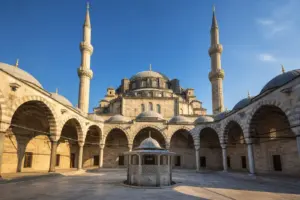 Şehzade Mosque – about 1.1 km away (~18 min walk) · typical visit: 1–1.5 hours4 min on foot from Vezneciler metro
Main image: AI-generated illustration. It may not show the place exactly as it looks.
Metro stations near Constantine Lips Monastery Ruins
 Yusufpaşa – about 750 m away (~12 min walk)Open daily 06:00–00:00
Main image: AI-generated illustration. It may not show the place exactly as it looks.
Restaurants and cafes near Constantine Lips Monastery Ruins
 Mivan Restaurant – about 1.1 km away (~18 min walk)4 min on foot from Vezneciler metro, Open daily 08:30–00:00
Main image: AI-generated illustration. It may not show the place exactly as it looks.
Related guides
 Best Underground Cisterns in Istanbul: Three Sites Compared
Main image: AI-generated illustration. It may not show the place exactly as it looks.
 The Red School in Fener: A Castle above the Golden Horn
Main image: AI-generated illustration. It may not show the place exactly as it looks.
 Orient Occident Hotel: Green and Brass in Sirkeci
Main image: AI-generated illustration. It may not show the place exactly as it looks.
 AJWA Sultanahmet: Ottoman Luxury Near the Blue Mosque
Main image: AI-generated illustration. It may not show the place exactly as it looks.
 My Terrace: Rooftop Breakfast by Little Hagia Sophia
Main image: AI-generated illustration. It may not show the place exactly as it looks.
Browse more: More in Fatih · All Churches · All Sightseeing
FAQ: Constantine Lips Monastery Ruins
Is this place still in ruins, or has it been restored?
The monastery is not in ruins today—it functions as an active mosque (Fenari İsa Mosque). While it was severely damaged by fires and lay abandoned in the 20th century, it was comprehensively restored between 1960 and 1963 by the Byzantine Institute of America. The interior is structurally sound and used regularly for Islamic prayer. However, the original Byzantine decoration (mosaics, frescoes) was lost to fires and Ottoman conversion, so it retains a spare, austere appearance.
Can visitors enter freely, or do I need a ticket?
Entry is completely free. There is no ticketing system or advance booking. Simply arrive during non-prayer times and enter. Respect prayer hours and dress modestly (women should wear a headscarf).
How much time should I spend here?
Most visitors spend 45 minutes to 1 hour. This allows time to walk through both churches, observe the architectural details, and explore the ambulatory. If you study the brickwork patterns carefully and spend time photographing, 1.5 hours is appropriate. For a deeper study, combine this visit with the Istanbul Archaeological Museum (2–3 hours total).
Are the two churches equally accessible, or is one off-limits?
Both churches are integrated into a single functioning mosque and equally accessible to visitors during non-prayer times. The north church and south church are not separated; they flow into one complex space. All areas open to worshippers are open to respectful visitors.
What happened to the original Byzantine mosaics and frescoes?
The original decoration was destroyed, primarily by fires during the Ottoman period (especially the devastating 1917 fire). When the structure was converted to a mosque in the 15th century, remaining decoration would have been removed for Islamic use. The excavations of 1960–1963 uncovered some marble sculptural fragments, now in the Istanbul Archaeological Museum, but no intact frescoes or mosaics remain visible inside.
Is it true that Empress Theodora is buried here?
The monastery served as the mausoleum for the Palaiologos imperial family, not exclusively Theodora. Theodora commissioned the south church in the late 13th century for family burials. Many Palaiologos family members, including imperial princes, were buried here. Exact burial locations are not marked or visible to visitors.
How do I get there by public transport?
Take the M1 metro line to either Fatih-Emniyet or Aksaray station (approximately 8–10 minutes' walk). Walk toward Adnan Menderes Boulevard; the mosque is on this main street. Multiple buses also serve this avenue. Ask the driver for 'Fenari İsa Camii' or 'Constantine Lips Monastery.'
Is a guide necessary to understand the site?
A guide is not required but helpful. The site has no interpretive signage or audio guide. If you research the site's history beforehand using academic sources or visit the related Istanbul Documentation Project materials online, you can self-guide effectively. Otherwise, hiring an Istanbul Byzantine history guide (arranged through your hotel) would enrich your visit significantly.
Istanbul Vibes is a one-person project. A coffee keeps it going
Hotels near Constantine Lips Monastery Ruins
- Ottoman Life Boutique Hotel (100 m) Check prices (affiliate link, opens in a new tab)
- ياسين استنبول (150 m) Check prices (affiliate link, opens in a new tab)
- yasin (150 m) Check prices (affiliate link, opens in a new tab)
- 7 salah 7 (200 m) Check prices (affiliate link, opens in a new tab)
Affiliate link (opens the booking site): we may earn a commission at no extra cost to you.
Restaurants near Constantine Lips Monastery Ruins
- Ahsen hatay sofrasi (50 m) Google Maps
- Kebabçı Mahmut (100 m) Google Maps
- Erzurum Cağ Kebap (100 m) Google Maps
- Razzak resturan (100 m) Google Maps
Distances are straight-line, from OpenStreetMap data.

Take this guide with you
Get a free PDF of this guide to print or read offline: key facts, tips and a map link on a few clean pages.
Report an issue on this page
How we research and update our guides
About this guide: AI assistance and accuracy
This guide is created with the help of AI and is based on official sources where available. Mistakes can still happen. Opening hours, prices, rules and other details are given to the best of our knowledge as of the date shown and can change without notice. It offers general recommendations only, not professional, legal or travel advice. Please confirm important details with the official source before you travel; you are responsible for your own plans and decisions.
* Affiliate link: as an Amazon Associate we earn from qualifying purchases at no extra cost to you.
