

The Arap Mosque is a mosque in the Karaköy quarter of Istanbul. Despite its name and its role as a mosque for centuries, the building was originally a Roman Catholic church erected in 1325 by the friars of the Dominican Order. It is the only mosque in Istanbul that was converted from a Roman Catholic Church; there are tens of Byzantine Orthodox churches in Istanbul that were converted into mosques such as Hagia Sophia, Chora Museum, and Zeyrek Mosque, but Arab Mosque is the only Roman Catholic church converted into a mosque in the city.
It stands out for being the first place where the call to prayer was raised in Istanbul. The mosque was given by Sultan Bayezid II to Muslim refugees from Al-Andalus who escaped the Spanish Inquisition in 1492 and settled in the Galata neighborhood of Istanbul, hence its current name, Arab Mosque.
Current access notice: As of October 2026: Entry is generally available during prayer times. Access outside prayer hours is not guaranteed; visitors should check ahead. The building remains an active mosque with operational prayer schedules.
Quick Facts
| Built / opened | 1325 |
|---|---|
| Architect(s) | Dominican friars |
| Address | Galata Mahkemesi Sokak 10, 34421 Beyoğlu, Istanbul, Turkey Google MapsApple MapsYandex Maps |
| District | Beyoğlu |
| Metro | Karaköy (T1, 7 min walk northwest) Tünel (Nostaljik Tramvay (Taksim-Tünel), 5 min walk south) |
| Admission | Free |
| Best time to visit | Visit outside the five daily prayer times for unobstructed access to the interior. Prayer times change daily and seasonally; check local sources on the day of your visit. Early morning (7–9 AM) and late afternoon (5–7 PM) are generally quieter times to visit. Midday (11 AM–2 PM) is often free of prayers.Any day of the week is suitable for a visit. The mosque remains an active place of worship, so weekdays may be less busy than weekends. |
What Is (and Isn't) Part of a Visit to Arap Mosque?
| Part | Status | Notes |
|---|---|---|
| Interior prayer hall and main nave | Included in the standard ticket | Visitors may enter during non-prayer times; respectful dress required, and shoes removed at entry. |
| Interior courtyard and sadirvan (fountain) | Included in the standard ticket | Accessible to visitors and provides a peaceful space outside the main prayer area. |
| Genoese tombstones | Separate ticket or institution | Originally found under the floor during 1913–1919 restoration; now on display at the Istanbul Archaeological Museum, not at the mosque. |
| Minaret climbing | Not open to visitors | The bell tower minaret is not open to visitors for climbing; view it from outside the building. |
| Galata Tower | Outside / not part of it | Nearby landmark on the skyline (separate from the Arap Mosque); reachable within a 5-minute walk. |
| Spice Bazaar | Outside / not part of it | Located across the Golden Horn in Eminönü; about 10–15 minutes' walk via the Galata Bridge. |
Why Visit Arap Mosque?
Although the structure was altered during the Ottoman period, it is the only example of medieval religious Gothic architecture remaining in Istanbul. The Gothic style bell tower of the Arab Mosque is functioning as a mosque minaret, creating a rare visual blend of Catholic and Islamic architecture in a single structure. Visitors have a unique opportunity to experience Istanbul’s rich layers of cultural and religious transformation. The mosque sits on Galata Mahkemesi Sokak, not far from the northern shores of the Golden Horn, and is surrounded by artisan shops, making it an accessible stop in the atmospheric Galata neighborhood.
Highlights of Arap Mosque
The Gothic Nave and Ribbed Vaults
The church was erected according to the model of Italian mendicant order churches of that period, with a three-nave rectangular base, squared-off eastern end and a square sanctuary covered by ribbed groin vaults. Walk into the interior and look up to see the distinctive ribbed stone vaults that marked Dominican Gothic architecture of the 14th century—unusual in Istanbul and rarely seen in Ottoman mosques.
Tip: The vaults are most visible when light comes through the windows; visit mid-morning for the best illumination of these architectural details.
The Bell Tower Minaret
When the Arab army decided to return to Damascus, some monks converted the building into a church, and the bell tower was added during that period. The Gothic style bell tower of the Arab Mosque is functioning as a mosque minaret. From outside, observe the angular, tall structure on the eastern corner—distinctly different from Ottoman minarets.
Tip: Step outside to view the minaret from Galata Mahkemesi Sokak for the clearest perspective of its Gothic proportions.
The Ottoman Additions: Mihrab and Minbar
Ottoman Sultan Mehmed the Conqueror captured the city and returned the building to its original status, adding the mihrab and minbar features characteristic of Islamic architecture. Inside, look for the mihrab (prayer niche) and the minbar (pulpit stairs)—these additions mark the transition from church to mosque.
Tip: The mihrab faces Mecca and is typically decorated; it may be on the qibla wall (generally toward the southeast).
The Heraldic Lion Sculpture
A heraldic lion sculpture remains from the church period, representing the building's Genoese-influenced past. This carved stone detail survives from the early centuries of the structure's existence.
Tip: Look carefully at the walls and facade for carved stone details typical of Genoese-style church decoration.
The Interior Courtyard and Sadirvan
The building has undergone quite a bit of repair and additions and now has an interior courtyard and sadirvan (fountain). The courtyard provides a peaceful space and offers a break from the busy Galata streets outside.
Tip: The courtyard is accessible to visitors during opening hours; it's a quiet spot for reflection even if you cannot enter the prayer hall.
Genoese Tombstones from the Church Period
During the restorations in the first half of the twentieth century, several Genoese tombstones were found underneath the structure, and now they are exhibited at the Archaeological Museum. These artifacts document the building's deep roots in the Genoese community that dominated medieval Galata.
Tip: To see the Genoese tombstones, visit the Istanbul Archaeological Museum separately; they are removed from the mosque and on display there.
Atmosphere
The building sits in the Karaköy neighborhood of Galata, not far from the northern shores of the Golden Horn, and is surrounded by artisan shops. The narrow street and modest entrance create an understated, almost hidden quality despite the building’s size and history. Inside, light filters through windows onto stone walls that have witnessed centuries of prayer—first Christian, then Muslim, then Christian again, and finally Muslim once more. The space feels contemplative, especially outside prayer times when few people are present. The mix of Gothic arches and Ottoman additions creates a unique visual experience, neither fully church nor fully mosque, but a blend of both.
History of Arap Mosque
Before the construction of the church, a small chapel was built during the Latin Occupation of Constantinople (1204–1261) and dedicated to San Paolo (Saint Paul), which had been established in 1233. In the first half of the fourteenth century, the small chapel was expanded and became a church with the name of the Church of San Domenico. The building was completed in 1325, taking its Gothic architectural form from the Dominican friars who oversaw its construction.
The church functioned until the conquest of Constantinople by the Ottomans in 1453, after which it was converted into a mosque and its name was Galata Mosque (Galata Camii). However, the building’s modern name dates to the late 15th century. At the end of the fifteenth century Ottoman sultan Bayezid II settled Andalusian Arabs who were deported from Spain during the Spanish Inquisition around the mosque, and therefore the mosque began to be known as the Arab Mosque.
The building was repaired in 1595–1603 during the reign of Mehmed III. After the Great Galata Fire in 1731, the mosque was partly damaged and during the restoration of the mosque some Gothic architectural elements were replaced with Ottoman architectural elements. In 1913–1919, a comprehensive restoration was carried out, the narthex was added and the mosque was enlarged. At the beginning of the 2010s, the mosque underwent an extensive restoration, which was finished in 2013, and an inaccurate inscription that the mosque was founded in 715 AD was also installed in front of the mosque as part of the restoration.
Legends and Myths about Arap Mosque
The Arab Commander's Mosque (717 AD)
Legend – historically unreliable. According to a legend, a commander named Mesleme bin Abdülmelik, who was one of the Muslim Arab commanders who came for the conquest of Istanbul in 717, built a mosque and named it Arap Mosque. On August 15, 717, Mesleme bin Abdülmelik besieged Byzantium both by land and sea, but Constantinople could not be taken, however Galata was captured, and as a result of an agreement reached between Arab commander Mesleme and Emperor Leon, the Arap Mosque was built for the worship of the Arab Muslim Army.
First Call to Prayer in Istanbul
Legend – historically unreliable. According to tradition, the Arap Mosque was the first place where the call to prayer was raised in Istanbul. Arap Mosque is known as the first mosque in Istanbul and is also the first mosque in the city where the call to prayer was heard. This tradition has made it culturally significant beyond its architectural importance.
Tickets and Booking for Arap Mosque
Entry to the Arap Mosque is free. Visitors are welcome during non-prayer times, but access may be restricted during the five daily prayer periods. As an active mosque, it serves the local Muslim community first.
- Check prayer times before visiting; during prayer times, the main interior may not be accessible to tourists.
- No advance booking is needed.
- Respectful dress is required: cover shoulders, knees and women should bring a headscarf.
- Remove shoes before entering the prayer hall.
- Bags and large items should be left at the entrance or checked with attendants.
Turkish citizens and residents may have different access policies; ask at the entrance if unsure. For additional information on visiting hours and prayer times, contact the mosque directly or check local tourism sources.
Suggested itineraries Arap Mosque
30 minutes
Enter the courtyard, view the interior from the entrance of the prayer hall (respecting ongoing prayers if present), observe the Gothic vaults and the minbar and mihrab, and step outside to view the bell tower minaret from the street. Exit and explore the surrounding artisan shops on Galata Mahkemesi Sokak.
45 minutes to 1 hour
Spend 20–30 minutes inside the mosque examining the architectural details. Exit and walk to Galata Tower (5 min) for views of the mosque from above. Return and explore the nearby Galata Bridge and Spice Bazaar area (10–15 min walk via the bridge).
2 hours
Visit the Arap Mosque (30–45 min), walk to nearby Galata Tower and climb if open (30 min plus entry time), explore the narrow streets of Galata and its artisan workshops, and walk to the Galata Bridge for views of the Golden Horn and the Spice Bazaar area.
How to Get to Arap Mosque
By metro and tram: The T1 tram line stops at Karaköy. From Karaköy Tram Station, walk northwest along the hillside streets (about 7 minutes) to reach Galata Mahkemesi Sokak. The mosque entrance is on this street.
By Tünel (nostalgic funicular railway): Take the Taksim–Tünel Nostaljik Tramvay line to Tünel Station. From there, walk south down the hill toward the Galata area (about 5 minutes) and ask for Galata Mahkemesi Sokak.
By walking from Galata Tower: Galata Tower is the most visible landmark in the area. From the tower, walk downhill and west to reach Galata Mahkemesi Sokak (about 5 minutes).
By bus: Buses 28, 28T, 30D, 35, 74, 74A, 80, 91O, and 99A serve the Karaköy and Galata areas; exit near Karaköy and walk up.
Street address to show locally: Galata Mahkemesi Sokak 10, 34421 Beyoğlu, Istanbul, Turkey.
Accessibility
The mosque is located on Galata Mahkemesi Sokak, a narrow uphill street in the Galata district. There is no wheelchair accessible entrance listed. The interior courtyard has uneven stone flooring. Shoes must be removed to enter the prayer hall. Step height between the courtyard and interior is not specified on official sources; contact the mosque directly to confirm accessibility needs.
Food Nearby
The immediate area around the mosque is busy with artisan shops rather than restaurants. The nearest dining options are in the surrounding Galata and Karaköy neighborhoods: small cafés and casual restaurants along Galata's side streets, and more substantial establishments around the Galata Bridge and Spice Bazaar area (10–15 minutes' walk downhill). Turkish tea and coffee can be found at street-level cafés near the mosque.
What to Bring
Bring a headscarf if you are not wearing one; women are expected to cover their hair in the prayer hall. Wear modest clothing that covers shoulders and knees. Remove shoes before entering the prayer area; consider wearing slip-on shoes for convenience. A light jacket may be useful as the interior can be cool. No large bags are permitted in the prayer hall; travel with a small day bag if possible.
Best Views and Photo Spots of Arap Mosque
Galata Mahkemesi Sokak, facing the mosque entrance
Direct view of the mosque's Gothic facade and the bell tower minaret rising above. The narrow street frames the building against the Beyoğlu skyline.
Best time: Morning light (7–10 AM) illuminates the stone facade; evening light creates long shadows at 5–6 PM.
From the courtyard looking at the interior facade
The Gothic arched entrance and interior courtyard with the sadirvan (fountain) in the foreground, showing the blend of Gothic and Ottoman architectural elements.
Best time: Midday provides even light on the stone arches; after 3 PM, light rakes across the courtyard.
Galata Tower grounds or nearby hillside
Wide view of the mosque in context of the Galata district, with the Golden Horn and the Spice Bazaar across the water in the background.
Best time: Late afternoon (4–6 PM) gives the best light on both the mosque and the Golden Horn.
Base of the bell tower minaret from the street
Close-up detail of the Gothic bell tower structure and its stone carvings, showing the architectural details that distinguish it from Ottoman minarets.
Best time: Overcast days provide even light for photographing fine stone details; morning side-light is good for texture.
Photography Rules
Check with the attendant before photographing inside the mosque; photography may be restricted during prayer times or in certain areas. No flash photography is permitted inside. Drones are not allowed. Tripods and professional equipment require permission. Outside on the street and in the courtyard, photography is generally permitted. The exterior of the building and the bell tower minaret can be freely photographed from the public street.
Family Suitability
The mosque is suitable for school-age children and adults interested in history and architecture. The visit is brief (30–45 minutes), which suits families with younger children. However, the narrow uphill street and stone steps may be challenging for strollers or young children with limited mobility. Children should understand that this is an active place of worship and that respectful behavior is required. A family visit works best outside prayer times and on less crowded weekdays.
Istanbul Vibes Tips
- Check prayer times on the morning of your visit; the mosque closes to tourists during the five daily prayers. Midday (around 12–2 PM) is often prayer-free and a good window for a visit.
- Do not confuse the Arap Mosque with the nearby Galata Tower or the Spice Bazaar; all three are in the same general area but are separate attractions requiring separate visits and tickets.
- The legend of the 717 AD Arab siege and the first call to prayer is widely repeated but historically disputed—the building itself dates to 1325 as a Christian church. Ask the attendant about the history if you want the most current scholarly view.
- Bring slip-on shoes; you will need to remove them to enter the prayer hall, and changing shoes twice saves time compared to lacing and unlacing.
- The surrounding Galata neighborhood is excellent for wandering; combine your mosque visit with a walk through nearby side streets, where you will find small cafés, bookshops, and vintage shops.
- If you are interested in the Genoese tombstones discovered during renovation, visit the Istanbul Archaeological Museum separately; they are on display there, not at the mosque.
Explore Nearby Arap Mosque
Sights near Arap Mosque
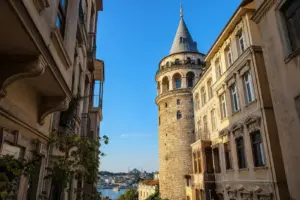 Galata Tower – about 300 m away (~5 min walk) · typical visit: 1–2 hours4 min on foot from Şişhane metro, Open daily 08:30–23:00
Main image: AI-generated illustration. It may not show the place exactly as it looks.
 Spice Bazaar – about 900 m away (~14 min walk) · typical visit: 1–2 hours13 min on foot from Haliç metro, Open daily 08:00–19:30
Main image: AI-generated illustration. It may not show the place exactly as it looks.
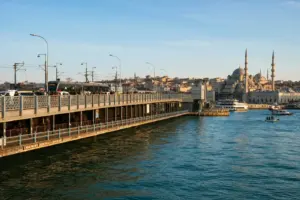 Galata Bridge – about 500 m away (~8 min walk) · typical visit: 30 minutes to 1 hour10 min on foot from Haliç metro, Open 24 hours
Main image: AI-generated illustration. It may not show the place exactly as it looks.
 Rüstem Pasha Mosque – about 800 m away (~13 min walk) · typical visit: 45 minutes to 1 hour10 min on foot from Haliç metro, Open daily 09:00–18:00
Main image: AI-generated illustration. It may not show the place exactly as it looks.
 SALT Galata – about 200 m away (~3 min walk) · typical visit: 1–2 hours7 min on foot from Şişhane metro
Main image: AI-generated illustration. It may not show the place exactly as it looks.
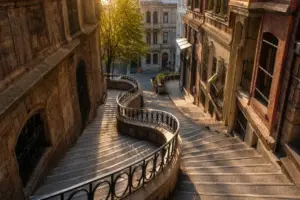 Kamondo Stairs – about 250 m away (~4 min walk) · typical visit: 15–30 minutes7 min on foot from Şişhane metro, Open 24 hours
Main image: AI-generated illustration. It may not show the place exactly as it looks.
Metro stations near Arap Mosque
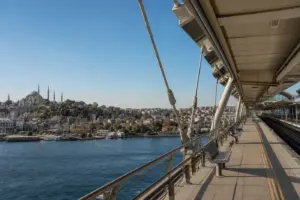 Haliç – about 400 m away (~6 min walk)Open daily 06:06–00:06
Main image: AI-generated illustration. It may not show the place exactly as it looks.
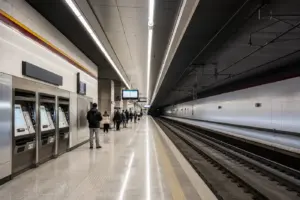 Şişhane – about 400 m away (~7 min walk)Open daily 06:09–00:09
Main image: AI-generated illustration. It may not show the place exactly as it looks.
 Tünelabout 550 m away (~9 min walk)
Main image: AI-generated illustration. It may not show the place exactly as it looks.
Restaurants and cafes near Arap Mosque
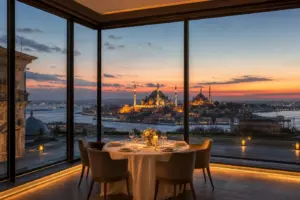 Neolokal – about 200 m away (~3 min walk)7 min on foot from Şişhane metro
Main image: AI-generated illustration. It may not show the place exactly as it looks.
 Ali Ocakbaşı Karaköy – about 250 m away (~4 min walk)8 min on foot from Haliç metro, Open daily 12:00–23:00
Main image: AI-generated illustration. It may not show the place exactly as it looks.
 Hacı Abdullah Lokantası – about 250 m away (~4 min walk)5 min on foot from Şişhane metro, Open daily 11:00–23:00
Main image: AI-generated illustration. It may not show the place exactly as it looks.
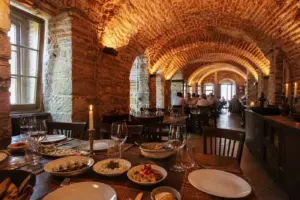 Pepo's Galata – about 300 m away (~5 min walk)5 min on foot from Şişhane metro, Open daily 10:00–02:00
Main image: AI-generated illustration. It may not show the place exactly as it looks.
Nightlife near Arap Mosque
 Suma Han – about 100 m away (~1 min walk)5 min on foot from Şişhane metro
Main image: AI-generated illustration. It may not show the place exactly as it looks.
 Nardis Jazz Club – about 250 m away (~4 min walk)5 min on foot from Şişhane metro, Open 20:30–01:00, closed Sun
Main image: AI-generated illustration. It may not show the place exactly as it looks.
Train stations and river piers near Arap Mosque
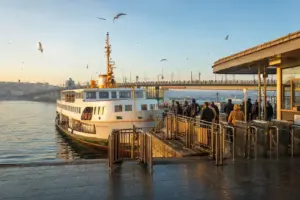 Karaköy Ferry Terminalabout 550 m away (~9 min walk)
Main image: AI-generated illustration. It may not show the place exactly as it looks.
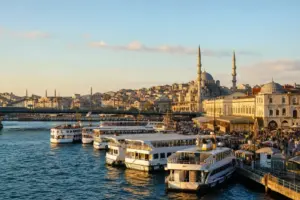 Eminönü Ferry Terminalabout 800 m away (~13 min walk)
Main image: AI-generated illustration. It may not show the place exactly as it looks.
Events and traditions near Arap Mosque
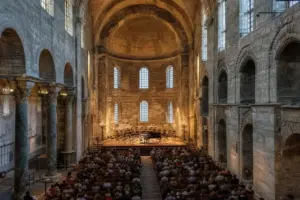 Istanbul Music Festivalabout 1.6 km away (~25 min walk)
Main image: AI-generated illustration. It may not show the place exactly as it looks.
Related guides
 Istanbul Cruise Port Guide: Galataport to the Old City in One Day
Main image: AI-generated illustration. It may not show the place exactly as it looks.
 Taksim Square: Istanbul’s Central Crossroads
Main image: AI-generated illustration. It may not show the place exactly as it looks.
 Galataport: Istanbul’s Waterfront Promenade in Karaköy
Main image: AI-generated illustration. It may not show the place exactly as it looks.
 Grand Hotel de Londres: A Faded Pera Landmark from 1892
Main image: AI-generated illustration. It may not show the place exactly as it looks.
 Soho House Istanbul: A Palazzo Club and Hotel
Main image: AI-generated illustration. It may not show the place exactly as it looks.
Browse more: More in Beyoğlu · All Landmarks · All Sightseeing
FAQ: Arap Mosque
Is the Arap Mosque the oldest mosque in Istanbul?
The mosque stands out for being the first place where the call to prayer was raised in Istanbul. However, the building itself was constructed as a church in 1325, not as a mosque; it was converted to a mosque after 1453. The legend that connects it to the 717 AD Arab siege is historically disputed—the actual church that stands today dates to the 14th century.
Can I visit during prayer times?
Entry during prayer times is restricted; the mosque prioritizes prayer for the local Muslim community. Visit outside the five daily prayer times for full access to the interior. Check prayer times in advance on the morning of your visit.
Is a guide necessary to understand the history?
A guide is not necessary but can be helpful if you want detailed historical context. The building's dual history—first church, then mosque—is visible in its architecture (Gothic vaults, bell tower minaret). The attendant can answer basic questions.
What is the dress code?
Wear modest clothing covering shoulders, knees, and chest. Women should bring or wear a headscarf to cover the hair in the prayer hall. Men should wear long pants or knee-length shorts.
Can I take photos inside?
Ask the attendant first; photography may be restricted in the prayer hall or during prayer times. Flash and tripods are not permitted. Outside on the street and in the courtyard, photography is generally allowed.
Is entry free?
Yes, entry is free. No ticket is required.
How long does a visit take?
A typical visit takes 30–45 minutes: 15–20 minutes to view the interior, 5–10 minutes to explore the courtyard, and 10 minutes to view the exterior and minaret from outside.
Is the minaret open to climb?
No, the bell tower minaret is not open to visitors for climbing. You can view it from the street outside the building.
Istanbul Vibes is a one-person project. A coffee keeps it going
Hotels near Arap Mosque
- Hotel Vavien (100 m) Check prices (affiliate link, opens in a new tab)
- Aloft by Marriott Istanbul Karakoy (100 m) Check prices (affiliate link, opens in a new tab)
- Depiero Hotel Karaköy (100 m) Check prices (affiliate link, opens in a new tab)
- Golden City Hotel (100 m) Check prices (affiliate link, opens in a new tab)
Affiliate link (opens the booking site): we may earn a commission at no extra cost to you.
Restaurants near Arap Mosque
- Mutfak Dili Ev Yemekleri (150 m) Google Maps
- Nola (200 m) Google Maps
- Ege Rum Meyhanesi (250 m) Google Maps
- ege rum meyhanesi cam ve ambalaj atık (250 m) Google Maps
Distances are straight-line, from OpenStreetMap data.

Take this guide with you
Get a free PDF of this guide to print or read offline: key facts, tips and a map link on a few clean pages.
Report an issue on this page
How we research and update our guides
About this guide: AI assistance and accuracy
This guide is created with the help of AI and is based on official sources where available. Mistakes can still happen. Opening hours, prices, rules and other details are given to the best of our knowledge as of the date shown and can change without notice. It offers general recommendations only, not professional, legal or travel advice. Please confirm important details with the official source before you travel; you are responsible for your own plans and decisions.
* Affiliate link: as an Amazon Associate we earn from qualifying purchases at no extra cost to you.
