
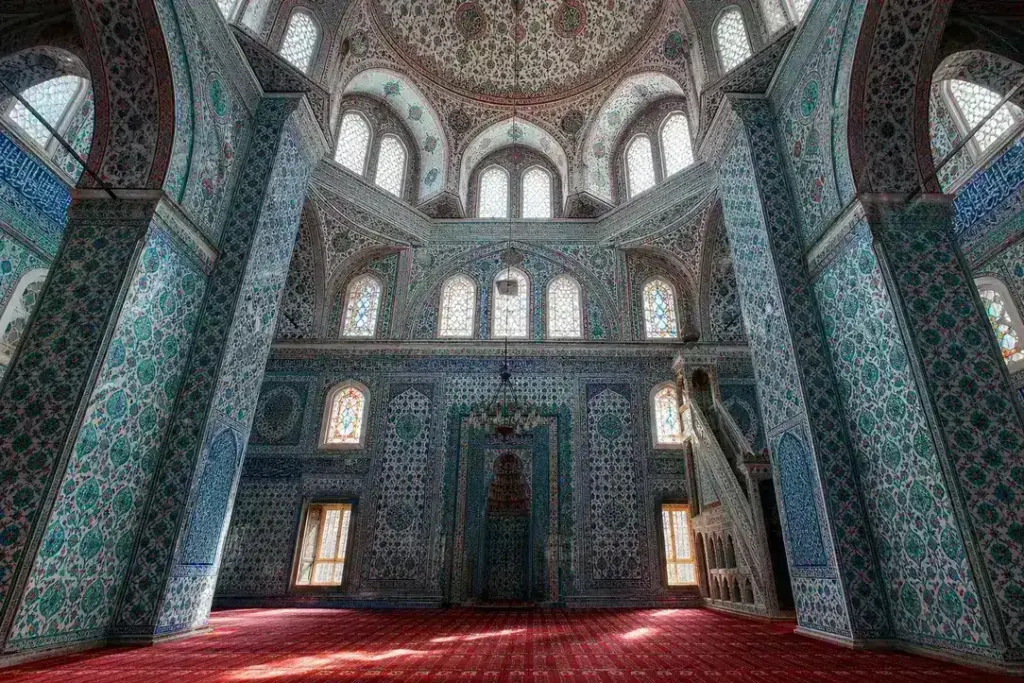
The Rüstem Pasha Mosque stands hidden above the bustling shops and market stalls of Eminönü‘s Hasırcılar Street (Strawmat Weavers Market), steps from the Spice Bazaar. Rüstem Pasha Mosque was completed in 1563 by architect Mimar Sinan for Grand Vizier Rüstem Pasha, the son-in-law and trusted minister of Sultan Suleiman the Magnificent.
What makes it extraordinary is not its size—the mosque is small and modest from outside—but its interior. Every wall, pier, and dome base glows with hand-painted Iznik tiles featuring tulips, carnations, and geometric patterns in brilliant blues, turquoises, and reds. Visitors who climb the narrow spiral stairs from the market below emerge into a serene sanctuary decorated with over 2,300 ceramic pieces, many still showing their original vivid colors.
Quick Facts
| Built / opened | 1563 |
|---|---|
| Architect(s) | Mimar Sinan |
| Address | Rüstem Paşa, Hasırcılar Cd. No:62, 34116 Fatih/İstanbul Google MapsApple MapsYandex Maps |
| District | Fatih |
| Metro | Eminönü (T1, Follow signs toward Spice Bazaar) |
| Admission | Free |
| Best time to visit | Visit on a weekday morning between 09:00 and 11:00 AM. This window offers the fewest tourists and worshippers, and the cool morning light renders the blue tiles at their most vibrant.Avoid Friday afternoons (when midday prayers extend the closure) and weekends when crowds are larger. Late afternoon (16:00–17:00) offers beautiful warm, golden light on the tiles but more visitors.Spring (April–May) and autumn (September–October) provide pleasant weather for exploring the surrounding Eminönü district. Summer can be hot and crowded; winter brings cooler light that is less ideal for photographing the tiles.Check prayer times before visiting; they shift daily with sunrise and sunset. The mosque typically closes 20–30 minutes before each prayer time, so arriving close to opening time (09:00) is safest. |
What Is (and Isn't) Part of a Visit to Rüstem Pasha Mosque?
| Part | Status | Notes |
|---|---|---|
| Prayer hall and tile decoration | Included in the standard ticket | The octagonal prayer space with dome, tilework, mihrab, and minbar are all part of a single visit. |
| Courtyard and entrance porch | Included in the standard ticket | The vaulted entry area and courtyard with fountain (if present) are accessible. |
| Shops below the mosque (Hasırcılar Çarşısı) | Outside / not part of it | The commercial space beneath the mosque is separate; you do not enter it as a visitor. |
| Minaret | Not open to visitors | Visitors do not climb the minaret; it is not open to the public. |
| Interior photography | Included in the standard ticket | Photography for personal use is generally permitted in the prayer hall when not in use for prayer. |
| Spice Bazaar (Mısır Çarşısı) | Outside / not part of it | Located nearby but a separate venue requiring its own visit; not part of the mosque. |
Why Visit Rüstem Pasha Mosque?
You come for the tiles. This mosque holds the most extensive Iznik tilework of any Ottoman building, with patterns that shift in color and intensity depending on the light. Morning hours offer the best illumination, revealing the depth and detail craftsmen achieved four centuries ago.
The intimate atmosphere sets it apart from Istanbul’s larger imperial mosques. The raised platform above the market creates a deliberate separation from urban noise—part of Sinan’s ingenious design. The commercial space below once generated income for the mosque’s maintenance, an example of Ottoman urban economics that shaped the city.
Finding it is half the adventure. The hidden entrance, the winding stairs, the sudden transition from commerce to calm—this is authentic Istanbul, not a polished tourist route.
How Rüstem Pasha Mosque Is Laid Out
The mosque sits on a raised terrace built over warehouses and shops on Hasırcılar Street. You approach from street level, spotting a small entrance near the corner shops past the Spice Bazaar. A curving or spiral staircase leads up to an elevated courtyard and entry porch.
Inside, the prayer hall follows an octagonal plan set within a rectangular frame, with the central dome resting on four semi-domes supported by just four piers. This design maximizes interior space while keeping the exterior compact. The mihrab (prayer niche) faces east, and a single minaret rises from the southeast corner. Windows around the dome base flood the interior with light that brings the tiles alive.
Highlights of Rüstem Pasha Mosque
Iznik Tile Revetment
Over 2,300 hand-painted Iznik tiles from the 16th century cover nearly every interior surface—walls, piers, the base of the dome, the mihrab and pulpit areas. Expect patterns of tulips, carnations, hyacinths, and geometric designs in dominant cobalt blue, turquoise, and crimson. Some tiles show wear and restoration, but the overall effect remains breathtaking. The tiles were made in Iznik (Nicaea), a major Ottoman ceramic center, and transported here at significant cost.
Tip: Visit between 9:00 and 11:00 AM for morning light that illuminates the blue tiles at their brightest. Avoid midday, when direct overhead light can flatten the colors.
The Central Dome and Oculus
The octagonal main dome sits on four semi-domes and is pierced by multiple windows that flood the prayer hall with natural light. The dome base itself is decorated with tilework. Seventy-four windows around the dome create an effect of luminosity that painters and photographers find compelling. This was Sinan's technique for creating an intimate yet spacious feeling without overpowering scale.
Tip: Stand in the center of the prayer hall and look straight up to see how light transforms the dome and surrounding tile patterns throughout the day.
The Mihrab (Prayer Niche)
The richly tiled mihrab on the east wall marks the direction of Mecca and is framed by some of the mosque's finest tilework. The niche is arched and decorated with intricate turquoise and blue patterns that create a focal point for prayer. The adjacent pulpit (minbar) is also adorned with tiles.
Tip: Stand some distance away to see how the mihrab composition draws your eye, then approach to examine the individual tile details and craftsmanship.
The Entrance Porch (Cloister)
Before entering the main prayer hall, you pass through a vaulted entrance porch lined with tile decoration. This transitional space sets the tone and allows your eyes to adjust from bright daylight to the interior's dimmer, more intimate lighting. The geometry and color palette here prepare you for the full interior experience.
Tip: Pause here and let your eyes adjust before entering the main hall, so you can appreciate the full effect of the tiles inside.
The Hidden Staircase Entrance
The approach itself is part of the experience. A narrow, curving staircase rises from Hasırcılar Street between market shops, its stairs worn smooth by centuries of footsteps. This hidden ascent was deliberate—Sinan designed the mosque to blend into the commercial district rather than dominate the skyline. The staircase creates a psychological and physical journey from the noise and rush of commerce to sanctity.
Tip: Exit the Spice Bazaar, look for Mehmet Efendi coffee shop on Hasırcılar Street, and continue past it along the street. The small entrance with stairs will appear on your right, easy to miss but worth seeking.
Single Minaret
The mosque has one slender minaret, visible from the courtyard level. It rises from the southeast corner, typically finished in stone or painted plaster. The single minaret reflects the mosque's modest, understated profile—consistent with Rüstem Pasha's position as a servant of the sultan, not a rival authority. Larger imperial mosques typically have multiple minarets.
Tip: Photograph the minaret from the courtyard at different times of day as the light and shadows change.
Atmosphere
Step inside and all street noise vanishes. The air smells faintly of stone, dust, and age. Your eyes are drawn upward by the play of light on tile—patterns of blue, red, and turquoise seem to shift as you move. A few worshippers may be sitting on the red carpet in quiet prayer; visitors move slowly and speak in whispers.
The light changes throughout the day. Morning brings a cool, clear illumination that sharpens every detail. Afternoon light turns warmer and more golden, softening the geometry. The dome and tiles create an acoustic effect—your footsteps are muffled, voices feel absorbed, the space feels private despite being a public mosque.
There is an intimacy here unlike larger mosques. You are not part of a crowd of tourists; you are a guest in an active place of worship that has stood for over 460 years. Weekday mornings are quieter than weekends or afternoons.
History of Rüstem Pasha Mosque
The Rüstem Pasha Mosque began as an act of devotion and memorial. In 1561, Grand Vizier Rüstem Pasha commissioned the construction of a mosque complex on the site of an earlier mosque called Haji Halil, in the commercial heart of Istanbul’s Tahtakale district. Rüstem Pasha was the son-in-law of Sultan Suleiman the Magnificent, having married the sultan’s daughter Mihrimah Sultan, and had served as Grand Vizier for fifteen years. When he died in 1561, his widow Mihrimah Sultan oversaw completion of the mosque in 1563 as a lasting memorial.
Architect Mimar Sinan designed the complex. Sinan was the empire’s chief architect, already famous for the Suleymaniye Mosque completed a few years earlier on a hill overlooking this same district. For the Rüstem Pasha Mosque, Sinan chose a different approach: instead of monumental scale, he created refined elegance. The octagonal prayer hall, his first use of that plan, sits on a raised platform above vaulted shops and warehouses. The rental income from these commercial spaces funded the mosque’s maintenance—a practical arrangement that made the mosque economically self-sustaining.
The decorative program was ambitious. Thousands of Iznik tiles were commissioned, many featuring tulip and carnation motifs that reflected the wealth and refined taste of their patron. These tiles came from Iznik, a major Ottoman ceramic center in western Anatolia, at considerable expense. The result was the most extensive tilework of any Ottoman building of the era.
The mosque survived the Great Fire of 1666 and the earthquake of 1776 that damaged many Istanbul structures, though both events caused damage that was repaired in subsequent restorations. In later centuries, as the district changed and modernized, some tiles were removed or lost, but many original pieces remain. Between 2017 and 2020, the mosque underwent major restoration work and reopened to visitors.
Legends and Myths about Rüstem Pasha Mosque
The Widow's Piety
Legend – historically unreliable. Tradition holds that after Rüstem Pasha's death in 1561, his widow Mihrimah Sultan, the daughter of Suleiman the Magnificent, pledged to complete the mosque as his memorial. Some sources suggest she chose the elaborate tilework as a way to ensure his name would be remembered in beauty and permanence. The story emphasizes her devotion and the power of Ottoman women of high rank to commission and oversee major architectural projects.
The Serene Sanctuary Above Commerce
Disputed by historians. Local accounts describe how Sinan deliberately placed the prayer hall above the bustling market and shops to create a spiritual oasis—a place of peace deliberately separated from the noise and commerce of daily life. Visitors would climb the hidden stairs to leave the material world behind. This design philosophy reflects Ottoman ideas about sacred space and urban integration.
Tickets and Booking for Rüstem Pasha Mosque
| Ticket | Price | Includes |
|---|---|---|
| General admission | Free | Access to the prayer hall, courtyard, and all decorated areas during open hours outside of prayer times. |
₺ budget · ₺₺ moderate · ₺₺₺ upscale · ₺₺₺₺ splurge. Price levels are estimates compared with typical prices for visitors.
Entry to the Rüstem Pasha Mosque is free. No tickets are required and no booking system exists. Simply arrive during open hours.
Access outside prayer times: The mosque is an active place of worship, so it closes during the five daily prayer times (Fajr, Dhuhr, Asr, Maghrib, and Isha). Prayer times change daily according to Islamic calendar and local sunrise/sunset times. Friday noon prayers typically close the mosque from around 12:00 to 13:30 or later. To check prayer times for your visit date, see the official Turkish Directorate of Religious Affairs website.
Best visiting windows: Mornings between 09:00 and 11:00 AM offer the fewest crowds and best natural light on the tiles. Late afternoon (16:00–17:00) provides warm golden light. Weekdays are quieter than weekends.
Donations: While entry is free, voluntary donations to support maintenance and preservation are welcomed. No donation box exists formally, but visitors may ask staff if donation is desired.
Entrance location: Enter from Hasırcılar Street via a small staircase. Look for the stone steps between shops, near the Spice Bazaar, past the Mehmet Efendi coffee shop.
Suggested itineraries Rüstem Pasha Mosque
45 minutes
Climb the stairs and allow your eyes to adjust in the entry porch. Spend 5 minutes observing the porch tiles, then 20–25 minutes in the main prayer hall, looking at the dome, the mihrab, and wall tiles from different positions. Exit and observe the courtyard and minaret. Visit during morning hours for best light.
1 hour
Follow the 45-minute route but spend more time studying the tile patterns in detail. Sit briefly on the carpet (if appropriate) to experience the space from a worshipper's perspective. Look at how light changes across the dome and walls. Return to specific tiles to examine individual details—flower motifs, brushwork, glaze variations—to appreciate the craftsmanship.
Half day (2–3 hours)
Visit the Rüstem Pasha Mosque in the morning (1 hour). Walk to the nearby Spice Bazaar (10 minutes) and explore (45 minutes to 1 hour). Continue to the adjacent New Mosque (Yeni Camii) for comparison (20 minutes). Lunch at a local restaurant in the Eminönü district overlooking the Golden Horn (30–45 minutes). Return for late-afternoon light at the mosque if desired.
How to Get to Rüstem Pasha Mosque
By tram: Take the T1 tram line (Bağcılar–Kabataş) to Eminönü station. Exit and walk toward the Spice Bazaar (Mısır Çarşısı). When you reach the bazaar entrance, turn right onto Hasırcılar Street and continue past the Mehmet Efendi coffee shop. The mosque entrance is a small stone staircase on your right, approximately 100–150 meters from the tram stop.
Walking from landmarks: From Hagia Sophia or Blue Mosque (20–30 minute walk), head down to the Golden Horn and follow the waterfront west toward Eminönü. Look for the Spice Bazaar and follow directions above.
By bus: Several buses serve Eminönü; ask locals for the stop nearest your location.
By taxi or local transport: Ask for Hasırcılar Street or the Spice Bazaar, then follow walking directions.
Parking: Street parking in Eminönü is very limited. If driving, use a paid lot near the bazaar area.
Accessibility
Access is challenging for those with limited mobility. The entrance involves a flight of spiral or curved stairs with no elevator or ramp—typically 15–25 steps to reach the courtyard level. The stairs are steep and narrow, worn smooth by centuries of use.The main prayer hall interior is at courtyard level, so no additional stairs are needed once you reach the upper level. The floor is covered with carpet and is relatively flat.There are no formal accessibility facilities (lifts, accessible restrooms, or designated seating). The mosque is an active religious space with limited modern amenities.Visitors with severe mobility restrictions should note that while you can view the mosque from the street below, full access to the interior requires climbing the stairs.
Food Nearby
The Spice Bazaar (Mısır Çarşısı) directly adjacent offers food stalls with dried fruits, nuts, Turkish delight, and tea. Several small cafés within the bazaar serve Turkish tea, coffee, and pastries.Hasırcılar Street and surrounding lanes have small kebab and soup vendors catering to the local market crowd. The Mehmet Efendi coffee shop (near the mosque entrance) serves traditional Turkish coffee and simple snacks.For sit-down meals, walk to the Eminönü waterfront along the Golden Horn, where multiple restaurants offer fish, meze, and traditional Turkish fare with water views. A 10–15 minute walk in any direction brings you to restaurants of various price levels.
What to Bring
Bring water, especially if visiting in summer, as the market area is crowded and you will walk before and after. The mosque interior is cool and calm, a respite from the busy district.Wear comfortable, respectful clothing: shoulders and knees should be covered. Women may wish to bring a headscarf or light fabric to cover their hair while inside (scarves are not enforced but are respectful). Remove or be prepared to remove your shoes; wear socks and easy-to-remove footwear.A camera is useful for the tile details, but a tripod or large professional setup may draw attention in a religious space. Bring a small bag; large bags may need to be left outside.
Best Views and Photo Spots of Rüstem Pasha Mosque
Inside the prayer hall, center of the carpet, looking up at the central dome
The octagonal dome with its ring of windows frames perfectly. Light falls from above onto the tiled semi-domes and the central dome base, creating layers of color and shadow. This perspective shows the architectural genius of the octagonal plan and the effect of the light that defines the space.
Best time: Morning (09:00–11:00 AM) for cool light; late afternoon (16:00–17:00) for golden light. Avoid harsh midday sun from directly overhead.
Facing the mihrab from mid-hall distance
The richly tiled prayer niche becomes the focal point, framed by surrounding tilework and the arch above. The perspective shows how the mihrab directs attention and draws the eye forward, a key architectural principle. The tile colors appear saturated from this distance.
Best time: Morning light, which illuminates the mihrab directly without harsh shadows.
Close-up of tile details on a wall or pier
Individual tile patterns—tulip motifs, geometric borders, color gradations—become visible. The craftsmanship, glaze variations, and hand-painted details reveal the skill of 16th-century artisans. Blues shift from cobalt to turquoise; reds glow against white glazes.
Best time: Any time of day, as close detail is less affected by angle. Morning light brings out cool tones; afternoon light warms them.
The entrance porch, looking into the main prayer hall beyond
A framed view through the vaulted entrance into the brightly lit main space beyond. The layering of arches and the transition from dimmer porch to luminous interior creates depth and invites the viewer inward. This perspective captures the intentional sacred journey Sinan designed.
Best time: Morning, when contrast between the darker porch and bright interior is greatest.
Courtyard area, including the minaret and dome silhouette
The modest exterior—the single minaret, the raised platform, and the curved roofline—shows how the mosque blends with its urban surroundings rather than dominating. The silhouette against the sky demonstrates Sinan's restrained design philosophy.
Best time: Early morning or late afternoon for directional light that brings out form and texture.
Photography Rules
Photography is generally permitted for personal, non-commercial use. No flash is required—the natural light is sufficient and often preferable. Tripods and professional lighting may draw attention or be restricted during prayer times or when worshippers are present. Avoid photographing individuals at prayer without permission. Exterior shots of the minaret and stairs are unrestricted. Check the current situation on arrival and ask staff if uncertain.
Family Suitability
The mosque is suitable for older children (8 and up) and teenagers interested in history, architecture, or Islamic art. Young children may find the stairs challenging and the interior less engaging. Strollers cannot navigate the narrow entrance stairs.The quiet, contemplative atmosphere is ideal for families seeking a less crowded alternative to larger mosques. No interactive exhibits or activities are present; this is a place to observe and appreciate quietly. Brief visits (30–45 minutes) work best for children's attention spans.Supervision is needed on the stairs (they are steep and narrow). The marble and carpet floors inside are smooth and level. Respectful behavior is important; children should understand they are in an active place of worship.
Istanbul Vibes Tips
- Do not expect the entrance to be obvious or clearly marked. It is genuinely hidden. If you miss the Mehmet Efendi coffee shop, you have gone too far. Walk past it, and look on your right for stone stairs between shopfronts. Ask a local shopkeeper if unsure—they are accustomed to helping visitors.
- Visit between 09:00 and 11:00 AM on a weekday. This is when the mosque has the fewest visitors, the best natural light on the tiles, and the quietest, most contemplative atmosphere. The tiles' colors are truest in cool morning light.
- Bring cash (Turkish lira) if you wish to donate. No formal donation system exists, so ask staff if you want to contribute to the mosque's maintenance and upkeep.
- Sit down inside for a few minutes if it feels appropriate. Your perspective from the floor changes the entire spatial experience and lets you understand how the dome and light function for someone at prayer. This is difficult to appreciate while standing and walking.
- Check prayer times before you go. The mosque closes during the five daily prayers, and Friday midday prayers can extend the closure significantly. A wasted trip is disappointing—five minutes of online checking saves frustration.
- The Spice Bazaar is steps away but is a separate, more touristy experience. If you want a peaceful visit to the mosque, avoid visiting on the same day as a bazaar exploration, which draws large crowds that spill onto the surrounding streets.
Explore Nearby Rüstem Pasha Mosque
Sights near Rüstem Pasha Mosque
 Spice Bazaar – about 200 m away (~3 min walk) · typical visit: 1–2 hours13 min on foot from Haliç metro, Open daily 08:00–19:30
Main image: AI-generated illustration. It may not show the place exactly as it looks.
 New Mosque – about 250 m away (~4 min walk) · typical visit: 30–45 min12 min on foot from Haliç metro
Main image: AI-generated illustration. It may not show the place exactly as it looks.
 Eyüp Cemetery – about 4.9 km away · typical visit: 1–2 hours2 min on foot from Piyer Loti metro, Open 24 hours
Main image: AI-generated illustration. It may not show the place exactly as it looks.
 Egyptian Bazaar – about 200 m away (~3 min walk) · typical visit: 30 minutes to 1 hour13 min on foot from Haliç metro, Open daily 08:00–19:30
Main image: AI-generated illustration. It may not show the place exactly as it looks.
 Büyük Valide Han – about 400 m away (~7 min walk) · typical visit: 1–2 hours9 min on foot from Beyazıt-Kapalıçarşı metro, Open daily 06:00–20:00
Main image: AI-generated illustration. It may not show the place exactly as it looks.
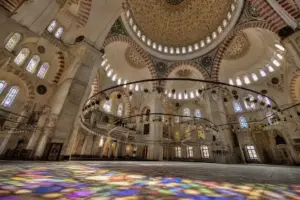 Süleymaniye Mosque – about 450 m away (~7 min walk) · typical visit: 1–2 hours9 min on foot from Vezneciler metro
Main image: AI-generated illustration. It may not show the place exactly as it looks.
Metro stations near Rüstem Pasha Mosque
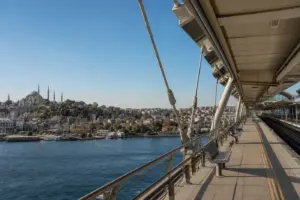 Haliç – about 600 m away (~10 min walk)Open daily 06:06–00:06
Main image: AI-generated illustration. It may not show the place exactly as it looks.
 Vezneciler – about 950 m away (~15 min walk)Open daily 05:59–00:24
Main image: AI-generated illustration. It may not show the place exactly as it looks.
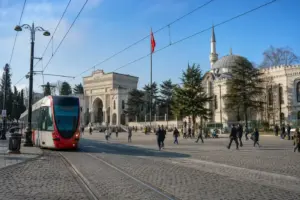 Beyazıt-Kapalıçarşı – about 950 m away (~16 min walk)Open daily 06:00–00:00
Main image: AI-generated illustration. It may not show the place exactly as it looks.
Restaurants and cafes near Rüstem Pasha Mosque
 Pandeli – about 200 m away (~4 min walk)12 min on foot from Haliç metro, Open 11:30–19:00, closed Sun
Main image: AI-generated illustration. It may not show the place exactly as it looks.
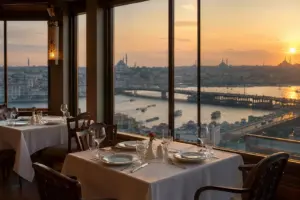 Hamdi Restaurant – about 400 m away (~7 min walk)12 min on foot from Çemberlitaş metro, Open daily 12:00–00:00
Main image: AI-generated illustration. It may not show the place exactly as it looks.
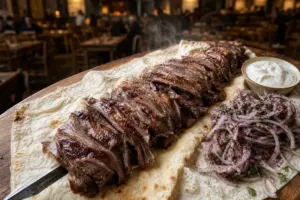 Şehzade Cağ Kebap – about 550 m away (~9 min walk)11 min on foot from Haliç metro
Main image: AI-generated illustration. It may not show the place exactly as it looks.
 Vefa Bozacısı – about 550 m away (~9 min walk)7 min on foot from Vezneciler metro, Open daily 08:00–00:00
Main image: AI-generated illustration. It may not show the place exactly as it looks.
Nightlife near Rüstem Pasha Mosque
 Cheers Karaköy – about 600 m away (~10 min walk)9 min on foot from Haliç metro, Open daily 08:30–02:00
Main image: AI-generated illustration. It may not show the place exactly as it looks.
 The Bank Roof Bar – about 850 m away (~13 min walk)8 min on foot from Şişhane metro, Open daily 12:00–02:00
Main image: AI-generated illustration. It may not show the place exactly as it looks.
Train stations and river piers near Rüstem Pasha Mosque
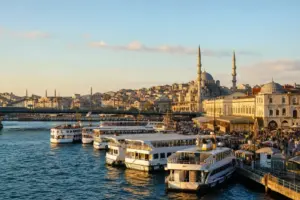 Eminönü Ferry Terminalabout 200 m away (~3 min walk)
Main image: AI-generated illustration. It may not show the place exactly as it looks.
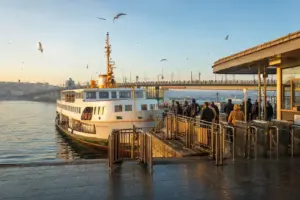 Karaköy Ferry Terminalabout 800 m away (~13 min walk)
Main image: AI-generated illustration. It may not show the place exactly as it looks.
Events and traditions near Rüstem Pasha Mosque
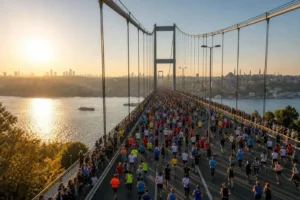 Istanbul Marathonabout 1.5 km away (~24 min walk)
Main image: AI-generated illustration. It may not show the place exactly as it looks.
Related guides
 Arap Mosque: Gothic Church Turned Ottoman Mosque in Galata6 min on foot from Haliç metro
Main image: AI-generated illustration. It may not show the place exactly as it looks.
 Best Mosques and Religious Sites: Ottoman Masterpieces and Sacred Spaces
Main image: AI-generated illustration. It may not show the place exactly as it looks.
 Istanbul Markets Morning Tour: Spice Bazaar and Grand Bazaar Itinerary
Main image: AI-generated illustration. It may not show the place exactly as it looks.
 Best Underground Cisterns in Istanbul: Three Sites Compared
Main image: AI-generated illustration. It may not show the place exactly as it looks.
 The Red School in Fener: A Castle above the Golden Horn
Main image: AI-generated illustration. It may not show the place exactly as it looks.
Browse more: More in Fatih · All Landmarks · All Sightseeing
FAQ: Rüstem Pasha Mosque
Is the Rüstem Pasha Mosque really free to enter?
Yes, entry is completely free. There is no ticket system. Donations to support maintenance are welcomed but never required or solicited. Most mosques in Istanbul are free to enter.
When can I visit? Is it always open?
The mosque is open daily from around 09:00 to 18:00 (hours may vary seasonally). However, it closes during the five daily Islamic prayer times: Fajr (dawn), Dhuhr (noon), Asr (afternoon), Maghrib (sunset), and Isha (evening). Friday noon prayers typically close the mosque for 1–2 hours around midday. Check daily prayer times online before visiting to avoid arriving during closure.
How long does a visit take?
Most visitors spend 30–45 minutes inside the mosque itself. Add 10–15 minutes for finding the entrance and climbing the stairs. If you linger to study tile details and experience the space slowly, allow up to 1–1.5 hours.
Is it difficult to find the entrance?
Yes, it is intentionally hidden. From the Spice Bazaar, look for Mehmet Efendi coffee shop on Hasırcılar Street. Just past it, on your right, is a small stone staircase between shops. If in doubt, ask a shopkeeper. The stairs lead up to the courtyard entrance.
Do I need special clothing or shoes?
Wear respectful clothing: shoulders and knees covered. Women may cover their hair with a scarf (not mandatory but appreciated). You must remove your shoes before entering the prayer hall—wear socks or bring slip-on shoes for easy removal and replacement.
What is the best time of day to visit for photography and light?
Morning between 09:00 and 11:00 AM is ideal. The light is cool and clear, bringing out the blue tiles brilliantly. Late afternoon (16:00–17:00) offers warm, golden light. Avoid harsh midday sun from directly overhead, which can flatten the three-dimensional effect of the tilework.
Can I visit with a large group or guided tour?
You can visit alone, with small groups, or as part of a guided tour, provided the mosque is not in prayer time and you are respectful. Large organized tour groups are less common here than at major mosques; that is part of its appeal. Confirm with your guide that prayer times are avoided.
What is so special about the tiles?
The mosque contains over 2,300 hand-painted Iznik tiles from the 16th century covering almost every interior surface—walls, piers, dome base, mihrab, and pulpit. They feature tulips, carnations, geometric patterns, and calligraphy in brilliant blues, turquoises, and reds. This is the most extensive tilework of any Ottoman building of that era and represents the height of Ottoman ceramic art. Many tiles retain their original vibrant colors.
Istanbul Vibes is a one-person project. A coffee keeps it going
Hotels near Rüstem Pasha Mosque
- Hal hotel (350 m) Check prices (affiliate link, opens in a new tab)
- Şirin Han Hotel (400 m) Check prices (affiliate link, opens in a new tab)
- Cronton (400 m) Check prices (affiliate link, opens in a new tab)
- Tuana Hotel (400 m) Check prices (affiliate link, opens in a new tab)
Affiliate link (opens the booking site): we may earn a commission at no extra cost to you.
Restaurants near Rüstem Pasha Mosque
- Acemoğlu Beklavaları (50 m) Google Maps
- Hatay Asi Künefeleri (50 m) Google Maps
- Tarihi Özkan Koftecisi (50 m) Google Maps
- Tahtekale Pılavcısı (50 m) Google Maps
Distances are straight-line, from OpenStreetMap data.

Take this guide with you
Get a free PDF of this guide to print or read offline: key facts, tips and a map link on a few clean pages.
Report an issue on this page
How we research and update our guides
About this guide: AI assistance and accuracy
This guide is created with the help of AI and is based on official sources where available. Mistakes can still happen. Opening hours, prices, rules and other details are given to the best of our knowledge as of the date shown and can change without notice. It offers general recommendations only, not professional, legal or travel advice. Please confirm important details with the official source before you travel; you are responsible for your own plans and decisions.
* Affiliate link: as an Amazon Associate we earn from qualifying purchases at no extra cost to you.
