

The Spice Bazaar (Mısır Çarşısı, or Egyptian Bazaar) is Istanbul’s most atmospheric covered food market. Built between 1660 and 1664 as part of the New Mosque complex on the Eminönü waterfront, this L-shaped hall has been the city’s spice hub for over 350 years. Unlike the sprawling Grand Bazaar—which sells jewellery, textiles and crafts—the Spice Bazaar focuses on what it has always sold: spices, lokum (Turkish delight), dried fruits, nuts, teas and coffee.
Entry is free, and the market opens seven days a week, including Sundays. The surrounding streets, packed with fresh produce, cheese stalls and specialty vendors like Kurukahveci Mehmet Efendi (Istanbul’s most famous coffee roaster), are often rated by locals as more worth exploring than the hall itself.
Quick Facts
| Built / opened | 1664 |
|---|---|
| Architect(s) | Koca Kasım Ağa (design), Mustafa Ağa (supervision) |
| Address | Rüstem Paşa Mahallesi, Eminönü, 34116 Fatih/Istanbul Google MapsApple MapsYandex Maps |
| District | Fatih |
| Metro | Eminönü (T1 (Tram), Tram stop; 2 min walk to main entrance) |
| Admission | Free |
| Best time to visit | Seasons: Spring (April–May) and autumn (September–October) offer mild weather and lower tourist density than summer. Winter is cool and often quiet but can be damp. Summer (June–August) brings peak crowds and heat, making the crowded bazaar even more intense, though the Eminönü waterfront is pleasant in early morning.Days of the week: Weekdays (Tuesday–Thursday) are quieter than weekends. Avoid Mondays if possible (residual weekend crowds). Friday and Saturday see significant tourist and local footfall.Time of day: Arrive 08:00–09:00 for the quietest, best-lit experience. Light is clearest in late morning (10:00–12:00). Midday (12:00–15:00) is crowded and hot; the vaults provide shade, but movement becomes sluggish. Late afternoon (17:00–19:00) fills again with locals doing evening shopping. Aim for early morning or late afternoon for both ambiance and photography. |
| Website | misircarsisi.org |
What Is (and Isn't) Part of a Visit to Spice Bazaar?
| Part | Status | Notes |
|---|---|---|
| The covered hall itself (main bazaar) | Included in the standard ticket | 85 shops selling spices, sweets, dried fruits, nuts, teas, coffee and souvenirs; covered by single ticket (free entry). |
| Upper floor galleries and merchant courts | Not open to visitors | Historic court spaces where spice merchants once settled disputes; not accessible to visitors except during occasional exhibitions or private events. |
| Flower Market (Çiçek Pazarı) | Outside / not part of it | Separate outdoor market directly adjacent (south side); free entry but operated independently; worth combining into one visit. |
| Fresh produce markets (west and south edges) | Outside / not part of it | Outdoor produce, cheese and cured-meat vendors; technically outside the bazaar building but integral to the Eminönü shopping experience; free to browse. |
| New Mosque (Yeni Cami) | Separate ticket or institution | Directly adjacent (north); separate building requiring separate entry; though architecturally paired, it is not included in bazaar admission. |
| Kurukahveci Mehmet Efendi coffee shop | Outside / not part of it | Famous coffee roaster on Hasırcılar Caddesi corner (west edge); free to queue and buy, but not inside the bazaar hall proper; separate venue. |
Why Visit Spice Bazaar?
The sensory experience is unlike anywhere else in Istanbul: soaring vaults frame colorful pyramids of spices in burlap sacks. The aromas—cardamom, chillies, cinnamon, cloves, saffron—are overwhelming and memorable.
This is not a themed tourist market, but a working 400-year-old commercial space where locals buy their coffee, tea and spices daily. The 85 shops offer genuine goods alongside mass-produced souvenirs; whether you seek a specific pul biber from a known vendor or simply wander, the bazaar rewards both purposeful and aimless browsing. Photo opportunities are plentiful: domed passages, stacked goods and the interplay of light through the vaulted ceilings.
How Spice Bazaar Is Laid Out
The Spice Bazaar occupies an L-shaped covered hall with six historic entrance gates. The main spine runs east–west, lined with the most famous spice vendors. Cross-passages branch north and south, connecting the two arms of the L. The building contains 85 shops.
Enter from any gate; the layout encourages wandering. Most first-time visitors enter from the waterfront side (near Eminönü tram stop) and exit toward the Flower Market on the opposite side, or circle back. The upper floor once housed merchant courts for settling trade disputes; today it is rarely open to visitors.
The surrounding neighbourhood—directly north is the New Mosque; west and south are the Flower Market and produce stalls—is integral to the visit. Locals often skip the main hall and shop the outdoor markets instead. Plan 10–15 minutes to traverse the bazaar end-to-end, but budget extra time for browsing and sampling.
Highlights of Spice Bazaar
Spice Pyramids and Powder Stalls
The most photographed corner of the bazaar: burlap sacks overflowing with cardamom, chillies, cinnamon, cloves, turmeric, saffron and dozens of other dried spices. Vendors often demonstrate the difference between grades, textures and origins—Indian versus Iranian saffron, for example. Most will let you smell and taste before buying.
Tip: Arrive early (before 10:00) when light streams through the vaults and crowds are lighter. Bring a small bag or ask for paper wraps; spice dust is inevitable.
Turkish Delight Displays
Rows of lokum (Turkish delight) stalls showcase hundreds of varieties: classic rose-flavoured cubes dusted in pistachios, pomegranate, walnut, and increasingly exotic modern flavours. The visual geometry of neatly stacked trays is striking, each arranged in geometric patterns by colour and type.
Tip: Most vendors offer tastings. Turkish delight is extremely sweet; one small piece satisfies. Quality varies; established shops like those along the main spine are more reliable than newer tourist stalls.
Kurukahveci Mehmet Efendi
Istanbul's most renowned coffee roaster, established in the early 20th century. The small shop sits on the corner of Hasırcılar Caddesi (outside the main hall, to the west). The queue outside—often 20+ people deep—moves steadily. Coffee is freshly ground to order; no seating, but locals recommend taking a cup to a nearby café.
Tip: Arrive before 13:00 to avoid the longest queues. Their blend is medium-roast and smooth, not heavily spiced. Budget 30 minutes if you wish to buy.
Dried Fruits and Nuts Section
The southern arm of the L contains vendors specializing in apricots, figs, sultanas, dates, pistachios, almonds and chestnuts. Many come from Anatolia; quality and freshness vary. Some vendors roast or season their goods in-house.
Tip: Ask about recent harvests and origins. Dried apricot from Malatya and pistachio from Gaziantep are regional specialities worth trying.
Herbal Teas and Remedies
Alongside spices, vendors sell dried medicinal herbs: linden, chamomile, sage, rosehip and blends for digestion, sleep and colds. Some shops have been run by the same families for generations and keep old-fashioned remedy recipes. Labels are often in Turkish only, but vendors will explain uses.
Tip: Check for freshness by smell; good tea should smell bright, not musty. Small sample bags are usually free.
The Flower Market (Çiçek Pazarı)
Directly outside the bazaar's southern gates lies the Flower Market, a vibrant outdoor warren of stalls selling fresh flowers, plants and seeds. Some stalls overflow into the bazaar's outer edges. In spring, tulips and carnations dominate; year-round are roses and seasonal blooms.
Tip: The Flower Market bleeds into restaurant rows on Nevizade Sokak (to the south). If you visit at lunch or dinner, the market transforms into a dining quarter. This is separate from the bazaar proper, but worth combining into a single visit.
Fresh Produce and Cheese Markets (West Side)
Beyond the bazaar's west entrance, Hasırcılar Caddesi opens onto outdoor stalls selling fresh Anatolian vegetables, fruits, cheeses (white feta, aged yellow varieties, string cheese), cured meats and preserved goods. The quality and variety reflect seasonal availability.
Tip: Visit on a Thursday or Saturday morning when vendor turnover is highest and selection freshest. Many stalls have no English signage; ask vendors for guidance or buy small quantities to experiment.
Vaulted Passages and Architecture
The bazaar's interior is lined with stone vaults supported by iron shutters. The 2018 restoration (completed by the General Directorate of Foundations) buried electrical cabling and cleaned the masonry, returning the space to closer to its 1664 appearance. Shafts of light pierce the vaults through strategic openings, creating dramatic photography.
Tip: Return in different light conditions to see how the interior transforms. Late afternoon (16:00–18:00) offers warm, low-angle light ideal for photographs. Midday can be harsh; the vaults provide natural shade.
Atmosphere
The bazaar is dense, aromatic and loud. Vendors call out; customers haggle; footsteps echo off stone. The air is thick with spice dust and smoke from tea urns. Shafts of light cut through the vaults, creating a cathedral-like quality despite the commercial purpose.
Crowds build mid-morning and peak between 12:00 and 15:00. Early morning (08:00–10:00) and late afternoon (17:00+) are quieter. Weekends are busier than weekdays. The bazaar never feels abandoned, even at off-peak times, because locals use it daily for routine shopping.
Visitors range from tour groups following guides with raised flags, to solo travellers with cameras, to Turkish grandmothers buying their weekly spices. The energy is working-market rather than theme-park, despite heavy tourist presence. Haggling is acceptable over bulk or multiple-item purchases, but less expected than at the Grand Bazaar.
History of Spice Bazaar
The Spice Bazaar was born from necessity. In 1660, Istanbul suffered a catastrophic fire beginning July 24 that destroyed much of the city and burned for 49 hours. In the aftermath, Sultan Mehmed IV’s mother, Hatice Turhan Sultan (Valide Sultan), began reconstruction of the nearby New Mosque, which had stalled for decades. She decided the mosque needed an income stream to fund its upkeep and charitable works.
Design was commissioned from court architect Koca Kasım Ağa, but construction supervision fell to another court architect, Mustafa Ağa, beginning in late 1660. The bazaar took four years to complete, finishing in 1664. Originally called the New Bazaar (Yeni Çarşı) or Valide Bazaar, the structure was an arasta—a covered shopping arcade whose rents were legally dedicated to the mosque.
By the early 18th century, the building had acquired its most enduring name: Mısır Çarşısı (Egyptian Bazaar). This came not from the goods sold, but from their origin: much of the spice, rice, henna and incense arrived via Ottoman tax caravans from Egypt, then an Ottoman province. The building’s endowment was also partially fed by Egyptian customs revenue. The name has stuck for 300 years despite merchandise shifting toward broader trade goods.
The bazaar has survived two major fires. A blaze in 1691, just 27 years after opening, gutted the interior and claimed most goods; only the iron-shuttered shop frames survived. The second fire, in 1940, forced a major municipal rebuild under Istanbul Metropolitan Municipality (1940–1943), during which the building’s stone and structure were largely restored.
Most recently, between 2013 and 2018, the General Directorate of Foundations undertook a comprehensive restoration: electrical cabling was buried, vaults were cleaned, and the interior returned to a state closer to its 1664 original than it had been for generations. The bazaar reopened fully in 2018. Today it remains a working vakıf (waqf) property—legally bound in perpetuity to support the New Mosque—and continues to serve locals and visitors nearly 360 years after its foundation.
Legends and Myths about Spice Bazaar
The Egyptian Endowment
Legend – historically unreliable. One origin story claims the bazaar's name and endowment stem from Egyptian spice merchants who so dominated early trade that the structure became synonymous with Egypt. In reality, the bazaar was named after Ottoman Egypt's tax revenues. This blending of fact and folk memory—the idea that actual Egyptian traders built the place rather than Ottoman administrators funding it—persists in tourist narratives and some guidebooks.
The Fire That Spared the Shutters
Disputed by historians. The 1691 fire is remembered in bazaar lore as so fierce it reduced the entire interior to ash, yet the iron-shuttered shop frames survived intact. Vendors would point to the oldest shutters as proof. Whether these particular metal fittings are genuinely 330+ years old or replaced during later restorations is unverified, but the story of resilience through fire remains central to how locals describe the bazaar's endurance.
Tickets and Booking for Spice Bazaar
Entry to the Spice Bazaar is completely free. No ticket, pass or pre-booking is required. Simply walk in through any of the six gates.
Opening hours: Daily 08:00–19:30. The bazaar opens seven days a week, including Sundays and public holidays (though on religious holidays such as Eid it may operate on reduced hours or close; check locally if visiting on a religious observance).
What to bring: Cash (Turkish lira) is strongly preferred; many small spice vendors do not accept cards. Debit and credit cards are accepted at larger shops and produce stalls, but not universally. ATMs are scarce nearby; withdraw cash at Eminönü or nearby metro stations before arrival.
Bag checks: No security screening or bag checks. Vendors are accustomed to tourists and do not restrict cameras or bags. Street vendors outside the bazaar may approach; politely decline if uninterested.
ID and entry: No ID required. The same pricing applies to all visitors regardless of nationality or residency. Note: Turkish citizens may benefit from discounted rates at the museum shops within the New Mosque complex (separate institution), but the bazaar itself has no such distinction.
Suggested itineraries Spice Bazaar
45 minutes
Enter from the Eminönü tram stop (waterfront) side, walk the main spine of the bazaar east to west observing spice and lokum stalls, exit toward the Flower Market, and finish with coffee at Kurukahveci Mehmet Efendi on Hasırcılar Caddesi. Quick visual survey, no deep browsing.
1.5 hours
Enter from Eminönü tram, spend 30 minutes exploring spice vendors and photographing vaulted passages. Venture into the Flower Market (15 min), browse outdoor cheese stalls (15 min), sample Turkish delight or dried fruits (15 min), finish with coffee at Kurukahveci or a tea break at a nearby café.
2–3 hours (half day)
Arrive early (08:00) to beat crowds. Spend 45 minutes methodically exploring the bazaar, visiting favourite vendors and buying spices or tea. Exit to west side, shop the fresh produce and cheese markets (30 min). Move south into the Flower Market and lunch at one of the restaurants on Nevizade Sokak (45 min). Return to bazaar for final purchases or photos (30 min). End with coffee at Kurukahveci Mehmet Efendi.
3–4 hours (full morning/afternoon)
Start at a café overlooking the bazaar or Flower Market (30 min). Enter bazaar, shop with focus: spices from one beloved vendor, lokum, tea (60 min). Explore produce and cheese markets thoroughly (45 min). Lunch on Nevizade Sokak (60 min). Return to bazaar for browsing and photography (30 min). Add a visit to the New Mosque if interested (45 min, separate experience).
How to Get to Spice Bazaar
By tram (T1 line, recommended): Board the Bağcılar–Kabataş tram at any stop. Get off at Eminönü (final waterfront stop). Exit and follow signs toward the waterfront and Yeni Mosque. The bazaar entrance is 2 minutes’ walk south/downhill from the tram platform. This is the most direct route.
By ferry: From the Asian side (Üsküdar, Kadıköy, Bostancı) or from Besiktaş, take a public ferry to Eminönü terminal. Follow waterfront signs to the Spice Bazaar (5 min walk, downhill).
By bus: IETT buses 36KE, 37E, 38E and EM1/EM2 serve Eminönü stop. Get off at Eminönü and walk to the bazaar (similar to tram directions).
By car / taxi: Address is Rüstem Paşa Mahallesi, Eminönü, Fatih. Parking nearby is limited; prefer public transport. Taxis accept card and cash payment.
Walking from nearby sights: From Galata Bridge (Galata Köprüsü): 5 min walk downhill on the waterfront. From Blue Mosque or Hagia Sophia: 15 min walk downhill through Eminönü neighbourhoods.
Accessibility
The Spice Bazaar is a 17th-century structure with uneven stone flooring, narrow passages and high doorway thresholds at several entrances. Wheelchair users can enter the main hall through certain wide gates (west entrance is widest), but traversing the narrow vendor aisles, sharp turns and rough flooring will be challenging.No lifts access the upper floor, which remains closed to the public. Accessible toilets have not been verified; ask vendors for directions if needed.Stairs are limited to optional upper-level access (not available to visitors). Benches for rest are sparse; consider bringing a walking stick or requesting a quiet corner spot from vendors if rest is needed.Guide dogs are permitted; the bazaar is a working market where animals are common. Mobility aids and canes are practical given the floor conditions.
Food Nearby
The bazaar itself sells food: spices, sweets, dried fruits, nuts, tea and coffee for takeaway or assembly into simple meals. Kurukahveci Mehmet Efendi (legendary coffee roaster, west side) sells freshly ground coffee to sip standing outside.Immediately south of the bazaar lies Nevizade Sokak, a restaurant row with dozens of casual and mid-range eateries: kebab, fish, mezes, Turkish stews. These are separate venues, not part of the bazaar. Most are open for lunch and dinner.Cafés and tea houses line the Flower Market (Çiçek Pazarı) and upper-level han buildings overlooking both markets. These offer views and less crowded seating than street level.Fresh produce and cheese vendors on the bazaar's west and south edges can be assembled into a picnic, though seating is not provided. Nearby parks are minimal; the small waterfront promenade along the Golden Horn offers benches and views.
What to Bring
Comfortable walking shoes with good grip: the stone flooring is uneven, worn and can be slippery if wet. Layers: the vaulted hall is cool year-round despite crowds. Cash in Turkish lira (ATMs are rare nearby; withdraw beforehand at Eminönü metro or Galata). A small bag or reusable shopping bag for purchases; spice dust will get on clothing. Sunscreen and hat if arriving early when outdoor Flower Market exposure is high. A camera or phone for photographs; no restrictions on photography inside.Bag check or security screening is not performed; items are your responsibility.
Best Views and Photo Spots of Spice Bazaar
Main spice pyramid stall (central spine, eastern section)
Burlap sacks overflowing with multi-coloured spices frame an archway. Light from vaulted openings creates dramatic shadows and highlights the texture of dried goods stacked floor to ceiling. A working vendor adds scale and authenticity.
Best time: Early morning (08:30–10:00) when light angles through the east-facing sections and fewer people obstruct the stalls. Arrive before vendor crowds build.
Vaulted passage facing west (main spine)
Stone arches recede into shadow, with rhythmic vaults and light shafts creating depth. Vendors and shoppers add human scale. The interplay of light and shadow is cathedral-like.
Best time: Late afternoon (17:00–18:30) when low-angle light from the west illuminates the passage, creating warm, directional shadows. Avoid midday when overhead light is flat.
Lokum display stalls (southern arm of L)
Hundreds of Turkish delight blocks arranged in geometric patterns, coloured and dusted with pistachios or coconut. Saturation is high; the compositions rival artistic installations.
Best time: Any time after 10:00, before 15:00, when stalls are fully stocked and light is even. Morning light emphasises the dust coating; afternoon light brings out deeper colours.
Flower Market (Çiçek Pazarı) entrance, viewed from bazaar
Stepping from the cool stone vaults into bright sunlight and cascades of fresh flowers creates a colour contrast. The transition from enclosed to open, spice-scented to flower-scented, is visually and emotionally striking.
Best time: Spring and early summer (April–June) when flower variety and density are highest. Late morning (10:00–12:00) when flowers are fresh and sunlight is bright but not harsh.
Upper-level galleries (if accessible during special exhibitions)
Bird's-eye view down into the bazaar floor, revealing the full L-shape layout, vaulted pattern and density of stalls. Rarely accessible to casual visitors, but offers unique perspective when open for cultural events.
Best time: During official exhibitions or guided tours (check with bazaar management). Light from skylights illuminates the floor below in striking patterns.
Kurukahveci Mehmet Efendi storefront corner
The iconic coffee shop exterior with its aged signage, window displays and the ever-present queue of locals creates a living snapshot of Istanbul's coffee culture. The surrounding street life is equally photogenic.
Best time: Morning (08:00–11:00) when the queue is longest and morning light catches the storefront details. Avoid midday heat when people are sparse.
Photography Rules
Photography is permitted throughout the bazaar for personal use. No professional tripods, reflectors or large lighting rigs are allowed in crowded areas; these obstruct foot traffic and may require special permission. Drones are not permitted. Flash photography is acceptable but can disorient vendors and neighbours; consider available light. The vaulted ceilings and spice stacks are highly photogenic in early morning and late afternoon light.
Family Suitability
The Spice Bazaar is suitable for families with children aged 6+. The sensory experience—vivid colours, intense aromas—captivates young visitors, though some may find the spice dust irritating to eyes or nose. Crowds can be overwhelming for anxious children; visit early morning for a calmer experience.Stroller use is impractical: narrow aisles, uneven flooring and crowd density make pushing a stroller cumbersome. Older children (8+) will appreciate the exploration; younger children (3–5) may tire quickly. Parents can carry infants; no dedicated family facilities or quiet zones exist.Sampling is encouraged by vendors; introduce children to new flavours gradually (Turkish delight is very sweet). Avoid eating spices directly; let them admire and smell. The outdoors Flower Market and street-level cafés offer rest and easier stroller access if needed.Hazards: sharp edges on metal stall frames, protruding goods, hot tea urns and crowding. Supervise closely and keep children close in busy periods.
Istanbul Vibes Tips
- Arrive before 09:00 on a weekday morning. This is the only time the bazaar feels like a working market rather than a tourist destination. Crowds are thin, light is clear, and you'll see locals buying their daily spices. By 10:30, tour groups dominate.
- Spend 15 minutes just watching a single vendor work before deciding what to buy. Observe how they interact with regular customers, which goods they recommend, and which items they personally stand behind. This informal market knowledge beats any guidebook.
- Buy small quantities from multiple vendors rather than bulk from one. The spice bazaar rewards curiosity over efficiency. A 100g mix from the cardamom specialist, a small tin of Malatya apricots from a dried-fruit vendor, and a bag of Gaziantep pistachios will teach you more about Turkish regional produce than a single large purchase.
- Ignore the tourist stalls pushing small glass bottles of 'exotic oils' and mass-produced lokum. The real goods are from vendors with metal shutters (original fixtures) and customers who are locals, not picture-takers. Ask a vendor how long they've been in the same spot; longevity is a marker.
- Bring cash (Turkish lira). Many traditional spice vendors, especially smaller ones, do not accept cards. ATMs are scarce in Eminönü; withdraw money before entering the bazaar or at a metro station nearby. Card-accepting vendors are mostly in the newer, more tourist-focused stalls.
- The bazaar's exterior—Hasırcılar Caddesi to the west, the Flower Market to the south, and the outdoor produce stalls—is often overlooked by tourists focused on the main hall. Locals rate these streets as more interesting than the covered bazaar itself. Combine them all into one trip; spend as much time outside as inside.
Explore Nearby Spice Bazaar
Sights near Spice Bazaar
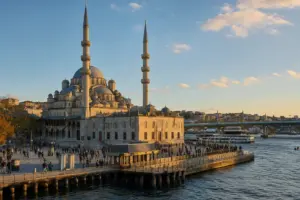 New Mosque – about 100 m away (~2 min walk) · typical visit: 30–45 min12 min on foot from Haliç metro
Main image: AI-generated illustration. It may not show the place exactly as it looks.
 Blue Mosque – about 1.3 km away (~22 min walk) · typical visit: 45–75 minutes3 min on foot from Gülhane metro
Main image: AI-generated illustration. It may not show the place exactly as it looks.
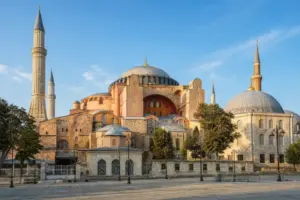 Hagia Sophia – about 1.2 km away (~19 min walk) · typical visit: 1–1.5 hours8 min on foot from Gülhane metro, Open daily 09:00–19:30
Main image: AI-generated illustration. It may not show the place exactly as it looks.
 Galata Bridge – about 450 m away (~7 min walk) · typical visit: 30 minutes to 1 hour10 min on foot from Haliç metro, Open 24 hours
Main image: AI-generated illustration. It may not show the place exactly as it looks.
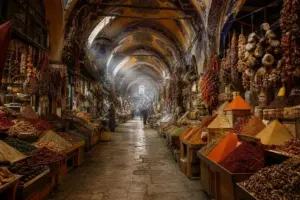 Egyptian Bazaar – about 50 m away (~1 min walk) · typical visit: 30 minutes to 1 hour13 min on foot from Haliç metro, Open daily 08:00–19:30
Main image: AI-generated illustration. It may not show the place exactly as it looks.
 Rüstem Pasha Mosque – about 200 m away (~3 min walk) · typical visit: 45 minutes to 1 hour10 min on foot from Haliç metro, Open daily 09:00–18:00
Main image: AI-generated illustration. It may not show the place exactly as it looks.
Metro stations near Spice Bazaar
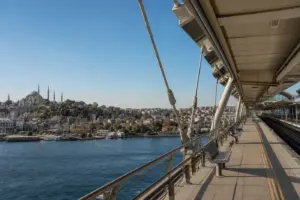 Haliç – about 800 m away (~13 min walk)Open daily 06:06–00:06
Main image: AI-generated illustration. It may not show the place exactly as it looks.
 Çemberlitaşabout 850 m away (~14 min walk)
Main image: AI-generated illustration. It may not show the place exactly as it looks.
 Beyazıt-Kapalıçarşı – about 900 m away (~15 min walk)Open daily 06:00–00:00
Main image: AI-generated illustration. It may not show the place exactly as it looks.
Restaurants and cafes near Spice Bazaar
 Pandeli – about 100 m away (~2 min walk)12 min on foot from Haliç metro, Open 11:30–19:00, closed Sun
Main image: AI-generated illustration. It may not show the place exactly as it looks.
 Hamdi Restaurant – about 200 m away (~4 min walk)12 min on foot from Çemberlitaş metro, Open daily 12:00–00:00
Main image: AI-generated illustration. It may not show the place exactly as it looks.
 Hafız Mustafa 1864 – about 450 m away (~8 min walk)12 min on foot from Çemberlitaş metro, Open daily 12:00–23:59
Main image: AI-generated illustration. It may not show the place exactly as it looks.
 Şehzade Cağ Kebap – about 550 m away (~9 min walk)11 min on foot from Haliç metro
Main image: AI-generated illustration. It may not show the place exactly as it looks.
Nightlife near Spice Bazaar
 Cheers Karaköy – about 600 m away (~10 min walk)9 min on foot from Haliç metro, Open daily 08:30–02:00
Main image: AI-generated illustration. It may not show the place exactly as it looks.
 The Bank Roof Bar – about 850 m away (~14 min walk)8 min on foot from Şişhane metro, Open daily 12:00–02:00
Main image: AI-generated illustration. It may not show the place exactly as it looks.
Train stations and river piers near Spice Bazaar
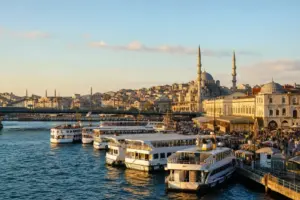 Eminönü Ferry Terminalabout 100 m away (~2 min walk)
Main image: AI-generated illustration. It may not show the place exactly as it looks.
 Karaköy Ferry Terminalabout 800 m away (~13 min walk)
Main image: AI-generated illustration. It may not show the place exactly as it looks.
Events and traditions near Spice Bazaar
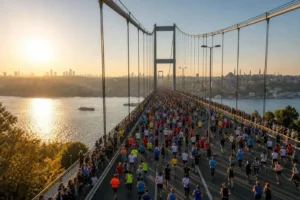 Istanbul Marathonabout 1.3 km away (~21 min walk)
Main image: AI-generated illustration. It may not show the place exactly as it looks.
Related guides
 30 Best Souvenirs from Istanbul: What to Buy and Where to Find It
Main image: AI-generated illustration. It may not show the place exactly as it looks.
 Tax-Free Shopping in Istanbul: VAT Refunds at IST and SAW Airports
Main image: AI-generated illustration. It may not show the place exactly as it looks.
 Istanbul Cruise Port Guide: Galataport to the Old City in One Day
Main image: AI-generated illustration. It may not show the place exactly as it looks.
 Istanbul Hop-On Hop-Off Bus: Routes, Tickets and Is It Worth It?
Main image: AI-generated illustration. It may not show the place exactly as it looks.
 One Day in Istanbul: Sultanahmet, the Bosphorus and Kadıköy
Main image: AI-generated illustration. It may not show the place exactly as it looks.
Browse more: More in Fatih · All Markets & Shopping · All Sightseeing
FAQ: Spice Bazaar
Is the Spice Bazaar different from the Grand Bazaar?
Yes. The Grand Bazaar (Kapalıçarşı), built in 1455, sprawls across thousands of shops selling jewellery, textiles, leather and crafts. The Spice Bazaar (1664) is a single L-shaped covered hall focused on food: spices, sweets, teas and dried goods. The Spice Bazaar is smaller, more intimate and less overwhelming. Both are free to enter and within walking distance of each other.
Do I need a guide or ticket?
No. Entry is completely free; no ticket or pass required. Simply walk in. Guides are not necessary but may be available for hire outside; negotiate any fee beforehand if interested. The bazaar is straightforward to navigate independently.
What should I buy?
Spices (saffron, cardamom, sumac, pul biber), Turkish delight, herbal teas, dried apricots from Malatya, pistachios from Gaziantep, and specialty coffee from Kurukahveci Mehmet Efendi are popular. Ask vendors for recommendations. Quality and freshness vary; buy small quantities to test first.
Is the Spice Bazaar part of the New Mosque complex?
Architecturally yes: it was built in 1664 as the revenue-generating structure for the New Mosque (Yeni Cami), which stands directly adjacent. Legally, the bazaar is a waqf (endowment) property dedicated to the mosque's upkeep. However, the bazaar and mosque are separate buildings with separate entrances. You can visit one without the other.
Can I haggle over prices?
Yes, but it depends on context. If buying bulk goods or multiple items, vendors expect some negotiation. Single small purchases are typically fixed price. Haggling is less aggressive here than at the Grand Bazaar; polite discussion is the norm.
When is it less crowded?
Weekday mornings before 10:00 are quietest. Avoid weekends, midday (12:00–15:00) and evenings (17:00+) if crowds bother you. The off-season (November–March, excluding holidays) is generally quieter than summer.
Is it safe for solo travelers or at night?
The bazaar itself is safe for solo travelers. It closes by 19:30. The surrounding Eminönü neighbourhood (Flower Market, restaurants on Nevizade Sokak) is busy and policed, but exercise normal urban caution. Travel in pairs or groups after dark if possible. Pickpocketing is a minor risk in crowded areas; keep bags close.
Can I bring luggage or large bags?
Yes. No bag check or security screening. However, large luggage is impractical in narrow aisles and crowded passages. If arriving from the airport with a suitcase, consider storing it at your hotel first or using a luggage storage service near Eminönü. A day pack is manageable.
Istanbul Vibes is a one-person project. A coffee keeps it going
Hotels near Spice Bazaar
- Şirin Han Hotel (150 m) Check prices (affiliate link, opens in a new tab)
- Cronton (200 m) Check prices (affiliate link, opens in a new tab)
- Orientbank Hotel Istanbul (200 m) Check prices (affiliate link, opens in a new tab)
- Legacy Ottoman (300 m) Check prices (affiliate link, opens in a new tab)
Affiliate link (opens the booking site): we may earn a commission at no extra cost to you.
Restaurants near Spice Bazaar
- Dilek Züccaciye Eminönü (50 m) Google Maps
- Meşhur Miss Döner (50 m) Google Maps
- 2K Chicken (50 m) Google Maps
- Resturant (100 m) Google Maps
Distances are straight-line, from OpenStreetMap data.

Take this guide with you
Get a free PDF of this guide to print or read offline: key facts, tips and a map link on a few clean pages.
Report an issue on this page
How we research and update our guides
About this guide: AI assistance and accuracy
This guide is created with the help of AI and is based on official sources where available. Mistakes can still happen. Opening hours, prices, rules and other details are given to the best of our knowledge as of the date shown and can change without notice. It offers general recommendations only, not professional, legal or travel advice. Please confirm important details with the official source before you travel; you are responsible for your own plans and decisions.
* Affiliate link: as an Amazon Associate we earn from qualifying purchases at no extra cost to you.
