
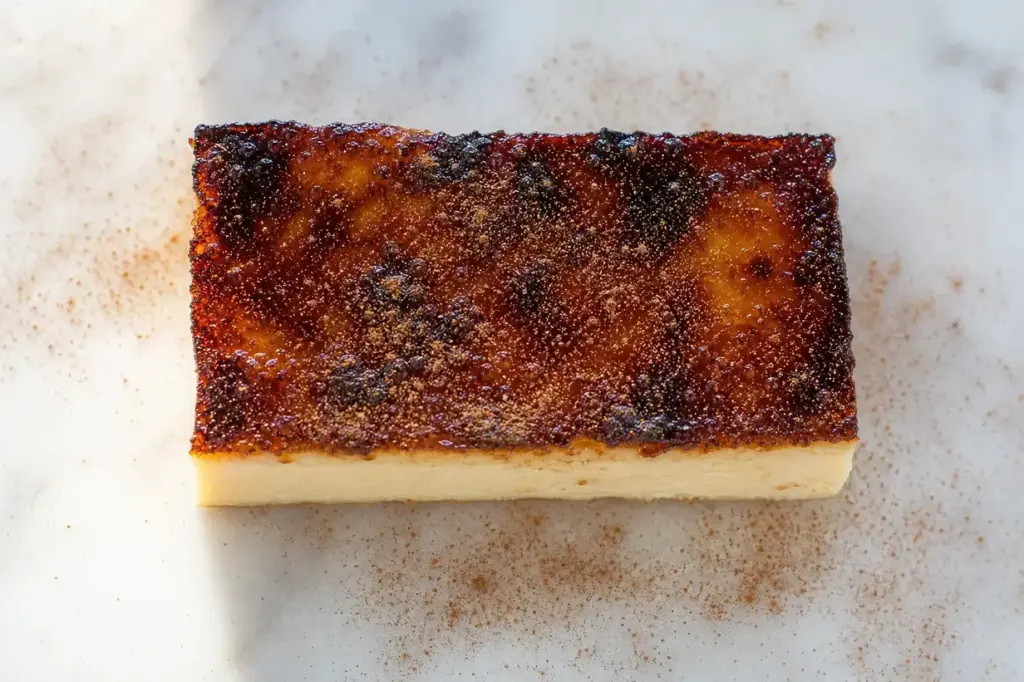
Kazandibi is a traditional Turkish dessert for anyone wanting to understand Ottoman palace cuisine. The name means “bottom of the cauldron”—a clue to its most distinctive feature. When you learn how to make Caramelised Milk Pudding Kazandibi, you create a pudding with a burnt sugar base that becomes the top layer when inverted, creating an intentional contrast between crispy caramel and creamy custard.
This guide walks you through the technique step by step. The process takes patience but no special equipment beyond a metal pan and stovetop heat. Most visitors taste kazandibi at a muhallebici (traditional milk pudding shop) in Istanbul, but making it at home reveals the precision required to achieve the perfect burnish without burning through to bitterness.
Quick answer: A caramelized milk pudding developed in the kitchens of the Ottoman Palace, made by thickening milk with starch and flour, then cooking it over caramelized sugar. Total time approximately 45–60 minutes plus chilling. Most versions today omit the traditional chicken and use simple milk-based custard for smoother texture.
At a Glance
| Type | Desserts & sweets |
|---|---|
| Origin | Developed in the kitchens of the Ottoman Palace, kazandibi is believed to have been created accidentally when a chef left a batch of milk pudding on the stove too long. Medieval Ottoman chefs deliberately burnt a mixture of sugar and milk on the bottom to develop a crust that would contrast with the velvety creaminess of the upper layers. It is traditionally made by burning the bottom of tavuk göğsü, a variant that uses muhallebi instead. |
| Servings | 2–4 servings (serves 6–8 if cut small) |
| Total time | 45–60 minutes preparation and cooking, plus 4 hours chilling |
| Difficulty | Medium |
History and Story of Caramelised Milk Pudding (Kazandibi)
Kazandibi was developed in the kitchens of the Ottoman Palace. Medieval Ottoman chefs created this dessert by deliberately burning a mixture of sugar and milk on the bottom to achieve a bitter-sweet flavor and create a crust that contrasts with the velvety creaminess of the upper layers. Originating in the kitchens of the Ottoman Empire during the 17th century, the technique remains largely unchanged today. While it is traditionally made by burning the bottom of tavuk göğsü (chicken breast pudding), which used shredded chicken as a thickener, the vast majority of kazandibi currently served in Turkey is made from regular muhallebi (Turkish milk pudding) which lacks chicken breast. Kazandibi is available at muhallebici shops of Istanbul.
Ingredients
- 1 litre (4 cups) whole milk
- 150 g (3/4 cup) caster sugar
- 60 g (1/2 cup) cornstarch
- 30 g (1/4 cup) rice flour
- 15 g (1 tablespoon) all-purpose flour
- 15 g (1 tablespoon) unsalted butter
- 50 g (3–4 tablespoons) caster sugar for the base
- 5 ml (1 teaspoon) vanilla extract
- Optional: 1 g mastic gum, crushed with sugar
How Caramelised Milk Pudding (Kazandibi) Is Made
Step 1: Mix the thickening agents and milk
In a large saucepan off the heat, whisk together the cornstarch, rice flour, and all-purpose flour with approximately 200 ml (1 cup) of cold milk until you have a smooth paste with no lumps. This prevents the starch from clumping when added to hot milk. Gradually whisk in the remaining milk and the caster sugar until completely smooth.
Tip: Whisking the starch into cold milk first is essential. If you add dry starch directly to hot milk, it will form hard lumps that won't dissolve.
Step 2: Cook the pudding base
Place the saucepan over medium heat and stir constantly with a wooden spoon. As the mixture warms, it will thicken gradually. Continue stirring for 10–15 minutes until the pudding is thick, smooth, and glossy. It should coat the back of a spoon. Stir in the vanilla extract and mastic (if using). Remove from heat and let cool for a few minutes.
Tip: Constant stirring prevents the bottom from scorching and ensures even thickening. If lumps do form, strain the pudding through fine mesh.
Step 3: Prepare the caramelized base
Generously butter the bottom of a shallow metal baking tray or heavy-bottomed pan (at least 2 cm deep). Sprinkle the remaining caster sugar evenly over the buttered surface. Place the tray over medium heat and watch carefully as the sugar melts and turns golden amber, approximately 5–8 minutes. The colour should be deep amber, not pale gold. Tilt and rotate the pan occasionally for even caramelization.
Tip: Use a metal pan, not glass or ceramic—glass can shatter on direct heat. You should hear a faint crackling sound as the sugar caramelizes. The smell will be toasted sugar, not burnt.
Step 4: Add the pudding to caramel
Once the caramel reaches the right colour, carefully remove the pan from heat. Using a ladle, slowly pour approximately 1 cup (240 ml) of the warm pudding mixture onto the caramelized sugar layer. The pudding will bubble slightly—this is normal. Do not stir. Let this layer cook undisturbed over low to medium heat for 3–5 minutes. You should see it darken slightly as the bottom surface caramelizes further.
Tip: Pouring slowly prevents the caramel from splattering. Do not attempt to stir once the pudding meets the caramel; this breaks the crust that's forming.
Step 5: Layer the remaining pudding
After the first layer has set slightly, carefully pour the remaining pudding mixture on top in a steady stream. Spread gently with a spatula to smooth the surface. Turn off the heat and allow the entire mixture to cool to room temperature, approximately 20–30 minutes.
Tip: Pouring from a height and working quickly prevents breaking the caramelized layer underneath.
Step 6: Chill and set
Once the pudding has cooled completely, cover and refrigerate for at least 4 hours, preferably overnight. The pudding must be fully chilled before cutting to set properly.
Tip: A longer chill (overnight) gives the pudding a firmer, cleaner cut.
Step 7: Cut and serve
Cut into rectangular pieces and serve chilled or at room temperature to highlight the contrast between the smooth milk pudding and the slightly burnt caramelized top layer. The caramelized side should face upward when served. Optionally dust with ground cinnamon.
Tip: For clean cuts, warm a knife under hot water and wipe it dry between cuts.
Variants
- Traditional tavuk göğsü version: made by burning the bottom of chicken breast pudding before pouring muhallebi on top
- Black Sea regional variant: rosewater or orange blossom water added for floral notes
- Semolina version: semolina flour substituted for rice flour
- Mastic-scented: crushed mastic gum (a resin from the mastic tree) whisked into the pudding for aromatic depth
- Vegan version: plant-based milk substituted for dairy milk
- Modern serving: topped with kaymak (thick clotted cream) or a scoop of vanilla ice cream
Common Mistakes to Avoid
- Using glass or ceramic baking dish instead of metal. Glass will shatter on the stovetop; you must use a metal baking tray or a copper pan.
- Adding dry starch directly to hot milk, which causes hard lumps. Always make a smooth paste with cold milk first.
- Stirring or moving the pan once the pudding meets the caramel. This breaks the caramelized crust forming underneath.
- Not cooking the caramel long enough or to a light shade. The pudding will bubble aggressively and you will smell burnt sugar; the surface should be dark brown, not just golden.
- Serving immediately after cooling. The pudding must be fully chilled to cut cleanly and for the layers to set properly.
- Using low-fat milk. Full-fat milk creates the richest, creamiest texture; low-fat versions can taste watery and thin.
How to Order and Eat It
Kazandibi is usually cut into rectangular pieces and served chilled or at room temperature to highlight the contrast between the smooth milk pudding and the slightly burnt caramelized top layer. It can be eaten on its own, but the combination with a cup of strong Turkish coffee or tea makes the whole experience better. For a contemporary touch, you can put ice cream on top, add fresh berries or drop fruit syrup to neutralize the heaviness of the dessert. The caramelized side should face up so the bitter-sweet notes hit the palate first, then the creamy pudding follows.
To order: Bir kase kazandibi lütfen [bir kase kazandibi lütfen]
Diet and Allergens
- Contains dairy (milk, butter)
- Typically contains gluten (from flour)
Where to Try Caramelised Milk Pudding (Kazandibi)
 Pandeli Ottoman-Turkish
Main image: AI-generated illustration. It may not show the place exactly as it looks.
Istanbul Vibes Tips
- The pudding texture depends entirely on starch balance. If your pudding is too thin after cooking, you may not have whisked the starch mixture in cold milk first. If it is too stiff, you used too much starch for the volume of milk. Note the proportions carefully.
- Taste the caramel before pouring the pudding on it. Sip a tiny amount from a spoon (let it cool first). If it tastes purely sweet with no burnt note, cook the sugar longer. If it tastes bitter, you've burned it too far and should start again.
- The sound of caramelization matters. As the sugar melts, listen for a gentle crackling. If you smell acrid smoke rather than toasted sugar, remove from heat immediately—the caramel has crossed into burnt.
- Different stoves conduct heat differently. On a gas stove, the sugar may caramelize in 5 minutes; on electric heat, it can take 8–10 minutes. Watch the colour, not the clock.
- If you cannot find mastic gum, the pudding is still excellent without it. Mastic adds a faint pine-resin aromatics that is traditional but optional. Do not substitute vanilla for mastic—they serve different purposes.
- Many Istanbul muhallebici shops serve kazandibi directly from a metal tray—it's not shaped into individual pieces. At home, letting it chill overnight makes cutting much cleaner than cutting after only 4 hours.
Where to Find Caramelised Milk Pudding (Kazandibi) in Istanbul
Related guides
 Turkish Coffee: How to Make It, Its History and Ritual
Main image: AI-generated illustration. It may not show the place exactly as it looks.
 Turkish Tea: How to Brew and Serve It Like Istanbul Locals
Main image: AI-generated illustration. It may not show the place exactly as it looks.
 Baklava: How to Make This Ottoman Dessert at Home
Main image: AI-generated illustration. It may not show the place exactly as it looks.
 Kunefe: How to Make This Turkish Cheese Dessert at Home
Main image: AI-generated illustration. It may not show the place exactly as it looks.
 Cooking Classes and Culinary Workshops: Learn Turkish Cuisine Hands-On
Main image: AI-generated illustration. It may not show the place exactly as it looks.
Browse more: All Food & Drink · All Other
FAQ
Is this the same as crème brûlée?
It can be thought of as a cross between the San Sebastián burned Basque cheesecake, regular vanilla pudding, and crème brûlée. The key difference: kazandibi is a thickened milk pudding served cold with the caramelized layer on top (or sometimes bottom, then flipped), while crème brûlée is a custard typically made with eggs and cream. Kazandibi is lighter and less rich.
Does kazandibi contain chicken?
Traditionally made by burning the bottom of tavuk göğsü, which includes shredded chicken as a thickener. However, the vast majority of kazandibi currently served in Turkey is made from regular muhallebi which lacks chicken breast. Most modern recipes (including this one) are chicken-free and use cornstarch and rice flour instead.
What is the Turkish name for this pudding?
Kazandibi (Turkish: lit. 'bottom of kazan or cauldron'). The name describes the cooking method—the pudding is deliberately burnt on the bottom of the metal pan (kazan) and this caramelized layer becomes the featured top.
Why does the pudding sometimes have a gritty texture?
This usually happens when starch is added directly to hot liquid without first making a smooth paste in cold milk. The starch granules seize and harden. Always whisk starch, flour, and cornstarch together with cold milk first to create a smooth slurry before adding to hot milk.
How do I know when the caramel is ready?
The pudding will bubble aggressively and you will smell burnt sugar. Lift a corner with a spatula to check; it should be dark brown, not just golden. The colour should resemble a penny or old copper coin, not light tan.
Can I make this without mastic gum?
Yes. Mastic is optional and adds a subtle aromatic note. The pudding tastes excellent without it. Do not substitute vanilla for mastic—vanilla is already in the recipe for a different purpose. If omitting mastic, simply leave it out.
Where do I buy the ingredients in Istanbul?
All ingredients are available at any Turkish supermarket or neighbourhood market (market). Cornstarch, rice flour, and all-purpose flour are standard pantry items. Mastic gum can be found in spice shops or specialty groceries, but is not essential. Butter and milk are found at every grocer.
Can I make kazandibi in advance?
Yes. Kazandibi keeps well refrigerated for 3–4 days covered. You can make it a day ahead. Do not freeze, as the texture becomes grainy when thawed.
Istanbul Vibes is a one-person project. A coffee keeps it going

Take this guide with you
Get a free PDF of this guide to print or read offline: key facts, tips and a map link on a few clean pages.
Report an issue on this page
How we research and update our guides
About this guide: AI assistance and accuracy
This guide is created with the help of AI and is based on official sources where available. Mistakes can still happen. Opening hours, prices, rules and other details are given to the best of our knowledge as of the date shown and can change without notice. It offers general recommendations only, not professional, legal or travel advice. Please confirm important details with the official source before you travel; you are responsible for your own plans and decisions.
* Affiliate link: as an Amazon Associate we earn from qualifying purchases at no extra cost to you.
