
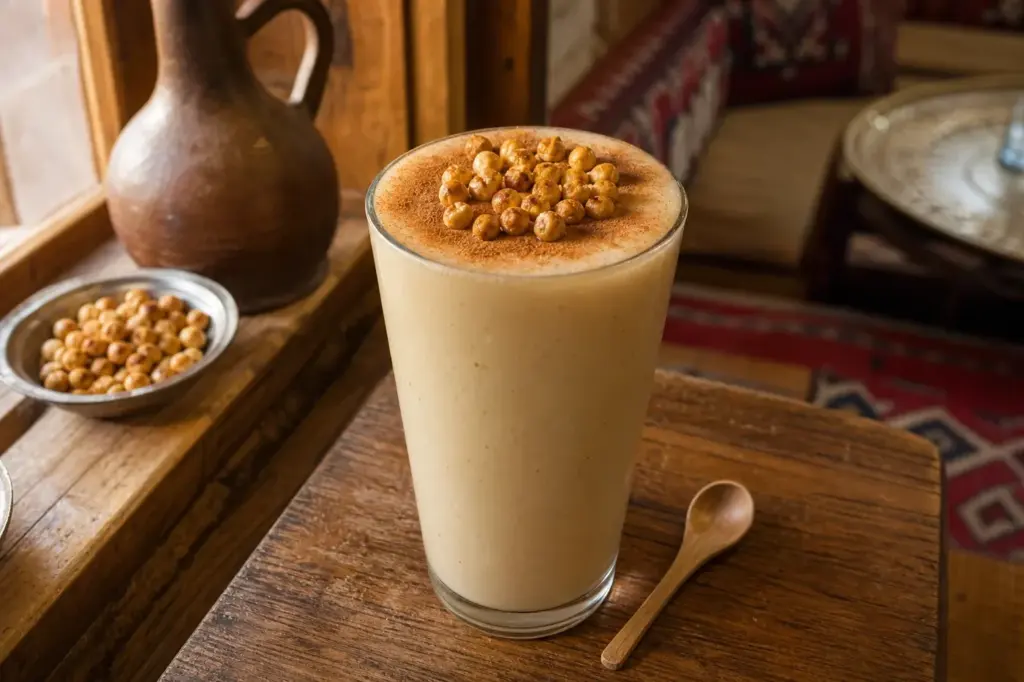
Boza is an ancient fermented beverage made from grains, which in its consistency resembles a thin pudding rather than a drink. This guide shows you how to make authentic boza at home, or where to order it freshly made on Istanbul’s streets.
If you want to try boza in Istanbul without cooking, street vendors and dedicated boza shops serve it warm from dawn through late morning, especially during the colder months. The recommended approach is to visit a traditional boza shop first to taste it, then try making your own if you enjoy the complex fermented flavor.
Quick answer: Make boza by cooking millet, cooling it, then fermenting it with a starter culture for 2–3 days. Strain, sweeten, and serve chilled with cinnamon and roasted chickpeas. Total time: about 5 days (mostly waiting). Cost: budget.
At a Glance
| Type | Drinks |
|---|---|
| Origin | Boza likely originated in Mesopotamia around 10,000 years ago, during the early days of agriculture. The drink was brought to the Balkan Peninsula by Turkish migrants. The most common recipe found throughout the region today was largely influenced by Albanian Hacı Sadık Bey who tweaked the brown, sour drink to a lighter-hued beverage with a lesser wallop of tang. Bey opened his own trading house for the stuff in 1876; to this day the operation continues to produce batches of boza. |
| Servings | 4–6 servings (from 1.5 liters) |
| Total time | 5 days (mostly fermentation; 2–3 hours active time) |
| Difficulty | Easy |
History and Story of Boza (Boza)
In the times of the Ottoman Empire, boza was a key source of energy for Janissaries and soldiers because it is caloric, rich in carbohydrates, and thanks to fermentation, easily digestible. It functioned as “liquid bread” that could satisfy hunger and warm one up, making it the ideal companion for harsh Anatolian and Balkan winters. By the 17th century, Istanbul alone had hundreds of boza shops, each serving a slightly different regional version. Despite being banned in the 17th century for having trace amounts of alcohol, boza has remained a persistent part of Turkish culture. The making of it continued, and boza houses became popular among commoners and the elite alike.
Ingredients
- 200 g hulled millet
- 1.5 liters water for cooking
- 400 ml water for adjusting consistency
- 80–100 g sugar
- 1 cup leftover boza or yogurt as starter culture
How Boza (Boza) Is Made
Step 1: Soak and rinse the millet
Measure 200 g hulled millet and rinse it thoroughly under cold running water. Place it in a large bowl, add enough water to cover it completely, and let it soak for at least 10 hours or overnight. This softens the grain and prepares it for cooking.
Tip: Use hulled millet (with the husk removed) for a smoother, creamier final texture.
Step 2: Cook the millet until soft
Drain the soaked millet and transfer it to a large pot. Add 1.5 liters of fresh water and bring to a boil over medium heat. Reduce heat to low and simmer, stirring occasionally, until the millet is completely soft and has broken down into a thick porridge-like consistency. This typically takes 45–60 minutes.
Tip: Stir from time to time to prevent sticking and ensure even cooking.
Step 3: Cool and blend
Turn off the heat and let the millet porridge cool to room temperature, which takes about 2 hours. Add 400 ml of cold water and blend thoroughly with an immersion blender until completely smooth. The mixture should resemble thin runny custard.
Tip: Cooling completely before blending prevents the mixture from becoming too hot and damaging beneficial bacteria that will ferment it.
Step 4: Strain and add starter
Pour the blended mixture through a fine mesh sieve into a large glass bowl, pressing firmly with the back of a spoon to extract as much liquid as possible. Discard the grain hulls left in the sieve. Add 1 cup of leftover boza (if you have made it before) or 1 cup of plain yogurt or kefir as a starter culture. Stir well.
Tip: The starter culture contains live bacteria and yeast that will ferment the millet. Use glass or ceramic containers, not metal, as metal can interfere with fermentation.
Step 5: Ferment for 2–3 days
Cover the bowl loosely with a cloth (not airtight) and set it in a cool place away from direct sunlight, ideally between 18–22°C. Let it ferment undisturbed for 2–3 days. You will notice the mixture becoming slightly thicker and developing a tangy, slightly sour smell. The longer it ferments, the more sour the flavor becomes.
Tip: If your kitchen is very warm, fermentation may complete in 24–36 hours. If it is very cold, it may take up to 4 days. Taste it after 2 days to decide when it has reached your preferred tanginess.
Step 6: Strain and sweeten
After fermentation, strain the boza through a fine sieve again if you prefer a smoother texture (optional). Transfer to a large bowl and whisk in 80–100 g of sugar until fully dissolved. Add cold water in small amounts—50–150 ml—while stirring until the consistency is thick but pourable. Divide into clean glass bottles.
Tip: Add sugar just before serving or bottling, not during fermentation, as sugar added during fermentation increases tartness rather than sweetness.
Step 7: Refrigerate and serve
Place the bottles in the refrigerator for at least 24 hours before serving. The cold rest allows the flavor to develop and round out. When ready to serve, pour into tall glasses. Dust the top with ground cinnamon and sprinkle with roasted chickpeas (leblebi). Serve chilled.
Tip: Boza keeps in the refrigerator for 3–4 days. The flavor continues to sharpen slightly as it sits.
Variants
- Turkish boza made with millet and a mild tangy flavor
- Balkan boza made with wheat or bulgur, often thicker
- Egyptian bouza made with fermented barley, higher alcohol content, served with nuts and spices
- Albanian and Macedonian versions often made with corn or combinations of grains
Common Mistakes to Avoid
- Using metal spoons, strainers, or containers during fermentation: metal reacts with the fermenting mixture and interferes with the process. Always use wood, plastic, glass, or ceramic.
- Adding all the sugar during fermentation rather than just before serving: sugar added during fermentation increases acidity instead of sweetness. Add sugar only at the end for proper taste.
- Fermenting at room temperature above 25°C: this causes the mixture to ferment too quickly or unevenly. Ferment in a cool, dark spot between 18–22°C for best results.
- Covering the bowl completely airtight: fermentation needs some air circulation. Cover loosely with a cloth, not a lid or plastic wrap.
- Not blending the cooked millet thoroughly enough: lumps in the millet will not strain properly. Blend until completely smooth before straining.
- Skipping the cooling step before adding the starter culture: adding starter to a warm mixture can kill the beneficial bacteria. Let the mixture cool to room temperature first.
How to Order and Eat It
The texture is creamy and almost thick (like a smoothie or a milkshake), with a sweet, tangy and slightly sour flavor. It is not a thirst-quencher like ayran or şalgam, but rather a filling liquid snack that has a firm place in Turkey during the cold months. Pour boza into a tall glass and drink it slowly with a spoon or straw, enjoying the creamy consistency. Pour into tall glasses, dust with ground cinnamon, and add a handful of roasted chickpeas (leblebi) for the traditional serving style. The chickpeas add texture and nutty flavor that balances the sweetness.
To order: Boza lütfen [Boza lootfen]
Where to Try Boza (Boza)
 Vefa Bozacısı Turkish Traditional Drinks
Main image: AI-generated illustration. It may not show the place exactly as it looks.
Istanbul Vibes Tips
- In Istanbul, the most famous historic boza shop is Vefa Bozacısı, which has been operating since 1876 and still uses traditional methods. It opens early in the morning and typically closes by mid-morning, as boza is mainly a winter and early-morning drink.
- Street vendors sell boza from large metal containers, often shouting "Boooozaa!" as they push their carts through residential neighborhoods in the early morning and evening. The sound is part of Istanbul's winter soundscape.
- Although it is served cold, its consumption is associated with winter and snow. Summer visitors rarely encounter boza on sale; it is primarily available from November through March.
- Fresh boza tastes noticeably different from bottled or powdered versions sold in supermarkets. If you want the authentic fermented version, buy from dedicated boza shops or street vendors, not instant packets.
- Although it contains trace amounts of alcohol produced by natural fermentation (usually around one percent), it is considered non-alcoholic in its countries of origin and is commonly drunk even by children.
Where to Find Boza (Boza) in Istanbul
Related guides
 Ayran: How to make Turkish yogurt drink at home
Main image: AI-generated illustration. It may not show the place exactly as it looks.
 Turkish Coffee: How to Make It, Its History and Ritual
Main image: AI-generated illustration. It may not show the place exactly as it looks.
 Sahlep: Turkish Orchid Drink Recipe and What to Expect
Main image: AI-generated illustration. It may not show the place exactly as it looks.
 Lentil Soup: How to Make Mercimek Çorbası at Home
Main image: AI-generated illustration. It may not show the place exactly as it looks.
Browse more: All Food & Drink · All Other
FAQ
Is boza alcoholic?
Although it contains trace amounts of alcohol produced by natural fermentation (usually around one percent), it is considered non-alcoholic in its countries of origin and is commonly drunk even by children.
What does boza taste like?
The texture is creamy and almost thick (like a smoothie or a milkshake), with a sweet, tangy and slightly sour flavor. The fermented grain flavor is malty and slightly nutty. First-time drinkers often find it unusual because it is thicker than most beverages and has a pronounced sour undertone.
When should I drink boza?
Boza is traditionally a winter and early-morning drink in Istanbul. Street vendors and boza shops typically sell it from before dawn through mid-morning. It is most common from November through March; during summer months it is rarely available.
What are leblebi?
Leblebi are roasted chickpeas that are cracked and roasted twice to make them crunchy. They are the traditional topping for boza, providing texture and a savory, nutty contrast to the sweet drink. You can buy them ready-made at Turkish markets or spice shops.
Can I make boza without a starter culture?
Yes, but it is more difficult. Without boza, yogurt, or kefir as a starter, you must rely on wild yeasts present on the grain. This takes longer (4–5 days) and is less predictable. Using a starter culture ensures faster, more reliable fermentation.
How long does homemade boza keep?
Refrigerated boza lasts 3–4 days. The flavor becomes progressively more sour as it sits, which some prefer and others do not. If you notice a pink or fuzzy mold, discard it immediately.
Is boza gluten-free?
It is gluten-free and dairy-free when made from millet, and its lactic acid fermentation gives it mild probiotic properties. However, if made from wheat or bulgur, it contains gluten. Check the ingredients if this matters to you.
Where can I buy ingredients to make boza at home?
Hulled millet is available at health food shops, online grocery suppliers, and some Turkish or Middle Eastern markets. Roasted chickpeas (leblebi) are sold in spice shops and Turkish grocers. Ground cinnamon is available everywhere. If you cannot find a starter culture, plain yogurt or kefir works equally well.
Istanbul Vibes is a one-person project. A coffee keeps it going

Take this guide with you
Get a free PDF of this guide to print or read offline: key facts, tips and a map link on a few clean pages.
Report an issue on this page
How we research and update our guides
About this guide: AI assistance and accuracy
This guide is created with the help of AI and is based on official sources where available. Mistakes can still happen. Opening hours, prices, rules and other details are given to the best of our knowledge as of the date shown and can change without notice. It offers general recommendations only, not professional, legal or travel advice. Please confirm important details with the official source before you travel; you are responsible for your own plans and decisions.
* Affiliate link: as an Amazon Associate we earn from qualifying purchases at no extra cost to you.
