
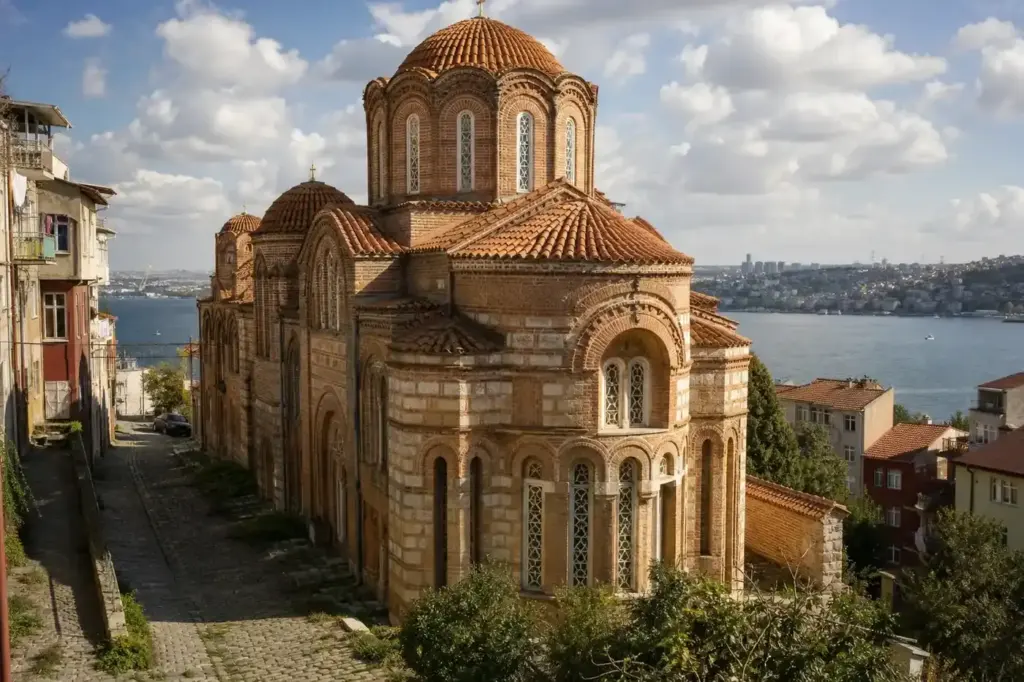
Dedicated to St. Saviour Pantocrator, this building is actually a composite of two churches and a chapel, making it the second-largest church in Istanbul after Hagia Sophia. The Pantocrator Church stands in the Zeyrek neighborhood as a living witness to Constantinople’s imperial past. Though now converted to a mosque and in need of care, it preserves fragments of its Byzantine grandeur among the narrow streets of the historic peninsula.
Because the structure is in a sad state of neglect, a detour here can only be recommended in tandem with a stroll through the narrow streets of the Zeyrek neighborhood. Visitors should expect interior wooden partitions that block views into much of the space, yet the building’s scale and the fragments of original decoration that remain offer a sense of its former magnificence.
Current access notice: As of October 2026: The building, which was converted into a mosque during the Ottoman period, has recently undergone a large-scale restoration.
Quick Facts
| Built / opened | 1118 |
|---|---|
| Architect(s) | Empress Eirene and Emperor John II Comnenus |
| Address | Zeyrek, İbadethane Sk. No:2, Fatih, Istanbul 34083 Google MapsApple MapsYandex Maps |
| District | Fatih |
| Admission | Free |
| Best time to visit | Spring (April–May) and autumn (September–October) offer the most comfortable weather for walking the steep Zeyrek neighborhood streets. Mornings are generally less crowded. Avoid midday summer heat. Avoid prayer times (five times daily) if you do not wish to encounter active worship; otherwise, visiting during prayer times allows interior access more readily. |
What Is (and Isn't) Part of a Visit to Pantocrator Church?
| Part | Status | Notes |
|---|---|---|
| South Church (Church of Christ Pantocrator) | Included in the standard ticket | The original 12th-century church founded by Empress Eirene; the main building of the complex. |
| North Church (Church of the Virgin Eleousa) | Included in the standard ticket | Added after Eirene's death by Emperor John II Comnenus; symmetrical companion church. |
| Imperial Chapel (Connecting Chapel) | Included in the standard ticket | Connects the two churches; originally served as a mausoleum for the Komnenos and Palaiologos dynasties. |
| Interior viewing | Separate ticket or institution | Visitors may see interior only at prayer times; interior access is limited due to wooden partitions. |
| Monastery grounds and outbuildings | Outside / not part of it | The original monastic buildings—dormitories, hospital, refectory—have vanished; only the three churches and a few cisterns survive. |
| Zeyrek neighborhood | Outside / not part of it | The surrounding residential neighborhood is separate; part of the walking experience but not part of the church complex itself. |
Why Visit Pantocrator Church?
The Pantocrator Monastery was built in the late Byzantine period, and its church was the third most important religious building in Constantinople during the Middle Ages. Many members of the imperial family, especially members of the Komnenos dynasty, were buried here. Walking through the structure is a lesson in Byzantine architecture and the continuity of sacred space across faiths and centuries.
The minbar (pulpit), added when the church was converted into a mosque in the 15th century, is composed of recycled fragments of Byzantine sculpture. The complex tells multiple stories at once: imperial patronage, monastic life, conquest, and transformation under Ottoman rule.
How Pantocrator Church Is Laid Out
The Church of the Monastery of Christ Pantocrator consists of three separate buildings adjacent to each other. The structures were built at different times and are not symmetrical. The northern church was added by the emperor (her husband) after Eirene’s death, and dedicated to Virgin Eleousa, the Merciful or Charitable. The emperor also had the churches connected through the jerry-rigging of a chapel between the north and south church, which also required the demolition of part of the exterior walls of the two buildings.
From the exterior, you see the distinctive apses—domed semi-circular ends of each church section rising above the Zeyrek neighborhood. The southern church opens near ground level; the northern structure sits slightly higher. The connecting chapel in the middle once served as an imperial mausoleum. Today, interior access is limited; wooden partitions block most internal views.
Highlights of Pantocrator Church
The South Church (Eirene's Church)
The monastery was founded by Empress Eirene, wife of John II Comnenus, who completed the south church prior to her death in 1124. This was the original core of the monastery, dedicated to Christ Pantocrator (Christ Almighty). Look for the cross-in-square plan typical of Middle Byzantine architecture and the marble details that survive. Although the building preserves some of its original decoration (marble pavement, door frames in the narthex, marble apse), it's almost impossible to get a sense of the interior, as each section has been blocked off by wooden partitions.
Tip: Approach from the south to see the apses and appreciate the original church's domed structure before wooden interior walls obscure the view.
The North Church (Eleousa Church)
The northern church was added by the emperor (her husband) after Eirene's death, and dedicated to Virgin Eleousa, the Merciful or Charitable. This symmetrical companion church is somewhat smaller than the south church but follows the same architectural principles. It was later incorporated into the overall complex.
Tip: The north church is visible from the street level to the north; its exterior is more accessible than the interior.
The Connecting Imperial Chapel
The emperor also had the churches connected through the jerry-rigging of a chapel between the north and south church, which also required the demolition of part of the exterior walls of the two buildings. The connecting imperial chapel was used as a mausoleum for the Komnenos and Palaiologos dynasties. This middle section holds centuries of imperial burials.
Tip: The chapel is not easily visible from outside; its presence is marked by the architectural junction where the two churches meet.
Byzantine Marble Details
The building preserves some of its original decoration (marble pavement, door frames in the narthex, marble apse). What remains of marble work—door surrounds, floor fragments, and apse lining—shows the quality and color that once filled these spaces. The marble work is concentrated where interior partitions have not yet obscured it.
Tip: Ask permission at the prayer times to enter; the marble details are scattered throughout the interior and require access to the vestibule and lower sections.
The Ottoman Minbar (Pulpit)
The minbar (pulpit), added when the church was converted into a mosque in the 15th century, is composed of recycled fragments of Byzantine sculpture. This minbar is a practical marker of the building's conversion to Islamic worship and a palimpsest of its own history—Byzantine stone repurposed for a new faith.
Tip: The minbar may not be visible from all vantage points due to interior partitions; focus your attention on the eastern end where Islamic elements are usually concentrated.
The Exterior Apses
The south and the north church are both cross domed with polygonal apses having seven sides, and not five as was typical in the Byzantine architecture of the previous century. These seven-sided apses are distinctive features of Comnenian-period Byzantine architecture and mark the innovation of the 12th century.
Tip: Walk around the complex's perimeter to see the apses from different angles; they are most clearly visible from the north and east sides.
Atmosphere
The Pantocrator Church feels like a building suspended between two worlds. The scale is vast—clear from the soaring domes visible from outside—yet the interior has been made claustrophobic by decades of wooden partitions that divide it into sections. What you mostly experience is fragments: a stretch of marble floor, a plastered wall with traces of older decoration, doorways blocked by panels.
Visitors arrive at prayer times to find locals worshipping quietly, sometimes alone in the echoing space. The muezzin’s call announces the hours. The neighborhood around it is residential and narrow, with locals living directly beside this monumental ruin. You hear the city outside—vendors, children, traffic—which contrasts sharply with the interior silence. The building speaks of grandeur, loss, and transformation rather than offering a clear sense of what it was.
History of Pantocrator Church
Between 1118 and 1124 Byzantine Empress Irene of Hungary built a monastery on this site dedicated to Christ Pantokrator (“Christ Almighty”). The monastery was founded by Empress Eirene, wife of John II Comnenus, who completed the south church prior to her death in 1124. This founding marked the establishment of one of Constantinople’s most important monastic complexes.
After the death of his wife, shortly after 1124, Emperor John II Komnenos built another church to the north of the first dedicated to the Theotokos Eleousa (“the merciful Mother of God”). Finally the two shrines were connected with a chapel dedicated to Saint Michael. There would be 80 monks, 45 ministers and a hospital within the foundation. The complex became a model of Byzantine institutional architecture.
Empress Eirene was also the first to be buried here (her sarcophagus was moved in the 1960s to the Archaeological Museum, but now resides in the exonarthex of the Ayasofya). Many members of the imperial family, especially members of the Komnenos dynasty, were buried here. The connecting chapel served as a mausoleum for generations of rulers.
During the Latin occupation after the IV. crusade, the complex was the see of the Venetian clergy and also used as an imperial palace by the last Latin Emperor, Baldwin. After the city was reconquered by Byzantines in 1261, the monastery was used again by Orthodox monks. The building survived the chaos of the Crusader interregnum and returned to Orthodox hands.
The church was converted to a mosque in the 15th century. The building, which was converted into a mosque during the Ottoman period, has recently undergone a large-scale restoration. The Pantocrator Monastery became the Zeyrek Mosque and served the Ottoman city’s spiritual needs for centuries. In modern times, it has faced decades of neglect before undergoing restoration work.
Legends and Myths about Pantocrator Church
The Empress Eirene's Sarcophagus
She was also the first to be buried here (her sarcophagus was moved in the 1960s to the Archaeology Museum, but now resides in the exonarthex of the Ayasofya). The relocation of Empress Eirene's remains from their place of honor in the monastery to the Archaeology Museum, and then again to the Hagia Sophia, traces the changing reverence for the building's sacred history and imperial significance across the 20th century.
The Last Imperial Burial
The last person buried in the Pantokrator Monastery Church was Helena Dragazes, the mother of the last Byzantine emperor Constantine XI Paleologos. This reflects the deep connection between the imperial house and this monastic sanctuary right up until the fall of Constantinople.
Tickets and Booking for Pantocrator Church
Entry is free. Open at prayer times only. There is no formal ticketing system; the building functions as an active mosque. Visitors should respect prayer times and the worshippers present. For the most current information on visiting hours and access, check with the Istanbul Culture and Tourism Directorate (Istanbul İl Kültür ve Turizm Müdürlüğü) or call ahead to the neighborhood mosque office.
Suggested itineraries Pantocrator Church
1 hour
Walk the perimeter to view the exterior apses and domes from different angles (north, east, south sides). This gives a sense of the complex's scale and three-part structure. Look for marble details and the minbar from openings. Conclude with a cup of tea in the neighborhood.
1.5 hours
Arrive at a non-prayer time to observe the exterior closely. Enter during prayer time if permission is granted; examine interior marble details, door frames, and the apse. Study the connecting chapel's role in linking the two churches. Walk the neighborhood streets to understand the building's position within the city grid.
2 hours
Begin with a detailed exterior survey from all sides. Visit during a prayer time to enter and explore the vestibule, marble work, and visible interior features. Exit and walk the surrounding Zeyrek neighborhood, visiting the small cafes and residential streets. Return to photograph the apses in late afternoon light from the north side.
How to Get to Pantocrator Church
The Pantocrator Church is located in the Zeyrek neighborhood of the Fatih district on Istanbul’s European side. By Metro: There is no direct metro station. The nearest metro station is Vezneciler on the M2 line (about 12–15 minutes walk). Exit and follow signs toward the Zeyrek neighborhood, descending into the historic peninsula.
By Bus: Several local buses serve the Fatih/Zeyrek area; check current routes with local transport (Istanbul Ulaşım) as routes change seasonally.
By Taxi or Ride-Share: Direct your driver to “Zeyrek Camii” or “İbadethane Sk. No. 2, Fatih”; the address is well known locally.
Walking from Eminönü: From Eminönü waterfront, walk west along the Golden Horn for 10–15 minutes, then ascend the narrow streets into Zeyrek. This route offers views of the complex from the water side.
Accessibility
The Pantocrator Church presents significant accessibility challenges. The building is located on steep, narrow cobbled streets in the historic Zeyrek neighborhood. There is no ramp or wheelchair access to the church entrance. The interior consists of multiple levels and narrow passages blocked by wooden partitions. Prayer time visitors must navigate stone steps and uneven flooring. No accessible restrooms are available on site. The surrounding neighborhood also has narrow sidewalks and steep inclines.
Food Nearby
The Zeyrek neighborhood has traditional Turkish cafes and kebab shops, many aimed at local residents rather than tourists. Several lokanta (casual eateries) serve simple, inexpensive Turkish food along the main pedestrian streets. Tea gardens offer seating with views. For more substantial meals, walk downhill toward Eminönü or the Galata Bridge area, where restaurant options are more extensive and cater to visitors.
What to Bring
Wear comfortable walking shoes with good grip for the steep, cobbled streets of Zeyrek. Bring water, especially in summer. If visiting during prayer times, carry a small scarf or shawl for covering shoulders and knees out of respect. A camera with a wide-angle lens helps capture the exterior apses from the narrow streets. No special bags are required; standard security and bag rules for mosques apply—no large backpacks during prayer times.
Best Views and Photo Spots of Pantocrator Church
North side view of both apses
From the street north of the church, you can see the apses of both the north and south churches side by side, showing their distinctive seven-sided polygonal form. This angle best demonstrates the symmetry and scale of the complex.
Best time: Late afternoon (3–5 p.m.), when sunlight highlights the brick and marble surfaces of the apses.
Golden Horn waterfront view
From the Eminönü waterfront or Galata Bridge area, looking across the water, the domes and apses of the Pantocrator Church rise prominently above the Zeyrek neighborhood, visible as part of the historic peninsula's skyline.
Best time: Early morning or late afternoon light; avoid midday glare on the water.
Marble details from the vestibule
Close-up shots of surviving marble door frames, pavements, and apse lining visible through openings and interior passages. These fragments capture the Byzantine craftsmanship and color.
Best time: Early morning or late afternoon when interior light is softer and illuminates marble textures.
Street-level view of brick exterior
The brick and mortar construction of the walls, with visible repairs and restorations, tells the story of the building's age and upkeep. Close-up shots show Byzantine and Ottoman-era masonry techniques.
Best time: Overcast days or shade hours reduce harsh shadows on the irregular wall surface.
Photography Rules
Photography is permitted of the exterior from the surrounding streets at any time. Interior photography during prayer times is not permitted out of respect for worshippers. Exterior shots are best in late afternoon when light catches the apses and domes. Tripods and drones require permission and are generally not permitted in the residential neighborhood; check with locals before setting up.
Family Suitability
The Pantocrator Church is moderately suitable for families with older children (10+) who can navigate steep, cobbled streets and appreciate historical architecture. Younger children may find the interior cramped and dark, and the narrow neighborhood paths are challenging for strollers. Prayer times require respectful, quiet behavior. The walk uphill to reach the church is strenuous for small children. Nearby cafes offer breaks, but there are no dedicated family amenities. Overall, it works best as part of a broader Zeyrek neighborhood walk for families interested in Byzantine history.
Istanbul Vibes Tips
- Arrive at non-prayer times to photograph the exterior freely and explore the neighborhood streets without time pressure. Prayer times are dawn (fajr), mid-morning (dhuhr), mid-afternoon (asr), sunset (maghrib), and night (isha). Ask locals or call ahead for exact times, which shift with the season.
- Don't expect a comprehensive interior tour. Due to wooden partitions, you will see fragments rather than the whole structure. This actually deepens the experience—you realize how much has been lost and what effort it took to preserve even these remnants.
- Pair your visit with a walk through the Zeyrek neighborhood itself. The narrow, residential streets with restored houses and small tea gardens offer as much of the Istanbul experience as the church. Allow extra time for getting lost in the maze of alleyways; that is part of the charm.
- Visit in spring or early fall to avoid summer heat on the steep climb and the winter rain that makes cobbles slippery. The neighborhood's narrow streets and steep grades make weather a significant factor.
- Bring euros, Turkish lira, or cards; the neighborhood has fewer ATMs than central tourist areas. Small cafes may not accept cards, so carry cash for tea or snacks.
- If you are photographing, avoid using flash inside during prayer times—it disturbs worshippers. The interior is dim, but a tripod and slower shutter speed work better than flash anyway.
Explore Nearby Pantocrator Church
Sights near Pantocrator Church
 Chora Church – about 2.0 km away (~32 min walk) · typical visit: 2–3 hoursOpen 09:00–18:00, closed Fri
Main image: AI-generated illustration. It may not show the place exactly as it looks.
 Valens Aqueduct – about 450 m away (~7 min walk) · typical visit: 30-45 minutes8 min on foot from Vezneciler metro, Open 24 hours
Main image: AI-generated illustration. It may not show the place exactly as it looks.
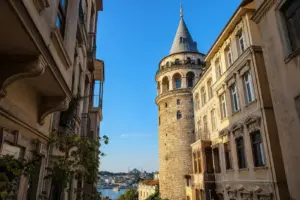 Galata Tower – about 1.6 km away (~26 min walk) · typical visit: 1–2 hours4 min on foot from Şişhane metro, Open daily 08:30–23:00
Main image: AI-generated illustration. It may not show the place exactly as it looks.
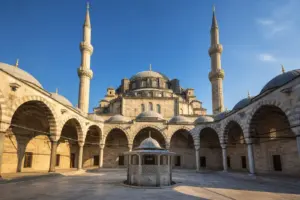 Şehzade Mosque – about 650 m away (~11 min walk) · typical visit: 1–1.5 hours4 min on foot from Vezneciler metro
Main image: AI-generated illustration. It may not show the place exactly as it looks.
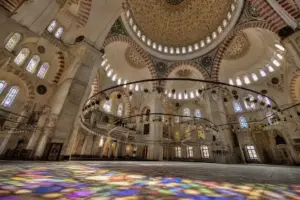 Süleymaniye Mosque – about 700 m away (~11 min walk) · typical visit: 1–2 hours9 min on foot from Vezneciler metro
Main image: AI-generated illustration. It may not show the place exactly as it looks.
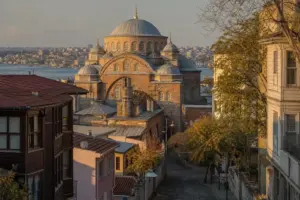 Gül Mosque – about 800 m away (~13 min walk) · typical visit: 1–2 hoursOpen daily 08:00–19:00
Main image: AI-generated illustration. It may not show the place exactly as it looks.
Metro stations near Pantocrator Church
 Vezneciler – about 850 m away (~14 min walk)Open daily 05:59–00:24
Main image: AI-generated illustration. It may not show the place exactly as it looks.
 Haliç – about 900 m away (~14 min walk)Open daily 06:06–00:06
Main image: AI-generated illustration. It may not show the place exactly as it looks.
 Laleli-Üniversiteabout 1.1 km away (~19 min walk)
Main image: AI-generated illustration. It may not show the place exactly as it looks.
Restaurants and cafes near Pantocrator Church
 Vefa Bozacısı – about 650 m away (~11 min walk)7 min on foot from Vezneciler metro, Open daily 08:00–00:00
Main image: AI-generated illustration. It may not show the place exactly as it looks.
 Mivan Restaurant – about 750 m away (~12 min walk)4 min on foot from Vezneciler metro, Open daily 08:30–00:00
Main image: AI-generated illustration. It may not show the place exactly as it looks.
 Pandeli – about 1.2 km away (~20 min walk)12 min on foot from Haliç metro, Open 11:30–19:00, closed Sun
Main image: AI-generated illustration. It may not show the place exactly as it looks.
 Ali Ocakbaşı Karaköy – about 1.3 km away (~22 min walk)8 min on foot from Haliç metro, Open daily 12:00–23:00
Main image: AI-generated illustration. It may not show the place exactly as it looks.
Nightlife near Pantocrator Church
 Suma Han – about 1.3 km away (~22 min walk)5 min on foot from Şişhane metro
Main image: AI-generated illustration. It may not show the place exactly as it looks.
 Cheers Karaköy – about 1.4 km away (~22 min walk)9 min on foot from Haliç metro, Open daily 08:30–02:00
Main image: AI-generated illustration. It may not show the place exactly as it looks.
Train stations and river piers near Pantocrator Church
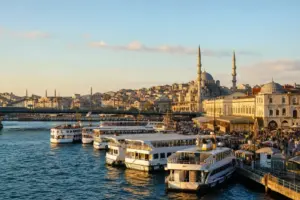 Eminönü Ferry Terminalabout 1.2 km away (~19 min walk)
Main image: AI-generated illustration. It may not show the place exactly as it looks.
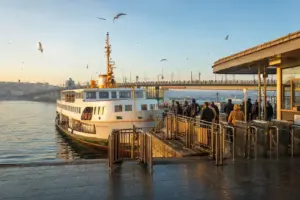 Karaköy Ferry Terminalabout 1.6 km away (~27 min walk)
Main image: AI-generated illustration. It may not show the place exactly as it looks.
Related guides
 Best Underground Cisterns in Istanbul: Three Sites Compared
Main image: AI-generated illustration. It may not show the place exactly as it looks.
 The Red School in Fener: A Castle above the Golden Horn
Main image: AI-generated illustration. It may not show the place exactly as it looks.
 Orient Occident Hotel: Green and Brass in Sirkeci
Main image: AI-generated illustration. It may not show the place exactly as it looks.
 AJWA Sultanahmet: Ottoman Luxury Near the Blue Mosque
Main image: AI-generated illustration. It may not show the place exactly as it looks.
 My Terrace: Rooftop Breakfast by Little Hagia Sophia
Main image: AI-generated illustration. It may not show the place exactly as it looks.
Browse more: More in Fatih · All Churches · All Sightseeing
FAQ: Pantocrator Church
Is the Pantocrator Church still a working mosque?
Yes. The building, which attracts attention with its grandeur when looking at the Historical Peninsula from the Golden Horn, serves as the Zeyrek Mosque today. It functions as an active mosque for the local Muslim community. Visitors are welcome outside prayer times or during prayer times if they dress respectfully and behave quietly.
Can I see the full interior?
Partially. Although the building preserves some of its original decoration (marble pavement, door frames in the narthex, marble apse), it's almost impossible to get a sense of the interior, as each section has been blocked off by wooden partitions. You can access the vestibule and lower sections but will not see the full sweep of the original Byzantine space.
What is the difference between the south and north churches?
The monastery was founded by Empress Eirene, wife of John II Comnenus, who completed the south church prior to her death in 1124. The northern church was added by the emperor (her husband) after Eirene's death, and dedicated to Virgin Eleousa, the Merciful or Charitable. The south church is the original; the north was added later. They are connected by a chapel in the middle.
How is this different from Hagia Sophia or other major Byzantine churches?
The Pantocrator Church is architecturally a composite of three separate structures (two churches and a chapel) rather than a single unified space. It is, after Hagia Sophia, the second largest religious edifice built by the Byzantines still standing in Istanbul. Unlike Hagia Sophia, much of its interior is obscured by later modifications and partitions, making it feel fragmented rather than monumental.
Who was Empress Eirene and why is she important to this church?
Empress Eirene, wife of John II Comnenus, completed the south church prior to her death in 1124. She was also the first to be buried here (her sarcophagus was moved in the 1960s to the Archaeological Museum, but now resides in the exonarthex of the Ayasofya). She founded the monastery complex and initiated its role as a major spiritual and institutional center.
What happens during prayer times?
The mosque is used for Islamic prayers five times daily. Visitors can sometimes enter during prayer times if they dress respectfully (covered shoulders and knees) and behave quietly. The building is especially busy at midday (dhuhr) and sunset (maghrib) prayers. Call ahead to check exact times, which change seasonally.
Is there an entrance fee?
No, entry is free. The building is open at prayer times only and costs nothing. There is no ticketing or organized tour system.
How do I get to the Pantocrator Church by public transport?
There is no direct metro station. The nearest metro is Vezneciler on the M2 line, about 12–15 minutes walk downhill from the church. Several local buses also serve the Fatih/Zeyrek area; check Istanbul Ulaşım (Istanbul Public Transport) for current routes. A taxi to "Zeyrek Camii" is straightforward and inexpensive.
Istanbul Vibes is a one-person project. A coffee keeps it going
Hotels near Pantocrator Church
- Biter Hotel (150 m) Check prices (affiliate link, opens in a new tab)
- Mövenpick Istanbul Old Town (250 m) Check prices (affiliate link, opens in a new tab)
- The Moss Hotel (350 m) Check prices (affiliate link, opens in a new tab)
- Victorious Hotel (350 m) Check prices (affiliate link, opens in a new tab)
Affiliate link (opens the booking site): we may earn a commission at no extra cost to you.
Restaurants near Pantocrator Church
- Jing ya Tang Restaurant (100 m) Google Maps
- Meşhur Unkapanı Pilavcısı (150 m) Google Maps
- Zeyrek Cafe Restaurant (150 m) Google Maps
- Fatih Çitir Pide (200 m) Google Maps
Distances are straight-line, from OpenStreetMap data.

Take this guide with you
Get a free PDF of this guide to print or read offline: key facts, tips and a map link on a few clean pages.
Report an issue on this page
How we research and update our guides
About this guide: AI assistance and accuracy
This guide is created with the help of AI and is based on official sources where available. Mistakes can still happen. Opening hours, prices, rules and other details are given to the best of our knowledge as of the date shown and can change without notice. It offers general recommendations only, not professional, legal or travel advice. Please confirm important details with the official source before you travel; you are responsible for your own plans and decisions.
* Affiliate link: as an Amazon Associate we earn from qualifying purchases at no extra cost to you.
