

Bulgarian St. Stephen Church, widely known as the Iron Church, stands on the shores of the Golden Horn in Istanbul’s Balat neighbourhood. This unique 19th-century structure is the world’s only surviving prefabricated cast-iron church, a remarkable feat of industrial engineering and religious devotion combined.
The church was built for the Bulgarian Orthodox community after they separated from the Greek-dominated Patriarchate during the nationalist movements of the Ottoman era. Its distinctive iron construction was chosen for practical reasons: fire resistance, rapid assembly, and suitability for the site’s unstable ground. After extensive restoration completed in 2018, it remains an active place of worship and one of Istanbul’s most striking architectural monuments.
Quick Facts
| Turkish name | Bulgar Sveti Stefan Kilisesi |
|---|---|
| Built / opened | 1898 |
| Architect(s) | Hovsep Aznavur |
| Address | Balat, Mürselpaşa Caddesi No:10, 34087 Fatih/Istanbul, Turkey Google MapsApple MapsYandex Maps |
| District | Fatih |
| Admission | Free |
| Best time to visit | Early mornings (9:00–10:00) or late afternoons (16:00–17:00) offer the best light for viewing and photography, with fewer crowds and optimal illumination of the iron exterior. Midday may coincide with services. Avoid Sundays during morning service hours if you prefer a quieter visit. Autumn and spring provide comfortable weather for exploring the surrounding Balat neighbourhood. Late afternoon light is particularly striking for photographing the church against the water. |
What Is (and Isn't) Part of a Visit to Bulgarian St. Stephen Church?
| Part | Status | Notes |
|---|---|---|
| Church interior and iconostasis | Included in the standard ticket | The main worship space with icons, frescoes, and altar accessible to visitors during non-service hours. |
| Belfry and bell tower | Not open to visitors | The 40-metre bell tower with the six Yaroslavl bells is not open to visitors; viewed from outside only. |
| Church courtyard | Included in the standard ticket | The exterior grounds around the church with views of the Golden Horn and Balat neighbourhood. |
| Phanar Greek Orthodox College (Fener area) | Outside / not part of it | A separate Orthodox institution nearby, not part of Bulgarian St. Stephen Church. |
| Fener Orthodox Patriarchate | Outside / not part of it | Located within walking distance but a separate institution that requires its own arrangements to visit. |
Why Visit Bulgarian St. Stephen Church?
The Bulgarian St. Stephen Church is unlike any other place of worship in Istanbul. Its exterior gleams with cast-iron ornamentation in neo-Gothic and neo-Baroque styles, creating a striking appearance against the waterfront. Inside, you’ll find ornate iconostasis and decorative details that reflect Russian Orthodox artistic traditions, along with six bells cast in Yaroslavl.
The church tells the story of a diaspora community’s quest for religious independence and their engineering ingenuity in the late Ottoman period. Its location on the Golden Horn, surrounded by the colourful Balat neighbourhood, makes it a perfect stop on walking routes through this historic district.
Highlights of Bulgarian St. Stephen Church
The Iron Structure
The entire church is built from prefabricated cast-iron components manufactured by the Waagner company in Vienna and transported to Istanbul via the Danube and Black Sea. The framework was assembled on-site with bolts, rivets, and welding. The white iron exterior features intricate detailing and ornamental elements that give the church its distinctive appearance. Built in 1895–1896 and completed in 1898, it remains the only surviving church of its kind in the world.
Tip: Look closely at the metalwork and seams; you can see the engineering craftsmanship in how the iron plates are joined together.
The 40-Metre Belfry
The soaring bell tower rises 40 metres above the church and houses six bells cast in Yaroslavl, Russia. The belfry is a striking vertical accent visible from across the Golden Horn. Its proportions and decoration emphasize the neo-Gothic influences in the church's overall design.
Tip: Photograph the church from the waterfront to capture the belfry against the sky and water.
Interior Iconostasis and Frescoes
Inside, the wooden iconostasis was crafted in Moscow and features gilded icons in the Russian Orthodox tradition. Ornate decorations and frescoes adorn the interior, creating a contrast between the cold iron exterior and the warm, richly decorated sacred space. The craftsmanship reflects the community's investment in making the church a worthy spiritual centre.
Tip: Allow your eyes time to adjust to the interior light; the iconostasis and details reveal themselves gradually.
Original Stone Altar from the Wooden Church
The only remaining feature from the original wooden church that preceded this building is its stone altar, still in use today. This continuity connects the current structure to the community's earlier worship space, which was established in 1849 and destroyed by fire.
Tip: Ask the caretaker about the church's history; they often have details about the altar's origins.
Neo-Gothic and Neo-Baroque Architecture
The church's design blends neo-Gothic verticality with neo-Baroque ornamentation, creating a cross-shaped basilica form. Pointed arches, ornate detailing, and decorative iron elements create a striking visual presence. The architectural style reflects late 19th-century European tastes adapted to a unique material and religious purpose.
Tip: View the church from different angles—from the street, from the water, and from close up—to appreciate how the design changes with perspective.
Golden Horn Location
The church sits directly on the Golden Horn waterfront between the Balat and Fener districts. The water views from the courtyard and the proximity to the historic waterfront add to the site's charm and historical significance. The location made it accessible for shipping the prefabricated components and symbolic for the community.
Tip: Visit in late afternoon when light reflects off the water and illuminates the iron exterior beautifully.
Atmosphere
The church creates a quiet, contemplative atmosphere despite its dramatic appearance. Inside, the space feels warmer and more intimate than its austere metal exterior suggests. Soft light filters through the windows, catching the gilded icons and creating a sense of spiritual calm.
Outside, the narrow street and nearby colourful houses of Balat create a neighbourhood feel far from central tourist routes. During services, particularly on Sunday mornings, the community presence is alive and welcoming. Outside service hours, you’ll encounter local visitors and architecture enthusiasts appreciating the craftsmanship. The sound of water from the nearby Golden Horn and the calls of birds add a peaceful ambiance.
History of Bulgarian St. Stephen Church
The Bulgarian community in Istanbul originated from an Ottoman state official named Stefan Bogoridi, who donated his house in 1849 to create a wooden church where Bulgarians could worship according to their own traditions. As the Orthodox Bulgarian population faced restrictions from the Greek-dominated Patriarchate, Bogoridi’s donation became the foundation for the Bulgarian Exarchate, formally established by Ottoman decree on 28 February 1870.
The original wooden church served the community for decades but was severely damaged by fire in the 19th century. The Bulgarians obtained permission from the Ottoman Sultan to rebuild on the same site, and architect Hovsep Aznavur, an Ottoman Armenian, won an international competition to design a new structure. His innovative solution was to use a prefabricated cast-iron framework and outer panels—a bold choice that addressed both practical challenges, including the site’s unstable ground, and the need for rapid assembly.
The Waagner company in Vienna manufactured approximately 500 tons of iron components between 1895 and 1896. These pieces were transported by ship along the Danube River and through the Black Sea to Istanbul, where they were assembled and welded together on-site. The work took one and a half years, and the church was inaugurated on 9 September 1898. Six bells cast in Yaroslavl, Russia, were installed in the belfry, and the wooden iconostasis was brought from Moscow, reflecting the influence of Russian Orthodox tradition.
Throughout much of the 20th century, the church faced corrosion from the aggressive waterfront environment—salt spray and humidity caused deterioration of the iron structure. By the late 20th century, restoration became urgent. A joint Bulgarian-Turkish restoration project began, and the church was thoroughly renovated and reopened in January 2018. The restoration preserved the original iron work and decorative elements while addressing structural and corrosion issues, ensuring the church’s survival as a landmark of 19th-century engineering and the Bulgarian community’s religious heritage.
Legends and Myths about Bulgarian St. Stephen Church
The Iron Church at Risk: Myth or Reality?
Legend – historically unreliable. Local stories have circulated for decades suggesting that the iron church would eventually collapse from rust and corrosion, particularly given its waterfront location exposed to salt spray. This narrative created urgency for restoration efforts in the early 2000s. While corrosion damage was genuinely severe by that point, the restoration was undertaken in time to save the structure rather than rescue a structure on the verge of ruin.
Vienna to Istanbul: The Impossible Journey
Legend – historically unreliable. Stories describe how 500 tons of iron components were shipped from Vienna to Istanbul in pieces small enough to travel down the Danube River and across the Black Sea. Local accounts suggest the journey took months and that workers marveled at assembling such a complex structure piece by piece on site. While the basic facts are true, some accounts exaggerate the dramatic difficulty of the transport and assembly process.
Tickets and Booking for Bulgarian St. Stephen Church
Entry to Bulgarian St. Stephen Church is free. The church is open daily from 09:00 to 17:00 as of October 2026; however, hours may vary during religious services (particularly Sunday mornings) or Orthodox holidays. It is advisable to plan your visit before 16:30 to allow adequate time for viewing before closing.
The church remains an active place of worship for the Bulgarian Orthodox community, so visitors should be respectful of any ongoing services. Donations are welcome and support the church’s maintenance and operations. There is no formal ticket exchange or voucher system; simply arrive during posted hours and enter through the main entrance on Mürselpaşa Street.
For the most current opening hours and any special closures related to religious observances, contact the church directly at +90 212 248 09 21.
Suggested itineraries Bulgarian St. Stephen Church
30 minutes
Enter through the main door, observe the exterior architecture and iron detailing from the courtyard, then spend 15–20 minutes in the interior examining the iconostasis, frescoes, and the original stone altar. Step outside to view the belfry and Golden Horn setting before departing.
1 hour
Begin as above, then extend your time to study the architectural details more carefully. Notice how the iron panels are joined, examine the neo-Gothic and neo-Baroque elements, and read any information plaques about the church's history. Walk around the exterior perimeter to see the church from different angles.
2–3 hours
Combine the church visit with exploration of the surrounding Balat neighbourhood. Walk along the colourful streets, stop at local cafes, visit the Phanar Greek Orthodox College nearby, and take waterfront photos. Return to the church in late afternoon light for photography before heading to dinner at a Balat restaurant.
How to Get to Bulgarian St. Stephen Church
By Tram and Walking: Take the F1 (vintage tram) line to Fener station. From Fener, walk down towards the Golden Horn (downhill and towards the water) for about 8–10 minutes. You’ll see Mürselpaşa Caddesi; the church is located at No. 10 on this street, right on the waterfront.
By Walking from Eminönü: For a scenic route, walk from Eminönü along the Golden Horn waterfront promenade towards Fatih. This flat, pleasant walk takes about 15–20 minutes and offers views of the water and historic buildings. The church is on your right as you approach Balat.
By Bus: Local buses serve the Balat area; ask at a ticket kiosk for routes to Balat or Fener. From the bus stop, it’s a short walk downhill to Mürselpaşa Caddesi.
By Taxi or Rideshare: Direct your driver to Balat, Mürselpaşa Caddesi No. 10, Istanbul. Taxis from central areas (Sultanahmet, Eminönü) typically take 10–20 minutes depending on traffic.
Accessibility
The church has a ground-level entrance and courtyard accessible without steps. The interior is entered through a single door at street level. No elevator or lift is available; the church is a single-story structure with no upper-floor access for visitors. The narrow cobbled streets surrounding the church can be uneven. Wheelchair users should contact the church in advance (+90 212 248 09 21) to confirm accessibility of the interior space.
Food Nearby
Balat is a neighbourhood with cafes, tea gardens, and casual eateries along the colourful streets near the church. Local vendors sell Turkish tea, coffee, and snacks. Several small restaurants serve traditional Turkish and Balkan fare within a 5-minute walk of the church, particularly along Mürselpaşa Caddesi and the side streets. The area is known more for casual stops than fine dining; many visitors combine a church visit with tea or refreshment at a neighbourhood cafe.
What to Bring
Comfortable walking shoes for narrow, sometimes uneven cobbled streets in Balat. In summer, bring water, sunscreen, and a hat for outdoor viewing and neighbourhood exploration. In winter, layers and a windproof jacket help protect against wind and cold from the nearby waterfront. A camera or phone for photography, especially if visiting late afternoon. Respectful attire is appreciated; modest clothing covering shoulders and knees is appropriate for a place of worship.
Best Views and Photo Spots of Bulgarian St. Stephen Church
Church courtyard, looking towards the belfry
The full height of the church against the sky, emphasizing the 40-metre belfry and the vertical lines of the neo-Gothic design. The white iron structure stands out against water and sky.
Best time: Late afternoon (16:00–17:00) when low-angle light catches the metalwork details and casts shadows that define the architectural features.
Waterfront promenade, looking at the church's profile
The church's silhouette against the Golden Horn, with the water in the foreground. This perspective shows the church's relationship to its historic waterfront setting.
Best time: Golden hour (late afternoon, one hour before sunset) when warm light reflects off the water and illuminates the iron facade.
Close-up of the iron panels and detailing
The intricate cast-iron ornamentation, joinery, and decorative elements that demonstrate the craftsmanship of the Waagner company. Details like bolts, rivets, and geometric patterns become visible.
Best time: Midday with direct sunlight to emphasize texture and three-dimensional details of the metalwork.
Entrance doorway and courtyard
The impressive arched entrance with neo-Gothic detailing, framing the white iron structure and creating depth in the composition.
Best time: Mid-morning (10:00–12:00) when light is bright but shadows still define the architectural features.
Photography Rules
Photography is permitted in the church interior without flash or tripod use. Respectful, non-intrusive photography is expected; avoid photographing during active services. Exterior photography is freely permitted, including from the courtyard, street, and waterfront. Early morning and late afternoon light produces the most striking images of the iron structure.
Family Suitability
The church is suitable for families with older children interested in history and architecture. The interior is compact and can be viewed in 20–30 minutes, making it manageable for younger attention spans. Strollers can navigate the courtyard and main entrance but may be difficult on surrounding cobbled streets. The lack of interactive exhibits or activities means younger children may find it less engaging than museums. The Balat neighbourhood walk combines well with a church visit for families, as the colourful streets, small shops, and tea gardens appeal to all ages. Respectful behaviour inside is expected.
Istanbul Vibes Tips
- Arrive before 16:30 to ensure you have adequate time inside before closing. The church may close promptly at 17:00, and you won't regret having extra time to absorb the details.
- Visit on a weekday morning if possible to avoid overlap with Sunday services, which typically run 09:00–12:00 and may limit visitor access.
- Use the waterfront walk from Eminönü or Fener as your approach; it's more atmospheric and historically rich than arriving by taxi, and you'll gain context for understanding the church's location and significance.
- Spend time in the surrounding Balat neighbourhood—the colourful Ottoman houses, narrow streets, and street art are integral to the experience. Allow 2–3 hours to combine church and neighbourhood properly.
- Bring coins for donations; the church is free, but contributions support its ongoing maintenance and operations. Ask the caretaker about the history; they often share stories about the restoration and community.
- Photography is best in late afternoon light. If weather permits, return to the waterfront viewpoint before 17:00 for striking exterior shots as the sun lowers over the Golden Horn.
Explore Nearby Bulgarian St. Stephen Church
Sights near Bulgarian St. Stephen Church
 Chora Church – about 900 m away (~15 min walk) · typical visit: 2–3 hoursOpen 09:00–18:00, closed Fri
Main image: AI-generated illustration. It may not show the place exactly as it looks.
 Eyüp Sultan Mosque – about 2.2 km away · typical visit: 1–2 hours7 min on foot from Feshane metro, Open daily 08:30–18:30
Main image: AI-generated illustration. It may not show the place exactly as it looks.
 Church of St. Mary of the Mongols – about 250 m away (~4 min walk) · typical visit: 45 minutes to 1 hourOpen 09:00–17:00, closed Mon
Main image: AI-generated illustration. It may not show the place exactly as it looks.
 St. George's Cathedral – about 350 m away (~6 min walk) · typical visit: 30–45 minutesOpen daily 08:00–16:30
Main image: AI-generated illustration. It may not show the place exactly as it looks.
 Fener District – about 350 m away (~6 min walk) · typical visit: 2–3 hoursOpen 24 hours
Main image: AI-generated illustration. It may not show the place exactly as it looks.
 Fener and Balat Districtsabout 400 m away (~6 min walk) · typical visit: 3–5 hours
Main image: AI-generated illustration. It may not show the place exactly as it looks.
Metro stations near Bulgarian St. Stephen Church
 Ayvansaray – about 1.0 km away (~16 min walk)Open daily 05:00–00:00
Main image: AI-generated illustration. It may not show the place exactly as it looks.
Train stations and river piers near Bulgarian St. Stephen Church
 Eyüp Ferry Terminalabout 2.0 km away (~32 min walk)
Main image: AI-generated illustration. It may not show the place exactly as it looks.
Related guides
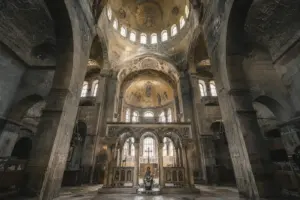 Christian and Jewish Religious Sites and Pilgrimage Locations: Where to Visit and How
Main image: AI-generated illustration. It may not show the place exactly as it looks.
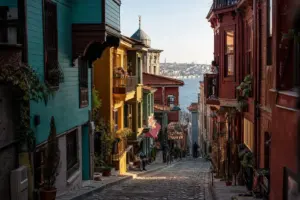 Balat: Istanbul’s Colorful Historic Neighborhood
Main image: AI-generated illustration. It may not show the place exactly as it looks.
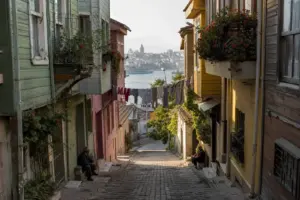 Fener: Istanbul’s Historic Greek Quarter on the Golden Horn
Main image: AI-generated illustration. It may not show the place exactly as it looks.
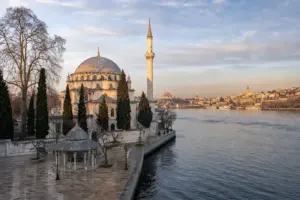 Eyüp: Sacred History, Cemeteries, and Golden Horn Views
Main image: AI-generated illustration. It may not show the place exactly as it looks.
 Kastel: Electronic Music Nightclub in Beyoğlu13 min on foot from Fındıklı-Mimar Sinan Üniversitesi metro
Main image: AI-generated illustration. It may not show the place exactly as it looks.
Browse more: More in Fatih · All Churches · All Sightseeing
FAQ: Bulgarian St. Stephen Church
Is the Bulgarian St. Stephen Church the only iron church in the world?
Yes, it is the only surviving church built entirely of prefabricated cast iron. Other metal churches were constructed in the 19th century in Europe and North America, but the Bulgarian St. Stephen Church is unique for being completely intact and still in active use. The innovative design and material make it a world-class example of industrial-era architecture.
Do I need to buy a ticket to visit?
No. Entry is free. The church is an active place of worship, and visitors are welcome during posted hours (09:00–17:00 daily). Donations are appreciated and support church maintenance. Plan to arrive before 16:30 to have time to view the interior before closing.
Can I visit during Sunday services?
Sunday services typically run 09:00–12:00. You can attend the service if you wish; visitors are welcome. However, if you prefer to explore the church at your own pace without services ongoing, visit on a weekday morning instead.
How long does a visit typically take?
Allow 30–45 minutes to view the interior, examine the iconostasis and decorative details, and study the exterior architecture. If you explore the surrounding Balat neighbourhood and the waterfront, plan 2–3 hours total.
Why is it called the Iron Church?
The structure is built almost entirely of cast iron—the framework, outer panels, and decorative elements. It was manufactured in Vienna by the Waagner company and shipped to Istanbul in prefabricated pieces, then assembled on-site. The iron construction was chosen for fire resistance, rapid assembly, and suitability for the site's unstable ground.
Is the church accessible for people with limited mobility?
The entrance is at street level with no steps. However, the surrounding Balat streets are narrow and cobbled, which can be challenging for wheelchairs or walkers. Contact the church directly at +90 212 248 09 21 to confirm interior accessibility before visiting.
What is the nearest transport stop?
The nearest tram stop is Fener (F1 vintage tram line), about 8–10 minutes' walk downhill. From central areas like Eminönü, you can also walk along the Golden Horn waterfront in about 15–20 minutes. Local buses also serve Balat; ask at a ticket kiosk for the current routes.
Is photography permitted inside the church?
Yes, photography without flash or tripods is permitted. Be respectful and avoid photographing during services. Exterior photography is freely permitted, and late afternoon light provides the most striking images of the iron structure.
Istanbul Vibes is a one-person project. A coffee keeps it going
Hotels near Bulgarian St. Stephen Church
- Hotel Troya Balat (450 m) Check prices (affiliate link, opens in a new tab)
- Rixos Tersane Istanbul (600 m) Check prices (affiliate link, opens in a new tab)
- Lotus Hotel Istanbul (750 m) Check prices (affiliate link, opens in a new tab)
Affiliate link (opens the booking site): we may earn a commission at no extra cost to you.
Restaurants near Bulgarian St. Stephen Church
- Fındık Kabuğu Restoran (50 m) Google Maps
- Domino Cafe (150 m) Google Maps
- AGORA Meyhanesi 1890 (300 m) Google Maps
- Anteplioğlu Baklavacı (300 m) Google Maps
Distances are straight-line, from OpenStreetMap data.

Take this guide with you
Get a free PDF of this guide to print or read offline: key facts, tips and a map link on a few clean pages.
Report an issue on this page
How we research and update our guides
About this guide: AI assistance and accuracy
This guide is created with the help of AI and is based on official sources where available. Mistakes can still happen. Opening hours, prices, rules and other details are given to the best of our knowledge as of the date shown and can change without notice. It offers general recommendations only, not professional, legal or travel advice. Please confirm important details with the official source before you travel; you are responsible for your own plans and decisions.
* Affiliate link: as an Amazon Associate we earn from qualifying purchases at no extra cost to you.
