
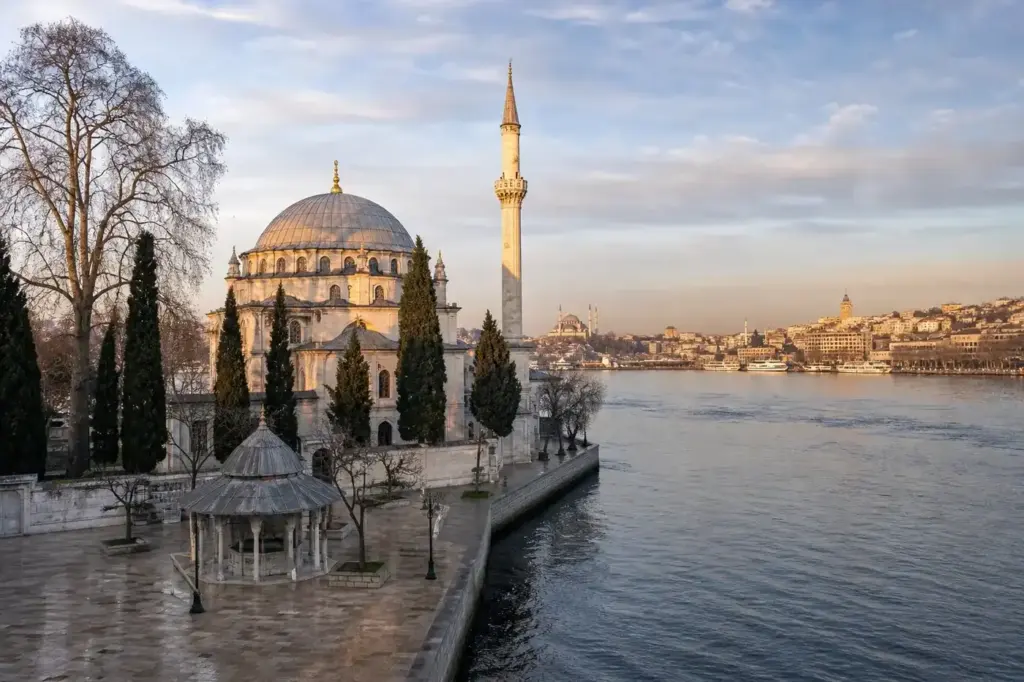
Eyüp (pronounced eh-YEW) is one of Istanbul’s holiest Muslim sites and the first Ottoman settlement established outside Constantinople’s city walls after the 1453 conquest. Located at the confluence of the Kağıthane and Alibey streams where they meet the Golden Horn, this neighborhood derives its name from Abu Ayyub al-Ansari, a companion of the Prophet Muhammad who fell during the first Arab siege of Constantinople in the 7th century.
More than simply a historical district, Eyüp remains an active spiritual center drawing pilgrims and visitors who come to experience its layered history, traditional Ottoman architecture, peaceful cemeteries, and commanding views across the water. Unlike Istanbul’s more heavily touristed quarters, Eyüp offers a slower pace and a genuine glimpse into Islamic heritage preserved over five centuries.
Quick Facts
| Address | Eyüp, Istanbul, Turkey Google MapsApple MapsYandex Maps |
|---|---|
| District | Eyüp |
| Metro | Alibeyköy (M7, For central Eyüp and the Golden Horn waterfront) Yeşilpınar (M7, For southern Eyüp) Hasdal (M11, For northern Eyüp) Göktürk (M11, For far northern areas) |
| Admission | Free |
| Best time to visit | Early morning (7–9 a.m.) brings the quietest atmosphere and best light for photography before prayer crowds. Mid-morning (10–11 a.m.) offers balance between fewer crowds and open access. Friday afternoons see large prayer gatherings and crowding. Ramadan intensifies both spirituality and crowds, especially in evenings. Spring (April–May) and autumn (September–October) offer ideal temperatures for walking the steep cemetery paths. Summer afternoons are hot; winter can be rainy and steep paths become slippery. |
| Recommended duration | 2–4 hours for the core neighborhood and Eyüp Sultan Mosque; half day with cemetery and Pierre Loti Hill |
What Is (and Isn't) Part of a Visit to Eyüp?
| Part | Status | Notes |
|---|---|---|
| Eyüp Sultan Mosque | Included in the standard ticket | Free entry to the mosque courtyard, prayer halls, and ablution courtyard. The sacred spaces are active places of worship; visitors are welcome with respectful dress and behavior. |
| Tomb of Abu Ayyub al-Ansari | Included in the standard ticket | Located within the mosque complex, free to visit as part of the mosque. The cenotaph is the most sacred interior space. |
| Eyüp Cemetery | Included in the standard ticket | Free to walk through. The terraced cemetery is open to public access as a sacred burial ground and historical site. Treat graves respectfully. |
| Pierre Loti Hill and Café | Separate ticket or institution | The café is a separate business with independent pricing for beverages and food. Reachable by cable car (separate small fee) or on foot through the cemetery. |
| Ottoman residential neighborhoods | Included in the standard ticket | The surrounding streets and restored wooden houses are open to public walking. Many are now private residences, shops, or small hotels. |
| Golden Horn waterfront promenade | Included in the standard ticket | The shoreline and waterfront area are open for walking. Ferry service operates from the main Eyüp pier. |
| Süleymaniye Mosque | Outside / not part of it | Located across the Golden Horn in Fatih district; not part of this walking route. It is a separate major sight requiring ferry or bridge crossing. |
Why Visit Eyüp?
Visit Eyüp to understand Ottoman Istanbul’s spiritual foundations and walk streets where the empire’s identity took root. The Eyüp Sultan Mosque complex is one of Islam’s holiest sites outside Mecca and Medina, drawing thousands of pilgrims especially during Friday prayers and Ramadan. The neighborhood’s extensive cemeteries hold the graves of notable Ottoman artisans, scholars, and soldiers, making them open-air museums of Ottoman history carved in stone.
For photography and peaceful contemplation, the terraced Eyüp Cemetery offers winding pathways with Golden Horn views, and the cable car to Pierre Loti Hill climbs through traditional neighborhoods to a legendary café overlooking water and minarets. Eyüp appeals to history buffs, those seeking spiritual atmospheres, and photographers drawn to authentic, less-crowded Istanbul.
How Eyüp Is Laid Out
The Eyüp neighborhood spreads uphill from the Golden Horn shoreline, organized around the Eyüp Sultan Mosque complex as its spiritual center. The mosque and adjacent tomb sit directly on the water near the main ferry landing, surrounded by an outer courtyard and ablution facilities.
From the mosque, narrow streets lined with shops and cafes climb toward the cemetery, which terraces up the hillside with grave markers scattered among shade trees. Further uphill lies Pierre Loti Hill (Piyer Loti Tepesi), accessible by cable car that departs from the lower cemetery area, offering panoramic views from its historic café.
Orientation is straightforward: arrive by ferry or metro at Alibeyköy, walk toward the water to reach the mosque, then ascend through the cemetery toward Pierre Loti. Allow time to wander side streets; smaller mosques, fountains, and traditional wooden houses reveal themselves to those moving slowly through the neighborhood.
Highlights of Eyüp
Eyüp Sultan Mosque Complex
The spiritual heart of the neighborhood, this mosque was built in 1458 by Sultan Mehmed II shortly after discovering the grave of Abu Ayyub al-Ansari. The current structure, reconstructed in 1800 in baroque style, features a central dome with sixteen smaller domes and overlooks the Golden Horn. Inside the sanctuary stands the cenotaph of Abu Ayyub, enclosed by a silver grille commissioned by Sultan Selim III, with inscriptions by Ottoman sultans and calligraphers. The mosque remains active; best visited during quieter morning hours before prayer times bring crowds.
Tip: Free entry; remove shoes at the entrance. Women and men have separate prayer areas, but respectful visitors are welcome to observe. The café behind the mosque offers the best views of the Golden Horn with traditional Turkish tea.
Tomb of Abu Ayyub al-Ansari (Türbe)
This eight-sided mausoleum within the mosque complex contains the shrine of the Prophet Muhammad's companion whose tomb inspired the entire neighborhood. The walls feature intricate ceramic tile work in blues and whites, and the tomb has drawn pilgrims for nearly six centuries. Ottoman sultans traditionally visited to seek spiritual blessing before undertaking military campaigns. The tomb remains open to pilgrims throughout the day and draws hundreds monthly seeking prayer and reflection.
Tip: Photography inside the tomb sanctuary is often restricted; ask politely before photographing. The surrounding courtyard is less crowded than the mosque interior and offers a quieter atmosphere for contemplation.
Eyüp Cemetery (Eyüp Mezarlığı)
Extending across the hillside above the mosque, this centuries-old burial ground contains Ottoman-era graves of artisans, scholars, soldiers, and notables with intricate stone carvings and calligraphic inscriptions. Winding pathways lead upward through groves of cypress and plane trees, offering both historical detail and peaceful green space. The cemetery is a museum of Ottoman funerary art and offers unexpected views of the Golden Horn between the trees. The walk through the cemetery to Pierre Loti Hill takes approximately 15 minutes.
Tip: Walk with respect; this is an active cemetery and a sacred space. Early morning visits are quieter. Wear comfortable shoes for the uneven terrain. Many stones have fascinating dates and epitaphs—bring a notebook if interested in Ottoman history.
Pierre Loti Hill and Café
Named after the 19th-century French novelist Pierre Loti (Julien Viaud), who spent time in Eyüp observing the Golden Horn, this hilltop café sits at the neighborhood's highest point offering commanding views across water to Galata Tower, the city walls, and Süleymaniye Mosque. Reach it by cable car from the cemetery base (a scenic ride itself) or on foot through terraced streets. The café serves traditional Turkish tea and coffee in a timeless atmosphere where locals and visitors share the vista. The view, especially at sunset, ranks among Istanbul's finest photo opportunities.
Tip: The cable car operates daily but check times before climbing to the base. Arrive at the café before sunset for the best light and fewer crowds. Prices are moderate for the setting and views.
Ottoman Streets and Wooden Houses
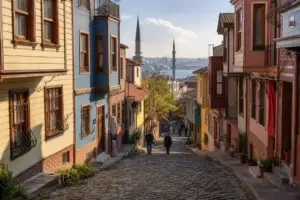
The neighborhoods surrounding the mosque—particularly Kasım Çavuş, Sofular, and Abdülvedud—preserve Ottoman-era wooden mansions with characteristic upper-story overhangs and bay windows. Many are now converted into small hotels, restaurants, or shops, but their original architecture remains visible. These narrow, steep lanes feel frozen in an earlier century, lined with modest neighborhood bakeries, tea gardens, and corner spice shops. The architecture reflects how Ottoman Istanbul's upper classes lived centuries ago.
Tip: Wander side streets without a fixed route; that's where authentic discoveries happen. Photograph traditional buildings in morning light before crowds arrive. Support local cafes and shops if you stop for refreshment.
Golden Horn Waterfront
The shoreline at Eyüp's base has been cleaned and revitalized in recent decades after industrial pollution. Today, the waterfront offers open views across the inlet toward Galata and offers respite from the neighborhood's steep streets. A simple waterside promenade allows sitting and watching ferries cross. The mosque's position directly on the water creates an iconic silhouette, especially when photographed from the water during ferry journeys.
Tip: Take a ferry across the Golden Horn or along it for changing perspectives on the mosque and neighborhood. Ferries from Eyüp pier connect to Balat, Fener, Karaköy, and Eminönü, offering low-cost, scenic transitions to other parts of the city.
Ablution Courtyard and Fountains
The outer courtyard of Eyüp Sultan Mosque features the traditional ablution (wudu) facilities including an ornate fountain where worshippers wash before prayer. The courtyard is bordered by porticoes, and at its center stands an ancient plane tree (sycamore) under which Ottoman sultans and officials once sat during formal ceremonies. The fountains themselves are architectural works with intricate stonework, and the courtyard's scale and geometry exemplify Ottoman religious architecture.
Tip: The courtyard is often quieter than the mosque interior. Sit under the plane tree for shade and observation of the neighborhood's religious rhythms.
Sword-Girding Ceremony Tradition
For centuries, Eyüp Sultan Mosque hosted the accession ceremony where new Ottoman sultans were ceremonially girded with the Sword of Osman, symbolizing their legitimacy and rule. This sacred tradition linked Eyüp directly to Ottoman imperial succession and marked the mosque's supreme importance in state and spiritual life. The ceremony tradition continued until the Ottoman Empire's end and explains the mosque's central role in Ottoman power. Visitors cannot witness this ceremony today, but it remains part of Eyüp's historical identity.
Atmosphere
Eyüp feels more reverent than touristic. The neighborhood quiets around the mosque during dawn and afternoon prayers, when the sound of the call to prayer echoes across water and uphill streets. The pace is deliberate: pilgrims move with purpose while locals navigate steep alleys toward homes and shops. Early mornings bring a meditative quality as worshippers arrive for prayer and the cemetery pathways remain nearly empty except for caretakers.
Midday brings more foot traffic, especially during Ramadan when crowds intensify. Friday afternoons see crowds surge for communal prayer. The wooden houses and narrow lanes retain an earlier Istanbul—colors are muted, materials are worn and weathered, and the sound profile is low: footsteps on stone, calls between neighbors, the murmur of tea gardens, ferry horns from the water.
Photography is permitted in most areas, though dress respectfully near the mosque and cemetery. The atmosphere welcomes respectful visitors and those seeking spiritual experience over entertainment.
History of Eyüp
Eyüp’s history predates the Ottoman period. A settlement existed here during the Byzantine period, known as Kosmidion, the site of a monastery established in the 5th century dedicated to Saints Cosmas and Damian. During the Fourth Crusade, Kosmidion was the site of one of the first skirmishes between the Crusaders and the Byzantines in July 1203. The Byzantine monastery served as a place of pilgrimage and religious importance for centuries under different powers.
The neighborhood’s Islamic identity began with a legend that shaped its future. After the Fall of Constantinople to the Ottomans in 1453, the quarter was renamed after Abu Ayyub al-Ansari, a companion of Muhammad who fell in the first Arab siege of Constantinople in 674–678. His burial place had been lost for centuries until the Ottoman conquest.
Eyup began to develop shortly after the conquest, when Sultan Mehmed II built a tomb over the grave of Ayyub al-Ansari and a mosque next to it. Built in 1458, it was the first mosque constructed by the Ottoman Turks following their conquest of Constantinople in 1453. The first settlers were from the city of Bursa in Anatolia. In 1581, Christians were prohibited from living in Eyüp, marking its transformation into an exclusively Muslim quarter.
The most intense period of development occurred during Sultan Süleyman’s rule in the 16th century. Theological schools, public fountains, cemeteries, hamams (public baths) and alms kitchens were built, followed by wooden mansions and pavilions. The cemetery expanded as the area has long been used for burials, largely due to its position outside the city of Istanbul.
The neighborhood declined in the 18th and 19th centuries. During the industrial boom, this bustling city centre neighbourhood built large factories. Unfortunately, no one thought about the consequences of mass factory sites, and surrounding polluted waters turned everyone off. Pollution from factories along the Golden Horn blighted Eyüp’s reputation for decades, and it became largely abandoned by the Turkish middle class and tourism.
Restoration and cleanup began in the late 20th century. They closed factories, eliminating the horrid stench, and slowly, wildlife returned to the area. Eyup, also called Eyupsultan or Sultan Eyup because of its historical importance, first operated as an individual district of European Istanbul in 1936, and the population grew from 35,000 to 405,000. Today, Eyüp has been revitalized as a residential neighborhood while maintaining its religious significance and historical character.
Legends and Myths about Eyüp
Abu Ayyub's Vision of His Own Burial
Legend – historically unreliable. Legend holds that Abu Ayyub al-Ansari, the Prophet Muhammad's companion, expressed his dying wish to be buried as close to Constantinople's walls as possible, expressing faith that the city would one day become part of the Muslim world. When Ottoman forces discovered his grave nearly eight centuries later during the 1453 conquest, it seemed to fulfill his prophecy. Sultan Mehmed II saw the discovery as divine confirmation that he should build the first mosque and tomb to honor this saint at exactly this spot.
Aksemseddin's Dream
Legend – historically unreliable. The story recounts that Sultan Mehmed II's mentor, the scholar Aksemseddin, dreamed of Abu Ayyub's resting place before it was found. In the dream, the saint appeared to him, pointing to his grave by the Golden Horn. When Mehmed II sent men to search based on this dream, they discovered the tomb, and the mosque was built to commemorate the miracle. This legend links spiritual vision to the mosque's sacred foundation.
Pierre Loti's Enchantment
Legend – historically unreliable. The French writer and naval officer Pierre Loti (Julien Viaud) became enchanted by Istanbul in the late 19th century and spent time in Eyüp watching the Golden Horn from a hillside café. His romantic writings about the city's beauty were so influential that the hill overlooking the mosque became known by his name. Local legend credits Loti with a writer's magic: that anyone who sits at the café where he sat and gazes across the water will feel the same spell of beauty that captured him.
Tickets and Booking for Eyüp
Entry to Eyüp Sultan Mosque and the neighborhood is free. The mosque is open to visitors during non-prayer times, though early mornings before prayer bring a more meditative atmosphere. Respectful dress is important: women should cover shoulders and knees; men should also dress modestly. Remove shoes before entering prayer halls.
The cable car from the cemetery base to Pierre Loti Hill operates daily with small fees per ride, payable directly at the cable car station. The café at Pierre Loti charges standard Turkish café prices for tea, coffee, and light refreshments.
Ferry service to Eyüp departs from Eminönü, Balat, Fener, and Karaköy; check current ferry schedules with İDO (Istanbul Ferries) for frequency and pricing. The metro lines M7 and M11 serve nearby stations with standard metro fares.
Suggested itineraries Eyüp
2 hours
Arrive at Alibeyköy metro station, walk downhill 5 minutes to the mosque. Spend 30 minutes in the mosque courtyard and tomb. Walk uphill through the first terraces of the cemetery for 20 minutes, enjoying views and grave inscriptions. Return to the waterfront for tea or rest. Take a ferry back to central Istanbul or explore the neighborhood's side streets.
3 hours
Start at the mosque as above, then walk through the entire Eyüp Cemetery, allowing 45 minutes for winding pathways and photos. Take the cable car to Pierre Loti Hill (5 minutes ride). Spend 45 minutes at the café and viewpoint. Descend either by cable car or walking back through the cemetery. Grab tea or snacks at a neighborhood café before departing.
Half day (4–5 hours)
Morning visit: arrive for sunrise or early prayers at the mosque (7–8 a.m.). Pray or observe if respectful. Walk through the cemetery slowly with notebook or camera, visiting notable graves. Cable car to Pierre Loti for midday rest and views. Lunch at neighborhood restaurants (Turkish cuisine) near the mosque. Afternoon: explore Ottoman residential streets and small shops. Depart by late afternoon ferry or metro.
How to Get to Eyüp
By Metro: The M7 line stops at Alibeyköy station, the closest metro access. Exit onto Atatürk Street; walk downhill toward water 5 minutes to reach the mosque. The M7 connects to central areas like Taksim and Sultanahmet with transfers. Alternatively, the M11 line serves Hasdal and Göktürk stations further north.
By Ferry: Ferries depart from Eminönü (main tourist pier), Balat, Fener, and Karaköy. The ferry ride to Eyüp takes 10–20 minutes depending on origin and offers scenic Golden Horn views. Exit at the main Eyüp pier and walk directly to the mosque (2 minutes).
By Taxi or Ride-Share: Direct taxi or app-based cars take 15–30 minutes depending on origin and traffic. Ask to be dropped at the Cami Kebir Sokak entrance or the waterfront near the mosque.
By Car: Street parking is limited. Dedicated small car parks exist near the mosque but fill during prayer times.
Accessibility
The mosque itself is ground-level with ramped or step access to the prayer hall. The outer courtyard is accessible. The cemetery paths climb steeply on uneven stone terrain with many steps; not suitable for wheelchairs or limited mobility visitors. Benches exist at intervals for rest. The cable car to Pierre Loti accommodates wheelchairs. Most surrounding neighborhoods have narrow, steep streets without level sidewalks.
Food Nearby
The neighborhood contains traditional Turkish restaurants and tea gardens catering to pilgrims and locals. Small family-run restaurants serve simple Ottoman cuisine (stews, kebabs, soups) at budget to moderate prices. Turkish breakfast spots operate early mornings. Cafés cluster around the mosque and throughout side streets, serving tea, coffee, and pastries. Pierre Loti Café at the hilltop serves beverages and light food with panoramic views. Street vendors sell sesame bread and seasonal snacks. Alcohol is not commonly available in the conservative neighborhood; focus on tea gardens and Turkish coffee houses.
What to Bring
Comfortable walking shoes with good grip—streets are steep and many paths are uneven stone. A hat and sunscreen for the exposed cemetery sections. A modest scarf or shawl to cover shoulders when entering the mosque if wearing sleeveless clothing. Water bottle; few shops cluster by the water and cemetery paths have no vendors. A small notebook for recording grave inscriptions or historical observations if interested in Ottoman funerary art.
Best Views and Photo Spots of Eyüp
Mosque courtyard, facing Golden Horn
The central dome and minarets of the mosque frame perfectly against the water and opposite shoreline. Early morning side-light illuminates the dome and ablution fountain details. This is the iconic view most recognized from this site.
Best time: Early morning (7–9 a.m.) for golden light and minimal crowds. Late afternoon for warm side-lighting on the dome.
Cemetery pathways with Golden Horn vista
Narrow winding paths through cypress and plane trees frame views of the mosque below and water beyond. The layers of graves create depth in photos. This is a quieter, more artistic perspective than the main courtyard.
Best time: Mid-morning for soft directional light through trees. Avoid strong midday overhead light that creates harsh shadows.
Pierre Loti Café terrace
Commanding panorama across the Golden Horn toward Galata Tower, Hagia Sophia, and Süleymaniye Mosque. The café's tables and railings frame the view. This offers Istanbul's most complete panorama in a single frame from this side of the water.
Best time: Late afternoon or near sunset for warm golden light on water and distant minarets. Avoid backlit mid-afternoon positions.
Ferry approaching Eyüp pier
From the water, the mosque complex rises directly from the shoreline with minarets against the sky. The perspective shows how the site dominates the Golden Horn corner. Few tourists capture this angle.
Best time: Any time of day during ferry transit; the moving perspective constantly shifts the composition.
Ottoman wooden houses on side streets
Bay windows, overhangs, and shuttered facades of 18th and 19th-century residential buildings. Detail shots reveal traditional Ottoman architecture in decay and repair, showing the neighborhood's authentic texture.
Best time: Morning light rakes across wooden details. Photograph facade details from opposite side of narrow streets for better perspective.
Photography Rules
Photography is generally permitted in the mosque courtyard and cemetery. Flash and tripods are prohibited inside the prayer halls and near the tomb. Drone photography is not permitted anywhere in the neighborhood. Respect those at prayer; ask permission before photographing people. Some visitors and pilgrims may object to photography during prayer times or at graves.
Family Suitability
The neighborhood appeals to history and culture-focused families but has limitations for young children. The steep cemetery paths and 200+ stone steps challenge strollers; older children can manage the walk with breaks. The mosque courtyard is calm and observes religious protocols respectfully. The cable car to Pierre Loti entertains children with a scenic ride. Restaurants offer simple child-friendly Turkish food. The peaceful atmosphere suits families seeking history over entertainment. Not suitable for families wanting playground facilities or child-focused attractions; better for ages 8+ interested in history.
Istanbul Vibes Tips
- Arrive early. The mosque and cemetery feel worlds away from crowded Istanbul before 10 a.m. Morning light also favors photography, and ferries are less packed.
- Hire a local guide if interested in Ottoman history details. Cemetery guides available at the base know grave stories, inscriptions, and neighborhood history that independent visitors miss. Ask at the mosque courtyard or main pier.
- Don't rush the cemetery walk. It's easy to treat it as a corridor between the mosque and Pierre Loti, but the graves themselves tell Ottoman history through inscriptions, symbols, and stone carving styles. Plan 45 minutes minimum.
- Respect prayer times. The mosque is most welcoming to visitors outside of formal prayer hours (roughly 9 a.m.–noon, 3–5 p.m., 7–9 p.m., depending on season). Friday midday is peak prayer time and least suitable for non-Muslim visitors.
- Take the ferry to Eyüp at least once. It's a scenic route offering views unavailable from land and costs the same as a metro ride. Ferry departures from Eminönü or Karaköy are frequent.
- Wear appropriate dress without assuming you need to be inconspicuous. Most visitors dress modestly (covered shoulders and knees) and are welcomed respectfully. Scantily dressed visitors can distract from the spiritual atmosphere and may be asked to cover.
Explore Nearby Eyüp
Sights near Eyüp
 Golden Horn · typical visit: 1–3 hours (waterfront walk or boat tour)
Main image: AI-generated illustration. It may not show the place exactly as it looks.
 Pierre Loti Hill – about 2.2 km away · typical visit: 1–2 hours2 min on foot from Piyer Loti metro, Open daily 08:00–23:00
Main image: AI-generated illustration. It may not show the place exactly as it looks.
 Fethiye Mosqueabout 2.4 km away · typical visit: 1–1.5 hours
Main image: AI-generated illustration. It may not show the place exactly as it looks.
 Bulgarian St. Stephen Church – about 2.0 km away · typical visit: 30–45 minutesOpen daily 09:00–17:00
Main image: AI-generated illustration. It may not show the place exactly as it looks.
 Rahmi M Koç Museum – about 1.1 km away (~17 min walk) · typical visit: 2–3 hours9 min on foot from Ayvansaray metro
Main image: AI-generated illustration. It may not show the place exactly as it looks.
 Aynalıkavak Pavilion – about 1.2 km away (~20 min walk) · typical visit: 1.5–2 hoursOpen 09:00–17:30, closed Mon
Main image: AI-generated illustration. It may not show the place exactly as it looks.
Train stations and river piers near Eyüp
 Eyüp Ferry Terminalabout 1.8 km away (~29 min walk)
Main image: AI-generated illustration. It may not show the place exactly as it looks.
Events and traditions near Eyüp
 Istanbul Film Festivalabout 1.3 km away (~21 min walk)
Main image: AI-generated illustration. It may not show the place exactly as it looks.
 Istanbul Music Festivalabout 1.8 km away (~29 min walk)
Main image: AI-generated illustration. It may not show the place exactly as it looks.
Related guides
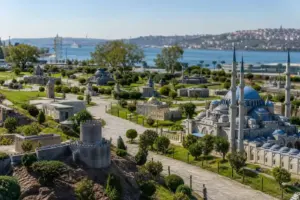 Miniaturk: Turkey’s Landmarks in Miniature on the Golden Horn
Main image: AI-generated illustration. It may not show the place exactly as it looks.
 Fener District: Historic Greek Orthodox Heart of IstanbulOpen 24 hours
Main image: AI-generated illustration. It may not show the place exactly as it looks.
 Islamic Architecture Tour: Ottoman Mosques, Palaces and Sacred Sites
Main image: AI-generated illustration. It may not show the place exactly as it looks.
 Eyüp Sultan Mosque: Sacred History on the Golden Horn7 min on foot from Feshane metro, Open daily 08:30–18:30
Main image: AI-generated illustration. It may not show the place exactly as it looks.
 Energy Museum at Santralistanbul: Ottoman Power Plant Turned Free MuseumOpen daily 08:30–17:00
Main image: AI-generated illustration. It may not show the place exactly as it looks.
Browse more: More in Eyüp · All Landmarks · All Neighborhoods
FAQ: Eyüp
Is Eyüp really Islam's holiest site outside Mecca and Medina?
The mosque complex is considered by many Muslims to be the fourth holiest site in Islam after Mecca, Medina, and Jerusalem, primarily because of the tomb of Abu Ayyub al-Ansari. However, this ranking is not universally recognized across all Islamic traditions. Eyüp holds immense spiritual significance in Turkish and Ottoman Islam specifically.
Do I need special permission to visit the mosque as a non-Muslim?
No formal permission is needed. The mosque welcomes respectful visitors outside formal prayer times. Dress modestly (covered shoulders, knees, and chest); women may be offered or should bring a headscarf to cover hair inside the prayer hall. Remove shoes before entering prayer areas. Avoid visiting during the five daily prayers and Friday noon prayer when the space is reserved for worshippers.
What is the sword-girding ceremony?
Ottoman sultans were traditionally girded (formally dressed and armed) with the Sword of Osman at Eyüp Sultan Mosque upon their accession to the throne. This ceremony proclaimed their legitimacy and rule. It connected spiritual blessing at this holy site to imperial power. The tradition ended with the Ottoman Empire; visitors cannot witness this ceremony today.
How long does it take to see everything in Eyüp?
The mosque complex and immediate surroundings take 45 minutes to 1 hour. Adding the cemetery walk and Pierre Loti cable car brings it to 2.5–3 hours. A full half-day visit (4–5 hours) allows exploring side streets, neighborhoods, and restaurants. You can see the core sites in a 1-hour visit if time is limited.
Is the cemetery appropriate to walk through?
Yes, the Eyüp Cemetery is open to public walking and is one of the site's major attractions. It is an active burial ground and sacred space, so walk respectfully, stay on paths, and avoid stepping on graves. The cemetery offers beautiful views, historical graves of notable Ottomans, and architectural details worth studying.
Can I reach Eyüp by public transport?
Yes. Metro line M7 stops at Alibeyköy (closest access), a 5-minute walk downhill to the mosque. Ferry service operates from Eminönü, Balat, Fener, and Karaköy to Eyüp pier. Both are affordable and frequent. Buses also serve the neighborhood from central areas.
What is Pierre Loti Hill and how do I get there?
Pierre Loti Hill is a hilltop named after a 19th-century French writer who loved Istanbul. A café there offers panoramic Golden Horn views. Reach it by cable car from the cemetery base (small fee, 5-minute ride) or walk uphill through the cemetery (20 minutes). The cable car saves energy but both routes are scenic.
Is Eyüp safe for solo travelers and women?
Yes. Eyüp is conservative and peaceful. Solo visitors and women alone are safe, especially during daytime and early evenings. The neighborhood is quiet with local residents, not a nightlife area. Dress respectfully to avoid unwanted attention. As always in Istanbul, use common sense about personal belongings.
Istanbul Vibes is a one-person project. A coffee keeps it going

Take this guide with you
Get a free PDF of this guide to print or read offline: key facts, tips and a map link on a few clean pages.
Report an issue on this page
How we research and update our guides
About this guide: AI assistance and accuracy
This guide is created with the help of AI and is based on official sources where available. Mistakes can still happen. Opening hours, prices, rules and other details are given to the best of our knowledge as of the date shown and can change without notice. It offers general recommendations only, not professional, legal or travel advice. Please confirm important details with the official source before you travel; you are responsible for your own plans and decisions.
* Affiliate link: as an Amazon Associate we earn from qualifying purchases at no extra cost to you.
