
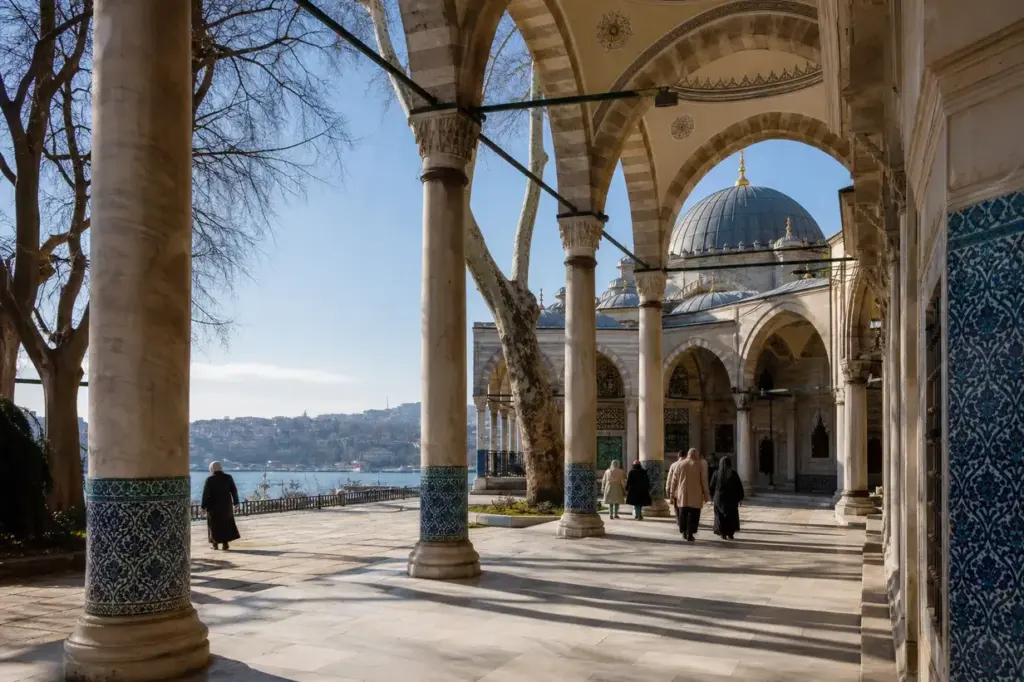
The Eyüp Sultan Mosque is the heart of the district, drawing thousands of visitors daily. It is revered because it is located on the site of the tomb of Abu Ayyub al-Ansari – who was both a friend and standard bearer for the Prophet Muhammad and was killed during the first Arab siege of Constantinople (674–678).
The mosque was erected on the instruction of Fatih Sultan Mehmet II, five years after he seized Constantinople for the Ottomans in 1453. Because of its particular sanctity, the mosque played a role in the coronation ceremony for new Ottoman Sultans, who came here to be girded with the Sword of Osman at the start of their reigns. For visitors, it offers both profound spiritual significance and a window into Ottoman imperial history.
Quick Facts
| Built / opened | 1458 |
|---|---|
| Address | Merkez Mahallesi, Cami Kebir Caddesi No: 1, 34050 Eyüpsultan, Istanbul Google MapsApple MapsYandex Maps |
| District | Eyüp |
| Metro | Haliç (M2, Follow signs to Eyup; 15–20 min walk or take local bus) |
| Admission | free |
| Best time to visit | Visit on a weekday morning between 09:00 and 12:00, when the mosque is less crowded and the spiritual atmosphere is most apparent. Avoid Friday midday (12:00–14:30) when Friday prayers close the mosque to visitors.Avoid prayer times (approximately 30 minutes each): dawn, mid-morning, noon, mid-afternoon, and sunset. These times change seasonally.Spring and autumn offer pleasant weather for walking the complex and surrounding cemetery. Summer can be hot; winter is mild but damper. The site is open year-round, but fewer international visitors come in winter, making it quieter. |
What Is (and Isn't) Part of a Visit to Eyüp Sultan Mosque?
| Part | Status | Notes |
|---|---|---|
| Main mosque chamber and courtyard | Included in the standard ticket | Entrance to Eyüp Sultan Mosque is free of any cost. |
| Tomb of Abu Ayyub al-Ansari | Separate ticket or institution | The tomb is open from Tuesday to Sunday from 9:30 am until 4:30 pm. Requires a separate ticket. |
| Eyüp Cemetery | Outside / not part of it | Historic burial ground on the hillside behind the mosque; free to walk through. A separate place. |
| Pierre Loti viewpoint | Outside / not part of it | A hilltop café and park above the cemetery, accessible by cable car. Not part of the mosque complex. |
| Prayer times | Included in the standard ticket | The mosque is closed to visitors during prayer hours. As an exception, it is closed for half a day on Fridays until 14:30 due to congregational prayers. |
Why Visit Eyüp Sultan Mosque?
The Eyüp Sultan Mosque is one of the most holy and important mosques in all of Turkey, revered because it is located on the site of the tomb of Abu Ayyub al-Ansari – who was both a friend and standard bearer for the Prophet Muhammad. The spiritual weight of the site is felt throughout the complex.
Architecturally, the mosque preserved classical Ottoman architectural traditions while integrating Baroque elements, with an octagonal-supported plan featuring a central dome measuring 17.5 meters in diameter, which is carried on eight pillars connected by arches. The interior and exterior tile compositions mostly feature high-quality 16th-century Iznik tiles, supplemented with later additions. Beyond the mosque itself, the Eyüp district offers traditional tea gardens, historic cemeteries, and views across the Golden Horn.
How Eyüp Sultan Mosque Is Laid Out
The mosque complex, or külliye, includes a madrassa, soup kitchen, public kitchen, bathhouse, and tomb. The main mosque chamber stands in the centre. The tomb of Abu Ayyub al-Ansari, adjacent to the mosque, is a site of great spiritual significance. The tomb is open from Tuesday to Sunday from 9:30 am until 4:30 pm. A courtyard surrounds the inner structures. The complex sits on the northern edge of the Golden Horn, with the cemetery rising on the hillside behind.
Highlights of Eyüp Sultan Mosque
The Central Dome
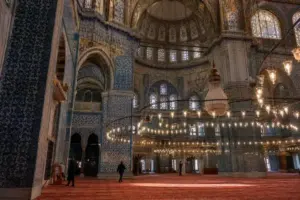
The octagonal-supported structure features a central dome measuring 17.5 meters in diameter, which is carried on eight pillars connected by arches. Looking upward from the floor, the dome appears to float above the columns, its interior decorated with fine plasterwork and light filtering through windows that run around the base. The effect is one of serene spaciousness, unusual for Ottoman mosques. Look for the eight pillars and trace how the arches distribute weight to create this effect.
Tip: Visit in late afternoon when sunlight streams through the windows, illuminating the interior and the tilework.
Iznik Tilework
The interior and exterior tile compositions feature high-quality 16th-century Iznik tiles, supplemented with later additions. The tiles cover walls and surfaces around the dome base, in jewel-toned blues, teals, and earth tones. Their geometric and floral patterns are intricate and layered, each section telling a story of Ottoman artisanship. The colours and patterns change throughout the complex.
Tip: Look closely at areas where restoration tiles meet original ones – you can see the difference in age and technique.
The Tomb of Abu Ayyub al-Ansari
The tomb of Abu Ayyub al-Ansari, adjacent to the mosque, is a site of great spiritual significance. Many Ottoman sultans performed their sword-girding ceremonies there, marking the official beginning of their rule. The tomb maintains the octagonal, domed, classical Ottoman style. A silver grille encloses the cenotaph. Visitors often see pilgrims in prayer here. The tomb is open from Tuesday to Sunday from 9:30 am until 4:30 pm.
Tip: The tomb requires a separate ticket and has different hours than the mosque; plan your timing accordingly.
The Fountain of Sultan Ahmed I
A fountain constructed in 1613 by Sultan Ahmed I draws attention for its classical style and marble workmanship. Located within the complex, the fountain sits beneath a small domed roof supported by slender columns. The marble is pale and finely worked, with decorative carving around the basin. Water still flows in the classical Ottoman manner. It serves both as a functional element and as a piece of art.
Tip: Walk around the fountain to see the marble detail from different angles; the craftsmanship is evident up close.
The Courtyard
The outer courtyard is surrounded by arcaded porticoes with tall columns. The ground is paved with stone, and the arcades cast deep shadows, creating a rhythm of light and shade. The space feels meditative, especially in early morning or late afternoon. Pigeons gather here, and worshippers and visitors move quietly. The courtyard is open to non-Muslims outside prayer times.
Tip: Remove your shoes before entering the inner mosque chamber; use the shoe cubbies near the entrance.
Ottoman Baroque Elements
The mosque integrated Baroque elements during reconstruction; the interior displays Baroque and Westernization-era decorations on columns, doors and windows. These softer, more ornamental details appear alongside the classical Ottoman geometry. Curved lines, floral motifs, and a sense of movement characterize the Baroque approach, contrasting with the strict geometric order of earlier Ottoman design.
Tip: Compare the Baroque elements (carved doors, painted plasterwork) with the geometric Iznik tiles to understand the stylistic transition from classical to 18th-century Ottoman aesthetic.
Atmosphere
Visitors frequently mention feeling a sense of peace, reverence, and tranquility upon entering the mosque and its surroundings. The interior is hushed, with soft light falling through windows. The air carries the scent of old stone, polish, and incense. Footsteps echo on marble. Carpets muffle sound in the main prayer hall, where worshippers kneel in orderly rows, and visitors move respectfully to the sides.
Early mornings are quiet, with few visitors and mainly local worshippers. By midday, the courtyard fills with pilgrims and tourists. The atmosphere remains contemplative rather than crowded. The area around the mosque is home to several Ottoman-era medreses, han buildings, and charming tea gardens where visitors can take a break, sip Turkish tea under the shade of ancient trees, and absorb the district’s historical atmosphere.
History of Eyüp Sultan Mosque
Abu Ayyub al-Ansari, Eyüp Sultan in Turkish, was a companion and trusted friend of Muhammad, who is believed to have died during the first Arab siege of Constantinople. His burial site fell into obscurity for centuries.
Fatih Sultan Mehmed ordered the construction of the Eyup Sultan Mosque complex in 1458, just five years after his victory, inspired by a dream of his teacher, Akşemseddin. In his dream, Akşemseddin saw the construction of a mosque at the burial site of Abu Ayyub al-Ansari. It led Sultan Mehmed to fulfil this vision by commissioning the mosque. This makes Eyüp Sultan Mosque the first mosque built by the Ottomans in Istanbul after the conquest.
The mosque was damaged in the major earthquake of 1766. It was largely destroyed, and efforts were made to repair it shortly afterward. Although it was repaired, a few years later this was deemed insufficient, and it remained closed for a period. In 1798, reconstruction efforts were undertaken again. However, inspections revealed that the structure could no longer be used, so it was demolished to its foundation and rebuilt within two years.
During the reign of Sultan Selim III, the mosque was reconstructed entirely, with the rebuilt structure opening for worship in 1800. Despite being reconstructed during the Ottoman Westernization period, the mosque preserved classical Ottoman architectural traditions while integrating Baroque elements. This synthesis shaped the mosque’s character. The tomb itself was restored and maintained as one of Islam’s holiest sites, and the complex has remained a destination for pilgrims ever since.
Tickets and Booking for Eyüp Sultan Mosque
| Ticket | Price | Includes |
|---|---|---|
| Mosque entry | Free | Access to main mosque chamber, courtyard, and fountain |
| Tomb of Abu Ayyub al-Ansari | ₺ | Separate entry to the tomb chamber with cenotaph and tilework |
₺ budget · ₺₺ moderate · ₺₺₺ upscale · ₺₺₺₺ splurge. Price levels are estimates compared with typical prices for visitors.
Entrance to Eyüp Sultan Mosque is free of any cost, because it is a sacred mosque. No advance booking is required for the main mosque. Simply arrive during open hours, remove your shoes at the entrance, and enter respectfully. The tomb has separate hours and requires a ticket purchased on-site.
Visitors should be aware that the mosque closes during the five daily prayers, each lasting approximately 30 minutes. On Fridays, the mosque is closed for half a day until 14:30 due to congregational prayers. Operating hours in 2026 are between 08:30 in the morning and 18:30 in the evening. Modest dress is required: women should cover their heads, shoulders, and legs; men should avoid shorts. Shoes must be removed before entering the mosque chamber. Check the official site for current visiting hours and prayer times, as these vary seasonally.
Suggested itineraries Eyüp Sultan Mosque
45 minutes
Enter the courtyard and outer arcades. Spend 15 minutes observing the courtyard and fountain. Remove shoes and enter the main prayer hall to view the dome and tilework for 20 minutes. Exit and walk around the exterior to see the building and complex layout for 10 minutes.
1–1.5 hours
Begin with the courtyard and fountain (15 minutes). Enter the main chamber and observe the dome, tilework, and Baroque details (25–30 minutes). Exit and visit the tomb (requires separate ticket; 20–25 minutes if open). Walk around the complex perimeter and photographically explore details (10 minutes).
2–3 hours
Spend time in the courtyard during quieter hours. Tour the main mosque chamber thoroughly. Visit the tomb. Explore the Eyüp Cemetery on the hillside behind the mosque (30–40 minutes) and see historic graves dating back centuries. Return and sit in a nearby tea garden for Turkish tea and reflection. Alternatively, take the cable car up to Pierre Loti café for views.
How to Get to Eyüp Sultan Mosque
By metro and bus: Take metro line M2 to Haliç station. Exit and follow signs toward Eyup; it is approximately 15–20 minutes on foot downhill toward the Golden Horn. Alternatively, from Haliç station, take a local bus (check current routes at the station) toward Eyup Merkez. The mosque is in the neighbourhood centre.
By ferry: Eyüp can be reached via the Haliç Hattı ferry line from Üsküdar, Karaköy, or Eminönü. Ferries dock at the Eyup pier; the mosque is a short walk uphill from the waterfront.
By taxi or local transport: Taxis are available throughout Istanbul. Ask for “Eyüp Sultan Camii” or provide the address: Merkez Mahallesi, Cami Kebir Caddesi No: 1. From Sultanahmet (Old City), the journey takes 15–20 minutes by taxi across the Golden Horn.
Accessibility
Modest clothing is required; women should cover their head, shoulders, and legs. Shoes must be removed before entering the mosque interior. Shoe cubbies are provided near the main entrance.The courtyard is at ground level and accessible via the main entrance. The outer arcades have slight slopes. The main prayer hall is accessed by a small step or ramp; this area is generally accessible. The building does not have documented wheelchair accessibility; the tight entry points, shoe-removal requirement, and interior layout may present challenges. Contact ahead to confirm if accommodation is possible.The tomb has separate, limited hours (Tuesday–Sunday, 9:30 am–4:30 pm). Accessibility features are not documented; assume similar limitations. Benches are available in courtyards for rest.
Food Nearby
The Eyüp district is known for traditional Turkish tea gardens and simple restaurants. Tea gardens with outdoor seating overlook the Golden Horn and cemetery; they serve Turkish tea and coffee with pastries. No high-end dining is near the mosque itself. For snacks, small bakeries and vendors sell Turkish pastries and bread. The area around the mosque is home to charming tea gardens where visitors can take a break, sip Turkish tea under the shade of ancient trees. Most food is casual and budget-friendly.
What to Bring
Bring comfortable walking shoes that are easy to remove and put back on. Modest clothing: long trousers or skirts, covered shoulders, and a headscarf for women (can be borrowed at the entrance if needed). In spring and autumn, bring a light jacket for outdoor areas. In summer, bring sunscreen and a hat. Carry water, as the complex offers no refreshments. A small bag is acceptable; large rucksacks may be left at the entrance or prohibited—check on arrival. Photography is allowed in most areas; tripods and professional equipment may require permission.
Best Views and Photo Spots of Eyüp Sultan Mosque
Courtyard arcades looking toward the dome
Framed by tall columns and arches, the dome rises at the end of the colonnade. Soft light filters through the openings, creating rhythmic shadows on the paved floor. The Baroque-era tilework and carved details are visible on the column bases.
Best time: Early morning or late afternoon for warm, directional light. Avoid harsh midday sun, which flattens the scene.
Interior dome from the floor
Looking straight up at the 17.5-meter dome supported by eight pillars and connecting arches. The dome's plasterwork and window openings create depth and luminosity. Geometric and floral tile patterns line the base.
Best time: Mid-morning or mid-afternoon when light flows through the dome's windows, illuminating the interior without glare.
Iznik tilework detail (walls near the dome base)
Close-up of 16th-century Iznik tiles in teals, blues, and earth tones. Geometric and botanical patterns fill the surface. Restoration tiles of later periods are interspersed, creating visible contrast.
Best time: Any time; the tiles' colours are consistent throughout the day. Macro or close-up lenses work well.
Fountain of Sultan Ahmed I
Pale marble fountain beneath a small domed roof, with finely carved basin and spout. Symmetrical columns support the dome. Water flows in the traditional Ottoman manner.
Best time: Morning light brings out the marble's grain and colour. Photograph from multiple angles to show the craftsmanship.
Golden Horn view from the cemetery hillside
The mosque sits at the edge of the Golden Horn with the cemetery's green slope rising behind. Views of the Old City's silhouette and the water create a layered, atmospheric scene.
Best time: Late afternoon, when the sun is lower and the cityscape across the water is illuminated. Autumn and spring offer clearer air.
Photography Rules
Photography is generally permitted inside the mosque and courtyard for personal use. Avoid photographing people in prayer or close-ups of worshippers without consent. Flash may disturb prayers; check before using it. Tripods and professional-grade equipment may require special permission or may be restricted. Drones are not permitted. The best photographs come from the courtyard arcades, the interior dome, and tilework details. Exterior shots work well from the street level and from nearby overlooks.
Family Suitability
The mosque welcomes families but is best suited to older children and teens who can observe prayer etiquette and sit or walk quietly. The courtyard is spacious and safe for children to walk through. Shoe removal is manageable for most ages. Inside the prayer hall, children should remain seated or standing quietly; it is not a playground.Strollers are impractical due to shoe removal requirements and narrow interior spaces; carriers or a child on foot are better. Young children may find the quiet atmosphere challenging if they need stimulation. The cemetery behind the mosque is interesting for older children learning about history.The tomb has limited hours and separate access; plan accordingly. Overall, the site is suitable for families seeking cultural and spiritual education in a respectful setting, not for very young children seeking active play.
Istanbul Vibes Tips
- Visit during the quieter morning hours when the local worshippers come for their daily prayers; it's the best time to experience the spiritual ambiance without the crowds.
- Confirm prayer times before you visit. The mosque closes during five daily prayers, and you may find the gates locked or the interior off-limits if you arrive at the wrong hour. The first prayer is before sunrise; the last is after sunset. A sign at the entrance usually lists the day's prayer times.
- Do not assume the tomb is open when the mosque is. The tomb is open from Tuesday to Sunday from 9:30 am until 4:30 pm. It is closed Mondays and has limited weekday hours. Plan your visit accordingly, or you will arrive to find it locked.
- Women should bring or borrow a headscarf before entering. One can usually be borrowed at the entrance for free, but bringing your own is faster and more comfortable.
- The cable car up to Pierre Loti (a café and viewpoint above the cemetery) is not part of the mosque complex, but it is nearby and a popular add-on. Budget an extra 30–45 minutes if you want to include it.
- Combine your visit with the Eyüp Cemetery, which is free and historically significant. You can walk up the hillside and explore graves dating back centuries. It adds 30–40 minutes to your visit and offers a quieter, contemplative experience away from the main tourist flow.
Explore Nearby Eyüp Sultan Mosque
Sights near Eyüp Sultan Mosque
 Eyüp Cemetery – about 550 m away (~9 min walk) · typical visit: 1–2 hours2 min on foot from Piyer Loti metro, Open 24 hours
Main image: AI-generated illustration. It may not show the place exactly as it looks.
 Fener and Balat Districtsabout 2.6 km away · typical visit: 3–5 hours
Main image: AI-generated illustration. It may not show the place exactly as it looks.
 ArtIstanbul Feshane – about 500 m away (~8 min walk) · typical visit: 1–2 hours2 min on foot from Feshane metro, Open 10:00–20:00, closed Mon
Main image: AI-generated illustration. It may not show the place exactly as it looks.
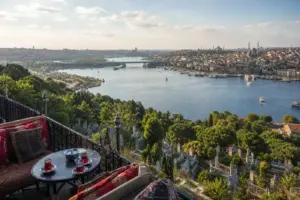 Pierre Loti Hill – about 700 m away (~12 min walk) · typical visit: 1–2 hours2 min on foot from Piyer Loti metro, Open daily 08:00–23:00
Main image: AI-generated illustration. It may not show the place exactly as it looks.
 Rahmi M Koç Museum – about 1.4 km away (~23 min walk) · typical visit: 2–3 hours9 min on foot from Ayvansaray metro
Main image: AI-generated illustration. It may not show the place exactly as it looks.
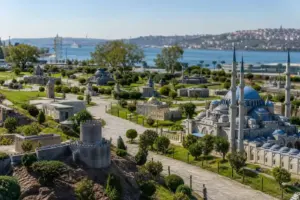 Miniaturkabout 1.8 km away (~30 min walk) · typical visit: 2–3 hours
Main image: AI-generated illustration. It may not show the place exactly as it looks.
Metro stations near Eyüp Sultan Mosque
 Feshane – about 450 m away (~7 min walk)Open daily 06:00–23:00
Main image: AI-generated illustration. It may not show the place exactly as it looks.
 Piyer Loti – about 600 m away (~10 min walk)Open daily 08:00–23:00
Main image: AI-generated illustration. It may not show the place exactly as it looks.
Train stations and river piers near Eyüp Sultan Mosque
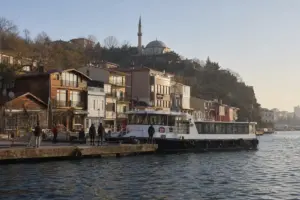 Eyüp Ferry Terminalabout 300 m away (~5 min walk)
Main image: AI-generated illustration. It may not show the place exactly as it looks.
Related guides
 Eyüp and Pierre Loti Walk: Sacred Sites and Golden Horn Views
Main image: AI-generated illustration. It may not show the place exactly as it looks.
 Best Mosques and Religious Sites: Ottoman Masterpieces and Sacred Spaces
Main image: AI-generated illustration. It may not show the place exactly as it looks.
 Golden Horn Waterfront Walk: Waterfront Route Through Fener, Balat & Eyüp
Main image: AI-generated illustration. It may not show the place exactly as it looks.
 Islamic Architecture Tour: Ottoman Mosques, Palaces and Sacred Sites
Main image: AI-generated illustration. It may not show the place exactly as it looks.
 Energy Museum at Santralistanbul: Ottoman Power Plant Turned Free MuseumOpen daily 08:30–17:00
Main image: AI-generated illustration. It may not show the place exactly as it looks.
Browse more: More in Eyüp · All Landmarks · All Sightseeing
FAQ: Eyüp Sultan Mosque
Is Eyüp Sultan Mosque free to enter?
Entrance to Eyüp Sultan Mosque is free of any cost. There is no entrance fee to the Eyup Sultan Mosque in 2026. The tomb of Abu Ayyub al-Ansari requires a separate, modest ticket.
Can non-Muslims visit?
Non-Muslims are welcome to visit Eyup Sultan Mosque outside of prayer times. It is a place of religious worship, so visitors are expected to show respect by dressing modestly and behaving quietly within the mosque's premises.
When is the mosque open?
Eyup Sultan Mosque opening hours are between 08:30 in the morning and 18:30 in the evening in 2026. However, the mosque is closed to visitors during prayer hours. As an exception, it is closed for half a day on Fridays until 14:30 due to congregational prayers.
What is the dress code?
Modest clothing is required; women should cover their head, shoulders, and legs. Shoes must be removed before entering the mosque interior. Men should avoid shorts. A headscarf can be borrowed at the entrance if you do not have one.
What is the history of the mosque?
Originally built in 1458, shortly after the Ottoman conquest of Constantinople, the mosque is one of the most sacred Islamic sites in Turkey. It is the first mosque built by the Ottomans in Istanbul after the conquest. The current structure was reconstructed during the reign of Sultan Selim III and opened for worship in 1800.
Why is Eyüp Sultan Mosque so important?
It is revered because it is located on the site of the tomb of Abu Ayyub al-Ansari – who was both a friend and standard bearer for the Prophet Muhammad and was killed during the first Arab siege of Constantinople (674–678). Because of its particular sanctity, the mosque played a role in the coronation ceremony for new Ottoman Sultans, who came here to be girded with the Sword of Osman at the start of their reigns.
Is the tomb separate from the mosque?
Yes. The tomb is open from Tuesday to Sunday from 9:30 am until 4:30 pm. It has its own entrance fee and separate hours from the main mosque. Plan your visit accordingly.
How do I get there by public transport?
Take metro line M2 to Haliç station. Exit and walk approximately 15–20 minutes downhill toward the Golden Horn, following signs to Eyup. Alternatively, take a ferry from Karaköy or Eminönü to Eyup pier and walk uphill. Local buses also serve the area; check current routes at the station.
Istanbul Vibes is a one-person project. A coffee keeps it going
Hotels near Eyüp Sultan Mosque
- Bayrak Hotel & Restaurant (150 m) Check prices (affiliate link, opens in a new tab)
- Turquhouse Hotel (750 m) Check prices (affiliate link, opens in a new tab)
Affiliate link (opens the booking site): we may earn a commission at no extra cost to you.
Restaurants near Eyüp Sultan Mosque
- Ensar Tatlicisi (150 m) Google Maps
- Aziyade Restaurant (700 m) Google Maps
Distances are straight-line, from OpenStreetMap data.

Take this guide with you
Get a free PDF of this guide to print or read offline: key facts, tips and a map link on a few clean pages.
Report an issue on this page
How we research and update our guides
About this guide: AI assistance and accuracy
This guide is created with the help of AI and is based on official sources where available. Mistakes can still happen. Opening hours, prices, rules and other details are given to the best of our knowledge as of the date shown and can change without notice. It offers general recommendations only, not professional, legal or travel advice. Please confirm important details with the official source before you travel; you are responsible for your own plans and decisions.
* Affiliate link: as an Amazon Associate we earn from qualifying purchases at no extra cost to you.
