
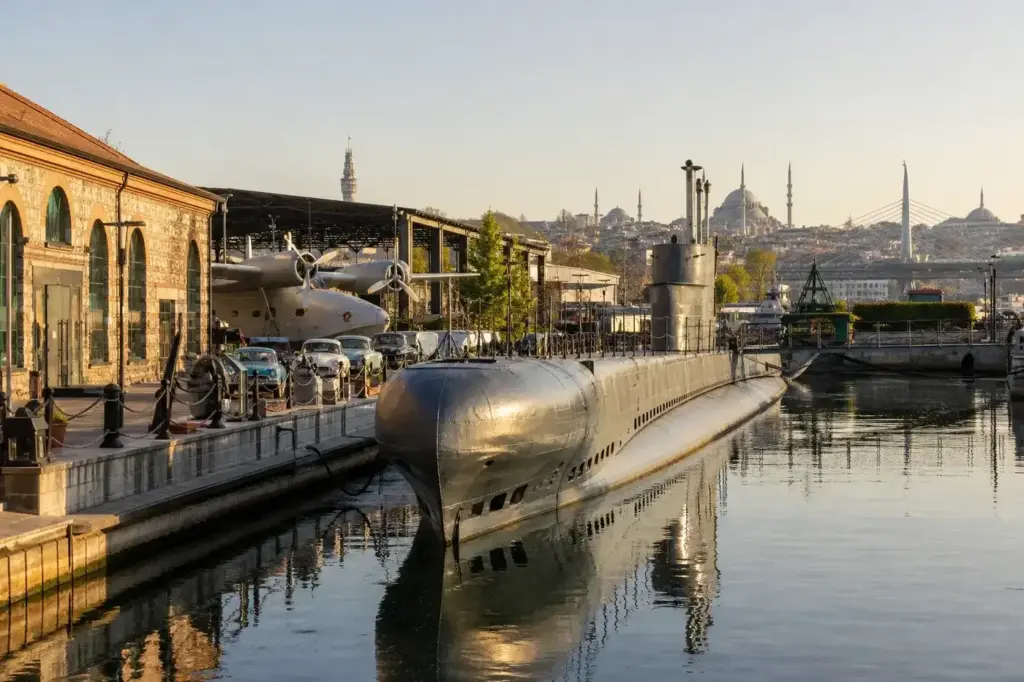
The Rahmi M Koç Museum is an industrial museum dedicated to the history of transport, industry and communications. Located on the northern shore of the Golden Horn in Hasköy, it opened in 1994 and remains Turkey’s only museum of its kind.
Founded by Rahmi M. Koç, retired chairman of the Koç Group, the museum grew from his passion for mechanical and industrial objects, inspired after visiting the Henry Ford Museum in Detroit. The collection spans thousands of items housed across historic buildings—a converted 19th-century dockyard and the restored Lengerhane, a former Ottoman foundry—plus an open-air display area.
Quick Facts
| Turkish name | Rahmi M. Koç Müzesi |
|---|---|
| Built / opened | 1994 |
| Address | Piri Paşa, Rahmi M. Koç Caddesi No: 3, 34445 Beyoğlu/İstanbul, Türkiye Google MapsApple MapsYandex Maps |
| District | Beyoğlu |
| Metro | Beyoğlu (T1 (Tünel Line), Main exit; 8-10 min walk along Hasköy Street toward the Golden Horn) |
| Admission | ₺₺ |
| Best time to visit | Visit Tuesday through Friday mornings (09:30–11:30) to avoid crowds and enjoy natural light in the galleries. Weekends are busier but offer extended hours (10:00–18:00). Summer months (June–August) see higher visitor numbers; spring (April–May) and autumn (September–October) offer pleasant weather with moderate crowds. Avoid Mondays (museum closed) and the week before and after Turkish religious holidays when hours may vary. |
| Website | rmk-museum.org.tr |
What Is (and Isn't) Part of a Visit to Rahmi M Koç Museum?
| Part | Status | Notes |
|---|---|---|
| Indoor galleries (Lengerhane and Shipyard buildings) | Included in the standard ticket | Main ticket covers entry to both connected buildings with model trains, vehicles, machinery, and a planetarium. |
| Open-air display area | Included in the standard ticket | Submarine, aircraft, Fenerbahçe Ferry, vintage cars, and other large objects along the waterfront are all part of the standard ticket. |
| Planetarium shows | Included in the standard ticket | Located in the Lengerhane building; showtimes rotate and may have capacity limits. |
| Museum cafés and shops | Included in the standard ticket | Tearoom, Barbarossa Pub, Halat Restaurant, and Café Du Levant are accessible and open during museum hours (closed Monday). |
| Guided tours and group programs | Separate ticket or institution | Special group tours (10+ people) during closing hours must be arranged in advance by contacting the museum. |
| Çengelhan Museum in Ankara | Outside / not part of it | A separate Rahmi M. Koç Museum exists in Ankara; this article covers only the Istanbul location. |
| Hagia Sophia and Blue Mosque | Outside / not part of it | These are separate major attractions across the Golden Horn; not part of the Rahmi M Koç Museum. |
Why Visit Rahmi M Koç Museum?
This is the only place in Turkey where you can explore industrial history hands-on. The collection combines unexpected range: from 1898 steam cars and gramophone needles to a real World War II submarine, vintage aircraft, classic trains, and the historic Fenerbahçe Ferry anchored in the Golden Horn. Many exhibits are interactive—you can touch, climb into, and operate displays.
The location itself matters: set directly on the water with cafés and boat views, the museum blends education with atmosphere. Families find it engaging; adults interested in engineering, design, and Ottoman industrial heritage find depth.
How Rahmi M Koç Museum Is Laid Out
The museum spreads across three linked sections covering about 28,000 square meters. The main entrance is on Hasköy Street, at street level.
Lengerhane Building: A restored 19th-century Ottoman stone structure houses a planetarium, model trains, boats, and smaller mechanical objects on multiple floors. This building requires navigating stairs.
Hasköy Shipyard Section: Built around the original 1861 dockyard, this newer structure displays larger vehicles and machinery and connects directly to the Lengerhane building. Layout follows a logical flow through the industrial narrative.
Open-Air Display Area: Outside along Hasköy Street and extending to the waterfront, you’ll find full-size vehicles, a B-24 Liberator aircraft, the TCG Uluçalireis submarine moored in the Golden Horn, and the Fenerbahçe Ferry. This area is accessible at all times of day and offers the best photo vantage points of the collection and the water.
Highlights of Rahmi M Koç Museum
TCG Uluçalireis Submarine
A real World War II Turkish submarine, now a major centerpiece moored in the Golden Horn. Visitors can walk alongside the vessel and see it from multiple angles, making it one of the museum's most striking and photographable objects. The submarine serves as an immediate visual anchor when approaching the museum.
Tip: Visit in early morning or late afternoon for the best light reflecting off the water; the submarine is dramatically framed against the Golden Horn and city skyline.
Fenerbahçe Ferry
A historic Istanbul ferry boat, almost a symbol of the city's maritime identity, anchored as part of the open-air collection. The ferry represents a working piece of city transport history that many longtime Istanbul residents will recognize immediately.
Tip: The ferry is best viewed from the waterfront walkway at the south edge of the open-air display; photos from here capture its scale and historic character.
B-24 Liberator Aircraft
A full-size American bomber aircraft from World War II, displayed prominently in the open-air section. Its scale is striking and offers perspective on aviation engineering of the 1940s. The exhibit shows how industrial collections balance Turkish and international industrial heritage.
Tip: Stand at the base and look up to appreciate the fuselage and wing span; the aircraft towers over visitors and photographs well against an Istanbul skyline backdrop.
Lengerhane Building and Planetarium
The restored Ottoman foundry building houses an active planetarium plus model train and boat collections spanning multiple floors. The building itself is architecturally significant—carefully restored without losing its original character. Visitors navigate narrow stairs and intimate galleries, creating a contrasting experience to the open-air areas.
Tip: The planetarium shows rotate; check the museum website or ask at entry for current showtimes if astronomy is a priority in your visit.
Vintage Cars and Steam Engines
The indoor sections contain a range of restored vehicles, from an 1898 Malden Steam Car to a 1963 Anadol. Steam engines and locomotives show the evolution of transport technology. Many are positioned where you can walk around them, examine details, and see mechanical components up close.
Tip: Take time to read the plaques identifying year and origin; the collection spans over a century of global automotive development, not only Turkish.
Hands-On Mechanical Exhibits
Throughout the buildings, interactive displays invite visitors to work levers, observe moving machinery, and climb into smaller vessels. Scientific instruments, old telescopes, and communication devices (from early telephones to Morse code equipment) show how technology shaped industry and daily life.
Tip: Children and adults alike engage with these exhibits; it's worth spending extra time if you're curious about how a particular mechanism worked.
Model Trains and Boats Collection
The Lengerhane Building contains an extensive collection of model trains and boats—both museum-quality miniatures and toy-scale models from different eras. This section appeals to those interested in miniature engineering and transport history at scale.
Tip: Photography of models is allowed but requires patience to frame shots well; natural light from upper-floor windows works best.
Golden Horn Views and Waterfront Setting
Unlike most museums, the Rahmi M Koç setting includes direct access to the Golden Horn waterfront. The open-air section allows you to step outside, see the water, and connect the industrial heritage to its working context. This location emphasizes why Istanbul's maritime and industrial history mattered to the city's economy.
Tip: On clear days, the views toward the old city across the Golden Horn and toward the modern skyline are exceptional; bring a camera and allow time to simply sit and observe the setting.
Atmosphere
The museum feels hybrid—part serious industrial archive, part wonderland of mechanical objects. The Lengerhane building is intimate and cave-like, with restored stone walls and galleries lit to highlight objects. Walking through it, you sense history in the architecture itself. The shipyard section opens up with higher ceilings and larger displays. Outside, the atmosphere shifts again: waterfront air, the sound of the Golden Horn, museum cafés with harbor views, and the anchor-and-water smell of an active port.
Visitors span families with children, engineers, design students, and tourists seeking something beyond typical sightseeing. Weekdays are quieter; weekends and summer months see more crowds. Morning visits (just after 09:30 on weekdays or 10:00 on weekends) offer the most tranquil experience and the best light for photography.
History of Rahmi M Koç Museum
The museum was founded in 1991 by Rahmi M. Koç, a member of Turkey’s Koç industrial family and retired chairman of the Koç Group conglomerate. Rahmi Koç had collected mechanical and industrial objects since childhood and was inspired to create a public museum after visiting the Henry Ford Museum in Dearborn, Michigan. He chose to share his private collection with the general public, establishing what became Turkey’s first and only industrial museum.
The museum officially opened on December 13, 1994, initially housed in the Lengerhane, a restored 19th-century Ottoman building that had served as a foundry. The Lengerhane itself dates to the Ottoman era and retains its original stone walls and architectural character. This building alone signals the museum’s commitment to preserving industrial-era architecture.
In July 2001, the museum expanded into a second major structure—a disused historical dockyard founded in 1861 by the Ottoman maritime authorities, located directly on the Golden Horn. This expansion allowed display of larger objects: the submarine, ferry, and aircraft that define the museum’s open-air character today. The dockyard building was integrated into the museum complex, creating a unique architectural ensemble where 19th-century industrial structures house 20th and 21st-century collections.
The museum’s growth reflects both Rahmi Koç’s continued collecting and ongoing donations from companies and individuals who entrust their industrial heritage to the institution. The collection now exceeds 14,000 objects. Since the Istanbul opening, sister museums have opened in Ankara (the Çengelhan Museum, in 2005) and on Cunda Island in Ayvalık (in 2014), extending the Rahmi M. Koç museum network across Turkey.
Tickets and Booking for Rahmi M Koç Museum
| Ticket | Price | Includes |
|---|---|---|
| Adult ticket | ₺₺ | Full access to Lengerhane and Shipyard buildings, open-air displays, planetarium, and museum facilities. |
| Child ticket | ₺ | Standard admission for children; free for very young children under a certain age (verify with museum for current policy). |
₺ budget · ₺₺ moderate · ₺₺₺ upscale · ₺₺₺₺ splurge. Price levels are estimates compared with typical prices for visitors.
Tickets are sold at the entrance during opening hours. Online booking is available through the official website (www.rmk-museum.org.tr) and can be purchased in advance, which is useful during peak summer months and weekends to avoid entrance queues.
Advance booking is not required for individual visitors; same-day purchases are standard. However, booking ahead is recommended if you plan to visit on a Saturday, Sunday, or during July–August.
Rates for Turkish citizens and groups differ from international visitor rates. For concession categories (students, senior citizens, military), children’s rates, and voucher exchange, check the official website for current policies, as these change periodically. The museum may also offer combined discount options for groups of 10 or more by prior arrangement.
Suggested itineraries Rahmi M Koç Museum
1.5–2 hours
Focus on the highlights: the open-air displays (submarine, aircraft, ferry) and the main vehicle collection in the indoor sections. Skip the model train galleries and planetarium unless specifically interested. This pace suits visitors with limited time who want to see the museum's most iconic objects.
2–3 hours
Tour both the Lengerhane building (model trains, smaller objects, planetarium if a show is available) and the Shipyard section (vehicle displays), then spend 30 minutes in the open-air area. This is the standard recommended visit and covers the breadth of the collection.
3–4 hours or half day
Explore all sections in depth: spend time reading plaques and interacting with mechanical exhibits, watch a planetarium show, examine model collections, tour the open-air displays unhurried, and take a break at one of the museum cafés with a water view. This pace allows genuine engagement with the museum's story.
How to Get to Rahmi M Koç Museum
By Metro: Take the T1 (Tünel) metro line to Beyoğlu station. From the main exit, walk downhill and northwest along Hasköy Street toward the Golden Horn for 8–10 minutes. The museum entrance is clearly marked at street level where Hasköy Street meets the waterfront.
By Bus: Buses 47, 47E, and 47Ç run along the Golden Horn embankment from central Istanbul (Eminönü area) and stop near the museum entrance. Journey time is 10–20 minutes depending on traffic and starting point.
By Ferry: For a scenic approach, take a Golden Horn ferry from Eminönü to the Hasköy pier. The museum is a 2-minute walk from the pier. This is a pleasant option that frames your arrival with water views.
By Taxi or Private Vehicle: The museum address is Piri Paşa, Rahmi M. Koç Caddesi No: 3, Beyoğlu. Street parking exists but is limited; public parking garages are nearby.
Accessibility
The museum is partially wheelchair accessible. The main shipyard building and open-air areas are accessible via level ground-floor entry. The Lengerhane building (restored Ottoman structure) has multiple flights of stairs and upper-floor galleries; wheelchair access to this building is limited or not available on all floors. Contact the museum in advance (+90 212 369 66 00) to confirm accessibility for your needs and request any necessary accommodations. Wide corridors and clear signage aid navigation. Restrooms are available.
Food Nearby
Within the museum complex, four dining venues serve visitors: Tearoom, Barbarossa Pub, Halat Restaurant, and Café Du Levant. All are open during museum hours (closed Mondays) and feature museum artifacts in their décor. They offer meals, drinks, and snacks at moderate prices, with views of the Golden Horn from some seating areas. Outside the museum, Hasköy Street and the surrounding Balat neighborhood (a 10–15 minute walk) have numerous casual eateries, cafés, and tea gardens typical of the area.
What to Bring
Comfortable walking shoes for navigating multiple levels and outdoor areas. A camera or smartphone for photography (tripods and drones are not permitted indoors; check rules for open-air areas). Water bottle, especially on warm days. Light jacket for cooler seasons; the stone buildings stay cool even in summer. The museum allows bags but screens them at entry; very large bags may be restricted.
Best Views and Photo Spots of Rahmi M Koç Museum
TCG Uluçalireis Submarine from the waterfront
The submarine anchored in the Golden Horn with the restored city skyline and bridges in the background. This is the most iconic shot—the vessel's full profile and size against water and sky creates strong framing.
Best time: Late afternoon (4–6 PM) for warm, directional light that brings out the submarine's hull details; early morning (sunrise) also works well for golden light.
B-24 Liberator Aircraft from below
Standing directly beneath the aircraft, looking up at the fuselage and wings against the sky. This perspective emphasizes scale and engineering; the bomber fills the frame.
Best time: Midday or clear sky hours; avoid harsh overhead sun. Early morning or late afternoon angled light can highlight the aircraft's profile.
Fenerbahçe Ferry from the south waterfront path
The ferry's full hull and superstructure reflected in or silhouetted against the Golden Horn water, with Galata Bridge or city buildings framed behind. The vessel's historic character shows in restored details.
Best time: Evening (5–7 PM) for warm light on the ferry's structures; the water reflects the city lights at dusk.
Lengerhane building exterior from the east entrance courtyard
The restored Ottoman stone facade, arched entry, and restored masonry detail. Trees and water views frame the architectural heritage the museum preserves.
Best time: Morning light (9–11 AM) illuminates the stone without harsh shadows; architectural details read clearly.
Open-air display area overlooking the Golden Horn
Vintage cars and machinery in the foreground, the Golden Horn and far shore with mosques and city buildings beyond. This captures the industrial-meets-heritage context that defines the museum's location.
Best time: Early morning or late afternoon for warm, side-angled light that brings out vehicle details and textures; clear days show the far shore sharply.
Museum interior galleries with restored stone walls
The Lengerhane building's arched corridors, exposed masonry, and museum lighting create atmospheric shots of both architecture and displays. Objects stand out against the historic stone.
Best time: Any time of day; interior light is consistent. Avoid peak hours for fewer visitors in frame.
Photography Rules
Photography is permitted throughout the museum for personal use. Flash and tripods are not allowed indoors to protect artifacts and ensure visitor safety. Drones are prohibited. In the open-air area, standard photography is welcome. Many exhibits are designed to be photographed; staff can direct you to the best angles for famous objects like the submarine.
Family Suitability
The museum is highly engaging for families. Interactive exhibits, the submarine and aircraft, and hands-on mechanical displays appeal to children 7 and older. The open-air areas allow children to move freely. Cafés provide break spaces. Younger children (under 5) may find stairs and long indoor sections tiring; stroller access is limited in the Lengerhane building. Facilities include restrooms. The planetarium show suits ages 5 and up. Adult supervision is necessary for children near water (Golden Horn) in the open-air section. Overall, plan 2–3 hours for a family visit.
Istanbul Vibes Tips
- Visit on a weekday morning (Tuesday–Friday, 09:30–11:00) for the shortest queues and best light through the stone building galleries. Saturdays are the busiest day.
- Ask staff about the planetarium show schedule when you enter. Shows fill quickly and run on rotation; arriving early lets you catch a session.
- Spend at least 30 minutes in the open-air section even if time is tight. The waterfront views and large objects (submarine, aircraft) are the museum's most memorable and photogenic elements.
- The Barbarossa Pub and Halat Restaurant inside the museum are pleasant for a break; they're more interesting than generic museum cafés and offer views. Book a table ahead on weekends.
- If you're interested in Ottoman industrial history, the Lengerhane building itself is as much the story as the objects inside. Take time to read the restoration information on display plaques.
- The model train and boat collection in the Lengerhane is easy to rush through but rewards lingering; many are exceptional examples of miniature engineering craftsmanship.
Explore Nearby Rahmi M Koç Museum
Sights near Rahmi M Koç Museum
 Hagia Sophia – about 4.6 km away · typical visit: 1–1.5 hours8 min on foot from Gülhane metro, Open daily 09:00–19:30
Main image: AI-generated illustration. It may not show the place exactly as it looks.
 Blue Mosque – about 4.7 km away · typical visit: 45–75 minutes3 min on foot from Gülhane metro
Main image: AI-generated illustration. It may not show the place exactly as it looks.
 Galata Bridge – about 3.2 km away · typical visit: 30 minutes to 1 hour10 min on foot from Haliç metro, Open 24 hours
Main image: AI-generated illustration. It may not show the place exactly as it looks.
 Aynalıkavak Pavilion – about 700 m away (~11 min walk) · typical visit: 1.5–2 hoursOpen 09:00–17:30, closed Mon
Main image: AI-generated illustration. It may not show the place exactly as it looks.
 ArtIstanbul Feshane – about 1.0 km away (~16 min walk) · typical visit: 1–2 hours2 min on foot from Feshane metro, Open 10:00–20:00, closed Mon
Main image: AI-generated illustration. It may not show the place exactly as it looks.
 Bulgarian St. Stephen Church – about 1.2 km away (~19 min walk) · typical visit: 30–45 minutesOpen daily 09:00–17:00
Main image: AI-generated illustration. It may not show the place exactly as it looks.
Metro stations near Rahmi M Koç Museum
 Ayvansaray – about 550 m away (~9 min walk)Open daily 05:00–00:00
Main image: AI-generated illustration. It may not show the place exactly as it looks.
 Feshane – about 1.0 km away (~16 min walk)Open daily 06:00–23:00
Main image: AI-generated illustration. It may not show the place exactly as it looks.
Train stations and river piers near Rahmi M Koç Museum
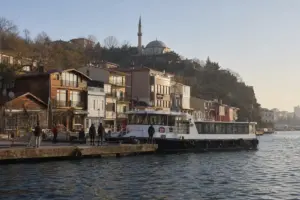 Eyüp Ferry Terminalabout 1.1 km away (~18 min walk)
Main image: AI-generated illustration. It may not show the place exactly as it looks.
Related guides
 Rixos Tersane Istanbul: Luxury Hotel in a 600-Year-Old Shipyard
Main image: AI-generated illustration. It may not show the place exactly as it looks.
 Atatürk Commemoration Day: A Moment of National Remembrance in Turkey
Main image: AI-generated illustration. It may not show the place exactly as it looks.
 Karaköy Ferry Terminal: Crossings, Routes and Waterfront Experience
Main image: AI-generated illustration. It may not show the place exactly as it looks.
 Alibeyköy Bus Terminal: Tickets, Transport Connections and Routes
Main image: AI-generated illustration. It may not show the place exactly as it looks.
 Nardis Jazz Club: Live Music in Istanbul’s Most Intimate Venue5 min on foot from Şişhane metro, Open 20:30–01:00, closed Sun
Main image: AI-generated illustration. It may not show the place exactly as it looks.
Browse more: More in Beyoğlu · All Museums · All Sightseeing
FAQ: Rahmi M Koç Museum
Is the Rahmi M Koç Museum the same as Hagia Sophia or the Blue Mosque?
No. The Rahmi M Koç Museum is a separate industrial museum on the Golden Horn in Beyoğlu. Hagia Sophia and the Blue Mosque are major religious and historical sites in the Sultanahmet district on the opposite side of the Golden Horn. All three are popular attractions but require separate visits.
Can I see the submarine up close?
Yes. The TCG Uluçalireis submarine is anchored in the Golden Horn as part of the open-air display and is visible from multiple angles. You can walk alongside the vessel, see its exterior in detail, and photograph it from the waterfront path.
Is the museum suitable for young children?
Yes, ages 7 and up will enjoy it, especially the interactive exhibits, submarine, and aircraft. Younger children may find stairs and the interior galleries tiring. Stroller access is limited in the historic Lengerhane building. The museum has cafés to take breaks.
How long does a typical visit take?
Most visitors spend 2–3 hours. This allows time for both indoor galleries and open-air displays. You can do it in 1.5–2 hours if you focus on the main highlights (submarine, aircraft, vehicles) or extend to 3–4 hours if exploring model collections and exhibits in depth.
Can I bring my own food, or must I eat in the museum?
Outside food is typically not permitted in most museum galleries. However, the open-air area may have more relaxed rules; ask staff. The museum has four on-site dining venues at moderate prices. Bringing a water bottle is generally fine.
Do I need to book tickets in advance?
Advance booking is not required but is recommended for weekends and July–August to avoid entrance queues. Tickets can be purchased online through the official website or at the entrance on the day of visit.
What is the closest metro station?
Beyoğlu station on the T1 (Tünel) metro line is the nearest. It's an 8–10 minute walk downhill to the museum entrance. Buses 47, 47E, and 47Ç also stop near the entrance.
Is the museum wheelchair accessible?
The main shipyard building and open-air areas are mostly accessible at ground level. The historic Lengerhane building has stairs and upper floors with limited wheelchair access. Contact the museum in advance (+90 212 369 66 00) to confirm accessibility for your specific needs.
Istanbul Vibes is a one-person project. A coffee keeps it going
Hotels near Rahmi M Koç Museum
- Millennium Istanbul Golden Horn (650 m) Check prices (affiliate link, opens in a new tab)
Affiliate link (opens the booking site): we may earn a commission at no extra cost to you.
Restaurants near Rahmi M Koç Museum
Distances are straight-line, from OpenStreetMap data.

Take this guide with you
Get a free PDF of this guide to print or read offline: key facts, tips and a map link on a few clean pages.
Report an issue on this page
How we research and update our guides
About this guide: AI assistance and accuracy
This guide is created with the help of AI and is based on official sources where available. Mistakes can still happen. Opening hours, prices, rules and other details are given to the best of our knowledge as of the date shown and can change without notice. It offers general recommendations only, not professional, legal or travel advice. Please confirm important details with the official source before you travel; you are responsible for your own plans and decisions.
* Affiliate link: as an Amazon Associate we earn from qualifying purchases at no extra cost to you.
