

Hasköy is a historic neighborhood on the northern bank of the Golden Horn in Istanbul’s Beyoğlu district. The name means “imperial village” in Turkish, a reference to the Ottoman imperial pavilions and gardens that once occupied the area. Today, Hasköy is primarily known for its rich Jewish heritage, its connection to Ottoman naval history, and its gradual urban renewal along the waterfront.
The neighborhood draws visitors interested in Ottoman history, Jewish cultural heritage, industrial museums, and the everyday life of a working-class Istanbul neighborhood that has remained largely undiscovered by mass tourism. It offers a quieter alternative to the crowded tourist zones across the Golden Horn.
Quick Facts
| Address | Hasköy, Beyoğlu, Istanbul, Turkey Google MapsApple MapsYandex Maps |
|---|---|
| District | Beyoğlu |
| Best time to visit | Spring (April–May) and autumn (September–October) offer mild temperatures and clear skies ideal for waterfront walks and exploring streets. Summer (June–August) brings heat and occasional humidity off the water; early morning or evening visits are more comfortable. Winter (November–March) is cool and sometimes rainy, but the waterfront is less crowded, and light is often dramatic. Avoid midday heat in summer. Weekday mornings are quieter than weekends; late afternoons bring out local residents and families, creating a more animated atmosphere. |
| Recommended duration | 2–4 hours |
What Is (and Isn't) Part of a Visit to Hasköy?
| Part | Status | Notes |
|---|---|---|
| Hasköy neighborhood and waterfront parks | Included in the standard ticket | The entire neighborhood is publicly accessible; streets, parks, and the ferry terminal are open to all visitors at any time. |
| Maalem Synagogue | Separate ticket or institution | An active place of worship, not a museum. Visits must be arranged in advance by contacting the community; not open for unannounced casual visitors. |
| Karaite Synagogue | Separate ticket or institution | Also an active community synagogue; visiting hours and access require prior arrangement. |
| Aynalıkavak Pavilion | Separate ticket or institution | The restored Ottoman pavilion requires confirmation of current opening status and permissions before visiting; access is not always guaranteed. |
| Rahmi M. Koç Museum | Separate ticket or institution | A private museum with paid admission; separate ticket required. Located within Hasköy's eastern boundary but independently operated. |
| Jewish Cemetery | Included in the standard ticket | The cemetery is accessible but is an active burial ground; visitors should approach with respect and awareness of ongoing community use. |
| Fener and Balat neighborhoods | Outside / not part of it | Located across the Golden Horn on the opposite (southern) shore; not part of Hasköy itself. |
| Kasımpaşa neighborhood | Outside / not part of it | Located immediately south of Hasköy; a separate neighborhood with its own identity, though historically connected. |
| Eyüp neighborhood and Pierre Loti | Outside / not part of it | Located further along the Golden Horn estuary to the north; accessible by ferry but outside Hasköy's boundaries. |
Why Visit Hasköy?
Hasköy preserves the material traces of one of Istanbul’s most important Jewish communities. Between the 15th and early 20th centuries, it was home to thousands of Sephardic and Karaite Jews whose descendants shaped Ottoman culture, medicine, printing, and learning. While only a handful of the more than thirty synagogues remain standing, the neighborhood’s architecture and street names still tell their story.
Beyond Jewish heritage, Hasköy was the site of the imperial naval shipyard founded in 1455, which built Ottoman fleets for centuries. The neighborhood’s waterfront parks and ferry terminal make it an accessible entry point for exploring the Golden Horn. The Rahmi M. Koç Museum, housed in a restored factory building, documents industrial and transport history.
How Hasköy Is Laid Out
Hasköy stretches along the Golden Horn’s northern shore as a compact, walkable neighborhood roughly 1.5 kilometers wide. The waterfront is anchored by Hasköy Park (Hasköy Parkı) in the west, where the ferry terminal is located. From there, narrow streets climb inland into residential and commercial areas.
Main attractions are distributed along three zones: the waterfront parks and ferry station in the west; the central areas where most surviving synagogues cluster; and the eastern edge where the Rahmi M. Koç Museum occupies a reclaimed industrial site. Streets follow an organic, irregular pattern typical of Ottoman neighborhoods. Orientation is easiest from the waterfront; inland navigation benefits from a local map or GPS.
Highlights of Hasköy
Hasköy Park and Waterfront
A reclaimed public space along the Golden Horn with tea gardens, a playground, and an outdoor fitness center. The ferry terminal at the park's western end connects hourly to Eyüp, Balat, Fener, Kasımpaşa, and other points on the estuary. The park provides unobstructed views of the Golden Horn and its opposite shore, and is popular with locals in the late afternoon and evening. Benches and shaded areas make it a genuine rest stop, not a tourist performance.
Tip: Visit in the late afternoon when locals arrive for tea and conversation; the light is best for photography from the waterfront around 5 pm.
Maalem Synagogue
Built in 1754, this is one of only two active synagogues remaining in Hasköy from an original thirty or more. The building was recently restored after years of abandonment. Its interior features a striking wooden bimah (pulpit) carved in the shape of a ship, set beneath a small dome with floral decorations. Marble columns flank the entrance porch, and the aron (ark) has gilt wooden doors. The hall is painted in alternating sky blue and white, creating an elegant contrast with the wooden pews.
Tip: The synagogue is accessible, but call ahead to confirm visiting hours as it remains primarily a place of worship, not a museum.
Karaite Synagogue
One of Hasköy's surviving Jewish houses of prayer, this small synagogue reflects the Karaite Jewish community that was transferred to Hasköy in the late 1590s when the Yeni Valide Mosque was built in Eminönü. The building is modest but architecturally significant, with details visible from the exterior. Karaite Judaism, which follows only the Hebrew Bible without rabbinic law, maintained a separate identity from the larger Sephardic community.
Tip: Located on a narrow side street; local residents can direct you more reliably than a GPS pin.
Aynalıkavak Pavilion
A surviving fragment of the Ottoman imperial palace and gardens that once gave Hasköy its name. The pavilion, built in the 18th century as part of the sultan's waterfront retreat, is now restored but rarely visited. It stands as a physical reminder of Hasköy's imperial past before the neighborhood became densely settled. The building itself is architecturally refined, with elegant proportions typical of Ottoman palace design.
Tip: Opening and access depend on current conservation and administrative status; inquire locally or check with the Beyoğlu municipality before planning a visit.
Rahmi M. Koç Museum
Housed in a restored factory building on reclaimed industrial land, this museum displays an extensive private collection of transport, industrial machinery, communications equipment, and vintage toys. The building itself is an example of thoughtful adaptive reuse. The collection includes steam engines, trains, ships in scale models, and early printing equipment—a visual history of Ottoman and Turkish industrial development. The museum anchors the neighborhood's eastern edge and is one of Istanbul's most distinctive private collections.
Tip: The museum has indoor galleries but also courtyard spaces; plan 2–3 hours for a full visit. Check the official website for current exhibitions and opening hours.
Ottoman-Era Residential Streets
Inland from the waterfront, narrow climbing streets retain Ottoman-era building stock: three- and four-story townhouses with shuttered windows, carved wooden door frames, and stone facades. Many buildings show signs of age and weathering, but this authenticity is part of Hasköy's character. Street names and building plaques sometimes recall the neighborhood's multicultural past. Walking these streets provides a genuine encounter with how an Istanbul working neighborhood actually evolved, without the polished restoration of Balat's painted row houses.
Tip: Explore early morning or late afternoon when residents are more visible and the light is softer; avoid peak midday heat if traveling during summer.
Jewish Cemetery and Memorials
Hasköy contains a historic Jewish cemetery with tombstones bearing inscriptions in Hebrew and Ladino, documenting centuries of burial. The cemetery holds symbolic importance as a repository of memory. Some gravestones and memorial plaques scattered throughout the neighborhood commemorate community leaders, physicians, and scholars from the Ottoman period. These physical markers make the Jewish presence tangible in ways that empty synagogue shells cannot.
Tip: Show respect as an active burial ground; visit with awareness that families may be present for remembrance. A local guide familiar with Hebrew or Ladino inscriptions can enhance understanding.
Halıcıoğlu Sub-neighborhood
The southeastern portion of greater Hasköy, Halıcıoğlu was historically a carpet-weaving and dyeing district with its own character. The neighborhood's industrial heritage—kiln marks, textile workshops—survives in scattered buildings. Halıcıoğlu is less visited than waterfront Hasköy but offers insight into Hasköy's working economy beyond maritime trade and commerce.
Tip: Halıcıoğlu blurs into adjacent neighborhoods; walking from Hasköy Park requires navigating narrow streets and asking locals for directions. Go with a map or a willingness to get briefly lost.
Atmosphere
Hasköy feels lived-in and unhurried—quite different from the restoration-boutique atmosphere of nearby Balat or the crowds at Topkapi Palace. The waterfront is the neighborhood’s social heart: in late afternoon, families, elderly men, and residents gather at the tea garden, and the sound of conversation and tea glasses dominates. The ferry’s hourly arrival and departure punctuates the day with activity.
Inland streets are quieter, with small grocery shops, bakeries, and modest local eateries catering to residents rather than tourists. During morning hours, the neighborhood feels residential; by evening, it becomes more animated. In summer, humidity off the water is noticeable; in winter, the open waterfront can be windy. The overall mood is authentic and unglamorous—a neighborhood defined by continuity rather than transformation.
History of Hasköy
Settlement in the area dates to at least the 6th century, when the neighborhood was known as Areovindou or Aravindou (Arabant in Turkish), named after a nobleman who built a summer house there. In the 8th century, a monastery founded by Ioannis Pikridios gave the area a new name: Prikidion. A Greek Orthodox community built up around the monastery and other churches, most notably Ayios Panteleimon, built by Teodora, wife of Emperor Theophilus, though none of these structures survive today.
By the 16th century, the neighborhood became known as Parasköy, taking its name from the Church of St. Paraskevi, which served as the focal point of the Greek Orthodox population. Over time, “Parasköy” contracted to “Hasköy.” Some historians attribute the name change to Mehmed II’s occupation of the area during the Siege of Constantinople in 1453, when the Ottoman army allegedly pitched tents there. A stone pillar in the courtyard of the Handan Ağa Mosque commemorates a bridge built across the Golden Horn on April 29, 1453, which may have carried troops during this siege.
Hasköy’s transformation into a major Jewish center began in the late 15th century, when Sephardic Jews expelled from Spain and Portugal by the Spanish Inquisition were welcomed into the Ottoman Empire and settled in Istanbul. The neighborhood became increasingly Jewish, particularly after 1590s, when Karaite Jewish families—numbering about 40 households—were transferred from Eminönü to make way for construction of the Yeni Valide Mosque (New Mosque).
During the 16th and 17th centuries, when the Ottoman Empire was at its height, Hasköy became the most prestigious Jewish neighborhood in Istanbul, slightly more populous than Balat and home to a greater concentration of wealthy and learned families. The celebrated physician Moshe Hamon of Granada served as an adviser to Mehmed II the Conqueror. The Gvira Yeshiva, established by Joseph Nasi in the 16th century, became one of the most renowned centers of Jewish learning in the Ottoman world. The first Jewish printing presses were set up in Hasköy, making it a center of book production as well.
The 17th-century Ottoman traveler Evliya Çelebi recorded that Hasköy contained more than a thousand homes surrounded by gardens, with a population of around 17,000 Jews—the overwhelming majority in the quarter at that time. His account describes the neighborhood as “a beautiful spot with good air.” Tax records from 1691 counted 515 Jewish taxpayers. The neighborhood was also home to a significant Greek Orthodox population, and later to Armenian families who migrated into the area in the 18th and 19th centuries. In 1858, the first Armenian theater company in Istanbul was established in Hasköy.
Hasköy was also the site of Ottoman imperial industrial infrastructure. In 1455, Sultan Mehmed II founded the Tersane-i Amire (imperial naval shipyard) along the northern Golden Horn shore. For four centuries, this shipyard built and maintained the Ottoman fleet, making Hasköy a center of maritime power. The neighborhood grew up around the shipyards and associated industries, with residential and merchant quarters intermixed with workshops and warehouses.
Beginning in the late 18th century, Hasköy entered a period of gradual decline. The Jewish population began to emigrate to newer neighborhoods and eventually to other cities. Modern educational institutions, such as the Abraham de Camondo school founded in 1858 (the first Jewish school in Istanbul to teach Western curricula), and the Universal Israelite Alliance school opened in 1899, represented efforts to maintain community cohesion and modernize. In 1955, the Alliance building became administrative offices for the rabbinical seminary before being repurposed as the main Jewish hospice for the elderly in Istanbul.
Urban reconstruction and the rerouting of major thoroughfares devastated much of Hasköy’s architectural heritage in the 20th century. Of more than thirty synagogues that once stood there, only two remain in active or restored condition. The imperial shipyard was relocated, and the neighborhood lost its role as a manufacturing center. What survives is a neighborhood of historical layers: Ottoman foundations, Jewish buildings and plaques, Turkish administrative and residential structures, and the physical memory of an industrial past.
Legends and Myths about Hasköy
The Bridge of 1453
Disputed by historians. According to local tradition and Ottoman records, a temporary bridge was built across the Golden Horn on April 29, 1453, to allow Mehmed II's army to advance during the Siege of Constantinople. Some accounts claim this crossing point became a symbolic rallying place for Ottoman forces, and that Mehmed's tent was pitched near what is now Hasköy. A commemorative stone pillar in the courtyard of the Handan Ağa Mosque purports to mark this bridge. The legend ties the neighborhood's name—Hasköy, "imperial village"—directly to the Conqueror's presence and the transformation of Constantinople into Istanbul.
Moshe Hamon's Medical Cure
Legend – historically unreliable. Moshe Hamon, the celebrated Sephardic physician from Granada who became an adviser to Mehmed II, was renowned for his medical knowledge and learning. Local tradition holds that Hamon treated prominent Ottoman officials and even the sultan himself, and that his success and wisdom made him so valued that the sultan granted him and the Jewish community special protections. While Hamon was indeed a real historical figure and served in the sultan's court, many specific medical anecdotes and miracle cures attributed to him in folk retellings lack historical documentation.
Tickets and Booking for Hasköy
Hasköy itself is free to visit. The neighborhood’s streets, waterfront, and public spaces require no admission or booking.
Rahmi M. Koç Museum: This museum charges separate admission. Tickets can be purchased at the entrance or via the museum’s official website. Check opening hours and current exhibitions before visiting.
Synagogue visits: To visit the Maalem or Karaite synagogues, contact the neighborhood’s Jewish community representatives or your hotel concierge in advance. These are active places of worship, not tourist attractions, and visiting arrangements should respect prayer times and community needs.
Ferry access: The Golden Horn ferry operates on an hourly schedule and is inexpensive. No advance booking is required for the ferry.
Suggested itineraries Hasköy
2 hours
Start at Hasköy Park and the ferry terminal. Spend 30 minutes enjoying the waterfront views, tea, and observation of local life. Walk inland to locate the Maalem and Karaite synagogues (30 minutes), examining their exteriors and any visible architectural details. Return to the waterfront via different streets to explore the residential fabric. End with a light meal at a local tea house or eatery.
3–4 hours
Begin at Hasköy Park. Explore the waterfront systematically, then venture into central and eastern Hasköy's street network, visiting the surviving synagogues and seeking out plaques and memorials to the Jewish community. Allocate 1.5–2 hours for the Rahmi M. Koç Museum if interested in industrial history. Allow time to walk the residential streets without a strict itinerary, letting the neighborhood's character emerge through observation. Conclude at a local tea house or restaurant.
Half day (4–5 hours)
Combine a thorough Hasköy visit with ferry exploration of the Golden Horn. Spend 2–3 hours in Hasköy's streets and museums. Take the ferry to Balat and Fener (opposite shore) for 1–2 hours, comparing the Jewish heritage sites and neighborhoods across the water. Return to Hasköy by ferry. End with an early dinner at a local restaurant. This itinerary provides context for understanding Hasköy within the broader geography and history of the Golden Horn's Jewish neighborhoods.
How to Get to Hasköy
By ferry (recommended): The Golden Horn ferry runs hourly from Karaköy (European side) or Üsküdar (Asian side), with stops at multiple neighborhoods. The ferry terminates at or passes through Hasköy, Kasımpaşa, Balat, Fener, and other points along the estuary. The Hasköy ferry terminal is at Hasköy Park on the waterfront. Journey time from Karaköy is approximately 10–15 minutes. The ferry is inexpensive and offers the most scenic and pleasant approach to the neighborhood.
By bus: Multiple bus lines serve Hasköy. From Taksim Square or Şişhane, several routes pass through or near the neighborhood. Journey times vary (15–30 minutes depending on traffic). Ask the bus driver or check with your accommodation for the best current route.
By taxi or rideshare: Drivers can navigate to Hasköy Park or specific addresses, though traffic and parking near the waterfront can be congested. Costs depend on your starting point.
Walking from adjacent neighborhoods: Hasköy is adjacent to Kasımpaşa to the south. A 15–20 minute walk uphill from central Kasımpaşa reaches the Hasköy waterfront.
Accessibility
Hasköy Park and the waterfront promenade are flat and accessible for wheelchairs and mobility devices. The ferry terminal has level boarding from the dock. Inland streets vary: some are steep and cobbled, with uneven surfaces that challenge wheelchair users. Many of Hasköy's historic buildings do not have ground-floor entrances or are not internally accessible due to their age and design. The Rahmi M. Koç Museum provides wheelchair access and facilities (check the museum's website for details). Most local restaurants and tea houses are at street level but may have narrow doorways. Public restrooms are limited; use those at the ferry terminal or restaurants.
Food Nearby
Hasköy is a residential neighborhood with modest local eateries catering to residents rather than tourists. Small tea gardens and cafés cluster near Hasköy Park and along the main waterfront promenade. Local bakeries sell simit (sesame bread rings), pastries, and fresh bread. Simple restaurants serve Turkish home cooking, kebabs, and breakfast dishes. Kumpir (baked potato) vendors and street food are available near the main streets. The neighborhood is not known for upscale dining or international cuisine; the appeal is authenticity and affordability.
What to Bring
Comfortable walking shoes suitable for cobbled and uneven streets. A hat, sunscreen, and water bottle for warm months. In winter, a windproof jacket, as the waterfront can be breezy. A printed neighborhood map or downloaded offline map (GPS coverage is reliable but planning ahead helps). A translation app for reading Ottoman-era Hebrew or Turkish plaques. Camera for architectural details and waterfront views. Respectful modest clothing if planning to visit active synagogues.
Best Views and Photo Spots of Hasköy
Hasköy Park waterfront promenade
Direct views across the Golden Horn toward Balat and Fener's painted row houses on the opposite shore. The foreground features the tea garden, benches, and ferry terminal; the background shows the southern waterfront and hills beyond. The composition is expansive and captures the neighborhood's role as a working harbor and social space.
Best time: Late afternoon (4–6 pm), when warm light illuminates the opposite shore and locals gather at the tea garden, adding human interest to the scene.
Ferry terminal approach, looking uphill into Hasköy streets
Narrow climbing streets lined with Ottoman-era buildings, shuttered windows, and worn facades ascending from the waterfront. The perspective emphasizes the neighborhood's urban density and historical texture.
Best time: Early morning (7–9 am), when light is soft and the streets are quieter, showing authentic daily life without heavy foot traffic.
Maalem Synagogue courtyard or external wall
The restored synagogue's architectural details: marble columns, carved stonework, and the contrast between the building's refined design and surrounding residential structures. The courtyard's protective high wall frames the building as a preserved historical artifact within the living neighborhood.
Best time: Mid-morning (9–11 am), when side light reveals architectural details without harsh shadows. Photograph exterior elements only unless prior permission to enter is granted.
Intersection of Hasköy's central residential streets (e.g., around Gemi Street or Eski Cami area)
Layered views of the neighborhood's street life: narrow lanes, corner groceries, residents in daily activities, weathered building facades, and patches of sky between structures. The scene captures authentic neighborhood texture rather than monumental architecture.
Best time: Early morning or early evening (7–8 am or 5–6 pm), when residents are active and light is directional, creating depth and definition in street-level photography.
Waterfront path near Rahmi M. Koç Museum, looking west toward central Hasköy
The reclaimed industrial waterfront with the museum building in context, the Golden Horn estuary, and the curve of the far shore. The juxtaposition of industrial heritage preservation and contemporary public space illustrates the neighborhood's transformation.
Best time: Golden hour before sunset (5–6:30 pm), when warm light bathes the industrial-historic mix and the water reflects color.
Upper residential streets with views back toward the waterfront and Golden Horn
Distant prospect showing Hasköy's position on the Golden Horn's northern shore, with water, opposite neighborhoods, and sky creating depth. The vantage point emphasizes the neighborhood's geographical and historical situation within the broader cityscape.
Best time: Late afternoon or early evening, when light is clear and crowds are lower on the streets.
Photography Rules
General street photography is permitted in Hasköy's public spaces. When photographing buildings with Jewish symbols or inscriptions, be respectful of the historical and community significance. Do not photograph individuals without consent. The waterfront at sunset (approximately 5–6 pm depending on season) offers the best light for landscape and architectural photos. Drone use is not permitted over populated areas or near public buildings.
Family Suitability
Hasköy Park and the waterfront are excellent for families with young children: flat, open spaces, a playground, tea gardens, and ferry access provide a relaxed, car-free environment. The neighborhood's pace is unhurried, making it suitable for children. Inland streets can be steep and cobbled, challenging for strollers; parents with infants should plan to stay near the waterfront. The Rahmi M. Koç Museum is engaging for older children interested in machines, trains, and historical objects. Visiting active synagogues requires prior arrangement and may not suit very young children due to the sacred nature of the spaces. Local restaurants are family-friendly but cater to residents; international or child-specific menus are rare. Overall, Hasköy is a good neighborhood for families seeking an authentic, non-commercial Istanbul experience with water views and accessible public space.
Istanbul Vibes Tips
- Arrive by ferry from Karaköy or Üsküdar rather than walking or taking a taxi. The ferry journey itself is part of the Hasköy experience, and it delivers you directly to the neighborhood's heart at Hasköy Park. The hourly schedule is predictable and the journey is inexpensive.
- Plan synagogue visits in advance by contacting local community representatives or your hotel. Do not expect to simply walk into the Maalem or Karaite synagogues; they are active places of worship, not museums. Visits outside prayer times may be possible with notice.
- Explore the residential streets inland with no fixed itinerary. Wander up the steep side streets, stop at local tea gardens and bakeries, and observe residents and shopkeepers. This unstructured approach reveals the neighborhood's authentic character far better than a checklist of monuments.
- Bring a modest amount of Turkish lira in small denominations. Many local eateries, tea gardens, and vendors do not accept cards, and ATMs can be sparse in the residential quarters.
- Visit in the late afternoon to see locals gathering at the waterfront tea garden. This is when Hasköy's social life is most visible and the light is best for photography. Avoid the appearance of a tourist on a rushed schedule.
- Do not miss the Rahmi M. Koç Museum if you have an interest in Ottoman history, industrial heritage, or engineering. It is one of Istanbul's finest museums but is rarely crowded, and the quality of the collection is exceptional. Plan 2–3 hours if you have the time.
Explore Nearby Hasköy
Sights near Hasköy
 Fener and Balat Districtsabout 1.2 km away (~20 min walk) · typical visit: 3–5 hours
Main image: AI-generated illustration. It may not show the place exactly as it looks.
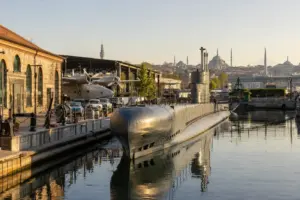 Rahmi M Koç Museum – about 300 m away (~5 min walk) · typical visit: 2–3 hours9 min on foot from Ayvansaray metro
Main image: AI-generated illustration. It may not show the place exactly as it looks.
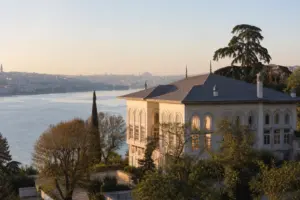 Aynalıkavak Pavilion – about 500 m away (~8 min walk) · typical visit: 1.5–2 hoursOpen 09:00–17:30, closed Mon
Main image: AI-generated illustration. It may not show the place exactly as it looks.
 Bulgarian St. Stephen Church – about 900 m away (~14 min walk) · typical visit: 30–45 minutesOpen daily 09:00–17:00
Main image: AI-generated illustration. It may not show the place exactly as it looks.
 Church of St. Mary of the Mongols – about 1.1 km away (~18 min walk) · typical visit: 45 minutes to 1 hourOpen 09:00–17:00, closed Mon
Main image: AI-generated illustration. It may not show the place exactly as it looks.
 ArtIstanbul Feshane – about 1.1 km away (~18 min walk) · typical visit: 1–2 hours2 min on foot from Feshane metro, Open 10:00–20:00, closed Mon
Main image: AI-generated illustration. It may not show the place exactly as it looks.
Metro stations near Hasköy
 Ayvansaray – about 500 m away (~8 min walk)Open daily 05:00–00:00
Main image: AI-generated illustration. It may not show the place exactly as it looks.
 Feshane – about 1.2 km away (~19 min walk)Open daily 06:00–23:00
Main image: AI-generated illustration. It may not show the place exactly as it looks.
Train stations and river piers near Hasköy
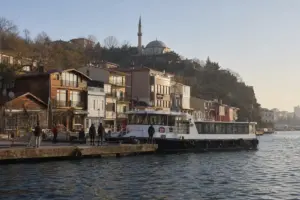 Eyüp Ferry Terminalabout 1.3 km away (~21 min walk)
Main image: AI-generated illustration. It may not show the place exactly as it looks.
Related guides
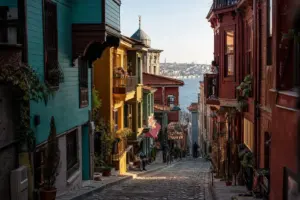 Balat: Istanbul’s Colorful Historic Neighborhood
Main image: AI-generated illustration. It may not show the place exactly as it looks.
 Eyüp and Pierre Loti Walk: Sacred Sites and Golden Horn Views
Main image: AI-generated illustration. It may not show the place exactly as it looks.
 Nurtepe Metro Station: Getting Around on Line M7Open daily 06:00–00:00
Main image: AI-generated illustration. It may not show the place exactly as it looks.
 Yeldeğirmeni: Street Art, Historic Buildings and Local Cafes in Kadıköy
Main image: AI-generated illustration. It may not show the place exactly as it looks.
 Istanbul Cruise Port Guide: Galataport to the Old City in One Day
Main image: AI-generated illustration. It may not show the place exactly as it looks.
Browse more: More in Beyoğlu · All Neighborhoods
FAQ: Hasköy
Is Hasköy safe for visitors?
Yes, Hasköy is a residential neighborhood and generally safe for visitors during daylight and evening hours. It is less touristy than areas like Sultanahmet or Taksim, but that does not make it dangerous. Standard urban awareness applies: avoid displaying expensive items openly, be aware of your surroundings, and travel in groups if possible, especially at night.
How do I visit the synagogues in Hasköy?
The Maalem and Karaite synagogues are active places of worship, not museums. Casual drop-in visits are not permitted. Contact a local tour guide, your hotel concierge, or the Istanbul Jewish community in advance to arrange a visit. Respect for prayer times and community customs is required.
Is there a difference between Hasköy and Balat?
Yes. Hasköy is on the northern (European) shore of the Golden Horn in Beyoğlu district; Balat is on the southern shore in Fatih district. Both have Jewish heritage, but Balat's narrow rows houses are painted bright colors and have been heavily renovated for tourism. Hasköy is less restored, more residential, and less visited by tourists. The ferry makes it easy to visit both and compare.
Can I walk from the ferry to the Rahmi M. Koç Museum?
Yes, the museum is approximately 15–20 minutes walk east from Hasköy Park along the waterfront or via inland streets. The waterfront path is flatter and easier to navigate; inland routes involve some hills.
Are there restaurants or cafés in Hasköy?
Yes, but they are modest local establishments catering to residents, not tourists. Tea gardens cluster near the waterfront park. Small restaurants serve Turkish home cooking and kebabs. International or upscale dining is rare. The appeal is authenticity and affordability, not cuisine variety.
What was Hasköy's historical role in Istanbul?
Hasköy was the site of the Ottoman imperial naval shipyard (Tersane-i Amire) founded in 1455, which built the empire's fleets for four centuries. It was also the primary Jewish neighborhood of Istanbul from the 16th to early 20th centuries, home to thousands of Sephardic and Karaite families. Today it is a residential and historic neighborhood.
How long should I spend in Hasköy?
A 2-hour visit covers the waterfront and a basic neighborhood walk. A 3–4 hour visit allows you to include the Rahmi M. Koç Museum and explore residential streets more thoroughly. A half-day visit (4–5 hours) is ideal if you also want to take the ferry to see Balat and Fener and return by ferry.
Is the Rahmi M. Koç Museum worth visiting?
Yes, if you have interest in Ottoman industrial history, transport, engineering, or machinery. The collection is extensive and housed in a thoughtfully restored factory building. The museum is rarely crowded and offers a different perspective on Istanbul from mainstream tourist sites. Plan 2–3 hours for a full visit.
Istanbul Vibes is a one-person project. A coffee keeps it going

Take this guide with you
Get a free PDF of this guide to print or read offline: key facts, tips and a map link on a few clean pages.
Report an issue on this page
How we research and update our guides
About this guide: AI assistance and accuracy
This guide is created with the help of AI and is based on official sources where available. Mistakes can still happen. Opening hours, prices, rules and other details are given to the best of our knowledge as of the date shown and can change without notice. It offers general recommendations only, not professional, legal or travel advice. Please confirm important details with the official source before you travel; you are responsible for your own plans and decisions.
* Affiliate link: as an Amazon Associate we earn from qualifying purchases at no extra cost to you.
