

Fener, located on the southern shore of the Golden Horn in the Fatih district, is Istanbul’s most important Orthodox Christian neighborhood. The name comes from a Byzantine column topped with a lantern—in Turkish, fener means “lighthouse.” After the 1453 Ottoman conquest of Constantinople, this quarter became the main Greek district of the city.
Walking through Fener is a journey through layers of history. Two-storey timber houses lean over cobblestones, their windows and balconies painted in pistachio, mustard, and rose. Stone mansions that once stored Black Sea timber now house cafés, art studios, and small museums. The steeply rising streets reveal Ottoman churches and the imposing red-brick Phanar Greek Orthodox College, still an active school overlooking the district.
Quick Facts
| Address | Fener, Fatih, Istanbul Google MapsApple MapsYandex Maps |
|---|---|
| District | Fatih |
| Metro | Balat (T5 (tram), 15 min walk uphill to central Fener) Cibali (T5 (tram), 10 min walk to northern Fener) |
| Admission | free |
| Best time to visit | Spring (April–May) and early autumn (September–October) are ideal. Temperatures are mild, light is golden, and crowds are lighter than summer. The neighborhood's colored houses glow in the softer light, and you can walk uphill without heavy sweating.Summer (June–August) is warm but can be crowded with tourists, especially afternoons. Arrive early morning to avoid crowds and heat. Winter (December–February) is quiet and atmospheric but rainy and cold; cobblestones become slippery on steep streets.Avoid midday in all seasons—the sun is harsh, tourists are thickest, and the steep lanes offer little shade. Early morning (7–10 a.m.) and late afternoon (3–6 p.m.) are best for light, crowds, and atmosphere. Weekdays are quieter than weekends, but weekends feel more like living neighborhood life. |
What Is (and Isn't) Part of a Visit to Fener?
| Part | Status | Notes |
|---|---|---|
| Outdoor neighborhood streets and waterfront path | Included in the standard ticket | Walking through public streets and alleys is free and open 24 hours; no ticket needed. |
| Ecumenical Patriarchate of Constantinople (exterior and courtyard) | Included in the standard ticket | The outer gate and courtyard are visible from the street and free to view respectfully; interior visits to the church are limited and should follow Orthodox etiquette. |
| Phanar Greek Orthodox College (exterior only) | Included in the standard ticket | The school is active and not open to casual tourists; only the exterior and surrounding area are visible from public streets. |
| Historic churches scattered through Fener | Included in the standard ticket | Small Orthodox and Armenian churches are open to passersby but are active places of worship; enter respectfully or observe from outside. |
| Women's Library (Kadın Kütüphanesi) | Separate ticket or institution | A restored Ottoman mansion housing a library and cultural space; hours and opening vary—check locally or contact the neighborhood association. |
| Chora Church (Kariye Museum) | Outside / not part of it | Often mentioned alongside Fener tours, but Chora is a separate museum in the Edirnekapı district, not part of Fener neighborhood itself. |
Why Visit Fener?
Fener offers a rare glimpse of Istanbul’s multicultural Ottoman past. Unlike the better-known monuments of Sultanahmet, this is a living neighborhood where daily life unfolds amid centuries-old architecture. You’ll find the still-active Patriarchal Church of St George, the spiritual home of Orthodox Christians worldwide; cobblestoned streets lined with historic timber houses restored by EU-backed conservation projects; and independent cafés, bookshops, and art galleries run by local residents and newcomers.
Recent restoration work has preserved over 200 historic homes while welcoming new cultural life—the neighborhood attracts artists, photographers, and travelers seeking authentic Istanbul beyond the main tourist circuit.
How Fener Is Laid Out
Fener stretches uphill from the Golden Horn’s shore, nestled between the Cibali district to the north and Balat to the south. The flat waterfront zone contains the Ecumenical Patriarchate complex and grand stone mansions. Above rises a steep maze of narrow lanes and stairs lined with wooden houses. The highest and most photographed spot is Merdivenli Yokuş (literally “Slope with Stairs”), a stepped street offering views back down toward the Golden Horn.
Enter from the T5 tram lines at either Cibali or Balat station and walk uphill. The Patriarchate lies near the waterfront; the Phanar Greek Orthodox College sits higher up, visible from many angles. Allow time for the slopes—sturdy footwear and stamina help. Most visitors spend 2–3 hours wandering the lanes and resting at cafés.
Highlights of Fener
Ecumenical Patriarchate of Constantinople
The spiritual headquarters of the worldwide Orthodox Christian community, this complex has occupied its Fener location since 1602. The Patriarchal Church of St George, with its three-aisled Byzantine plan, survived fires in 1720 and 1941 but retains its medieval foundation. Visitors can view the church's interior from the doorway and see the modest outer gate where the Patriarch performs the Blessing of the Waters ceremony each January 6. Still an active religious center, it is one of the oldest continuously inhabited Orthodox churches in the world.
Tip: The Patriarchate is small and interior visits are limited. The outer courtyard and gate are visible to respectful passersby. Dress modestly if you enter.
Phanar Greek Orthodox College
This fortress-like red-brick building stands on the highest ridge of Fener, dominating the skyline. Established in 1454, it was once the school for elite Ottoman Greek families. The imposing Victorian-era structure visible today dates from 19th-century expansion. The school remains active and not open to casual visitors, but the exterior and surrounding views make it a landmark all visitors head toward.
Tip: You do not need to enter; the building is impressive from the street. Walk around the perimeter for the best photographs of the dome and Golden Horn views.
Merdivenli Yokuş (Slope with Stairs)
This stepped street winding uphill between colorful timber houses has become Fener's most photographed spot, especially on social media. The narrow passage creates a photogenic frame of wooden facades leaning inward, hanging laundry, and geraniums on iron balconies. It captures the essence of old Istanbul. The lane is short but steep, connecting the higher Fener streets to the waterfront area.
Tip: Visit early morning or late afternoon for softer light and fewer tourists. The street is only a few minutes' walk but the climb is steep—wear comfortable shoes.
Stone Mansions and Timber Houses
Grand stone mansions line the flatter zone near the Golden Horn shore; many once stored imported Black Sea wood and now house cafés, small libraries, or art spaces. Up the hills, two-storey timber houses—called cumba by Istanbul locals—lean at angles with enclosed balconies where residents once sat watching street life. Recent restoration work has stabilized roofs and façades while keeping crooked shutters and historic details intact.
Tip: The Women's Library (Kadın Kütüphanesi) occupies one of the restored waterfront mansions; check if it is open during your visit. Explore side streets for the most intact examples of cumba houses.
Byzantine and Ottoman Churches
Fener is home to several small Orthodox and Armenian churches dating from Byzantine and Ottoman times. Church of the Panagia (Assumption), Church of St John the Baptist, and Aya Kyriaki are scattered through the neighborhood, many still in use by small congregations. These are active places of worship, not museums, and most are small and simple—their significance lies in their age and continuous presence rather than elaborate decoration.
Tip: Respect prayer times and worshippers. Most churches are open in early morning and late afternoon but may close during midday. Look for the Greek lettering on doors and small crosses.
Waterfront Walking Path and Golden Horn Views
The flat street running along the Golden Horn offers views of the water and the Eyüp district on the opposite shore. This is the most accessible part of Fener—no hills—and the breeze and light water views provide relief from the steep streets above. It is also where the T5 tram line runs, making it your entry and exit point.
Tip: The waterfront can be crowded midday with other visitors. Walk here early morning or in late afternoon when locals are out and light is softer.
Street Art, Cafés, and Local Life
Recent restoration has brought young residents, students, and artists to Fener. Independent cafés serve coffee and tea on small patios overlooking stairs; vintage bookshops, art galleries, and craft studios occupy ground floors of restored houses. Street art appears on some walls, a sign of the neighborhood's creative revival. These spaces are genuinely run by residents and small entrepreneurs, not chains.
Tip: Arrive hungry for lunch. Several neighborhood cafés serve simple Turkish food and are far cheaper and more authentic than touristy areas.
Atmosphere
Fener feels like stepping back a century, yet it is alive. In early morning, the narrow lanes are quiet—an old man sweeping his doorstep, a cat on a windowsill, the sound of someone practicing music in a room above. Laundry hangs between buildings. The air carries the smell of pine from old wooden shutters and the sound of the water below.
By midday, visitors and young residents fill the streets. Cafés spill tables onto the sidewalk. Friends sit on steep stairs chatting. Around 3 or 4 p.m., the neighborhood quiets again—school hours, afternoon prayers, rest time. The light shifts, making the colored house façades glow. By evening, the lit lamps of the waterfront and distant minarets silhouette against the sky.
Unlike the Sultanahmet tourist zone nearby, Fener does not feel performed or staged. It is a real neighborhood with old residents, young newcomers, and students. Children play in courtyards. The pace is slow. There is no pressure to see, buy, or perform—just room to wander and wonder.
History of Fener
Fener’s name comes from the Byzantine period: a column topped with a lantern, called a pharos or phanarion in Greek, stood here as a street light and landmark. After the Ottoman conquest of Constantinople in 1453, the quarter became the main Greek settlement of the new Ottoman city. The inhabitants called themselves Phanariotes, a proud merchant and administrative class who rose to prominence in the Ottoman government.
From the 16th to 18th centuries, Fener was the seat of wealth and power. Phanariote families built grand stone mansions near the shore and filled the upper slopes with timber row houses. Many Phanariotes served the Sultan as diplomats, interpreters, and governors of Ottoman provinces in the Balkans and Greece. This was the Ottoman Greek elite, not refugees or servants. By 1600, the Ecumenical Patriarchate—the spiritual head of Orthodox Christians worldwide—chose Fener as its seat, cementing the quarter’s role as the religious heart of Ottoman Orthodox Christianity.
The 19th century brought decline. As wealthy Phanariotes moved to new neighborhoods along the Bosphorus (Kuruçeşme, Arnavutköy), artisans and small traders took over their houses. The Phanar Greek Orthodox College, established in 1454, was rebuilt in its current red-brick Victorian form in the 19th century. By the early 20th century, Fener remained a bustling Greek neighborhood, but its dominance had passed.
The 20th century brought catastrophe. In 1955, amid Cold War tensions, Greek and Turkish communities suffered violent pogroms. Greek residents fled Istanbul in large numbers. Rural migrants from the Black Sea region moved into abandoned houses. Without resources to maintain grand old mansions, many facades crumbled. By the 1980s, Fener had become a run-down, decaying neighborhood on the edge of ruin. Street-widening work in the 1930s onward had already damaged picturesque waterfront buildings.
Revival came in the 21st century. Starting in the 1990s, small-scale restoration and EU-backed conservation projects began stabilizing historic houses. By the 2010s, young residents, artists, students, and entrepreneurs were moving in. Cafés, galleries, and studios opened. The neighborhood regained life without erasing its character. Today, Fener is neither museum nor theme park—it is a working neighborhood with roots deep in Orthodox Christian history, still served by its Patriarchate, still inhabited by descendants of the old residents, and newly alive with a younger generation drawn to its authentic charm and history.
Legends and Myths about Fener
The Blessed Cross and the Epiphany Blessing
Legend – historically unreliable. Every January 6, on the Feast of the Epiphany, the Ecumenical Patriarch performs the Blessing of the Waters ceremony. The Patriarch casts a jeweled cross into the Golden Horn from the waterfront, and swimmers race to retrieve it—a tradition believed to bring blessing and luck. This annual ritual, rooted in early Christian tradition, is one of the most visible Orthodox celebrations in Istanbul and draws crowds to the Fener waterfront. The cross is always recovered, blessed, and returned for safekeeping.
The Phanariotes as Invisible Power
Tickets and Booking for Fener
Fener is a free, publicly accessible neighborhood—no tickets required. The entire area is open 24 hours, though most visits occur between 9 a.m. and sunset.
To explore Fener, simply arrive at Cibali or Balat T5 tram stations and walk uphill. The neighborhood has no formal entrance, no restrictions on photography (except inside active churches, where flash and tripods are not permitted), and no guided tour requirement. You can explore independently in any order and direction.
If you wish to enter active churches, visit in early morning or late afternoon outside prayer times. Dress modestly—covered shoulders and knees are expected. The Patriarchate courtyard is visible from the street; interior visits are rare for non-Orthodox visitors and require respect and permission from priests or staff present.
No advance planning is needed. However, hiring a local guide familiar with Fener’s history and current life can deepen your understanding of the neighborhood’s significance and ongoing restoration work.
Suggested itineraries Fener
1.5–2 hours (waterfront focus)
Start at Balat tram station and walk north along the flat waterfront path toward Cibali. You'll pass the Ecumenical Patriarchate and restored stone mansions. Look inside cafés occupying old buildings. At Cibali, turn back and rest at a waterfront café. This is the most accessible and peaceful walk, best for slower walkers or early morning light.
2–3 hours (classic circuit)
Arrive at Cibali station, walk uphill through timber-house lanes toward the Phanar Greek Orthodox College. Take photos at Merdivenli Yokuş and explore small streets. Descend toward the Patriarchate and waterfront. Finish with lunch or coffee at a neighborhood café overlooking the Golden Horn.
3–4 hours (thorough exploration)
Begin at Balat tram, walk north along the shore past the Patriarchate. Turn uphill into the narrow streets and side alleys, exploring smaller churches and hidden courtyards. Visit Merdivenli Yokuş and surrounding viewpoints. Descend to the waterfront via different lanes to see varied architecture. Eat lunch at a local spot. Rest and people-watch from a café.
Half day with adjacent Balat
Spend 2–3 hours in Fener (waterfront and uphill to the college), then cross south into neighboring Balat neighborhood to see the Jewish heritage sites and the Bulgarian Iron Church. Both neighborhoods together offer six hours of rich multicultural history along the Golden Horn.
How to Get to Fener
By tram: The T5 tram line runs along the Golden Horn and stops at both Cibali and Balat stations, which serve as the main entry points to Fener. From Cibali (northern end), walk south into the neighborhood via uphill lanes. From Balat (southern end), walk north along the waterfront or uphill. The T5 tram connects to Eminönü, the tourist hub near Hagia Sophia, in about 10 minutes.
Walking from Eminönü: A 15–20 minute walk west along the Golden Horn waterfront from Eminönü Square or Galata Bridge brings you to Fener’s waterfront. You will pass under the Galata Bridge on your left and reach the Patriarchate and tram stops.
By bus: Several local buses serve the waterfront (Alibeyköy minibus terminal is nearby), but the T5 tram is the most direct and scenic route.
By ferry: The Golden Horn ferry stops at Fener, offering connections to Karaköy, Üsküdar, and points along the horn. The ferry landing is at the waterfront near the Patriarchate.
Parking: There is limited street parking in Fener. Visitors with cars are advised to park near a major tram stop (Eminönü or Cibali) and use public transport.
Accessibility
Fener is hilly and steep. The waterfront zone is flat and accessible to wheelchair users and those with reduced mobility. Above the waterfront, streets rise steeply on narrow, uneven cobblestones with no elevator access. Most small churches and historic buildings have steps and uneven floors.The T5 tram is wheelchair accessible at modern stations (Cibali and Balat); trams themselves have lowering ramps. Once in Fener, wheelchair users should stay on the flat waterfront path and avoid uphill exploration.Sturdy footwear is essential for all visitors. Steep lanes, uneven stones, and loose rubble on some steps present trip hazards. The Phanar Greek Orthodox College and upper neighborhood are not feasible for those with mobility difficulties.
Food Nearby
The neighborhood has several small, locally-run cafés and tea gardens, mainly along the waterfront and mid-level streets. These serve Turkish tea, coffee, simple flatbreads, and light meals at budget prices—far cheaper than Sultanahmet restaurants.Near the Patriarchate waterfront, look for modest family-run tea gardens with plastic chairs and views of the Golden Horn. Higher up, side-street cafés and art-space kitchens serve seasonal mezze, sandwiches, and coffee. Balat, just south, has more developed restaurant options including street food.Avoid expecting elaborate sit-down dining in Fener itself. Bring snacks or eat a proper meal before arriving, then enjoy tea and simple refreshments in the neighborhood. The experience is about atmosphere and history, not fine dining.
What to Bring
Comfortable walking shoes with grip are essential—steep cobblestones and uneven steps are standard. Bring a hat and sunscreen for uphill walks; there is minimal shade in upper streets. A light jacket is useful for early morning or waterfront breezes. Water bottle for the climb.Dress modestly out of respect for active churches and Orthodox spaces—covered shoulders and knees are expected. The neighborhood is safe, but use normal city awareness with bags and valuables. No special security checks or bag restrictions apply.
Best Views and Photo Spots of Fener
Merdivenli Yokuş (Slope with Stairs)
The iconic stepped alley lined with colorful wooden houses leaning inward, with laundry and flowering pots. The best angle is from the bottom looking uphill, framing the narrow passage and façades. This shot has become famous on Instagram and travel blogs.
Best time: Early morning (7–9 a.m.) for soft light and empty streets, or late afternoon (4–6 p.m.) for warm, golden light. Avoid midday when the sun is harsh and tourists crowd the narrow alley.
Phanar Greek Orthodox College from Surp Asdvadzadzin Church square
The red-brick fortress-like building dominates the skyline. Approach from the north side of the college to frame the dome and towers against the sky and Golden Horn in the background. The wide angle captures the scale and majesty.
Best time: Late afternoon when the red brick glows. Overcast skies reduce harsh shadows but mute colors. Weekday mornings are least crowded for composition.
Golden Horn waterfront from the Patriarchate
The flat shore offers views across the water to Eyüp and the Eyüp Mosque minaret in the distance. Old stone mansions line the waterfront. The foreground can include the ferries, local fishermen, or a café table for a livelier scene.
Best time: Sunset or late afternoon when light is soft and golden. Early morning on a clear day shows sharp detail. Avoid harsh midday sun which flattens the water.
Timber houses and cumba balconies from side streets near Çıkrıkçı Yokuş
Narrow lanes reveal leaning two-storey houses with bay windows (cumba) and geranium-draped iron balconies. Shoot down the lane to frame rows of façades in perspective, or close-up on weathered wooden details and shutters.
Best time: Overcast or soft morning light is best for showing texture. Avoid harsh sun which creates stark shadows and washes out the painted colors.
Ecumenical Patriarchate gate and courtyard from the street
The modest outer gate and small courtyard are visible from the public street. The humble entrance belies the global religious significance within. Include a piece of the Golden Horn and busy street life for context.
Best time: Morning light catches the courtyard. The scene is active with local visitors and priests in early morning; quieter by afternoon.
Photography Rules
Photography in public streets and from outside buildings is free and unrestricted; Fener is highly photogenic and visitors are expected to photograph. However, inside active Orthodox churches, do not use flash, tripods, or prolonged interior photography without asking permission. Do not photograph worshippers at prayer. Drones and aerial photography are not permitted. The waterfront and Merdivenli Yokuş are the most popular and picturesque photo spots.
Family Suitability
Fener is suitable for families with older children (8+) who can walk uphill on steep, uneven cobblestones. The neighborhood is safe, quiet, and culturally rich. Young children can manage the flat waterfront path easily; the upper streets require stamina and careful footing.Strollers are impractical on steep lanes and impossible on stairs. Consider a child carrier for the uphill portions. The neighborhood is best visited by families not bound to formal itineraries—allow children to wander, rest often at cafés, and explore at their own pace. Explain the history and Orthodox significance to older children; the houses and churches are tangible history, not abstract.There are no playgrounds or child-specific attractions in Fener itself. But for families interested in heritage, neighborhood life, and photography rather than theme-park tourism, Fener offers authenticity and learning. Combine with adjacent Balat for variety.
Istanbul Vibes Tips
- Arrive early morning (before 10 a.m.) or late afternoon (after 3 p.m.) to avoid tourist crowds, enjoy softer light for photography, and experience the neighborhood as a working community. Midday is crowded, hot, and least authentic.
- Wear shoes with good grip. The cobblestones are uneven, many streets are steep staircases, and some steps are worn or loose. One slip on a steep lane can cause injury. Test your footing carefully, especially in wet weather.
- Do not assume you need a formal tour. The neighborhood is small enough to navigate alone with a map. Wandering side streets at random is often more rewarding than following a fixed route. Use a compass app if you lose orientation; the Golden Horn is always downhill to your east.
- Respect the Patriarchate and active churches. They are not museums or photo sets—they are working religious sites. Do not enter uninvited, do not use flash, and do not photograph people at prayer. A respectful demeanor opens doors and conversations with locals.
- Fener's recent restoration has brought new cafés, galleries, and studios. Support local independent businesses rather than chain cafés. Buy tea or coffee at a neighborhood spot, not a tourist chain, and you support residents and preservation efforts.
- Plan to eat before you arrive or eat lunch in Fener at local cafés serving simple Turkish food. There are no fast-food chains or formal restaurants; eating out is an experience of sitting in an old building with a view, sipping tea, and watching street life.
Explore Nearby Fener
Sights near Fener
 Bulgarian St. Stephen Church – about 350 m away (~6 min walk) · typical visit: 30–45 minutesOpen daily 09:00–17:00
Main image: AI-generated illustration. It may not show the place exactly as it looks.
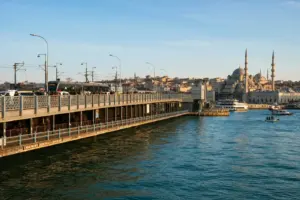 Galata Bridge – about 2.0 km away · typical visit: 30 minutes to 1 hour10 min on foot from Haliç metro, Open 24 hours
Main image: AI-generated illustration. It may not show the place exactly as it looks.
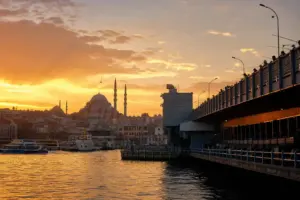 Golden Horn · typical visit: 1–3 hours (waterfront walk or boat tour)
Main image: AI-generated illustration. It may not show the place exactly as it looks.
 Eyüp Sultan Mosque – about 2.6 km away · typical visit: 1–2 hours7 min on foot from Feshane metro, Open daily 08:30–18:30
Main image: AI-generated illustration. It may not show the place exactly as it looks.
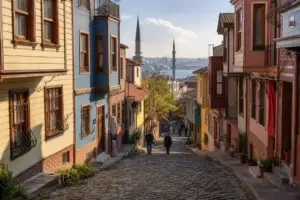 Fener District – about 50 m away (~1 min walk) · typical visit: 2–3 hoursOpen 24 hours
Main image: AI-generated illustration. It may not show the place exactly as it looks.
 Fener and Balat Districtsabout 50 m away (~1 min walk) · typical visit: 3–5 hours
Main image: AI-generated illustration. It may not show the place exactly as it looks.
Related guides
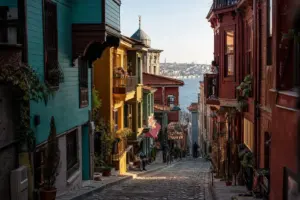 Balat: Istanbul’s Colorful Historic Neighborhood
Main image: AI-generated illustration. It may not show the place exactly as it looks.
 Miniaturk: Turkey’s Landmarks in Miniature on the Golden Horn
Main image: AI-generated illustration. It may not show the place exactly as it looks.
 Spice Bazaar and Grand Bazaar Route: Two Markets, Six Centuries
Main image: AI-generated illustration. It may not show the place exactly as it looks.
 Golden Horn Waterfront Walk: Waterfront Route Through Fener, Balat & Eyüp
Main image: AI-generated illustration. It may not show the place exactly as it looks.
 Istanbul Markets and Bazaars: A Three-Day Shopping and Exploration Itinerary
Main image: AI-generated illustration. It may not show the place exactly as it looks.
Browse more: More in Fatih · All Neighborhoods
FAQ: Fener
Is Fener a separate paid attraction or museum?
No. Fener is a free, open neighborhood. You can walk its streets without a ticket, entrance fee, or tour. The streets are public; churches can be viewed from outside or entered respectfully. A few cultural sites (like the Women's Library) may have limited hours but are free or very cheap.
Can I visit the Ecumenical Patriarchate of Constantinople?
The courtyard and outer gate are visible from the public street and free to view. Interior visits to the church are rare for non-Orthodox visitors and require respectful approach. If a priest is present, you may ask permission to observe briefly. But the experience is mainly external—the Patriarchate's significance is its role in history and Orthodoxy, not tourism.
How long should I spend in Fener?
Two to three hours is typical for a thorough but unhurried visit. If you walk slowly, rest often, explore side streets, and eat at a café, you could spend a half day. If you just want photos and main sites, 1.5–2 hours suffice. Fener is not designed to be rushed.
Is Fener the same as Balat? Are they one neighborhood?
No. Fener and Balat are two adjacent but distinct neighborhoods. Fener was historically the Greek Orthodox quarter; Balat was the Jewish quarter. They share similar architecture and are often visited together, but have separate histories and characters. Allow time for both if you want to experience both communities.
Do I need a guide?
No, but a guide adds value. A knowledgeable local guide can explain the history, introduce you to residents, explain the current restoration work, and take you to less obvious sites. If you speak Turkish or Greek, you might have richer conversations. But wandering alone with a map is also rewarding.
Is Fener safe?
Yes. Fener is a safe, family-friendly neighborhood with no particular crime or safety concerns for visitors. The main hazards are steep streets and uneven cobblestones, not crime. Use normal city awareness (watch your bag in crowds) but feel free to explore alone at any hour.
What is the best way to get to Fener?
The T5 tram line is the most direct and scenic route. Get off at either Cibali (north) or Balat (south) station and walk uphill into the neighborhood. From Eminönü (near Hagia Sophia), the tram takes about 10 minutes. You can also walk west along the Golden Horn from Eminönü in 15–20 minutes.
Can I use my phone map in Fener?
Yes. Google Maps and Yandex Maps work well in Fener and show the neighborhood layout accurately. However, cell reception can be spotty in deep canyon-like lanes between tall houses. Download an offline map before you arrive, or use a printed map from a tourism office.
Istanbul Vibes is a one-person project. A coffee keeps it going

Take this guide with you
Get a free PDF of this guide to print or read offline: key facts, tips and a map link on a few clean pages.
Report an issue on this page
How we research and update our guides
About this guide: AI assistance and accuracy
This guide is created with the help of AI and is based on official sources where available. Mistakes can still happen. Opening hours, prices, rules and other details are given to the best of our knowledge as of the date shown and can change without notice. It offers general recommendations only, not professional, legal or travel advice. Please confirm important details with the official source before you travel; you are responsible for your own plans and decisions.
* Affiliate link: as an Amazon Associate we earn from qualifying purchases at no extra cost to you.
