
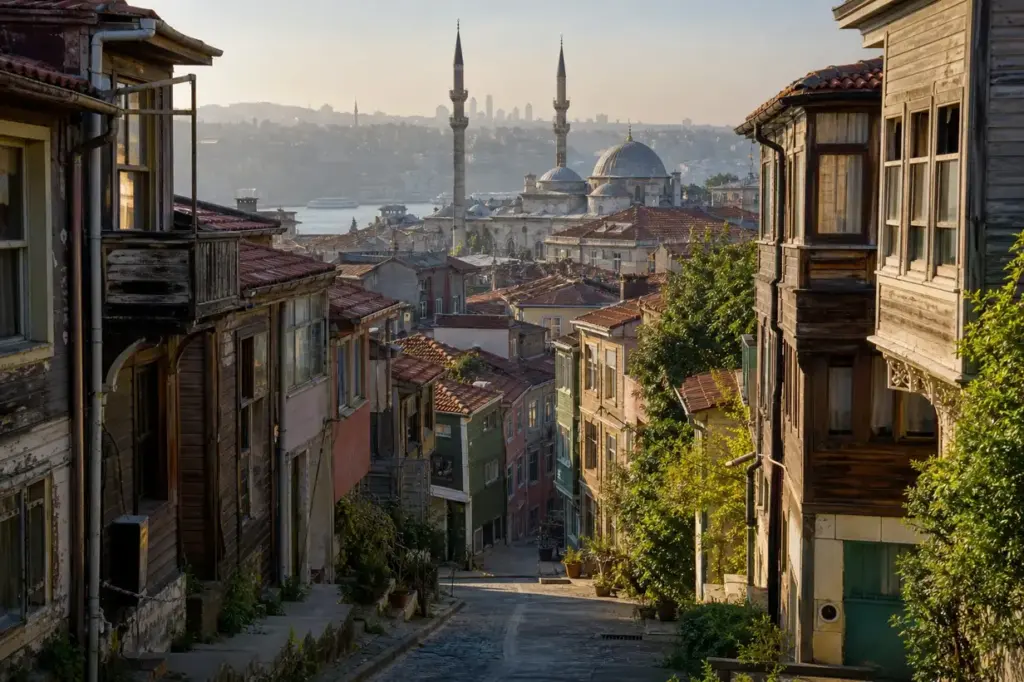
Zeyrek is a picturesque hilltop neighborhood in the Fatih district, perched above the Golden Horn between the busy districts of Fatih and Unkapanı. The neighborhood takes its name from its most prominent landmark, the Zeyrek Mosque, which rises dramatically from a plateau overlooking the water. This is one of Istanbul’s oldest quarters, protected as part of the city’s UNESCO World Heritage listing for the Historic Areas of Istanbul.
Unlike many of Istanbul’s famous tourist zones, Zeyrek remains a working neighborhood where daily life unfolds on narrow streets lined with restored 19th-century wooden houses. The area is difficult to reach by public transport and lacks obvious attractions beyond its central mosque, which means very few international visitors venture here—allowing those who do to experience a quieter, more authentic side of Istanbul.
Quick Facts
| Address | İbadethane Sk., Zeyrek, Fatih, İstanbul Google MapsApple MapsYandex Maps |
|---|---|
| District | Fatih |
| Metro | Vezneciler (M2, Follow signs towards Zeyrek; walk uphill 10-15 minutes) |
| Best time to visit | Spring and autumn offer the most comfortable walking weather, with mild temperatures and clear light. The neighborhood is quieter on weekends as the markets are less busy. Mid-morning to early afternoon is best for visiting the markets when they're most active. Late afternoon light is beautiful for photography, especially views from the plateau toward the Golden Horn. Summer heat can be intense on the exposed plateau; bring water. Winter is feasible but streets may be slippery. |
| Recommended duration | 1.5–2 hours |
What Is (and Isn't) Part of a Visit to Zeyrek?
| Part | Status | Notes |
|---|---|---|
| Zeyrek Mosque (Pantokrator complex) | Included in the standard ticket | The main building anchoring the neighborhood. Currently undergoing restoration; visitor access status varies—check ahead before planning a visit. |
| Zeyrek neighborhood streets and wooden houses | Included in the standard ticket | Free to walk; the restored Ottoman-era residential streets and markets are open to public movement. |
| Women's Market (Kadınlar Pazarı) | Included in the standard ticket | Open pedestrian shopping street with local markets, butchers, and restaurants; free to browse and walk through. |
| Çinili Hamam (Tiled Bath House) | Separate ticket or institution | Still functions as an active Turkish bath; entry and use require a separate arrangement with the hamam management. |
| Zeyrek Cistern (underground) | Not open to visitors | Under restoration as of October 2026; not currently open to visitors. |
| Surrounding Fatih district neighborhoods | Outside / not part of it | Fatih and Unkapanı neighborhoods are adjacent; they are separate areas with their own attractions. |
Why Visit Zeyrek?
Zeyrek offers several compelling reasons to venture uphill from the metro station. First, the neighborhood centers on one of the most significant Byzantine religious complexes still standing—a 12th-century monastery complex that rivals the Hagia Sophia in architectural importance. Second, the steep terrain and narrow lanes preserve an Ottoman-era street pattern and wooden house design that has been steadily restored since the early 2000s. Third, the views of the Golden Horn from the plateau are among the finest in historic Istanbul, without the crowds of Sultanahmet. Finally, local street life around the markets and tea shops offers genuine contact with how many Istanbul residents actually spend their day.
How Zeyrek Is Laid Out
Zeyrek sits on a steep hill rising from Atatürk Boulevard in the south. The Zeyrek Mosque occupies the high point, dominating the skyline. From the mosque, narrow streets descend in a tight grid toward the markets and shopping areas below. The main commercial artery, İtfaiye Street, runs roughly north-south through the neighborhood and is where the Women’s Market (Kadınlar Pazarı), butchers, grocers, and local restaurants cluster. Walking from Vezneciler metro station, you enter the neighborhood from the east and climb uphill; most visitors head toward the mosque first before exploring the street life below it.
Highlights of Zeyrek
Zeyrek Mosque (Pantokrator Monastery)
The neighborhood's centerpiece and a UNESCO World Heritage landmark. Originally built between 1118 and 1124 as the Monastery of Christ Pantokrator by Byzantine Empress Eirene, it once included a church, hospital, and library. After the Ottoman conquest in 1453, it was converted into a mosque and named after its first professor, Molla Zeyrek Mehmet Efendi. The structure showcases layered Byzantine and Ottoman architecture. As of October 2026, the mosque has been undergoing restoration; check current access status before visiting, as it may be closed to visitors during work.
Tip: View the exterior from the plateau for the finest perspective of the structure and the Golden Horn beyond. The restoration work means interior access may be limited.
Women's Market (Kadınlar Pazarı)
This pedestrian shopping street along İtfaiye Street is the beating heart of local Zeyrek life. Lined with butchers, grocers, and small restaurants, it serves residents from the nearby Siirt and Bitlis regions. You'll see fresh meat hanging, produce stacked on the sidewalk, and families shopping for the day's meals. It's a vivid slice of neighborhood commerce that hasn't changed much in decades.
Tip: Go in the morning to catch the busiest trade. Bring a camera, but photograph discreetly and respectfully—this is a working market, not a tourist attraction.
Çinili Hamam (Tiled Bath House)
At the northern end of İtfaiye Street stands this Ottoman-era bathhouse, attributed to the 16th century. The structure was restored in recent years and retains its traditional layout. While it still functions as a hamam (Turkish bath), the exterior and architectural details are recognizable from the street.
Tip: The hamam is actively used by locals, so respect prayer times and women-only hours if you wish to observe the building or ask about entry.
Hüsambey Tezgahçılar Mosque
This small mosque on the east side of İtfaiye Street was built in 1612 by Şeyhülislam Sunullah Efendi. It was damaged by fire and rebuilt in 1911. The structure reflects Ottoman religious architecture of the early 17th century, though it remains modest compared to the grand Zeyrek complex.
Tip: This mosque is still actively used for prayer; remove your shoes and dress modestly if you enter outside prayer times.
Tomb of Gazanfer Ağa
Located at the corner of Atatürk Boulevard, this 1596 tomb commemorates Gazanfer Ağa, the Chief White Eunuch of Topkapi Palace under Sultan Mehmed III. Gazanfer Ağa was originally from Venice, captured as a boy, and rose to prominence in the Ottoman court. The modest but well-positioned tomb sits at the neighborhood's edge near major traffic.
Tip: This is easily spotted from Atatürk Boulevard; there's no entry inside, but the exterior is visible and historically significant for understanding Ottoman palace hierarchy.
Zeyrek Cistern (Zeyrek Sarnıcı)
Beneath the neighborhood lies the Zeyrek Cistern, the third-largest Byzantine cistern in Istanbul, built in the 12th century as part of the Pantokrator Monastery complex. Covering 900 square meters, it stored water for the monastic community and the surrounding area. The cistern was used until the 18th century.
Tip: As of October 2026, the cistern is undergoing restoration and not open to the public. Check ahead if you're interested in underground cistern visits; Piri Mehmed Pasha Mosque sits atop it.
Ottoman Wooden Houses
Zeyrek's distinctive character comes from its intact grid of late-19th-century wooden houses, many painted in muted earth tones or faded pastels. Many were restored beginning in the early 2000s as part of the UNESCO World Heritage conservation effort. Walking the narrow streets, you see bay windows, carved details, and compact courtyards typical of Ottoman domestic architecture.
Tip: Photography is best in morning or late afternoon light; the steep terrain and narrow lanes create strong shadows. Respect residents' privacy and avoid photographing people directly.
Atmosphere
Zeyrek has a distinctly working-class, residential atmosphere—quite different from the polished, heritage-marketed feel of Sultanahmet. The steep streets fill with locals going about their days: schoolchildren, shoppers carrying mesh bags from the market, delivery trucks maneuvering carefully downhill, and elderly men sitting outside tea shops. Life genuinely happens here on the street rather than behind closed doors.
The markets are noisy, aromatic, and animated, especially mid-morning when the butchers and grocers are busiest. Sounds of Turkish pop music drift from shop radios, and the smell of grilled meat and fresh herbs fills the air. By mid-afternoon, the pace slows; after dark, the neighborhood becomes quite quiet and residential. The views of the Golden Horn from the plateau are serene and surprisingly undisturbed, particularly beautiful in late afternoon when the light turns golden and the water reflects the sky.
History of Zeyrek
The neighborhood’s history is inseparable from the Zeyrek Mosque, the former Monastery of Christ Pantokrator. This monastic complex was commissioned by Byzantine Empress Eirene, wife of Emperor John II Komnenos, and built between 1118 and 1124. The complex was one of the greatest religious foundations of the Byzantine era, consisting of not just a church but also a hospital and library—a hub of faith, healing, and learning.
The monastery expanded under Emperor John II Komnenos, who added a second church to the north dedicated to the Theotokos. By 1136, the two churches were connected by an imperial chapel dedicated to Archangel Michael, which became the burial place for the Komnenos and Palaiologos imperial dynasties. This multi-chambered complex became the most elaborate religious building in Constantinople after the Hagia Sophia, distinguished by its intricate Byzantine architecture with multiple domes and masonry vaults.
During the Latin Occupation of Constantinople (1204–1261), after the Fourth Crusade, the monastery was seized and used as a palace by the Latin Emperor Baldwin II. Catholic clergy reconsecrated the building. When Byzantine rule was restored, the complex returned to Orthodox use until 1453.
After the Ottoman conquest in 1453, Sultan Mehmed the Conqueror converted the monastery into a medresse (religious school) and its church into a mosque. The building took the name Molla Zeyrek Camii (Mosque) from Molla Zeyrek Mehmet Efendi, its first professor. The mosque served as an important center of Islamic learning until the larger Fatih Mosque Complex was completed. The structure underwent major repairs in the late 18th century and was substantially restored in 1966 by the Directorate of Religious Endowments.
The surrounding neighborhood developed as an Ottoman-era residential quarter with tight networks of wooden houses, many dating to the 19th century. The entire center of Zeyrek was designated part of the Historic Areas of Istanbul UNESCO World Heritage Site in 1985. Beginning in the early 21st century, many of the deteriorating wooden houses were restored, preserving the neighborhood’s distinctive late-Ottoman character while halting decades of decline.
Legends and Myths about Zeyrek
The Imperial Tombs
Disputed by historians. According to Byzantine records, the chapel connecting the two churches of the Pantokrator Monastery was built to serve as the mausoleum of the imperial Komnenos and Palaiologos families. Emperors and empresses were believed to be buried here, making it one of the city's most sacred burial grounds. Legend says that the tombs were sealed when the Ottomans converted the complex, and their exact location remains disputed by historians and archaeologists.
Empress Eirene's Piety
Legend – historically unreliable. Local lore holds that Empress Eirene, a Hungarian princess who married into the Byzantine court, founded the monastery as an act of religious devotion and to ensure her own salvation and that of her dynasty. She allegedly spent vast imperial resources on the hospital and library to serve the poor and advance learning. The legend emphasizes her generosity and piety as the spiritual force behind the complex.
The Hidden Cistern
Legend – historically unreliable. Tales speak of an enormous underground cistern beneath Zeyrek that was built in antiquity and expanded by the monastery builders to supply endless water to the complex even during sieges. Some versions claim secret passages connected it to the Hagia Sophia or the imperial palaces, allowing movement through the city unseen. The cistern was forgotten after the Ottoman conquest and rediscovered only in the 20th century.
Tickets and Booking for Zeyrek
Zeyrek is a free-to-explore neighborhood. There is no admission fee for walking the streets, visiting the markets, or viewing the Zeyrek Mosque exterior. If the mosque is open inside (check current status, as restoration work may limit access), entry for visitors outside prayer times is typically free; remove your shoes and dress modestly.
The Çinili Hamam (bathhouse) operates independently and charges a fee for bathing services; inquire on-site for current rates and hours. The Zeyrek Cistern is not currently accessible to the public.
No advance booking is needed to explore the neighborhood. Simply arrive, ideally in the morning or mid-afternoon to experience the busiest street life. Local guides familiar with the area may be available through tour operators, but hiring one is not necessary to enjoy the neighborhood on your own.
Suggested itineraries Zeyrek
1.5 hours
Exit Vezneciler metro and climb steeply uphill toward the Zeyrek Mosque, taking in the views of the Golden Horn as you ascend. Spend 20 minutes viewing the mosque exterior and surrounding plateau, noting the architectural details. Descend to İtfaiye Street and walk the Women's Market for 30 minutes, browsing butchers and local shops. End with tea at a local café overlooking the neighborhood or the market.
2–2.5 hours
Follow the 1.5-hour itinerary above. Add exploration of the surrounding wooden-house streets, photographing details of Bay windows and carved details. Visit the Hüsambey Mosque if you're interested in Ottoman religious architecture. Hunt for the Tomb of Gazanfer Ağa near Atatürk Boulevard. Finish with a long tea or simple lunch at a neighborhood restaurant.
Half day (3–4 hours)
Begin at Vezneciler and slowly explore the neighborhood's full range. Walk the full length of İtfaiye Street, stopping to chat with shopkeepers or observe the market. Visit each highlighted mosque and historic structure. Explore the quieter residential streets on either side of the main drag. Locate the Çinili Hamam and consider whether a traditional hamam experience interests you. Take lunch at one of the local restaurants serving Siirt or Bitlis cuisine. Return to the plateau near the mosque for sunset views of the Golden Horn.
How to Get to Zeyrek
By Metro: The closest metro station is Vezneciler on the M2 line. Exit and follow signage toward Zeyrek. The neighborhood is uphill from the station—a 10–15 minute walk with steady elevation gain. Look for İbadethane Street leading upward; follow it to reach the Zeyrek Mosque on the plateau.
By Tram: The T5 tram line stops at Cibali, closer to the Zeyrek area. From Cibali, Zeyrek is a 5–10 minute walk uphill.
By Bus: Multiple buses run along Atatürk Boulevard at the neighborhood’s base. Look for stops marked Vefa, Unkapanı, or Cibali. From Atatürk Boulevard, climb uphill on any street leading north into the neighborhood.
Walking Tip: Zeyrek is steep; wear comfortable shoes. Once on the plateau near the mosque, the terrain flattens. The streets are narrow and unpaved in some places; watch your step.
Accessibility
Zeyrek is a steeply sloped neighborhood with cobblestone and uneven streets, making it challenging for those with mobility restrictions or using wheelchairs. The paths to the mosque and main attractions require climbing. There are no elevators or ramps in the neighborhood. Sturdy, closed-toe walking shoes are essential. Public bathrooms are limited; the nearest facilities are at the metro station or local restaurants. Benches are available on the plateau near the mosque for resting.
Food Nearby
The Women's Market area along İtfaiye Street hosts numerous small restaurants and kebab stands serving Siirt and Bitlis cuisine, including local specialties. Zeyrekhane, an upscale restaurant in a restored house, offers Golden Horn views and traditional Turkish food. Smaller lokanta-style restaurants serve simple daily menus. Tea gardens cluster near the market. Street food vendors offer simit (sesame bread), boiled corn, and other quick snacks. Choose any small, busy restaurant filled with locals for authentic, affordable meals.
What to Bring
Comfortable, sturdy walking shoes are essential for steep cobblestone streets. Bring water, especially in summer—the plateau has little shade. A camera or phone is useful for photographing the wooden houses and Golden Horn views. Cash is helpful, as many small shops and restaurants don't accept cards. A light jacket or shawl is useful if you plan to enter a mosque, and modest clothing is respectful. An umbrella or rain jacket is wise during spring and autumn showers.
Best Views and Photo Spots of Zeyrek
Zeyrek Mosque plateau viewpoint
From the plateau around the mosque, wide views of the Golden Horn frame the structure. The mosque's silhouette against the water and opposite shore creates dramatic compositions, especially in golden-hour light. The surrounding wooden houses and narrow streets descend steeply toward the water.
Best time: Late afternoon (4–6 PM) when the sun is lower and light is warm. Early morning offers clearer air but harsher shadows.
Women's Market (Kadınlar Pazarı) street level
The busy street lined with produce, hanging meats, and shoppers captures authentic neighborhood life. The narrow passage and overhead wires create layered street photography. Morning light is strongest from the east.
Best time: 9–11 AM when the market is most active and crowded. Avoid shooting during prayer times when some vendors may close.
Ottoman wooden house details (various streets)
Carved wooden window frames, painted bay windows, and weathered facades of 19th-century houses provide close-up architectural photography. Streets like those surrounding the mosque offer good examples.
Best time: Mid-morning (10–12 PM) for side-lit details that reveal texture and carving. Avoid harsh noon sun.
Corner views looking toward the Golden Horn
Several street intersections offer glimpses of the water and the opposite shore between buildings. These narrow vistas create compositional depth and context.
Best time: Afternoon when the water reflects warm light. Clear weather is essential for seeing the far shore.
Photography Rules
Photography is generally welcome in the streets and markets, but photograph people respectfully and ask permission before close-ups. Inside the mosque (if open), photography may be restricted during prayer times; check with the caretaker. No drones are permitted. Tripods attract attention in crowded market areas—use them discreetly or consider a phone stabilizer instead. Avoid photographing directly into homes or private courtyards without permission.
Family Suitability
Zeyrek is suitable for older children and teens who can manage steep hills and enjoy cultural exploration. Younger children may find the climb tiring. Stroller use is impractical due to cobblestone streets, steep terrain, and narrow lanes. The lively market atmosphere and street life interest children old enough to walk independently. Restaurants are casual and welcoming to families. There are no dedicated children's attractions, so interest in history, architecture, and local life is important. The neighborhood is safe, but constant vigilance is needed on steep, uneven streets and around market traffic.
Istanbul Vibes Tips
- Arrive before noon. The Women's Market and street vendors are at their peak in late morning. By mid-afternoon, many shops close. If you arrive after 2 PM, you'll miss the busiest and most authentic activity.
- Allow extra time for the uphill walk from Vezneciler metro. It's not far in distance, but the steep grade makes it feel longer. Bring water even if you think you won't need it; there's little shade on the exposed paths.
- Before planning to enter the Zeyrek Mosque, call ahead or check the latest travel advisories. Ongoing restoration work means access for visitors is unpredictable. Check the current status rather than arriving to find it closed.
- Explore the side streets and courtyards, not just the main market street. The quieter residential lanes have some of the finest examples of restored wooden houses and offer views most visitors miss.
- Respect prayer times at the mosques. Avoid loud photography or intrusive behavior during prayer. If you're interested in the interior of a mosque, ask politely at the entrance about visitor hours.
- Carry small cash. Many family-run restaurants, small shops, and tea gardens don't accept cards. ATMs are limited in the neighborhood; get cash at the metro station before climbing up.
Explore Nearby Zeyrek
Sights near Zeyrek
 Valens Aqueduct – about 450 m away (~7 min walk) · typical visit: 30-45 minutes8 min on foot from Vezneciler metro, Open 24 hours
Main image: AI-generated illustration. It may not show the place exactly as it looks.
 Fener and Balat Districtsabout 1.1 km away (~18 min walk) · typical visit: 3–5 hours
Main image: AI-generated illustration. It may not show the place exactly as it looks.
 Eyüp Cemetery – about 4.1 km away · typical visit: 1–2 hours2 min on foot from Piyer Loti metro, Open 24 hours
Main image: AI-generated illustration. It may not show the place exactly as it looks.
 Yavuz Sultan Selim Bridge – about 24.1 km away · typical visit: 1–2 hoursOpen 24 hours
Main image: AI-generated illustration. It may not show the place exactly as it looks.
 Pantocrator Church – about 50 m away (~1 min walk) · typical visit: 1–2 hours14 min on foot from Vezneciler metro, Open daily 08:00–18:00
Main image: AI-generated illustration. It may not show the place exactly as it looks.
 Şehzade Mosque – about 650 m away (~11 min walk) · typical visit: 1–1.5 hours4 min on foot from Vezneciler metro
Main image: AI-generated illustration. It may not show the place exactly as it looks.
Metro stations near Zeyrek
 Vezneciler – about 850 m away (~14 min walk)Open daily 05:59–00:24
Main image: AI-generated illustration. It may not show the place exactly as it looks.
 Haliç – about 900 m away (~14 min walk)Open daily 06:06–00:06
Main image: AI-generated illustration. It may not show the place exactly as it looks.
 Laleli-Üniversiteabout 1.1 km away (~19 min walk)
Main image: AI-generated illustration. It may not show the place exactly as it looks.
Restaurants and cafes near Zeyrek
 Vefa Bozacısı – about 650 m away (~11 min walk)7 min on foot from Vezneciler metro, Open daily 08:00–00:00
Main image: AI-generated illustration. It may not show the place exactly as it looks.
 Mivan Restaurant – about 750 m away (~12 min walk)4 min on foot from Vezneciler metro, Open daily 08:30–00:00
Main image: AI-generated illustration. It may not show the place exactly as it looks.
 Pandeli – about 1.2 km away (~20 min walk)12 min on foot from Haliç metro, Open 11:30–19:00, closed Sun
Main image: AI-generated illustration. It may not show the place exactly as it looks.
 Ali Ocakbaşı Karaköy – about 1.3 km away (~22 min walk)8 min on foot from Haliç metro, Open daily 12:00–23:00
Main image: AI-generated illustration. It may not show the place exactly as it looks.
Nightlife near Zeyrek
 Suma Han – about 1.3 km away (~22 min walk)5 min on foot from Şişhane metro
Main image: AI-generated illustration. It may not show the place exactly as it looks.
 Cheers Karaköy – about 1.4 km away (~22 min walk)9 min on foot from Haliç metro, Open daily 08:30–02:00
Main image: AI-generated illustration. It may not show the place exactly as it looks.
Train stations and river piers near Zeyrek
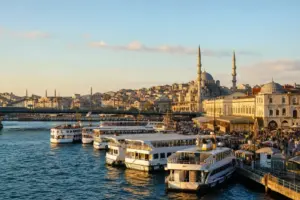 Eminönü Ferry Terminalabout 1.2 km away (~19 min walk)
Main image: AI-generated illustration. It may not show the place exactly as it looks.
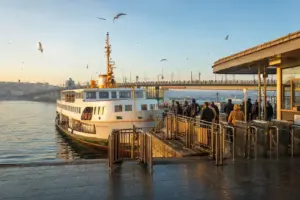 Karaköy Ferry Terminalabout 1.6 km away (~27 min walk)
Main image: AI-generated illustration. It may not show the place exactly as it looks.
Related guides
 Nurtepe Metro Station: Getting Around on Line M7Open daily 06:00–00:00
Main image: AI-generated illustration. It may not show the place exactly as it looks.
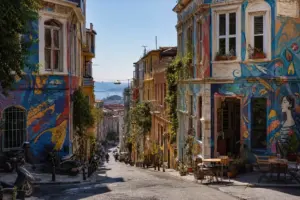 Yeldeğirmeni: Street Art, Historic Buildings and Local Cafes in Kadıköy
Main image: AI-generated illustration. It may not show the place exactly as it looks.
 Spice Bazaar Shopping Guide: What to Buy in Eminönü
Main image: AI-generated illustration. It may not show the place exactly as it looks.
 Chora Church (Kariye Mosque): Mosaics and Visitor Route
Main image: AI-generated illustration. It may not show the place exactly as it looks.
 Blue Mosque Visiting Guide: Prayer, Courtyard and Tiles
Main image: AI-generated illustration. It may not show the place exactly as it looks.
Browse more: More in Fatih · All Landmarks · All Neighborhoods
FAQ: Zeyrek
Is the Zeyrek Mosque open to visitors right now?
As of October 2026, the Zeyrek Mosque is undergoing restoration and access for visitors is variable. Before planning a visit to the interior, check the current status with local tourism offices or the neighborhood caretaker. The exterior and plateau around it are always accessible.
How long does it take to see Zeyrek?
A quick visit (markets and mosque exterior) takes 1.5 hours. A fuller exploration of residential streets, hamams, and tea breaks takes 2–3 hours. Visitors interested in architecture and local life can easily spend a half-day here without rushing.
Is Zeyrek safe for solo travelers?
Yes. The neighborhood is residential and well-traveled by locals. There are no particular safety concerns for solo visitors during daylight hours. The area becomes quiet after dark, which is typical for residential neighborhoods. Take normal precautions as you would anywhere in Istanbul.
Can I take a tour of the Zeyrek Mosque?
The mosque is active and used for prayer. You can enter outside prayer times if the building is accessible, but formal guided tours are not standard. If you want detailed historical information, hire a local guide familiar with the neighborhood. Some tour companies offer Zeyrek tours.
What's the difference between the Zeyrek Mosque and other Ottoman mosques?
The Zeyrek Mosque is exceptional because it's a Byzantine church (12th century) converted into a mosque after 1453, not built as a mosque from the start. Its Byzantine architecture—multiple domes, intricate vaults—makes it architecturally distinct from purpose-built Ottoman mosques. It's the second-largest surviving Byzantine religious structure in Istanbul after the Hagia Sophia.
Are there restaurants in Zeyrek, or should I eat elsewhere?
Yes, there are restaurants, though don't expect fine dining. Small lokanta-style establishments and kebab stands along the Women's Market serve local food. Zeyrekhane is a more upscale option. For variety, you may prefer to eat in nearby Fatih or Vefa, which have more diverse options.
Is Zeyrek good for photography?
Yes, for street photography, architecture, and Golden Horn views. The narrow streets, market activity, and wooden houses offer compelling subjects. The plateau near the mosque is a strong viewpoint. Photograph respectfully—ask before shooting people directly, and avoid photographing into homes.
What should I wear when visiting?
Comfortable, closed-toe walking shoes are essential—cobblestone and uneven streets demand sturdy footwear. Modest clothing is respectful if entering mosques or interacting with residents. Layers are practical for changing weather. Sunscreen and a hat help in summer. An umbrella is useful in spring and autumn.
Istanbul Vibes is a one-person project. A coffee keeps it going

Take this guide with you
Get a free PDF of this guide to print or read offline: key facts, tips and a map link on a few clean pages.
Report an issue on this page
How we research and update our guides
About this guide: AI assistance and accuracy
This guide is created with the help of AI and is based on official sources where available. Mistakes can still happen. Opening hours, prices, rules and other details are given to the best of our knowledge as of the date shown and can change without notice. It offers general recommendations only, not professional, legal or travel advice. Please confirm important details with the official source before you travel; you are responsible for your own plans and decisions.
* Affiliate link: as an Amazon Associate we earn from qualifying purchases at no extra cost to you.
