

The Şehzade Mosque is a 16th-century Ottoman imperial mosque in the Fatih district, commissioned by Suleiman the Magnificent and designed by Mimar Sinan as a memorial to his son Şehzade Mehmed. Built between 1543 and 1548, the mosque features a central dome 19 meters in diameter rising to about 37 meters, supported by four half-domes, with twin minarets and a marble-paved colonnaded courtyard.
This was Sinan’s first major imperial commission, completed in 1548 and regarded as the best work of his apprenticeship. The complex extends beyond the mosque itself to include the mausoleum of Prince Mehmed, two madrasahs, a public kitchen and a travellers inn. The site stands as one of the finest examples of Classical Ottoman architecture and remains a major pilgrimage and sightseeing destination on Istanbul’s historic peninsula.
Current access notice: As of October 2026: The mosque is open to visitors during posted hours. Entry is free but access is restricted during the five daily prayer times and partially restricted on Fridays during congregational prayers. Visitors should dress modestly (covered shoulders and knees); headscarves are recommended for women but not required. Check official sources for any updates.
Quick Facts
| Built / opened | 1548 |
|---|---|
| Architect(s) | Mimar Sinan |
| Address | Şehzadebasi Cd. 44, Fatih, Istanbul Google MapsApple MapsYandex Maps |
| District | Fatih |
| Admission | free |
| Best time to visit | Spring (April–May) and autumn (September–October) offer pleasant temperatures and lower tourist crowds than summer. Summer visits require early morning or late afternoon arrival to avoid midday heat and larger crowds. Winter (December–February) is quieter but can be rainy and cold. Avoid peak prayer times: midday (approximately 12:00–13:30), sunset, and late evening. Friday congregational prayers (around 12:30–14:00) close the mosque to non-worshippers for several hours. Weekday mornings before 10:00 are generally the quietest times to visit. |
What Is (and Isn't) Part of a Visit to Şehzade Mosque?
| Part | Status | Notes |
|---|---|---|
| Main prayer hall and interior | Included in the standard ticket | Free entry during posted hours outside of prayer times. |
| Courtyard and covered arcade | Included in the standard ticket | Accessible to visitors at all times as an outdoor public space. |
| Tomb of Şehzade Mehmed | Included in the standard ticket | Integrated into the complex; accessible as part of a visit. |
| Additional tombs (Cihangir, Hümasah, Rüstem Pasha, Destari Mustafa Pasha) | Included in the standard ticket | Located within the complex courtyard and accessible to visitors. |
| Historical medrese (theological school) | Outside / not part of it | Now used for institutional purposes and not open to casual visitors; see the building from the courtyard. |
| Historical caravansarai and public kitchen | Outside / not part of it | No longer operated as historical functions; some buildings repurposed for other institutional use. |
| Süleymaniye Mosque | Separate ticket or institution | A separate, larger mosque complex adjacent to Şehzade; built later by Sinan and requiring a separate visit with its own free entry. |
Why Visit Şehzade Mosque?
The mosque is one of the earliest and most important works of architect Mimar Sinan and is one of the signature works of Classical Ottoman architecture. The interior is distinguished by its harmonious proportions and abundant natural light from many windows. The mosque interior has a square base with a large central dome flanked by four half domes and numerous smaller domes.
The forecourt has an area equal to that of the mosque itself, with an ablution space in the centre that was donated from Sultan Murat IV. The complex also contains richly decorated tombs: the tomb of Sehzade Mehmed in the middle, Sehzade Cihangir on the right, and Hümasah Sultan on the left.
How Şehzade Mosque Is Laid Out
The Şehzade complex is organized around the main mosque as its focal point. Upon arrival, visitors encounter the outer courtyard (avlu), ringed by a colonnade of 12 columns supporting 16 domes. At the center stands the ablution fountain (şadırvan), an octagonal marble structure.
The main prayer hall lies beyond the courtyard’s north side, accessed through three main doorways. Inside, the spatial design unfolds vertically: the square prayer chamber rises to the central dome, with four supporting columns at the corners and half-domes arranged symmetrically on all four sides. The Sultan’s private lodge (hünkâr mahfili) occupies a gallery to one side, while the women’s gallery runs along another wall, enclosed in a carved wooden screen.
The complex extends outward to include funerary structures. The mausoleum of Prince Mehmed stands to one side of the main mosque, an octagonal chamber filled with colorful tilework. Additional tombs—those of Prince Cihangir, Princess Hümasah, Rüstem Pasha and others—cluster nearby. The complex also historically contained a medrese (theological school), public kitchen (imaret) and caravansarai, though some buildings are now used for other institutional purposes.
Highlights of Şehzade Mosque
Central Dome and Four Half-Domes
The mosque is built around a central dome 19 meters in diameter rising to about 37 meters, with four half-domes. Standing directly beneath the dome, visitors experience the architectural innovation that Sinan would develop further in later designs. The dome is supported on four massive columns at the corners of the prayer hall, creating an unobstructed interior space. The supporting half-domes distribute weight elegantly, and smaller cupolas fill the corners. Light enters through many windows set into the dome's drum and the walls, creating a luminous interior.
Tip: Stand near the center of the prayer hall facing the mihrab (prayer niche) to fully appreciate the dome's soaring proportions and how light moves across the interior through the day.
Twin Minarets
The mosque has two minarets with two balconies each. The minarets are crafted with fine details and are successfully integrated into the mass. The minarets rise 55 meters in height. Unlike many Ottoman mosques, the minarets of Şehzade are positioned symmetrically at the corners of the courtyard, creating a balanced facade. Stone carving on the shafts displays intricate geometric patterns typical of Sinan's work.
Tip: Photograph the minarets from the courtyard at sunset when golden light catches the carved stone details on their surfaces.
Marble-Paved Courtyard and Ablution Fountain
The forecourt has an area equal to that of the mosque itself. The ablution space (known as a şadırvan) in the centre was donated from Sultan Murat IV. The mosque courtyard is surrounded by 12-columned, 16-domed porticos. The fountain in the middle of the courtyard draws attention with its elegant workmanship. The courtyard's covered arcade provides shelter and creates a transition space between the secular city and the sacred interior.
Tip: Arrive early or late in the day when sunlight streams through the arcade's colonnade, creating dramatic patterns of light and shadow on the marble floor.
Tomb of Şehzade Mehmed
Prince Mehmed (born 1521) died in 1543 while returning to Istanbul after a victorious military campaign in Hungary. The mausoleum of Mehmed was the first element of the complex to be completed, in 1544. The octagonal tomb chamber stands adjacent to the main mosque and is filled with colorful Iznik tilework in blue, green and white. The walls of the chamber display intricate geometric and floral patterns typical of 16th-century Ottoman ceramic art.
Tip: Allow your eyes to adjust when entering the tomb chamber so you can fully appreciate the richness of the tilework, which becomes more vivid once your eyes adapt to the interior light.
Additional Royal Tombs
The tomb houses the tombs of Sehzade Mehmed in the middle, Sehzade Cihangir on the right, and Hümasah Sultan on the left. The tomb of Rüstem Pasha is also located on the left side of the princes tomb. The tomb of Destari Mustafa Pasha is located in the outer courtyard. Each contains its own tilework and cenotaphs (decorated covers over the graves). Rüstem Pasha, a celebrated grand vizier, has a particularly ornate chamber with 17 windows.
Tip: Study the different styles and periods of tilework on display—Rüstem Pasha's tomb shows later, more elaborate decoration than Mehmed's.
Interior Decoration and the Mihrab
The Sultan's Lodge in the Harim, the women's gallery surrounded by a wooden cage and the Muezzin's lodge with 8 columns are meticulously crafted. The prayer niche (mihrab) on the qibla wall is carved from marble and inlaid with colorful stone. The pulpit (minbar) beside it displays fine woodcarving. Calligraphic inscriptions in Arabic circle the walls, including the inscription on the main door reads "Mabed-i Ummet-i Resûl-i Mûbin – year 955" ("Temple of the Nation of the Explicit Prophet").
Tip: Look upward to notice the painted and gilded decorations on the wooden ceiling sections that bridge some of the half-domes; this work is often missed by visitors focused on the marble below.
Atmosphere
The Şehzade Mosque projects architectural confidence and restraint at once. Its cream and gray stone exterior, though grand in scale, avoids the ornate detailing of later Ottoman baroque. The twin minarets frame the courtyard like sentries, their call to prayer echoing across Fatih throughout the day.
Inside, the atmosphere shifts according to light and prayer times. Outside prayer hours, the space feels contemplative—light streams through dozens of windows, pooling on the marble floor and illuminating the interior with changing intensity through the day. During midday prayers, the mosque fills with the murmur of worshippers and the resonant acoustics of the dome overhead, which carries voices and footsteps with surprising clarity.
The surrounding courtyard is quieter than the prayer hall, a tree-shaded haven where visitors linger to absorb the surroundings. The complex sits on a rise, and the street-level approach is modest; once inside, the scale of the architecture becomes apparent. Tourist traffic is steady but manageable compared to the nearby Süleymaniye, making it possible to find moments of stillness even on busy days.
History of Şehzade Mosque
The mosque was commissioned by Suleiman the Magnificent as a memorial to his son Şehzade Mehmed who died in 1543 while returning to Istanbul after a victorious military campaign in Hungary. Mehmed was Suleiman’s favourite son, the eldest of Suleiman’s sons by his wife Hurrem, more commonly known as Roxelana. His exact cause of death is unknown; some are of the opinion he died from smallpox while others believe he was actually murdered. The loss of the heir apparent was a profound shock to the sultanate, and the commission of a grand funerary complex reflected both Suleiman’s grief and his desire to immortalize his son.
The Sehzade Mosque was the architect Sinan’s first major imperial commission. He completed it in 1548 CE and it is regarded as the best work of his apprenticeship. The mausoleum of Mehmed was the first element of the complex to be completed, in 1544. Suleiman was so impressed with the ensuing Şehzade Mosque that he asked Sinan to design a mosque for himself too. That commission resulted in the larger Süleymaniye Mosque, completed a decade later nearby, which would establish Sinan’s reputation as the Ottoman Empire’s greatest architect.
The Şehzade complex demonstrates several innovations that would become hallmarks of Ottoman imperial architecture. The central dome rises on four large columns and is supported by four half domes. The mosque has a square plan and a large dome. This layout—a square prayer chamber unified beneath a central dome with flanking half-domes—created an interior of unusual spaciousness and light. The courtyard’s colonnade, equal in area to the prayer hall itself, provided generous public space for ablutions and gathering.
The mosque was damaged in the fires of 1613 and 1633; the dome of the fountain was renovated during the reign of Murad IV. The wooden parts were completely burned in the fires of 1718 and 1782; partial repairs were made in 1916 and 1953. The complex underwent extensive restoration between 1994 and 1999. More recently, in a June 2016 attack, the windows of the mosque were shattered, but the building has been repaired and remains in use for both worship and pilgrimage.
Legends and Myths about Şehzade Mosque
Sinan's Apprenticeship Masterpiece
Disputed by historians. The mosque is known as Sinan's 'apprenticeship work,' a phrase that requires careful reading. Sinan did not regard it as a work of inexperience, but rather as the culmination of his training before undertaking grander commissions. The story holds that Suleiman himself was so moved by the Şehzade Mosque that he commissioned Sinan to build his own funerary mosque—the Süleymaniye—as a monument to himself. Some accounts suggest Sinan designed Şehzade under the mentorship of an older master, though historical records of Sinan's training are fragmentary and this remains a matter of scholarly debate.
The Prince's Death and Suleiman's Grief
Legend – historically unreliable. Ottoman chronicles record that Suleiman the Magnificent mourned his son Mehmed so deeply that he withdrew from court for forty days after the prince's death. Some accounts describe the sultan's grief as so severe that he abandoned his usual activities and spent the period in seclusion at the temporary tomb site where Mehmed had been buried. The decision to commission such a lavish complex is said to have been Suleiman's personal decree, a father's effort to ensure his beloved son would be remembered eternally through architecture.
Tickets and Booking for Şehzade Mosque
The Şehzade Mosque is free to enter. No advance booking is required; visitors may arrive and enter during posted hours. Opening hours as of October 2026 are 08:30–18:30 daily; the mosque is closed to visitors during the five daily prayer times. On Fridays, access is restricted until 14:30 due to congregational prayers. Entry times outside these restrictions are generally flexible, and visitors may stay for as long as they wish.
No ticket purchase or voucher exchange is necessary. Dress code: visitors should cover shoulders and knees out of respect for the active place of worship. Headscarves are customary for women but not legally required. Photography is permitted in most areas of the interior unless specifically restricted by current signage.
For the most current opening hours, prayer schedules and any temporary closures, consult official sources or ask locally upon arrival, as times may shift seasonally or due to special observances.
Suggested itineraries Şehzade Mosque
1 hour
Enter through the main courtyard and pause to observe the ablution fountain and colonnade. Proceed into the prayer hall and stand centrally to experience the dome and light. Spend time at the mihrab (prayer niche) and the minbar (pulpit). Exit to view the tomb of Şehzade Mehmed, observing the tilework. This route captures the essential architectural and spiritual core without extended lingering.
1.5 hours
Begin as above. After viewing the main interior, take time to study the architectural details: the women's gallery screen, the Sultan's lodge, the calligraphic inscriptions. Exit to the courtyard and visit each of the secondary tombs (Cihangir, Hümasah, Rüstem Pasha), reading the tilework and window details. Sit in the courtyard arcade to rest and absorb the atmosphere before departure.
2–3 hours (combined with Süleymaniye)
Spend 1–1.5 hours at Şehzade, then walk to the adjacent Süleymaniye Mosque (5–10 minutes on foot). Spend the remaining time exploring the larger complex, tombs and courtyard of Süleymaniye. This pairing allows comparison of Sinan's early and mature imperial designs and shows the progression of Ottoman mosque architecture within a single visit.
How to Get to Şehzade Mosque
By metro: The nearest metro stations are Laleli-Üniversite on the M1A line and Çemberlitaş on the T1 line. From Laleli-Üniversite, follow signs for the Valens Aqueduct exit; proceed northeast (uphill) toward Şehzadebasi Caddesi for approximately 8–10 minutes on foot. From Çemberlitaş, head north along Divanyolu Caddesi and then northeast to Şehzadebasi Caddesi, approximately 10–12 minutes walk.
Walking from nearby landmarks: If approaching from the Süleymaniye Mosque, Şehzade lies 5–10 minutes downhill to the south. From the Fatih Mosque or Vezneciler area, walk southeast toward the Valens Aqueduct; Şehzade Mosque stands just south of this ancient Roman structure. The mosque’s twin minarets are visible landmarks that help orient visitors from surrounding streets.
By taxi or other transport: The mosque is located at Şehzadebasi Caddesi 44, Fatih. Taxis and ride-hailing apps can deliver you directly; the courtyard entrance sits street-level with clear signage. Street parking is limited in the dense Fatih neighborhood; public transport or walking is recommended.
Accessibility
The mosque is partially accessible to visitors with mobility challenges. The main courtyard is accessible at street level with no steps. The prayer hall entrance is reached via a few steps (typically 2–4) from the courtyard; no ramp is currently provided, though staff may assist visitors if requested in advance. The interior prayer hall floor is level and unobstructed, allowing wheelchair access if entry can be managed. Access to the tombs involves multiple small steps in some areas. Visitors with significant mobility limitations should inquire at the entrance about assistance. Companion tickets and reduced fees for disabled visitors follow standard Turkish cultural institution policies; inquire locally for current rates.
Food Nearby
The Şehzade area is part of Istanbul's historic Fatih quarter, which has numerous casual dining options within walking distance. Small lokanta (casual restaurants) serving traditional Turkish fare line nearby streets such as Vezneciler Caddesi. Coffee houses (kahvehane) and simpler tea gardens are common. Closer to Çemberlitaş and Laleli metro stations, small cafes and kebab stands cater to local workers and students. Supermarkets and grocery shops are plentiful for purchasing snacks. Picnicking is not common at the mosque itself, but benches are available in the courtyard for resting. The bustling atmosphere is typical of Istanbul's old-city neighborhoods rather than tourist-oriented dining.
What to Bring
Comfortable walking shoes suitable for uneven stone floors indoors and surrounding cobblestone streets. A light scarf or shawl to cover shoulders if needed and to use as a headscarf (headscarves for women are customary but not required). Water bottle to stay hydrated, especially in summer. Modest clothing covering shoulders and knees is essential. A camera for photographs, though respect prayer times and worshippers. Sun protection (sunscreen, hat) for outdoor courtyard areas and approaches. In winter, warm layers and an umbrella are advisable. No special equipment is required; bags are permitted but large backpacks may be checked or requested to be left at a secure entrance.
Best Views and Photo Spots of Şehzade Mosque
Courtyard colonnade framing the minarets
Stand within the covered arcade and photograph toward the courtyard's north side, where the twin minarets frame the entrance to the prayer hall. The columns create a rhythmic pattern and the contrast of stone, shadow and sky is visually strong.
Best time: Late afternoon when sunlight rakes across the stone colonnade and highlights carved details on the minarets; the side-lighting creates texture and depth.
Central prayer hall looking up at the dome
Position yourself centrally beneath the dome and photograph upward to capture the dome's geometry, the surrounding half-domes, and the light filtering through windows. The composition emphasizes Sinan's architectural innovation.
Best time: Midday or early afternoon when direct sunlight enters the dome's windows and illuminates the interior brightly. Overcast days diffuse light evenly throughout the space.
Ablution fountain in the courtyard
Frame the octagonal fountain centrally with the colonnade and minarets visible in the background. The fountain's carved marble workmanship is prominent and the courtyard's spatial geometry becomes apparent.
Best time: Morning or early evening when side-lighting reveals the carving on the fountain's surfaces and the colonnade casts dramatic shadows.
Tilework in the Tomb of Şehzade Mehmed
Photograph the intricate Iznik tilework on the tomb chamber's walls. The blues, greens and whites of the tiles and geometric patterns are visually rich and require close-up photography.
Best time: Morning when natural light through the windows illuminates the tiles clearly without glare. The interior is cooler in morning light and details are sharp.
Exterior view from Şehzadebasi Caddesi
Capture the mosque's full silhouette from the street level, with the twin minarets prominent against the sky and the dome rising behind them. The stone facade and proportions are visible in full.
Best time: Late afternoon or golden hour when the stonework glows warm and shadows define the architectural form. Clear skies make the minarets stand out.
Photography Rules
General photography is permitted in the courtyard and most interior areas of the prayer hall outside prayer times. Flash photography is discouraged inside to preserve the atmosphere and respect worshippers. Tripods and professional equipment require permission from staff. Drone photography is not permitted. Avoid photographing worshippers in close-up or without permission. Some areas may have temporary restrictions; observe signage and staff guidance. Photography is typically free and part of the visit.
Family Suitability
Older children (8+) with interest in history and architecture will appreciate the Şehzade Mosque's scale and beauty. The interior is open and accessible, though the interior floor is hard stone and seating is limited. Younger children may find sustained visits challenging due to the quiet, reverent atmosphere and lack of interactive elements. Strollers are technically allowed in the courtyard but navigating narrow streets and the few interior steps may be difficult. The mosque is active for worship, so children should be prepared for occasional prayer calls and worshippers. Modesty requirements apply: children's clothing should cover shoulders and knees. The site is free and has no formal entry gates, making it accessible at any visiting hour. Consider morning visits during quieter times for families with very young children.
Istanbul Vibes Tips
- Visit during shoulder hours—between 09:00 and 11:30 or between 15:00 and 17:00—to avoid both early-morning crowds and late-afternoon tourist rushes. Weekday visits are quieter than weekends.
- Stand at the center of the prayer hall and look directly upward. The dome's geometry and the light are best experienced from this vantage point; most visitors rush past without pausing for this moment.
- Do not miss the tilework in the tomb chambers, especially Rüstem Pasha's mausoleum. Many visitors focus only on the main mosque and overlook the richness of decoration in these smaller spaces.
- The nearby Valens Aqueduct (a 4th-century Roman structure) is visible just east of the mosque and requires minimal additional walking. Combining these two sites into a single outing deepens understanding of Istanbul's layers of history.
- Ask staff about the history of the complex's surrounding buildings (medrese, caravansarai). Though not open to general visitors, staff can explain what they were and point out which structures remain in the area, enriching your understanding of how Ottoman imperial complexes functioned.
- If you arrive near prayer time, do not be discouraged—observing the call to prayer (adhan) and seeing worshippers arrive adds an authentic dimension to the visit. You can observe respectfully from the courtyard if the prayer hall is closed.
Explore Nearby Şehzade Mosque
Sights near Şehzade Mosque
 Valens Aqueduct – about 250 m away (~4 min walk) · typical visit: 30-45 minutes8 min on foot from Vezneciler metro, Open 24 hours
Main image: AI-generated illustration. It may not show the place exactly as it looks.
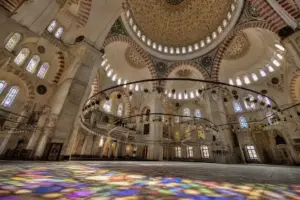 Süleymaniye Mosque – about 600 m away (~10 min walk) · typical visit: 1–2 hours9 min on foot from Vezneciler metro
Main image: AI-generated illustration. It may not show the place exactly as it looks.
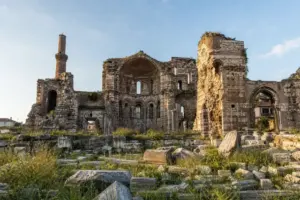 Stoudios Monasteryabout 3.1 km away · typical visit: 1–2 hours (exterior viewing only)
Main image: AI-generated illustration. It may not show the place exactly as it looks.
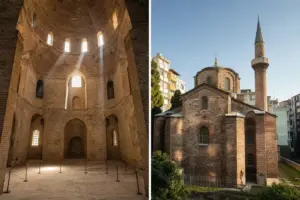 Bodrum Mosque – about 600 m away (~10 min walk) · typical visit: 30–40 minutes6 min on foot from Laleli-Üniversite metro, Open daily 12:00–14:00
Main image: AI-generated illustration. It may not show the place exactly as it looks.
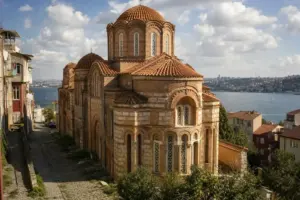 Pantocrator Church – about 650 m away (~11 min walk) · typical visit: 1–2 hours14 min on foot from Vezneciler metro, Open daily 08:00–18:00
Main image: AI-generated illustration. It may not show the place exactly as it looks.
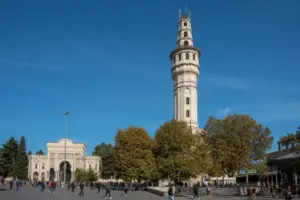 Beyazit Tower – about 650 m away (~11 min walk) · typical visit: 20–30 minutes (viewing from outside)7 min on foot from Vezneciler metro
Main image: AI-generated illustration. It may not show the place exactly as it looks.
Metro stations near Şehzade Mosque
 Vezneciler – about 250 m away (~4 min walk)Open daily 05:59–00:24
Main image: AI-generated illustration. It may not show the place exactly as it looks.
 Laleli-Üniversiteabout 500 m away (~8 min walk)
Main image: AI-generated illustration. It may not show the place exactly as it looks.
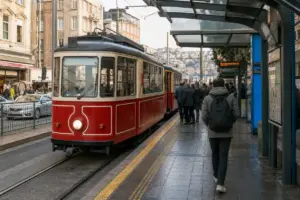 Yusufpaşa – about 950 m away (~16 min walk)Open daily 06:00–00:00
Main image: AI-generated illustration. It may not show the place exactly as it looks.
Restaurants and cafes near Şehzade Mosque
 Mivan Restaurant – about 100 m away (~2 min walk)4 min on foot from Vezneciler metro, Open daily 08:30–00:00
Main image: AI-generated illustration. It may not show the place exactly as it looks.
 Vefa Bozacısı – about 500 m away (~8 min walk)7 min on foot from Vezneciler metro, Open daily 08:00–00:00
Main image: AI-generated illustration. It may not show the place exactly as it looks.
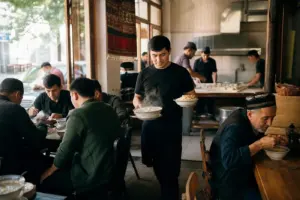 Vodiy Uzbek Restaurant – about 900 m away (~15 min walk)7 min on foot from Laleli-Üniversite metro, Open daily 09:00–20:00
Main image: AI-generated illustration. It may not show the place exactly as it looks.
 Dönerci Şahin Usta – about 1.1 km away (~18 min walk)4 min on foot from Çemberlitaş metro
Main image: AI-generated illustration. It may not show the place exactly as it looks.
Train stations and river piers near Şehzade Mosque
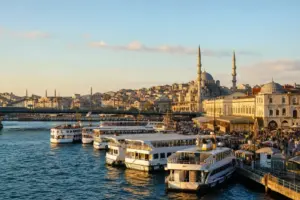 Eminönü Ferry Terminalabout 1.2 km away (~20 min walk)
Main image: AI-generated illustration. It may not show the place exactly as it looks.
 Karaköy Ferry Terminalabout 1.9 km away (~30 min walk)
Main image: AI-generated illustration. It may not show the place exactly as it looks.
Events and traditions near Şehzade Mosque
 Istanbul Marathonabout 1.8 km away (~30 min walk)
Main image: AI-generated illustration. It may not show the place exactly as it looks.
Related guides
 Koska Köftecisi: Köfte and Piyaz in Vefa
Main image: AI-generated illustration. It may not show the place exactly as it looks.
 Best Underground Cisterns in Istanbul: Three Sites Compared
Main image: AI-generated illustration. It may not show the place exactly as it looks.
 The Red School in Fener: A Castle above the Golden Horn
Main image: AI-generated illustration. It may not show the place exactly as it looks.
 Orient Occident Hotel: Green and Brass in Sirkeci
Main image: AI-generated illustration. It may not show the place exactly as it looks.
 AJWA Sultanahmet: Ottoman Luxury Near the Blue Mosque
Main image: AI-generated illustration. It may not show the place exactly as it looks.
Browse more: More in Fatih · All Architecture · All Sightseeing
FAQ: Şehzade Mosque
Is Şehzade Mosque the same as Süleymaniye Mosque?
No, they are two separate mosques designed by the same architect, Mimar Sinan. Şehzade (1548) was built for Prince Mehmed and is Sinan's earlier work. Süleymaniye (1557) was built for Sultan Suleiman himself and is larger and more elaborate. Both are in Fatih and can be visited together; they are about 5–10 minutes apart on foot.
Do I need a ticket or reservation to enter?
No. The Şehzade Mosque is free to enter with no advance booking required. Simply arrive during posted hours (08:30–18:30 daily). Access is restricted during the five daily prayer times and partially on Friday afternoons due to congregational prayers.
What is the best time of day to visit?
Weekday mornings between 09:00 and 11:30, or late afternoon between 15:00 and 17:00, are generally quietest. Avoid midday prayer times (around 12:00–13:30), evening prayers, and Friday afternoons. Early morning arrival also allows you to experience the space with fewer visitors.
Can women and men enter the mosque together?
Yes, men and women can enter the main prayer hall together during non-prayer times. The women's gallery (an elevated balcony with a carved wooden screen) is a historic part of the building; it is not mandatory to use it. During active prayer, worshippers occupy both spaces, and visitors may observe respectfully from the courtyard.
What should I wear?
Dress modestly with shoulders and knees covered as a sign of respect for the active mosque. Headscarves are customary for women but not legally required. Comfortable walking shoes suitable for stone floors are recommended. You are not required to remove your shoes in the main prayer hall.
Can I photograph inside the mosque?
Yes, general photography is permitted in most areas outside prayer times. Flash photography is discouraged to preserve the atmosphere and respect worshippers. Avoid photographing people without permission. Professional equipment or tripods may require staff permission. Observe any posted signage.
How long does a typical visit take?
Plan for 1–1.5 hours for a comprehensive visit: time in the main prayer hall, viewing the courtyard and fountain, and exploring the tombs. A quick visit can take 45 minutes. If combining with Süleymaniye Mosque or other nearby sites, allow 2–3 hours total.
What is inside the tombs visible at the mosque?
The tombs are decorated burial chambers (mausoleums) containing the remains of members of the Ottoman royal family and court: Prince Mehmed (for whom the complex was built), Prince Cihangir, Princess Hümasah, Rüstem Pasha (a celebrated grand vizier), and others. Each chamber displays intricate Iznik tilework and marble carving. Entry to these chambers is included as part of the complex visit.
Istanbul Vibes is a one-person project. A coffee keeps it going
Hotels near Şehzade Mosque
- Grand Hotel Gülsoy (100 m) Check prices (affiliate link, opens in a new tab)
- Hotel Büyük Hamit (100 m) Check prices (affiliate link, opens in a new tab)
- Telia (150 m) Check prices (affiliate link, opens in a new tab)
- Tilia hotel (150 m) Check prices (affiliate link, opens in a new tab)
Affiliate link (opens the booking site): we may earn a commission at no extra cost to you.
Restaurants near Şehzade Mosque
- Güler Restaurant (150 m) Google Maps
- Venezia restaurant (200 m) Google Maps
- Daphne restaurant (200 m) Google Maps
- Vefa restaurant ve kafe (200 m) Google Maps
Distances are straight-line, from OpenStreetMap data.

Take this guide with you
Get a free PDF of this guide to print or read offline: key facts, tips and a map link on a few clean pages.
Report an issue on this page
How we research and update our guides
About this guide: AI assistance and accuracy
This guide is created with the help of AI and is based on official sources where available. Mistakes can still happen. Opening hours, prices, rules and other details are given to the best of our knowledge as of the date shown and can change without notice. It offers general recommendations only, not professional, legal or travel advice. Please confirm important details with the official source before you travel; you are responsible for your own plans and decisions.
* Affiliate link: as an Amazon Associate we earn from qualifying purchases at no extra cost to you.
