

The Book Bazaar (Sahaflar Çarşısı in Turkish) is a tranquil courtyard market tucked between the Grand Bazaar and Beyazit Mosque in Istanbul’s old city. Unlike the crowded covered bazaar next door, the Book Bazaar offers a quieter, contemplative space where visitors can browse secondhand books, antique maps, Ottoman manuscripts and handwritten calligraphy panels.
This market has roots stretching back centuries. The site was once the location of Chartoprateia, a Byzantine paper and book market, and has continuously served book lovers since the Ottoman era. The current location became the bazaar’s permanent home after the 1894 earthquake, when it relocated from within the Grand Bazaar. Today, dozens of small shops line a shaded courtyard, their proprietors eager to help visitors discover rare finds and literary treasures.
Quick Facts
| Built / opened | 1400s |
|---|---|
| Address | Beyazıt, Sahaflar Bedesteni Sk. No:4, 34126 Fatih/İstanbul Google MapsApple MapsYandex Maps |
| District | Fatih |
| Metro | Beyazıt-Kapalıçarşı (T1 Tram, Walk towards Grand Bazaar Gate 7) Veznecıler – İstanbul Üniversitesi (M2 Metro, Head west toward Beyazıt area, 8–10 min walk) |
| Admission | Free |
| Best time to visit | Visit on weekday mornings (Tuesday–Thursday, 07:30–11:00) for the quietest atmosphere and easiest browsing. Evenings (after 17:00) are also peaceful, though some shops begin to close. Avoid weekends and afternoons when tourist crowds increase. The bazaar operates year-round; weather is pleasant in spring (April–May) and autumn (September–October). Summer (June–August) can be hot, though shade from trees provides relief. Winter is cool and sometimes rainy, but fewer tourists visit. |
What Is (and Isn't) Part of a Visit to Book Bazaar?
| Part | Status | Notes |
|---|---|---|
| Secondhand books, antique texts and manuscripts | Included in the standard ticket | The primary stock of all stalls. Books are sold individually by the shopkeeper; entry to the courtyard and browsing are free. |
| Ottoman miniatures, calligraphy panels and prints | Included in the standard ticket | Sold in shops throughout the bazaar alongside books. These are separate purchases priced individually. |
| Maps and city plans (antique and reproduction) | Included in the standard ticket | Available in several shops, ranging from museum-quality reproductions to original historical maps. |
| Beyazit Mosque adjacent to the bazaar | Outside / not part of it | The mosque is a separate institution with its own entrance. Visiting requires appropriate dress (covered shoulders and knees) and is a separate visit. |
| Grand Bazaar (Kapalıçarşı) next door | Outside / not part of it | A distinct market with thousands of shops. The Book Bazaar courtyard is separate, though Gate 7 of the Grand Bazaar is the nearest landmark. |
| Shade and seating areas | Included in the standard ticket | Plane trees provide natural shade throughout the courtyard. No formal seating; visitors stand while browsing. |
Why Visit Book Bazaar?
The Book Bazaar rewards curiosity and patience. Most shops carry a mix of books in Turkish and other languages, from children’s readers to scholarly texts. You will find antique Ottoman-era volumes, prints of historical Istanbul scenes, reproductions of Ottoman miniatures and calligraphy, old city maps and Quranic texts. Prices are often lower than equivalent items in the Grand Bazaar next door, making it possible to carry home meaningful souvenirs without spending heavily.
The atmosphere sets it apart. Shade from plane trees, the absence of aggressive sales tactics, and the company of serious bibliophiles create a meditative quality. Shopkeepers are generally patient with browsers and willing to share hidden treasures if they sense genuine interest. The bazaar is a living connection to Istanbul’s long literary heritage and Ottoman-era book culture.
How Book Bazaar Is Laid Out
The Book Bazaar is compact and easy to navigate. It consists of a central open courtyard surrounded on all sides by small shopfronts. Most shops are ground-level single rooms with open storefronts facing inward. A bronze statue of Ibrahim Müteferrika, the Ottoman printer, marks the center of the courtyard.
The main pedestrian entrance is near Gate 7 of the Grand Bazaar, reached by walking from the bazaar’s western side towards the Beyazit Mosque. Several narrow passageways also connect the courtyard to surrounding streets. Once inside, you can move freely between stalls and shops in any order; there is no prescribed route. The entire market can be surveyed in 20–30 minutes at a casual pace, though browsing deeper takes longer.
Highlights of Book Bazaar
Ottoman-era manuscripts and books
Many stalls carry genuine secondhand volumes from the Ottoman period. You will see leather-bound historical texts in Turkish and Arabic, theological works, Ottoman chronicles and literature. Some volumes are fragile and valuable; others are affordable. Look for books with calligraphy visible on spine or cover, and ask shopkeepers about the origins of pieces that interest you—many have stories to tell.
Tip: Inspect older books carefully for condition. Humidity in the courtyard means some pages may show water damage; ask about the provenance and condition before committing to a purchase.
Antique maps and city plans
Several shops specialize in historical maps: Ottoman-era maps of Istanbul and the Bosphorus, maps of the Eastern Mediterranean, and prints of the city from different centuries. These reproductions capture the layout of Istanbul as it was during the Ottoman and Byzantine periods. They range from museum-quality reproductions to originals in varying states of preservation.
Tip: Ask the shopkeeper to show you hand-colored maps (painted by hand after printing)—these are often more interesting visually than standard prints and represent the cartographic art of the period.
Ottoman miniatures and calligraphy panels
Miniature paintings on paper, often extracted from historical texts or newly created in traditional Ottoman style, are widely available. These small, intricate artworks depict court scenes, hunting expeditions, and literary subjects. Hand-written calligraphy panels in Arabic and Ottoman Turkish are also common—some are originals, others are modern reproductions. Both carry the aesthetic of Ottoman palace and scholarly culture.
Tip: Calligraphy pieces are often priced reasonably and make compact, elegant souvenirs. Look for calligraphy of famous Ottoman poets or Quranic verses if those appeal to you.
Rare and foreign-language books
While most stock is in Turkish, patient hunting can yield English-language editions, vintage travel guides to Turkey, European novels and academic books in various languages. Shopkeepers often know each other's inventory and can direct you to the best stall for a specific title or genre. The selection is unpredictable but the search itself becomes part of the experience.
Tip: Speak with shopkeepers about what you are looking for. Many speak English and take pride in sourcing hard-to-find titles. You may need to return another day if something specific must be located.
Ibrahim Müteferrika monument
A bronze statue stands in the center of the courtyard honoring Ibrahim Müteferrika (1674–1745), a Hungarian-born Ottoman scholar who established the first Ottoman printing house in 1726. The monument marks an important threshold in the history of the Ottoman book trade: the transition from manuscript copying to mechanical printing. The statue is a small but historically significant focal point.
Tip: Use the monument as your reference point for orientation within the courtyard. It helps identify the center if you become disoriented among the winding stalls.
Beyazit Mosque adjacent entrance
One side of the Book Bazaar courtyard borders the Beyazit Mosque (Beyazıt Camii), one of Istanbul's oldest imperial mosques, built in the early 16th century. You can see the mosque's stone wall and Ottoman architectural details from the bazaar. The juxtaposition of the mosque and the book market reflects the historical connection: the bazaar originally served theological students and scholars who studied at the adjacent madrasah.
Tip: The mosque entrance is separate; visiting the mosque requires a separate trip and appropriate dress (covered shoulders and knees). The sight of the mosque from within the bazaar is a visual reminder of Ottoman intellectual culture.
Atmosphere
The Book Bazaar is a study in contrast to the Grand Bazaar next door. Where that market is loud, crowded, and commercialized, the Book Bazaar is quiet, intimate and scholarly in tone. Plane trees shade the courtyard, their leaves rustling in the breeze. The air carries the smell of old paper, leather bindings and dust—a scent that many book lovers find evocative and calming. Sunlight filters through the canopy in patches, creating a dappled, almost library-like quality.
Visitors tend to move slowly, pausing frequently to examine items. The typical customer is a reader or collector, not a casual souvenir shopper. Shopkeepers sit quietly in their stalls, reading or writing, waiting for genuine interest. Turkish coffee is sometimes served. On weekday mornings, crowds are minimal; weekends and afternoons attract more tourists, but even then the atmosphere remains contemplative rather than frenetic. The bazaar feels like a place where time moves differently—a refuge for those seeking intellectual rather than commercial excitement.
History of Book Bazaar
The history of the Book Bazaar is inseparable from Istanbul’s long tradition as a center of learning and literacy. The site itself has served the book trade since Byzantine times, when it was called Chartoprateia—a market for paper and books that supported scholars and scribes. When the Ottoman Empire established its capital in Istanbul after 1453, this location continued its intellectual function.
The Ottoman-era book market was formally established in the 15th century under Sultan Beyazid II. It was created partly to serve students of the nearby theological schools (medrese), who needed access to religious texts, law books, and classical literature. In the 16th century, Istanbul became widely celebrated for its extensive book culture and its scholars. The bazaar grew to include approximately 50 shops and around 300 employees—a significant commercial enterprise. The close relationship to the Beyazit Mosque and the madrasah next to it was deliberate: the market existed to supply the intellectual community.
For centuries, the market operated as a center for manuscript copying and trade. The work was slow and specialized. Each book had to be copied by hand by trained scribes, making books costly and precious. The bazaar served not only casual readers but also serious collectors, libraries and religious institutions seeking rare and important texts.
A major turning point came in 1726, when Ibrahim Müteferrika, a Hungarian-born Ottoman scholar and diplomat, established the first Ottoman printing house. This introduced mechanical printing to Istanbul and transformed the book trade. The monument in the center of the courtyard honors this moment. Over the following centuries, printing gradually displaced manuscript copying, though the market continued to serve both new and used books.
The physical location of the bazaar changed after the 1894 Istanbul earthquake. The market had originally occupied a space within the Grand Bazaar itself, but earthquake damage and subsequent reconstruction forced it to relocate to its current site near the Beyazit Mosque. This relocation was actually fortuitous: the new location returned the bazaar to the area it had occupied in Byzantine times, creating a historical continuity. The move also gave it a separate, more peaceful identity distinct from the Grand Bazaar’s commercial bustle.
In the 20th and 21st centuries, the bazaar adapted to the shift from new books to antiquarian and used books, which remains its character today. While new printing and digital technology have changed reading habits, the bazaar has found a stable role as a destination for collectors, historians, students of Ottoman culture and travelers seeking to understand Istanbul’s literary past. It remains one of the oldest continuously operating book markets in the world.
Legends and Myths about Book Bazaar
The hidden treasures of the collectors
Legend – historically unreliable. A widely repeated anecdote claims that experienced collectors and rare-book dealers know that shopkeepers in the Book Bazaar keep their most valuable items hidden from casual browsers. According to the story, these treasures—medieval manuscripts, early Ottoman prints, extremely rare volumes—are stored out of sight and only shown to customers who demonstrate serious interest and knowledge. The claim is that you may walk past an item worth thousands of lira without knowing it is there, visible only to those who ask the right questions and earn the trust of the vendor.
Ibrahim Müteferrika's ghost in the printing house
Legend – historically unreliable. A legend holds that the spirit of Ibrahim Müteferrika, the Ottoman printer honored in the courtyard statue, haunts the area where he worked. According to the tale, late-night visitors and night-shift workers have reported seeing figures in Ottoman dress moving between the stalls, and have heard the sound of old printing presses running despite all machinery being long defunct. The legend suggests that Müteferrika's dedication to spreading knowledge through printing was so profound that his presence remains.
Tickets and Booking for Book Bazaar
Entry to the Book Bazaar courtyard is free. No ticket or advance booking is required. Simply walk in during open hours and browse the stalls as long as you wish.
Payment for purchases: When you decide to buy an item, negotiate the price directly with the shopkeeper. Most accept Turkish lira (cash preferred by some); larger stalls may accept cards. Haggling is common and expected, particularly for multiple items or higher-priced books.
Opening hours: The bazaar is open Monday to Saturday 07:30–19:00 and Sunday 09:30–18:30. Individual shop hours may vary slightly; some close earlier on Sundays or during Ramadan. Weekday mornings (Tuesday–Thursday, 07:30–11:00) are quietest for browsing.
Suggested itineraries Book Bazaar
1 hour
Enter via Gate 7 of the Grand Bazaar and walk to the Book Bazaar courtyard. Spend 20–30 minutes surveying the outer shops and central area. Look at maps, miniatures and calligraphy in the main stalls. Exit via the courtyard's eastern passage toward Beyazit Mosque. This pace works for first-time visitors wanting a sense of the market.
2 hours
Arrive mid-morning (09:30–11:00) when crowds are minimal. Spend time in 6–8 shops, asking shopkeepers about their collections. Look for items that interest you personally—books in your language, maps of specific regions, calligraphy styles. Negotiate and make 1–2 purchases. Sit quietly and observe the atmosphere. This pace allows browsing and conversation.
Half day (3–4 hours)
Combine the Book Bazaar with adjacent sights. Spend 1.5–2 hours in the bazaar in the morning. Visit the Beyazit Mosque (30 min; separate entrance and appropriate dress required). Walk to the Grand Bazaar and explore specific sections (textiles, spices, metalwork) for 1.5–2 hours. End with lunch or tea in a nearby café in Beyazit Square. This creates a full literary and commercial circuit.
How to Get to Book Bazaar
By Tram (T1): Take the T1 Tram to Beyazıt-Kapalıçarşı station (the stop is shared with the Grand Bazaar). Exit and look for Gate 7 of the Grand Bazaar—a large stone archway. Instead of entering the bazaar proper, veer left along the exterior wall and follow signs or ask locals for Sahaflar Çarşısı. You will enter a narrow passage that opens into the courtyard within 1–2 minutes.
By Metro (M2): Take the M2 Metro to Veznecıler – İstanbul Üniversitesi station. Exit and walk west toward the Beyazit Mosque and Grand Bazaar (8–10 min walk downhill). Once you see Gate 7 of the Grand Bazaar, follow the tram directions above.
Walking from Sultanahmet: From Sultanahmet Square or Hagia Sophia, walk west uphill toward the Grand Bazaar (about 10 min). Follow signs to Gate 7 (Beyazit Gate) and look for Sahaflar Çarşısı on your left.
By taxi: Give the driver the address: Beyazıt, Sahaflar Bedesteni Sk. No:4, Fatih. The courtyard is small; the driver may drop you at Gate 7 of the Grand Bazaar, from which you will walk the final 1–2 minutes.
Accessibility
The Book Bazaar courtyard is at street level with no steps at the main entrance. However, the surrounding passages are narrow and uneven in places, and individual shops have small thresholds and varied floor levels. The courtyard itself is paved but not smooth. There are no formal wheelchair ramps, accessible restrooms, or seating areas. Browsing requires standing and reaching items on shelves. Visitors with mobility difficulties may find navigation challenging, particularly during busy hours. Push strollers are impractical due to narrow passages.
Food Nearby
The bazaar itself has no cafés or food vendors inside. However, Beyazit Square, directly adjacent to the courtyard's eastern side, has several tea gardens and simple kebab stalls. These are informal outdoor spaces with basic seating, operating during the day. A few street vendors around Gate 7 of the Grand Bazaar sell water, tea and snacks. For a more substantial meal, walk into the Grand Bazaar (Gate 7 or nearby entrances) where numerous traditional restaurants and kebab shops operate, or move to the surrounding streets in Beyazit district, where you will find cafés, bakeries and restaurants within 2–5 minutes' walk.
What to Bring
Comfortable walking shoes with good support, as you will stand for extended periods on uneven paving. A small backpack or tote bag for purchases (the bazaar is cash-heavy, so bring Turkish lira). Sun protection (hat or scarf) during summer, though shade is plentiful. A small notebook or phone for recording details of items you want to return for. No special security restrictions; standard bags are fine. Photography is permitted throughout the courtyard.
Best Views and Photo Spots of Book Bazaar
Ibrahim Müteferrika statue in the courtyard center
The bronze statue, surrounded by stalls and plane tree shade, captures the historical essence of the market. Shooting from ground level looking up at the statue creates a sense of reverence. Early morning light from the east illuminates the statue and casts long shadows, ideal for dramatic effect.
Best time: Early morning (08:00–09:30) for soft light and minimal crowds. The light strikes the bronze statue directly from the east.
Covered passageway entrance from Gate 7 of the Grand Bazaar
This narrow stone passage frames the transition from the bustle of the Grand Bazaar into the quiet Book Bazaar. The shot captures the contrast: crowded commercial space giving way to serene literary space. Stone walls and archway create strong leading lines.
Best time: Mid-morning (10:00–11:30) when crowds have thinned but light is still good. Shoot from inside the passage looking outward toward the courtyard.
Stacks of old books on vendor shelves
Close-up shots of leather-bound volumes, calligraphy-covered spines and worn pages convey the tactile, aged character of the collection. A vendor's hands holding or arranging books adds human scale. Colors range from deep brown leather to faded gilt lettering.
Best time: Any time of day, but overcast light (common in Istanbul in winter) is best to avoid harsh shadows on book spines. Mid-morning provides adequate ambient light for detail photography.
Courtyard looking toward the Beyazit Mosque stone wall
The mosque's grey Ottoman stone wall visible beyond the bazaar's eastern edge, with plane trees framing the composition, creates a layered historical image. The juxtaposition of old books and ancient mosque wall tells the story of the site's intellectual heritage.
Best time: Late afternoon (16:00–17:30) when the setting sun illuminates the mosque wall and casts long shadows across the courtyard. Light is warm and atmospheric.
A vendor in his stall surrounded by books and miniature paintings
A portrait-style shot capturing a shopkeeper at work—reading, writing, or arranging stock. The background of calligraphy, maps and books creates a rich texture. These are often willing subjects if you ask permission.
Best time: Mid-morning on weekdays, when vendors are relaxed and crowds are minimal, making conversation easier and unobstructed shots possible.
Photography Rules
Photography is freely permitted throughout the Book Bazaar courtyard and inside stalls (unless an individual shopkeeper requests otherwise). No restrictions on flash or tripods apply, though flash is unnecessary and sometimes unwelcome in crowded stalls. Drones are not permitted. The courtyard's dappled light and layered stalls create interesting photographic conditions; early morning and late afternoon light are particularly attractive for photography.
Family Suitability
The Book Bazaar is suitable for families with older children (8+) who have an interest in history, art or reading. Young children may find the quiet, slow pace boring. The narrow passageways and crowded stalls (during busy times) are challenging for strollers or very young children requiring constant supervision. Older children can learn about Ottoman history and book culture hands-on by handling items and talking with shopkeepers. Teenagers interested in vintage books, maps or art will enjoy browsing. No specific children's activities or interactive elements are offered. The market is not wheelchair-accessible for those with limited mobility.
Istanbul Vibes Tips
- Speak Turkish or write on paper. Saying "Sahaflar Çarşısı" is far more effective than "Book Bazaar" or "Old Book Market"—locals immediately understand. If you need help from a police officer or passerby, write the name on paper.
- Haggle confidently but politely. Negotiation is expected, particularly for books, maps and multiple items. Start at 50–60% of the asking price and work upward. Shopkeepers appreciate serious negotiation more than accepting the first offer. Show genuine interest and knowledge of what you are examining; vendors reward informed buyers with better prices.
- Visit early in the week on weekday mornings (Tuesday–Thursday, 07:30–10:00). This is when the bazaar is quietest, vendors are most patient, and the contemplative atmosphere is strongest. Avoid Friday through Sunday and afternoon hours, when tourist groups can create noise and congestion.
- Ask the shopkeeper to show you items not immediately visible. Many vendors keep more valuable, delicate, or specialized items in back rooms or on upper shelves, away from casual browsers. Demonstrating interest in quality and specific genres often prompts them to retrieve hidden stock. This is how serious collectors find the best pieces.
- Inspect condition closely before purchasing antique books or maps. Humidity affects paper over time; check for water stains, mold spots, and ink fading. Ask about provenance if an item is expensive. A shopkeeper's willingness to discuss history and condition honestly is a good sign of reliability. Expect to pay more for items in excellent condition.
- Combine your visit with the adjacent Beyazit Mosque or Grand Bazaar, but plan separate time for each. The Book Bazaar is introspective; the Grand Bazaar is sensory overload. Visiting both in one trip creates a more complete picture of Istanbul's market culture, but rushing both will diminish the experience.
Explore Nearby Book Bazaar
Sights near Book Bazaar
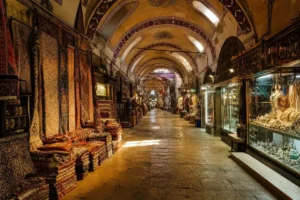 Grand Bazaar – about 50 m away (~1 min walk) · typical visit: 2–4 hours4 min on foot from Beyazıt-Kapalıçarşı metro, Open 08:30–19:00, closed Sun
Main image: AI-generated illustration. It may not show the place exactly as it looks.
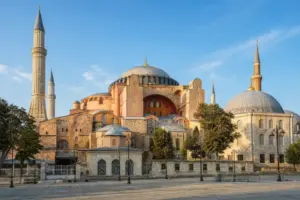 Hagia Sophia – about 1.0 km away (~16 min walk) · typical visit: 1–1.5 hours8 min on foot from Gülhane metro, Open daily 09:00–19:30
Main image: AI-generated illustration. It may not show the place exactly as it looks.
 Blue Mosque – about 900 m away (~15 min walk) · typical visit: 45–75 minutes3 min on foot from Gülhane metro
Main image: AI-generated illustration. It may not show the place exactly as it looks.
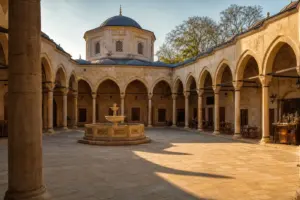 Çorlulu Ali Pasha Madrasa – about 150 m away (~3 min walk) · typical visit: 30–45 minutes2 min on foot from Beyazıt-Kapalıçarşı metro, Open daily 08:00–23:00
Main image: AI-generated illustration. It may not show the place exactly as it looks.
 Nuruosmaniye Mosque – about 200 m away (~3 min walk) · typical visit: 1–2 hours3 min on foot from Çemberlitaş metro
Main image: AI-generated illustration. It may not show the place exactly as it looks.
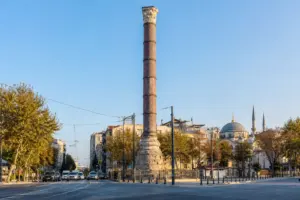 Column of Constantine – about 300 m away (~5 min walk) · typical visit: 15–20 minutes1 min on foot from Çemberlitaş metro, Open 24 hours
Main image: AI-generated illustration. It may not show the place exactly as it looks.
Metro stations near Book Bazaar
 Beyazıt-Kapalıçarşı – about 250 m away (~4 min walk)Open daily 06:00–00:00
Main image: AI-generated illustration. It may not show the place exactly as it looks.
 Çemberlitaşabout 300 m away (~5 min walk)
Main image: AI-generated illustration. It may not show the place exactly as it looks.
 Laleli-Üniversiteabout 750 m away (~12 min walk)
Main image: AI-generated illustration. It may not show the place exactly as it looks.
Restaurants and cafes near Book Bazaar
 Dönerci Şahin Usta – about 150 m away (~2 min walk)4 min on foot from Çemberlitaş metro
Main image: AI-generated illustration. It may not show the place exactly as it looks.
 Hamdi Restaurant – about 650 m away (~10 min walk)12 min on foot from Çemberlitaş metro, Open daily 12:00–00:00
Main image: AI-generated illustration. It may not show the place exactly as it looks.
 Vefa Bozacısı – about 700 m away (~12 min walk)7 min on foot from Vezneciler metro, Open daily 08:00–00:00
Main image: AI-generated illustration. It may not show the place exactly as it looks.
 Hafız Mustafa 1864 – about 750 m away (~12 min walk)12 min on foot from Çemberlitaş metro, Open daily 12:00–23:59
Main image: AI-generated illustration. It may not show the place exactly as it looks.
Nightlife near Book Bazaar
 Roxy – about 900 m away (~14 min walk)7 min on foot from Gülhane metro
Main image: AI-generated illustration. It may not show the place exactly as it looks.
 Seven Hills – about 1.1 km away (~17 min walk)4 min on foot from Gülhane metro, Open daily 08:00–23:00
Main image: AI-generated illustration. It may not show the place exactly as it looks.
Train stations and river piers near Book Bazaar
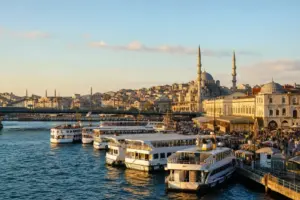 Eminönü Ferry Terminalabout 800 m away (~13 min walk)
Main image: AI-generated illustration. It may not show the place exactly as it looks.
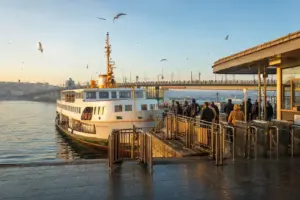 Karaköy Ferry Terminalabout 1.4 km away (~23 min walk)
Main image: AI-generated illustration. It may not show the place exactly as it looks.
Events and traditions near Book Bazaar
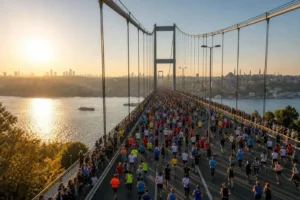 Istanbul Marathonabout 850 m away (~14 min walk)
Main image: AI-generated illustration. It may not show the place exactly as it looks.
Related guides
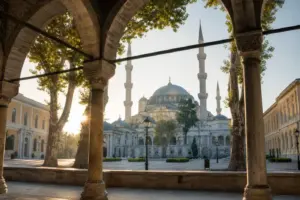 Beyazit: Ottoman Mosque, University, and the Gateway to History
Main image: AI-generated illustration. It may not show the place exactly as it looks.
 Currency exchange Istanbul: Where to change money and avoid hidden costs
Main image: AI-generated illustration. It may not show the place exactly as it looks.
 Tripe Soup: Recipe, History and How to Cook It Like Istanbul
Main image: AI-generated illustration. It may not show the place exactly as it looks.
 Silivri Kapi Dervish Lodge: Authentic Thursday Ceremonies Near Historic Walls
Main image: AI-generated illustration. It may not show the place exactly as it looks.
 Sahlep: Turkish Orchid Drink Recipe and What to Expect
Main image: AI-generated illustration. It may not show the place exactly as it looks.
Browse more: More in Fatih · All Markets & Shopping · All Sightseeing
FAQ: Book Bazaar
Is the Book Bazaar free to enter?
Yes, entry is completely free. You pay only for items you choose to buy. There is no admission fee, ticket or advance booking required. Simply walk in during operating hours.
What is the best time to visit to avoid crowds?
Visit on weekday mornings, Tuesday through Thursday, between 07:30 and 11:00. Weekends, afternoons and tourist season (May–September) are busier. Early morning is also when many shopkeepers are setting up and most patient with questions.
Will I find books in English?
Some shops carry English-language books, but selection is limited and unpredictable. Most stock is in Turkish and Arabic. If you are looking for a specific English title, ask the shopkeeper—many know each other's inventory and can direct you or help source a book over time.
Is haggling expected?
Yes, negotiation is part of the culture. Shopkeepers expect you to counter-offer, especially for older or higher-priced items. Start at 50–60% of asking price and work upward. A respectful haggle is appreciated; accept gracefully if a vendor won't budge on price.
What payment methods are accepted?
Cash in Turkish lira is preferred and most reliable. Larger, more established shops may accept credit or debit cards, but many smaller stalls do not. Bring cash to ensure you can complete purchases without difficulty.
How long does a typical visit take?
A casual first-time visit takes 1–2 hours. If you browse slowly, ask shopkeepers questions and make purchases, plan 2–3 hours. Serious collectors can spend half a day or longer. The entire courtyard can be surveyed in 20–30 minutes if you are rushing.
Is the Book Bazaar part of the Grand Bazaar, or is it separate?
They are separate locations, though adjacent. The Book Bazaar (Sahaflar Çarşısı) occupies its own courtyard. The Grand Bazaar is a different, much larger covered market next door. You enter them through different passages, though Gate 7 of the Grand Bazaar is the nearest landmark for orientation.
Can I take photographs?
Yes, photography is freely permitted throughout the courtyard and inside stalls, unless a specific shopkeeper asks you not to. No flash, tripod or drone restrictions apply, though flash is unnecessary and sometimes unwelcome in crowded shops. Ask permission before photographing shopkeepers directly.
Istanbul Vibes is a one-person project. A coffee keeps it going
Hotels near Book Bazaar
- Hotel Padova (250 m) Check prices (affiliate link, opens in a new tab)
- Vault karakoy (300 m) Check prices (affiliate link, opens in a new tab)
- Divani Ali Hotel (300 m) Check prices (affiliate link, opens in a new tab)
- Grand Rosa Hotel (300 m) Check prices (affiliate link, opens in a new tab)
Affiliate link (opens the booking site): we may earn a commission at no extra cost to you.
Restaurants near Book Bazaar
- Mardin Et Ve Kebap Salonu (100 m) Google Maps
- Gelgör Kebap Salonu (100 m) Google Maps
- Saaf-İ Kebap Salonu (100 m) Google Maps
- Bolca Köfte Ve Piliç Çevirme (100 m) Google Maps
Distances are straight-line, from OpenStreetMap data.

Take this guide with you
Get a free PDF of this guide to print or read offline: key facts, tips and a map link on a few clean pages.
Report an issue on this page
How we research and update our guides
About this guide: AI assistance and accuracy
This guide is created with the help of AI and is based on official sources where available. Mistakes can still happen. Opening hours, prices, rules and other details are given to the best of our knowledge as of the date shown and can change without notice. It offers general recommendations only, not professional, legal or travel advice. Please confirm important details with the official source before you travel; you are responsible for your own plans and decisions.
* Affiliate link: as an Amazon Associate we earn from qualifying purchases at no extra cost to you.
