

The Silivri Kapi Dervish Lodge is a functioning Mevlevi monastery in the Fatih district, situated near the Silivri Gate of the Theodosian Walls. Unlike the more touristic dervish shows elsewhere in Istanbul, this lodge preserves a more traditional approach to the sema ceremony, the sacred whirling dance central to Mevlevi spirituality.
The lodge hosts regular Thursday evening gatherings that draw both devotees and visitors seeking authentic spiritual practice rather than performance. The ceremony includes discussion, prayers, traditional sufi music, and the meditative whirling that expresses the Mevlevi path of union with the divine.
Quick Facts
| Address | Silivrikapı, Fatih, Istanbul, Turkey Google MapsApple MapsYandex Maps |
|---|---|
| District | Fatih |
| Metro | Ayrılık Çeşmesi (M2, approximately 15 min walk north) |
| Admission | free (donation-based) |
| Best time to visit | Thursday evenings at 19:30 or 20:00 (timing may vary; confirm current schedule). Spring (April–May) and autumn (September–October) offer the most pleasant weather for walking to the lodge and exploring the walls. Summer can be very hot; winter involves chilly evening temperatures. The ceremony operates year-round; there are no seasonal closures. The atmosphere is most intimate outside peak tourist season. |
What Is (and Isn't) Part of a Visit to Silivri Kapi Dervish Lodge?
| Part | Status | Notes |
|---|---|---|
| Mevlevi Whirling Ceremony (Sema) | Included in the standard ticket | The core ritual, performed by robed dervishes on Thursday evenings, lasting approximately 45 minutes to 1 hour within the total 3–4 hour gathering. |
| Introductory Discussion and Teachings | Included in the standard ticket | Educational segment on Mevlana's philosophy and the order's spiritual path, conducted before the sema ceremony begins. |
| Dhikr (Sacred Recitation) | Included in the standard ticket | Rhythmic, meditative chanting of Mevlevi prayers and Rumi's poetry; part of the spiritual sequence. |
| Traditional Dervish Meal | Included in the standard ticket | Simple refreshment (bread, soup, or dates) served after the ceremony as part of Ottoman hospitality tradition. |
| The Silivri Gate (Theodosian Walls) | Outside / not part of it | The historic 5th-century Byzantine gate is adjacent to the lodge but separate; no additional ticket required to view it from the exterior, though it is part of the broader Theodosian Walls complex. |
| Galata Mevlevi Lodge Museum | Outside / not part of it | A different, larger dervish lodge in Beyoğlu district with a museum dedicated to Mevlevi culture; not part of this lodge. |
| Audio Guide or Professional Translation | Separate ticket or institution | English-language guides can be arranged through third-party tourism operators for an additional cost; the ceremony itself is conducted in Turkish. |
Why Visit Silivri Kapi Dervish Lodge?
This lodge offers one of Istanbul’s most genuine encounters with living Mevlevi tradition. Unlike commercial venues, the ceremony here unfolds at a contemplative pace, beginning with explanation of the Mevlevi order’s teachings, followed by ritual recitation and concluding with the sema. The 3–4 hour experience includes serving of traditional dervish food, creating a complete immersion in the spiritual practice rather than a packaged show.
The location near the historic Silivri Gate adds layers of meaning: the gate once marked the city’s boundary and commercial threshold in Byzantine and Ottoman times, while the dervishes have traditionally sought spiritual seclusion from worldly activity.
Highlights of Silivri Kapi Dervish Lodge
The Sema Ceremony
The whirling ritual at the heart of Mevlevi practice, where dervishes in white robes and tall felt hats (sikke) rotate in a precise, meditative movement. The ceremony here runs longer and at a slower, more spiritual pace than tourist performances. Visitors observe from the side of the hall while dervishes perform the sema, which in Mevlevi belief symbolizes the soul's journey toward God through music and motion.
Tip: Arrive early to understand the order's history through the introductory session; the visual beauty of the ceremony deepens when you grasp its spiritual meaning.
Mevlevi Teachings and Recitation
The gathering opens with discussion of Mevlana (Jalaluddin Rumi) and the order's spiritual path, often followed by rhythmic vocal recitation called dhikr—a remembrance of God's names through chanted poetry and music. This part of the ceremony is meditative rather than performative, reflecting the order's focus on inner transformation.
Tip: The ceremony is conducted in Turkish; consider arranging an English-language guide in advance if language is a concern, though the visual and auditory experience transcends words.
Dervish Hospitality
Following the ceremony, traditional dervish food (simple bread, soup, or dates) is served, a practice rooted in Ottoman hospitality and the Mevlevi principle of sharing. This informal moment allows visitors to sit with community members and experience the lodge as a living gathering place rather than a museum.
Tip: Dress modestly (long sleeves and pants or long skirts) and remove your shoes when entering the prayer space, as is customary in Islamic places of worship.
Proximity to the Silivri Gate
The lodge sits adjacent to the Silivri Gate (Silivrikapı), one of the main gates in the Theodosian Walls built in the 5th century. The gate's two polygonal towers remain standing, and the Byzantine masonry beneath Ottoman repairs is still visible. The gate was historically both a military stronghold and a commercial passage to the western regions.
Tip: Explore the gate and nearby sections of the walls before or after the ceremony to contextualise the lodge within Istanbul's layered history.
Genuine Spiritual Community
Unlike commercial dervish venues, this lodge functions as an actual place of worship and practice. The attendees include devotees of the Mevlevi order, local visitors, and international guests seeking authentic spiritual encounter. The informal, non-touristic atmosphere reflects the historical role of tekkes as centers of spiritual fellowship rather than spectacle.
Tip: This is an observant, quiet space; conversations are subdued and photography is typically not permitted during the ceremony itself.
Atmosphere
The lodge is a modest, intimate space that emphasizes spiritual focus over grandeur. The ceremony hall is lit softly, with dervishes dressed in their traditional white robes and tall felt hats, their movements fluid and hypnotic. The sound of ney (reed flute) and frame drums creates an otherworldly atmosphere, neither entirely music nor entirely silence. Chanted prayers in Turkish echo through the space, reinforcing the sense of collective spiritual practice.
The gathering draws a mixed crowd: Turkish community members, long-term spiritual seekers, and curious international visitors. There is no separation between performers and audience; instead, everyone participates in the shared devotional moment. The pace is unhurried and meditative; this is not entertainment seeking applause, but witnessing of sacred practice.
History of Silivri Kapi Dervish Lodge
The Mevlevi order was founded in the 13th century by followers of the poet and mystic Jalaluddin Rumi in Konya, Anatolia. The order spread throughout the Ottoman Empire, and Istanbul became a major center of Mevlevi spirituality and arts. Dervish lodges (tekkes) served as homes for initiated members, schools of mystical philosophy, and centers of Ottoman high culture, particularly music and poetry.
The Silivri Kapi lodge is part of this broader tradition, though its exact founding date is unclear. Like all Sufi lodges in Turkey, it was closed by law in 1925 following the proclamation of the Turkish Republic. The government of Mustafa Kemal Atatürk banned all Sufi orders and closed their lodges, viewing mystical practices as incompatible with a modern, secular state.
In recent decades, particularly since UNESCO designated the Mevlevi sema as Intangible Cultural Heritage in 2005, some lodges have quietly reopened or resumed limited activities. The Silivri Kapi lodge is among those that have re-established Thursday evening ceremonies, serving both as a continuation of spiritual practice and as a bridge to Istanbul’s Ottoman heritage. The lodge operates under the umbrella of EMAV (Eski Sanatlar Vakfı—Foundation of Traditional Arts), which supports the preservation of classical Turkish arts and spiritual traditions.
Legends and Myths about Silivri Kapi Dervish Lodge
The Dervishes and Seclusion
Legend – historically unreliable. Medieval Ottoman historians noted that Mevlevi dervishes deliberately chose to establish their lodges away from the centers of worldly life, often near cemeteries or quiet edges of the city. The Silivri Kapi area, near the walls and gates, represented the boundary between the city's everyday bustle and the contemplative realm sought by mystics. This choice reflected the spiritual principle that detachment from worldly concerns is essential to divine union.
The Gate and the Gate-Keeper's Vision
Legend – historically unreliable. Local accounts speak of a vision experienced by a 16th-century gate-keeper at Silivri Kapi, who witnessed dervishes passing through in their white robes at night and understood their presence as a sign of divine blessing on the city. The gate, which had witnessed countless military and commercial passages, thus became associated with spiritual passage as well—a threshold between material and spiritual worlds.
Tickets and Booking for Silivri Kapi Dervish Lodge
| Ticket | Price | Includes |
|---|---|---|
| Entry and Ceremony | Free | Admission to the lodge and participation in the full Thursday evening ceremony (discussion, dhikr, sema, and meal). |
₺ budget · ₺₺ moderate · ₺₺₺ upscale · ₺₺₺₺ splurge. Price levels are estimates compared with typical prices for visitors.
The lodge accepts visitors on Thursday evenings and operates on a donation basis. No advance booking is officially required, but arriving early is advisable to secure a place and participate in the introductory discussion. Arrive at least 15–20 minutes before the stated start time.
If you require an English-language guide or wish to arrange group attendance, contact the lodge or local cultural organizations in advance. Some tour operators in Istanbul (such as Les Arts Turcs) offer guided visits to the ceremony, which may include transport and translation for an additional cost.
This is a functioning Islamic prayer space and active Mevlevi community center, not a museum or ticketed attraction. Visitors should approach it with respect and reverence; photography during the ceremony is generally not permitted. Dress code is modest: long sleeves and long pants or skirts are required.
Suggested itineraries Silivri Kapi Dervish Lodge
2 hours
Arrive at 19:15, view the exterior of the Silivri Gate and walk the nearby Theodosian Walls section (approximately 30 minutes), then enter the lodge for the beginning of the gathering, arriving in time for the introductory discussion.
3–4 hours
Full immersion experience: arrive early to explore the Silivri Gate neighborhood, participate in the complete ceremony from introduction through sema and shared meal, and remain for informal conversation with community members afterward.
Half day
Extend the visit to include other historic sites near Silivrikapı: walk sections of the Theodosian Walls, visit the nearby Church of St. Mary of the Mongols (within walking distance), and attend the evening ceremony, creating a thematic journey through Byzantine and Ottoman religious heritage.
How to Get to Silivri Kapi Dervish Lodge
By Metro: Take the M2 line (Red Line) toward Yenikapı and exit at Ayrılık Çeşmesi station. From there, walk northwest for approximately 15 minutes following local street signs toward Silivrikapı (Silivri Gate). The lodge is located very near the gate itself, within the old city walls.
Alternative by Tram and Walk: Take the nostalgic Tramway (NT1) or the modern T1 tram toward Zeytinburnu and exit near the Theodosian Walls. Follow the walls north to locate the Silivri Gate; the lodge is adjacent.
Taxi or Ride-Share: Give the driver the address ‘Silivrikapı, Fatih’ or ‘Silivri Gate, Istanbul.’ Traffic in the historic peninsula can be congested, so plan extra time.
Walking from Sultanahmet: If exploring the historic core, walk southwest from Sultanahmet for approximately 25–30 minutes toward the Theodosian Walls and the Silivrikapı area.
Accessibility
The lodge is situated on a sloped street with uneven paving near the historic walls. Wheelchair access is limited; the entrance involves steps. There are no elevators or accessible restrooms. Visitors with mobility issues should contact the lodge in advance to discuss possible accommodations. The ceremony requires sitting on the floor or on cushions, which may be difficult for those with joint or back problems.
Food Nearby
The Silivrikapı neighborhood is quieter and less developed than central tourist zones. Small, local cafes and kebab stands operate on nearby streets. The lodge provides refreshment after the ceremony. For a full meal before attending, walk toward the nearby Balat or Fener districts (15–20 minutes away), where traditional Turkish restaurants and tea gardens abound. Instant noodle shops and simple street food vendors are scattered through the area.
What to Bring
Comfortable walking shoes for the uneven streets and walls. A light jacket or sweater for cool evening temperatures. Slip-on shoes, as you will remove them before entering the prayer space. A small flashlight if visiting in winter, as the street lighting near the walls is minimal. Water bottle. Dress in modest, loose-fitting clothing that covers your shoulders, elbows, knees, and cleavage; headscarves are provided if needed. Do not bring bags larger than a small daypack; cameras are not permitted during the ceremony.
Best Views and Photo Spots of Silivri Kapi Dervish Lodge
Silivri Gate exterior (Silivrikapı)
The Byzantine polygonal gate towers and Ottoman-era modifications to the Theodosian Walls create a striking medieval backdrop. The twin towers frame the gateway passage; the alternating stone and brick masonry is clearly visible.
Best time: Late afternoon golden light illuminates the stone; arrive before dusk to see architectural details clearly.
Theodosian Walls section north of Silivri Gate
Long stretches of the original 5th-century walls, with both Byzantine stone foundations and Ottoman repairs visible. The walls rise dramatically against the sky; the crenellated towers create a dramatic silhouette.
Best time: Sunset casts long shadows across the walls, emphasizing their texture and age.
Balat neighborhood alleyway (10 min walk northeast)
Narrow Ottoman-era streets lined with colorful renovated wooden houses, creating an atmospheric, photogenic scene of historic Istanbul domestic architecture.
Best time: Early morning or late afternoon light; crowds are thinner than midday.
Photography Rules
Photography is not permitted during the ceremony itself, out of respect for the spiritual practice and the privacy of the dervishes and community members. You may photograph the exterior of the lodge and the Silivri Gate before or after the ceremony. The Theodosian Walls and surrounding streets are open for photography. Drones are not permitted in the historic district.
Family Suitability
Families with older children (ages 10+) may find the ceremony meaningful and educational. Younger children may struggle with the 3–4 hour duration, the requirement to sit quietly, and the unfamiliar language and ritual. The lodge is not designed for strollers; the streets and entrance involve steps. There is no children's programming or shortened ceremony. The spiritual focus and solemnity of the gathering is better suited to visitors with at least basic curiosity about Sufi traditions and spiritual practice. This is not a family entertainment venue.
Istanbul Vibes Tips
- Arrive at least 20 minutes early to find seating on the floor cushions and to observe the opening discussion about Mevlana's teachings, which provides essential context for understanding the sema ceremony.
- Wear socks; you will remove your shoes, and the floor can be cold. Bring slip-on shoes to speed up this process and avoid holding up others.
- Sit quietly along the walls and do not approach the dervishes or attempt to photograph them during the ceremony. The ritual requires focused attention and reverence, not documentation.
- If you do not speak Turkish, the experience may feel more accessible if you have read about Mevlana and the sema ceremony beforehand. Understanding the symbolism enriches the visual and auditory experience significantly.
- The neighborhood around Silivrikapı is quieter and less touristy than Sultanahmet; use the visit as an opportunity to step away from the typical tourist trail and encounter Istanbul's living spiritual traditions rather than packaged heritage.
- Ask community members (in simple English or through gestures) about the history of the lodge and the Mevlevi order. Many regular attendees are eager to share knowledge and welcoming to respectful visitors.
Explore Nearby Silivri Kapi Dervish Lodge
Sights near Silivri Kapi Dervish Lodge
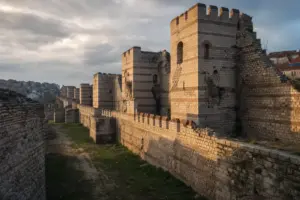 Theodosian Walls · typical visit: 2–3 hours
Main image: AI-generated illustration. It may not show the place exactly as it looks.
 Church of St. Mary of the Mongols – about 19.6 km away · typical visit: 45 minutes to 1 hourOpen 09:00–17:00, closed Mon
Main image: AI-generated illustration. It may not show the place exactly as it looks.
 Fener District – about 19.6 km away · typical visit: 2–3 hoursOpen 24 hours
Main image: AI-generated illustration. It may not show the place exactly as it looks.
 Book Bazaar – about 17.7 km away · typical visit: 1–2 hours4 min on foot from Beyazıt-Kapalıçarşı metro
Main image: AI-generated illustration. It may not show the place exactly as it looks.
Related guides
 Balat: Istanbul’s Colorful Historic Neighborhood
Main image: AI-generated illustration. It may not show the place exactly as it looks.
 Spice Bazaar Shopping Guide: What to Buy in Eminönü
Main image: AI-generated illustration. It may not show the place exactly as it looks.
 Chora Church (Kariye Mosque): Mosaics and Visitor Route
Main image: AI-generated illustration. It may not show the place exactly as it looks.
 Blue Mosque Visiting Guide: Prayer, Courtyard and Tiles
Main image: AI-generated illustration. It may not show the place exactly as it looks.
 Topkapı Palace Visiting Guide: Courtyards, Treasury and Harem
Main image: AI-generated illustration. It may not show the place exactly as it looks.
Browse more: More in Fatih · All Hidden Istanbul · All Sightseeing
FAQ: Silivri Kapi Dervish Lodge
Is this the same as the Galata Mevlevi Lodge?
No. The Galata Mevlevi Lodge in Beyoğlu is a restored museum dedicated to Mevlevi culture and Ottoman literature. The Silivri Kapi lodge is a functioning place of worship where actual ceremonies are held. The Galata lodge is open for touring during the day; Silivri Kapi hosts ceremonies on Thursday evenings and is not a museum.
Do I need to book in advance?
No formal booking is required. The ceremony is open to visitors on a walk-in basis. However, contacting the lodge or a local guide in advance is recommended if you want English-language interpretation or wish to confirm the current schedule, as times may occasionally vary.
Is the ceremony in English?
No, the ceremony is conducted entirely in Turkish. Introductory discussions, prayers, and the ney music are in Turkish. The physical beauty of the sema and its spiritual meaning are accessible regardless of language, though advance reading or a guide can deepen understanding.
What does the ceremony cost?
Admission is free. The lodge operates on a donation basis; visitors typically contribute what they can to support the community. Donations are voluntary and not required.
Can I take photos during the ceremony?
No. Photography during the sema ceremony and the spiritual gathering is not permitted, out of respect for the practice and the privacy of participants. You may photograph the exterior and the surrounding walls before or after.
What should I wear?
Dress modestly with long sleeves, long pants or long skirts, and closed-toe shoes. You will remove your shoes in the prayer space, so wear socks. Headscarves are provided if needed. Avoid transparent fabrics, tight clothing, or shorts.
Is there a dress code for men and women?
Both men and women must dress modestly in loose-fitting clothing that covers shoulders, elbows, and knees. The standards are the same for all visitors. No special gender separation occurs; men and women sit in the same space.
How long does the ceremony last?
The full gathering lasts 3–4 hours, including introductory discussion, dhikr (recitation), the sema ceremony itself (45 minutes to 1 hour), and a shared meal. You can arrive partway through or leave early if needed, though staying for the complete experience is recommended.
Istanbul Vibes is a one-person project. A coffee keeps it going
Hotels near Silivri Kapi Dervish Lodge
Restaurants near Silivri Kapi Dervish Lodge
Distances are straight-line, from OpenStreetMap data.

Take this guide with you
Get a free PDF of this guide to print or read offline: key facts, tips and a map link on a few clean pages.
Report an issue on this page
How we research and update our guides
About this guide: AI assistance and accuracy
This guide is created with the help of AI and is based on official sources where available. Mistakes can still happen. Opening hours, prices, rules and other details are given to the best of our knowledge as of the date shown and can change without notice. It offers general recommendations only, not professional, legal or travel advice. Please confirm important details with the official source before you travel; you are responsible for your own plans and decisions.
* Affiliate link: as an Amazon Associate we earn from qualifying purchases at no extra cost to you.
