

Information only. This page is general information, not financial, investment, tax or legal advice and not a recommendation to use any bank, service or product. Rules, fees and availability change. The order of a list is not a ranking. Investments can lose value. For your own situation ask a licensed adviser or the provider.
This guide explains where and how to exchange money in Istanbul, and which method costs least. Whether you arrive at the airport, explore the city center, or withdraw cash from an ATM, your choice in the first few hours affects your budget for the entire trip.
The Turkish lira (TRY, symbol ₺) is the only currency accepted in shops and restaurants. Euros, dollars and pounds cannot be spent. You have four main ways to get lira: licensed exchange offices (called döviz bürosu in Turkish), banks, ATMs, or hotels. This guide covers all four and explains the hidden costs of each.
At a Glance
| # | Place | Best for | Good to know |
|---|---|---|---|
| 1 | Licensed exchange office (döviz bürosu) | Cheapest for larger amounts | Sultanahmet, Sirkeci, Taksim, Grand Bazaar, Spice Bazaar areas; check board before entering; bring your passport |
| 2 | Bank branch | Safe and reliable | Branches in Sultanahmet, Taksim, and all central districts; usual hours 9 AM–5 PM weekdays, closed weekends; bring your passport |
| 3 | Airport exchange (Istanbul Airport and Sabiha Gökçen) | Convenient but costly | Istanbul Airport (IST, formerly Atatürk) and Sabiha Gökçen (SAW); both terminals; ATMs in landside and airside areas; open 24 hours |
| 4 | Bank ATM | Easiest for small amounts | Available 24/7 throughout the city; check for branded machines from Garanti, İşbank, Yapı Kredi, Ziraat, or Halkbank; daily limits apply per transaction (varies by bank and your card) |
| 5 | Hotel desk | Emergency only | Front desk service; hours depend on the hotel; often available after hours |
| 6 | Online currency services before departure | Advance planning option | Order online before traveling; collect at a designated Istanbul address or arrange delivery; requires passport verification |
| 7 | Cash only: do not bring cryptocurrency | Legal status in Turkey | Crypto payment is prohibited by CBRT regulation; conversion to lira is possible but adds a step and fees |
| 8 | Credit and debit card payments | Works almost everywhere now | Accepted everywhere except small markets, street stalls, and some independent cabs; inform your bank before traveling so it does not block your card |
| 9 | Understanding Turkish lira notes and coins | Practical recognition | Most common in daily use: mid-sized notes; coins rarely needed |
How We Chose
The entries below are not ranked or recommended. They describe each method by how it works, where to find it, what to watch for, and typical costs. Information is drawn from current Turkish Central Bank regulations, the Istanbul Airport official guide, and travelers’ practical experience as of October 2026.
- All methods listed are legal and widely used in Istanbul
- Entry data reflects typical practices; specific hours, fees and limits vary by provider and by your home country
- No entry represents endorsement; choice depends on your home bank, how much cash you need, and whether you prioritize speed or cost
- Rules and fees change; always read the screen before confirming any ATM transaction
1. Licensed exchange office (döviz bürosu) – Cheapest for larger amounts
A döviz bürosu is a small, independently licensed money-changer with a posted board showing buy and sell rates for each currency. Found throughout tourist areas, they charge no commission—only the spread (difference between buy and sell rates) shown on their board. Offices compete on rates, so compare boards before exchanging. Always look at the "ALIŞ" column (the office buys your currency from you) and avoid confusion with the "SATIŞ" column (the office sells to you). The real rates are lower than those shown on financial websites because banks quote interbank rates for electronic transfers, not cash exchanges.
Good to know: Sultanahmet, Sirkeci, Taksim, Grand Bazaar, Spice Bazaar areas; check board before entering; bring your passport
Tip: Offices in the back streets of the Grand Bazaar and Sirkeci typically have the tightest spreads because they compete fiercely. Skip airport exchange offices, which add a 3–4% margin.
2. Bank branch – Safe and reliable
Turkish banks such as Garanti BBVA, İşbank, Yapı Kredi, Ziraat Bank, and Halkbank exchange foreign currency at their official rate, usually posted on a board near the counter. Banks offer security and produce a receipt useful for reporting purposes. The exchange rate is typically neutral, but banks close in the evenings and on weekends, and lines can be long during peak hours. Some very old foreign banknotes may not be accepted.
Good to know: Branches in Sultanahmet, Taksim, and all central districts; usual hours 9 AM–5 PM weekdays, closed weekends; bring your passport
Tip: Visit a bank early in the morning or mid-week to avoid crowds. If you need a formal receipt for tax or reporting purposes, banks provide one; exchange offices do not.
3. Airport exchange (Istanbul Airport and Sabiha Gökçen) – Convenient but costly
Both major Istanbul airports have licensed exchange counters and ATMs in the arrivals hall, open 24/7. The rates look reasonable on the display board but typically carry a 3–4% margin wider than city offices, because the airport is a captive market. Most travelers exchange only a small amount at the airport (enough for a taxi or metro card) and do the bulk of their exchange in the city afterward. One exception: if you arrive very late at night or very early in the morning, the airport counter is your only quick option.
Good to know: Istanbul Airport (IST, formerly Atatürk) and Sabiha Gökçen (SAW); both terminals; ATMs in landside and airside areas; open 24 hours
Tip: Withdraw only enough for your first day—a taxi to the city, public transport card (İstanbulkart), and a meal. Change larger sums at a city office the next morning.
4. Bank ATM – Easiest for small amounts
Major Turkish banks operate ATMs throughout the city, and Visa and Mastercard are widely accepted. Before confirming a withdrawal, the ATM shows you the fee your bank will charge, and you can cancel if it is high. Turkish banks typically charge a small foreign card fee per withdrawal (₺). The exchange rate the ATM uses is close to the mid-market rate. Avoid dynamic currency conversion (DCC): when the ATM asks if you want to be charged in your home currency or in Turkish lira, always choose Turkish lira. DCC typically adds to your cost through an inflated rate set by the ATM operator.
Good to know: Available 24/7 throughout the city; check for branded machines from Garanti, İşbank, Yapı Kredi, Ziraat, or Halkbank; daily limits apply per transaction (varies by bank and your card)
Tip: Use ATMs attached to a real bank branch during daytime in busy areas. Avoid standalone Euronet machines and ATMs in hotel lobbies, which push dynamic currency conversion more aggressively.
5. Hotel desk – Emergency only
Many hotels offer currency exchange at the front desk, though not all do. Rates are typically less favorable than offices or banks, and the service exists mainly for guests in urgent need of cash outside bank hours. Never use a hotel desk as your first choice, as margins are wider and there is no competition. Some hotels also exchange USD or EUR directly to guests at the desk without requiring a formal exchange transaction, which may be convenient but costs more.
Good to know: Front desk service; hours depend on the hotel; often available after hours
Tip: Ask the concierge in advance whether the hotel offers exchange, and at what rate. Most central hotels are within walking distance of a döviz bürosu, so that is cheaper.
6. Online currency services before departure – Advance planning option
Some international money transfer and currency services offer pre-ordering Turkish lira before you travel. You fund the order with a home bank transfer or card, and collect the cash at a branch in Istanbul, or have it delivered. This requires advance notice (typically several days) and works well if you plan ahead. Services vary by your home country, and some charge a fee or add a margin to the exchange rate. Always check the terms before ordering.
Good to know: Order online before traveling; collect at a designated Istanbul address or arrange delivery; requires passport verification
Tip: Use this method only if you know your budget well in advance and have time before departure. For most visitors, it costs more than waiting to exchange in the city.
7. Cash only: do not bring cryptocurrency – Legal status in Turkey
Bitcoin, Ethereum, and other digital assets cannot be used for payment in Istanbul or anywhere in Turkey. The Central Bank of the Republic of Turkey (CBRT) prohibited their use as legal tender in April 2021. You can legally hold and trade digital assets, but to spend them you must first convert them to Turkish lira through a regulated exchange, then withdraw the lira. Bring only traditional foreign currency (USD, EUR, GBP) or use your debit or credit card.
Good to know: Crypto payment is prohibited by CBRT regulation; conversion to lira is possible but adds a step and fees
Tip: If you hold crypto and want cash, research Turkish crypto exchanges (which require KYC verification and may take days) before you arrive. For a short trip, bring traditional currency or rely on your card.
8. Credit and debit card payments – Works almost everywhere now
Cards are widely accepted in Istanbul: all hotels, shopping malls, chain restaurants, supermarkets (Migros, A101, Carrefour, BIM), and most sit-down restaurants accept Visa and Mastercard. The exchange rate your bank offers is typically competitive. However, some small street vendors, neighborhood bakeries, dolmuş minibus drivers, taxis outside the city, and Grand Bazaar vendors prefer or only accept cash. Bring a mix: card for large purchases, cash for bazaars, street food, and tips.
Good to know: Accepted everywhere except small markets, street stalls, and some independent cabs; inform your bank before traveling so it does not block your card
Tip: Notify your home bank of your Istanbul dates before you travel. If your card is blocked, you can withdraw cash from an ATM, but this costs a fee. Contactless payment works at most terminals.
9. Understanding Turkish lira notes and coins – Practical recognition
Turkish lira comes in banknotes of several denominations. Coins are rarely used in daily life; most small transactions are paid in bills. Smaller denominations are useful for street food and tips. When you receive change, check that bills are not torn or excessively worn, as some vendors may refuse them. Exchange offices and ATMs typically dispense larger denominations; if you need small bills, ask the office to break one for you.
Good to know: Most common in daily use: mid-sized notes; coins rarely needed
Tip: Ask for smaller denominations when exchanging money if you plan to eat at street stalls, use bazaar vendors, or tip in cash. Vendors outside Istanbul may not accept large bills.
Good to know
- Never exchange all your money at the airport. The margin is wider because there is no competition. Change or withdraw only what you need for the first day (taxi, metro card, a meal), then exchange the rest at a licensed office in the city the next morning. This alone can save you the equivalent of several coffees.
- Always choose Turkish lira (TRY) when an ATM or card terminal offers you a choice between your home currency and TRY. This is called dynamic currency conversion (DCC), and accepting it costs 3–7% more. The machine will show you the rate; it is almost always worse than letting your home bank do the conversion.
- Read the exchange board correctly. The "ALIŞ" column is what the office pays you for your currency. The "SATIŞ" column is what it charges you to buy Turkish lira. First-time visitors often confuse them and think they are getting a better rate than they are.
- If you need a formal receipt (for tax reporting or repatriation of funds), use a bank, not an exchange office. Exchange offices do not issue official receipts, even if you ask. Banks provide one automatically.
- Carry mostly mid-sized notes. Small vendors and street food carts prefer smaller denominations and may say they cannot change a large note. Taxi drivers, market vendors, and restaurants appreciate exact change or small bills.
- Check whether your home bank charges a foreign transaction fee on card payments. If it does, withdrawing cash from an ATM might cost less overall than paying by card for every purchase, especially for small amounts. Compare your bank's ATM fee with its card transaction fee before deciding your payment strategy.
Explore Nearby Currency exchange
Sights near Currency exchange
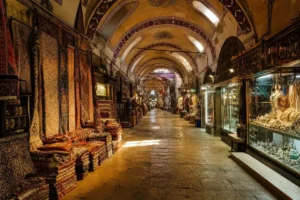 Grand Bazaar · typical visit: 2–4 hours4 min on foot from Beyazıt-Kapalıçarşı metro, Open 08:30–19:00, closed Sun
Main image: AI-generated illustration. It may not show the place exactly as it looks.
 Beyazit Tower · typical visit: 20–30 minutes (viewing from outside)7 min on foot from Vezneciler metro
Main image: AI-generated illustration. It may not show the place exactly as it looks.
 Book Bazaar · typical visit: 1–2 hours4 min on foot from Beyazıt-Kapalıçarşı metro
Main image: AI-generated illustration. It may not show the place exactly as it looks.
Related guides
 Spice Bazaar and Grand Bazaar Route: Two Markets, Six Centuries
Main image: AI-generated illustration. It may not show the place exactly as it looks.
 Alternatif Bank: Services, Regulation and How It Works
Main image: AI-generated illustration. It may not show the place exactly as it looks.
 N Kolay: Payment Service and Digital Banking in Istanbul
Main image: AI-generated illustration. It may not show the place exactly as it looks.
 Ziraat Katılım: Participation Banking Services in Istanbul
Main image: AI-generated illustration. It may not show the place exactly as it looks.
 PTTBank: Turkey’s Postal Banking and Payment Services for Visitors
Main image: AI-generated illustration. It may not show the place exactly as it looks.
Browse more: All Finance Guides · All Free and Budget
FAQ
Can I use euros or dollars to pay in Istanbul shops?
No. Only Turkish lira is accepted in shops, restaurants, markets, and taxis. Euros and dollars must be exchanged first at a bank, licensed exchange office, or ATM. Some very large hotels in tourist areas may accept USD or EUR at the front desk as a convenience, but rates are unfavorable.
What is the difference between an exchange office and a bank?
Exchange offices (döviz bürosu) compete on rates and usually offer better spreads than banks, with no commission—you pay only the spread shown on the board. Banks offer security, official receipts useful for reporting, and longer access to your money once exchanged. Banks close in the evenings and on weekends; exchange offices stay open longer.
Should I exchange money before I travel or after I arrive?
It depends on your home country and bank. If your home bank charges high fees for foreign ATM withdrawals, exchange a small amount before traveling. If your bank offers good exchange rates and low ATM fees, wait and exchange in Istanbul. Most travelers find it cheapest to bring the equivalent of a few days' spending in USD or EUR, exchange half of it at an exchange office on arrival, and use ATMs as needed.
Do I need to declare cash when I arrive in Turkey?
Customs regulations depend on your nationality and residence status. Most visitors do not face restrictions for personal spending money. However, if you are bringing a large amount or are relocating to Istanbul, check current rules with Turkish Customs (Gümrük Müdürlüğü) and your own country's tax authority before traveling. Rules change and vary by individual circumstances.
Can I use cryptocurrency to pay in Istanbul?
No. The Central Bank of the Republic of Turkey prohibits the use of cryptocurrency (Bitcoin, Ethereum, etc.) as payment since April 2021. You can legally hold and trade digital assets, but to spend them you must convert to Turkish lira through a regulated exchange first. Bring traditional currency or use your card instead.
What is the daily ATM withdrawal limit in Istanbul?
Most Turkish ATMs allow withdrawals between 3,000 and 10,000 Turkish lira per transaction, though limits vary by bank and your card issuer. If you need more cash, make multiple withdrawals at different times, or use a licensed exchange office instead.
What do I do if an ATM asks if I want to be charged in my home currency?
Always tap "Decline" and choose to be charged in Turkish lira (TRY). This is called dynamic currency conversion (DCC), and accepting it typically costs 3–7% more through an inflated exchange rate. By choosing TRY, your home bank handles the conversion at a better rate.
Are exchange rates different at different exchange offices?
Yes. Licensed exchange offices in Istanbul compete and post different rates on their boards. Offices in the back streets of the Grand Bazaar and Sirkeci typically have tighter (better) spreads than offices in high-foot-traffic tourist areas. Always check the board before entering and compare rates if you are exchanging a large sum.
Before you decide anything
- This page is information. It is not financial, investment, tax or legal advice, and not a recommendation to use or buy any product, or to choose any bank, service or country.
- Fees, rates, limits and rules change often and depend on your nationality, residence and the product. Ask the provider for its current written conditions.
- Investments can lose value, and you can lose money. Past results say nothing about the future.
- Check that a provider is licensed in the official register of the BDDK, SPK, TCMB, SEDDK.
- Payment limits can affect which services work for visitors from your country. Check with your own bank before you travel or send money.

Take this guide with you
Get a free PDF of this guide to print or read offline: key facts, tips and a map link on a few clean pages.
Report an issue on this page
How we research and update our guides
About this page: AI assistance and accuracy
This page was prepared with the help of AI and checked by automatic rules. It is general information only, not financial, investment, tax or legal advice and not a recommendation to use any bank, service or product. Mistakes can still happen, and fees, rules and availability change without notice. Please check important details with the provider, the competent regulator and a licensed adviser before you decide anything.
