
Information only. This page is general information, not financial, investment, tax or legal advice and not a recommendation to use any bank, service or product. Rules, fees and availability change. The order of a list is not a ranking. Investments can lose value. For your own situation ask a licensed adviser or the provider.
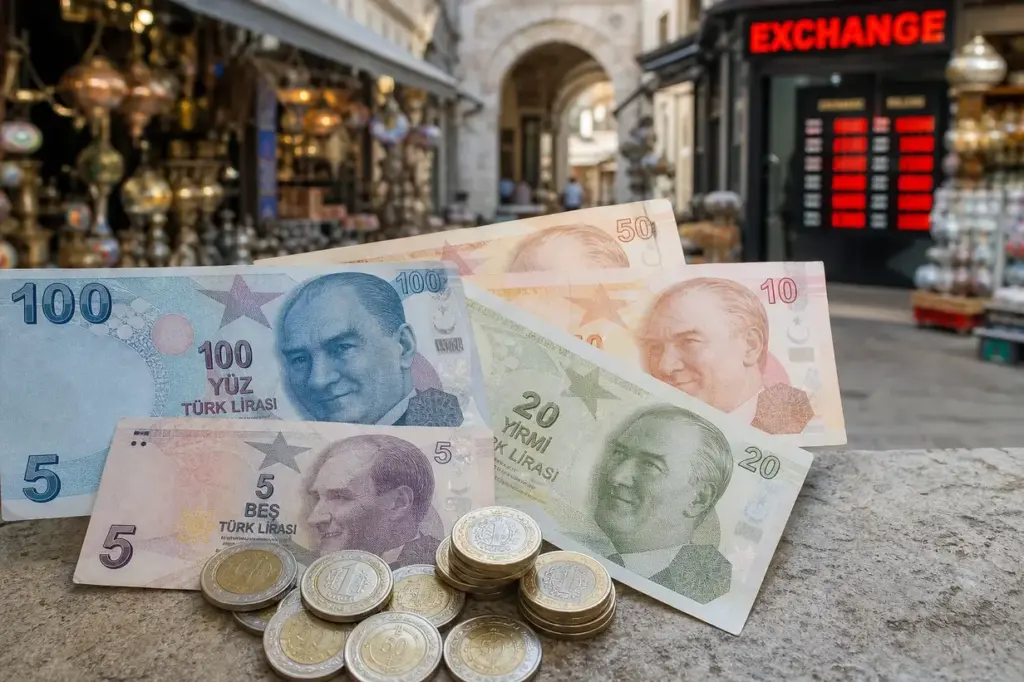
ATMs and cash form the backbone of day-to-day spending in Istanbul, even as card payments have become more common. For visitors and people new to the city, understanding when to carry cash, where to withdraw it, and how to exchange currency can make the difference between smooth transactions and expensive mistakes.
This guide covers how to use ATMs safely, how exchange rates differ between providers, which payment cards work locally, and practical strategies for managing both cash and cards. It explains how money moves through Istanbul and what to watch for.
At a Glance
| # | Place | Best for | Good to know |
|---|---|---|---|
| 1 | Bank ATMs (Ziraat Bank, Garanti BBVA, İş Bankası, Akbank, VakıfBank, DenizBank) | Most common, variable fees | Citywide; available 24/7; check the displayed fee before withdrawing |
| 2 | ATMs in free-standing booths (tourist areas, malls, transport hubs) | Convenient but higher risk | Eminönü, Sultanahmet, major metro stations, airport; use only if no bank ATM is nearby |
| 3 | Currency exchange offices (Döviz bürosu) | Best rates for cash exchange | Grand Bazaar area, Eminönü, Sirkeci, Istiklal Street; compare 'ALIŞ' (buying) rates at multiple offices |
| 4 | Bank branches (for currency exchange) | Safe but slower than döviz | Bank branch locations citywide; weekday hours only; rates posted in window |
| 5 | Debit and credit cards (Visa, Mastercard, Maestro) | Widely accepted for everyday spending | Everywhere except small bazaar stalls, street food vendors, and independent taxis; inform your bank before travelling |
| 6 | Cash at small vendors, markets and taxis | Often cash-only | Everywhere outside major chains and tourist restaurants; always carry some cash in small notes |
| 7 | Post office ATMs and counters (PTT) | Fee-free option | Post office locations citywide; closed evenings and Sundays; check hours before visiting |
| 8 | Avoid: Airport and hotel exchange counters | Poor rates, high markups | Istanbul airports; hotel lobbies—avoid for currency exchange |
| 9 | Istanbulkart (public transport card) | Cash-free metro and bus travel | Metro station booths, convenience stores citywide; load with cash, then use contactless |
How We Chose
The entries below describe the main methods visitors use to access and exchange Turkish Lira in Istanbul. They are selected based on how they work in practice: ATM networks that serve foreign cards, banks offering exchange services, and venues where cash remains essential. The order reflects practical frequency of use and accessibility, not a ranking. Each entry is verified against current provider information and traveller experience.
1. Bank ATMs (Ziraat Bank, Garanti BBVA, İş Bankası, Akbank, VakıfBank, DenizBank) – Most common, variable fees
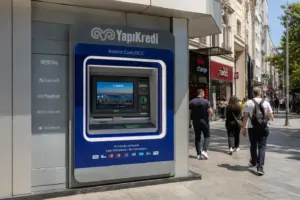
Major Turkish banks operate extensive ATM networks throughout Istanbul, at airports, metro stations, and alongside bank branches. These are generally the safest option because machines are located near staffed branches and less likely to have been tampered with. Most accept Visa and Mastercard. Each bank sets its own fee for foreign cards; some charge around 1–2% of the withdrawal amount, others more. Always read the fee on screen before confirming the transaction.
Good to know: Citywide; available 24/7; check the displayed fee before withdrawing
Tip: Compare two different bank ATMs if you have time—fees vary by bank. Ziraat Bank, Halkbank and ING are often reported as charging lower or no fees, but verify on screen when you withdraw.
2. ATMs in free-standing booths (tourist areas, malls, transport hubs) – Convenient but higher risk
Standalone ATMs in busy tourist zones, shopping malls, and transport corridors are tempting because they are highly visible. However, these machines—especially those operated by networks like Euronet—are more frequently targeted for tampering or cloning. They also commonly push 'dynamic currency conversion' (DCC): an option to have the ATM charge you in your home currency rather than Turkish Lira at an unfavorable rate set by the machine operator, not your bank.
Good to know: Eminönü, Sultanahmet, major metro stations, airport; use only if no bank ATM is nearby
Tip: Always decline dynamic currency conversion and choose Turkish Lira. If the fee displayed is high, cancel and find a bank ATM instead.
3. Currency exchange offices (Döviz bürosu) – Best rates for cash exchange
Licensed currency exchange offices, known locally as 'döviz' or 'döviz bürosu', are the standard way to exchange cash in Turkey. Competition in commercial areas like the Grand Bazaar, Sirkeci and Eminönü means rates are consistently better than at airports or hotels. These offices handle USD, EUR and GBP notes. Rates and spreads vary between offices; checking two or three nearby improves your deal. Ask whether any commission applies before handing over money.
Good to know: Grand Bazaar area, Eminönü, Sirkeci, Istiklal Street; compare 'ALIŞ' (buying) rates at multiple offices
Tip: Bring clean, undamaged foreign notes. Many offices reduce the rate for torn or marked banknotes. Exchange only what you need; Istanbul's density of ATMs makes it easy to top up as you go.
4. Bank branches (for currency exchange) – Safe but slower than döviz
Bank branches are safe and reliable options for money exchange, though rates may not be as favorable as exchange offices. Major Turkish banks including Garanti BBVA, İş Bankası and Yapı Kredi offer currency exchange. Transactions take longer than at a döviz office and rates tend to be less competitive, but the service is transparent and you have a paper receipt.
Good to know: Bank branch locations citywide; weekday hours only; rates posted in window
Tip: Use a bank branch if you need an official receipt or if it's after hours and you need cash urgently, but expect slower service and a less favorable rate than a nearby döviz office.
5. Debit and credit cards (Visa, Mastercard, Maestro) – Widely accepted for everyday spending
Istanbul is largely card-friendly, and while you can tap your card in most shops and restaurants, you will need Turkish Lira for taxis, street vendors, and small neighborhood eateries. Hotels, chain restaurants, supermarkets and most shops accept Visa and Mastercard. American Express is less widely accepted. Digital wallets such as Apple Pay and Google Wallet function in some locations, but adoption is still inconsistent.
Good to know: Everywhere except small bazaar stalls, street food vendors, and independent taxis; inform your bank before travelling
Tip: Always choose to pay or withdraw in Turkish Lira, never in your home currency, to avoid unfavorable dynamic currency conversion rates.
6. Cash at small vendors, markets and taxis – Often cash-only
Street vendors and small neighborhood eateries typically require Turkish Lira cash. Family-owned restaurants, independent taxi drivers off the meter, bazaar stalls, public toilets, and tipping all expect lira cash. Contactless card terminals have spread, but many small or family businesses still do not have them, and some prefer to avoid the transaction fee.
Good to know: Everywhere outside major chains and tourist restaurants; always carry some cash in small notes
Tip: Keep small denominations (small notes) for tips and small purchases. Many vendors claim their card machine is broken; carrying cash gives you the real price without pressure.
7. Post office ATMs and counters (PTT) – Fee-free option
The Turkish postal service, PTT, operates ATM networks and currency exchange counters at post offices. PTT ATMs are widely reported to charge no operator fee to foreign cards, making them a cost-effective option if you find one. Post office exchange counters also offer reasonable rates. However, post offices close in the afternoon and are not available 24/7.
Good to know: Post office locations citywide; closed evenings and Sundays; check hours before visiting
Tip: If you see a PTT ATM during the day, use it for a fee-free withdrawal. Some Istanbul post offices are near major transport hubs or commercial streets.
8. Avoid: Airport and hotel exchange counters – Poor rates, high markups
Avoid exchanging money at airports and other high-fee exchange services like hotel front desks; you will get a better deal if you buy your lira in Turkey. If you arrive with no cash at all, use an airport ATM instead of the exchange counter—ATM rates are typically much better, even with fees included. The same applies to hotel front desks: a bank ATM or döviz office nearby usually offers a markedly better rate.
Good to know: Istanbul airports; hotel lobbies—avoid for currency exchange
Tip: If you must exchange money at the airport, do it at an ATM, not a counter. Once in the city, find a döviz office for any large currency exchange.
9. Istanbulkart (public transport card) – Cash-free metro and bus travel
While you can pay for public transport with a contactless credit card, using a cash-topped Istanbulkart is still the cheapest way to travel. The Istanbulkart is a rechargeable card you can load with cash at metro station booths or many convenience stores. Once loaded, you tap it at gates for metro, tram and bus journeys at a discounted per-trip rate compared to single tickets.
Good to know: Metro station booths, convenience stores citywide; load with cash, then use contactless
Tip: Top up an Istanbulkart when you have cash to avoid buying single tickets. The per-ride cost is notably cheaper on the card.
Good to know
- Before you travel, notify your home bank that you will be in Istanbul. Some banks flag international ATM withdrawals as fraud and block your card unless you give advance notice. Check whether your bank charges a fee for international ATM use and whether it has partnership agreements with Turkish banks that might reduce fees.
- Fees on ATM withdrawals can add up because your home bank typically charges a flat fee per withdrawal, plus a percentage, plus the Turkish bank's operator fee. Making fewer, larger withdrawals reduces how many times fees apply.
- When an ATM or card terminal offers to charge you in your home currency (USD, EUR, GBP) instead of Turkish Lira, always decline. This is called dynamic currency conversion, and the machine's exchange rate is typically less favourable than your bank's rate. Always choose to be charged in Turkish Lira.
- Bring clean, undamaged foreign banknotes to exchange offices. Many döviz bureaux reduce the rate or refuse damaged or marked notes, particularly older banknotes. New or crisp notes typically get the posted rate.
- Exchange a small amount of cash before you travel (if convenient in your country) or at an ATM on arrival, and then manage your cash needs as you go. Istanbul's density of ATMs and döviz offices means you do not need to carry a large amount of cash at once.
- Some establishments in Istanbul quote prices in euros or dollars, but paying in foreign currency usually means accepting the merchant's own conversion rate, which is typically less favourable than the official rate. Pay in Turkish Lira whenever possible, whether in cash or by card.
Explore Nearby ATMs and cash
Metro stations near ATMs and cash
 Beyazıt-KapalıçarşıOpen daily 06:00–00:00
Main image: AI-generated illustration. It may not show the place exactly as it looks.
Related guides
 Spice Bazaar and Grand Bazaar Route: Two Markets, Six Centuries
Main image: AI-generated illustration. It may not show the place exactly as it looks.
 Istanbul Markets and Bazaars: A Three-Day Shopping and Exploration Itinerary
Main image: AI-generated illustration. It may not show the place exactly as it looks.
 Best Street Food and Markets: Where Istanbul Eats
Main image: AI-generated illustration. It may not show the place exactly as it looks.
 HSBC Turkey: Banking in Istanbul for International Visitors
Main image: AI-generated illustration. It may not show the place exactly as it looks.
 How to Get Medical Help in Istanbul: Emergency Care, Clinics and What to Expect
Main image: AI-generated illustration. It may not show the place exactly as it looks.
More guides
 How to Get Cash and Use ATMs in Istanbul
Main image: AI-generated illustration. It may not show the place exactly as it looks.
 Currency exchange
Main image: AI-generated illustration. It may not show the place exactly as it looks.
 Opening an account as a foreigner
Main image: AI-generated illustration. It may not show the place exactly as it looks.
Browse more: All Finance Guides · All Free and Budget
FAQ
Do I need to bring cash to Istanbul or can I just use my card?
Istanbul is largely card-friendly, but you will need Turkish Lira for taxis, street vendors, and small neighborhood eateries. Major restaurants, hotels, supermarkets and shops accept cards. Small family restaurants, bazaar stalls, independent taxis and street food vendors typically only take cash. Carry both.
What currency do I use in Istanbul?
The primary currency used for transactions within Turkey is the Turkish Lira (TRY). All prices are in lira. You cannot pay with USD or EUR in shops; only lira is accepted. Some tourist venues quote euros or dollars, but the conversion rate applied is usually less favourable.
Will my Visa or Mastercard work in Istanbul ATMs?
Most international debit and credit cards work in Istanbul; Visa and Mastercard are widely accepted. American Express cards may work but with fewer options. Most ATMs display logos of these card networks and offer English menus. Check with your home bank before travelling to confirm there are no blocks on international withdrawals.
Where can I exchange foreign cash for Turkish Lira?
Döviz bürosu (currency exchange offices) are a common place to exchange cash; they are widespread in Istanbul's tourist neighbourhoods (Sultanahmet, Beyoğlu, the Grand Bazaar). Banks and airports also exchange cash. Rates differ between providers, so it is common to compare the posted rates of a few offices in the same area.
Why should I avoid dynamic currency conversion at ATMs?
Many Turkish ATMs prompt you to accept a conversion in your home currency; it is usual to choose to be charged in Turkish lira because the ATM's conversion rate is typically less favourable than your bank's rate. Your bank then handles the conversion at its own rate.
Should I exchange money before I leave home or after I arrive in Istanbul?
Airports and hotels typically apply wider margins on currency exchange. Many visitors exchange a small amount at home or on arrival and handle the rest in the city. Rates and fees change, so check the current terms with each provider.
Do Turkish ATMs charge foreign cards a fee?
Operator fees for foreign cards differ by bank and can change. Always read the fee displayed on the ATM screen before confirming your withdrawal; if it is high, cancel and try a different bank's ATM.
Can I use an ATM near my hotel or in a tourist area, or is it safer to find a bank branch ATM?
ATMs are found at airports, near bank branches and in free-standing booths close to major attractions; it is often safer to use ATMs next to bank branches because free-standing booths have sometimes been tampered with. If a bank ATM is nearby, use it instead of a standalone machine.
Before you decide anything
- This page is information. It is not financial, investment, tax or legal advice, and not a recommendation to use or buy any product, or to choose any bank, service or country.
- Fees, rates, limits and rules change often and depend on your nationality, residence and the product. Ask the provider for its current written conditions.
- Investments can lose value, and you can lose money. Past results say nothing about the future.
- Check that a provider is licensed in the official register of the BDDK, SPK, TCMB, SEDDK.
- Payment limits can affect which services work for visitors from your country. Check with your own bank before you travel or send money.

Take this guide with you
Get a free PDF of this guide to print or read offline: key facts, tips and a map link on a few clean pages.
Report an issue on this page
How we research and update our guides
About this page: AI assistance and accuracy
This page was prepared with the help of AI and checked by automatic rules. It is general information only, not financial, investment, tax or legal advice and not a recommendation to use any bank, service or product. Mistakes can still happen, and fees, rules and availability change without notice. Please check important details with the provider, the competent regulator and a licensed adviser before you decide anything.
