
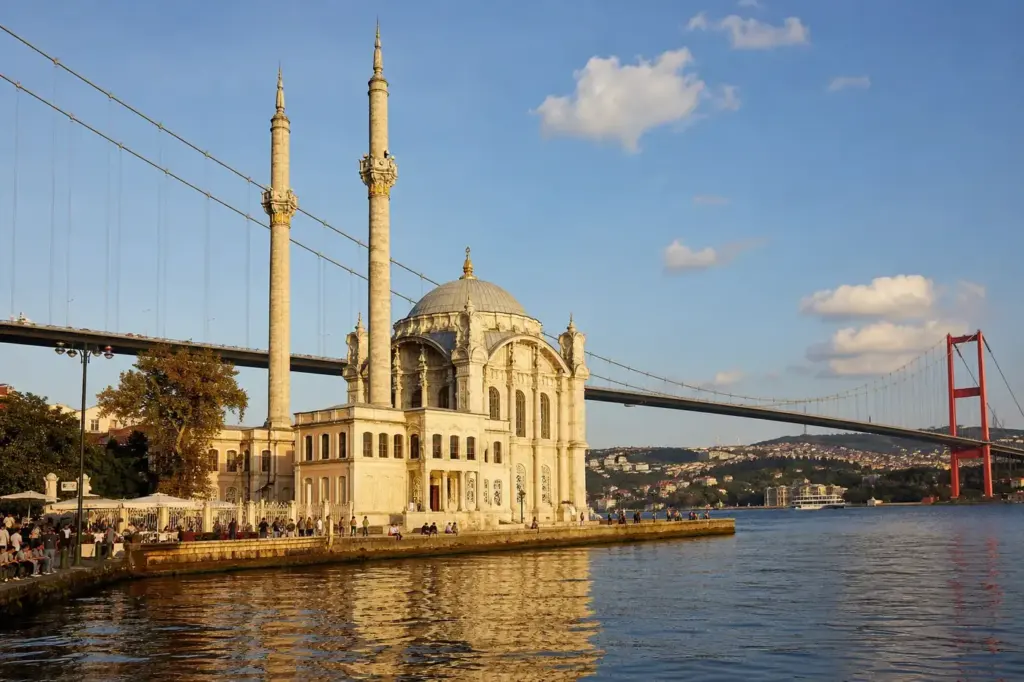
On the European shore of the Bosphorus, north of Beşiktaş and immediately beneath one of Istanbul’s great suspension bridges, lies Ortaköy, one of the city’s most recognizable waterfront neighborhoods. Located between down-to-earth Beşiktaş and chichi Kuruçeşme, Ortaköy positions itself somewhere in the middle—orta köy means ‘middle village’ in Turkish.
Ortaköy brings together several different faces of Istanbul within a remarkably small area: historic monuments, religious diversity, Bosphorus scenery, street culture and contemporary city life. It sits directly on the Bosphorus, where the water, Asian shore, passing boats and enormous suspension bridge create a cityscape that feels unmistakably Istanbul.
Quick Facts
| Address | Ortaköy, Beşiktaş, Istanbul Google MapsApple MapsYandex Maps |
|---|---|
| District | Beşiktaş |
| Metro | Kabataş (10 min walk south along the coast) |
| Best time to visit | Early morning gives more space. Late afternoon and sunset give warmer light but considerably more people. The square is small, so crowd levels make a bigger difference here than at many larger Istanbul landmarks. Spring and autumn offer the most pleasant weather. Weekdays are quieter than weekends. Avoid late evening crowds on Friday and Saturday unless you plan to stay for dinner or street food. |
| Recommended duration | 2–4 hours |
What Is (and Isn't) Part of a Visit to Ortaköy?
| Part | Status | Notes |
|---|---|---|
| Ortaköy neighborhood | Included in the standard ticket | Open public area with shops, cafés, restaurants and street food vendors. Waterfront is accessible year-round. |
| Büyük Mecidiye Mosque (Ortaköy Mosque) | Included in the standard ticket | Open to visitors outside prayer times. Remove shoes; modest dress required for entry. Located in the square. |
| Ottoman Hamam | Included in the standard ticket | Requires separate payment and separate visit. Operating separately from the neighborhood sightseeing. |
| Aya Fokas Church | Included in the standard ticket | Active place of worship with restricted visiting hours. Located near the bridge in the neighborhood. |
| Etz-Ahayim Synagogue | Included in the standard ticket | Active place of worship with restricted visiting hours. Close to the Bosphorus Bridge. |
| 15 July Martyrs Bridge | Outside / not part of it | The bridge is visible from the square and framed in photographs, but the bridge structure itself is a separate infrastructure and not part of Ortaköy sightseeing. |
Why Visit Ortaköy?
Ortaköy is a compact Bosphorus neighborhood known for its waterfront mosque, bridge views, lively square and one of the city’s most recognizable skylines. The waterfront square fills with cafés, street-food stalls, small shops, craft sellers, photographers, students and evening crowds. The neighborhood contains the famous 19th-century Büyük Mecidiye Camii, a historic Mimar Sinan bath, old fountains, religious buildings and the surviving memory of palaces and waterfront residences.
Reflecting the cosmopolitan nature of a neighbourhood where Turks, Armenians, Greeks, and Jews historically lived side by side, you can visit the Etz-Ahayim synagogue, close to the Bosphorus Bridge and the Greek Orthodox church of Aya Fokas.
How Ortaköy Is Laid Out
At its heart is Ortaköy Square, a waterfront plaza that pulses with energy, framed by the magnificent Büyük Mecidiye Mosque and the soaring legs of the 15 July Martyrs Bridge, with a lively tangle of cafés, street food vendors, and artisan stalls. The neighborhood is small and walkable; the main focal point is the waterfront square where the mosque stands directly at the water’s edge.
Ortaköy lies on the European shore of the Bosphorus in the Beşiktaş district, between central Beşiktaş and the neighborhoods farther north toward Bebek. The main anchors are Ortaköy Mosque, the waterfront square, and the Bosphorus view beneath the bridge, supported by compact food and market streets nearby.
Highlights of Ortaköy
Büyük Mecidiye Mosque
The current mosque, commissioned by Sultan Abdülmecid I and designed by architects Garabet Amira Balyan and Nigoğayos Balyan in Neo-Baroque style, was built between 1854 and 1856. The exterior attracts attention with carved and relief decorations made of magnificently beautiful stones. The interior walls are made of pink plaster with red and white bright stripes and the marble structure of the pulpit is decorated with pink stones. The mosque is open to visitors outside prayer times.
Tip: Arrive early morning or late afternoon for better light and fewer crowds. The best photo vantage point is from the waterfront square facing the mosque with the bridge visible behind it.
Waterfront Square and Bosphorus Views
The mosque stands at the waterside of the Ortaköy pier square, one of the most popular locations on the Bosphorus, offering a distinctive view of the Bosphorus Strait and the Bosphorus Bridge. The square is the focal point of the neighborhood and the primary gathering space for visitors and locals.
Tip: Visit after sunset when the mosque and bridge are illuminated. The waterfront remains active with crowds, cafés and street vendors into the evening.
Ottoman Hamam (Turkish Bath)
One of Istanbul's oldest hamams was built by the famous Ottoman architect Mimar Sinan in 1556. The bath is a working facility offering the traditional Turkish bathing experience and represents one of Ortaköy's enduring Ottoman structures.
Tip: The hamam operates for visitors during regular business hours. It is a separate experience from the square; allow time if you plan to bathe as well as sightsee.
Aya Fokas Church
The Greek Orthodox church of Aya Fokas is located close to the Bosphorus Bridge. During the Byzantine period, this location held a monastery built by Emperor Basil I in the second half of the 9th century, after a martyr named Saint Phocas. The church reflects the neighborhood's multicultural religious heritage.
Tip: The church may have limited visiting hours. Check before planning a visit, as it is an active place of worship.
Street Food Culture
The district is especially famous for kumpir, the generously filled baked potatoes sold from the food stands near the square. Beyond kumpir, the waterfront area offers Turkish waffles, grilled fish, kebabs and other street fare from numerous small vendors and restaurants.
Tip: Food stalls cluster near the waterfront square and are busiest in late afternoon and evening. Prices are moderate and portions generous.
Etz-Ahayim Synagogue
The Etz-Ahayim synagogue is located close to the Bosphorus Bridge. It reflects the historical Jewish presence in Ortaköy and the neighborhood's multicultural identity.
Tip: Like the church, visiting hours may be restricted. Confirm access times in advance as it remains an active place of worship.
Atmosphere
The waterfront square fills with cafés, street-food stalls, small shops, craft sellers, photographers, students and evening crowds. By day the square is moderately busy, filling with tourists and locals browsing shops and taking photographs. The atmosphere is relaxed and photogenic, with the massive bridge framing everything overhead.
In late afternoon and after dark, energy builds significantly. The bridge and mosque are lit, the cafés and stalls fill up, and the waterfront is busy with families. The waterfront becomes a social gathering place. Most people stay three hours because of the food.
History of Ortaköy
Ortaköy was first settled by Archias Aristonymos in antiquity and was originally known as Arhias or Archeion. It took the name Agios Phocas during the Byzantine period, after a monastery built there by Emperor Basil I in the second half of the 9th century on the site of the luxurious home of iconoclast Patriarch John VII.
As the area transitioned into Ottoman rule, the name shifted to Ortaköy, symbolizing its role as a ‘middle ground’ where diverse communities—Muslims, Jews, Armenians, and Greeks—coexisted. During the Ottoman period it was a small fishing village and a resort for Ottoman dignitaries because of its attractive location.
A small mosque originally stood at this site in 1721, commissioned by Mahmud Ağa, son-in-law of Grand Vizier Ibrahim Pasha. The mosque was ruined during the Patrona Halil Uprising in 1731.
The current mosque, commissioned by Sultan Abdülmecid I and designed by architects Garabet Amira Balyan and Nigoğayos Balyan in Neo-Baroque style, was built between 1854 and 1856. The Balyans were also the architects behind Dolmabahçe Palace, positioning Ortaköy Mosque within the same refined 19th-century Ottoman design world.
Many other buildings were constructed in Ortaköy during the 19th century, including schools, hospitals, and public baths. The area became a center of culture and education, with many writers, artists, and scholars living and working in the district, including the poet Tevfik Fikret and the painter Osman Hamdi Bey. The mosque has undergone multiple restorations: it was repaired twice in the 1860s, sustained major damage in the 1894 earthquake and was restored in 1904. Between 1960 and 1969 it underwent significant restoration, reopening in 1969, and after extensive fire damage in 1984 was again restored.
Legends and Myths about Ortaköy
The Bridge Shadows the Mosque
Legend – historically unreliable. The 15 July Martyrs Bridge (formerly Bosphorus Bridge), completed in 1973, was built directly above Ortaköy and seems to emerge from the mosque itself in photographs. Local lore suggests the bridge's sudden appearance transformed Ortaköy from a quiet waterfront village into a globally recognized landmark, making the mosque an icon overnight.
Tickets and Booking for Ortaköy
Ortaköy neighborhood and the waterfront square are free and open to the public. There are no admission fees for walking the area, visiting the square, shopping, or dining. Individual mosques and churches have restricted visiting hours; confirm access with locals or your hotel before visiting. The Ottoman hamam (Mimar Sinan bath) requires payment and has its own operating hours.
Suggested itineraries Ortaköy
2 hours
Enter the square from the market streets. Photograph the mosque from the waterfront, walk the short promenade along the Bosphorus, browse craft and souvenir stalls, and have a tea or coffee at a waterfront café. Visit the mosque interior if open. Depart before peak evening crowds.
3 hours
Spend 1 hour photographing the mosque and square from different angles and light. Visit the Ottoman hamam for the Turkish bath experience (allow 1–1.5 hours). Return to the square for street food and cafés.
4 hours
Afternoon and early evening visit. Explore the mosque, check visiting hours for Aya Fokas and Etz-Ahayim, browse the neighborhood shops and stalls. Spend late afternoon into early evening at a waterfront restaurant or café. Watch the bridge and mosque light up after dark.
How to Get to Ortaköy
By Metro and walk: The nearest metro station is Kabataş, which is about a 10-minute walk from Ortaköy. From Kabataş, descend to the waterfront level and follow the coastal road north (left) along the Bosphorus for about 10 minutes. The waterfront square and mosque appear ahead where the road curves toward the bridge.
By bus: Buses run along the coast road to Ortaköy. Several bus routes serve the Beşiktaş–Ortaköy–Kuruçeşme corridor. The neighborhood is well signposted. Alight where you see the bridge looming and follow street signs to the waterfront square.
By ferry: A small pier connects Ortaköy to neighborhoods on the Asian side by passenger ferries. If arriving by ferry, exit onto the Ortaköy waterfront directly.
On foot from Beşiktaş: From central Beşiktaş, walk north along Çırağan Caddesi for about 30 minutes. The street leads directly to the Ortaköy waterfront.
Accessibility
The waterfront square and mosque forecourt are at ground level with flat, paved access. The interior of the mosque has steps. There are no lifts or ramps at the hamam, which operates on multiple floor levels. Waterfront cafés and most restaurants offer outdoor seating at street level. Wheeled access to the compact square is possible but tight due to crowds and uneven stone paving in places. Benches are limited.
Food Nearby
The district is famous for kumpir, generously filled baked potatoes sold from food stands near the square. Fish restaurants along the waterfront have terraces and bridge views; stalls in the square do kumpir and waffles. The waterfront is lined with cafés, kebab vendors, grilled-fish restaurants and casual seating. Most venues operate during daylight and into late evening. Expect moderate prices for food and drinks.
What to Bring
Comfortable walking shoes with grip on stone paving. A light layer or jacket for evening, especially if dining late by the water. A camera or phone with good battery; this is one of Istanbul's most photographed spots and crowds build for sunset and blue hour. Hat and sunscreen for daytime visits in warm seasons.
Best Views and Photo Spots of Ortaköy
Waterfront square facing the mosque
The classic shot: the pale Neo-Baroque mosque in the center, the bridge soaring behind, Bosphorus water in front, Asian shore in the far background. The composition is tight and iconic.
Best time: Early morning (fewer people, softer light), late afternoon (warm light), or after dark (bridge and mosque illuminated).
Waterfront promenade to the right of the square
Wider Bosphorus view with the mosque as an anchor point, more water and sky visible, the Asian shore and passing ferries visible. Less crowded vantage point than the square itself.
Best time: Sunrise or late afternoon for angled light across the water.
Market street approach to the square
The mosque framed by market stalls and surrounding buildings as you descend toward the water. Shows the neighborhood context rather than just the mosque.
Best time: Daytime when market activity is visible; less dramatic but documentary.
Bridge underbelly from the square
Looking directly up at the bridge legs framing the mosque. A dramatic upward perspective that emphasizes the bridge's scale and the mosque's delicate silhouette beneath.
Best time: Midday when light hits the bridge structure clearly, or at night when the bridge is lit.
Photography Rules
No special restrictions for personal photography in the square or from the public waterfront. Commercial photography may require local permits. The view of the mosque framed by the bridge is best early morning or at sunset. Night photography is rewarding after the bridge and mosque are illuminated. Avoid wide-angle shots during peak hours due to crowds; timing and angle are crucial.
Family Suitability
The mosque stands at the edge of the Bosphorus and is best after dark when the bridge and mosque are lit. It takes twenty minutes to see and most people stay three hours because of the food. The waterfront is a family gathering space, especially in evening. The compact square is manageable for strollers on flat paving, though uneven stone and crowds can make pushing difficult. There are no dedicated children's facilities, but cafés and restaurants offer a casual mix of ages. The waterfront promenade is short but safe and scenic. Good for families seeking a short, low-pressure stop combining sightseeing and casual food rather than a structured children's attraction.
Istanbul Vibes Tips
- Skip the waterfront square during midday peak (noon–3 p.m.) if you dislike crowds. The best photographs happen in early morning or after sunset, when crowds thin and light improves dramatically. Visit then.
- The neighborhood has no metro or tram terminus. Use the 10-minute walk from Kabataş metro station rather than trying to navigate taxi traffic during peak hours. The walk along the coast is pleasant.
- Plan a visit to the Ottoman hamam for a separate 1–1.5 hour time block. It is not a quick add-on; bathing is an experience that combines with sightseeing only if you allow dedicated time.
- Visiting hours for Aya Fokas Church and Etz-Ahayim Synagogue are restricted. Check locally or call ahead before making the trip; they are active places of worship, not museums.
- Street food vendors in the square offer good value for kumpir and waffles. Waterfront restaurants have better views but charge more. Mix both: food stand for a snack, café table for a drink overlooking the water.
- Combine Ortaköy with Beşiktaş, Çırağan or Yıldız Park. Ortaköy alone is a 2–4 hour stop. Linking it to a nearby neighborhood gives a full afternoon or half-day route without doubling back.
Explore Nearby Ortaköy
Sights near Ortaköy
 Yildiz Park – about 650 m away (~11 min walk) · typical visit: 2–3 hours13 min on foot from Yıldız metro, Open daily 06:00–23:00
Main image: AI-generated illustration. It may not show the place exactly as it looks.
 Dolmabahce Palace – about 2.1 km away · typical visit: 2–3 hours15 min on foot from Kabataş metro, Open 09:00–18:00, closed Mon
Main image: AI-generated illustration. It may not show the place exactly as it looks.
 Ortaköy Waterfront – about 50 m away (~1 min walk) · typical visit: 2–3 hoursOpen 24 hours
Main image: AI-generated illustration. It may not show the place exactly as it looks.
 Ortaköy Mosqueabout 300 m away (~5 min walk) · typical visit: 30–60 minutes
Main image: AI-generated illustration. It may not show the place exactly as it looks.
 Ulus Park – about 650 m away (~10 min walk) · typical visit: 1–2 hours14 min on foot from Yıldız metro, Open 24 hours
Main image: AI-generated illustration. It may not show the place exactly as it looks.
 Küçük Mecidiye Mosqueabout 650 m away (~10 min walk) · typical visit: 20–30 minutes
Main image: AI-generated illustration. It may not show the place exactly as it looks.
Metro stations near Ortaköy
 Tophaneabout 4.3 km away
Main image: AI-generated illustration. It may not show the place exactly as it looks.
Nightlife near Ortaköy
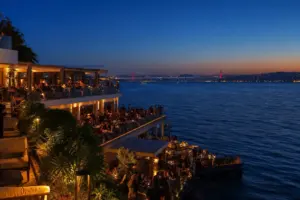 Oligark Istanbul – about 1.3 km away (~21 min walk)Open daily 10:00–04:00
Main image: AI-generated illustration. It may not show the place exactly as it looks.
Train stations and river piers near Ortaköy
 Beşiktaş Ferry Terminalabout 1.9 km away (~31 min walk)
Main image: AI-generated illustration. It may not show the place exactly as it looks.
Related guides
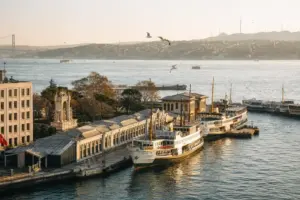 Beşiktaş: Ottoman Palaces, Waterfront Neighborhoods, and Istanbul’s Bosphorus Heart
Main image: AI-generated illustration. It may not show the place exactly as it looks.
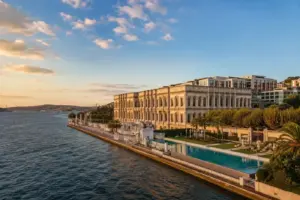 Çırağan Palace Kempinski Istanbul: History, Hotels and Bosphorus Views
Main image: AI-generated illustration. It may not show the place exactly as it looks.
 Romantic Hotels in Istanbul: Bosphorus Views and Terraces
Main image: AI-generated illustration. It may not show the place exactly as it looks.
 Sunset Grill & Bar: Dinner Above the Bosphorus
Main image: AI-generated illustration. It may not show the place exactly as it looks.
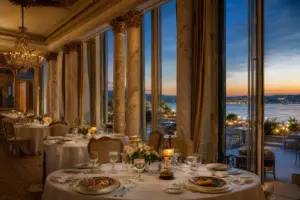 Tuğra: Ottoman Palace Dining on the Bosphorus
Main image: AI-generated illustration. It may not show the place exactly as it looks.
Browse more: More in Beşiktaş · All Landmarks · All Neighborhoods
FAQ: Ortaköy
How long does it take to visit Ortaköy?
Ortaköy works as a 2 to 4 hour Bosphorus stop, ideally combined with Beşiktaş, Çırağan Palace, Yıldız Park or another waterfront neighborhood. Most visitors spend 20 minutes photographing the mosque, then stay longer for food and cafés.
Is Ortaköy free to visit?
Yes. The neighborhood, waterfront square, and shops are free. The mosque is free to enter outside prayer times, though modest dress is required. The Ottoman hamam requires separate payment.
Can I visit the mosque?
Yes, outside prayer times. Remove shoes, cover legs and shoulders modestly, and avoid praying times if possible. Check with locals or ask café owners for current prayer schedule.
What is kumpir?
Kumpir is the generously filled baked potato sold from food stands near the square. It is loaded with butter, cheese, vegetables and optional meat. A filling, affordable meal sold by multiple vendors in the waterfront area.
Is there a metro station at Ortaköy?
There is no metro or tram stop in the neighborhood. The nearest metro is Kabataş, a 10-minute walk away. Buses serve the area; ferries dock at a small pier.
When is the best time to visit?
Early morning for fewer crowds and clear light. After sunset for illuminated mosque and bridge views and evening crowds. Avoid midday (noon–3 p.m.) and peak weekend times if crowds matter to you.
Can I take photos?
Yes, freely. No restrictions on personal photography in the square or from the waterfront. The mosque interior also allows photography. Commercial shoots may need permits.
What other things are in Ortaköy?
The Ottoman hamam (1556, Mimar Sinan), Aya Fokas Church (Byzantine origins), Etz-Ahayim Synagogue, waterfront cafés, and shops. The neighborhood reflects multicultural heritage with Muslim, Christian, and Jewish heritage sites.
Istanbul Vibes is a one-person project. A coffee keeps it going

Take this guide with you
Get a free PDF of this guide to print or read offline: key facts, tips and a map link on a few clean pages.
Report an issue on this page
How we research and update our guides
About this guide: AI assistance and accuracy
This guide is created with the help of AI and is based on official sources where available. Mistakes can still happen. Opening hours, prices, rules and other details are given to the best of our knowledge as of the date shown and can change without notice. It offers general recommendations only, not professional, legal or travel advice. Please confirm important details with the official source before you travel; you are responsible for your own plans and decisions.
* Affiliate link: as an Amazon Associate we earn from qualifying purchases at no extra cost to you.
