
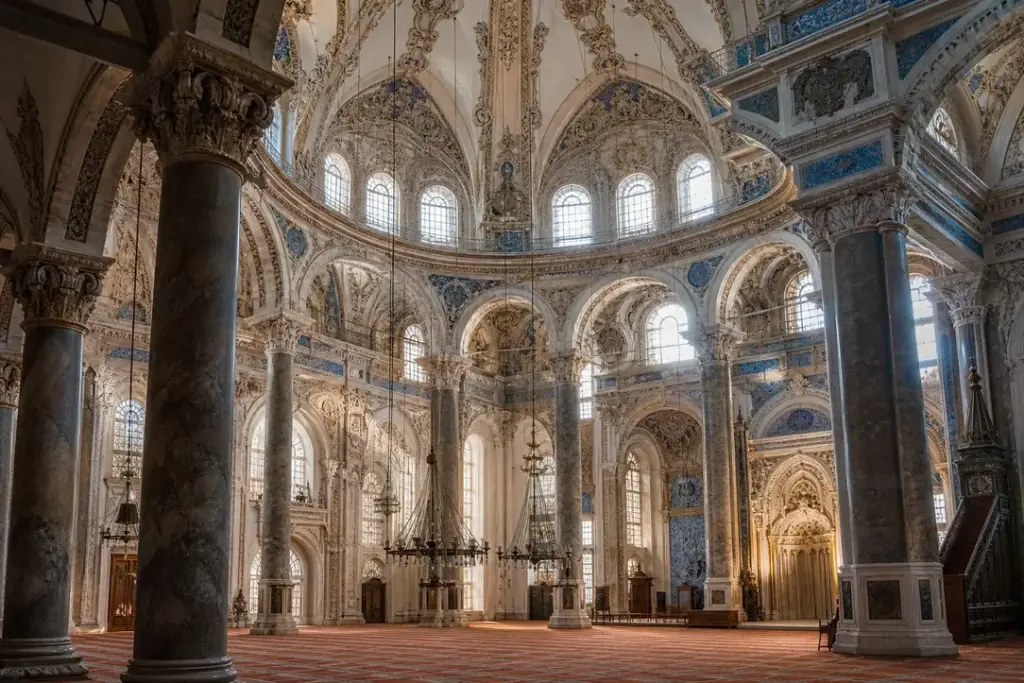
The Nuruosmaniye Mosque is an 18th century Ottoman mosque located near the entrance of the Grand Bazaar in Istanbul. Construction began in 1749 during the rule of Sultan Mahmud I and was completed by his brother and successor Sultan Osman III in 1755. The name Nuruosmaniye, meaning the Light of Osman, refers to a verse from the Koran inscribed inside the dome of the mosque.
The mosque was the first monumental Ottoman building to exemplify the new Ottoman baroque style, which introduced baroque and neoclassical elements from Europe. This was the first non-Muslim architect to be placed in charge of a major imperial Ottoman construction. The mosque forms the center of a large külliye complex that includes a madrasa, soup kitchen, library, tomb and rows of shops.
Quick Facts
| Built / opened | 1755 |
|---|---|
| Architect(s) | Mustafa Ağa and Simeon Kalfa |
| Address | Molla Fenari Mah., Vezirhan Cd. No:4, 34120 Fatih/İstanbul, Türkiye Google MapsApple MapsYandex Maps |
| District | Fatih |
| Metro | Çemberlitaş (T1, toward Vezirhan Caddesi; 2 min walk) |
| Admission | Free |
| Best time to visit | The best time to visit is in the morning or late afternoon, when sunlight beautifully filters through the mosque's windows. Weekdays are quieter, offering a peaceful experience before or after visiting the Grand Bazaar. Early morning (9:00 AM – 10:30 AM) is ideal for a quiet visit with fewer tourists.Avoid Friday noon when the mosque is crowded during Friday prayers. Access is temporarily restricted during prayer times, and Friday visits generally begin after 14:30 following the main noon prayer. Summer mornings and autumn afternoons offer the best light through the windows. Spring and autumn provide comfortable temperatures for exploring the surrounding neighborhood. |
What Is (and Isn't) Part of a Visit to Nuruosmaniye Mosque?
| Part | Status | Notes |
|---|---|---|
| Main mosque prayer hall and interior | Included in the standard ticket | Accessible during non-prayer hours; visitors must remove shoes and dress respectfully. |
| Courtyard (exterior) | Included in the standard ticket | The horseshoe-shaped courtyard can be visited at any time as it is open to the public plaza. |
| Ablution facilities | Included in the standard ticket | Located on the outer walls of the mosque and available for ritual washing before prayer. |
| Madrasa and educational buildings | Separate ticket or institution | Part of the complex but operate separately; access depends on current use and may not be open to casual visitors. |
| Tomb (Türbe) | Separate ticket or institution | Located within the complex but entry may be restricted; inquire at the mosque entrance. |
| Library (Kütüphane) | Separate ticket or institution | Houses manuscript collections but is not typically open for general tourism; scholars may request access. |
| Guided tours | Not open to visitors | No organized tours are offered; the mosque is an active place of worship, not a ticketed museum. |
| Grand Bazaar | Outside / not part of it | The Grand Bazaar (Kapalı Çarşı) adjoins the mosque but is a separate site with its own entrance and ticketing. |
| Column of Constantine (Çemberlitaş) | Outside / not part of it | Located nearby in the public plaza but is a separate Byzantine monument outside the mosque complex. |
Why Visit Nuruosmaniye Mosque?
The mosque was the first Ottoman religious building to exhibit European Baroque and Neoclassical details like scrolls, shells, cable and round moldings, undulating and heavily molded cornices, concave and convex facades, round arches, engaged pillars, and fluted capitals. The name means the light of Osman after Osman III and the 174 windows that allow sunlight into the prayer hall. The abundant natural light creates an atmospheric interior unlike other Ottoman mosques.
Its oval-shaped courtyard, fluid architectural lines and elaborate decoration mark the building as one of the structures that signaled a turning point in Ottoman architectural history. The mosque is located close to the Çemberlitaş tram station and near the eastern entrance to the Grand Bazaar and Column of Constantine.
How Nuruosmaniye Mosque Is Laid Out
The mosque was built on a slope and the courtyard is in an innovative horseshoe shape which was not seen in traditional Turkish mosques. The courtyard does not contain a fountain inside and ablution areas are on the outer wall of the building, implying that the courtyard had a more decorative purpose than practical.
The complex includes a madrasa (religious school), soup kitchen, library, tomb and rows of shops arranged around the main mosque building. The main prayer hall features a large central dome supported by columns, with an ornate mihrab (prayer niche) on the interior wall facing Mecca. Two minarets flank the mosque structure.
Highlights of Nuruosmaniye Mosque
The Grand Dome and Window Placement
The dome of the mosque is one of the largest in Istanbul. The mosque was the first in Istanbul to introduce abundantly fenestrated facades. 174 windows fill the interior with natural light, living up to its name, "The Light of Osman." The abundance of tall windows arranged around the dome creates dramatic patterns of light and shadow that shift throughout the day, making the interior feel airy despite the scale.
Tip: Visit in early morning or late afternoon when sunlight streams through the windows at a low angle, creating the most striking interior lighting and ideal photography conditions.
Ottoman Baroque Architecture
The "Ottoman Baroque" is characterized by the use of S and C curves in plans and architectural elements and by rococo ornamentation with leaf forms, scallops and volutes. The architects adopted western Baroque architectural elements such as exaggerated ornamentation, a large dome, focus on light, lots of windows, a niched mihrab similar to a church apse, and polygonal courtyard. The interior surfaces display elaborate carved and painted decoration that marks a clear departure from the geometric austerity of classical Ottoman design.
Tip: Look closely at the painted wall panels and the carved stone work around the windows to see the rococo ornamentation up close—these details are easily missed if you move quickly through the space.
The Ornate Mihrab
The niched mihrab resembles a church apse, one of the European Baroque details introduced here. The mihrab, the wall niche indicating the direction of Mecca, is surrounded by elaborate carved stonework and tilework. This architectural feature, more typical of European religious architecture, was revolutionary in an Ottoman imperial mosque and reflects the new aesthetic direction under Mahmud I.
Tip: The mihrab lies on the interior far wall; you will need to remove your shoes and step inside the prayer hall to view it properly. Approach respectfully during non-prayer times.
The Horseshoe-Shaped Courtyard
The courtyard is in an innovative horseshoe shape which was not seen in traditional Turkish mosques. Unlike the rectangular courtyards of classical Ottoman mosques, this curved courtyard entrance creates a distinctive visual effect and reflects the flowing lines characteristic of Baroque architecture. The courtyard provides an open approach before entering the prayer hall.
Tip: Stand in the courtyard and look back toward the entrance gate to see how the curved walls frame the view, then look forward to see how the courtyard sweeps toward the mosque entrance—this composition is intentional and part of the Baroque design.
Two-Story Interior with Galleries
The interior features colonnaded mezzanine galleries and windows topped with Roman arches arranged beneath the great dome. These galleries, supported on columns and accessible by stairs, allowed additional worshippers to view the prayer hall. The stone columns and arches reflect both Ottoman tradition and European classical forms.
Tip: If permitted during your visit, the upper gallery level offers a different perspective of the dome and interior decoration. Ask respectfully if you may access the galleries.
The Madrasa and Complex Buildings
The complex consists of the mosque itself, a madrasa (religious high school), imaret (soup kitchen), tomb, public fountain, and library with very rich book and manuscript collection. These structures, built around the mosque, served educational, charitable and administrative functions for the neighborhood. The madrasa was one of the last imperial educational complexes built in this style in Istanbul.
Tip: The complex buildings are integrated into the surrounding area and may not always be clearly marked. Ask at the mosque entrance about access to other parts of the complex if you wish to explore beyond the prayer hall.
White Marble Construction
Built entirely of exquisite white marble, the mosque sits atop the Second hill and is a distinct feature of the Istanbul skyline as it can be seen from a long way away. The white stone exterior glows in strong sunlight and contrasts sharply with the darker, more heavily decorated surroundings. The marble cladding required careful quarrying and transport during the 18th century.
Tip: View the exterior from the Column of Constantine nearby to see how the white marble dome and exterior stand out against the urban landscape—this is one of the best vantage points for seeing the full structure from a distance.
Calligraphy Bands and Interior Decoration
A broad band of calligraphy runs around the interior. The Ottoman Baroque style is quite evident in the interior decoration. Painted and carved panels fill the surfaces between windows and columns, featuring floral motifs, geometric patterns and Islamic calligraphy. The color and detail of this ornamentation would have been more vibrant when first completed.
Tip: Bring binoculars or use a camera's zoom to read the calligraphic inscriptions on the upper walls; the script style and proportions are part of the architectural composition.
Atmosphere
The interior is quiet and contemplative despite the mosque’s prominence and the busy bazaar immediately outside. Sunlight floods through its tall windows, illuminating its grand dome. The sense of expansiveness comes from the high dome supported on slender columns and the abundance of light, quite different from the more enclosed, shadowed interiors of older Ottoman mosques.
The space is actively used for prayer, so visitors encounter worshippers throughout the day, particularly during the five daily prayer times. During non-prayer hours, the atmosphere is peaceful and suitable for quiet contemplation and architectural study. The ornate baroque decoration, carpet-covered floor and smell of perfumed oils create a sensory experience distinct from secular architectural sites.
The mosque closes temporarily to non-worshippers before and during the five daily prayers. Morning and late afternoon hours tend to have fewer visitors while still offering strong natural lighting through the windows.
History of Nuruosmaniye Mosque
The foundation of the mosque was laid by Sultan Mahmud I and construction began in 1749. However, the sultan died in 1754 before the project was completed. The building was finished during the reign of his brother, Sultan Osman III, and opened for worship in 1755.
The mosque was built on the site of the Fatma Hatun Mosque, which was dedicated to the wife of Ottoman scholar Hoca Sadettin Efendi. The older mosque started to collapse, prompting Sultan Mahmud I to commission a new one. Historical records mention that there was previously a small mosque on the grounds. The area was purchased and existing buildings knocked down for the new complex.
Although there is some dispute about the identity of architect, it is agreed that the architect was Simeon Kalfa who was of Greek origin. This was the first non-Muslim architect to be placed in charge of a major imperial Ottoman construction. Simeon’s chief assistant was a Christian man named Kozma and the majority of the stonemasons under him were Christians as well. Both Simeon and Kozma were given robes of honour by the grand vizier at the mosque’s opening ceremony.
After the construction of the Sultan Ahmed Mosque, the Nuruosmaniye mosque was the first imperial mosque to be built in 100 years. It marked the first time since the early 17th century that an Ottoman sultan had built his own imperial mosque in Istanbul. This act rekindled a tradition of imperial mosque building, showcasing the empire’s wealth and architectural prowess.
The construction of the Nuruosmaniye Complex began in 1749 during the rule of Sultan Mahmud I and was completed by his brother and successor Sultan Osman III in 1755. Founded by Mahmud I in 1749 and completed by his successor Osman III in 1755, the Nurosmaniye Complex is the finest example of Ottoman Baroque and displays a unique synthesis between classical Ottoman and contemporary western styles. The mosque represents one of the earliest architectural syntheses of the classical Ottoman mosque tradition with the Baroque architectural and decorative style that emerged in Europe.
In 2010, restoration work on the mosque commenced. The mosque was re-opened for worship in 2012.
Legends and Myths about Nuruosmaniye Mosque
The European Architect's Inspection Tour
Disputed by historians. Local legend claims that Simeon Kalfa or another Ottoman architect traveled to Europe to study European cathedrals before designing the Nuruosmaniye Mosque, bringing back ideas for the baroque style. Although it is claimed that an architect sent to Europe examined the cathedrals, this has not been proven true. The baroque features may have come through cultural contact with European merchants and diplomats in Istanbul rather than direct travel.
Tickets and Booking for Nuruosmaniye Mosque
There is no entrance fee for visiting the Nuruosmaniye Mosque in 2026. As with many historic mosques in Istanbul, donation boxes near the exit help support the maintenance of the building. The mosque remains an active place of worship rather than a ticketed museum. Visitors are normally welcome outside prayer times, provided that they respect the religious character of the building.
Respectful dress is required if you visit. There are no advance bookings or reservations needed. Simply arrive during the stated visiting hours and enter from the designated visitor entrance. Prayer times temporarily close the mosque to non-worshippers; Friday sightseeing visits are best planned after the main congregational prayer.
Suggested itineraries Nuruosmaniye Mosque
1 hour
Enter from the main entrance and spend 10–15 minutes in the courtyard observing the curved architecture and exterior marble work. Remove your shoes and step inside the prayer hall for 30–40 minutes to study the dome, windows, mihrab and interior decoration. Note the light patterns and baroque ornamental details on the walls and arches.
1.5–2 hours
Begin with the courtyard and exterior examination (15 min), then enter the prayer hall (45 min). If access is available, visit the upper gallery level for a different perspective of the dome (20 min). Spend remaining time photographing details of the decorative elements, calligraphy, and window arrangements from various angles inside.
Half day (3–4 hours)
Spend 1.5–2 hours at the mosque as described above. Then explore the adjacent Grand Bazaar entrance and the Column of Constantine nearby (1–2 hours). Return to the mosque if desired to revisit specific architectural details or experience different light conditions.
How to Get to Nuruosmaniye Mosque
By Metro (Tram): The Nuruosmaniye Mosque is located close to the Çemberlitaş tram station. Take the T1 line and exit at Çemberlitaş. From the tram stop, walk uphill toward Vezirhan Caddesi (the street runs upward from the main avenue); the mosque entrance is about a 2–3 minute walk. Look for the white marble dome visible from the street.
From the Grand Bazaar: If entering from the Grand Bazaar’s eastern entrance (Nuruosmaniye Gate), exit the bazaar and turn left; the mosque courtyard and entrance are immediately adjacent, less than 1 minute walk.
Walking from Sultanahmet: From the Blue Mosque or Hagia Sophia, walk north through the historic quarter for about 10–15 minutes. The area is hilly with narrow cobbled streets; use a map or ask locals for “Nuruosmaniye Camii” or directions to the Grand Bazaar.
Nearby Landmarks: The Column of Constantine (Çemberlitaş) stands in a small plaza directly across from the mosque’s exterior plaza, making it a useful reference point.
Accessibility
As of October 2026: The mosque is built on sloped terrain with steps leading up to the courtyard entrance, making wheelchair access challenging. Visitors are normally welcome outside prayer times, provided that they respect the religious character of the building. There are no elevators within the prayer hall or to the upper gallery levels. Visitors with mobility issues may find steps and uneven flooring difficult. Restrooms are not typically available for visitors; use facilities at the nearby Grand Bazaar if needed. For specific accessibility questions, call the mosque during daytime hours.
Food Nearby
Located in Çemberlitaş very close to Sultanahmet, there are a number of sights to visit close to the Nuruosmaniye Mosque including Column of Constantine, Grand Bazaar, Blue Mosque, Underground Cistern, and Hagia Sophia. Food options are abundant in the historic quarter. Within the Grand Bazaar, numerous small restaurants and food stalls serve Turkish dishes, kebabs, and pastries. The surrounding streets have casual eateries, tea gardens and dessert shops. Avoid eating inside the mosque complex; consume food in the courtyard, plaza or nearby venues outside prayer times.
What to Bring
Wear comfortable walking shoes with good grip, as the approach involves cobbled streets and steps. Bring a head scarf or shawl to cover your head if entering the prayer hall; this is required for all visitors regardless of religion or gender. Modest clothing is necessary (knees and shoulders covered). A small donation (coins are appropriate) is welcome at the collection boxes. Bring a camera or phone for photography, but no tripods or professional filming equipment without prior permission. Water bottle and sunscreen are useful for exploring the surrounding historic district. The site is outdoors and exposed; bring an umbrella or hat for sun or rain protection depending on the season.
Best Views and Photo Spots of Nuruosmaniye Mosque
Interior dome from the prayer hall floor
Standing directly beneath the main dome looking upward captures the sweeping curves, the ring of windows, and the interplay of light and shadow on the painted interior surfaces. The columns framing the dome create vertical lines that emphasize height.
Best time: Early morning (9:00–11:00 AM) or late afternoon (3:00–5:00 PM) when sunlight from the side windows creates dramatic contrast on the dome's interior surfaces.
From the upper gallery looking toward the mihrab
If accessible, this vantage point shows the full expanse of the prayer hall with the ornate mihrab framed by columns and arches in the distance. The perspective emphasizes the baroque curvature of architectural elements.
Best time: Mid-morning when direct sunlight illuminates the far end of the hall without creating harsh backlighting on the mihrab decoration.
Courtyard interior with mosque entrance
Facing inward toward the mosque entrance from within the horseshoe courtyard shows the curved walls, the white marble surface, and the entrance portal framed by the courtyard's distinctive shape.
Best time: Mid-morning to noon when sunlight illuminates the marble facade without creating deep shadows in the courtyard.
Column of Constantine plaza, looking toward the mosque exterior
This vantage point shows the full exterior of the white marble mosque rising from the slope, with the dome and minarets clearly visible above surrounding buildings. The mosque stands out sharply against the urban context.
Best time: Late afternoon when the white marble glows in the slanting sunlight and longer shadows define the structure's form against the darker cityscape.
Interior window and wall detail close-up
Move close to the painted panels, carved surrounds of windows, and calligraphic bands to photograph the intricate baroque ornamentation and decorative elements in detail. The patterns and colors show the craftsmanship of the 18th-century decoration.
Best time: Early morning when soft light rakes across the textured surfaces, or any time when direct sunlight illuminates individual windows and their stone surrounds.
Entrance portal and gate from the plaza
The ornate entrance gate and portal arch frame a view into the courtyard beyond, with the mosque entrance visible in the distance. The composition creates visual depth with layered architectural elements.
Best time: Early morning or late afternoon when light skims across the facade and gates, emphasizing texture and architectural detail in the stonework.
Photography Rules
Photography is generally permitted inside the prayer hall and courtyard for personal use. Flash is discouraged indoors to respect worshippers and preserve the delicate painted surfaces. Drones are not permitted. Tripods, monopods and professional filming equipment require prior permission from the mosque administration; do not assume these are allowed. Respect worshippers during prayer times by not photographing them. The best light for photography occurs in early morning and late afternoon when sunlight streams through the windows at a low angle.
Family Suitability
The mosque is suitable for families with children old enough to sit quietly during visits (school-age and older). The interior is safe and accessible to walk through, though the courtyard involves steps and the slopes around the site are steep. Young children may find the scale impressive but may become restless during a long visit. Visitors must respect the religious character of the building. Children should be reminded to walk quietly and not run or play. Strollers cannot be used inside the prayer hall (shoes are removed) but may be parked in the courtyard. The site has no dedicated children's facilities, restrooms or changing areas; use facilities in the nearby Grand Bazaar if needed. The historic quarter surrounding the mosque is interesting for a family walk, but the terrain is uneven and crowded during peak hours.
Istanbul Vibes Tips
- Arrive before 9:00 AM on a weekday for the quietest experience. Fewer tourists and worshippers means more space to move around and photograph interior details without crowds in your frame.
- Friday after 14:30 (2:30 PM) is a good time if you want to avoid the crowded midday prayer period—by then the main congregation has dispersed and the mosque reopens to visitors with reasonable numbers.
- The baroque window details and painted panels are small and easy to overlook if you move quickly. Bring binoculars or zoom in with a camera to see the calligraphy, tile work and carved ornamentation clearly.
- Do not assume you can visit all parts of the complex (madrasa, tomb, library). Stick to the main prayer hall and courtyard unless you specifically inquire at the entrance about accessing other sections.
- The Grand Bazaar entrance beside the mosque is useful if you want to combine a quick bazaar visit with mosque viewing. However, save the bazaar for after the mosque when your eyes have adjusted to the transition from the bright interior light to the bazaar's covered hallways.
- The steep approaches and cobbled streets make the site challenging in rain or icy conditions. Visit on clear days if possible, and wear shoes with good grip. Use handrails on steps if provided.
Explore Nearby Nuruosmaniye Mosque
Sights near Nuruosmaniye Mosque
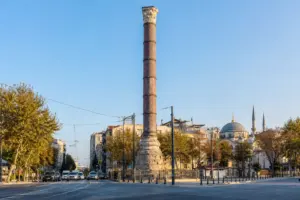 Column of Constantine – about 200 m away (~3 min walk) · typical visit: 15–20 minutes1 min on foot from Çemberlitaş metro, Open 24 hours
Main image: AI-generated illustration. It may not show the place exactly as it looks.
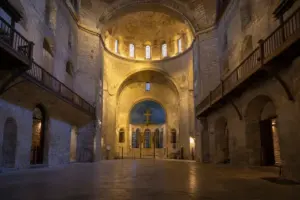 Hagia Irene – about 900 m away (~14 min walk) · typical visit: 45 minutes to 1 hour10 min on foot from Gülhane metro, Open 09:00–18:00, closed Tue
Main image: AI-generated illustration. It may not show the place exactly as it looks.
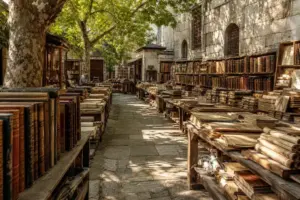 Book Bazaar – about 200 m away (~3 min walk) · typical visit: 1–2 hours4 min on foot from Beyazıt-Kapalıçarşı metro
Main image: AI-generated illustration. It may not show the place exactly as it looks.
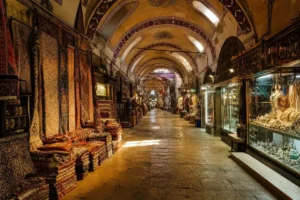 Grand Bazaar – about 200 m away (~4 min walk) · typical visit: 2–4 hours4 min on foot from Beyazıt-Kapalıçarşı metro, Open 08:30–19:00, closed Sun
Main image: AI-generated illustration. It may not show the place exactly as it looks.
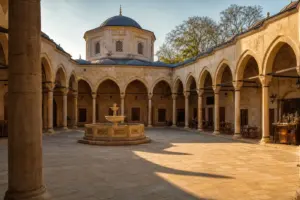 Çorlulu Ali Pasha Madrasa – about 250 m away (~4 min walk) · typical visit: 30–45 minutes2 min on foot from Beyazıt-Kapalıçarşı metro, Open daily 08:00–23:00
Main image: AI-generated illustration. It may not show the place exactly as it looks.
 Şerefiye Cistern – about 350 m away (~6 min walk) · typical visit: 30–45 minutes3 min on foot from Çemberlitaş metro, Open daily 10:00–18:00
Main image: AI-generated illustration. It may not show the place exactly as it looks.
Metro stations near Nuruosmaniye Mosque
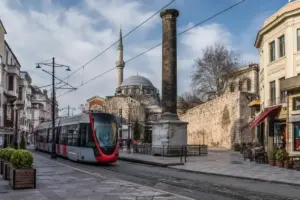 Çemberlitaşabout 200 m away (~3 min walk)
Main image: AI-generated illustration. It may not show the place exactly as it looks.
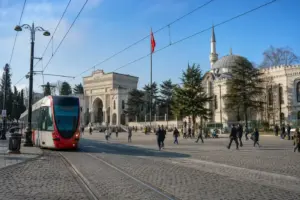 Beyazıt-Kapalıçarşı – about 350 m away (~6 min walk)Open daily 06:00–00:00
Main image: AI-generated illustration. It may not show the place exactly as it looks.
 Laleli-Üniversiteabout 900 m away (~15 min walk)
Main image: AI-generated illustration. It may not show the place exactly as it looks.
Restaurants and cafes near Nuruosmaniye Mosque
 Dönerci Şahin Usta – about 50 m away (~1 min walk)4 min on foot from Çemberlitaş metro
Main image: AI-generated illustration. It may not show the place exactly as it looks.
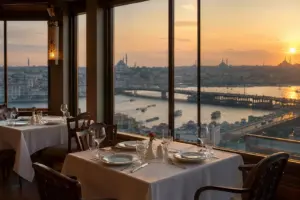 Hamdi Restaurant – about 600 m away (~9 min walk)12 min on foot from Çemberlitaş metro, Open daily 12:00–00:00
Main image: AI-generated illustration. It may not show the place exactly as it looks.
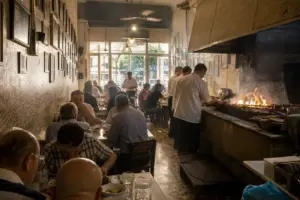 Tarihi Sultanahmet Koftecisi – about 600 m away (~10 min walk)7 min on foot from Gülhane metro, Open daily 11:00–23:00
Main image: AI-generated illustration. It may not show the place exactly as it looks.
 Hafız Mustafa 1864 – about 650 m away (~11 min walk)12 min on foot from Çemberlitaş metro, Open daily 12:00–23:59
Main image: AI-generated illustration. It may not show the place exactly as it looks.
Nightlife near Nuruosmaniye Mosque
 Roxy – about 700 m away (~11 min walk)7 min on foot from Gülhane metro
Main image: AI-generated illustration. It may not show the place exactly as it looks.
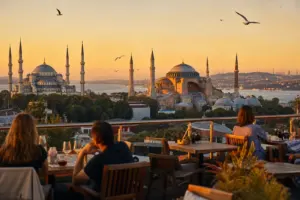 Seven Hills – about 850 m away (~14 min walk)4 min on foot from Gülhane metro, Open daily 08:00–23:00
Main image: AI-generated illustration. It may not show the place exactly as it looks.
Train stations and river piers near Nuruosmaniye Mosque
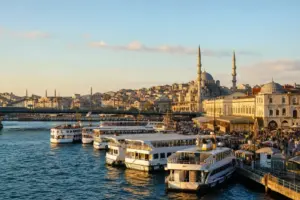 Eminönü Ferry Terminalabout 800 m away (~13 min walk)
Main image: AI-generated illustration. It may not show the place exactly as it looks.
 Karaköy Ferry Terminalabout 1.4 km away (~22 min walk)
Main image: AI-generated illustration. It may not show the place exactly as it looks.
Events and traditions near Nuruosmaniye Mosque
 Istanbul Marathonabout 700 m away (~12 min walk)
Main image: AI-generated illustration. It may not show the place exactly as it looks.
Related guides
 Cihangir and Çükurcuma Walk: Antiques, Cafés, and Hidden Streets
Main image: AI-generated illustration. It may not show the place exactly as it looks.
 How to Navigate Grand Bazaar: Layout, Gates and First-Time Tips
Main image: AI-generated illustration. It may not show the place exactly as it looks.
 Spice Bazaar and Grand Bazaar Route: Two Markets, Six Centuries
Main image: AI-generated illustration. It may not show the place exactly as it looks.
 Istanbul Markets and Bazaars: A Three-Day Shopping and Exploration Itinerary
Main image: AI-generated illustration. It may not show the place exactly as it looks.
 Best Underground Cisterns in Istanbul: Three Sites Compared
Main image: AI-generated illustration. It may not show the place exactly as it looks.
Browse more: More in Fatih · All Architecture · All Sightseeing
FAQ: Nuruosmaniye Mosque
Is entry to the Nuruosmaniye Mosque free?
There is no entrance fee for visiting the Nuruosmaniye Mosque, though small donations are welcomed to support maintenance. No advance tickets are required; simply arrive during visiting hours.
What are the visiting hours and when is it closed?
Visitors can usually enter the Nuruosmaniye Mosque between 08:30 and 18:30 throughout 2026. However, access is temporarily restricted during prayer times, and Friday visits generally begin after 14:30 following the main noon prayer.
What should I wear when visiting?
Respectful dress is required if you visit. This means covering your knees and shoulders. A head scarf is recommended for women entering the prayer hall. Avoid tight or revealing clothing out of respect for the mosque's religious function.
Is the Nuruosmaniye Mosque part of the Grand Bazaar?
No. The mosque is a separate site located adjacent to the Grand Bazaar's eastern entrance. While they share a boundary, they are distinct institutions with separate access. The bazaar has its own entrance and operating hours. See the scope section for clarification on what is included in each visit.
Can I bring a camera or take photos?
Photography for personal use is generally permitted inside the prayer hall and courtyard. Flash is discouraged indoors. Tripods and professional filming equipment require permission from the mosque administration; do not assume these are allowed without asking first.
How long does it take to visit?
Time required to visit Nuruosmaniye Mosque: 01:00 Hrs (approximately 1 hour) for a thorough look at the main prayer hall and courtyard. Plan 1.5–2 hours if you want to study the baroque details carefully or if you access the upper galleries.
Can I visit the madrasa, library or tomb as part of my visit?
The madrasa, library and tomb are separate buildings within the complex. Access to these is typically not granted to casual visitors; they may be closed or restricted to scholars or special permission holders. Ask at the mosque entrance if you wish to inquire about access to specific buildings.
Is the mosque suitable for visitors with limited mobility?
The site is built on sloped terrain with steps to the courtyard entrance, making wheelchair access difficult. There are no elevators, and the prayer hall interior is not wheelchair accessible. Visitors with mobility challenges should be aware of these physical limitations before visiting.
Istanbul Vibes is a one-person project. A coffee keeps it going
Hotels near Nuruosmaniye Mosque
- Vault karakoy (100 m) Check prices (affiliate link, opens in a new tab)
- Sipahi Otel (200 m) Check prices (affiliate link, opens in a new tab)
- Sipahi Hotel (200 m) Check prices (affiliate link, opens in a new tab)
- Fer Hotel (200 m) Check prices (affiliate link, opens in a new tab)
Affiliate link (opens the booking site): we may earn a commission at no extra cost to you.
Restaurants near Nuruosmaniye Mosque
- Sütiş Special (50 m) Google Maps
- Çarşıkapı Muhallebicisi 1984 (50 m) Google Maps
- Vejetaryen Mutfak (50 m) Google Maps
- Historical Subasi Restaurant (50 m) Google Maps
Distances are straight-line, from OpenStreetMap data.

Take this guide with you
Get a free PDF of this guide to print or read offline: key facts, tips and a map link on a few clean pages.
Report an issue on this page
How we research and update our guides
About this guide: AI assistance and accuracy
This guide is created with the help of AI and is based on official sources where available. Mistakes can still happen. Opening hours, prices, rules and other details are given to the best of our knowledge as of the date shown and can change without notice. It offers general recommendations only, not professional, legal or travel advice. Please confirm important details with the official source before you travel; you are responsible for your own plans and decisions.
* Affiliate link: as an Amazon Associate we earn from qualifying purchases at no extra cost to you.
