
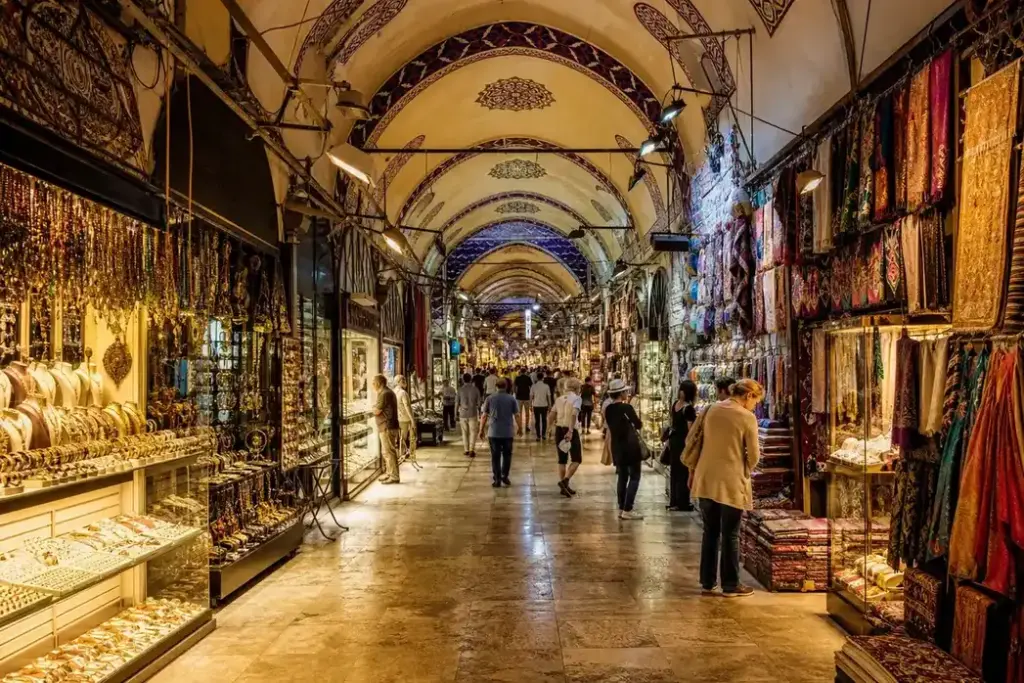
This guide is for first-time visitors and solo travelers who want to explore the Grand Bazaar without getting lost or wasting hours wandering. How to navigate Grand Bazaar Istanbul is simple once you know the core principle: the market is built around two main streets and 22 numbered gates. You will achieve a clear mental map and confidence to find shop types, specific sections, and your exit. The recommended approach is to use the main spine (Kalpakçılar Caddesi) as your reference point, note your entry gate number, and explore from there.
The Grand Bazaar (Kapalı Çarşı, meaning ‘Covered Market’) is one of the world’s largest and oldest covered markets, built starting in 1455 by Sultan Mehmed II. Shops are grouped by type—jewelry, carpets, textiles, leather, antiques, spices and more—making navigation logical once you understand the layout. Even without buying anything, a 1–2 hour walk through its vaulted stone streets is a cultural experience worth taking.
Quick answer: Arrive Monday to Saturday between 8:30 am and 7:00 pm (note your gate number at entry). Use the main street Kalpakçılar Caddesi (running east–west, lined with gold shops) as your reference. Branch into side streets toward carpet or antique sections, or descend downhill to find your exit. Entry is free. Allow 1–2 hours for an unhurried walk; longer if shopping.
At a Glance
| Total time | 1–2 hours for a first visit; 3–4 hours or longer if shopping |
|---|---|
| Typical cost | Free to enter; shopping budget is entirely your choice |
What You Need Before You Start
- Comfortable, flat walking shoes (expect multiple hours on stone floors)
- A light bag or small backpack (luggage handling is your responsibility)
- Cash or credit card (for shopping; not required for entry)
- Optionally, a screenshot or photo of a bazaar map from an information kiosk (maps are free inside)
- Mobile phone with offline map downloaded or a note of your entry gate number
Compare Your Options
| Option | Duration | Price | Notes |
|---|---|---|---|
| Self-guided walk with printed map | 1–2 hours (introduction); 3–4 hours (browsing) | Free | Most flexible. Grab a free map from a shop or kiosk inside. Requires confidence navigating by landmarks. Best for budget travelers and solo visitors who enjoy discovery. |
| Guided tour (group or private) | 2–3 hours | ₺₺–₺₺₺ | Eliminates navigation worry and provides historical and cultural context. Guides explain merchant traditions, haggling etiquette, and genuine souvenirs versus mass-market items. Bookable through hotels or online platforms. Good for history buffs and first-time visitors who value insight. |
| Audio guide or mobile app | 1–3 hours (self-paced) | ₺–₺₺ | Modern alternative offering flexibility with information. Apps and audio guides available through hotels or travel websites. Less personal than a guide but cheaper and self-directed. Useful if you want context without being tied to a group. |
| Combination: Grand Bazaar + Spice Bazaar walk | 2–3 hours total | Free | Link the two markets via the Örücüler Gate (10 minutes' walk through connecting streets). Spice Bazaar is smaller, more compact, and open daily including Sundays. Good for a half-day cultural immersion and sampling Turkish flavors. Pair with tea at a café inside either bazaar. |
₺ budget · ₺₺ moderate · ₺₺₺ upscale · ₺₺₺₺ splurge. Price levels are estimates compared with typical prices for visitors.
Step-by-Step Instructions
Step 1: Choose your entry gate and note its number
The Grand Bazaar has 22 numbered gates. Each gate number is marked above the archway. Choose one of the main gates: Nuruosmaniye Gate (near the Nuruosmaniye Mosque, marked Gate 1 in some sources; leads directly into the jewelry section), Beyazıt Gate (across from the Beyazıt tram station, marked Gate 7; popular for public transport access), or Çarşıkapı Gate (near the Column of Constantine). Write down or photograph your gate number—this is your most reliable way back out.
Tip: The Nuruosmaniye Gate is recommended for first-time visitors because the main jewelry street (Kalpakçılar Caddesi) runs straight ahead from it, giving you an immediate reference axis.
Step 2: Walk to the main street and orient yourself
Once inside, locate Kalpakçılar Caddesi, the primary east–west street lined with gold and jewelry shops. This street runs between the Nuruosmaniye Gate and the Beyazıt Gate. Stand on it, face the direction you want to explore, and remember this is your compass. If you ever feel lost, walk downhill (the bazaar is built on a slope) or ask a shopkeeper which direction leads to a gate.
Tip: The İç Bedesten (Inner Bedesten), a central stone hall with antique and luxury goods, sits roughly at the market's center. Knowing its location helps orient you.
Step 3: Identify the main cross-street for navigation
Halıcılar Caddesi (the carpet street) crosses Kalpakçılar Caddesi roughly at the center. If you branch left (north) from the main street, you enter sections with textiles, leather goods, and spices. If you turn right (south), you move toward antiques and the inner hall. Learning these two perpendicular streets gives you a grid to work from.
Tip: Color-coded maps available free inside shops use colors to mark zones: yellow for gold, grey for silver, red for carpets, blue for textiles. Grab one from any shop.
Step 4: Browse by section or type
Shops naturally cluster by product. Spend 10–20 minutes walking a section that interests you (jewelry, carpets, leather, antiques, spices, ceramics). Do not expect shop numbers or street signs everywhere; the layout is organic. If a street seems to lead nowhere, it is a dead end selling one type of goods. Turn back and try another turning. The bazaar rarely lets you trap yourself—all streets eventually connect back to a main passage.
Tip: Early morning (9–10 am on weekdays) is quietest and shopkeepers are freshest. Avoid the 1–4 pm window in summer when it is hot and crowded.
Step 5: Locate the Spice Bazaar connection if needed
The Örücüler Gate (Gate 10) on the bazaar's northeast side connects to the Spice Bazaar (Mısır Çarşısı), a smaller covered market selling herbs, spices, dried fruit, and tea. Walk through this gate if you want to visit both markets in one trip. The Spice Bazaar is open daily, including Sundays, making it useful if the Grand Bazaar is closed.
Tip: The Spice Bazaar is downhill and closer to the waterfront. If you exit the Grand Bazaar and hear seagulls or see water, you have gone too far.
Step 6: Visit the Book Bazaar outside the western wall (optional)
Exit through the Beyazıt Gate and look left (west) toward Istanbul University. The Sahaflar Çarşısı (Book Bazaar) is a small, peaceful courtyard of second-hand book and postcard vendors. It is a quiet contrast to the main market and a good place to sit and absorb the experience. The bazaar occupies a restored Ottoman caravanserai (inn).
Tip: This is a genuine local gathering spot, not a tourist trap. Bring Turkish lira if you want to buy; locals browse here as much as tourists do.
Step 7: Plan your exit before fatigue sets in
The bazaar stays open until 7 pm, but shopkeepers begin packing up around 6:30 pm. Arrive by 6 pm at the latest for a full experience. If you are tired, head toward your marked gate number while energy permits. Do not wander aimlessly near closing time looking for that 'one more shop'—you will regret it. Navigate by your gate number, not by shop hunting.
Tip: If completely disoriented, stand still and ask a shopkeeper or a security guard (they wear vests). Locals are used to directing lost visitors and usually point you kindly toward the nearest gate.
Common Mistakes to Avoid
- Entering without noting your gate number. The bazaar has 22 exits, and finding your entry point again by memory alone wastes 20–30 minutes. Always photograph or write down your gate number at entry.
- Expecting a logical, grid-like map. The bazaar's streets are not all equally named or signposted. Do not rely on a printed map alone; use landmarks (the main jewelry street, the central hall, the slope of the ground) instead.
- Shopping during peak hours (1–4 pm in summer). Crowds clog the main streets, pickpocketing becomes more likely, and the heat is stifling. Arrive by 9 am or after 5 pm for a better experience.
- Buying from the first shop you see. Prices are negotiable and vary widely by location. Browse several shops selling the same item before haggling. The first shop may be overpriced for tourists; back-street shops offer better value.
- Ignoring closing time and merchant patience. Shopkeepers close up around 6:30 pm and may rush you or refuse negotiation if you arrive after 6 pm. Plan to leave or finalize purchases by 5:30 pm.
- Leaving a large bag or backpack unattended. Petty theft does occur in crowds. Keep your belongings close and visible, especially at crowded intersections and near the entry gates.
Tickets, Payment and Booking
Entry: Free. No tickets, no Museum Pass, no registration required. Walk in through any of the 22 gates.
Payment for shopping: Cash (Turkish Lira) is preferred and expected. Credit cards are accepted at most shops, but some smaller vendors, tea stalls, and carpet dealers may demand cash or offer discounts for cash payment. No special payment apps are needed.
Foreign visitors: Welcome without restriction. No visa requirements for shopping (visa rules are separate; check your country’s entry requirements to Turkey separately).
Guided tours and audio guides: Bookable through hotels, travel agencies, or online platforms (Viator, Airbnb Experiences, etc.). Prices vary by provider and group size. Recommend booking in advance if you want a specific time or language.
Avoid resellers and touts: Do not buy from street touts offering ‘special deals’ or vouchers outside the bazaar. Use the official gates. Legitimate merchants operate from shops inside; unofficial offers outside are targeting tourists with inflated prices or fake goods.
Istanbul Vibes Tips
- Arrive early (8:30–10:00 am) to experience the bazaar at its most authentic. Shopkeepers are friendly, the air is cool, and you may see the 'siftah' tradition—merchants offering the first customer of the day a small discount for good luck. After 11 am, crowds build steadily.
- Do not haggle over small items (postcards, small souvenirs) where the marked price is already low. Haggle over carpets, large textiles, antiques, and luxury goods (₺₺₺ and above). Start by offering 30% less than the asking price and work toward 10–20% off. Haggling is expected and friendly; smile and enjoy the banter.
- The bazaar is closed Sundays and on the first days of Eid al-Fitr and Eid al-Adha (Islamic holidays following the lunar calendar). Check the Islamic calendar if your visit falls near these dates. The Spice Bazaar, nearby, opens daily and is a Sunday alternative.
- Wear comfortable, flat walking shoes. The floor is stone, uneven in places, and you will walk 2–5 km during a full visit. Heels, sandals, and new shoes will cause pain. Also carry a light cardigan or shawl—the covered sections are cool even in summer, and modest dress (covered shoulders and knees) is respectful if you visit nearby mosques.
- Hydration and fatigue hit faster than expected because the market is enclosed and crowded. Take a 15-minute tea break at one of the bazaar's small cafés (found sprinkled throughout side streets). A glass of Turkish apple tea costs little and gives you a chance to sit, observe, and reset before continuing.
- Photography is welcome inside shops, but always ask permission before photographing people (shopkeepers, other visitors). The interiors of the bedestens (central halls) and the arched main streets photograph beautifully. Avoid flash in dim corridors and be respectful if a merchant asks you not to photograph their stock.
Explore Nearby How to Navigate Grand Bazaar
Sights near How to Navigate Grand Bazaar
 Spice Bazaar · typical visit: 1–2 hours13 min on foot from Haliç metro, Open daily 08:00–19:30
Main image: AI-generated illustration. It may not show the place exactly as it looks.
 Nuruosmaniye Mosque · typical visit: 1–2 hours3 min on foot from Çemberlitaş metro
Main image: AI-generated illustration. It may not show the place exactly as it looks.
 Sirkeci Railway Station · typical visit: 20 to 40 minutes outside
Main image: AI-generated illustration. It may not show the place exactly as it looks.
Related guides
 Çemberlitaş: T1 Tram Stop Beside the Column of Constantine
Main image: AI-generated illustration. It may not show the place exactly as it looks.
 Kebab: What to Eat, How to Order, and How to Cook It
Main image: AI-generated illustration. It may not show the place exactly as it looks.
Browse more: All How-To · All Other
FAQ
How long should I spend in the Grand Bazaar?
First-time visitors should allow 1–2 hours for an overview walk, sampling the main streets and sections. If you plan to shop seriously, budget 3–4 hours or longer. The bazaar does not have a 'must-see' duration—some visitors spend 30 minutes, others 6 hours. Come back if you cannot see it all.
Is the Grand Bazaar free to enter?
Yes, completely free. No tickets, no fees, no Museum Pass required. You pay only for what you buy. Tea and food are optional and inexpensive.
Is the Grand Bazaar open on Sundays?
No. The bazaar is closed every Sunday and on the first days of Eid al-Fitr and Eid al-Adha (Islamic holidays). Plan your visit Monday to Saturday. The Spice Bazaar, a separate smaller market, opens daily including Sundays.
Do I need a guide or can I navigate alone?
You can navigate alone, especially with this guide. The layout is confusing at first, but Kalpakçılar Caddesi (the main jewelry street) and your gate number are enough to find your way. A guide is optional and helps if you want historical context or are uncomfortable with crowds and getting temporarily lost.
What should I buy and what is tourist trap pricing?
Genuine items: carpets (negotiate hard), leather goods, spices, textiles, antiques, and Turkish delight. Mass-market 'Istanbul' trinkets (snow globes, fake Ottoman coins, cheap souvenirs) are overpriced. Gold and jewelry are legitimate (prices quoted in grams) but shop around. Ask locals (café owners, hotel staff) which shops are trusted before buying expensive items.
Can I use credit cards or do I need cash?
Most shops accept credit cards, but many prefer cash (Turkish Lira) and may offer a small discount. Bring both. ATMs are rare inside the bazaar; withdraw cash before entering or from a nearby bank outside.
What is the best time of year to visit?
Spring (April–May) and autumn (September–October) offer pleasant weather and fewer summer crowds. Summer (June–August) is hot, humid, and packed with tourists. Winter (November–February) is quieter and cooler, but some shops have reduced hours. Avoid the week before and after major religious holidays when the bazaar is crowded.
Are children welcome and is it a safe place to visit?
Yes, children are welcome. The bazaar is crowded and can be overwhelming for very small children due to noise, scents, and tight spaces. Pickpocketing is rare but possible in dense crowds, especially near main gates and during peak hours. Keep bags close and young children supervised. The bazaar itself is not dangerous; it is a regulated market with security presence.
Istanbul Vibes is a one-person project. A coffee keeps it going

Take this guide with you
Get a free PDF of this guide to print or read offline: key facts, tips and a map link on a few clean pages.
Report an issue on this page
How we research and update our guides
About this guide: AI assistance and accuracy
This guide is created with the help of AI and is based on official sources where available. Mistakes can still happen. Opening hours, prices, rules and other details are given to the best of our knowledge as of the date shown and can change without notice. It offers general recommendations only, not professional, legal or travel advice. Please confirm important details with the official source before you travel; you are responsible for your own plans and decisions.
* Affiliate link: as an Amazon Associate we earn from qualifying purchases at no extra cost to you.
