
Finding a clean public toilet in Istanbul requires knowing where to look and what to expect. This guide covers the most reliable facilities across the city, explains how to pay, and shows you how to navigate both traditional Turkish-style (squat) and modern Western-style toilets.
The best strategy is simple: use shopping malls for free, clean facilities, or plan bathroom visits around cafés, restaurants and museums. Public pay toilets are available but less predictable in quality. This article explains where each type is located, what to carry, and how to handle payment.
Quick answer: Best option: Use shopping malls (free, modern, reliable) or restaurants and cafés (buy something small). Standalone public toilets require cash or an Istanbulkart and cost a small fee.
Total time to use a public toilet: 5–10 minutes from spotting a facility.
At a Glance
| Total time | 5–10 minutes |
|---|---|
| Typical cost | ₺ (public toilets) or free (malls, restaurants, museums, mosques) |
What You Need Before You Start
- Small bills or coins in Turkish Lira for standalone public toilets (not always necessary if using malls or restaurants)
- Istanbulkart transport card (optional, but accepted at some public toilets)
- Tissues or wet wipes to carry with you
- Comfort with either Western-style or squat-style toilets depending on location
Compare Your Options
| Option | Duration | Price | Notes |
|---|---|---|---|
| Shopping malls (Cevahir, Kanyon, Istinye Park, Forum Istanbul) | 5–10 minutes | Free | Modern Western-style toilets, climate-controlled, clean, with separate facilities for men and women. No waiting typically required outside peak shopping hours. Best for families and those needing accessible facilities. Malls operate daily 10:00–22:00. |
| Restaurants and cafés | 10–15 minutes | ₺ | Toilet use is free if you buy something, usually a coffee or tea. Small neighborhood cafés cost less than chain establishments. Quality varies; Starbucks and modern chains ensure cleanliness. Works well if you need a break anyway. |
| Museums and historical sites (Topkapi Palace, Grand Bazaar, etc.) | 5–10 minutes | Free | Included with your entrance ticket. Located inside the site; well-maintained for tourist use. Grand Bazaar toilets are free and surprisingly clean despite the age of the building. Look for WC signs throughout the complex. |
| Mosques | 5–10 minutes | Free | Always free of charge. Facilities typically feature Turkish-style (squat) toilets and ablution rooms for ritual washing before prayer. Located in or near major neighborhoods. Some very old mosques may have basic facilities; newer ones are cleaner. Respectful dress is appreciated. |
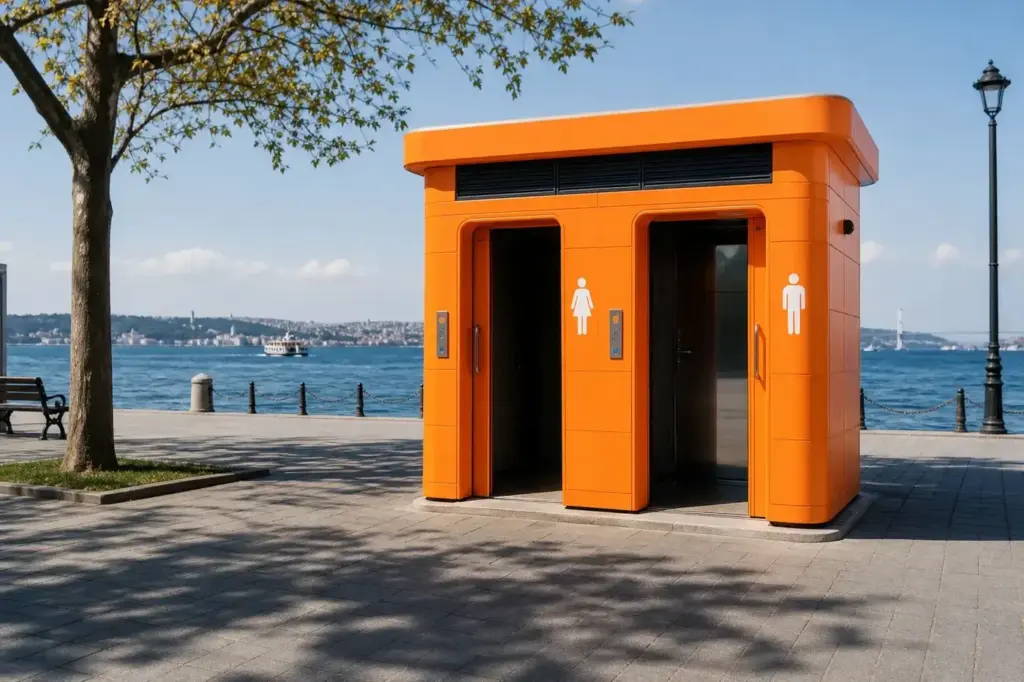
| Standalone public toilets (dedicated booths throughout the city) | 5–10 minutes | ₺₺ | Operated by Istanbul Municipality. Typically cost 10–20 Turkish Lira. Orange-painted booths are visible near parks, squares, and transport hubs, especially near the Sea of Marmara shoreline. Accept cash or Istanbulkart. Quality varies; newer facilities are modern and clean. |
| Metro stations (Eminönü, major hubs) | 5–10 minutes | ₺₺ | Available at major stations. Quality varies; newer M1 and M4 line stations have better facilities than older M2 stations. Require payment (a small fee, ₺). Busier during commute hours. Useful if you are already in the metro. |
₺ budget · ₺₺ moderate · ₺₺₺ upscale · ₺₺₺₺ splurge. Price levels are estimates compared with typical prices for visitors.
Step-by-Step Instructions
Step 1: Choose your location based on availability and cleanliness
Decide where you will look for a toilet based on your current location. Shopping malls offer the most reliable, free, modern facilities with separate entrances for men and women. Museums and historical sites included in your ticket provide free toilets. Restaurants and cafés offer free toilets to customers (buy a coffee or water). Mosques provide free facilities. Standalone public toilets (marked 'WC' or 'Tuvalet') are scattered throughout the city but require payment.
Tip: Shopping malls are your safest bet for cleanliness and convenience. If you are in Sultanahmet, the nearby malls offer easier access than public booths.
Step 2: Locate a public toilet using signs or ask directions
Look for signs marked 'WC' (pronounced 'double-veh-see') or 'Tuvalet' (pronounced too-vah-let). These appear above doorways, on poles, or on building sides. If you cannot find a sign, ask locals using the phrase 'Tuvalet nerede?' (Where is the toilet?). In tourist areas, attendants and staff can direct you. Use your phone map and search 'public toilet Istanbul' or 'WC Istanbul' for nearby options.
Tip: The newer municipal toilets near the Sea of Marmara shoreline are marked by orange-painted booths, easy to spot from a distance.
Step 3: Prepare payment for standalone public toilets
If you are using a dedicated public toilet booth, you will need to pay a small fee. As of October 2026, public toilets typically cost between 10–20 Turkish Lira. Have small bills or coins ready. Some modern facilities now accept payment via Istanbulkart (your metro card). If you do not have exact change, you may not be able to enter. Attendants are often present and can accept coins or notes.
Tip: Always carry some small bills for this purpose. Attendants will appreciate a small tip in addition to the standard fee.
Step 4: Enter and choose your toilet type
Upon entering, you will typically find both Western-style (seated) and Turkish-style (squat) toilets available. Look for signs or ask the attendant which option is available. Western-style toilets (sometimes called 'Alafranga') are standard pedestal toilets familiar to most visitors. Turkish-style toilets (called 'Alaturka') are floor-level squat toilets. Most modern facilities and tourist areas offer the Western option.
Tip: If you are unfamiliar with squat toilets, modern tourist areas almost always have Western-style options. Museum and mall toilets are guaranteed to have Western-style facilities.
Step 5: Use the facility and handle basic etiquette
Turkish plumbing systems can be sensitive. Do not flush large amounts of toilet paper down the toilet; instead, place used paper in the waste bin beside the toilet. Some older facilities may have a waste receptacle for this purpose. Wash your hands at the sink after use. If an attendant is present, leave a small tip on the counter or in a dish near the sink before leaving.
Tip: Toilet paper may not always be provided; carrying your own tissues or wet wipes is a safeguard. Modern shopping mall and hotel toilets always stock paper.
Step 6: Exit and collect your change if applicable
If you paid with a larger bill or card, collect any change from the attendant as you leave. Some facilities may retain the fee automatically; others hand it back. Always verify this before departing to avoid losing money.
Tip: At modern automated booths, your payment is collected automatically when you enter; no attendant exchange is needed.
Step 7: Use free alternatives during busy times
If public toilets are crowded or you want to avoid payment, head to a shopping mall (Cevahir, Kanyon, Istinye Park, Forum Istanbul, Mall of Istanbul) where restrooms are free and clean. Alternatively, enter a café or restaurant, order a small item (tea, coffee, water), and ask to use the toilet. Museums included in your ticket provide free, well-maintained facilities. Mosques welcome visitors to use ablution rooms and toilets free of charge.
Tip: During peak tourist season (April–October), malls are less crowded than public booths and offer air-conditioned comfort.
Common Mistakes to Avoid
- Not carrying small bills or coins. Many attendants at public toilets do not have change, and you may be turned away if you only have large notes. Always keep some money in small denominations.
- Flushing toilet paper down the toilet. Turkish plumbing is sensitive and clogs easily. Place used paper in the waste bin provided. Ignoring this will block the toilet and disrupt service for the next user.
- Assuming all public toilets are clean. Standalone public booths vary in quality. When in doubt, use a shopping mall, museum, or restaurant toilet instead. Peak hours (noon–3 p.m., evening) often mean longer waits and less maintenance.
- Not knowing the phrase 'Tuvalet nerede?' (Where is the toilet?). Many locals, especially outside tourist areas, may not speak English. Learning this one phrase makes finding facilities much easier and is appreciated by Turkish speakers.
- Being unprepared for squat toilets. While Western-style toilets dominate modern and tourist facilities, older buildings and some mosques may only have squat toilets. If you are uncomfortable with them, stick to malls, museums, and chain restaurants.
- Underestimating the importance of carrying tissues. Not all facilities stock toilet paper, or supplies may run low during busy times. Carrying wet wipes or pocket tissues prevents awkward situations.
- Forgetting that mosques require respectful behavior. If using a mosque toilet, remove your shoes, speak quietly, and avoid walking through prayer areas. Some mosques may request that visitors use facilities at specific times outside of prayer periods.
Tickets, Payment and Booking
Public Toilets
- Standalone public toilet booths are operated by the Istanbul Metropolitan Municipality and do not require advance booking. Pay at the entrance: cash (10–20 Turkish Lira) or Istanbulkart (your Istanbul metro card). Accept both notes and coins.
- No booking needed; facilities are available during posted hours (typically 06:00–22:00 at most locations, though some are 24 hours).
- Foreign visitors can use all public facilities; no registration required. Just carry small bills in Turkish Lira.
Free Alternatives
- Shopping Malls: Entrance is free; toilets are inside, also free. No purchase required for restroom use, though buying something is polite.
- Restaurants and Cafés: Order something first (tea, coffee, water costs ₺). No credit card needed; small establishments accept cash only.
- Museums: Toilets included with your ticket. No separate booking; use them freely during your visit.
- Mosques: Completely free. Visitors welcome at any time outside of prayer. No booking; just enter respectfully.
Payment & Cards
- Modern public toilet facilities accept Istanbulkart, but always carry cash as a backup. Many older booths only accept coins or notes.
- Foreign credit cards are not accepted at toilets; ATMs are widely available if you need to withdraw Lira.
- Do not assume attendants can make change for large notes; bring small bills and coins.
Warnings
- Avoid very old standalone booths in secluded areas; use malls or restaurants instead if available.
- Do not be approached by unofficial ‘toilet guides’ outside the Grand Bazaar or tourist areas. The facilities are inside; no guide is needed.
- Restrooms at bus terminals may require payment and have less reliable maintenance; check condition before paying.
Istanbul Vibes Tips
- Plan your bathroom visits around meals. Instead of using a paid public toilet, stop at a café for tea or coffee (about ₺) and use the free toilet. This saves money, gives you a rest break, and you avoid the unpredictability of public booth queues.
- Time your visits to avoid peak hours. Between 12:00–15:00 and 18:00–20:00, public facilities are busiest. If you can, use the toilet early morning (07:00–10:00) or late afternoon (16:00–18:00) for shorter waits and fresher facilities.
- Download a map app offline and mark nearby malls and museums before you leave your hotel. When nature calls, a quick glance at your map gets you to the nearest free, reliable facility in seconds instead of wandering around.
- Carry a small pouch of wet wipes or portable hand sanitizer. Many public toilets have soap and water, but some do not. Wet wipes also help if you find a facility that is less clean than expected, and they double as emergency toilet paper.
- In Sultanahmet (the historic tourist district), toilets near the Blue Mosque, Hagia Sophia, and Sultanahmet Square are maintained specifically for tourists and are more reliable than random street booths. Head directly to these if you are sightseeing in the area.
- If you have an Istanbulkart, tap it at public toilet gates instead of paying cash each time. This is faster, avoids fumbling with coins, and works at modern facilities throughout the city.
Explore Nearby How to Use Public Toilets in Istanbul
Sights near How to Use Public Toilets in Istanbul
 Grand Bazaar · typical visit: 2–4 hours4 min on foot from Beyazıt-Kapalıçarşı metro, Open 08:30–19:00, closed Sun
Main image: AI-generated illustration. It may not show the place exactly as it looks.
 Topkapi Palace · typical visit: 3–4 hours without Harem; 4–5 hours with Harem15 min on foot from Gülhane metro, Open 09:00–18:30, closed Tue
Main image: AI-generated illustration. It may not show the place exactly as it looks.
 Blue Mosque · typical visit: 45–75 minutes3 min on foot from Gülhane metro
Main image: AI-generated illustration. It may not show the place exactly as it looks.
Related guides
 Cevahir Shopping Center: Hours, Transport & What to Shop
Main image: AI-generated illustration. It may not show the place exactly as it looks.
 Sultanahmet: Istanbul’s Historic Heart and Essential First Stop
Main image: AI-generated illustration. It may not show the place exactly as it looks.
 Best Neighborhoods for First-Time Visitors: Where to Stay in Istanbul
Main image: AI-generated illustration. It may not show the place exactly as it looks.
 Braces: Treatment Process, Types and What to Expect
Main image: AI-generated illustration. It may not show the place exactly as it looks.
Browse more: All Etiquette and Safety · All How-To
FAQ
Is it expensive to use public toilets in Istanbul?
No. Public toilets cost a small amount (₺). However, free alternatives are better: shopping malls are free and cleaner, restaurants require only a small coffee purchase (₺), museums are free with your ticket, and mosques are always free. Most visitors avoid paying toilets entirely by using these options instead.
Can I use a toilet in a restaurant or café if I do not buy anything?
Technically, no; toilets are for customers. Practically, many establishments will not refuse you if you ask politely. However, buying something small (tea, water, coffee) is inexpensive (₺) and shows respect. It is a common strategy: tourists stop for a beverage, rest, and use the toilet, all for less than a public booth.
Are Western-style or Turkish-style toilets more common in Istanbul?
Western-style (seated) toilets dominate modern areas, shopping malls, hotels, museums, and restaurants. Turkish-style (squat) toilets are found in older buildings, some mosques, and older neighborhoods. Tourist areas and all major attractions have Western-style options. If you prefer Western, stick to malls, museums, and modern restaurants.
Do I need to carry toilet paper with me?
Not always, but it is wise. Modern facilities and malls always stock paper. Older public booths and some mosques may run low or require you to bring your own. Carrying wet wipes or pocket tissues costs nothing and prevents awkward situations. Many visitors keep a small pack of tissues in their bag at all times.
What should I do if I see only a squat toilet and do not know how to use it?
Modern Istanbul almost always has a Western-style toilet nearby. Ask the attendant or look for signs pointing to another option in the same facility. If you are uncomfortable, simply leave and head to a mall or restaurant; there is no shame in preferring what you are familiar with. Tourist facilities prioritize Western-style options.
Can I pay for a public toilet with my credit card?
No. Public toilets require cash (Turkish Lira) or an Istanbulkart (metro card). Credit cards are not accepted. Always carry some small bills when exploring the city. ATMs are common if you run out of cash.
Are public toilets in Istanbul clean?
Quality varies widely. Shopping malls and modern municipal facilities are excellent. Older standalone booths are less reliable. Museums and restaurants are dependable. The newer orange booths near parks and the Sea of Marmara are maintained well. Most visitors find that avoiding the very oldest facilities and using malls instead solves the problem entirely.
Can I use the toilet in a mosque even if I am not Muslim?
Yes. Mosques provide free toilet and ablution (washing) facilities for the community. Visitors of any faith are welcome. Be respectful: remove your shoes before entering the prayer area, dress modestly, and speak quietly. Facilities are often located outside or at the edge of the main prayer space, so you need not disturb worshippers.
Istanbul Vibes is a one-person project. A coffee keeps it going

Take this guide with you
Get a free PDF of this guide to print or read offline: key facts, tips and a map link on a few clean pages.
Report an issue on this page
How we research and update our guides
About this guide: AI assistance and accuracy
This guide is created with the help of AI and is based on official sources where available. Mistakes can still happen. Opening hours, prices, rules and other details are given to the best of our knowledge as of the date shown and can change without notice. It offers general recommendations only, not professional, legal or travel advice. Please confirm important details with the official source before you travel; you are responsible for your own plans and decisions.
* Affiliate link: as an Amazon Associate we earn from qualifying purchases at no extra cost to you.
