
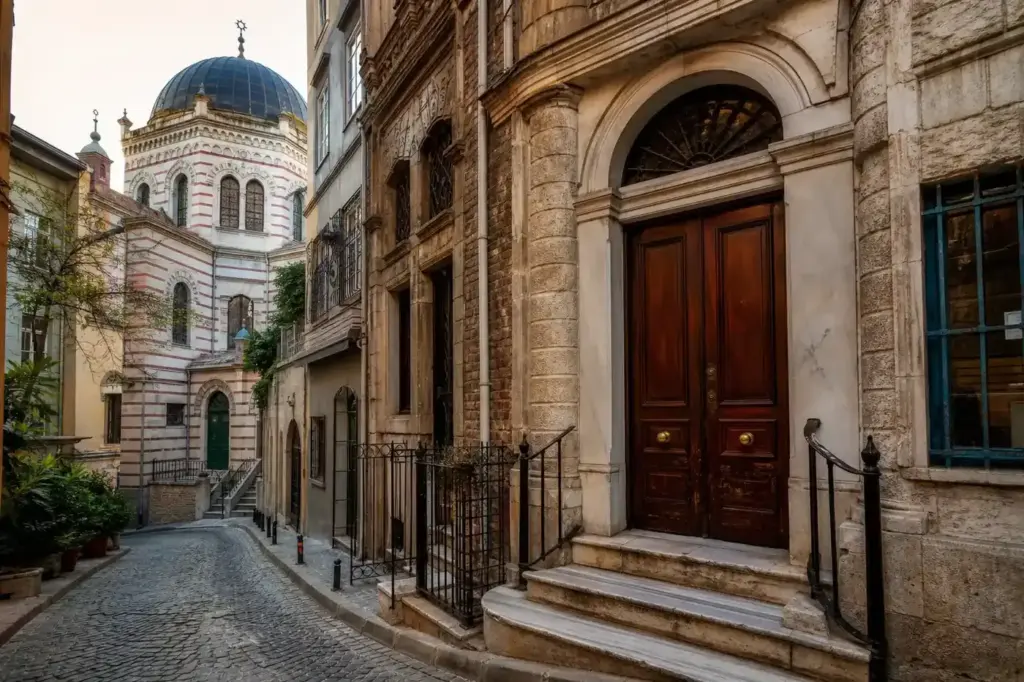
The Museum of Turkish Jews (also known as the Quincentennial Foundation Museum of Turkish Jews) opened in 2001 to mark 500 years since Sephardic Jews fleeing the Spanish Inquisition found refuge in the Ottoman Empire. Located in Beyoğlu near Galata Tower, the museum occupies a building attached to Neve Shalom Synagogue, one of Istanbul’s oldest active places of worship.
The museum presents the history, culture, language and traditions of Turkish Jews across two floors of chronologically arranged exhibits. Displays include photographs, documents, video, sound recordings and ceremonial objects donated by the Istanbul Jewish community, tracing connections between Jewish and Turkish heritage from antiquity to the present day.
Quick Facts
| Turkish name | Türk Yahudi Müzesi |
|---|---|
| Built / opened | 2001 |
| Address | Bereketzade Mahallesi, Büyük Hendek Caddesi No. 39, Beyoğlu, 34421 Istanbul Google MapsApple MapsYandex Maps |
| District | Beyoğlu |
| Metro | Şişhane (Tünel Line, 5 min walk from museum, located on main street between Galata Tower and Şişhane) Karaköy (Karaköy-Topkapı line, 10 min walk uphill from waterfront) |
| Admission | Donation-based |
| Best time to visit | Season: Visit in spring (April–May) or autumn (September–October) for pleasant weather and fewer crowds. Summer (June–August) brings heat and peak tourist season, making Galata streets busy. Winter (November–February) is cool and quiet; the museum's interior is comfortable year-round.Day and time: Sunday is a good choice; the museum tends to be quieter. Weekday mornings (Monday–Thursday, 10:00–12:00) are typically less busy than afternoons. Friday morning (10:00–12:00) is also quiet, though the museum closes at 13:00. Avoid Thursday afternoons when tour groups may visit. Saturday is closed.Religious calendar: The museum and Neve Shalom Synagogue observe Jewish holidays and observances; check muze500.com for any closures during major holidays (Rosh Hashanah, Yom Kippur, Passover, Sukkot, Hanukkah). |
| Website | muze500.com |
What Is (and Isn't) Part of a Visit to Museum of Turkish Jews?
| Part | Status | Notes |
|---|---|---|
| Museum exhibits and collections | Included in the standard ticket | Two-floor museum with photographs, documents, artifacts, video and interactive displays covering Turkish Jewish history and culture. |
| Neve Shalom Synagogue interior viewing | Included in the standard ticket | Museum admission includes viewing the sanctuary of Neve Shalom Synagogue from a balcony within the museum building. |
| Physical entry to Neve Shalom Synagogue sanctuary | Not open to visitors | Visitors see the synagogue's interior from a viewing balcony only; entry into the active sanctuary itself is restricted to worshippers and authorized visitors. |
| Photography in the museum galleries | Included in the standard ticket | Photography is permitted in the exhibit spaces unless otherwise marked; check with staff for any restricted areas. |
| Guided tours | Separate ticket or institution | Guided tours are not listed as standard; contact the museum directly for group or private tour arrangements. |
| Galata Tower | Outside / not part of it | The Galata Tower is a separate museum nearby (about 180 metres away); it is not included in this museum's admission and requires a separate ticket. |
Why Visit Museum of Turkish Jews?
Turkey’s Jewish history is rarely documented in English-language sources, making this museum essential for understanding the country’s cultural diversity. The collection tells a unique story distinct from European Jewish history: Ottoman Turkey offered legal protection and relative stability to Jewish communities for centuries, creating a distinct Sephardic and Mizrahi heritage.
The museum showcases how Jewish and Turkish traditions intertwined, visible in objects like a 19th-century hanukkiah (Hanukkah menorah) shaped like a minaret with a Turkish crescent-and-star motif. The visit includes access to Neve Shalom Synagogue, the only synagogue in Turkey open to the public year-round, from which you can observe its interior sanctuary.
Highlights of Museum of Turkish Jews
The Hanukkiah with Turkish Influence
A distinctive 19th-century ceremonial menorah incorporates both Jewish and Ottoman design: it is shaped like a minaret (the tower of a mosque) with a Turkish crescent and star. This single object illustrates the cultural fusion at the heart of Turkish Jewish life, showing how two traditions shaped a shared aesthetic.
Tip: Look for it in the ethnography section; its minaret shape makes it instantly recognizable and striking among the collection.
Neve Shalom Synagogue Interior and Balcony View
From a viewing balcony within the museum, visitors look down into the sanctuary of Neve Shalom Synagogue, one of Istanbul's most important active places of worship. The synagogue's rich interior is visible from above, allowing visitors to observe the space without disturbing services or entering the sacred sanctuary directly.
Tip: Visit on a Sunday for the best atmosphere; the balcony offers a unique vantage point not usually available to visitors.
Ottoman and Pre-Ottoman Artifacts
The collection spans 2,600 years of Jewish presence in Anatolia and the Ottoman Empire. Exhibits include ceremonial regalia, Torah ornaments, marriage documents (ketubahs), textiles, and household objects showing daily life and religious practice. The chronological arrangement helps visitors understand how Turkish Jewish identity evolved across centuries.
Tip: The hand-written ketubah (marriage contract) papers are particularly well preserved; these offer intimate glimpses into family history and artistic craftsmanship.
The Museum's Own Building: Former Zülfaris Synagogue
The museum is not simply housed in a synagogue; one section of the building is the former Zülfaris Synagogue, one of Galata's historic places of worship dating to at least the early 19th century (rebuilt around 1823). The building itself is part of the narrative, embodying the architectural heritage it documents.
Tip: Ask staff about the building's history; they can point out original architectural details and explain how the space was adapted for museum use.
Interactive Collection and Multimedia Presentations
Unlike static museum displays, the curated collection incorporates video interviews, sound recordings, and interactive elements that bring voices from the Turkish Jewish community into the exhibition space. Photographs from different eras show the evolution of family life and community institutions.
Tip: Allow time to watch the video presentations; they provide context and personal testimony that objects alone cannot convey.
Focus on Ottoman Tolerance and Sephardic Welcome
The museum tells the story of Sultan Bayezid II's 1492 welcome of Sephardic Jews fleeing Spain and Portugal, presenting this as a moment of Ottoman tolerance and refuge. Exhibits explain how Jewish refugees contributed to Ottoman economic and cultural life, particularly in Izmir, Salonica, and Istanbul.
Tip: The museum's narrative emphasizes Turkish-Jewish co-existence; visitors gain perspective on a lesser-known but historically significant chapter of Mediterranean history.
Atmosphere
The museum occupies a modest, intimate space with a scholarly rather than grandiose feel. Two floors of displays in glass cases and on walls create a focused environment. The building’s age and the proximity to the active Neve Shalom Synagogue next door give the visit a sense of living history rather than a distant past.
Visitors are predominantly international travelers, small family groups, and history-interested adults. The small size means it never feels crowded. The space is quiet and reflective, particularly near the viewing balcony overlooking the synagogue. Mornings and Sunday afternoons tend to be quieter than weekday afternoons.
History of Museum of Turkish Jews
Jewish communities had lived in Anatolia for over 2,000 years before the modern era. However, the museum’s story centers on 1492, when Sultan Bayezid II offered refuge to Sephardic Jews expelled from Spain and Portugal during the Spanish Inquisition. This moment fundamentally shaped Ottoman Jewry.
The Sephardic Jews who arrived brought advanced mercantile skills, medical knowledge, and cultural sophistication. They settled primarily in Istanbul, Izmir, Salonica (modern Thessalonica) and other Ottoman cities, becoming integral to trade, banking, and administration. The Ottoman millet system granted Jewish communities considerable autonomy in religious and judicial affairs, allowing the establishment of synagogues, schools, and social institutions.
Istanbul’s Galata and Balat neighborhoods became centers of Jewish life, with dozens of synagogues serving different Sephardic and Ashkenazi communities. The Zülfaris Synagogue, in which part of the museum now stands, served Galata’s Jewish community from at least the 17th century and was rebuilt around 1823. By the 19th century, Istanbul’s Jewish population numbered in the tens of thousands.
The 20th century brought upheaval. Jewish emigration accelerated due to Zionist movement, economic changes, and migration to the Americas. Turkish nationalism and restrictions on minorities reduced the community further. The Holocaust and World War II, though Turkey remained neutral, caused fear and migration. By the late 20th century, Istanbul’s Jewish community had shrunk to a few thousand.
The museum was established in 2001 by the Quincentennial Foundation to commemorate the 500th anniversary of the 1492 welcome. Initially located in the Zülfaris Synagogue building in Karaköy, it moved in 2015 to its current location in a building attached to Neve Shalom Synagogue, a more prominent location with better access and facilities.
Legends and Myths about Museum of Turkish Jews
The Kamondo Family and Ottoman Banking
Disputed by historians. The Kamondo family, Sephardic Jews from Galata, rose to prominence as Ottoman bankers and merchants in the 18th and 19th centuries. Multiple family members served as imperial bankers and diplomats, accumulating vast wealth. The family's palazzo (now destroyed) stood in Galata, and the ornate Kamondo Stairs in the neighborhood are named after them. Their story illustrates how some Ottoman Jewish families achieved extraordinary influence, though many were devastated by 20th-century displacement and the Holocaust.
Ahmed the Flying Man and the Galata Tower
Legend – historically unreliable. A popular legend claims that Hezarfen Ahmed Çelebi, a 17th-century inventor, launched himself from the top of Galata Tower and glided across the Golden Horn to the Asian side. While Ottoman sources describe this event, modern historians question whether it truly occurred as described. The story celebrates Ottoman innovation and has become emblematic of Galata's place in Istanbul folklore.
Tickets and Booking for Museum of Turkish Jews
| Ticket | Price | Includes |
|---|---|---|
| General admission | Donation-based | Access to all two floors of the museum and viewing balcony overlooking Neve Shalom Synagogue. Visitors are asked for a donation; no fixed admission price is charged. |
₺ budget · ₺₺ moderate · ₺₺₺ upscale · ₺₺₺₺ splurge. Price levels are estimates compared with typical prices for visitors.
Entry to the Museum of Turkish Jews is donation-based; there is no fixed admission price, but contributions from visitors are appreciated and support the museum’s operations.
Passport or ID required: All visitors must present a valid passport or national ID card at entry for security purposes. This is a standard requirement for accessing the Neve Shalom complex.
No advance booking needed: Walk-ins are welcome during regular hours. The museum is small and rarely fills to capacity.
Hours: Open Monday–Thursday 10:00–17:00, Friday 10:00–13:00 (shortened for Shabbat), Sunday 10:00–17:00. Closed Saturday (Sabbath) and on national and religious holidays. Last entry is 45 minutes before closing time.
Entrance and access: The entrance is on Büyük Hendek Caddesi. Staff conduct a brief security check at the door (bag inspection). The space is accessed from street level with steps; visitors should be aware of the building’s age and potential steep or narrow passages.
Rates for Turkish citizens and concessions (students, seniors) differ from international visitor rates. For all categories and any current updates, see the official website at muze500.com.
Suggested itineraries Museum of Turkish Jews
1 hour
Enter the museum and spend time on the first floor with the introductory exhibits on Ottoman Jewish history and Sephardic arrival. Climb to the second floor and view the balcony overlooking Neve Shalom Synagogue. This pace allows you to grasp the main narrative and see the museum's key objects without rushing.
2 hours
Begin with the historical timeline on the first floor, pausing to read context about each era. Watch the video presentations or interviews if available. Explore the ethnography section and ceremonial objects. Spend time at the Neve Shalom balcony viewing the synagogue interior. Exit and walk around the Galata neighborhood to see nearby heritage sites (Kamondo Stairs, other synagogues in the area, Galata Tower exterior).
Half day (3–4 hours)
Start at the museum early (10:00 a.m.) to avoid crowds. Spend 2 hours inside. Exit and have a light breakfast or coffee nearby. Walk downhill to see other Galata Jewish heritage sites: Bankalar Street, the Kamondo Stairs, and the Ashkenazi Synagogue. End at Galata Bridge or Karaköy waterfront. Alternatively, continue uphill to explore Beyoğlu and Istiklal Avenue for lunch and shopping.
How to Get to Museum of Turkish Jews
By metro: The nearest metro station is Şişhane on the Tünel Line (M2). Exit the station and walk toward Galata Tower; the museum is on Büyük Hendek Caddesi, the main street leading downhill from Şişhane. The walk takes 5 minutes. Alternatively, use Karaköy station on the Karaköy–Topkapı line and walk uphill for about 10 minutes along the waterfront and side streets.
Walking from Galata Tower: If you are already in the Galata district, the museum is a 3-minute walk from Galata Tower. Head downhill from the tower on Galata Kulesi Sokak, then turn onto Büyük Hendek Caddesi. Look for the building marked with museum signage near Neve Shalom Synagogue.
By tram or bus: Trams stop at Karaköy near the Golden Horn. From there, walk uphill (slightly steep) for about 10 minutes. Bus services serve Beyoğlu; ask a local or check Istanbul’s transit map (moovit.com or Istanbul Metro app) for the nearest stop.
By taxi or ride-share: Ask the driver to take you to “Müze 500, Büyük Hendek Caddesi, Beyoğlu” or “Neve Shalom Synagogue museum.” The location is well known to Istanbul drivers.
Accessibility
Wheelchair access: The museum is located in a historic building with steps at the entrance and narrow interior passages typical of Istanbul's older architecture. Wheelchair access is limited or not available; visitors with mobility issues should contact the museum in advance at +90 212 292 63 33 to discuss specific needs.Stairs and interior layout: The museum occupies two floors accessed by stairs. There is no elevator mentioned in the building's specifications. Visitors with difficulty climbing stairs may struggle with the layout.Service animals: Contact the museum directly to confirm whether service animals are permitted in the space.Accessible restroom: Information about accessible facilities is not published; call ahead to confirm availability.
Food Nearby
Büyük Hendek Caddesi and surrounding streets in Galata have several small cafes and restaurants within walking distance. The area near Galata Tower has tourist-oriented establishments. For a quieter option, walk downhill toward Karaköy, where meyhane (tavern) restaurants and fish restaurants line the waterfront near the Golden Horn. The Balık Pazarı (fish market) is a short walk away and offers fresh seafood and quick bites. Coffee shops and kebab stands dot the neighborhood. The area is dense with food vendors, though prices can be higher near Galata Tower due to tourist traffic.
What to Bring
Bring a valid passport or national ID card; this is required for entry. Wear comfortable walking shoes, as the streets of Galata are steep and uneven. A light jacket or sweater is useful in spring and autumn, as the neighborhood is on a hillside with breezes off the Golden Horn. In summer, bring sunscreen and a hat, though the museum interior is air-conditioned. The building and neighborhood are compact; you do not need a large bag, but small security checks are conducted at entry.
Best Views and Photo Spots of Museum of Turkish Jews
Neve Shalom Synagogue viewing balcony
The interior of the active synagogue is visible from above, with ornate wooden furnishings, arched windows, and the bimah (platform). The balcony framing creates a unique elevated perspective rarely available to visitors.
Best time: Sunday morning light is soft and warm; avoid times when services are occurring (Friday evening, Saturday morning, holiday mornings).
Museum entrance on Büyük Hendek Caddesi
The historic building's exterior and Neve Shalom Synagogue's facade next to it frame a view of Galata's architectural heritage. The narrow street and surrounding buildings show the density of historic Istanbul.
Best time: Early morning light comes from the east; late afternoon brings warm, directional light across the facades.
Street level looking toward Galata Tower
From the area around the museum, you can look downhill or uphill to see Galata Tower in the distance framed by surrounding buildings, illustrating how the neighborhood sits on a steep hillside.
Best time: Mid-morning or early afternoon for clear light; the tower is visible from many angles in this district.
Photography Rules
Photography is generally permitted in the museum's exhibit spaces. However, respect signage marking restricted areas (if any). Flash photography should be avoided to protect artifacts. Tripods and professional film or video equipment may require prior permission; contact the museum if you plan professional photography. No photography is permitted in the active Neve Shalom Synagogue sanctuary during services or prayer times.
Family Suitability
The museum is suitable for families with children aged 10 and older who have an interest in history. Younger children may not engage with the exhibits, as the collection is document-heavy and narrative-driven rather than interactive or playful. The two-floor layout involves stairs with no elevator, which may be challenging for visitors with strollers or very young children. The museum space is small and quiet, so families should ensure children understand the need for respectful behavior.The viewing balcony overlooking Neve Shalom Synagogue is a highlight for children, as it offers a unique perspective. However, the museum does not offer family guides, activity sheets, or child-specific interpretation. Visiting as part of a broader Galata neighborhood walk (with Galata Tower, street food, parks) makes for a more engaging family itinerary than the museum alone.
Istanbul Vibes Tips
- Bring your passport or ID even if you think you won't need it; entry is refused without valid identification for security reasons related to the Neve Shalom complex.
- Visit on a Sunday morning for the quietest experience. The museum is less busy on weekends, and Sunday light is particularly good for the interior balcony views of the synagogue.
- Ask staff about the building's history when you arrive; they can explain the Zülfaris Synagogue connection and point out architectural features that visitors otherwise miss.
- Allow time to sit and reflect at the Neve Shalom balcony; rushing through diminishes the power of viewing an active, sacred space where services have been held for centuries.
- Combine the museum visit with a walk down to Bankalar Street and the Kamondo Stairs, which are 5–10 minutes downhill and add context to the stories of Ottoman Jewish prominence and loss presented in the museum.
- Donate generously if you can; the museum's operation depends on visitor contributions and does not receive consistent government funding, making your support directly meaningful.
Explore Nearby Museum of Turkish Jews
Sights near Museum of Turkish Jews
 Galata Tower – about 150 m away (~3 min walk) · typical visit: 1–2 hours4 min on foot from Şişhane metro, Open daily 08:30–23:00
Main image: AI-generated illustration. It may not show the place exactly as it looks.
 Istiklal Street – about 950 m away (~16 min walk) · typical visit: 1–2 hours12 min on foot from Tünel metro, Open 24 hours
Main image: AI-generated illustration. It may not show the place exactly as it looks.
 Arap Mosque – about 300 m away (~5 min walk) · typical visit: 30–45 minutes6 min on foot from Haliç metro
Main image: AI-generated illustration. It may not show the place exactly as it looks.
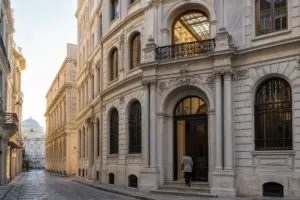 SALT Galata – about 300 m away (~5 min walk) · typical visit: 1–2 hours7 min on foot from Şişhane metro
Main image: AI-generated illustration. It may not show the place exactly as it looks.
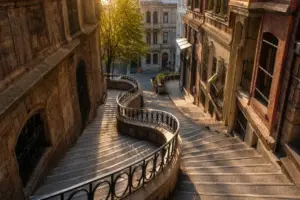 Kamondo Stairs – about 300 m away (~5 min walk) · typical visit: 15–30 minutes7 min on foot from Şişhane metro, Open 24 hours
Main image: AI-generated illustration. It may not show the place exactly as it looks.
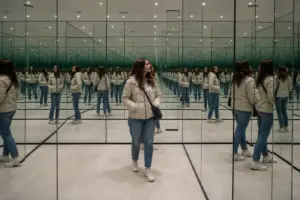 Museum of Illusions – about 350 m away (~6 min walk) · typical visit: 1–1.5 hours2 min on foot from Tünel metro
Main image: AI-generated illustration. It may not show the place exactly as it looks.
Metro stations near Museum of Turkish Jews
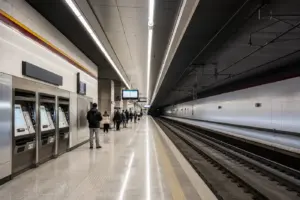 Şişhane – about 100 m away (~2 min walk)Open daily 06:09–00:09
Main image: AI-generated illustration. It may not show the place exactly as it looks.
 Tünelabout 200 m away (~4 min walk)
Main image: AI-generated illustration. It may not show the place exactly as it looks.
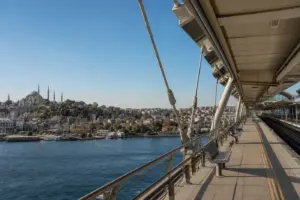 Haliç – about 650 m away (~11 min walk)Open daily 06:06–00:06
Main image: AI-generated illustration. It may not show the place exactly as it looks.
Restaurants and cafes near Museum of Turkish Jews
 Hacı Abdullah Lokantası – about 200 m away (~3 min walk)5 min on foot from Şişhane metro, Open daily 11:00–23:00
Main image: AI-generated illustration. It may not show the place exactly as it looks.
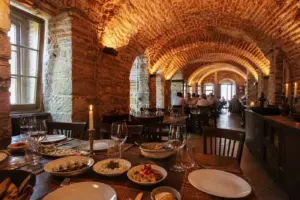 Pepo's Galata – about 200 m away (~3 min walk)5 min on foot from Şişhane metro, Open daily 10:00–02:00
Main image: AI-generated illustration. It may not show the place exactly as it looks.
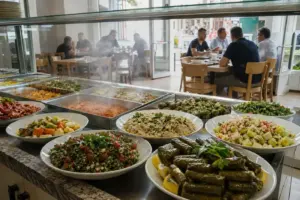 Galata Kitchen – about 250 m away (~4 min walk)5 min on foot from Tünel metro, Open 11:30–22:00, closed Sun
Main image: AI-generated illustration. It may not show the place exactly as it looks.
 Aheste – about 250 m away (~4 min walk)2 min on foot from Tünel metro, Open daily 18:00–00:00
Main image: AI-generated illustration. It may not show the place exactly as it looks.
Nightlife near Museum of Turkish Jews
 Nardis Jazz Club – about 200 m away (~3 min walk)5 min on foot from Şişhane metro, Open 20:30–01:00, closed Sun
Main image: AI-generated illustration. It may not show the place exactly as it looks.
 Suma Han – about 200 m away (~3 min walk)5 min on foot from Şişhane metro
Main image: AI-generated illustration. It may not show the place exactly as it looks.
Train stations and river piers near Museum of Turkish Jews
 Karaköy Ferry Terminalabout 650 m away (~11 min walk)
Main image: AI-generated illustration. It may not show the place exactly as it looks.
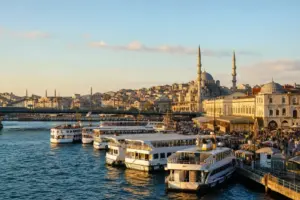 Eminönü Ferry Terminalabout 1.1 km away (~17 min walk)
Main image: AI-generated illustration. It may not show the place exactly as it looks.
Events and traditions near Museum of Turkish Jews
 Istanbul Music Festivalabout 1.3 km away (~21 min walk)
Main image: AI-generated illustration. It may not show the place exactly as it looks.
Related guides
 Karaköy: Istanbul’s Historic Waterfront at the Golden Horn
Main image: AI-generated illustration. It may not show the place exactly as it looks.
 Things to Do in Istanbul on a Rainy Day: Indoor Museums, Palaces and Bazaars
Main image: AI-generated illustration. It may not show the place exactly as it looks.
 Hafız Mustafa 1864: 160 Years of Turkish Confectionery in Istanbul12 min on foot from Çemberlitaş metro, Open daily 12:00–23:59
Main image: AI-generated illustration. It may not show the place exactly as it looks.
 Beyoğlu Nightlife Streets: Nevizade to Asmalımescit
Main image: AI-generated illustration. It may not show the place exactly as it looks.
 Best Rooftop Bars in Istanbul: Views and Reservations
Main image: AI-generated illustration. It may not show the place exactly as it looks.
Browse more: More in Beyoğlu · All Museums · All Sightseeing
FAQ: Museum of Turkish Jews
Is a separate ticket required for Neve Shalom Synagogue?
No. Museum admission includes viewing the interior of Neve Shalom Synagogue from a designated balcony within the museum building. You do not enter the active sanctuary itself; you view it from above. No additional ticket is required.
Is the museum the same as the Quincentennial Foundation Museum of Turkish Jews?
Yes. The Museum of Turkish Jews is officially known as the Quincentennial Foundation Museum of Turkish Jews. It was established in 2001 by the Quincentennial Foundation to commemorate 500 years of Sephardic Jewish presence in the Ottoman Empire. Both names refer to the same institution.
What identification do I need to enter?
All visitors must present a valid passport or national ID card. This is a security requirement for access to the Neve Shalom complex. Visitors without identification will not be admitted, so do not forget this even for a short visit.
Is photography allowed inside the museum?
Yes, photography is generally permitted in the exhibit spaces. However, avoid using flash, which can damage artifacts. Professional or commercial filming may require prior written permission. Check with staff about any specific restricted areas.
Can I visit if I'm not Jewish?
Absolutely. The museum is open to all visitors regardless of religion or background. It exists to educate the public about Turkish Jewish history and culture and is an important part of Istanbul's multicultural heritage.
How long does a typical visit take?
Most visitors spend 1–2 hours inside the museum. The space is modest, with two floors of curated exhibits. A quick visit can be done in 45 minutes; a thorough exploration allowing time for videos and reflection takes 2 hours.
Is the museum accessible for people with mobility issues?
The museum is housed in a historic building with steps at the entrance and stairs between floors. Wheelchair access is limited or not available. Visitors with mobility concerns should contact the museum in advance at +90 212 292 63 33 to discuss specific accommodations.
Can I combine this visit with other nearby sites?
Yes. Galata Tower (separate ticket) is 3 minutes away. Nearby are the Kamondo Stairs, Bankalar Street, the Ashkenazi Synagogue, and the waterfront at Karaköy. The Galata neighborhood itself is a walkable heritage district with narrow streets, cafes, and shops worth exploring.
Istanbul Vibes is a one-person project. A coffee keeps it going
Hotels near Museum of Turkish Jews
- Galata Design Guest House (50 m) Check prices (affiliate link, opens in a new tab)
- Chillout Pera Hostel (100 m) Check prices (affiliate link, opens in a new tab)
- Walton (100 m) Check prices (affiliate link, opens in a new tab)
- Mesto Galata Hotel (100 m) Check prices (affiliate link, opens in a new tab)
Affiliate link (opens the booking site): we may earn a commission at no extra cost to you.
Restaurants near Museum of Turkish Jews
- Privato Cafe (100 m) Google Maps
- Nakka Bistro (150 m) Google Maps
- Çağrı Karadeniz Kebap & Pide Salonu (150 m) Google Maps
- robin's (150 m) Google Maps
Distances are straight-line, from OpenStreetMap data.

Take this guide with you
Get a free PDF of this guide to print or read offline: key facts, tips and a map link on a few clean pages.
Report an issue on this page
How we research and update our guides
About this guide: AI assistance and accuracy
This guide is created with the help of AI and is based on official sources where available. Mistakes can still happen. Opening hours, prices, rules and other details are given to the best of our knowledge as of the date shown and can change without notice. It offers general recommendations only, not professional, legal or travel advice. Please confirm important details with the official source before you travel; you are responsible for your own plans and decisions.
* Affiliate link: as an Amazon Associate we earn from qualifying purchases at no extra cost to you.
