
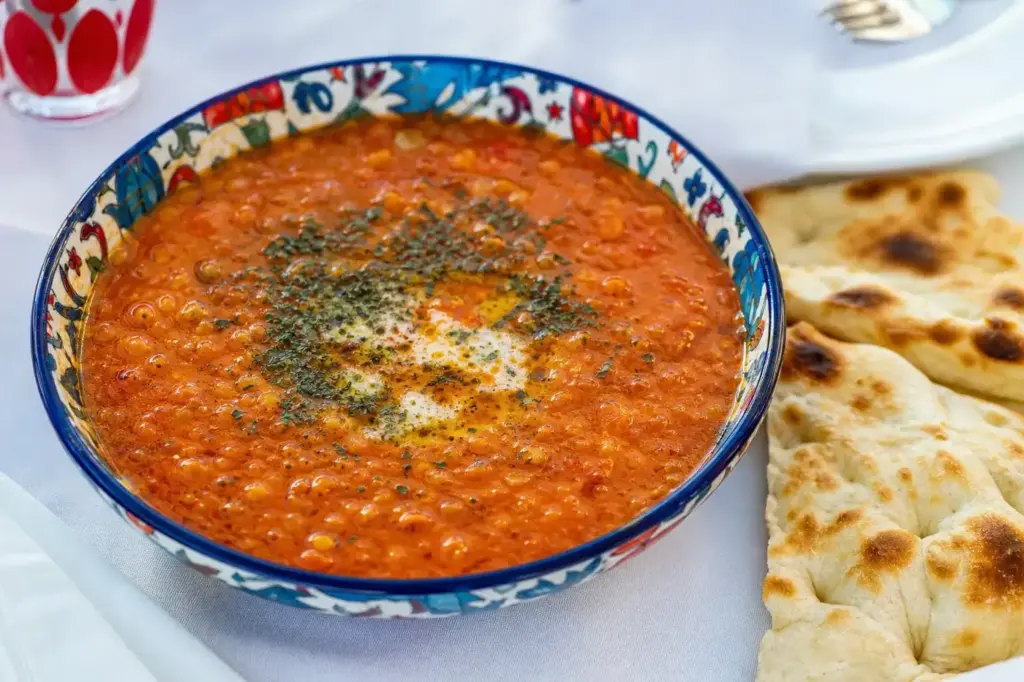
Ezogelin soup is a beloved classic of Turkish home cooking, found in neighborhood restaurants (lokantas) and family kitchens across the country. This article shows you how to make it from scratch, using pantry ingredients that come together into a thick, warming bowl in under an hour.
The soup carries a story: it is named for Ezo, a woman from southeastern Turkey who lived in the early 20th century. Whether you are cooking it to understand Turkish culinary tradition or simply looking for a reliable recipe, this guide will walk you through every step.
Quick answer: Sauté onion and garlic, add red lentils and bulgur, simmer with broth and tomato paste for 30 minutes, finish with dried mint and lemon juice. Total time: 35–40 minutes. Budget-friendly.
At a Glance
| Type | Dishes |
|---|---|
| Origin | The soup is attributed to Ezo the bride from Gaziantep. She was an exceptionally beautiful woman who lived in the village of Dokuzyol near Gaziantep in the early 20th century. Her second marriage took her to Syria where she became homesick for her village and had to deal with a difficult mother-in-law. For her, the story goes, Ezo created this soup. The soup was originally known locally as malhıta çorbası (from the Gaziantep dialect for lentils), but was renamed ezogelin in the mid-20th century by Istanbul restaurants, popularizing it nationwide. |
| Servings | 4 |
| Total time | 35–40 minutes |
| Difficulty | Easy |
History and Story of Ezogelin Soup
Ezogelin soup (Turkish: Ezogelin çorbası, ‘the soup of Ezo the bride’) is a common soup in Turkish cuisine. The origins are linked to a young woman named Ezo, who really lived in the early twentieth century. Ezo grew up in Gaziantep, a town near the border with Syria. Renowned for her legendary beauty, she was married against her will at the age of 20 and forced to move to Syria. Far from her native country and living in great poverty, she gradually sank into grief and died young. After bearing 9 children, poor Ezo died of tuberculosis in the 1950s and has since become a Turkish legend, depicted in popular films and lamented in folksongs. Her name lives on in this popular soup, which is now traditionally fed to brides to sustain them for the uncertain future that lies ahead.
Ingredients
- 200 g red lentils (rinsed)
- 100 g coarse bulgur
- 50 g short-grain white rice
- 1 medium onion
- 2 cloves garlic
- 2 tablespoons tomato paste
- 1 tablespoon dried mint
- 1 teaspoon red pepper flakes
- 2 tablespoons olive oil
- 1 tablespoon butter
- 6 cups vegetable or chicken broth
- Salt and black pepper to taste
- 1 lemon (for juice at the end)
How Ezogelin Soup Is Made
Step 1: Sauté the aromatics
Heat 2 tablespoons olive oil and 1 tablespoon butter together in a large pot over medium heat. Dice 1 medium onion finely and add to the pot. Cook for 2–3 minutes until softened. Mince 2 garlic cloves and stir them in. Cook for another minute until fragrant.
Tip: Do not let the garlic burn; reduce heat slightly if needed.
Step 2: Build the flavour base
Stir in 2 tablespoons tomato paste, 1 teaspoon of red pepper flakes, and a pinch of black pepper. Cook this mixture for 1–2 minutes, stirring constantly, until the spices are fragrant and the tomato paste darkens slightly.
Tip: This step develops depth; do not skip it.
Step 3: Add the grains and legumes
Rinse 200 g red lentils and 50 g white rice. Pour 6 cups of vegetable or chicken broth into the pot, bring to a boil, then add the rinsed lentils and rice. Stir well. Add 100 g coarse bulgur. Return to a boil, then reduce heat to medium-low.
Tip: Coarse bulgur holds its texture; avoid using fine or medium bulgur if you want that signature texture contrast.
Step 4: Simmer until tender
Cover the pot partially and simmer for 25–30 minutes, stirring occasionally, until the lentils break down slightly and the mixture thickens. The soup should look thick and textured, not smooth. If it is too thick, add a splash of water.
Tip: The lentils will naturally create creaminess; you do not need to blend unless you prefer a smoother consistency.
Step 5: Season and finish
Taste and add salt to your preference. Stir in 1 tablespoon of dried mint. Squeeze the juice of half a lemon into the pot and stir. Do not add the lemon juice during cooking; it goes in only at the end to preserve brightness.
Tip: Start with half the lemon and taste; you can always add more.
Step 6: Serve hot
Ladle the soup into bowls. A traditional finish is to drizzle a small amount of melted butter or red pepper oil on top, but this is optional. Serve with bread.
Tip: Leftovers keep for 3–4 days in the refrigerator and reheat gently on the stovetop.
Variants
- Add diced carrots, zucchini, and potato along with the onion, then blend or mash the finished soup for a smoother, vegetable-forward version suitable for children.
- Stir in 2 tablespoons of vermicelli (şehriye) along with the rice and bulgur for a fourth grain and extra texture.
- Add 1 teaspoon of ground cumin with the mint; this is standard in many restaurant versions.
- Use a pressure cooker instead of a regular pot: cook for approximately 15 minutes under pressure instead of 30 on the stovetop. Never fill more than halfway to prevent foaming.
Common Mistakes to Avoid
- Adding lemon juice during cooking rather than at the end. This makes the soup taste flat. Always add lemon at the very end, after the pot comes off the heat.
- Using fine or blended bulgur instead of coarse bulgur. The coarse texture is part of what defines this soup and distinguishes it from other Turkish lentil soups.
- Over-blending or over-stirring until the soup becomes completely smooth. The soup should have a textured, deliberately coarse appearance, not the uniformity of a purée.
- Substituting vegetable oil for olive oil and butter. The traditional base flavour depends on these fats; other oils will give a noticeably different result.
- Overcooking the soup. If you simmer for more than 35–40 minutes, the lentils can break down completely and the soup becomes mushy rather than thick and textured.
- Forgetting to rinse the lentils and rice before cooking. This removes excess starch and improves both texture and appearance.
How to Order and Eat It
Ezogelin is a staple of the Turkish esnaf lokanta (tradesmen’s restaurants). Whether at esnaf lokantas or elsewhere, soups like this are eaten as a starter before lunch or a main meal. The portions are usually quite small. Ordering a half portion—always an option in Turkish restaurants—is also very common. The soup is served hot, often with a squeeze of fresh lemon or a drizzle of melted butter on top. Bread is the traditional accompaniment. In Istanbul, you will find it in neighbourhood lokantas, at breakfast buffets in some hotels, and in quick lunch spots across all districts.
Istanbul Vibes Tips
- If you cannot find fresh tomato paste or red pepper paste (biber salçası), use only tomato paste and add an extra pinch of paprika or Aleppo pepper powder for depth. The soup will taste different but still be good.
- This soup freezes well. Let it cool completely, transfer to freezer containers, and freeze for up to 2 months. Thaw overnight in the refrigerator and reheat gently on the stovetop, adding a splash of water if needed.
- In Istanbul, many lokantas serve Ezogelin soup every single day as one of the standard soup offerings. It appears alongside Turkish red lentil soup (mercimek çorbası), which is similar but smoother and contains no bulgur. Knowing the difference helps you order what you actually want.
- The soup tastes better the next day as the flavours meld. If you have time, make it a day ahead, refrigerate, and reheat before serving.
- Dried mint is essential; fresh mint does not work the same way in this soup. Look for dried Turkish mint (left whole, not ground) in Middle Eastern or Turkish food shops.
Explore Nearby Ezogelin Soup
Browse more: All Food & Drink · All Other
FAQ
Is Ezogelin soup vegan?
The soup is vegan and hearty without being heavy, and ready in about 40 minutes. Check that your broth is vegetable-based rather than chicken, and use olive oil instead of butter if you are strictly vegan.
What is the difference between Ezogelin soup and Turkish red lentil soup?
Ezogelin çorbası and mercimek çorbası (red lentil soup) are two very similar styles of Turkish lentil soup. They both contain red pepper paste, tomato paste, and red lentils and are finished with mint and fresh lemon juice. However, Ezogelin çorbası is a textural soup featuring bulgur. It contains no other vegetables other than the garlic, onion, tomato and pepper paste.
Can I make Ezogelin soup without red pepper paste?
Yes. Use only tomato paste and increase the paprika to 1 tablespoon, or add a pinch of Aleppo pepper powder or cayenne. The soup will taste slightly less layered but will still be flavourful. Red pepper paste (biber salçası) adds sweetness and depth that tomato paste alone does not provide, but it is not irreplaceable.
How thick should the soup be?
It is distinguished by its thick and consistent texture, where the ingredients are deliberately coarsely mixed, unlike a velouté. If your soup is too thin after 30 minutes of simmering, simmer for another 5–10 minutes uncovered. If it is too thick, stir in water a little at a time.
Can I use a food processor or blender to mix the ingredients?
You can blend part of the soup for a creamier texture, but do not blend it completely smooth. The coarse, textured appearance is traditional. Some recipes coarsely blend or mash the finished soup with a hand blender for a partially creamy result.
Where can I find Ezogelin soup in Istanbul?
Nearly every traditional Turkish lokanta (casual neighbourhood restaurant) serves Ezogelin soup every day, usually alongside other soups. It is most common at breakfast buffets in budget and mid-range hotels, and at lunch in working-class restaurants. Look for the sign 'çorbası' or simply ask your server what soups are available.
Does Ezogelin soup contain gluten?
The traditional recipe contains no gluten if made with gluten-free broth. However, bulgur is wheat-based and contains gluten. If you are gluten-free, you would need to omit the bulgur or substitute it with a gluten-free grain like millet or quinoa, though this changes the soup considerably.
How long does Ezogelin soup keep?
Refrigerate in an airtight container for up to 4 days. Freeze for up to 2 months. Reheat gently on the stovetop, adding a little water if the soup has thickened too much. Do not reheat in a microwave if possible, as this can make the texture rubbery.
Istanbul Vibes is a one-person project. A coffee keeps it going

Take this guide with you
Get a free PDF of this guide to print or read offline: key facts, tips and a map link on a few clean pages.
Report an issue on this page
How we research and update our guides
About this guide: AI assistance and accuracy
This guide is created with the help of AI and is based on official sources where available. Mistakes can still happen. Opening hours, prices, rules and other details are given to the best of our knowledge as of the date shown and can change without notice. It offers general recommendations only, not professional, legal or travel advice. Please confirm important details with the official source before you travel; you are responsible for your own plans and decisions.
* Affiliate link: as an Amazon Associate we earn from qualifying purchases at no extra cost to you.
