
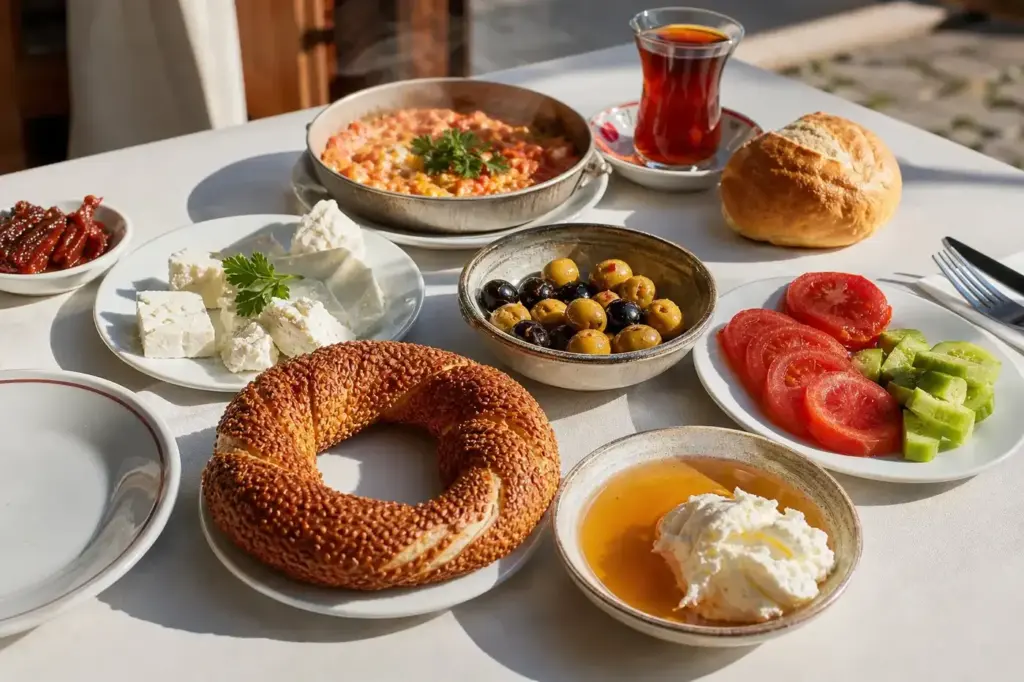
Turkish breakfast, called kahvaltı, is one of the most distinctive meals in Istanbul. Whether you’re staying in a hotel or visiting a neighborhood café, understanding how to eat Turkish breakfast will enrich your visit and help you avoid a common mistake: trying to rush through it.
This guide shows you what a traditional spread contains, how to approach the table, which components to start with, and what makes Istanbul’s breakfast culture so different from everywhere else. The goal is not just to eat, but to sit down, linger, and experience breakfast the way Turks do—as a social event, not a refueling stop. For first-timers, the simplest approach is to order tea, bread, cheese, olives, fresh tomatoes and cucumbers, and one hot egg dish such as menemen.
Quick answer: Order a table spread (serpme kahvaltı) or a set plate with bread, cheese, olives, vegetables and an egg dish, then pour tea and settle in for at least an hour. Breakfast is designed to be leisurely, with everything arriving at once so you can mix and match flavors as you eat. For a light version, stick to the cold items; for the full experience, add hot dishes like menemen or sucuklu yumurta.
At a Glance
| Total time | 1–3 hours |
|---|---|
| Typical cost | ₺₺ to ₺₺₺ depending on the venue and type of spread |
What You Need Before You Start
- Comfortable shoes and time—Turkish breakfast is not rushed
- An appetite for variety (many small dishes, not large portions)
- Willingness to share dishes and try unfamiliar items
- Some Turkish words or the ability to point at what you want
- Cash or payment method accepted by your restaurant
Compare Your Options
| Option | Duration | Price | Notes |
|---|---|---|---|
| Serpme kahvaltı (spread breakfast at a dedicated breakfast house) | 1.5–3 hours | ₺₺₺₺ | The full experience: many small dishes shared in the middle of the table. Best on weekends. Van-style spreads (from eastern Turkey) are more abundant and include regional specialties like herbed butter and local cheeses. Popular chains include Van Kahvaltıcı (multiple locations). First-timers should choose this option. Order for two people minimum. |
| Kahvaltı tabağı (set breakfast plate at a hotel or café) | 30–60 minutes | ₺₺ | A single plate with a boiled egg, cheese, jam, olives, bread and butter. Quick, straightforward, and common in hotels. Good for solo travelers or those short on time. Less social but still respects the ritual of tea and sitting down. |
| Menemen-focused breakfast (egg-focused menu) | 45–90 minutes | ₺ | Order a hot menemen or gözleme (stuffed flatbread) with bread, cheese and tea, without the full spread. Lighter and cheaper than serpme kahvaltı, but still captures the warm egg dish that defines Turkish breakfast. Good for travelers with a small appetite. |
| Café breakfast (casual coffee shop) | 30–45 minutes | ₺₺₺ | Many cafés offer a simpler version: bread, cheese, honey or jam, olives, and tea. Less elaborate than a dedicated breakfast house, but authentic and quick. Often available any time of day. Good for a light start before sightseeing. |
| Street-bought breakfast (simit and cheese from a vendor) | 10–15 minutes | ₺ | Buy a fresh simit (sesame bagel) and white cheese from a street vendor, along with tea from a café. Not a sit-down meal, but authentic and very common for locals. Good if you're in a rush but want to taste the basics. |
₺ budget · ₺₺ moderate · ₺₺₺ upscale · ₺₺₺₺ splurge. Price levels are estimates compared with typical prices for visitors.
Step-by-Step Instructions
Step 1: Arrive early and choose your seating
Turkish breakfast is a weekend ritual, so popular breakfast houses fill up by 10 am. Arrive by 9 am to avoid queues, especially in famous spots like Van Kahvaltıcı or in Beşiktaş. Choose a table with space to spread out dishes. Outdoor seating is preferred when available. Look for signs that say 'Kahvaltı Evi' (breakfast house) or 'Serpme Kahvaltı' (spread breakfast).
Tip: Friday and Saturday mornings are busiest; visit on a weekday if you prefer a quieter experience.
Step 2: Study the menu or ask for a recommendation
Ask your server 'Serpme kahvaltı var mı?' (Do you have a breakfast spread?). If yes, ask how many people you're ordering for. Most places have set spreads for two people or more, or you can build your own by pointing to items. If it's your first time, accept the house recommendation. Turkish staff understand that visitors may not know all the dishes.
Tip: Many breakfast places have photo menus on the wall showing what each spread includes.
Step 3: Wait for tea and water to arrive first
The server will bring a traditional double teapot (çaydanlık) with strong tea in the top pot and hot water in the bottom pot. Pour from the top first, then dilute with hot water to your taste. They will also bring small tea glasses and a glass of cold water. Do not drink the water immediately—it's for cleaning your palate between tastes and after eating.
Tip: Turkish tea is black tea, never sweetened. Sugar is served on the side; ask 'Şeker' if you want it.
Step 4: Bread and spreads arrive—start here
Freshly baked bread (usually white or simit, a sesame bagel) comes first. Tear off a piece and use it to sample the spreads: butter, jam, honey, and kaymak (clotted cream). Try honey with kaymak together on bread—this combination is iconic. Do not fill up on bread; it's just the beginning.
Tip: Simit has a hollow ring in the middle; you can slide a piece of cheese inside to make a quick sandwich.
Step 5: Pick from the cold dishes: cheese, olives, vegetables
Small plates arrive with beyaz peynir (white brined cheese, like feta), kaşar cheese, olives (black and green), sliced tomatoes, sliced cucumbers, and often fresh radishes or green peppers. These are designed to be shared and mixed. Take a small piece of cheese, an olive, a tomato slice and a cucumber slice on one bite with bread. There's no rush—this is the 'eating slowly' part.
Tip: If you see a green bowl with herbs (parsley, mint, sumac), sprinkle these over cheese and vegetables for flavor.
Step 6: Add the hot egg dish when it arrives
A hot plate comes last: menemen (soft scrambled eggs with tomato and pepper), sucuklu yumurta (eggs with spiced sausage), or kızarmış yumurta (fried eggs with kaymak). Menemen is the safest first choice for visitors—warm, savory, and easy to share. Tear bread into pieces and use it to scoop up the eggs. Eat this while it's hot.
Tip: If the eggs are very runny, that's intentional—Turkish cooks avoid overcooking. If you prefer them firmer, say 'Biraz daha pişmiş' (a bit more cooked).
Step 7: Continue between hot and cold, mixing flavors
The ritual continues: alternate between fresh vegetables, cheese and bread, then return to warm eggs. Sip tea between bites. There is no order or finish line. You eat what you want when you want, at your own pace. This is the social heart of kahvaltı—the meal can stretch to two hours, with conversation and tea-drinking between courses.
Tip: Turks often linger after eating, continuing to drink tea and chat. You don't need to leave as soon as you've eaten.
Step 8: End with sweets if you want them
Some spreads include honey and jam again at the end, or light pastries like pişi (fried dough) or baklava. These are optional. More commonly, breakfast simply ends when you stop eating and push back from the table, signaling you're done.
Tip: Say 'Afiyet olsun' (may it bring well-being) to others at the table when you finish eating—it's polite.
Step 9: Finish with tea and Turkish coffee (optional)
After eating, continue with tea or order a small cup of Turkish coffee (türk kahvesi). This is not rushed. You can sit here for another 30 minutes or more. The coffee is thick, strong and served in a tiny cup. Turkish tradition says that Turkish coffee tells your fortune from the grounds, but that's optional.
Tip: Turkish coffee is often offered free by the restaurant after a breakfast spread—don't assume it costs extra.
Common Mistakes to Avoid
- Skipping the tea. Tea is not optional—it's central to the ritual and aids digestion. Arrive expecting to drink multiple glasses over the course of an hour or more. If you don't like black tea, ask for 'çay with milk' (süt) or 'çay with honey' (bal), though these are less traditional.
- Trying to eat quickly. Breakfast is designed to be slow. Rushing through it misses the point entirely and may confuse your server or table mates. Plan for at least an hour, preferably 1.5 hours. This is not a grab-and-go meal.
- Not understanding 'serpme' (spread). First-timers often expect one large dish, like an omelet or breakfast plate. Instead, everything arrives at once: many small dishes in the middle of the table. There is no 'main dish.' You assemble your own bites from the variety.
- Overfilling your plate on first bites. Take small amounts from each dish. The point is to taste and mix flavors, not to load one plate. Bread is your utensil for picking up cheese, olives and vegetables. Use it generously.
- Not ordering menemen or another hot egg dish. Most visitors focus on cold items (cheese, olives, vegetables) and miss the warm component that makes Turkish breakfast special. Ask for menemen or sucuklu yumurta—these take 10 minutes to prepare and are worth the wait.
- Being shy about sharing dishes. Everything is in the middle of the table and designed to be shared. Reach across, take what you want. This is normal and expected. Don't wait for permission or worry about taking too much.
- Leaving immediately after eating. Turks linger at the breakfast table for tea and conversation, sometimes for hours. If you sit down to breakfast, budget time to stay. If you must rush, consider ordering a quick café version instead.
Tickets, Payment and Booking
Most Istanbul breakfast houses do not require advance booking for small groups, but popular spots fill up fast on weekends. As of October 2026: For spreads for four or more people, or for famous houses like Van Kahvaltıcı or Duriye, reserve by phone the day before or arrive by 9 am on weekends to secure a table.
Payment: Turkish breakfast houses accept cash (Turkish lira) and major credit cards, though some neighborhood cafés in outer areas may be cash-only. Foreign credit cards work at most established restaurants, but check with your card issuer regarding Turkish sanctions and restrictions, as your country’s banking rules may limit their use. Some places offer a small discount for cash payment.
Ordering: Ask your server for recommendations or point to items on the wall menu if there is one. If ordering for two people, say ‘İki kişi için serpme kahvaltı’ (spread breakfast for two). If you want to build your own plate, say ‘Seçerek kahvaltı’ (select your own breakfast).
Apps and booking: No dedicated Turkish breakfast booking app exists. Reservations can be made by phone (usually in Turkish or with the help of your hotel staff) or walk-in. Popular tourist-area houses may have Instagram pages showing current menus.
Warning: Avoid breakfast places on heavily touristed streets (Istiklal Caddesi, Sultanahmet mosque square) that have aggressive touts outside. These are often overpriced and low-quality. Instead, venture into residential neighborhoods or ask locals for recommendations.
Istanbul Vibes Tips
- Order tea immediately upon sitting, even before deciding on food. The server will bring the double teapot and glasses right away. While waiting for food, sip tea and study the menu or ask for recommendations. This prevents the awkward moment of having food arrive with no beverage.
- For the cheapest authentic breakfast, skip the famous tourist breakfast houses and visit a working-class neighborhood spot in Aksaray, Laleli, or on Kahvaltıcılar Sokağı (Breakfast Street) in Beşiktaş. These are packed with locals, charge less, and serve excellent food.
- If you want to eat alone without feeling out of place, sit at the café counter (bar) rather than a table. Ordering a simple kahvaltı tabağı (set plate) also signals you're eating quickly. Full serpme spreads are more social and work better with company.
- Many breakfast places serve unlimited tea with your spread. Take advantage—pour glass after glass without worrying about additional charges. This is the entire point of staying two hours.
- Don't expect English menus or staff in neighborhood breakfast houses. Learn to recognize key dish names: menemen, sucuklu yumurta, gözleme, simit, beyaz peynir, kaymak. Pointing and photos on your phone work perfectly fine. Most servers are patient with visitors who clearly want to try the food.
- If you're unsure whether you like a particular item, ask for a tiny taste from your server first. Turkish hospitality culture means they will happily put a small spoon on your plate so you can sample before committing. This is common practice.
Explore Nearby How to Eat Turkish Breakfast
Restaurants and cafes near How to Eat Turkish Breakfast
 Van Kahvalti Evi6 min on foot from Fındıklı-Mimar Sinan Üniversitesi metro, Open daily 08:00–17:00
Main image: AI-generated illustration. It may not show the place exactly as it looks.
 Ciya Sofrasi6 min on foot from Kadıköy-İDO metro
Main image: AI-generated illustration. It may not show the place exactly as it looks.
Related guides
 Turkish Breakfast Spots: 10 Essential Kahvaltı Places in Istanbul
Main image: AI-generated illustration. It may not show the place exactly as it looks.
 Best Neighborhoods for First-Time Visitors: Where to Stay in Istanbul
Main image: AI-generated illustration. It may not show the place exactly as it looks.
 Best Cafes by Neighborhood: Where to Sit in Every District
Main image: AI-generated illustration. It may not show the place exactly as it looks.
 Braces: Treatment Process, Types and What to Expect
Main image: AI-generated illustration. It may not show the place exactly as it looks.
 Gözleme: How to Make Turkish Stuffed Flatbread at Home
Main image: AI-generated illustration. It may not show the place exactly as it looks.
More guides
 Best Baklava Shops in Istanbul: Where to Eat Authentic Turkish Baklava
Main image: AI-generated illustration. It may not show the place exactly as it looks.
 Turkish Breakfast in Istanbul
Main image: AI-generated illustration. It may not show the place exactly as it looks.
 Turkish Airlines Free Transit Hotel: Eligibility and How to Claim It
Main image: AI-generated illustration. It may not show the place exactly as it looks.
Browse more: All Foodies · All How-To
FAQ
Is Turkish breakfast always this big, or do locals eat smaller breakfasts?
Both exist. The abundant serpme kahvaltı spreads you see in restaurants are a weekend or special-occasion version. On weekdays, many Turks eat a simpler breakfast at home: just bread, cheese, olives, tomato, cucumber and tea. The spreads you'll encounter in Istanbul as a visitor are more generous than daily home breakfasts, but they're still authentic and part of Turkish culture.
What if I don't like eggs? Do I have to eat them?
No. Many spread breakfasts can be enjoyed without the hot egg dish. Eat the cheese, olives, vegetables, bread, jams and honey. However, the egg dish is an important part of the experience for most Turks, and it's worth trying at least once. Menemen is the gentlest introduction—it's soft, vegetable-forward, and not heavily spiced.
Can I just order a few items instead of the whole spread?
Yes. Tell your server 'Seçerek kahvaltı' (select your own breakfast) and point to what you want. You can order just bread, cheese, olives and tea, or just menemen and bread. The server will serve you accordingly, and the bill will reflect your selection. There's no minimum order.
Is Turkish breakfast expensive?
No. A simple kahvaltı tabağı (set plate) costs ₺₺. A serpme kahvaltı (spread for two) costs ₺₺ to ₺₺₺ depending on the location and how upscale the venue is. Famous tourist spots charge more; neighborhood breakfast houses are very affordable. You're paying for the time and the ritual, not luxury.
How long does it take? I'm only in Istanbul for one day.
A basic kahvaltı takes 30–45 minutes. A proper serpme kahvaltı takes 1.5–3 hours. If you're short on time, order a quick set plate (kahvaltı tabağı) at a café, not a full spread at a dedicated breakfast house. Rushing through breakfast feels wrong and you'll miss the point.
What time is breakfast served?
Breakfast houses open early, typically 7–8 am, and close by mid-afternoon (2–4 pm). The busiest times are 9–11 am on weekends. If you go after 11 am on Saturday or Sunday, expect to wait or find no tables. Weekday breakfasts are quieter and easier to access.
Can I bring children to a breakfast place?
Yes, absolutely. Turkish breakfast is a family meal. Many restaurants specifically cater to families on weekends. Children can eat smaller portions from the spreads, or order simple items like bread with jam and honey. Tea with milk is available for kids. High chairs are usually not provided, but staff are very welcoming to families.
What's the difference between white cheese and the other cheeses on the table?
Beyaz peynir (white cheese, like feta) is salty, crumbly and fresh. Kaşar cheese is milder, creamier and more like cheddar. Some spreads also include string cheese (tel peynir). Try each one—they have different textures and tastes. White cheese is the most essential and appears on nearly every breakfast table.
Istanbul Vibes is a one-person project. A coffee keeps it going

Take this guide with you
Get a free PDF of this guide to print or read offline: key facts, tips and a map link on a few clean pages.
Report an issue on this page
How we research and update our guides
About this guide: AI assistance and accuracy
This guide is created with the help of AI and is based on official sources where available. Mistakes can still happen. Opening hours, prices, rules and other details are given to the best of our knowledge as of the date shown and can change without notice. It offers general recommendations only, not professional, legal or travel advice. Please confirm important details with the official source before you travel; you are responsible for your own plans and decisions.
* Affiliate link: as an Amazon Associate we earn from qualifying purchases at no extra cost to you.
