
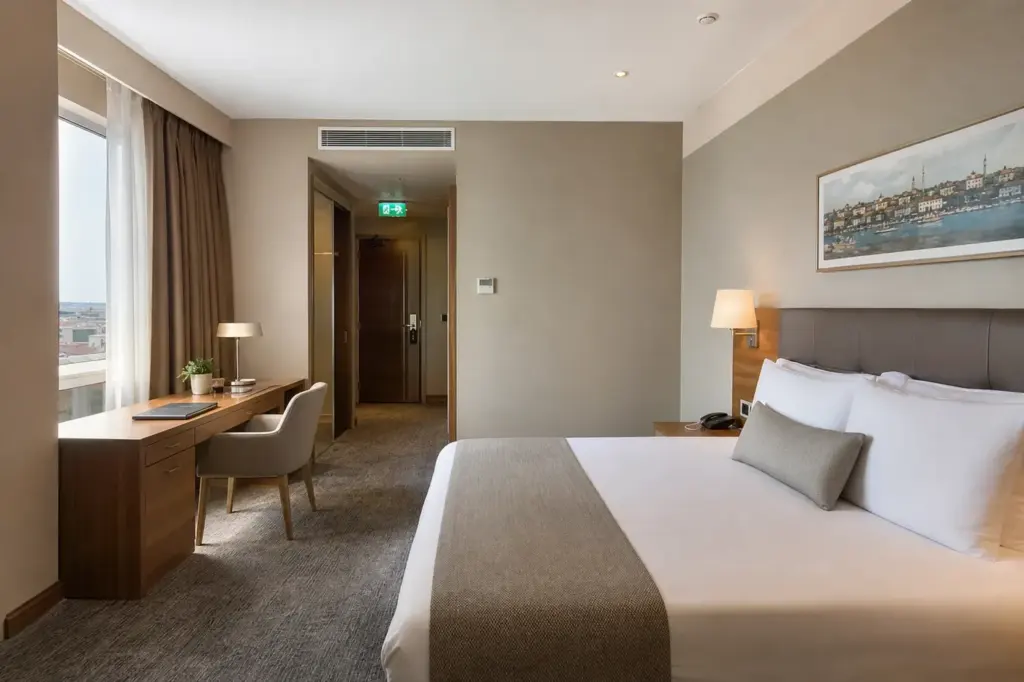
Istanbul is located near the North Anatolian Fault and the Marmara Fault, making it part of one of Europe’s most seismically active regions. However, for a visitor spending days or weeks in the city, the immediate risk on any given day is comparable to other seismically active cities worldwide such as Tokyo or Los Angeles.
This guide covers practical preparation steps before you arrive, how to respond if you feel tremors, and where to find real-time information while you’re in Istanbul. The recommended approach is to take basic precautions at your hotel without anxiety: note emergency exits, keep essentials within reach, and register for official alerts.
Current access notice: As of October 2026: Turkey experienced a magnitude 6.2 earthquake on April 23, 2025, located in the Sea of Marmara about 40 kilometers southwest of Istanbul. This event caused hundreds of injuries and moderate damage in Istanbul but no major tourist infrastructure disruption. The city returned to normal operations within days. No tourist attractions or transit systems remain closed as a result. Current seismic activity is monitored continuously by AFAD.
Quick answer: Before arrival, download the official AFAD emergency app and familiarize yourself with drop-cover-hold on procedures. Upon check-in, locate emergency exits and ask staff about earthquake protocols. If you feel shaking, immediately drop to the ground, take cover under a sturdy table or against an interior wall, and hold on until movement stops. Most episodes pass within seconds to a minute.
At a Glance
| Total time | Preparation takes 10–15 minutes on arrival; response during an event is instantaneous |
|---|---|
| Typical cost | Free (the AFAD app and alert system are free; earthquake drills and information are public) |
What You Need Before You Start
- A smartphone with internet access to download the AFAD mobile app
- Turkish SIM card or working mobile connection for alerts (visitors can register with their Turkish phone number during their stay)
- Comfortable shoes to keep near your bed (in case of broken glass)
- A phone charger kept accessible
- Basic familiarity with your hotel's emergency exits and procedures
Compare Your Options
| Option | Duration | Price | Notes |
|---|---|---|---|
| Register your phone number with AFAD for text alerts (recommended) | 2 minutes per device | Free | Visitors can register a Turkish mobile number (purchased as a visitor SIM or through their hotel) with AFAD's Integrated Disaster Management System to receive SMS and push notifications. This ensures you're notified of earthquakes and official guidance in real time, even if you're not actively using the app. |
| Use a third-party earthquake app that aggregates AFAD data | 5 minutes to download and configure | Free | Apps like 'Earthquake Network Turkey' or 'Earthquake Turkey' pull data from AFAD, Kandilli Observatory, and European monitoring agencies. These apps may offer faster notifications and visual maps but are not official. They're useful for supplementary information but not replacement for AFAD. |
| Check the EarthquakeTrack website manually for current activity | 1 minute per check | Free | The independent website earthquaketrack.com.tr combines feeds from USGS, Kandilli Observatory, and EMSC into a live map. Useful for context but not a warning system. Refresh every 60 seconds if monitoring actively. |
| Ask your hotel concierge for daily earthquake briefings | 1–2 minutes per day | Free | High-end hotels in Istanbul may volunteer information about seismic activity and safety status as part of guest services. Concierges monitor AFAD and local news. This is passive information rather than active preparation. |
₺ budget · ₺₺ moderate · ₺₺₺ upscale · ₺₺₺₺ splurge. Price levels are estimates compared with typical prices for visitors.
Step-by-Step Instructions
Step 1: Download the official AFAD app before you arrive
Search your phone's app store for 'AFAD' (Afet ve Acil Durum Yönetimi Başkanlığı, Turkey's Disaster and Emergency Management Authority). Install the app on both iOS and Android. This app provides real-time earthquake information, alerts filtered by your location, and aftershock tracking. Activate push notifications so you receive alerts without actively checking the app.
Tip: Download before departure to avoid poor mobile service after landing. The app is available in Turkish and English.
Step 2: Locate the emergency exits in your hotel or accommodation
Upon check-in, ask the front desk to show you the nearest emergency exit and stairwell. Look at the evacuation map posted inside your room door. In a multi-story building, stairs are always safer than elevators in an earthquake. Note the exit closest to your room and mentally rehearse the path. If you're staying in a newer hotel built after 2000, the structure meets modern seismic codes and is more resistant to damage.
Tip: Avoid taking the elevator. If you're in a tall building, ground-floor or lower rooms offer slightly faster exit times, though modern buildings are engineered throughout.
Step 3: Ask staff about the hotel's earthquake procedures
Request information about what to do during an earthquake. Ask whether the hotel conducts earthquake drills, where emergency supplies are kept, and whether there are designated assembly points outside the building. Write down the hotel's local phone number and address so you can call from outside if needed. Most international-standard hotels in Istanbul have written protocols.
Tip: This conversation takes two minutes and gives you confidence. Staff typically appreciate the question.
Step 4: Prepare a bedside earthquake kit
Keep the following items within arm's reach of your bed: sturdy shoes (to protect feet from broken glass), a charged phone, a phone charger, a small flashlight or your phone's flashlight function enabled, and any daily medications you take. If staying multiple nights, replenish water and snacks daily. This is not an elaborate survival kit; it's practical response gear for the first few minutes after an event.
Tip: Store shoes under the bed or on a nightstand, not across the room. In darkness or confusion, you won't be able to search.
Step 5: Memorize the drop-cover-hold on procedure
The three-step response if you feel shaking: (1) Drop immediately to hands and knees; (2) Take cover under a sturdy table, desk, or against an interior wall away from windows and heavy objects that could fall; (3) Hold on until the shaking stops. Do not try to run outside—moving during shaking increases injury risk. Most tremors last 10–30 seconds. Wait for complete stillness before moving.
Tip: Visualize this for 30 seconds. The muscle memory matters more than memorization. If you're outdoors, move away from buildings, power lines, and trees.
Step 6: Understand that aftershocks may follow
After the initial shaking stops, remain alert for aftershocks, which are typically smaller but can occur minutes to hours later. Stay in safe positions if you're still on the ground. Check the AFAD app for magnitude and location data. If you're in a public place, follow directions from local authorities. If in your hotel, remain calm and stay in your room unless instructed otherwise.
Tip: Aftershocks are normal and expected. They rarely cause additional damage in modern buildings.
Step 7: Know the emergency contact number
Turkey's universal emergency number is 112 (police, fire, ambulance, disaster response). Call only if you or others are injured or trapped. Use text if calling is impossible. Text messages often get through when voice lines are congested. You do not need a SIM card to dial 112—any phone with signal can call. Have this number written down or memorized.
Tip: During major events, emergency lines experience high volume. If you can self-rescue and are uninjured, do so to free lines for serious cases.
Step 8: Follow official guidance and avoid social media rumors
After significant seismic activity, check only official sources: the AFAD app, AFAD's website (en.afad.gov.tr), or local news. Do not spread unverified information. Social media and messenger apps often circulate false reports that cause panic. If you're uncertain about whether to leave your building or area, wait for official instruction or ask hotel staff.
Tip: Misinformation spreads faster than facts. Pause before sharing posts about earthquake damage or evacuation orders.
Common Mistakes to Avoid
- Assuming you can run outside during an earthquake. Running during shaking often causes injury from falling or being struck by debris. The safest action is to immediately drop and take cover where you are—indoors or out—and wait for the shaking to stop. Outdoor movement should happen only after the ground is still.
- Taking the elevator after an earthquake. Elevators can trap you or malfunction if the building is damaged. Always use stairs for all post-earthquake movement, even to descend from upper floors. This applies even if the building seems undamaged.
- Panicking or passing judgment about your hotel after minor tremors. Istanbul experiences frequent minor tremors (magnitude 2–3) that residents often don't notice. Feeling a small tremor does not mean your hotel is unsafe. Modern hotels are engineered to handle seismic movement. Unless there is visible damage or official evacuation orders, remain in your accommodation.
- Ignoring the drop-cover-hold on procedure because you don't believe an earthquake will happen during your trip. While your statistical risk as a visitor is low, the procedure takes seconds and costs nothing. It's equivalent to knowing where the life jacket is on a plane—remote risk, practical preparation.
- Trusting social media or WhatsApp group messages over AFAD for emergency information. After earthquakes, false reports circulate rapidly about tsunami warnings, building collapses, or evacuation zones that are later contradicted. Official channels (AFAD app, 112, hotel staff) are the only reliable sources.
Tickets, Payment and Booking
There are no tickets or bookings required for earthquake preparedness. All resources are free and publicly available:
- AFAD mobile app: Download from Apple App Store or Google Play Store. Search ‘AFAD’ or ‘Disaster and Emergency Management Authority.’ Available in Turkish and English. No login required.
- AFAD official website: en.afad.gov.tr provides English-language information, maps, and archived earthquake data.
- Emergency number: Call 112 from any phone on any network in Turkey, with or without a SIM card, 24/7.
- For visitors: You do not need to register in advance. Upon arrival, purchase a local SIM card if you want SMS alerts, or rely on the app with WiFi at your hotel.
- Warning about resellers: Do not download earthquake apps from third-party websites or links in social media. Download only from your phone’s official app store.
Istanbul Vibes Tips
- If you're in Istanbul during the national earthquake drill (typically held in November on the anniversary of the 1999 Düzce earthquake), this is an ideal moment to test your awareness. When the warning is broadcast on television and radio, mentally rehearse your drop-cover-hold on response. Many residents participate, and the drill reinforces good habits.
- Ask your hotel or hostel whether they have a rooftop assembly point or garden where guests are instructed to go after significant seismic events. Some buildings have designated outdoor gathering areas away from structures. Knowing this in advance removes uncertainty if evacuation is needed.
- If you're traveling with others, establish a communication plan: exchange phone numbers, agree on a meeting place outside your hotel, and decide on a contact person in your home country to notify if normal communication fails. Write this down on paper—phone batteries die and services can be disrupted.
- Avoid standing under or near power lines, building cornices, or large trees if you're outdoors during shaking. If you're in a crowded bazaar or crowded street and feel significant shaking, crouch or squat and cover your head with your hands. Once shaking stops, calmly move to open space.
- Don't assume that older neighborhoods or historic districts are more dangerous than modern areas. Modern buildings built to post-2000 seismic codes are the safest. Newer hotels, offices, and museums have undergone retrofitting or were purpose-built to withstand seismic movement. This is one case where staying in a well-maintained modern hotel offers a genuine safety advantage.
- If you experience a moderate earthquake (strong shaking lasting 10–20 seconds), expect that some services (metro, ferries, shops) may close temporarily for safety checks, and phone networks may be congested. Stay calm, do not call unless injured, and wait for official information. Istanbul's emergency services are prepared for this scenario.
Explore Nearby How to Prepare for an Earthquake While Visiting Istanbul
Related guides
 Things to Do in Istanbul on a Rainy Day: Indoor Museums, Palaces and Bazaars
Main image: AI-generated illustration. It may not show the place exactly as it looks.
 Free Things to Do in Istanbul: 10 Major Sights and Walks
Main image: AI-generated illustration. It may not show the place exactly as it looks.
 Traveling with Chronic Conditions: Health Care Guide for Istanbul
Main image: AI-generated illustration. It may not show the place exactly as it looks.
More guides
 Self-Transfer at Istanbul Airports: Baggage, Immigration and Connection Times
Main image: AI-generated illustration. It may not show the place exactly as it looks.
 Istanbul Budget Travel Essentials
Main image: AI-generated illustration. It may not show the place exactly as it looks.
 How to Get Cash and Use ATMs in Istanbul
Main image: AI-generated illustration. It may not show the place exactly as it looks.
 How to Use Dolmuş Minibuses in Istanbul
Main image: AI-generated illustration. It may not show the place exactly as it looks.
 How to Transfer Between Istanbul's Two Airports
Main image: AI-generated illustration. It may not show the place exactly as it looks.
Browse more: All Etiquette and Safety · All How-To
FAQ
What is the actual risk of an earthquake during my visit to Istanbul?
For a visitor staying days or weeks, the statistical probability of experiencing a major earthquake during your specific trip is very low, similar to the risk in Tokyo or Los Angeles. Istanbul is in a seismically active zone, but earthquakes cannot be predicted by time. Geologists estimate a 60–70% probability of a significant earthquake (magnitude 7.0 or above) in the Marmara region within the next 30 years—a long-term forecast, not a daily prediction.
Do I need to buy earthquake insurance or cancel my trip?
No. Earthquake risk to visitors is comparable to other seismically active tourist destinations. Thousands of visitors experience Istanbul safely every month without incident. Your existing travel insurance typically covers medical evacuation if needed. Canceling your trip based on earthquake risk is not recommended; proceeding with basic preparedness (download the app, locate exits, know the drop-cover-hold on procedure) is the practical approach.
What was the April 2025 earthquake in the Sea of Marmara like in Istanbul?
On April 23, 2025, a magnitude 6.2 earthquake struck the Sea of Marmara, about 40 kilometers southwest of Istanbul. It caused hundreds of injuries and moderate damage (broken windows, wall cracks, one building collapse in Fatih district). The metro closed briefly for safety inspections, schools shut for two days, and around 100,000 people spent the night in emergency shelters. Tourist infrastructure (hotels, restaurants, museums) resumed normal operations within days. No major disruption to tourism occurred.
Will I receive an earthquake warning before strong shaking arrives?
Turkey's early warning system can provide alerts within 10–15 seconds of earthquake detection, depending on proximity to the epicenter. For earthquakes far from Istanbul (such as those south of the city), you may receive warning before strong shaking arrives. For very close earthquakes, there may be no warning time. The AFAD app and SMS alerts aim to notify people as soon as seismic activity is detected.
Which Istanbul neighborhoods are safest from earthquakes?
Safety depends more on building age and construction standards than on neighborhood location. Newer buildings (post-2000) that meet modern seismic codes are the safest, whether in central Istanbul or the suburbs. Older neighborhoods and hastily constructed areas have higher risk. Stay in hotels and accommodations built or recently renovated to modern standards. Ask your hotel's age and whether it has undergone seismic retrofitting.
What should I do if I'm on the metro or a ferry when shaking occurs?
On the metro: Drop, cover, and hold on where you are. Do not try to exit during shaking—the train may still be moving. Wait for the train to stop and for instructions from staff. Exit via stairs only, never escalators or elevators. On a ferry: Seek shelter indoors, drop to the ground if possible, and hold on. Do not jump into the water. Follow crew instructions. Modern ferries are designed to stay afloat during seismic events.
Is it safe to visit mosques, museums, or historical sites after an earthquake?
Most historic and religious sites are continuously monitored by officials and UNESCO authorities. After any significant seismic event, sites are inspected for structural damage before reopening. If a site remains open and accessible, it has been cleared by authorities. If you're concerned, ask hotel staff or call ahead. Major attractions rarely close except for brief inspection periods after large earthquakes.
What is the difference between AFAD, Kandilli Observatory, and other sources I see online?
AFAD (Disaster and Emergency Management Authority) is Turkey's official emergency management body and operates the national monitoring and alert system. Kandilli Observatory is a research institution that also monitors seismic activity and publishes data used by AFAD and international agencies. AFAD is the authority for emergency response and official alerts; Kandilli provides complementary scientific data. Both feed into AFAD's alert system on your phone.
Istanbul Vibes is a one-person project. A coffee keeps it going
Not legal advice. This is general information for visitors. Rules on visas, entry, registration, customs and similar matters change often and can depend on your nationality. Check the official source and, if in doubt, ask your embassy or a qualified adviser.

Take this guide with you
Get a free PDF of this guide to print or read offline: key facts, tips and a map link on a few clean pages.
Report an issue on this page
How we research and update our guides
About this guide: AI assistance and accuracy
This guide is created with the help of AI and is based on official sources where available. Mistakes can still happen. Opening hours, prices, rules and other details are given to the best of our knowledge as of the date shown and can change without notice. It offers general recommendations only, not professional, legal or travel advice. Please confirm important details with the official source before you travel; you are responsible for your own plans and decisions.
* Affiliate link: as an Amazon Associate we earn from qualifying purchases at no extra cost to you.
