
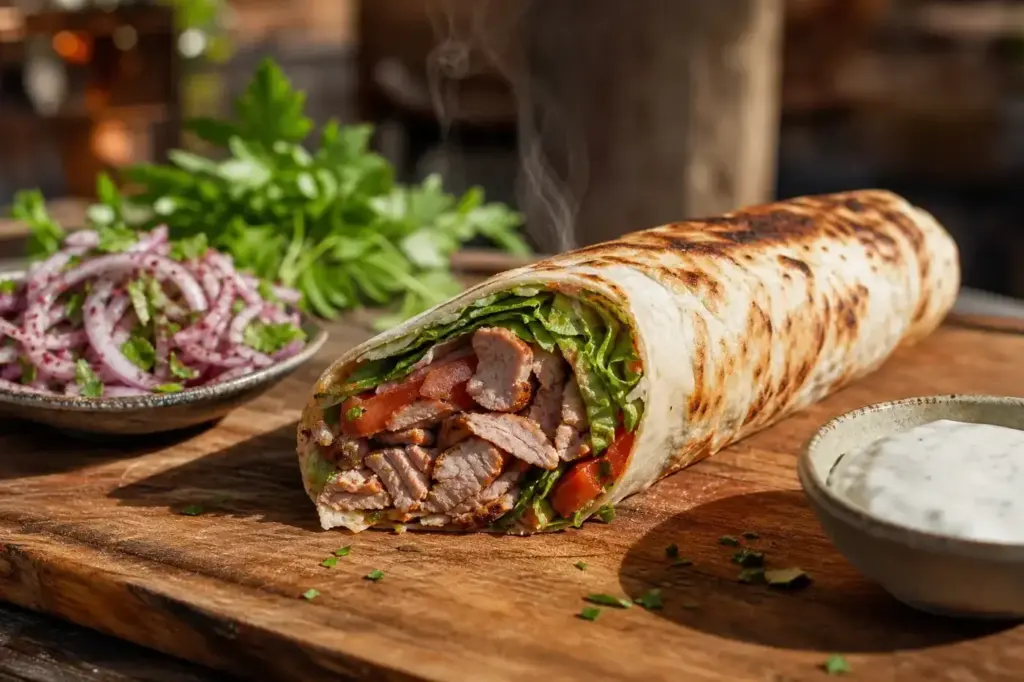
Durum (spelled dürüm in Turkish) is the quintessential Turkish street food wrap: hot meat from a grill or vertical spit, rolled tightly in thin lavash or yufka flatbread with sumac onions, tomatoes, lettuce and sauce. The name means “roll” in Turkish, describing the wrapping action that defines it. If you’re asking how to make a durum kebab wrap at home, the key is understanding that success depends on warm ingredients, a properly prepared flatbread, and confident rolling.
This guide shows you the recommended approach: assembling a traditional durum with döner or grilled meat, building layers so nothing falls out, and rolling it tight enough to hold its shape. The whole process takes 30–45 minutes at home, depending on how you cook the meat.
Quick answer: Prepare warm spiced meat and vegetables, lay a warm lavash or yufka flatbread on a clean surface, spread with sauce, layer the meat and fresh ingredients, roll tightly and cut on the diagonal. Total time: 30–45 minutes. Cost depends on meat type; typically moderate.
At a Glance
| Type | Street food & snacks |
|---|---|
| Origin | Street vendors in Istanbul and Gaziantep pioneered the practice of assembling meat, vegetables, and sauces inside a thin sheet of bread, creating a portable, eat-on-the-go dish. It originated as a portable adaptation of döner kebab, which itself emerged in the Ottoman Empire during the 19th century, with the vertical rotisserie cooking technique pioneered in Bursa, Turkey. |
| Servings | 2–4 (makes 2–3 wraps) |
| Total time | 30–45 minutes |
| Difficulty | Easy |
History and Story of Durum
The word dürüm means “roll” in Turkish, referring to the way the flatbread is rolled around its filling. Street vendors in Istanbul and Gaziantep pioneered assembling meat, vegetables, and sauces inside a thin sheet of bread, creating a portable, eat-on-the-go dish. This wrap-style serving gained widespread popularity in the mid-20th century, particularly through Turkish immigrants in Europe, evolving into a global fast-food staple. It has nothing to do with durum wheat, the hard pasta wheat that shares the spelling. The bread that makes rolling possible is lavash—the thin Anatolian flatbread so old that its making is inscribed on UNESCO’s cultural heritage lists across the region, from Turkey through the Caucasus.
Ingredients
- 400–500 g boneless lamb, beef or chicken, thinly sliced or ground
- 2 sheets lavash or yufka flatbread
- 1 medium tomato, sliced
- 1 small head lettuce, sliced
- 1 red onion, thinly sliced
- 30 ml olive oil
- 2 tsp paprika
- 1 tsp ground cumin
- ½ tsp salt
- 2 tbsp fresh parsley, chopped
- 2 tbsp garlic sauce or yogurt-based sauce
- 1 tsp sumac (for dusting)
How Durum Is Made
Step 1: Prepare and marinate the meat
Trim any excess fat from the meat and slice it thinly (or use ground meat). In a bowl, combine paprika, cumin, salt, minced garlic and olive oil. Add the meat and toss until coated. Let it sit for at least 30 minutes at room temperature so the spices penetrate. If using pre-cooked döner from a vendor, skip this step.
Tip: Marinating overnight intensifies flavour, but 30 minutes is the minimum.
Step 2: Cook the meat
Heat a skillet or griddle over medium-high heat. Add the marinated meat and cook for 8–12 minutes, stirring occasionally, until browned and cooked through. The meat should release its juices and develop a light crust. For Adana kebab, form the marinated meat onto a skewer and grill over charcoal or a hot grill until cooked.
Tip: Raw or undercooked meat will make the wrap fall apart. Cook until no pink remains.
Step 3: Prepare the vegetables
While the meat cooks, slice the tomato into thin pieces, cut the lettuce into fine strips, and slice the onion paper-thin. Mix the onion with chopped parsley and sumac in a small bowl; this sumac onion mixture is essential to durum flavour. Keep the vegetables separate until assembly.
Tip: Fresh, cold vegetables contrast with the hot meat and prevent the bread from becoming soggy.
Step 4: Warm the flatbread
Hold the lavash or yufka briefly over a gas flame, hot skillet or under a warm grill for 15–20 seconds per side. It should be warm and pliable, not dry or crispy. If you're using döner from a grill, lay the lavash over the meat on the grill and press it down so the bread warms through and soaks up the rendered fat.
Tip: Cold bread will crack when you roll it. Warm it just before assembly.
Step 5: Assemble the wrap
Lay the warm flatbread flat on a clean surface or cutting board. Spread a thin layer of garlic sauce or yogurt sauce across it. Layer the hot meat in the centre, then add the tomato slices, lettuce, and a generous handful of the sumac onion mixture. The meat should still be warm when you assemble—this is essential.
Tip: Don't overfill. Leave about 2 cm on each end to allow for rolling without spillage.
Step 6: Roll the wrap tightly
Grip the edges of the flatbread with both hands. Fold the left and right sides inward about 2 cm, then fold the bottom edge up over the filling. Now roll the entire wrap tightly away from you, maintaining tension so the bread stays firm around the cylinder. Roll until the top edge seals; the weight of the roll itself should hold it closed.
Tip: Eat it standing up if you can—durum is street food, built to be eaten hot within minutes of rolling, not reheated.
Step 7: Cut and serve immediately
Place the roll seam-side down on the cutting board. Using a sharp knife, cut diagonally across the centre, and then cut the pieces in half again if desired. Cut on the diagonal; a straight cut exposes less of the cross-section and the wrap looks, and eats, better. Serve at once while everything is still hot.
Tip: Diagonal cuts show off the layers and make the wrap easier to hold and eat.
Variants
- Döner durum: the most common version, made with thin slices of meat cooked on a vertical spit
- Adana durum: made with spiced ground lamb formed into a long kebab and grilled on a skewer
- Balık durum (fish wrap): grilled mackerel or oily fish wrapped in lavash with fresh herbs, typical of Istanbul waterfront vendors
- Vegetarian durum: grilled vegetables, mushrooms or falafel wrapped in lavash
- Chicken durum: boneless chicken thighs marinated and grilled instead of lamb or beef
Common Mistakes to Avoid
- Using cold flatbread. Cold dürüm bread will tear or crack when you roll it. Always warm it first—even 15 seconds over a flame or on a hot pan makes the difference between a wrap that holds and one that falls apart.
- Filling it too much. Overstuffing causes the bread to burst when rolling and ingredients to escape. Leave at least 2 cm on each end and use a moderate amount of each ingredient.
- Cooking the meat until it dries out. Overcooked meat won't hold together inside the wrap and tastes tough. Cook until the meat is just done, with a slight sizzle and moisture still visible.
- Forgetting the sumac onions. Many home cooks skip this step thinking it's optional. Sumac onions are not a garnish—they're essential to authentic durum flavour, adding a tart, citrus note that balances the richness.
- Rolling too loose. A wrap that isn't rolled tightly will unroll when you cut it and fall apart in your hand. Roll with tension so the bread forms a firm cylinder on its own.
- Letting it sit after assembly. Durum is made to be eaten hot, within a minute or two of rolling. Sitting even a few minutes allows steam to soften the bread unevenly and fillings to cool. Serve immediately.
How to Order and Eat It
Eat it standing up if you can—durum is street food, built to be eaten hot within minutes of rolling, not reheated. Hold the wrap with both hands at one end, using a napkin to catch any drips from the sauce and warm meat. Work your way along it, turning it slightly to distribute the heat and prevent one side from becoming soggy. The diagonal cut exposes the layers so you get meat, vegetables and sauce in every bite. Finish it within minutes of rolling—as it cools, the bread becomes less pliable and the contrast between hot and fresh diminishes.
To order: Bir dürüm lütfen. [Bir durum lutfen.]
Diet and Allergens
- Contains meat (lamb, beef or chicken)
Where to Try Durum
 Bayramoğlu Döner Wood-fired döner with fresh lavaş
Main image: AI-generated illustration. It may not show the place exactly as it looks.
 Antiochia Hatay (Antakya) meze, grills and desserts
Main image: AI-generated illustration. It may not show the place exactly as it looks.
 Dürümzade Turkish kebab and wraps
Main image: AI-generated illustration. It may not show the place exactly as it looks.
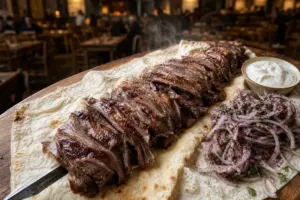 Şehzade Cağ Kebap Turkish (Kebab)
Main image: AI-generated illustration. It may not show the place exactly as it looks.
Istanbul Vibes Tips
- At Istanbul street vendors, watch the timing. Durum is assembled to order after the meat is cooked, so you can see it being rolled. If the vendor is wrapping meat that's been sitting, wait a moment—or order somewhere busier where the turnover is faster and meat stays hot.
- Buy döner from a busy location. The vertical spit should be turning steadily and shaving meat constantly. Meat that sits on the spit for hours dries out and becomes stringy. The outer layer—the most desirable part—caramelises only on spits with regular turnover.
- Ask for extra sumac onions and parsley if the vendor offers them. These aren't filler—they provide the sharp, fresh note that cuts through the richness of the meat and sauce. Without them, durum tastes flat.
- In Istanbul, avoid shops advertising "tourist prices" or posted in English. The best durum comes from places where locals are eating. Walk where the queue is, not where the sign is brightest.
- Pair your durum with ayran, the thin salted yogurt drink sold alongside. The cold, tart liquid balances the warm, savoury wrap perfectly and is the traditional pairing. Drink it sip by sip as you eat.
- When making durum at home, don't skip the resting time for marinated meat. Even 30 minutes allows the spices to infuse. Overnight gives noticeably better flavour, and you can then cook the meat quickly the next day when you're ready to eat.
Explore Nearby Durum
Related guides
 Spice Bazaar and Grand Bazaar Route: Two Markets, Six Centuries
Main image: AI-generated illustration. It may not show the place exactly as it looks.
 Street Food Tour Route: A 3-Day Walking Guide to Istanbul’s Best Eats
Main image: AI-generated illustration. It may not show the place exactly as it looks.
 Istanbul Markets Morning Tour: Spice Bazaar and Grand Bazaar Itinerary
Main image: AI-generated illustration. It may not show the place exactly as it looks.
 How to Avoid Restaurant Scams in Istanbul: Prevention and Fair Billing
Main image: AI-generated illustration. It may not show the place exactly as it looks.
 Best Street Food and Markets: Where Istanbul Eats
Main image: AI-generated illustration. It may not show the place exactly as it looks.
Browse more: All Food & Drink · All Other
FAQ
What's the difference between durum and döner?
Durum is usually more expensive than a normal döner. Some people prefer it to the döner, either because the portion is bigger or because the fillings-to-bread-ratio is higher in a dürüm. A döner is typically served on bread shaped like a boat, while a durum is rolled tight in thin flatbread, making it more portable.
Can I make durum at home without special equipment?
Yes. You need a skillet or griddle to cook the meat, and the ability to warm flatbread over a gas flame or in a hot pan. If you don't have access to lavash or yufka, thin flour tortillas work. The key is getting the meat properly spiced and the bread warm before assembly.
What's the difference between lavash and yufka?
Yufka is a thin, round, and unleavened flatbread. It is similar to lavash and is usually made from wheat flour, water, and salt. Both work for durum; lavash is slightly softer and more pliable, yufka is slightly denser. Use whichever you can find.
Is durum gluten-free?
Traditional durum is made with wheat flatbread, so it contains gluten. The meat filling itself contains no gluten, but cross-contamination is common in street kitchens. If you have celiac disease or gluten sensitivity, ask the vendor or make durum at home using gluten-free flatbread.
Does durum contain pork?
Authentic Turkish durum is made with lamb, beef, chicken, or fish—never pork. However, always confirm with the vendor or restaurant, especially when travelling. Halal-certified shops guarantee no pork.
How long will a durum stay fresh if I make it ahead?
Durum is designed to be eaten hot, within minutes of rolling. The bread softens and absorbs moisture as it sits; the meat cools and firms up. After 30 minutes, it's still edible but loses its appeal. Don't make durum in advance—assemble it fresh each time.
What sauce should I use in my durum?
Authentic durum uses either a thin garlic sauce (made from yogurt or sour cream mixed with garlic) or a tomato-based sauce. Some vendors add a spicy chili sauce on top. Start with a thin layer—too much sauce makes the bread soggy and flavour muddy.
Can I eat durum cold the next day?
You can, but it won't be good. Cold durum is chewy, the bread is tough, and the flavours don't meld. If you have leftover cooked meat, make fresh durum the next day rather than reheating yesterday's wrap.
Istanbul Vibes is a one-person project. A coffee keeps it going

Take this guide with you
Get a free PDF of this guide to print or read offline: key facts, tips and a map link on a few clean pages.
Report an issue on this page
How we research and update our guides
About this guide: AI assistance and accuracy
This guide is created with the help of AI and is based on official sources where available. Mistakes can still happen. Opening hours, prices, rules and other details are given to the best of our knowledge as of the date shown and can change without notice. It offers general recommendations only, not professional, legal or travel advice. Please confirm important details with the official source before you travel; you are responsible for your own plans and decisions.
* Affiliate link: as an Amazon Associate we earn from qualifying purchases at no extra cost to you.
