
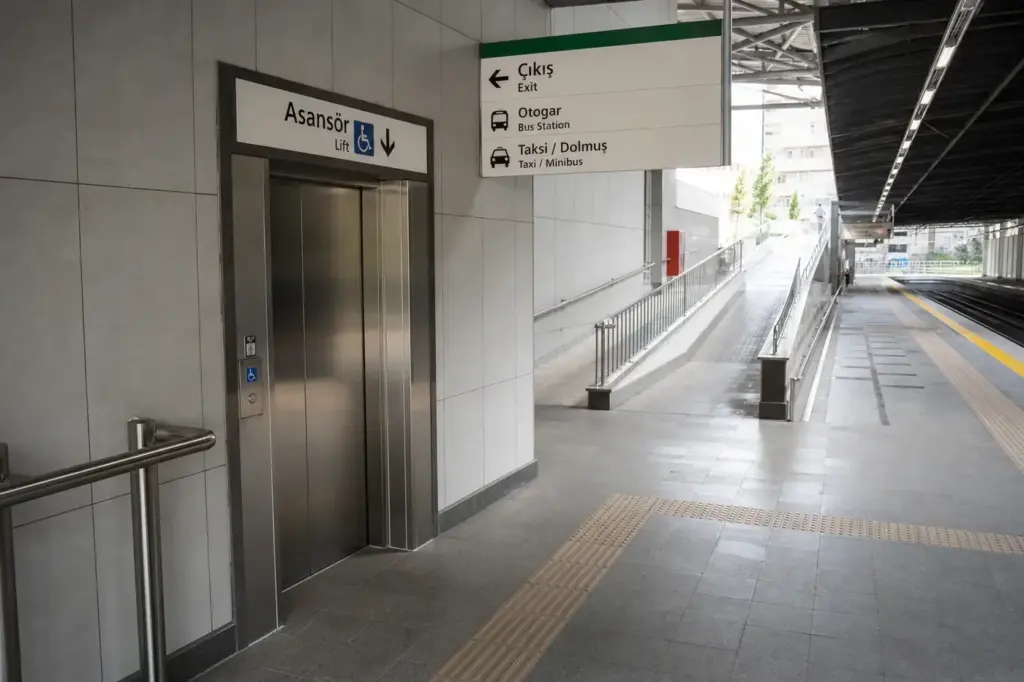
If you use a wheelchair or have mobility challenges, you can visit Istanbul—but the city requires advance planning. Unlike many European capitals, Istanbul was not designed with universal accessibility in mind; cobblestone streets, steep hills, and historic buildings in the old city create real barriers. The good news is that modern infrastructure—the metro, tram, and Marmaray rail tunnel—now offers step-free routes through the tourist center, and many major attractions have made accommodations.
This guide shows you the practical way to plan your visit: which neighborhoods to stay in, which transit lines work, how to book accessible taxis, and what you will and will not find at the main sites. How to get around Istanbul with disabilities starts with choosing your base near accessible metro or tram stations, then moving between attractions on those reliable networks.
Current access notice: As of October 2026: The M11 metro line now connects Istanbul Airport directly to the city centre with step-free interchange at Gayrettepe to M2. This is a recent upgrade; check Metro Istanbul's website for the latest route map and elevator status. Istanbulkart Disabled Card eligibility and free transport benefits are current; verify requirements with the official transport authority before arrival.
Quick answer: Use the T1 tram for Sultanahmet (tourist center), the Metro for Taksim and Beyoğlu, and Marmaray to cross the Bosphorus. Book an accessible taxi for hills and gaps. Plan short distances between transit and your destination. Total visit time depends on your pace; allow extra time for orientation and rest.
At a Glance
| Total time | Varies by itinerary; plan extra time for transitions between transit and attractions (10–20 minutes between stops) |
|---|---|
| Typical cost | ₺ to ₺₺ (free transport for disabled cardholders; otherwise budget-moderate for taxis and entry fees) |
What You Need Before You Start
- Istanbulkart Disabled Card (if eligible, for free metro/tram/ferry) or standard transport card
- Pre-booked accessible taxi or van contact details (especially for airport transfer)
- Hotel details with confirmed accessible room and entry method
- Comfortable, non-slip shoes (tram and metro ramps can be damp)
- Power bank or charger (if using electric wheelchair)
- List of nearby accessible restrooms in your chosen area
Compare Your Options
| Option | Duration | Price | Notes |
|---|---|---|---|
| T1 tram + Metro M2 (recommended) | 30 minutes to 1.5 hours per journey (including waits) | ₺₺ | Best for Sultanahmet sights and Taksim. Fully accessible stations, step-free boarding. Trams can be crowded; travel off-peak. Most reliable for regular sightseeing. |
| Accessible taxi or private van | 20–40 minutes depending on traffic | ₺₺₺₺ | Door-to-door service. No waiting for transit. Overcrowded times easier to manage. Booking essential; drivers familiar with routes. More expensive but saves energy and time. |
| Marmaray rail + T1 tram combination | 45 minutes to 2 hours (including connections) | ₺ | Fully accessible, connects European and Asian sides. Useful for getting to base areas (Sirkeci, Yenikapı) then switching to tram. Longer journey but no hills. |
| Metro M1, M3, or M6 (limited access) | Variable; fewer stations with elevators | ₺ | Older lines have gaps in lift coverage. Only use if your route avoids stairs. Check station accessibility before boarding. Not recommended unless specifically needed. |
| Walking + local support | Highly variable; slower overall | Free | Useful for short distances in accessible flat areas (Sultanahmet Square, Taksim Square, Istiklal Avenue parts). Cobblestones and slopes may be tiring; combine with transit for longer days. |
| Wheelchair rental + hotel coordination | Arrange 1–2 days in advance | ₺₺ | Useful if you do not have your own wheelchair. Hotels and tourist agencies can arrange manual or power chairs. Ensure battery charging facilities at your hotel. |
₺ budget · ₺₺ moderate · ₺₺₺ upscale · ₺₺₺₺ splurge. Price levels are estimates compared with typical prices for visitors.
Step-by-Step Instructions
Step 1: Arrange airport transfer before arrival
Istanbul Airport (IST) is on the European side, 25 km from the city. Standard yellow taxis are not wheelchair-accessible. Contact your hotel or a specialist accessible transfer service in advance. Ask for a van with a ramp or lift, not a sedan. Havaist airport buses also serve Sultanahmet but do not offer wheelchair lifts. Private transfer is the reliable option.
Tip: Confirm the vehicle size, ramp condition, and driver's experience the day before your flight.
Step 2: Book a hotel in an accessible neighborhood
Choose Sultanahmet (near the T1 tram), Sirkeci (near Marmaray and T1), Eminönü (metro and tram hub), or Taksim (M2 metro). Avoid steep Beyoğlu side streets unless the hotel is on Istiklal Avenue itself. Ask the hotel before booking: ramp or step-free entry, elevator in the building, accessible bathroom with grab bars, and where to drop off luggage. Larger chains (Marriott, Four Seasons, Hilton) usually have genuine accessible rooms.
Tip: Request a ground-floor or low-floor room to minimize elevator use if you have additional mobility concerns.
Step 3: Get an Istanbulkart Disabled Card if eligible
Visitors with disabilities holding proof (disability documentation from their home country or Turkish medical certificate) can apply for an Istanbulkart Disabled Card at metro stations or transport offices. This card gives free travel on metro, tram, bus, funicular, and ferry for you and one companion. Bring your passport and disability certificate. Process takes a few hours to days.
Tip: Check current eligibility rules and required documents at Metro Istanbul's official website or ask your hotel concierge to help clarify.
Step 4: Use the T1 tram for Sultanahmet sights
The T1 tram runs from Bağcılar to Kabataş, serving Sultanahmet Square, Hagia Sophia (Sultanahmet stop), Blue Mosque (Sultanahmet stop), Grand Bazaar (Sultanahmet stop), and Topkapi Palace. Stations have ramps and level boarding. The tram can be crowded at peak times (10:00–16:00, weekends). Tap your Istanbulkart or buy a single ticket at the station kiosk.
Tip: Travel early morning (before 09:00) or late afternoon (after 17:00) to find space onboard and avoid dense tourist crowds.
Step 5: Use the Metro for Beyoğlu and Taksim
The M2 metro line (Yenikapı–Hacıosman) connects the European waterfront to Taksim Square and modern Beyoğlu. Most stations have elevators, ramps, and tactile paving. Yenikapı and Şişhane are major transfer hubs. Tap your card at the accessible turnstile gates (wide, no barriers). Trains have designated wheelchair spaces.
Tip: Newer lines (M7, M11) have better accessibility than older lines; M1 and M3 have fewer elevators, so check your route beforehand.
Step 6: Use Marmaray to cross the Bosphorus
Marmaray is the rail tunnel linking the European and Asian sides. Every station has lifts and step-free access. Trains have wheelchair spaces and priority seating. Key stations: Yenikapı and Sirkeci (European side), Söğütlüçeşme (Asian side). Journey time 4–5 minutes under the strait. No extra charge with your Istanbulkart.
Tip: During peak rush hours (07:30–09:30, 16:30–19:00), wheelchair spaces may be occupied; wait for the next train if needed.
Step 7: Book an accessible taxi for hills and gaps
Some neighborhood streets between transit stops have steep slopes or uneven surfaces. Standard yellow taxis are sedans. Ask your hotel or use specialist apps to book a larger vehicle with a ramp. UberXL or private transfer companies can accommodate non-folding wheelchairs. Confirm the car type and ramp before booking.
Tip: Keep the phone number of a reliable accessible taxi service on your phone; drivers can often take you faster than transit in congested areas.
Step 8: Check each attraction's access before you go
Hagia Sophia and Blue Mosque have side ramps but uneven thresholds inside. Topkapi Palace courtyards are flat but some buildings have stairs. Basilica Cistern now has an elevator. Call ahead or ask your hotel concierge about the current state of ramps, lifts, or entry restrictions. Some sites offer entry discounts or free admission for disabled visitors and companions; bring your disability certificate.
Tip: Photograph or write down the entrance address so you can show it to your taxi driver or describe it to staff.
Step 9: Plan restroom breaks in advance
Accessible restrooms are limited in historic areas but common in museums, malls, and modern public buildings. Sultanahmet Square (near the German Fountain) and Gülhane Park have public accessible toilets. Inside Hagia Sophia, toilets require entry payment. Some cafés and restaurants on your route have staff-assisted access. Ask your hotel where to find facilities near each stop.
Tip: Do not assume a café or shop has a modern restroom; ask staff before entering or call ahead from your phone.
Common Mistakes to Avoid
- Assuming all metro stations have elevators: older M1 and M3 lines have gaps. Check your specific route on Metro Istanbul's official accessibility map before traveling.
- Taking a standard yellow taxi with a non-folding wheelchair: sedans cannot accommodate large wheelchairs. Always pre-book an accessible van; do not rely on hailing a taxi in the street.
- Underestimating distances between transit stops and attractions: most Sultanahmet sights are 5–15 minutes' walk from the nearest tram stop. Build extra time into your day.
- Not booking accessible taxi for airport arrival: queuing for a standard taxi will fail. Arrange transfer before you land; it is the fastest and safest option.
- Visiting historic sites during peak hours (11:00–15:00): the T1 tram is dangerously crowded, and you will not find space. Go early or late to avoid chaos and allow time to navigate.
- Forgetting to ask hotels about bathroom grab bars and step-free showers: not all 'accessible' hotel rooms have true roll-in facilities. Confirm specific features during booking.
- Ignoring cobblestone terrain in Sultanahmet: the old city is beautiful but rough. Wear protective gloves, use all-terrain wheels if possible, and plan for slower movement than in modern neighborhoods.
Tickets, Payment and Booking
Public Transport Cards: Buy an Istanbulkart at metro stations, tram stops, or large shops. Standard card costs a refundable deposit plus travel credit. A Disabled Card grants free metro, tram, bus, and ferry travel for you and one companion; bring your disability documentation (passport + home country certificate or Turkish medical evaluation). Card applications take hours to days.
Payment Methods: Turkish contactless cards and foreign debit/credit cards (Visa, Mastercard) work at automated gates. Some older machines accept only Turkish cards; carry cash (Turkish Lira) as backup. Avoid unofficial resellers; buy directly at station ticket offices or authorized shops.
Apps: Download Metro Istanbul app for line maps and elevator status. Check iSTANBUL CARD app for accessible taxi listings (pre-book, do not flag in the street).
Taxis & Transfers: Do not assume standard yellow taxis are wheelchair-accessible; they are sedans. Pre-book accessible vans through your hotel, tourist office, or specialist agencies. Confirm vehicle type and ramp condition 24 hours before use. Standard fares shown on meter; accessible vehicles may charge a small premium.
Istanbul Vibes Tips
- Taksim and Nisantasi neighborhoods are newer and flatter than Sultanahmet; they are easier to navigate by foot if you have some walking ability but tire easily with hills. Trade-off: fewer historic sights, but less obstacle stress.
- The funicular railways (Kabataş-Taksim and Tunel) are NOT wheelchair-accessible; they have steps on public areas. Avoid them. Use the M2 metro or T1 tram instead to reach high elevations.
- Bosphorus ferries are partially accessible (lower deck yes, upper deck no). If you want a cruise, book in advance via the operator and confirm wheelchair space. Public ferries are free for disabled cardholders; private sightseeing boats may not accept wheelchairs.
- Ramps at metro and tram stations can be wet or slippery in rainy weather. Wear shoes with non-slip soles, use gloves for pushing if needed, and go slowly. October to March is the rainy season in Istanbul.
- Museum discounts for disabled visitors often include one companion free. Ask at the ticket counter—discounts are not always posted. Some sites (Hagia Sophia, Blue Mosque) waive entry fees entirely for people with disabilities; bring proof.
- Grand Bazaar (indoor market) has a main corridor that is wide and mostly level, but side alleys are narrow and crowded. Aim for the central artery (Kalpakçılar Caddesi) and go early to avoid vendor chaos.
Explore Nearby How to Get to Disabled Visitors
Sights near How to Get to Disabled Visitors
 Hagia Sophia · typical visit: 1–1.5 hours8 min on foot from Gülhane metro, Open daily 09:00–19:30
Main image: AI-generated illustration. It may not show the place exactly as it looks.
 Blue Mosque · typical visit: 45–75 minutes3 min on foot from Gülhane metro
Main image: AI-generated illustration. It may not show the place exactly as it looks.
 Topkapi Palace · typical visit: 3–4 hours without Harem; 4–5 hours with Harem15 min on foot from Gülhane metro, Open 09:00–18:30, closed Tue
Main image: AI-generated illustration. It may not show the place exactly as it looks.
 Basilica Cistern · typical visit: 1 hour4 min on foot from Gülhane metro, Open daily 09:00–18:30
Main image: AI-generated illustration. It may not show the place exactly as it looks.
 Grand Bazaar · typical visit: 2–4 hours4 min on foot from Beyazıt-Kapalıçarşı metro, Open 08:30–19:00, closed Sun
Main image: AI-generated illustration. It may not show the place exactly as it looks.
Related guides
 How to Get from Istanbul Airport to the City Centre
Main image: AI-generated illustration. It may not show the place exactly as it looks.
 Kadıköy Ferry Terminal: Fast Ferries and Sea of Marmara Routes
Main image: AI-generated illustration. It may not show the place exactly as it looks.
Browse more: All How-To · All Other
FAQ
Can I use my home country's disability certificate in Istanbul?
Turkish authorities recognize foreign disability certificates for transit benefits (Istanbulkart Disabled Card), but application rules vary. Some attractions accept foreign certificates; others ask for a Turkish evaluation. Bring an official document from your home country (translated if necessary) and ask institutions directly. Tourism staff and hotels can often help interpret local rules.
Is the T1 tram really fully accessible?
Mostly yes for stations (ramps, level boarding), but the tram itself can be extremely crowded. You may board, but finding space to stay safely is hard during peak hours (10:00–16:00). Travel early morning or late afternoon. Crowding is the main issue, not physical barriers.
Can I get a wheelchair rental if I do not have one?
Yes. Many hotels can arrange manual or electric wheelchair rental (1–2 day lead time). Tourist offices and specialist agencies also rent chairs. Confirm battery charging at your hotel if you rent a power chair. Cost is moderate; arrange at least 24 hours before.
Is Hagia Sophia wheelchair-accessible?
Partially. Entry via a ramped side approach is step-free, and the ground-floor prayer hall is accessible. The upper gallery requires a long climbing ramp (steep, not for everyone). Historic doorways have 3–5 inch thresholds. Entry is free or discounted for disabled visitors; bring proof of disability.
Which metro line should I avoid if I use a wheelchair?
The older M1 line (Kirazlı–Atatürk) has gaps in elevator coverage at some stations. M2, M7, M11, and Marmaray are the safest choices. Before boarding any line, check the official Metro Istanbul accessibility map or ask staff to confirm your specific station has a lift.
How early should I book an accessible taxi from the airport?
Book at least 24–48 hours before your arrival. Specialist transfer services need advance notice to confirm vehicle and driver. Standard taxis cannot be relied upon at the airport; planning ahead is essential. Your hotel can often arrange this or recommend a company.
Are the Blue Mosque and Topkapi Palace accessible?
Blue Mosque: Free entry, ramp on the north side. Carpet interior means wheelchair users may need to transfer to a staff-provided chair (historic preservation rule). Topkapi Palace: Courtyards are flat and step-free; Treasury and Harem buildings have historic doorway steps and thresholds. Hagia Sophia: partially (as above). Basilica Cistern: now has an elevator.
What if I run out of accessible restrooms during the day?
Accessible public restrooms are limited outside tourist zones. Plan breaks near museums, shopping malls, or hotels where restrooms are maintained. Sultanahmet Square has public accessible toilets (near German Fountain). Cafés may allow restroom use if you purchase something; always ask. Build in rest time at your hotel or a café on your itinerary.
Istanbul Vibes is a one-person project. A coffee keeps it going

Take this guide with you
Get a free PDF of this guide to print or read offline: key facts, tips and a map link on a few clean pages.
Report an issue on this page
How we research and update our guides
About this guide: AI assistance and accuracy
This guide is created with the help of AI and is based on official sources where available. Mistakes can still happen. Opening hours, prices, rules and other details are given to the best of our knowledge as of the date shown and can change without notice. It offers general recommendations only, not professional, legal or travel advice. Please confirm important details with the official source before you travel; you are responsible for your own plans and decisions.
* Affiliate link: as an Amazon Associate we earn from qualifying purchases at no extra cost to you.
