
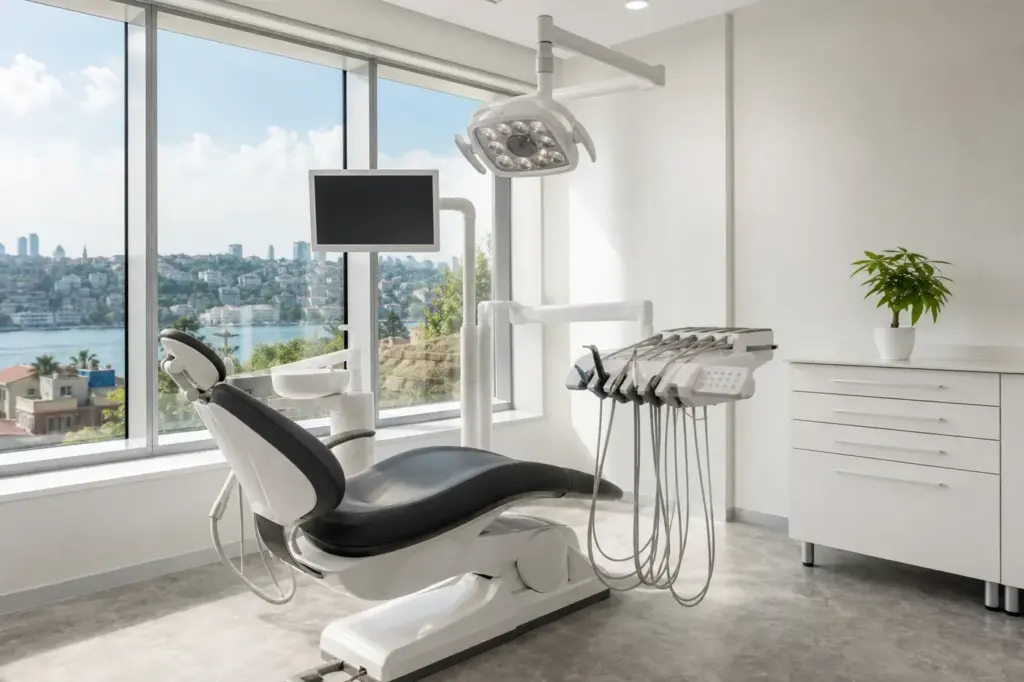
Information only. This article explains what a treatment is and how it is usually carried out. It is not medical advice, not an offer and not a recommendation to have any procedure. Whether it suits you can only be decided by a licensed doctor after an examination.
Tooth whitening is a dental procedure that many travellers consider while visiting Istanbul. This article explains how the procedure works, what to expect during and after treatment, typical risks and recovery, and what questions to ask a dentist before deciding.
Professional whitening aims to lighten tooth shade using bleaching agents; results, healing and risks differ from person to person. Suitability can only be decided by a licensed dentist after an examination.
Quick answer: Professional tooth whitening uses peroxide-based bleaching gels applied to tooth surfaces. The dentist first examines your teeth and gums, cleans the surfaces, protects your gums with a barrier, applies the gel for a timed period, and may repeat the cycle. Visible results can appear during or shortly after a single visit, though results vary.
At a Glance
| Total time | 30–60 minutes for in-office treatment; custom take-home trays require additional time for impressions and tray fabrication at the clinic |
|---|---|
| Typical cost | ₺₺ |
What You Need Before You Start
- Healthy gums and teeth (cavities, cracks or loose fillings require treatment first)
- No active gum disease or inflammation
- Dental examination by a licensed dentist before treatment
- Realistic expectations about results
- Willingness to discuss sensitivity concerns with your dentist
- Follow-up care arranged in your home country if needed
Compare Your Options
| Option | Duration | Price | Notes |
|---|---|---|---|
| In-office whitening (single visit) | 30–60 minutes | ₺₺ | High-concentration peroxide gel applied under professional supervision. Results visible immediately or within hours. No follow-up visits required if done in one session. Best for visitors with limited time or those who want results before a specific event. |
| Custom take-home trays with professional gel | First appointment 30–45 minutes; daily use over 1–2 weeks at home | ₺₺ | Dentist takes impressions and fabricates custom-fitted trays. You then apply lower-concentration gel at home following instructions. Lower sensitivity risk than in-office but requires more time and compliance. Suitable if you have time to stay in Istanbul for a few days or prefer to continue treatment after returning home. |
| Combined in-office and take-home | In-office 30–60 minutes; take-home daily for several days to one week | ₺₺₺ | Professional in-office treatment followed by take-home trays for maintenance and gradual enhancement. Offers both rapid initial results and extended lightening. Requires time commitment but often used for optimal shade achievement. |
₺ budget · ₺₺ moderate · ₺₺₺ upscale · ₺₺₺₺ splurge. Price levels are estimates compared with typical prices for visitors.
Step-by-Step Instructions
Step 1: Consultation and oral examination
The dentist examines your teeth and gums for decay, cracks, leaking fillings or inflamed tissue, because peroxide seeping into an open cavity or under a loose filling can cause sharp pain. Plaque and surface stain are often cleaned away first so the gel meets enamel rather than debris. Bring any concerns about sensitivity or previous reactions to bleaching to this consultation.
Tip: Be clear about any dental work you've had (crowns, veneers, fillings) as these do not whiten and may affect the final appearance.
Step 2: Shade check and baseline recording
A small fan of tooth-colored tabs, called a shade guide, is held beside your teeth and the closest match is recorded, often with a photograph. That baseline is what the final result will be compared with.
Tip: Ask the dentist to explain what shade changes are realistic for your tooth type.
Step 3: Isolation and gum protection
The mouth is isolated. A plastic retractor holds the lips and cheeks away from the teeth, cotton rolls or gauze keep saliva off the enamel, and the dentist paints a soft resin along the gumline and hardens it with a light. This gum barrier, sometimes called a gingival dam, is the step that separates a supervised procedure from a strip you buy at a pharmacy.
Tip: This protective step is essential for safety; clinics that skip it are not following standard protocols.
Step 4: Whitening gel application and first cycle
The whitening gel is brushed onto the front surfaces of the teeth. It stays in place for a timed period, may be exposed to a light, and is then suctioned or wiped off. The cycle is usually repeated two or three times during the visit. Whitening works by using peroxide-based bleaching agents to break down stain molecules on and within the tooth, which can noticeably brighten yellowed teeth and remove many surface stains.
Tip: The dentist will check your comfort between cycles; speak up immediately if you feel pain or tingling.
Step 5: Rinse, remove barrier and final shade check
The barrier is peeled away, the teeth are rinsed, a desensitizing agent may be applied, and the shade guide comes out again. Your final shade will be compared to the baseline recorded at the start.
Tip: Ask for a written record of the shade change and any desensitizing products applied so you can replicate them at home if needed.
Step 6: Recovery and sensitivity management
Tooth sensitivity occurs because bleaching agents temporarily increase enamel permeability. This makes the nerves inside the tooth more responsive to hot or cold drinks, sweet foods, or even air exposure. In most cases, the sensitivity subsides within 24 to 72 hours after treatment. Gum irritation can occur if whitening gel comes into contact with the soft tissues around the teeth. Symptoms may include redness, mild swelling, or a slight burning sensation along the gum line.
Tip: If sensitivity persists beyond a few days or is severe, contact the clinic or your dentist at home; this is not normal.
Common Mistakes to Avoid
- Assuming whitening results last for ever: the effect is usually temporary, and touch-ups may be needed after months or years depending on the type of treatment. Habits such as dark drinks and smoking affect how long results last.
- Thinking the procedure whitens everything: existing crowns, veneers, fillings and implants do not whiten. The dentist usually assesses existing dental work before treatment, and restorations may need colour-matching afterwards.
- Skipping the pre-treatment dental exam: cavities, cracks and loose fillings are usually dealt with first, because whitening agent reaching damaged areas can cause sharp pain. Whitening is normally not started before the dentist has checked for these problems.
- Expecting no sensitivity with already sensitive teeth: if baseline sensitivity is high, the dentist may suggest preparation or a milder gel. This risk is worth discussing openly, and sensitivity differs from person to person.
- Choosing a clinic without checking credentials: the licence of the clinic and the dentist can be checked in the official register of the Turkish Ministry of Health, and proof of professional qualifications can be requested.
Tickets, Payment and Booking
Professional tooth whitening in Istanbul is available at many licensed dental clinics. To book: Contact the clinic directly by email, phone or their official website to schedule a consultation and procedure. Most clinics accept international patients and speak English. Payment methods typically include credit cards and bank transfer; check with the specific clinic about their options for foreign visitors. Avoid third-party booking platforms or unverified resellers; use only the clinic’s official channels.
Good to know
- Book your appointment at least 1–2 days after arriving in Istanbul so your body is rested and you are not dehydrated from travel. Dehydration can increase sensitivity.
- If you have sensitive teeth, tell the dentist during the consultation. Many clinics offer pre-treatment with desensitizing gel or recommend take-home trays with lower peroxide concentrations.
- Avoid staining foods and drinks (coffee, tea, red wine, dark sauces, smoking) for at least 24–48 hours after treatment. Your enamel is more porous immediately after whitening and stains more easily during this 'white diet' period.
- Ask the clinic for a written aftercare guide and the shade number of your final result. Keep this record if you return to your home dentist; it helps them match future restorations or maintain your whiteness with take-home trays.
- If sensitivity develops after treatment, use a soft toothbrush and sensitivity toothpaste, and avoid very hot or very cold foods and drinks for a few days. Contact the clinic if sensitivity lasts more than 72 hours.
- Check that the clinic is licensed by the Turkish Ministry of Health (Sağlık Bakanlığı) and ask to see the dentist's credentials. Reputable clinics display their licences and professional affiliations.
Explore Nearby Tooth Whitening
Sights near Tooth Whitening
 Galata Tower · typical visit: 1–2 hours4 min on foot from Şişhane metro, Open daily 08:30–23:00
Main image: AI-generated illustration. It may not show the place exactly as it looks.
 Blue Mosque · typical visit: 45–75 minutes3 min on foot from Gülhane metro
Main image: AI-generated illustration. It may not show the place exactly as it looks.
 Hagia Sophia · typical visit: 1–1.5 hours8 min on foot from Gülhane metro, Open daily 09:00–19:30
Main image: AI-generated illustration. It may not show the place exactly as it looks.
 Topkapi Palace · typical visit: 3–4 hours without Harem; 4–5 hours with Harem15 min on foot from Gülhane metro, Open 09:00–18:30, closed Tue
Main image: AI-generated illustration. It may not show the place exactly as it looks.
 Grand Bazaar · typical visit: 2–4 hours4 min on foot from Beyazıt-Kapalıçarşı metro, Open 08:30–19:00, closed Sun
Main image: AI-generated illustration. It may not show the place exactly as it looks.
Browse more: All Other · All Treatments
FAQ
How long do teeth whitening results last?
This procedure is typically temporary, and touch-ups may be needed after a few months or years, depending on the type of teeth whitening treatment performed. Results depend on your diet, habits (smoking, staining drinks) and natural tooth colour. Some people maintain results for 6 months; others need touch-ups after 1–2 years.
Will whitening work on crowns, veneers or fillings?
No. Existing dental restorations (crowns, veneers, implant crowns, large fillings) do not whiten. Only natural tooth enamel lightens. If you have visible restorations, discuss with your dentist how to handle colour-matching afterwards. In some cases, restorations are replaced after whitening to match your new shade.
Can I whiten my teeth if I have cavities or gum disease?
No. Cavities, cracks, loose fillings and active gum disease must be treated first. Peroxide can seep into damaged areas and cause pain or damage the pulp. The dentist will check for these problems during your initial exam and may recommend treatment before whitening.
Is tooth whitening safe during pregnancy?
There isn't much safety data on teeth whitening if you're pregnant or nursing. You're more likely to have inflamed gums and sensitivity after whitening due to hormonal changes during pregnancy. Discuss with your dentist and your obstetrician before proceeding.
What should I do if I have tooth sensitivity after treatment?
Tooth sensitivity and gum irritation, especially during or shortly after treatment, typically improve within a few days once the whitening process is complete. Avoid very hot or cold foods, use a soft toothbrush and sensitivity toothpaste, and contact the clinic if sensitivity lasts beyond 72 hours.
How much does tooth whitening cost in Istanbul compared to my home country?
Cost varies by clinic and technique. Many international patients find professional whitening in Istanbul moderately priced. Ask the clinic for a detailed quote during your consultation. Do not rely on price alone to choose a clinic; verify credentials and licensing with the Turkish Ministry of Health.
Can I eat or drink immediately after whitening?
No. Avoid eating, drinking and smoking for at least 24–48 hours after treatment, or follow your dentist's specific aftercare instructions. Your teeth are more porous and stain more easily during this period. The dentist will provide a written list of foods and drinks to avoid.
Do I need a guide to undergo this procedure, or can I arrange it independently?
You can arrange whitening independently by contacting a clinic directly. A guide is not required. However, if you prefer translation assistance or help navigating the clinic's location, ask your hotel concierge or use an interpreter app. Always communicate your medical history and any concerns clearly to the dentist.
Before you decide anything
Risks and possible complications
- Transient tooth sensitivity is the most common side effect reported. The most common side effects include tooth sensitivity and gum irritation, especially during or shortly after treatment. These effects typically improve within a few days once the whitening process is complete.
- Gingival irritation, also known as whitening burns, may cause your gums to turn white or bright red while using whitening products. This mild to moderate burning sensation can begin within the first day of whitening and may last for several days.
- Tooth whitening products have several unpleasant side effects, including tooth sensitivity, soft tissue irritation and tooth surface changes. Overuse or misuse increases these risks.
- There isn't much safety data on teeth whitening if you're pregnant or nursing. You're more likely to have inflamed gums and sensitivity after whitening due to hormonal changes during pregnancy.
Alternatives to talk about with a doctor
- At-home whitening strips (lower concentration, longer use required, more sensitivity risk than professional gels)
- Whitening toothpaste (milder results, daily use, may cause sensitivity with overuse)
- Professional cleaning and polishing to remove surface stains without chemical bleaching
- Veneers or crowns (for permanent or lasting appearance change; more invasive and costly)
- Enamel microabrasion (removal of surface stains by gentle abrading; only suitable for certain stain types)
Questions to ask a licensed doctor
- Is my current tooth sensitivity a reason to delay or modify the procedure?
- Are there any existing cavities, cracks or loose fillings that need treatment before whitening?
- Do any of my current medications or conditions increase whitening risks (blood-thinning medications, bleeding disorders, immunosuppression)?
- What desensitizing products or techniques can lower my risk of sensitivity?
- How long should I wait before eating, drinking or smoking after treatment?
- What is your protocol if I experience severe pain, fever or bleeding after the procedure?
- Can I arrange follow-up care or touch-ups with my dentist at home, and do you provide written instructions for them?
- Which whitening system do you use, and what is the concentration of the bleaching agent?
- This page is information. It is not medical advice and not a recommendation to have any treatment or to choose any clinic, doctor or country.
- Every medical procedure has risks, and results and healing differ from person to person. A licensed doctor who has examined you decides whether a treatment is suitable.
- Talk to a doctor in your home country before you decide, and plan follow-up care at home: problems can appear after you return.
- Check that the clinic and the doctor are licensed in the official register of the Türkiye Cumhuriyeti Sağlık Bakanlığı, and ask for a written treatment plan and a consent form you understand.
- After a procedure, get urgent medical help for severe pain, fever, heavy bleeding or breathing problems. In an emergency call the local emergency number.
Kontrendikasyonlar olabilir. Bir uzmana danışmak gerekir.

Take this guide with you
Get a free PDF of this guide to print or read offline: key facts, tips and a map link on a few clean pages.
Report an issue on this page
How we research and update our guides
About this page: AI assistance and accuracy
This page was prepared with the help of AI and checked by automatic rules. It is general information only, not medical advice and not a recommendation to have any treatment or to choose any clinic. Mistakes can still happen and details can change without notice. Please check important details with the official source and talk to a licensed doctor before you decide anything.
