
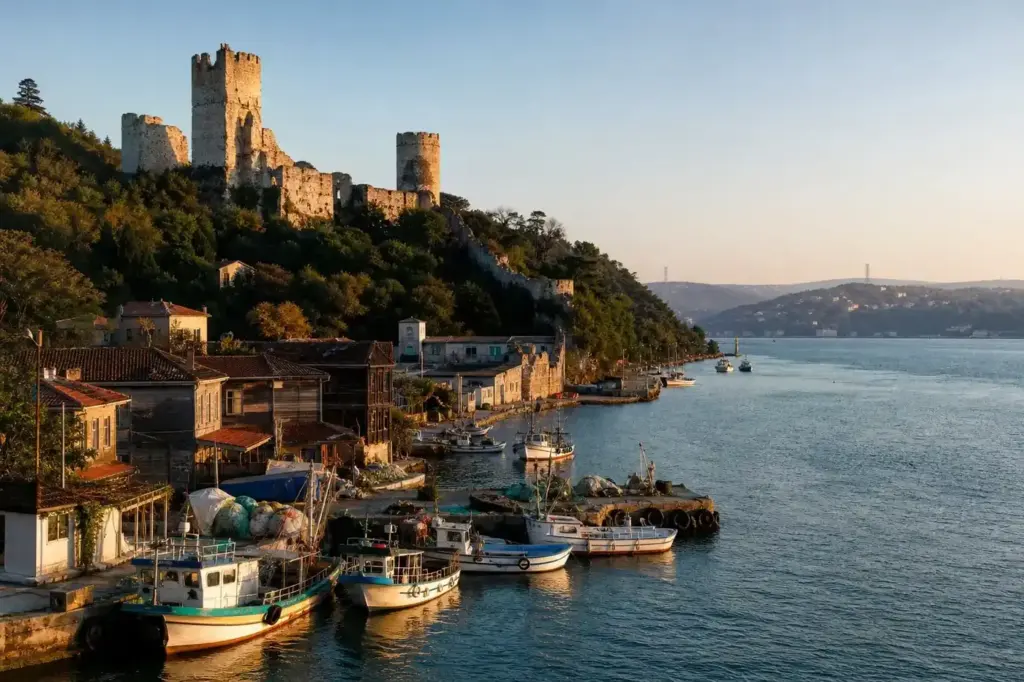
Anadolu Kavagi is a small fishing village located in the Beykoz district at the northern entrance to the Bosphorus Strait, where it opens toward the Black Sea. The village sits on the Asian side of Istanbul and has long served as a strategic outpost controlling maritime traffic. Today it attracts visitors primarily as the final stop on the popular Long Bosphorus Tour, a public ferry ride that departs daily from Eminönü.
Most visitors come for two reasons: to hike up to the ruins of Yoros Castle perched on the hill above, and to eat fresh seafood at the waterfront restaurants clustered around the pier. The village itself retains a working-harbor atmosphere, with fishing boats, gift shops, and narrow streets leading uphill from the water.
Quick Facts
| Address | Anadolu Kavağı, 34825 Beykoz, Istanbul Google MapsApple MapsYandex Maps |
|---|---|
| District | Beykoz |
| Admission | free |
| Best time to visit | Anadolu Kavagi is accessible year-round. Spring (April-May) and autumn (September-October) offer the most comfortable temperatures and clear light without the intense summer heat. Summer brings warmer water suitable for swimming at the small public beach, but also brings the most ferry passengers and crowds around the pier.
Winter (November-February) is quieter and offers a more authentic village experience, though the water is cold and the weather can be rainy or windy. Weekday visits are noticeably less crowded than weekends, and arriving early in the ferry's dwell time (mid-late morning) is preferable to the afternoon surge. |
What Is (and Isn't) Part of a Visit to Anadolu Kavagi?
| Part | Status | Notes |
|---|---|---|
| Anadolu Kavagi village and waterfront | Included in the standard ticket | The village itself is open to visitors at all times. Restaurants, shops, and public spaces are freely accessible. |
| Yoros Castle | Included in the standard ticket | The ruins are open to visitors free of charge. The castle is reached by a steep uphill walk from the village (approximately 20 minutes). |
| Ferry journey from Eminönü | Separate ticket or institution | The ferry ticket is a separate cost from visiting the village. The journey to and from Anadolu Kavagi comprises the bulk of the Long Bosphorus Tour experience. |
| Restaurants and meals | Separate ticket or institution | Food and drink must be purchased separately. Many waterfront restaurants cater to ferry passengers with set menus and a la carte options. |
| Souvenir shops | Separate ticket or institution | Gift shops near the pier sell postcards, crafts, and souvenirs at independent prices. |
| Anadoluhisarı Fortress (in Beykoz but elsewhere) | Outside / not part of it | A different Ottoman fortress, built in 1394 by Bayezid I, located elsewhere in the Beykoz district. Not part of an Anadolu Kavagi visit, though sometimes confused due to similar names. |
Why Visit Anadolu Kavagi?
Anadolu Kavagi offers a marked change of pace from central Istanbul. The journey itself—a two-hour ferry ride threading between European and Asian shores—shows the Bosphorus landscape from the water, passing major landmarks and fortresses in sequence. Upon arrival, you can climb to Yoros Castle in about twenty minutes to see views of both the Bosphorus and Black Sea meeting.
The village functions as a working fishing community rather than a theme-park attraction, which gives it an authentic maritime character. The seafood is genuinely fresh, caught by local boats. The area is also archaeologically significant: the site was known in antiquity as Hieron, a sacred place settled by Phoenicians and Greeks over two thousand years ago.
How Anadolu Kavagi Is Laid Out
Anadolu Kavagi is a linear village built along the shoreline where the ferry docks. The pier and surrounding waterfront area contain most of the restaurants, shops and informal gathering spaces. From the pier, the village rises steeply uphill. A signed path leads up through residential streets and past a tea garden, reaching Yoros Castle ruins at the summit in roughly 20 minutes of walking.
There is no car-oriented layout or major plazas; visitors move on foot between the waterfront and the heights. The castle overlooks the entire village and the mouth of the Bosphorus. Apart from restaurants and shops near the pier, the main architectural feature is Yoros Castle itself—the focal point of most visits.
Highlights of Anadolu Kavagi
Yoros Castle
The ruined medieval fortress that dominates the hilltop above the village. The castle originated as a Byzantine defensive structure protecting the entrance to the Black Sea and was reinforced by the Genoese in the 14th and 15th centuries, who called it Genoese Castle. The two towers still standing rise about 16 meters high. From the castle, views extend down the Bosphorus in one direction and toward the Black Sea in the other, with the Third Bosphorus Bridge visible to the south since 2016. The site was listed as a UNESCO Temporary Heritage Site in 2013.
Tip: Start the climb early in your visit to avoid afternoon heat and crowds. Wear sturdy shoes and expect a steep uphill walk with uneven stone steps in places.
The Ferry Ride from Eminönü
The journey itself is a primary attraction. The Şehir Hatları public ferry departs Eminönü near the Galata Bridge each morning, usually at 10:35 a.m., and takes nearly two hours to reach Anadolu Kavagi. Along the way it stops at Beşiktaş, Üsküdar, Kanlıca, Sarıyer, and Rumeli Kavağı, allowing views of waterfront palaces, mosques, fortresses, and the two Bosphorus bridges from the water. The ferry is double-decked, giving options for sun exposure and viewing angles. Return ferries depart around 3 p.m., allowing approximately 2.5 to 3 hours ashore.
Tip: Board early to secure a good seat. The bow and port (left) side offer the best views while minimizing direct sun exposure. On the return journey, the port side avoids afternoon sun.
Waterfront Fish Restaurants
Roughly 15 to 20 seafood restaurants line the waterfront and nearby streets around the pier. Many sit directly over the water or have waterfront terraces. These are genuine working restaurants serving the local fishing community, not tourist imitations. Mussels and calamari are particularly recommended, and the fish is caught daily by boats visible at the dock. Restaurants range from casual snack bars to more established establishments with table service and wider menus.
Tip: Menus and pricing can vary noticeably; inspect options at several restaurants before choosing. Ask to see the fish selection and inquire about the day's catch. Lunch is the main meal; most restaurants focus on lunch service for ferry passengers.
The Bosphorus Narrows
Anadolu Kavagi sits at the narrowest stretch of the Bosphorus Strait, where the waterway opens into the Black Sea. On the opposite (European) shore directly across is Rumeli Kavağı, which formerly held a matching fortress. This geography made the location strategically vital for controlling naval traffic between the Black Sea and the Mediterranean for over two thousand years. The water here is typically deep and fast-moving, and in certain seasons visitors may see dolphins.
Tip: The best views of this geography are from the castle summit or from the ferry while approaching or leaving the village. Early morning light on the water is particularly clear.
Historic Origins at Hieron
The ancient name for this location was Hieron, meaning Sacred Place. Phoenician traders from Lebanon established a settlement here around 3,000 years ago, followed by Greeks and Romans. Archaeological excavations have uncovered evidence of these ancient occupations. The site's strategic position at the entrance to the Black Sea made it valuable for trade and military control across millennia of history.
Tip: Walk the hillside paths to spot archaeological markers and informational plaques. Recent excavation work continues at the castle site.
The Village Character
Unlike many tourist destinations, Anadolu Kavagi retains the character of an active fishing community. Working fishermen repair nets and boats near the pier. The narrow streets have traditional shops selling practical goods and souvenirs. The atmosphere is unhurried, especially outside peak ferry arrival times. The population is small—around 1,500 residents, including military personnel at nearby bases—which contributes to the peaceful, un-crowded feel compared to central Istanbul.
Tip: Visit on a weekday or arrive early in the ferry's dwell time to experience the village at its quietest. Late afternoon, as ferry passengers depart, the pace becomes noticeably slower.
Atmosphere
Anadolu Kavagi feels like stepping out of Istanbul’s intensity into a working harbor town. The smell of fresh fish and grilled seafood fills the waterfront at lunch time. Fishing boats bob at the dock; fishermen mend nets and sort their catch. Narrow streets lined with modest homes and shops lead steeply uphill from the water’s edge. The sound of ferry horns echoes as boats arrive and depart. In good weather, the light on the water is sharp and clear.
The daytime bustle is concentrated around ferry arrival times—typically mid-morning and early afternoon—when restaurants fill and shop owners tend to visitors. Between ferry arrivals, the pace slows dramatically. Locals fish from the rocks and waterfront. The atmosphere is distinctly less frantic than central Istanbul neighborhoods, and the openness of the water to the north creates a sense of space and escape.
History of Anadolu Kavagi
The site of Anadolu Kavagi has been strategically important for over two thousand years. In antiquity, it was known as Hieron, a sacred place associated with the 12 Olympian gods in Greek mythology. Phoenician traders from Lebanon established a settlement here around 3,000 years ago for trade and military purposes, followed by Greeks and Romans who recognized its value as a control point for naval traffic entering the Black Sea.
The fortress visible today, Yoros Castle, originated during the Byzantine period as a defensive structure protecting Constantinople’s access to the Black Sea. Byzantine engineers built it to control traffic through the narrows in conjunction with a matching fortress, Imros Castle, on the opposite shore. The castle has eight towers in its original design, though only fragments remain.
Control of the castle changed hands repeatedly between the 13th and 16th centuries. The Ottomans first captured it in 1305 under Sultan Bayezid I, but the Byzantines retook it. In the 14th and 15th centuries, the Genoese, a powerful maritime republic from Italy, seized the fortress in 1414 and held it for several decades. Their influence was so significant that the castle became known as Genoese Castle. The Genoese presence here posed a direct threat to both the Byzantine capital and later the new Ottoman capital.
Following the final Ottoman conquest of Constantinople in 1453, the fortress came permanently under Ottoman control. It continued to function as a military outpost and control station for the Bosphorus. The Ottomans restored and reinforced portions of the structure. Until 1946, the area around Anadolu Kavagi remained within a military zone, limiting civilian access and settlement. This military status helped preserve the fishing-village character and prevented large-scale development.
In recent decades, Anadolu Kavagi has transitioned into a popular destination for ferry passengers taking the Long Bosphorus Tour. Archaeological excavations continue at the castle site, revealing layers of Phoenician, Greek, Roman, Byzantine, Genoese, and Ottoman occupation. The ruins now attract history visitors alongside seafood-focused tourists.
Legends and Myths about Anadolu Kavagi
Phrixos and the Sanctuary of the Twelve Olympians
Legend – historically unreliable. According to one legend, Phrixos, son of King Athamas of Boeotia and the goddess Nephele, stopped at Anadolu Kavagi (then Hieron) during his flight to Colchis. He dedicated a sanctuary to the 12 Olympian gods in gratitude for safe passage. A competing version of the story credits Jason, of Golden Fleece fame, with building the sanctuary. The shrine's connection to the gods reflected the site's religious significance in antiquity.
The Name from Poplar Trees
Disputed by historians. The name 'Anadolu Kavagi' is traditionally derived from the word kavak, meaning poplar tree in Turkish. One account claims the area was named after particularly large and ancient plane trees that once grew abundantly here. Another version suggests the name came from a specific poplar fig. Over time, kavak evolved to mean control station or checkpoint, reflecting the location's strategic military role. The exact origin of the botanical reference remains disputed among historians.
Tickets and Booking for Anadolu Kavagi
| Ticket | Price | Includes |
|---|---|---|
| Long Bosphorus Tour ferry round trip | ₺ | Round trip ferry from Eminönü to Anadolu Kavagi and back, approximately 2 hours each way with 2.5-3 hour stop in the village. Passes Beşiktaş, Üsküdar, Kanlıca, Sarıyer, and Rumeli Kavağı on the way. Access to Yoros Castle and village exploration included. |
| Village entry | Free | Walking through Anadolu Kavagi village, visiting Yoros Castle, exploring streets and waterfront areas. |
₺ budget · ₺₺ moderate · ₺₺₺ upscale · ₺₺₺₺ splurge. Price levels are estimates compared with typical prices for visitors.
The ferry is operated by Şehir Hatları, Istanbul’s municipal ferry company. Tickets for the Long Bosphorus Tour are sold at the Eminönü terminal, located near the Galata Bridge on the European shore. The ferry departs daily (in high season) or several times per week (in low season), typically at 10:35 a.m., with occasional additional sailings at 1:35 p.m. in summer.
Arrive 15-30 minutes before departure to purchase tickets and board. Same-day tickets are usually available at the pier counter, but confirming departure times in advance is wise during low season. The ferry is a working public transport vessel, not a guided tour, so there is no commentary. Tickets differ for Turkish citizens and local residents; ask for international visitor rates at the window. Snacks and beverages are sold aboard at modest prices. Check the official Şehir Hatları website for current schedules and rates.
Suggested itineraries Anadolu Kavagi
3 hours (including ferry)
Arrive at Eminönü by 10:20 a.m. to purchase a ticket for the 10:35 ferry. Spend the two-hour ferry journey viewing the Bosphorus from the boat, observing palaces, mosques, and fortresses on both shores. Upon arrival in Anadolu Kavagi, climb directly to Yoros Castle (20 minutes uphill). Spend 30-40 minutes exploring the castle ruins and enjoying views. Return to the village for a quick lunch or snack at a waterfront restaurant (30-40 minutes). Board the 3 p.m. return ferry back to Eminönü.
4-5 hours (ferry plus visit)
Depart Eminönü on the 10:35 ferry. Upon arrival, explore the village waterfront and shops for 20-30 minutes before climbing to Yoros Castle. Spend 45 minutes to an hour at the castle, including time for photos and rest. Return to the village and settle for a leisurely lunch at a seafood restaurant (60-90 minutes), watching fishing boats and taking in the water views. Return to the pier in time for the 3 p.m. ferry departure.
Full day (Black Sea-focused)
Take the 10:35 ferry from Eminönü and spend extra time on the outbound journey observing landmarks. Upon arrival, combine a village walk with restaurant exploration, visiting shops and chatting with locals. Climb to Yoros Castle in the early afternoon when light is strong. Have a prolonged seafood lunch or dinner, lingering to watch the sun move across the water. If a late ferry is available (typically around 7-8 p.m. in high season), use it for a return journey through the Bosphorus by evening light. Otherwise, depart on the 3 p.m. ferry.
How to Get to Anadolu Kavagi
By ferry (recommended, most direct): The Long Bosphorus Tour ferry departs daily from Eminönü Terminal, a waterfront pier located a short walk from Galata Bridge on the European shore. Tram T1 stops at Sultanahmet (Sirkeci) and Eminönü; walk downhill to the ferry pier on the waterfront. The ferry takes approximately two hours to reach Anadolu Kavagi, stopping at intermediate piers but not requiring you to exit. Depart around 10:35 a.m. and return around 3 p.m.
By land and local ferry: A more time-consuming alternative is to take a bus to Beykoz district on the Asian shore (e.g., bus 15A from Kadıköy), then board a local ferry from Beykoz Pier to Anadolu Kavagi. This journey takes approximately 90 minutes but allows flexibility in timing. However, local ferry schedules are less reliable than the Long Tour.
Accessibility
Access to Anadolu Kavagi is limited for visitors with mobility restrictions. The village is built on steep terrain with narrow, unpaved streets and many steps. Yoros Castle requires a 20-minute uphill hike with uneven stone steps and no handrails in places. The ferry itself has stairs to upper and lower decks and modest facilities. Restaurants vary in accessibility; some are at street level while others require climbing to reach. No dedicated wheelchair routes or accessible parking exist in the village. Visitors with mobility concerns should plan carefully and may find the combination of ferry, steep streets, and castle climb physically challenging.
Food Nearby
Anadolu Kavagi is primarily known for seafood restaurants clustered around the waterfront pier. Locally well-regarded establishments include Yosun, Kavak Doganay, Yedigul, and Ismail'in Yeri, though specific locations change. Fresh fish, mussels (midye), and calamari (squid) are typical menu items. Many restaurants offer set lunch menus for ferry passengers at moderate prices. Tea gardens and casual snack bars also operate near the pier and along the uphill paths. Avoid peak ferry arrival times if you prefer quieter dining. Outside the immediate waterfront, dining options are limited; the village is small and most services focus on the temporary visitor population rather than supporting a year-round local restaurant scene.
What to Bring
Wear comfortable, sturdy walking shoes suitable for steep terrain and uneven stone surfaces if planning to climb to Yoros Castle. Bring plenty of water, especially in warm months, as the uphill walk offers little shade. Sun protection (hat, sunscreen) is essential, particularly on the ferry and at the castle. A camera or smartphone for photographs is recommended given the views. The village has souvenir shops, so additional items can be purchased if forgotten. Bags and personal items are allowed; standard security screening applies at the ferry terminal.
Best Views and Photo Spots of Anadolu Kavagi
Yoros Castle ruins, hilltop
The castle overlooks the Bosphorus stretching south and the Black Sea to the north. On clear days the Third Bosphorus Bridge is visible in the distance. The two remaining towers frame views in both directions. The surrounding landscape is largely undeveloped, making the water and sky the dominant visual elements.
Best time: Early morning light (before 11 a.m.) is clearest and emphasizes the stone texture of the ruins. Late afternoon (after 3 p.m.) creates longer shadows and warmer tones on the towers.
Waterfront pier at village center
The pier and immediate shoreline show fishing boats, working nets, and the daily life of the harbor. The castle is visible on the hill above the waterfront, providing layered compositional depth. Restaurants and shop fronts line the pier, creating a lived-in village scene.
Best time: Mid to late morning, when fishing boats are active and restaurants are setting up. The sun is angled to avoid harsh shadows on the waterfront.
Ferry approaching or departing
The ferry arriving or leaving the village pier shows Anadolu Kavagi nestled between forested hills and the water, with the castle visible on the rise above. The scale of the boat against the small village conveys the remoteness of the location.
Best time: Around 10:30 a.m. (ferry arrival) or 3 p.m. (ferry departure) when light is good and the boat is in clear view. Photograph from the deck during the approach for a full landscape context.
Tea garden or café en route to castle
Small cafés and tea gardens along the uphill path offer vantage points partway to the castle. These spots show a mix of village life—locals resting, tourists catching their breath, the waterfront visible in the distance below.
Best time: Mid-morning, when visitors are climbing and the atmosphere is most active. The mixed crowd creates authentic village activity.
Photography Rules
Photography is freely permitted throughout Anadolu Kavagi village and Yoros Castle. No drones, tripods, or commercial equipment are permitted without special authorization. Smartphone and handheld camera photography is unrestricted. The castle ruins and waterfront are highly photogenic, particularly in morning light. The ferry journey also offers photo opportunities; the bow and port side typically offer the best light and views during the morning outbound journey.
Family Suitability
Anadolu Kavagi is moderately family-friendly for families with older children (ages 8+) comfortable with steep walking and uneven terrain. The ferry ride itself is engaging for children and offers novel views. However, the climb to Yoros Castle is steep and unshaded, requiring stamina and good footwear. Very young children or those unused to hills may find it tiring or uncomfortable.
There is a small public beach suitable for swimming in warm months, though facilities are basic. Many waterfront restaurants welcome families and offer simple meals. Stroller access is very limited due to steep streets and steps. Families should plan for the ferry's fixed departure times (typically 3 p.m. return) to avoid being stranded. The village itself is safe and low-traffic, making it easier to navigate independently than central Istanbul neighborhoods.
Istanbul Vibes Tips
- Do not miss the 3 p.m. return ferry. Anadolu Kavagi has minimal transport connections after dark, and taxis or alternative transport are difficult to arrange. Plan your activities to ensure you are back at the pier 15 minutes before departure.
- Visit on a weekday rather than weekend to experience the village at its most authentic. Weekend ferry departures are notably busier, and restaurants and shops cater more heavily to tour groups on Saturdays and Sundays.
- Climb to Yoros Castle in the morning or very early afternoon, before afternoon heat peaks and while shade is still available on the upper portions of the path. The 20-minute climb is easier before fatigue from ferry travel and restaurant time sets in.
- Inspect the daily catch displayed at several waterfront restaurants before choosing where to eat. Fish variety, freshness, and restaurant price positioning vary noticeably. Ask the server about the day's catch and pricing to avoid surprises.
- Bring significantly more water than you think you will need. The uphill walk to the castle offers almost no shade, and the village has limited water fountains and no widespread water vendors. Dehydration on the climb is a common visitor issue.
- Book ferry tickets in advance during high season (May-September) if you have concerns about capacity, though same-day purchasing is typically possible. Confirm the ferry schedule the evening before, as winter schedules may differ from published high-season times.
Explore Nearby Anadolu Kavagi
Sights near Anadolu Kavagi
 Joshua's Hill – about 1.3 km away (~21 min walk) · typical visit: 1–2 hoursOpen 24 hours
Main image: AI-generated illustration. It may not show the place exactly as it looks.
Related guides
 Sarıyer: Bosphorus villages, seafood and green escapes north of Istanbul
Main image: AI-generated illustration. It may not show the place exactly as it looks.
 Princes’ Islands: Ferry, Day Trip and What to See
Main image: AI-generated illustration. It may not show the place exactly as it looks.
 Water Sports and Adventure Activities: Best Things to Do on Istanbul’s Waters
Main image: AI-generated illustration. It may not show the place exactly as it looks.
 Hidiv Grove: Palace, Gardens and Bosphorus ViewsOpen daily 08:00–23:00
Main image: AI-generated illustration. It may not show the place exactly as it looks.
 Weekend Getaways and Multi-Day Tours from Istanbul: 8 Essential Escapes
Main image: AI-generated illustration. It may not show the place exactly as it looks.
Browse more: More in Beykoz · All Sightseeing · All Viewpoints
FAQ: Anadolu Kavagi
Is Anadolu Kavagi inside Istanbul or a day trip?
Anadolu Kavagi is administratively part of Istanbul (Beykoz district), not a separate day-trip destination. However, it sits at the northernmost edge of the city, on the Asian shore near the Black Sea entrance to the Bosphorus. Visitors typically reach it as a single extended journey via ferry rather than as a neighborhood to combine with other Istanbul sightseeing.
How much does it cost to visit?
Entry to Anadolu Kavagi village and Yoros Castle is free. The only cost is the ferry ticket for the Long Bosphorus Tour. Food, drinks, and souvenirs are purchased separately at independent prices. Most ferry tickets are inexpensive relative to other Istanbul attractions.
Can I visit Anadolu Kavagi without taking the ferry?
Yes, though it is more time-consuming. You can take a bus to Beykoz on the Asian shore, then board a local ferry to Anadolu Kavagi. This journey takes significantly longer (approximately 90 minutes by bus plus ferry) than the direct ferry tour from Eminönü, but it offers schedule flexibility. However, the Long Bosphorus Tour ferry is the standard and most popular way to reach the village.
Is Yoros Castle free to visit?
Yes, Yoros Castle is free to enter. There is no admission charge. The fortress is accessible by a 20-minute walk uphill from the village pier. The castle is partially ruined and open to the air; there are no buildings or interior exhibits to enter.
How long do I need in Anadolu Kavagi?
Most visitors spend 2.5-3 hours in the village between ferry arrival and the 3 p.m. return departure. This time allows for a hike to Yoros Castle, a rest at the ruins, and a leisurely meal at a waterfront restaurant. Visitors can extend their stay by staying overnight in the village (though accommodations are limited), or visiting on a late-season evening ferry if one is available.
What is the difference between Yoros Castle and Anadoluhisarı Fortress?
They are two different fortresses in different locations. Yoros Castle sits on a hill above Anadolu Kavagi village at the northern entrance to the Bosphorus and dates to Byzantine times with Genoese restoration. Anadoluhisarı is an Ottoman fortress built in 1394 by Bayezid I, located elsewhere in Beykoz district on the Asian shore, farther south. Both are historic military structures, but visiting Anadolu Kavagi does not include Anadoluhisarı.
Are there fish restaurants I should book in advance?
Most waterfront restaurants in Anadolu Kavagi operate on a walk-in basis and cater to ferry passengers. Advance booking is generally unnecessary and rarely practiced at these establishments. You can simply arrive, inspect the displayed catch, and choose a restaurant on the spot. During peak summer weekends, earlier meals (before noon or after 2 p.m.) may have shorter waits than midday lunch time.
Can I stay overnight in Anadolu Kavagi?
Overnight accommodation in Anadolu Kavagi is very limited. The village has a small hotel or two, such as Taşlı Yalı Boutique Hotel, but options are sparse compared to central Istanbul. Most visitors treat Anadolu Kavagi as a day trip via ferry. If you do stay overnight, confirm the ferry schedule for the next morning before you commit, as transport out of the village can be unreliable.
Istanbul Vibes is a one-person project. A coffee keeps it going
Hotels near Anadolu Kavagi
Restaurants near Anadolu Kavagi
- Çam Vadisi (700 m) Google Maps
Distances are straight-line, from OpenStreetMap data.

Take this guide with you
Get a free PDF of this guide to print or read offline: key facts, tips and a map link on a few clean pages.
Report an issue on this page
How we research and update our guides
About this guide: AI assistance and accuracy
This guide is created with the help of AI and is based on official sources where available. Mistakes can still happen. Opening hours, prices, rules and other details are given to the best of our knowledge as of the date shown and can change without notice. It offers general recommendations only, not professional, legal or travel advice. Please confirm important details with the official source before you travel; you are responsible for your own plans and decisions.
* Affiliate link: as an Amazon Associate we earn from qualifying purchases at no extra cost to you.
