
Information only. This article explains what a treatment is and how it is usually carried out. It is not medical advice, not an offer and not a recommendation to have any procedure. Whether it suits you can only be decided by a licensed doctor after an examination.
ICSI Treatment (intracytoplasmic sperm injection) is an advanced fertility procedure performed as part of in vitro fertilization (IVF). If you and your partner are exploring fertility options, understanding how ICSI works can help you have informed conversations with a healthcare provider.
This article explains what the procedure involves, who it may be considered for, the typical process, recovery, and what to discuss with a doctor before deciding whether it is right for your situation.
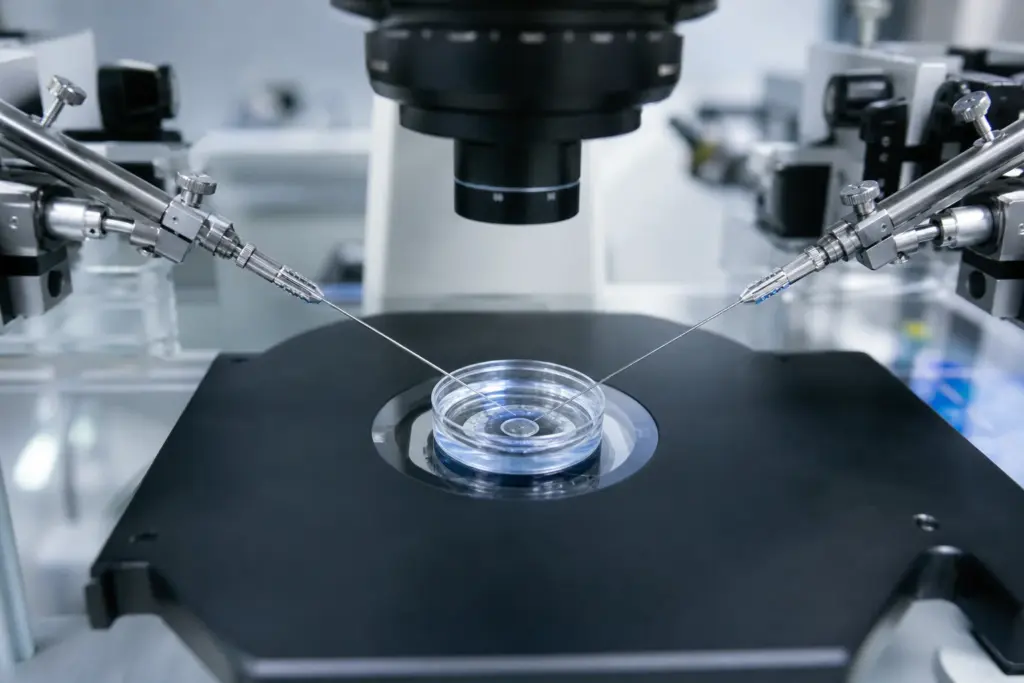
Quick answer: ICSI is a laboratory technique in which a single sperm is injected directly into a mature egg under a microscope, bypassing the natural steps sperm must take to penetrate and fertilize an egg. This procedure is performed as part of an IVF cycle and is most commonly used when male infertility factors are present or when fertilization has not occurred with standard IVF methods. The injection itself takes only seconds per egg, but it is one stage in a cycle that typically spans several weeks from start to finish.
At a Glance
| Total time | The complete ICSI cycle typically spans 4–6 weeks from the start of hormone stimulation to embryo transfer. Ovarian stimulation takes 8–12 days, followed by egg retrieval and the laboratory fertilization process (1–2 days). Embryo transfer usually occurs 3–5 days after egg retrieval. |
|---|---|
| Typical cost | ₺₺₺ |
What You Need Before You Start
- Initial fertility assessment and blood tests to screen for infections
- Semen analysis for the male partner
- Female partner medical history and ovarian assessment
- Commitment to daily hormone injections for 8–12 days
- Availability for multiple clinic visits for monitoring via ultrasound and blood tests
- Time for recovery after egg retrieval (usually 1–2 days before resuming normal activities)
- Plans for follow-up care with your home healthcare provider after the procedure
Compare Your Options
| Option | Duration | Price | Notes |
|---|---|---|---|
| Standard ICSI (using fresh sperm) | 4–6 weeks per cycle | Sperm is collected on the day of egg retrieval. This is the most common approach and is used when sperm quality or availability is not a concern. | |
| ICSI with frozen sperm | 4–6 weeks per cycle | Sperm that was frozen in advance (for example, before cancer treatment) is thawed and used for injection. This option is useful for men who cannot produce sperm at the time of egg retrieval due to medical or surgical circumstances. | |
| ICSI with surgically retrieved sperm | 4–7 weeks per cycle | Sperm is obtained by a minor surgical procedure from the testicle or epididymis when ejaculation is not possible due to blockage, absence of sperm in ejaculate, or other conditions. This may add time to the cycle. | |
| Rescue ICSI | 4–6 weeks per cycle | ICSI is used on eggs that failed to fertilize after standard IVF (in vitro insemination). This is performed on the day after egg retrieval if fertilization did not occur overnight. |
₺ budget · ₺₺ moderate · ₺₺₺ upscale · ₺₺₺₺ splurge. Price levels are estimates compared with typical prices for visitors.
Step-by-Step Instructions
Step 1: Initial consultation and screening
Before starting ICSI, you will have a consultation with a fertility specialist who will review your medical history, previous fertility attempts, and test results. Blood tests will check for infections such as HIV, hepatitis B, and hepatitis C. The male partner will provide a semen analysis to assess sperm count, motility (how well they swim) and morphology (shape). Based on this assessment, your doctor will discuss whether ICSI is a suitable option for your situation.
Tip: Bring all previous fertility test results and medical records to your first appointment.
Step 2: Start ovarian stimulation with daily hormone injections
On day 2 or 3 of your menstrual cycle, you will begin daily hormone injections (typically follicle-stimulating hormone or FSH) to stimulate your ovaries to produce multiple mature eggs. These injections are usually self-administered at home and continue for 8–12 days. The goal is to develop multiple follicles (fluid-filled sacs containing eggs) instead of the single egg that normally develops in a natural cycle.
Tip: Keep injections at the recommended temperature and follow timing instructions carefully; your clinic will provide detailed guidance on administration.
Step 3: Attend monitoring appointments during stimulation
While you are taking hormone injections, you will visit the clinic every few days for ultrasound scans and blood tests. These appointments track how your ovaries are responding and measure hormone levels. Your doctor may adjust your medication dose based on your response. Monitoring usually involves a transvaginal ultrasound (a small probe inserted into the vagina) to visualize the developing follicles.
Tip: These appointments are essential for safety; do not skip them as they help prevent over-stimulation of the ovaries.
Step 4: Receive the trigger injection to prepare eggs for release
When your eggs have matured sufficiently, your doctor will give you an injection of human chorionic gonadotropin (hCG) or a similar medication, usually in the evening. This 'trigger injection' prompts your eggs to complete their final maturation and prepares them to be released from the follicles. Egg retrieval will be scheduled for approximately 35–38 hours after this injection.
Tip: Timing of this injection is critical; follow your clinic's exact instructions on when and how to administer it.
Step 5: Undergo egg retrieval under mild sedation
You will arrive at the clinic in the morning and receive mild sedation (light anesthesia) to keep you comfortable. Your doctor, guided by ultrasound imaging, will insert a thin needle through the vaginal wall into each ovary to retrieve the mature eggs from the follicles. The procedure typically takes 15–20 minutes. After retrieval, you will rest in the clinic for 1–2 hours before going home. Some women experience mild cramping or spotting after retrieval.
Tip: Arrange for someone to drive you home; you should not drive yourself after sedation.
Step 6: Provide a sperm sample on the day of egg retrieval
On the same day as egg retrieval, the male partner will provide a fresh semen sample at the clinic, usually by ejaculation into a sterile cup. If sperm cannot be collected this way due to blockage or other reasons, the doctor may retrieve sperm surgically from the testicle or epididymis through a minor procedure. The sample is then prepared in the laboratory to select the best sperm for injection.
Tip: If sperm collection by ejaculation is not possible, discuss surgical retrieval options with your doctor well before egg retrieval day.
Step 7: ICSI procedure: injection of sperm into eggs in the laboratory
In the laboratory, an embryologist performs ICSI under a specialized microscope using micromanipulation tools. First, the eggs are prepared by removing surrounding cells. Then, a very fine needle is used to select a single sperm and inject it directly into the center (cytoplasm) of each mature egg. The needle is carefully withdrawn, and the injected eggs are placed in culture medium to allow fertilization to occur. The entire injection for each egg takes only a few seconds.
Tip: Fertilization is checked approximately 16–18 hours after injection; your clinic will contact you with results.
Step 8: Wait for fertilization and embryo development
After ICSI, the injected eggs remain in the laboratory culture medium overnight. The next morning, the embryologist examines each egg under the microscope to check for signs of successful fertilization (the presence of two pronuclei). Over the next 3–5 days, the fertilized eggs (now called embryos) divide and develop. Your clinic will monitor their progress daily and grade them based on appearance and development rate.
Tip: Not every injected egg will fertilize, and not every fertilized egg will develop into a viable embryo; this is normal.
Step 9: Embryo transfer: implanting an embryo into the uterus
Once embryos have developed, usually 3–5 days after egg retrieval, one (or sometimes two) of the best-quality embryos will be transferred into your uterus. This is done using a thin catheter (tube) guided through the cervix. The procedure is similar to a pap smear and requires no sedation. You may feel mild cramping. The transfer takes only a few minutes.
Tip: Any remaining good-quality embryos can be frozen for future use if you do not become pregnant or wish to have another child later.
Step 10: Rest and wait for pregnancy to develop
After embryo transfer, you can usually resume light activities the next day. You may be prescribed progesterone (a hormone) in the form of injections, pills, or vaginal supplements to support the developing embryo. Avoid strenuous exercise and sexual intercourse for at least 24 hours. Pregnancy testing is typically performed 9–14 days after transfer with a blood test.
Tip: Bleeding or spotting after transfer does not necessarily mean the cycle has failed; contact your clinic if you have concerns.
Step 11: Pregnancy test and follow-up
Your clinic will contact you with pregnancy test results. If the test is positive, you will be referred to an obstetrician for routine pregnancy care. If negative, your doctor will discuss next steps, which may include repeating the cycle, investigating other factors, or exploring other treatment options. If you become pregnant, hormone support is usually continued until approximately 10–12 weeks of pregnancy.
Tip: Follow your clinic's instructions on when to contact your primary healthcare provider to begin prenatal care.
Common Mistakes to Avoid
- Assuming ICSI ensures fertilisation or pregnancy: ICSI can help fertilisation in certain situations, but some eggs may not fertilise, and even after fertilisation embryos may not implant or develop into a pregnancy.
- Not understanding the difference between ICSI and IVF: ICSI is a technique used within IVF, not a replacement for it. In standard IVF, many sperm are placed with each egg and fertilise it naturally. ICSI uses one sperm per egg and is usually chosen for specific medical reasons.
- Missing monitoring appointments: regular ultrasound and blood-test monitoring during hormone stimulation is used to track the response, reduce the risk of over-stimulation and time the trigger injection. Missed appointments can affect the cycle.
- Not arranging follow-up care at home in advance: before starting ICSI, it helps to discuss with a home doctor how they can support after the procedure, including blood tests, medication refills or complications.
- Underestimating the emotional and physical commitment: ICSI involves daily injections, frequent clinic visits, sedation, recovery time and an uncertain outcome. A realistic view of this commitment helps decision-making.
- Not discussing genetic or chromosomal questions: especially with male factor infertility, genetic concerns may exist, and preimplantation genetic testing (PGT) can be discussed with the doctor where relevant.
Tickets, Payment and Booking
ICSI is offered at fertility clinics and IVF centers. To begin, you will need to contact a clinic directly to schedule an initial consultation. Most clinics have websites with information about their services and how to book an appointment. At the time of consultation, the clinic will explain their policies regarding payment, insurance coverage, and consent forms. Payment is typically arranged directly with the clinic. Because ICSI is part of IVF treatment and regulations for fertility services differ by country and clinic, confirm in advance what documents or tests you will need to bring, whether your insurance covers the procedure, and what the full cost will be.
Good to know
- Before your first appointment, gather all previous fertility test results, imaging reports, and medical records. This helps your doctor understand your full history and make faster recommendations about whether ICSI is suitable.
- During hormone stimulation, keep a simple log of your daily injections (time and dose). This helps you stay organized and makes it easier to report to your clinic if questions arise.
- Inform your employer or school about the time needed for clinic appointments well in advance. The monitoring phase requires visits every 2–3 days, and you may need time off for egg retrieval and recovery.
- Have a support person available on the day of egg retrieval because you will have received sedation and cannot drive. Also consider having support during the emotional waiting periods.
- After embryo transfer, mild cramping or spotting is normal; it does not indicate failure. But contact your clinic immediately if you experience severe pain, fever above 38°C (100.4°F), heavy vaginal bleeding, or difficulty breathing.
Explore Nearby ICSI Treatment
More guides
 Root Canal Treatment
Main image: AI-generated illustration. It may not show the place exactly as it looks.
 IVF Treatment
Main image: AI-generated illustration. It may not show the place exactly as it looks.
 Acne Scar Treatment
Main image: AI-generated illustration. It may not show the place exactly as it looks.
 Mesotherapy Hair Treatment
Main image: AI-generated illustration. It may not show the place exactly as it looks.
 PRP Hair Treatment
Main image: AI-generated illustration. It may not show the place exactly as it looks.
Browse more: All Other · All Treatments
FAQ
How is ICSI different from standard IVF?
In standard IVF, many sperm are placed in a dish with the egg and fertilise it naturally. With ICSI, a trained embryologist uses a fine needle to inject a single sperm directly into each egg. ICSI is usually chosen when male factor infertility is present or when fertilisation failed with standard IVF in previous cycles.
Is ICSI only for male infertility?
ICSI is most commonly used for male factor infertility, but it can also be used when eggs have a hard outer shell, when fertilisation has repeatedly failed with standard IVF, when frozen sperm is used, or when preimplantation genetic testing is planned.
How long does the ICSI procedure itself take?
The injection of sperm into each egg takes only a few seconds per egg. It is one part of the whole IVF cycle, which usually spans several weeks from the start of hormone stimulation to embryo transfer.
Does ICSI ensure that eggs will fertilise?
No. ICSI can improve the chance of fertilisation compared with standard IVF in cases of male factor infertility, but fertilisation depends on egg quality, sperm quality and other factors, and results differ from person to person.
What happens if eggs do not fertilise after ICSI?
If eggs do not fertilise overnight, some clinics offer rescue ICSI the next day. If fertilisation is still very low, the doctor discusses options such as using different sperm in a future cycle, investigating egg quality or considering alternative treatments.
What are the main risks of ICSI?
Risks include possible damage to eggs during the injection, failure of eggs to fertilise or embryos to develop, ovarian hyperstimulation in rare cases, infection or bleeding after egg retrieval, and multiple pregnancy when combined with IVF. Specific risks are discussed with the doctor based on age and medical history.
Is time off work needed?
Time off is usually needed for multiple clinic appointments during hormone stimulation, usually over 8–12 days, and for the egg retrieval day. After retrieval, many women return to light activities within a day or two, while strenuous exercise is usually avoided for a few days. Flexibility with the employer is usually helpful.
What is usually prepared before starting ICSI treatment?
It is common to discuss the procedure with a doctor in the home country, gather previous fertility test results, arrange time off and support for retrieval day, and confirm with the clinic which initial tests and screening are needed. Chronic conditions and medications are discussed with the doctor, and costs and payment terms are clarified in advance.
Before you decide anything
Risks and possible complications
- Ovarian hyperstimulation syndrome (OHSS): In rare cases, hormone stimulation can cause the ovaries to become swollen and painful. Severe OHSS can cause nausea, vomiting, weight gain, and in rare cases, serious complications. Recovery is usually within a week or two.
- Infection or bleeding after egg retrieval: The needle insertion carries a small risk of damaging blood vessels or organs, leading to bleeding, or of introducing infection. These are uncommon but require urgent medical attention if severe pain, fever, or heavy bleeding occurs.
- Egg damage during needle injection: There is usually less than a 5% chance that the needle will damage some or all of the eggs during ICSI, reducing the number available for fertilization.
- Failure of eggs to fertilize after injection: Not all injected eggs will fertilize, even with ICSI. Some embryos may stop developing in the laboratory or after transfer.
- Ectopic pregnancy or implantation problems: In rare cases, an embryo may implant outside the uterus (ectopic pregnancy) or fail to implant despite being transferred.
- Multiple pregnancy: ICSI combined with IVF increases the risk of conceiving twins or multiples. Multiple pregnancies carry increased risks to both mother and babies, including gestational diabetes, high blood pressure, premature delivery, and low birth weight.
- Possible long-term health concerns in children: Research is ongoing. Some studies have reported associations between ICSI/IVF conception and certain conditions in children, such as differences in birth weight, blood pressure, metabolic markers, or rarely, developmental delay. However, medical experts debate whether these associations reflect the underlying causes of infertility in parents rather than the procedure itself. Risks, if present, are considered small relative to the baseline risk in the general population.
Alternatives to talk about with a doctor
- Standard in vitro fertilization (IVF) without ICSI: Eggs and sperm are placed together in a culture dish and left to fertilize naturally. This is used when male factor infertility is not present.
- Intrauterine insemination (IUI): Washed sperm is placed directly into the uterus around the time of ovulation. This requires less intensive monitoring than IVF and is used for certain types of infertility.
- Fertility medications alone: Ovulation-stimulating drugs may help if irregular or absent ovulation is the primary issue.
- Surgical sperm retrieval with standard IVF: In some cases, sperm is surgically obtained but standard IVF (without ICSI injection) is used instead.
Questions to ask a licensed doctor
- Is ICSI the right option for my specific situation, or would standard IVF be more appropriate?
- What are the risks specific to my age, health conditions, and medical history?
- If I become pregnant, what prenatal monitoring and follow-up care will I need, and how will this be coordinated between my fertility clinic and my home healthcare provider?
- What happens if ICSI does not result in fertilization or pregnancy? What are the options to try again?
- Are there genetic or chromosomal concerns I should be aware of, and should I consider preimplantation genetic testing (PGT)?
- What medications will I need to take, what are their side effects, and what should I do if I experience severe side effects?
- How long can embryos be frozen, and what options do I have regarding unused embryos?
- If I experience severe pain, fever, or heavy bleeding after the procedure, what should I do and where should I seek care?
- What signs of ovarian hyperstimulation syndrome should I watch for, and when should I contact my clinic?
- Will I need time off work or school for appointments and recovery, and what activities should I avoid?
- This page is information. It is not medical advice and not a recommendation to have any treatment or to choose any clinic, doctor or country.
- Every medical procedure has risks, and results and healing differ from person to person. A licensed doctor who has examined you decides whether a treatment is suitable.
- Talk to a doctor in your home country before you decide, and plan follow-up care at home: problems can appear after you return.
- Check that the clinic and the doctor are licensed in the official register of the Türkiye Cumhuriyeti Sağlık Bakanlığı, and ask for a written treatment plan and a consent form you understand.
- After a procedure, get urgent medical help for severe pain, fever, heavy bleeding or breathing problems. In an emergency call the local emergency number.
Kontrendikasyonlar olabilir. Bir uzmana danışmak gerekir.

Take this guide with you
Get a free PDF of this guide to print or read offline: key facts, tips and a map link on a few clean pages.
Report an issue on this page
How we research and update our guides
About this page: AI assistance and accuracy
This page was prepared with the help of AI and checked by automatic rules. It is general information only, not medical advice and not a recommendation to have any treatment or to choose any clinic. Mistakes can still happen and details can change without notice. Please check important details with the official source and talk to a licensed doctor before you decide anything.
